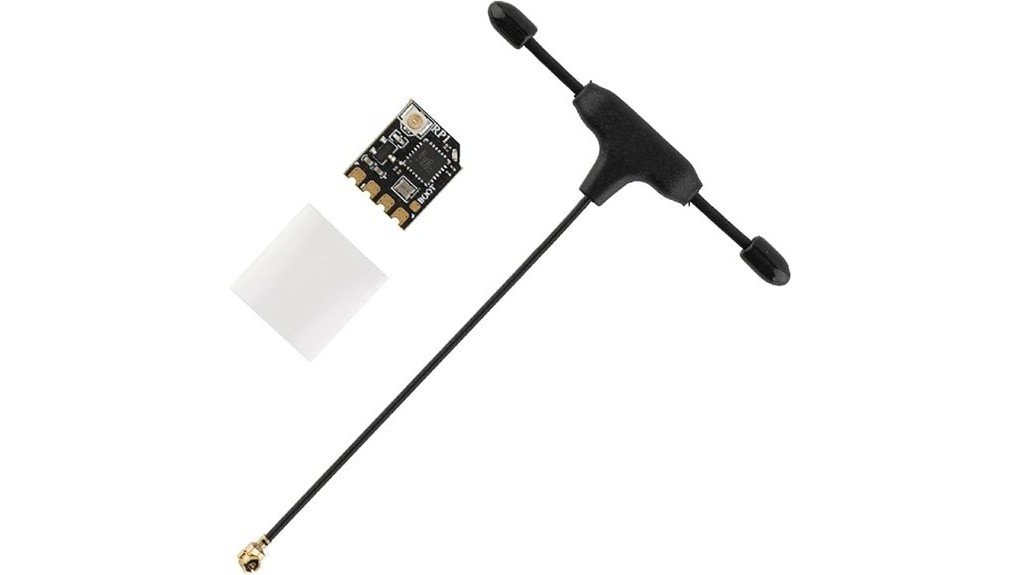
The RM RP1 ELRS FPV Receiver stands out due to its lightweight design and advanced features, including an enhanced PCB for improved heat dissipation. With a latency of under 5 ms and a refresh rate of 250 Hz, it is tailored for both hobbyists and professionals. Its compact size and easy assembly make it user-friendly, yet its performance metrics invite further exploration into how it compares with other receivers on the market.
Key Takeaways
- The RM RP1 ELRS FPV Receiver features a latency of less than 5 ms and a refresh rate of 250 Hz for optimal performance.
- Its enhanced PCB ensures effective heat dissipation, promoting reliability during extended use.
- The upgraded 65mm UFL T antenna offers improved durability, making it suitable for competitive FPV racing.
- User-friendly installation is supported by enhanced solder pads and a compact design that fits various drone types.
- Positive user feedback highlights the convenience of WiFi capability for effortless firmware updates.
Key Features of the RM RP1 ELRS FPV Receiver
The RM RP1 ELRS FPV Receiver stands out in the domain of drone technology due to its array of key features designed for peak performance and user convenience.
Notable design improvements include an enhanced PCB, which facilitates better heat dissipation, ensuring ideal operation during extended use. The upgraded 65mm UFL T antenna boasts impressive durability, essential for withstanding the rigors of FPV racing and various environmental conditions.
Additionally, the solder pads have been enhanced for easier assembly, while the integrated LED indicator simplifies status monitoring.
The improved solder pads ensure effortless assembly, while the integrated LED indicator streamlines status monitoring for enhanced usability.
These features combine to create a reliable and user-friendly experience for both hobbyists and professionals alike.
Performance Metrics: Latency and Refresh Rate of the RM RP1
Performance metrics play an essential role in determining the effectiveness of the RM RP1 ELRS FPV Receiver, particularly regarding latency and refresh rate. The RM RP1 boasts impressive latency benchmarks and competitive refresh rate comparisons, making it suitable for competitive FPV racing.
| Metric | Value |
|---|---|
| Latency | < 5 ms |
| Refresh Rate | 250 Hz |
| Operating Range | Up to 10 km |
| Frequency | 2.4 GHz |
| Compatibility | ExpressLRS |
These specifications guarantee a responsive flying experience, essential for precision and control in various applications.
How to Install the RM RP1 Receiver
Installing the RM RP1 ELRS FPV Receiver requires attention to detail and a methodical approach to confirm peak performance.
First, make sure the receiver is properly oriented, with the 65mm UFL T antenna securely attached. Utilize the enhanced solder pads for easy connections to your flight controller.
Installation tips include checking the impedance of 50 Ohms for compatibility and ensuring a stable power supply.
After installation, troubleshooting common issues, such as connectivity drops, may involve verifying firmware updates through WiFi capability.
Following these steps will enhance the receiver’s performance and reliability for FPV applications.
How the RM RP1 Stacks Up Against Other Receivers
When comparing the RM RP1 ELRS FPV Receiver to other options on the market, several key features emerge that set it apart. Remarkably, its lightweight design at just 2L x 1W x 0.7H inches enhances maneuverability in various drone applications.
Regarding comparison metrics, the low-latency performance and high-refresh rate cater to FPV racing needs effectively. Additionally, the upgraded rigid antenna greatly boosts receiver durability, making it more resilient in challenging conditions.
With improved PCB for heat dissipation and user-friendly solder pads, the RM RP1 stands as a strong contender among its peers in the FPV receiver category.
User Experiences With the RM RP1 Receiver
User experiences with the RM RP1 ELRS FPV Receiver highlight its practical benefits across various applications. Users appreciate the receiver’s low latency and high refresh rate, which enhance performance in FPV racing and long-range flying.
Feedback indicates that the ultra-light, compact design, measuring just 2L x 1W x 0.7H inches, fits seamlessly into different drone types. The improved PCB and durable antenna contribute to reliability in diverse conditions.
Many users commend the ease of soldering due to enhanced pads, while the WiFi capability for firmware updates adds convenience. Overall, user experiences reflect satisfaction with the RM RP1’s functionality and versatility.
Frequently Asked Questions
What Is the Maximum Range of the RM RP1 ELRS Receiver?
The RM RP1 ELRS receiver boasts impressive long-range performance, achieving distances of several kilometers. Its advanced design enhances signal stability, making it ideal for demanding applications like FPV racing and long-range drone operations.
Is the RM RP1 Compatible With All Drone Models?
The RM RP1 exhibits compatibility concerns with various drone models, primarily designed for FPV racing and lightweight applications. Users should verify specific drone specifications to guarantee peak performance and functionality across different platforms.
How Do I Reset the RM RP1 Receiver?
To reset the RM RP1 receiver, users should perform a firmware update via WiFi. This process often enhances signal strength and restores factory settings, ensuring peak performance for various applications, including FPV racing and drones.
Can I Use the RM RP1 for Non-Fpv Applications?
While the RM RP1 excels in FPV settings, its signal reliability offers potential for alternative applications. Ironically, one might find a high-performance racing receiver surprisingly adaptable beyond its intended use, showcasing versatility in unexpected areas.
What Is the Expected Battery Life When Using the RM RP1?
The expected battery performance when using the RM RP1 varies by usage scenarios, typically lasting several hours under ideal conditions. Factors such as signal strength and environmental conditions can influence overall battery life considerably.
Conclusion
In conclusion, the RM RP1 ELRS FPV Receiver stands out for its lightweight design and impressive specs, including a latency of less than 5 ms and a refresh rate of 250 Hz. Users have likened its performance to that of a finely tuned sports car, delivering quick responses and reliability on the racing circuit. With easy installation and robust features, it is a solid choice for both hobbyists and professionals looking to elevate their FPV experience.