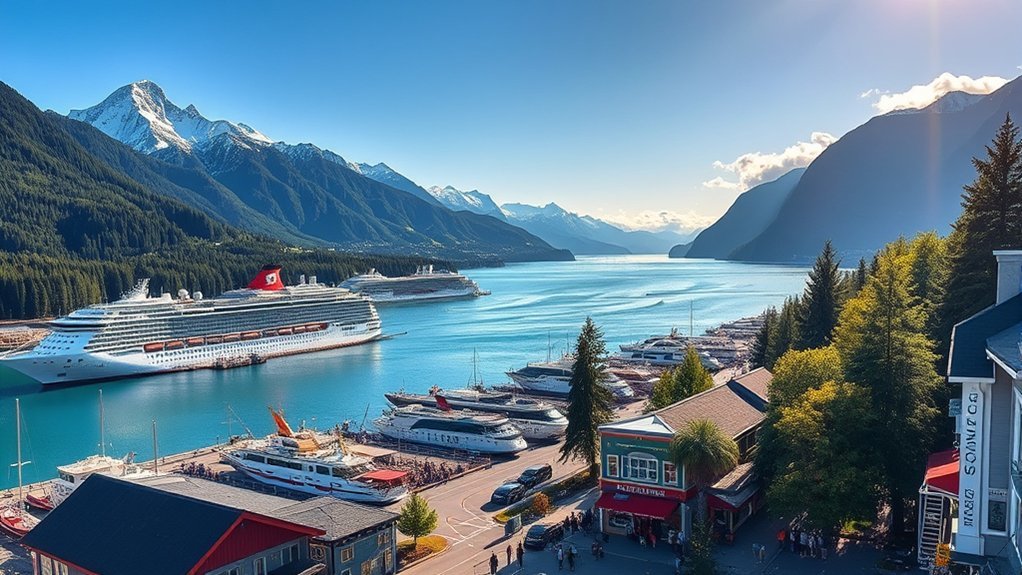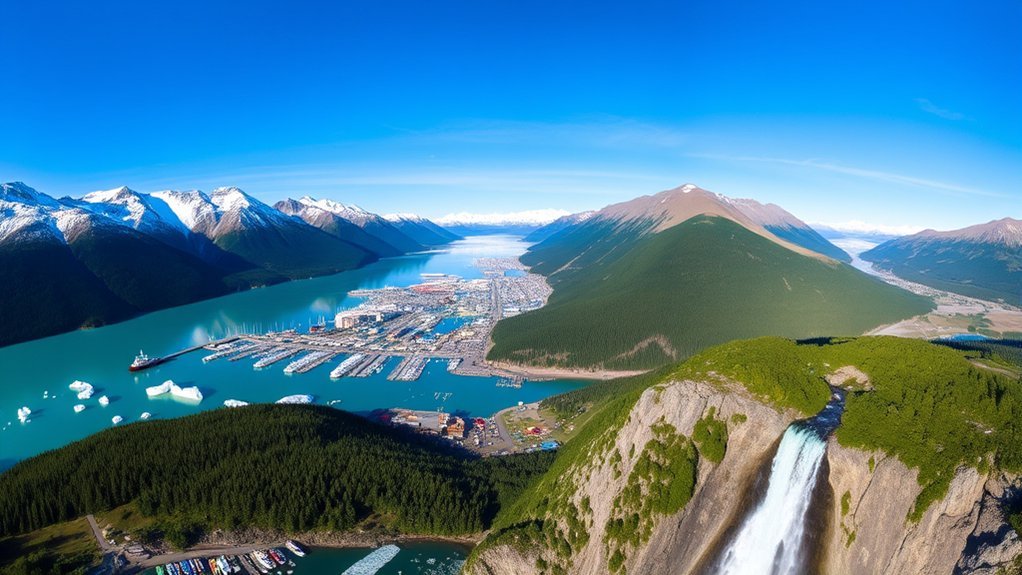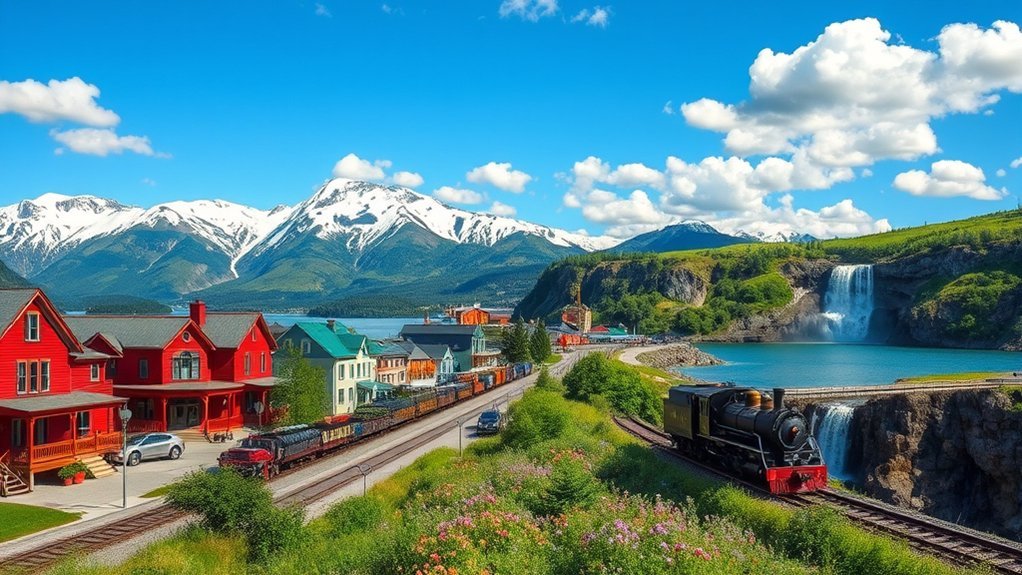
Nestled at the northernmost tip of the Inside Passage along the Taiya Inlet, Skagway, Alaska, is a living gateway to the 1897–1898 Klondike Gold Rush. Preserved as part of the Klondike Gold Rush National Historical Park, this coastal community blends wooden boardwalks and false-front saloons with the dramatic glaciated peaks of the Coast Mountains. Whether you arrive via cruise ship, the Alaska Marine Highway ferry, or the scenic South Klondike Highway, Skagway delivers a rare mix of well-preserved frontier history, rugged outdoor expeditions, and authentic Southeast Alaskan culture.
Quick Answer
The best things to do in Skagway include riding the historic White Pass & Yukon Route Railway, exploring the restored 1898 Gold Rush buildings along Broadway in the Klondike Gold Rush National Historical Park, hiking to Lower Dewey Lake or the Chilkoot Trail in nearby Dyea, and sampling fresh Alaskan seafood at local saloons. Summer (mid-May through mid-September) offers optimal daylight, full excursion availability, and daily ferry service.
Key Takeaways
- Historic District: Over 20 historic buildings are preserved and managed by the National Park Service along Broadway.
- Passports Required: Many White Pass & Yukon Route train excursions and all road tours up the Klondike Highway cross the Canadian border into British Columbia and the Yukon Territory.
- Getting Around: Downtown Skagway is highly walkable (7 blocks by 4 blocks), supplemented by the municipal SMART bus for dock and trailhead transfers.
- Peak Season: The town operates fully from mid-May through September; most tour operators and seasonal restaurants close from October through April.
Historical Landmarks to Explore
Skagway’s town center serves as a preserved outdoor museum anchored by the Klondike Gold Rush National Historical Park. In 1897, tens of thousands of stampeders arrived here by steamship, outfitting themselves before attempting the treacherous journey over the Coast Mountains toward the Dawson City goldfields.
The centerpiece of the historic district is Broadway Street, paved with wooden boardwalks and lined with false-front architecture dating from 1897 to 1900. Must-see historic landmarks include:
- The Mascot Saloon: Located at 3rd Avenue and Broadway, this restored establishment offers a vivid look at gold-rush-era drinking establishments, standing as the only preserved saloon of the dozens that operated during the boom.
- The Arctic Brotherhood Hall: Built in 1899, this iconic building features an exterior adorned with more than 8,700 pieces of weathered driftwood gathered from local shores. It currently serves as the Skagway Visitor Information Center.
- The White Pass & Yukon Route Railroad: Built in 1898 against incredible engineering odds, this narrow-gauge railroad climbs nearly 3,000 feet in just 20 miles, passing sheer cliff walls, wooden trestles, and roaring waterfalls.
- Gold Rush Cemetery and Reid Falls: Situated 1.5 miles north of downtown, this cemetery is the final resting place of notorious outlaw Jefferson Randolph “Soapy” Smith and town hero Frank Reid. A short trail behind the cemetery leads to the cascading 300-foot Reid Falls.
- The Moore Homestead: The oldest standing residential structure in Skagway, built in 1887 by Captain William Moore before the stampede transformed the quiet valley.
Warning: The White Pass Summit Excursion train and Klondike Highway van tours enter Canadian territory. All travelers must carry a valid passport. Failure to bring proper border documentation will prevent boarding on international routes.
Natural Wonders and Scenic Views
Flanked by the Coast Mountains and the deep, glacial waters of the Taiya Inlet—the northernmost terminus of Lynn Canal—Skagway offers exceptional fjord and mountain scenery.
Lynn Canal is the longest and deepest fjord in North America, plunging to depths exceeding 2,000 feet. The steep granite walls flanking the inlet funnel coastal microclimates, producing dramatic cloud inversions, sudden squalls, and vibrant rainbow displays across the water.
“From the crest of White Pass, looking down the valley toward Taiya Inlet, the glaciated granite peaks drop directly into tidal waters, offering one of the most dramatic topographic relief gradients in Southeast Alaska.”
Prime scenic viewpoints and natural attractions include:
- Yakutania Point and Smuggler’s Cove: A gentle 1- to 1.5-mile round-trip coastal forest walk starting from the footbridge over the Skagway River. The trail leads to flat granite rocks offering panoramic views of cruise ships entering Taiya Inlet, harbor seals, and diving bald eagles.
- Skagway Scenic Overlook: Located along the Dyea Road on the bluffs west of town, this pullout offers an elevated, postcard-perfect view of the entire Skagway valley, rail yards, and harbor.
- Pitchfork Falls: Visible along the Klondike Highway and White Pass rail line, this massive hydroelectric-generating waterfall plunges down steep granite cliffs from high alpine tarns.
Outdoor Adventures and Activities
Skagway is a premier basecamp for hiking, alpine scrambling, and paddling in Southeast Alaska. Unlike many rainforested Inside Passage communities, Skagway lies in a partial rain shadow, averaging roughly 26 inches of precipitation annually, making outdoor trekking substantially drier than in Ketchikan or Juneau.
Popular excursions and trails include:
- Lower Dewey Lake Trail: Accessible directly from downtown (behind the railroad tracks at 4th Avenue), this 3.6-mile loop circles a pristine alpine lake surrounded by spruce and hemlock forest. For advanced hikers, the trail connects to Upper Dewey Lake (elev. 3,100 ft) and Devil’s Punchbowl.
- The Historic Chilkoot Trail: Known as the “world’s longest museum,” this 33-mile trail starts in historic Dyea (9 miles west of Skagway), crossing the border at Chilkoot Pass into Canada. Day hikers can tackle the first 4 miles from the Dyea trailhead to Finnegan’s Point without an overnight permit.
- Taiya River Rafting & Kayaking: Float the glacier-fed Taiya River through the coastal rainforest flats of Dyea, where seasonal runs of pink, chum, and coho salmon attract bald eagles and brown bears.
- Ocean Kayaking along Lynn Canal: Guided sea kayaking tours depart from the Skagway small boat harbor, paddling along steep fjord cliffs where harbor seals and pigeon guillemots feed along tidal currents.
Pro Tip: If planning to hike the full 33-mile Chilkoot Trail, you must secure backcountry permits in advance through Parks Canada and the National Park Service. Reservations generally open in early spring.
Local Culture and Events
Skagway’s living culture represents a dynamic blend of ancestral Indigenous traditions and a vibrant community of year-round artisans, historians, and seasonal hospitality operators.
Indigenous Heritage and Tlingit Traditions
Long before the 1897 stampede, the Skagway and Taiya valleys were the ancestral home and trade corridor of the Chilkoot and Chilkat Tlingit (Ḵwáan) peoples. The name “Skagway” originates from the Tlingit word Sha-ka-ԍei, referring to the rugged, wind-blown whitecaps created by the northern inlet winds.
Tlingit trade leaders historically controlled the mountain passes (including the Chilkoot Trail), acting as intermediaries in commerce between coastal settlements and the Athabascan communities of the interior Subarctic. Today, travelers can appreciate authentic Tlingit art, formline carving, and traditional silverwork at dedicated galleries and cultural centers throughout town.
| Cultural Element | Significance in Skagway & Lynn Canal |
|---|---|
| Chilkoot Trail Trade Route | The historic grease trail utilized by Tlingit traders to transport eulachon oil to the Interior. |
| Formline Woodcarving & Totems | Traditional clan storytelling, crest depictions, and historical lineage displayed on cedar poles. |
| Chilkat Weaving | Intricate textile art made from mountain goat wool and cedar bark, native to the neighboring Chilkat valley. |
Seasonal Festivals and Annual Community Events
Skagway maintains an active calendar of civic and cultural festivals that highlight the town’s tight-knit year-round spirit:
- Skagway Summer Solstice (June): Celebrates the longest days of northern daylight with live street performances, extended shopping hours, and outdoor gatherings.
- Fourth of July Parade & Street Games: A historic town-wide celebration featuring foot races, egg tosses, a vibrant parade down Broadway, and the traditional slow-pitch softball tournament.
- Duff’s Skagway Marathon & Half Marathon (June): A scenic and challenging race routing along Taiya Inlet and through the Dyea valley flats.
- Klondike Road Relay (September): An internationally renowned 110-mile, 10-stage running relay spanning from Skagway over the White Pass Summit to Whitehorse, Yukon.
- Yuletide / Tree Lighting (December): A community winter festival featuring artisanal holiday markets, story sessions, and festive lights along the historic district.
Suggested Itineraries for Different Lengths of Stay
Whether stopping for a single port day on an Inside Passage cruise or spending several days exploring the northern panhandle, use these structured timelines to plan your visit:
| Duration | Recommended Daily Plan |
|---|---|
| 1-Day Port Call | Morning: Ride the 2.5-hour White Pass & Yukon Route Summit Excursion. Afternoon: Self-guided walking tour of the Klondike Gold Rush NHP, lunch at a historic saloon, and a walk out to Yakutania Point. |
| 2 Days | Day 1: Downtown historical sites, White Pass train, and Gold Rush Cemetery. Day 2: Morning hike around Lower Dewey Lake; afternoon shuttle to Dyea for a Taiya River float or historical townsite walk. |
| 3 Days | Days 1–2: Complete the 2-day itinerary. Day 3: Rent a vehicle or book a guided van excursion up the South Klondike Highway to Carcross Desert and Emerald Lake in Canada’s Yukon Territory. |
| 4+ Days | Add a full-day fast-ferry excursion to neighboring Haines for eagle viewing and Chilkat cultural sites, or embark on a multi-day backpacking trek on the Chilkoot Trail. |
Tips for First-Time Visitors
Maximizing your time in this historic sub-arctic valley requires strategic preparation:
- Dress in Versatile Layers: Summer temperatures average between 55°F and 68°F (13°C to 20°C), but mountain passes can drop toward 40°F (4°C) with strong coastal winds. Bring a waterproof outer shell, fleece mid-layer, and sturdy walking shoes.
- Pre-Book Excursions: White Pass train tickets and small-group Dyea rafting trips frequently sell out weeks in advance when multiple cruise ships are in port.
- Track Cruise Ship Schedules: Check the port schedule via the Skagway Visitor Department. If staying overnight, visit popular downtown sights early in the morning (before 9:00 AM) or after 5:00 PM when port foot traffic subsides.
- Use the SMART Transit Shuttle: Municipal shuttles run regularly between the cruise ship docks, ferry terminal, downtown shopping corridor, and local trailheads for a modest per-ride or daily pass fee.
- Carry Physical ID & Passports: Essential if traveling north of Mile 15 on the Klondike Highway or taking any rail tour crossing the Canadian boundary.
Where to Eat and Stay in Skagway
Skagway boasts a rich dining and lodging scene reflecting authentic Alaskan character and historic hospitality.
Best Local Restaurants & Saloons
- Red Onion Saloon (Broadway & 2nd Ave): A gold rush brothel established in 1898, now operating as a lively saloon serving craft pizzas, loaded nachos, Alaskan beers, and upstairs historical brothel museum tours.
- Skagway Brewing Company (4th Ave): Famous for its flagship Spruce Tip Blonde Ale—brewed using hand-picked local Sitka spruce tips—alongside hearty pub fare, halibut fish and chips, and burgers.
- Sweet Tooth Cafe (Broadway between 3rd & 4th Ave): A beloved local institution operating since 1968, serving hearty breakfast scrambles, sourdough hotcakes, fresh donuts, and espresso.
- Olivia’s Bistro at the Historic Skagway Inn (7th & Broadway): Refined dining offering fresh wild Alaskan salmon, king crab, halibut, and seasonal herbs harvested directly from their on-site garden.
- Starfire (4th Ave): A popular local eatery serving authentic Thai cuisine, spicy curries, and noodle dishes made with fresh ingredients.
Recommended Accommodations
- The Historic Skagway Inn: A charming 1897 former gold-rush boarding house in the heart of the historic district, featuring Victorian-style guest rooms named after historical figures.
- Westmark Inn Skagway: The town’s largest full-service hotel, offering comfortable modern amenities, a spacious courtyard, and on-site dining convenient to all major attractions.
- Morning Wood Hotel / Sgt. Preston’s Lodge: Centrally located properties offering straightforward, comfortable accommodations within easy walking distance of the train depot and restaurants.
- At the White House B&B: A beautifully restored 1902 residence offering boutique, personalized bed-and-breakfast hospitality near the historic core.
Frequently Asked Questions
What is the best time of year to visit Skagway?
The best time to visit Skagway is from mid-May through mid-September. During this summer window, daytime temperatures range from 55°F to 70°F, daylight extends up to 18 hours per day, and all historic tours, the White Pass railroad, and seasonal restaurants operate at full capacity.
Are there any local customs or etiquette to be aware of?
Skagway is a casual, welcoming community where outdoor layers and practical footwear are acceptable everywhere. When visiting historic sites or private residences, stay on designated wooden boardwalks. When exploring local wilderness areas, adhere strictly to “Leave No Trace” principles and maintain bear awareness by carrying bear spray and never leaving food unattended.
How do I get to Skagway from other cities?
Skagway is accessible by four primary modes of transit: via major cruise ships operating in the Inside Passage; by the state-run Alaska Marine Highway System vehicle ferry connecting to Juneau and Haines; by passenger road along the scenic South Klondike Highway from Whitehorse, Yukon; or via scheduled regional commuter flights (such as Alaska Seaplanes) from Juneau.
What is the availability of public transportation in Skagway?
Public transportation is managed via the municipal SMART (Skagway Municipal Area Rapid Transit) bus system, which operates seasonal loop routes between all cruise ship docks, the ferry terminal, and the historic downtown core. The town itself is compact and flat, making walking the primary way to get around.
Are there any safety concerns for travelers in Skagway?
Skagway is safe with very low violent crime rates. The primary travel hazards are environmental: rapidly changing weather along mountain passes, steep drop-offs on alpine hiking trails, and active wildlife (coastal brown and black bears). Always carry extra layers, store food in bear-resistant containers, and watch your step on wet wooden boardwalks.
Conclusion
Skagway occupies a singular position in Alaskan travel, offering a tangible connection to the rugged spirit of the 1898 gold rush alongside the wild, untouched grandeur of the Inside Passage. Whether gazing down the sheer drops of the White Pass from a vintage train car, walking the wooden sidewalks where miners once sought their fortunes, or paddling the calm waters of Taiya Inlet, Skagway delivers an authentic and unforgettable frontier adventure.
Sources
- National Park Service: Klondike Gold Rush National Historical Park — Official historic district preservation, visitor guidelines, and Chilkoot Trail permitting.
- White Pass & Yukon Route Railway — Historical engineering background, train schedules, and international route details.
- Municipality of Skagway Visitor Information — Official municipal transit schedules, community festivals, and licensed business directories.
- Alaska Marine Highway System (Alaska DOT) — Inside Passage ferry routes, vessel schedules, and terminal access details.