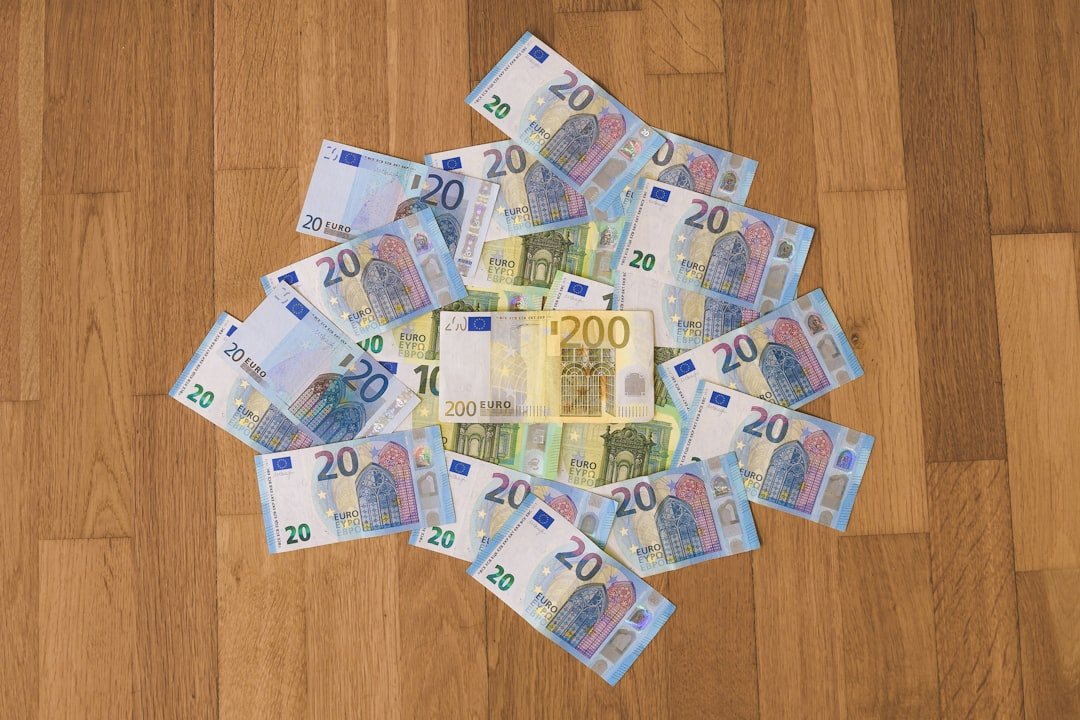
Switzerland, a landlocked sovereign state in Central Europe, is celebrated for its pristine alpine geography, high standard of living, and an exceptionally robust economy. At the core of this economic powerhouse operates the Swiss Franc (CHF), the nation’s official currency. Renowned across international capital markets for its monetary strength, political neutrality, and fiscal conservatism, the currency has long served as a premier global safe-haven asset during times of geopolitical and financial volatility. Yet beneath this historic reputation for stability lies a modern, rapidly transforming payment landscape characterized by advanced mobile wallets, progressive cryptocurrency regulations, and institutional digital asset experimentation.
Quick Answer
The official currency of Switzerland is the Swiss Franc (CHF), divided into 100 Rappen (centimes). While physical cash remains legally protected and culturally respected, Switzerland operates predominantly as a cashless society: major credit/debit cards, contactless mobile wallets, and the domestic payment app TWINT are accepted almost everywhere nationwide.
Key Takeaways
- Official Currency: The Swiss Franc (code: CHF, symbol: Fr.) is issued by the Swiss National Bank (SNB) and serves Switzerland and Liechtenstein.
- Payment Preferences: Over three-quarters of retail transactions are cashless, led by contactless debit cards and the proprietary mobile system TWINT.
- Currency Subunits: 1 Franc equals 100 Rappen (German), centimes (French), centesimi (Italian), or raps (Romansh).
- Regulatory Edge: Switzerland’s “Crypto Valley” in Zug and the Federal DLT Act establish one of the world’s most sophisticated legal frameworks for blockchain and tokenized assets.
- Consumer Warning: Foreign travelers should consistently refuse Dynamic Currency Conversion (DCC) at payment terminals to avoid paying 3% to 8% in hidden foreign transaction markups.
The Swiss Franc: History, Denominations, and Safe-Haven Status
The Swiss Franc was formally established in 1850 under the Federal Coinage Act, replacing a disjointed patchwork of more than 800 regional, cantonal, and private coinages that had previously complicated domestic commerce. The founding of the Swiss National Bank in 1907 concentrated monetary issuance into a single institution, setting the foundation for the currency’s renowned stability.
For most of the twentieth century, the Franc’s reliability was reinforced by strict gold backing requirements. Contrary to widespread misconception, Switzerland did not decouple its currency from gold in the mid-1900s; rather, the historic 40% gold reserve requirement remained formally enshrined in the Swiss Federal Constitution until a national referendum in April 1999 severed the legal tie, effective May 17, 2000. Despite the discontinuation of the gold peg, prudent monetary governance, low sovereign debt, a consistent balance-of-payments surplus, and domestic political neutrality have preserved the Franc’s role as a preeminent international safe haven.
“The Swiss Franc’s international resilience rests on structural fundamentals: disciplined fiscal policy, sustained economic performance, and institutional trust in the Swiss National Bank.”
Current Swiss cash circulation is governed by the 9th Banknote Series, designed around the conceptual theme “The Many Facets of Switzerland.” Produced on Durasafe—a high-security substrate combining cotton paper with a polymer core—these notes represent some of the most technologically secure physical currency in the world:
- Banknotes: Available in denominations of 10, 20, 50, 100, 200, and 1,000 Francs. Notably, Switzerland remains one of the few developed economies to retain a high-value note (the 1,000 CHF bill), which is widely used for high-value transactions and physical wealth storage.
- Coins: Minted by Swissmint, circulating denominations include 5, 10, 20, and 50 centimes (Rappen), alongside 1, 2, and 5 Francs. The 1-centime and 2-centime coins were removed from circulation due to prohibitive production costs.
Cashless Society: Payment Trends in Switzerland
Switzerland has experienced a swift and permanent transition toward cashless transactions. According to ongoing payment method surveys published by the Swiss National Bank, electronic payment instruments have definitively surpassed cash in both aggregate transaction value and turnover frequency. Today, cashless instruments account for well over 70% of daily transactions nationwide.
This development is underpinned by an advanced point-of-sale (POS) infrastructure. Near-Field Communication (NFC) terminals are standard across Swiss commerce, from high-end boutiques along Zurich’s Bahnhofstrasse to automated mountain railway kiosks and family-owned alpine farms utilizing QR-code billing. The shift toward digital settlements was heavily accelerated between 2020 and 2022, when hygiene considerations and revised contactless limits altered long-standing consumer habits. Yet unlike Scandinavian nations where cash acceptance is occasionally refused by merchants, Swiss federal law mandates broad acceptance of legal tender, ensuring cash remains an accessible and respected medium.
Note: While card and contactless acceptance is practically universal in urban areas, keeping a small reserve of 20 to 50 CHF in cash is advisable when traveling in remote mountain regions, taking rural cable cars, or buying local produce from unattended farm stands.
Contactless Payment: The Rise of Mobile Wallets
The global surge in mobile and contactless payment mechanisms has directly shaped Swiss retail habits. While international solutions such as Apple Pay, Google Pay, and Samsung Pay enjoy broad support, Switzerland’s payment architecture is defined by its homegrown champion: TWINT.
Launched through a collaboration among major Swiss financial institutions—including UBS, PostFinance, Raiffeisen, and exchange operator SIX Group—TWINT connects directly to a user’s Swiss bank account. It facilitates peer-to-peer (P2P) transfers, POS contactless checkouts via optical QR codes, online e-commerce transactions, and parking fee settlements. With more than 5 million active users in a country of 8.9 million residents, TWINT is an integral component of daily financial activity in Switzerland.
Contextual Benchmark: Global Mobile Wallet Expansion
| Year | Global Mobile Wallet Users (Millions) | Global Transaction Value (Billion USD) | Swiss Market Context |
|---|---|---|---|
| 2017 | 440 | $601 | TWINT merges with Paymit, unifying Swiss banks |
| 2019 | 760 | $930 | TWINT registers over 1 million active users |
| 2021 | 1,235 | $1,350 | Contactless card limit raised permanently to 80 CHF |
| Current | 1,600+ | $2,000+ | TWINT exceeds 5 million registered users domestically |
Pro Tip: International tourists cannot typically link foreign bank accounts to TWINT. Instead, international visitors should rely on credit/debit cards loaded into Apple Pay or Google Pay, which are accepted by virtually all contactless POS terminals across Switzerland.
Cryptocurrency in Switzerland: Adoption and Regulation
Switzerland is internationally recognized as a premier destination for blockchain enterprise and fintech governance. Rather than applying restrictive measures, Swiss authorities established a progressive regulatory architecture supervised by the Swiss Financial Market Supervisory Authority (FINMA).
The Canton of Zug, known globally as “Crypto Valley,” hosts hundreds of leading blockchain foundations, Web3 startups, and digital asset custodians—including the Ethereum Foundation, Cardano, and Solana Foundation. Switzerland cemented this status with the federal enactment of the Distributed Ledger Technology (DLT) Act, which took full legal effect in August 2021. The DLT Act established robust legal certainty for tokenized securities, created an infrastructure license for DLT trading facilities, and secured segregated digital asset ownership rights during corporate insolvencies.
Civil adoption also operates at municipal levels. Public administrations in Zug, Zermatt, and Lugano (under its “Plan B” initiative) accept Bitcoin (BTC) and Tether (USDT) for municipal taxes, public services, and university tuition. Nevertheless, regulatory oversight remains stringent: FINMA enforces strict anti-money laundering (AML) controls, mandatory Know-Your-Customer (KYC) identity procedures, and compliance with Financial Action Task Force (FATF) Travel Rule guidelines for all cryptocurrency transactions exceeding statutory thresholds.
Cross-Border Payments: Impact on the Swiss Economy

Situated in the heart of Europe but remaining outside the European Union and the Eurozone, Switzerland maintains an export-intensive economy driven by pharmaceuticals, high-precision engineering, luxury horology, and specialized private banking. Consequently, seamless cross-border settlement mechanisms are critical to maintaining trade competitiveness.
While the Swiss Franc’s structural strength prevents imported inflation, sustained appreciation against the Euro and US Dollar presents ongoing challenges for Swiss manufacturing exporters. To manage friction across international transactions, Switzerland integrates closely with the Single Euro Payments Area (SEPA) network, enabling cost-effective Euro settlements between Swiss and European financial counterparties. Concurrently, Swiss clearing infrastructure operated by SIX Interbank Clearing (SIC) facilitates multi-currency liquidity settlement in real time.
Warning: When using international cards at Swiss payment terminals or ATMs, always select “Pay in CHF” rather than your home currency. Choosing your home currency triggers Dynamic Currency Conversion (DCC), enabling the merchant’s processing bank to levy unfavorable exchange rate markups ranging between 3% and 8%.
Payment Security: Measures and Innovations
Because the Swiss banking sector oversees significant global offshore wealth, transactional data protection and network integrity are maintained to rigorous standards. Financial institutions in Switzerland adhere to cybersecurity directives outlined by the Swiss Federal Act on Data Protection (FADP) and FINMA operational risk circulars.
Consumer payment channels incorporate multi-layered defenses:
- Universal Multi-Factor Authentication: Online banking systems and e-commerce checkouts mandate two-factor authentication (2FA) via hardware security tokens or cryptographic mobile authorization apps.
- Tokenization Architectures: Contactless cards and mobile systems substitute primary account numbers (PAN) with ephemeral digital tokens, safeguarding payment credentials during merchant transmissions.
- Behavioral Fraud Detection: Artificial intelligence monitoring tools scrutinize payment anomalies, geographical irregularities, and unusual transaction velocity to freeze illicit transactions before clearing.
E-commerce and Online Payments in Switzerland
E-commerce in Switzerland represents a mature, high-value consumer market. Driven by high disposable incomes and sophisticated logistics networks, Swiss domestic online purchases regularly surpass 14 billion CHF annually.
Unlike many Western economies where international credit cards completely dominate digital checkouts, the Swiss e-commerce payment mix is diverse. Consumers frequently opt for traditional open invoices with payment slips (historically the orange Einzahlungsschein, now superseded by the universal QR-bill system), allowing buyers to pay within 14 to 30 days of goods delivery. Concurrently, TWINT has established itself as an essential online checkout option alongside credit cards, PayPal, and Apple Pay, dramatically reducing cart abandonment rates through rapid biometric authorizations.
Digital Banking: The Future of Financial Services
The Swiss retail banking landscape is being reshaped by digital transformation. Incumbent banking institutions (such as UBS, Cantonal Banks, and PostFinance) have modernized legacy IT infrastructures to deliver feature-complete mobile banking applications.
Concurrently, a wave of digital-only neobanks—including domestic platforms such as Neon, Yuh, and Radicant, as well as European providers like Revolut—has gained substantial market share. These platforms attract younger demographics and frequent travelers by offering zero-fee foreign exchange, integrated fractional share investing, real-time budgeting tools, and rapid account onboarding. In response, traditional private and cantonal banks increasingly partner with fintech firms or launch proprietary digital sub-brands to retain their deposit base.
Impact of Pandemic Transformations on Payment Habits
The structural changes triggered during the COVID-19 pandemic permanently altered Swiss transactional behavior. Temporary measures instituted to reduce physical contact—most visibly the raising of the PIN-free contactless card limit from 40 CHF to 80 CHF—became permanent industry benchmarks.
More importantly, the shift dismantled generational barriers to digital finance. Demographic cohorts over the age of 65 adopted mobile banking applications and contactless cards at record rates, fundamentally shifting the baseline of consumer expectations. While cash has not disappeared, its role has transitioned from the default transaction method to an intentional alternative used for specific transactions, budgeting purposes, or privacy preferences.
Outlook for the Future: Emerging Trends in Swiss Currency and Payments
The evolution of Switzerland’s monetary ecosystem continues to accelerate across several key frontiers:
- Wholesale Central Bank Digital Currencies (wCBDC): Through Project Helvetia, a joint initiative by the Swiss National Bank and the Bank for International Settlements (BIS), Switzerland has progressed beyond theoretical studies. The SNB has executed live, real-money wholesale CBDC bond settlements on the regulated SIX Digital Exchange (SDX), demonstrating how tokenized central bank money can operate alongside traditional settlement infrastructure.
- The Constitutional Defense of Cash: In response to the decline of physical cash usage, grassroots Swiss civic movements launched the “Pro-Cash” popular initiatives. These proposals aim to enshrine an explicit federal guarantee in the Swiss Federal Constitution ensuring the continuous availability of physical banknotes and coins.
- Artificial Intelligence and Real-Time Clearing: The ongoing deployment of the revised SIC5 platform introduces national Instant Payments, enabling irrevocable settlements between accounts within seconds, accessible 24/7/365.
Switzerland stands at the intersection of traditional monetary stability and digital payment innovation. Grounded in the enduring trust of the Swiss Franc, the nation demonstrates how modern digital payment rails, institutional blockchain frameworks, and physical cash protections can successfully coexist within a modern market economy.
Frequently Asked Questions
What is the official currency of Switzerland?
The official currency of Switzerland is the Swiss Franc, denoted internationally by the ISO currency code CHF (derived from the Latin name Confoederatio Helvetica Franc) and locally as Fr. The Swiss Franc is also the legal tender of the Principality of Liechtenstein and the Italian municipality exclave of Campione d’Italia.
What are the denominations of Swiss Franc banknotes and coins?
Swiss Franc banknotes are issued by the Swiss National Bank in denominations of 10, 20, 50, 100, 200, and 1,000 Francs. Coins minted by Swissmint circulate in denominations of 5, 10, 20, and 50 centimes (Rappen), alongside 1, 2, and 5 Francs. The historical 1- and 2-centime coins have been officially withdrawn from circulation and are no longer legal tender.
Can I use Euros in Switzerland?
While many railway ticket offices, international hotels, airports, and major supermarkets near borders accept Euro banknotes, businesses are not legally mandated to do so. Change is almost universally returned in Swiss Francs, and merchants typically apply unfavorable proprietary exchange rates. Paying with Swiss Francs or using debit/credit cards billed in CHF is strongly recommended.
What is the most widely used payment method in Switzerland?
Debit cards and contactless payment solutions account for the majority of point-of-sale volume. Domestically, TWINT is the premier mobile payment app, used by more than 5 million residents for P2P transfers, store checkouts, and e-commerce. International contactless systems like Apple Pay and Google Pay are also widely supported across the country.
Are there any currency exchange or reporting restrictions in Switzerland?
There are no statutory ceilings on the amount of foreign currency or Swiss Francs that can be brought into or taken out of Switzerland. However, under Swiss anti-money laundering regulations, travelers carrying cash, precious metals, or bearer checks valued at 10,000 CHF or more must declare the funds to the Federal Office for Customs and Border Security (FOCBS) upon inspection.
Financial Disclaimer: This article is provided for informational and educational purposes only and does not constitute foreign exchange, tax, legal, or investment advice. Currency markets and digital assets carry inherent financial risks.
Sources
- Swiss National Bank (SNB) — Official central bank publications on monetary policy, the 9th banknote series, and the Survey on Payment Methods.
- Swiss Financial Market Supervisory Authority (FINMA) — Regulatory guidelines on digital assets, ICOs, banking supervision, and the DLT Act.
- Swissmint (Federal Mint) — Official legal tender coinage specifications, mintage data, and coin demonetization histories.
- Bank for International Settlements (BIS) — Project Helvetia reports and research on central bank digital currency (wCBDC) integrations.
- Federal Office for Customs and Border Security (FOCBS) — Swiss cross-border cash declaration regulations and customs thresholds.