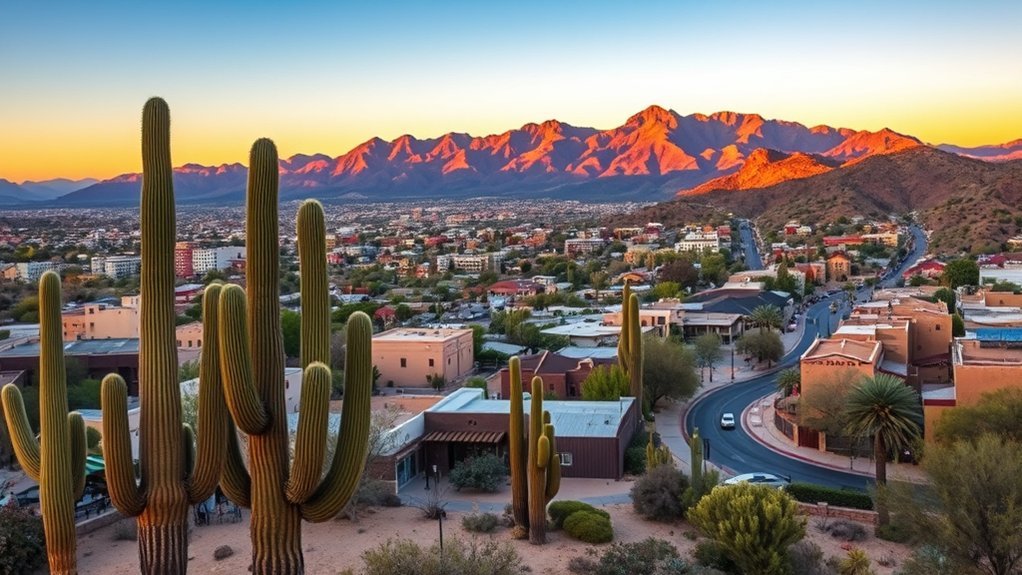
Tucson blends Sonoran Desert scenery, Indigenous and Spanish colonial history, distinctive regional food, museums, astronomy, and easy access to cactus-filled hiking country. A good trip balances outdoor time in the cool morning hours with museums, markets, and restaurants later in the day. Whether you have one day or a full week, thoughtful scheduling matters because Tucson’s best sights are spread across downtown, the foothills, and two separate districts of Saguaro National Park.
Quick Answer
For a first Tucson trip, spend at least three days exploring Saguaro National Park, Mission San Xavier del Bac, the Arizona-Sonora Desert Museum, downtown museums, and the city’s Sonoran food scene. Visit from late fall through early spring for the easiest outdoor weather, start desert activities early, and use a car for attractions outside central Tucson.
Key Takeaways
- Three days gives you enough time for Tucson’s major desert, cultural, and food highlights without rushing.
- Late fall through early spring is generally easiest for hiking; summer requires much earlier starts and stricter heat precautions.
- Saguaro National Park has separate east and west districts, so plan them as different outings rather than one quick stop.
- Tucson is a UNESCO Creative City of Gastronomy, making local food part of the destination rather than an afterthought.
- Sun Tran and Sun Link are currently fare-free, but a rental car is still useful for desert attractions and day trips.
Why Visit Tucson: What Makes the City Special
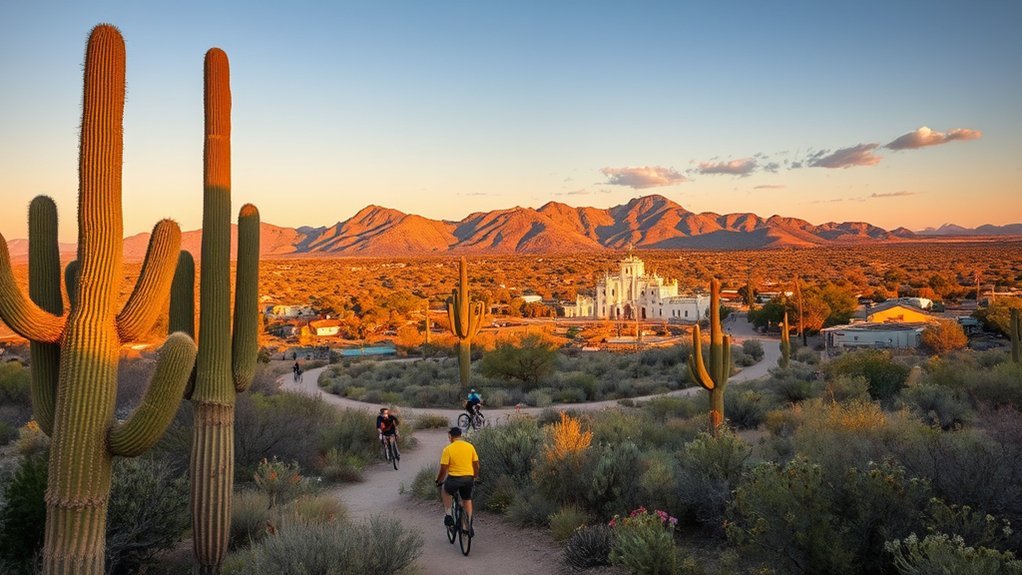
Tucson stands out because the city and desert are closely connected. Historic neighborhoods, university museums, murals, markets, and restaurants sit within easy driving distance of cactus forests, mountain roads, and sunset viewpoints. Mission San Xavier del Bac reflects centuries of regional history, while Saguaro National Park protects some of the Sonoran Desert landscapes most visitors picture when they think of southern Arizona.
Food is another major reason to visit. Tucson is recognized by UNESCO as a Creative City of Gastronomy, reflecting the region’s long agricultural history, traditional ingredients, and layered Indigenous, Mexican, Spanish, and American food cultures. That history is visible in flour tortillas, mesquite flavors, chiles, tepary beans, prickly pear, carne asada, and the Tucson-style Sonoran hot dog.
The landscape changes quickly as you move around the region. The desert basin is filled with saguaros, palo verde, mesquite, washes, and rocky foothills, while higher elevations around the Santa Catalina Mountains provide cooler forests and broad views. That variety makes Tucson especially rewarding if you enjoy hiking, photography, wildlife, astronomy, architecture, or simply being outdoors.
Best Time to Go and Weather Considerations
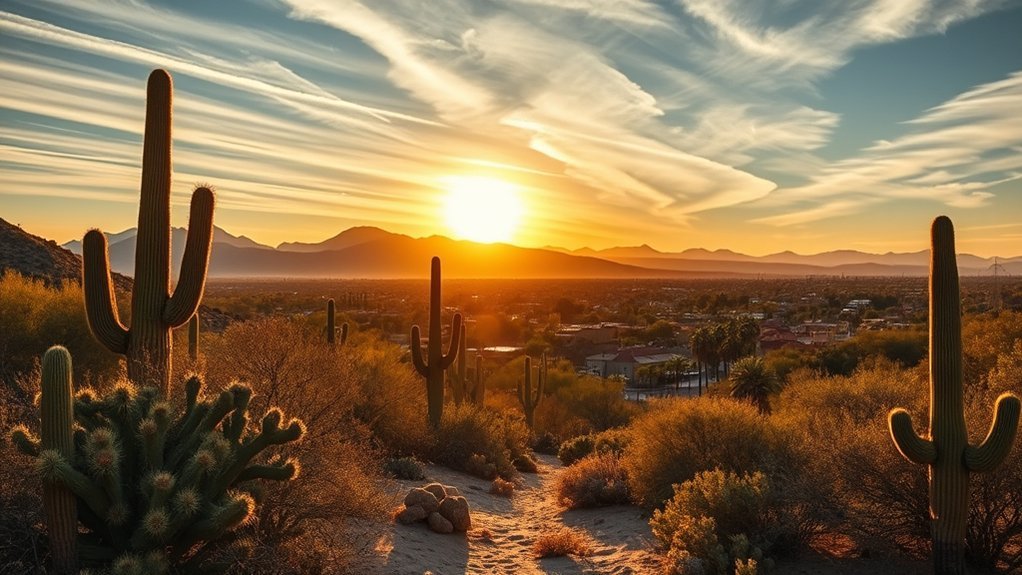
For most visitors who want to hike and sightsee outdoors, late fall through early spring offers the easiest conditions. Winter days can be pleasant while nights may turn cold, so bring layers. Spring can bring desert blooms, although temperatures climb quickly as summer approaches. Fall gradually becomes more comfortable after the intense summer heat.
Summer is a different kind of trip. Daytime temperatures regularly climb above 100°F, and exposed desert trails can become dangerous well before midday. If you visit during the hottest months, make sunrise or early morning your main outdoor window and move museums, meals, swimming, or other indoor activities to the middle of the day.
Southern Arizona’s official summer monsoon period runs from June 15 through September 30 at Saguaro National Park. Thunderstorms can produce lightning, strong winds, sudden heavy rain, and flash flooding. A storm several miles away can send water through a normally dry wash, so never enter a flooded roadway or assume a dry drainage will remain dry.
Warning: Summer desert hiking requires more than carrying a small bottle of water. Saguaro National Park advises drinking roughly one quart of water per hour while hiking on hot, dry summer days, replacing electrolytes, and avoiding the hottest part of the day. Turn around before you have used half of your water supply.
Top Attractions and Must-See Sights
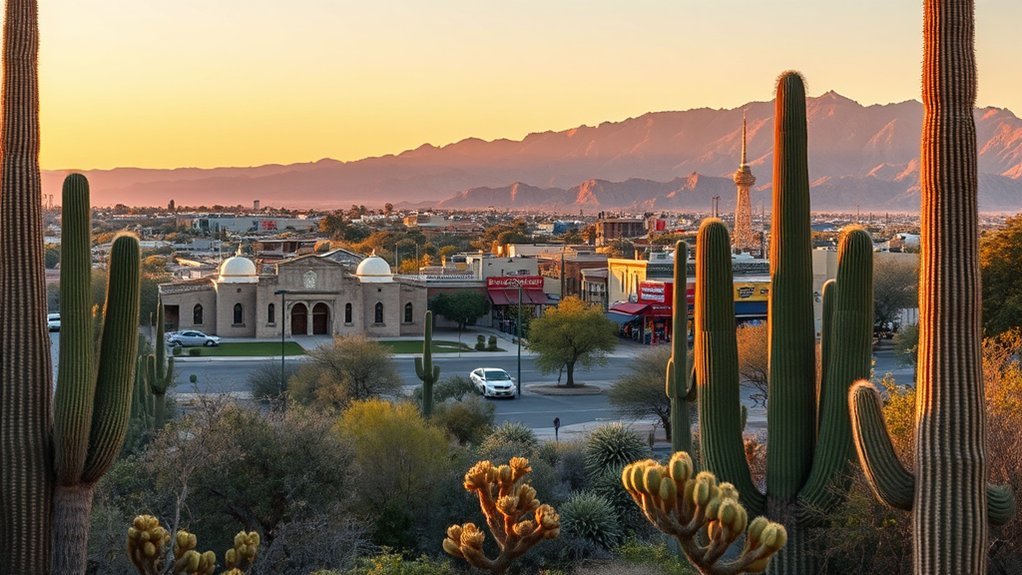
Tucson’s major attractions cover desert ecology, aviation, art, history, architecture, and Indigenous culture. Because they are spread across a wide area, group nearby sights together instead of crossing the city several times in one day.
- Saguaro National Park: Choose the Rincon Mountain District on the east side for its paved scenic loop and broad mountain views, or the Tucson Mountain District on the west side for dense cactus scenery and convenient pairing with the Arizona-Sonora Desert Museum.
- Arizona-Sonora Desert Museum: This west-side attraction combines zoo habitats, botanical displays, natural history, and desert interpretation. Give it several hours rather than treating it as a quick museum stop.
- Mission San Xavier del Bac: Visit this active Catholic mission church on Tohono O’odham Nation land south of Tucson. Dress respectfully, keep voices low, and remember that worship services and community events take priority over sightseeing.
- Pima Air & Space Museum: Aviation fans can spend several hours among historic aircraft and indoor exhibits. Summer operating hours may differ from the cooler season, so check the museum’s current schedule before leaving.
- Tucson Museum of Art and Historic Block: A strong downtown choice for regional, Latin American, contemporary, and historic art combined with historic buildings.
- Gates Pass: This Tucson Mountain Park viewpoint is especially popular late in the day when the low sun lights the desert and surrounding ridges.
Pro Tip: If you want Saguaro National Park West, the Arizona-Sonora Desert Museum, and Gates Pass, group them into the same day. They are all west of central Tucson and fit together far better than repeatedly driving across the metro area.
Outdoor Activities and Hiking Essentials
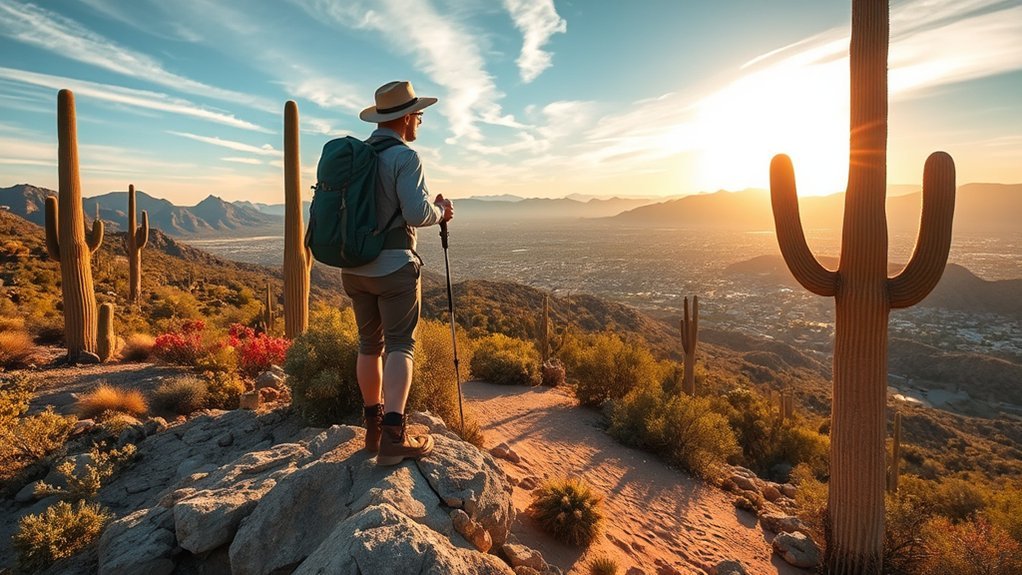
Tucson’s desert is most comfortable around first light and late afternoon, especially outside winter. Start with trails that match your ability instead of choosing by scenery alone. Saguaro National Park has short interpretive walks as well as longer desert and mountain routes, while other Tucson-area parks add foothill and canyon options.
Follow current Saguaro National Park hiking-safety guidance. Carry more water than you expect to need, drink before you feel thirsty, bring salty snacks or another electrolyte source, use sunscreen, wear a hat and sturdy footwear, and carry an accurate map. Tell someone where you are going and when you expect to return.
Wildlife is part of the experience. You may encounter javelinas, coyotes, snakes, birds, and other desert animals. Give wildlife space, never reach blindly into rocky gaps or vegetation, and watch for cactus spines near trail edges. Cholla segments can attach easily to clothing and skin.
After thunderstorms, avoid flowing washes and low drainage areas. Flash floods can arrive quickly even if rain is not falling directly over you. During lightning, leave exposed ridges, hilltops, and open areas and seek safe shelter.
Saguaro National Park East vs. West
Saguaro East, or Rincon Mountain District, has the paved Cactus Forest Loop Drive, short interpretive trails, and access to longer foothill and mountain routes. It works well if you are staying on the east side or want a scenic drive combined with a short hike.
Saguaro West, or Tucson Mountain District, feels more compact and rugged, with dense stands of saguaros and easy access to the Arizona-Sonora Desert Museum and Gates Pass. It is a natural choice for a full west-side sightseeing day.
Where to Eat: Sonoran Cuisine and Local Favorites
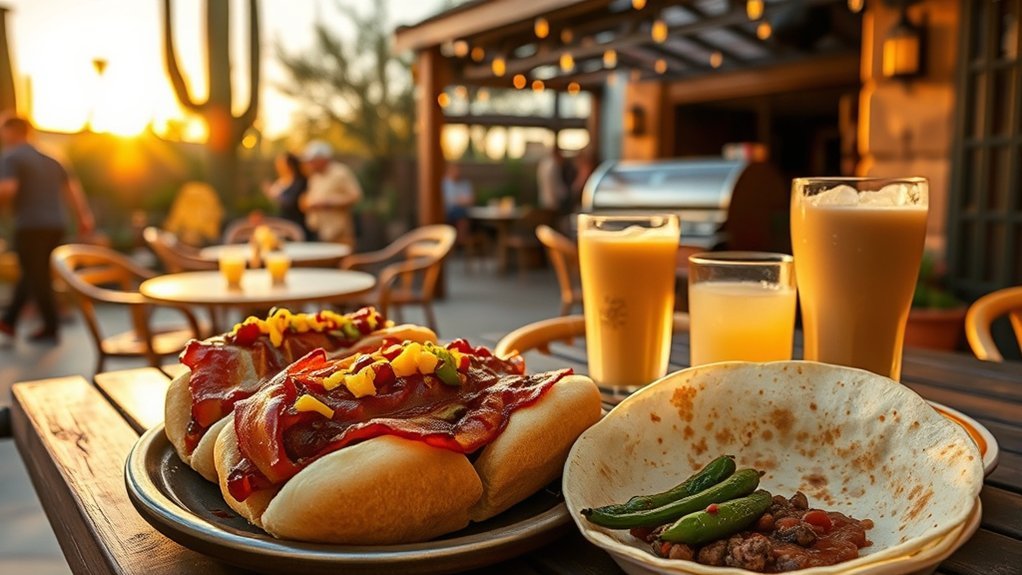
Tucson’s food culture is one of the city’s main attractions. Rather than limiting yourself to one upscale dinner, mix restaurants with bakeries, taco stands, mercados, and farmers markets. Flour tortillas, mesquite-grilled meat, chiles, beans, cactus fruit, corn, and other desert ingredients connect modern menus with a much older regional food tradition.
Street Food Gems
Small taquerias, food trucks, and Sonoran hot dog stands are an easy way to experience Tucson’s borderland food culture. Look for busy local spots serving fresh tortillas, carne asada, tacos, grilled onions, salsas, and Sonoran hot dogs. Evening can be especially lively once the desert heat fades.
A Sonoran hot dog typically combines a bacon-wrapped hot dog with beans, tomato, onion, condiments, and other toppings inside a soft bun. Recipes vary by stand, so trying more than one version can be part of the fun.
Sonoran Staples
Regional menus may feature carne asada, chile rellenos, nopales, menudo, handmade flour tortillas, beans, roasted chiles, and dishes built around local or heritage ingredients. Not every dish is unique to Tucson, but together they reflect the broader Sonoran and Mexican food traditions that shape the city’s identity.
| Dish | What to expect |
|---|---|
| Carne Asada | Grilled beef often paired with tortillas, salsa, beans, or grilled onions |
| Sonoran Hot Dog | Bacon-wrapped hot dog with beans, vegetables, sauces, and a soft bun |
| Chile Relleno | Roasted chile filled with cheese or another savory filling |
| Nopales | Cactus pads with a fresh, slightly tart vegetal flavor |
| Menudo | Traditional rich soup commonly served with garnishes and tortillas |
Markets & Farmers
Farmers markets and public markets are useful for seeing the ingredients behind Tucson’s food culture. Depending on the season, you may find local vegetables, chiles, citrus, honey, baked goods, tortillas, salsas, cheeses, and foods made with regional crops.
Schedules change with the season and summer heat. Check current listings before going rather than relying on an old weekly schedule. Mercado San Agustín and the nearby MSA Annex also host food, shopping, and changing market events, while year-round farmers markets operate at several locations around the Tucson area.
Arts, Museums, and Cultural Experiences
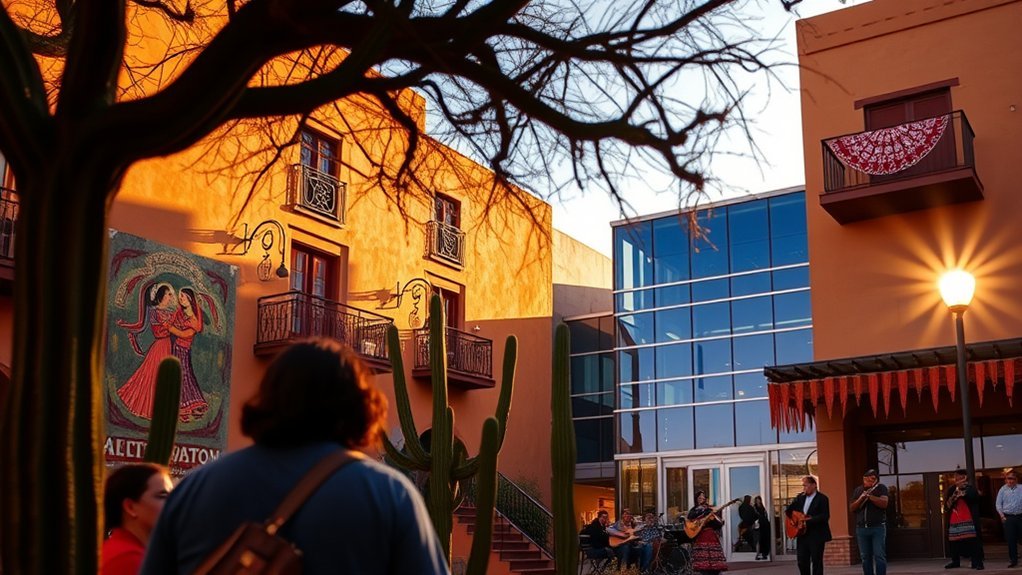
Tucson’s cultural scene extends well beyond Southwestern décor. The Tucson Museum of Art combines changing exhibitions with a historic downtown block, while the University of Arizona’s Center for Creative Photography presents exhibitions drawn from major photographic collections and archives.
Downtown, 4th Avenue, and nearby warehouse areas add murals, independent galleries, studios, live music, and small creative businesses. Because gallery openings and museum evening programs change throughout the year, check current calendars instead of planning around an assumed recurring art walk.
When learning about Indigenous history and culture, remember that Tucson sits within a living cultural landscape rather than a historical theme. The Tohono O’odham Nation and other Indigenous communities remain part of southern Arizona today. Sites such as Mission San Xavier del Bac should therefore be approached as active community and religious places as well as visitor attractions.
Where to Stay in Tucson
Your best base depends on what you want to do. Tucson is spread out, so the cheapest hotel is not always the most convenient choice.
- Downtown: Best for restaurants, nightlife, museums, historic streets, and easy Sun Link access.
- University and 4th Avenue area: Good for a lively atmosphere, cafés, bars, and access to University of Arizona museums.
- Catalina Foothills: Better for resorts, mountain views, quieter evenings, and access toward the Santa Catalina Mountains.
- West Tucson: Convenient if Saguaro National Park West, Gates Pass, and the Arizona-Sonora Desert Museum are major priorities.
- East Tucson: Useful for Saguaro National Park East and travelers who prefer suburban lodging away from downtown nightlife.
If your itinerary includes attractions on both sides of Tucson, staying near central Tucson usually gives you the most balanced driving times.
Sample Itineraries: 24 Hours to a Week
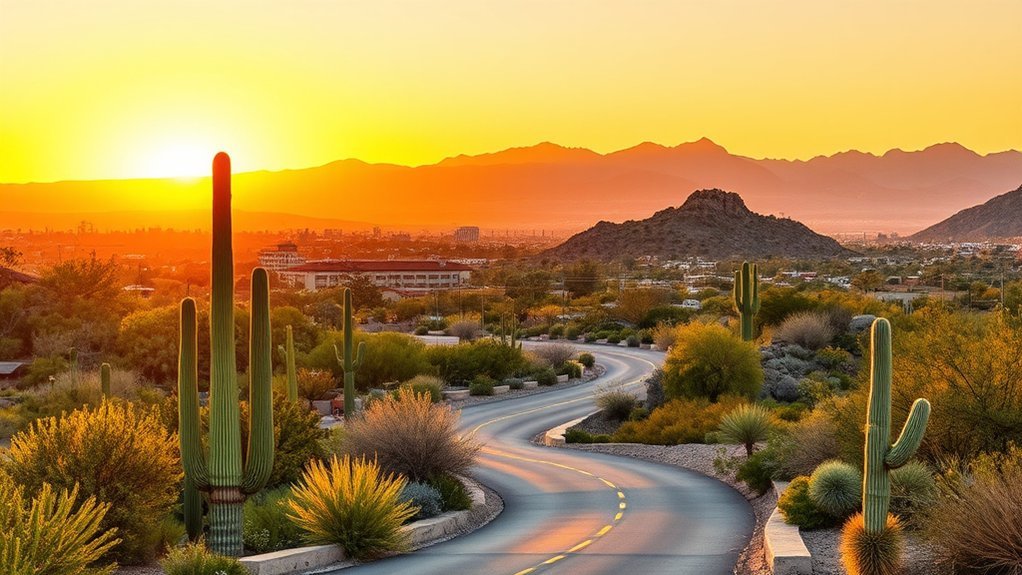
How many days you need depends on whether Tucson is your destination or one stop on a larger Arizona trip. One day can cover a few highlights, three days gives you a balanced first visit, and a week allows room for both sides of Saguaro National Park, museums, mountain scenery, markets, and slower meals.
24-Hour Tucson Highlights
If you only have one day, do not spend all of it downtown. Tucson’s desert landscape is too important to skip.
- Early morning: Visit Saguaro National Park East or West for a scenic drive and short trail while temperatures are comfortable.
- Late morning: Return toward central Tucson for brunch or an early lunch featuring Sonoran or Mexican food.
- Afternoon: Explore the Tucson Museum of Art, Center for Creative Photography, or downtown historic areas.
- Evening: Walk part of downtown or 4th Avenue, then finish with dinner and, if conditions allow, sunset or stargazing.
3-Day Tucson Highlights
| Day | Morning | Afternoon & Evening |
|---|---|---|
| Day 1 | Downtown historic district and Tucson Museum of Art | 4th Avenue or Mercado area, Sonoran dinner, downtown evening |
| Day 2 | Saguaro National Park West | Arizona-Sonora Desert Museum, then Gates Pass near sunset |
| Day 3 | Saguaro National Park East | Mission San Xavier del Bac or Pima Air & Space Museum, followed by a relaxed final dinner |
This sequence reduces unnecessary driving and gives you desert time on both sides of Tucson.
7-Day Immersive Route
- Day 1, Downtown Tucson: Historic streets, Tucson Museum of Art, cafés, murals, and an evening downtown.
- Day 2, Saguaro West: Explore the Tucson Mountain District, Arizona-Sonora Desert Museum, and Gates Pass.
- Day 3, South Tucson: Visit Mission San Xavier del Bac, explore additional cultural stops, and focus on Sonoran food.
- Day 4, Saguaro East: Drive the Rincon Mountain District’s scenic roads and choose a trail suited to your fitness and the weather.
- Day 5, Aviation and University: Visit Pima Air & Space Museum, then spend time around the University of Arizona or Center for Creative Photography.
- Day 6, Mountains and Foothills: Take a scenic mountain outing or explore Tucson’s northern foothills, adjusting plans for weather and seasonal road conditions.
- Day 7, Markets and Slow Tucson: Browse a market if one is operating, revisit a favorite neighborhood, enjoy a long meal, and finish with sunset or a reserved astronomy program.
A week gives you enough flexibility to move outdoor activities when heat, storms, or wind make your original schedule uncomfortable.
Getting Around: Transportation and Parking Tips

A car is the easiest way to see Tucson if your plans include both districts of Saguaro National Park, the Arizona-Sonora Desert Museum, Mission San Xavier del Bac, Pima Air & Space Museum, or mountain areas. Those attractions are too spread out for a compact walking itinerary.
Central Tucson is easier without a car. Sun Tran and Sun Link are currently fare-free, making the bus and streetcar useful for downtown, 4th Avenue, the University area, and parts of the Mercado District. Because fare policy and routes can change, check the transit system before your trip.
Downtown parking includes meters, garages, and surface lots. At popular trailheads and sunset viewpoints, arrive early because parking can fill during comfortable-weather weekends.
Cyclists can also use Tucson’s extensive bike network and the regional Loop system. Desert heat still matters on a bike, so carry water, protect yourself from the sun, and avoid treating summer midday riding like a normal mild-weather commute.
Note: Fare-free transit is a current policy, not a permanent guarantee. Recheck Sun Tran before your visit if transportation cost affects your plans.
Practical Travel Tips and Safety in the Desert
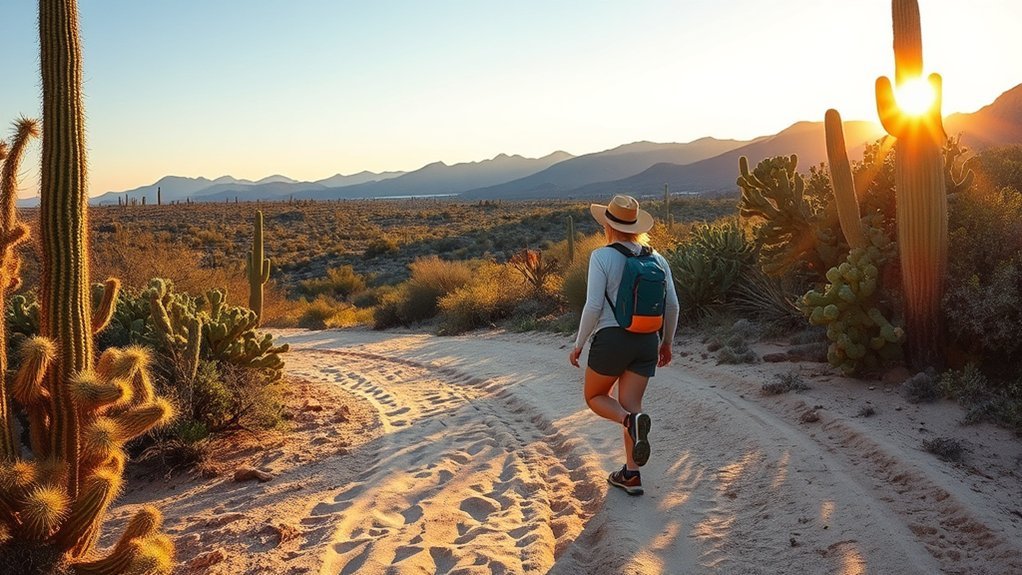
The Sonoran Desert rewards preparation. Heat, strong sun, cactus spines, rocky ground, wildlife, and sudden monsoon storms can turn a simple outing into a problem when visitors underestimate conditions.
- Carry enough water: Summer hikers may need roughly one quart per hour according to current NPS guidance, with additional electrolyte replacement.
- Start early: In hot weather, finish exposed hikes before the most intense part of the day.
- Protect your skin: Use sunscreen, sunglasses, a wide-brimmed hat, and lightweight clothing that covers exposed skin.
- Use sturdy footwear: Desert trails can be rocky, loose, steep, and lined with spiny vegetation.
- Carry navigation: Bring a map even if you use a phone, and consider offline maps where service may be inconsistent.
- Leave your route: Tell someone where you are hiking and when you expect to return.
- Respect wildlife: Never approach or feed wild animals.
- Avoid flooded washes: Do not walk or drive through moving floodwater.
Accessible Desert Experiences
You do not need to hike a rugged backcountry trail to experience Saguaro National Park. The park’s current accessibility information lists paved and mobility-friendly options in both districts. These include the Desert Ecology Trail and Mica View Trail in the east district and the Desert Discovery Trail in the west district, along with accessible visitor-center facilities and designated parking.
Traveling With Pets
Do not assume that dogs are allowed on every desert trail. Saguaro National Park permits pets only in designated locations and on a limited number of routes. Review the current NPS pet rules before arriving.
Hot pavement, cactus spines, snakes, and dehydration create additional risks for pets. In summer, leaving a dog at your accommodation may be safer than trying to build a hiking day around pet access.
Frequently Asked Questions
How many days do you need in Tucson?
Three days is a good minimum for a first visit because it gives you time for downtown, both the west-side desert attractions and Saguaro National Park East. Five to seven days is better if you want museums, mountain scenery, markets, longer hikes, and a slower pace.
Are there guided night-sky or astronomy tours near Tucson?
Yes. Kitt Peak National Observatory offers public programs that may include daytime telescope tours and nighttime observing experiences. Space is limited for some programs, so check dates and reserve ahead rather than driving to the mountain without a plan.
Current public-visit information is available through NSF NOIRLab’s Kitt Peak visitor information.
Can I bring my pet to popular Tucson hiking trails?
Rules depend on the land manager. At Saguaro National Park, dogs are allowed only on certain designated trails, roads, and developed areas rather than on most hiking trails. Keep pets leashed where required and consider heat, cactus, wildlife, and hot pavement before bringing them.
Do I need special vaccinations before visiting Tucson?
Most domestic U.S. travelers do not need a Tucson-specific travel vaccine. Stay current on routine vaccinations appropriate for your age and health, and ask a healthcare professional about personal risks if you have medical conditions or special travel concerns. Heat and sun protection are usually more immediate outdoor considerations for visitors.
Are there wheelchair-friendly routes at major Tucson outdoor sites?
Yes. Saguaro National Park has accessible visitor centers and several paved or mobility-friendly trails, including Desert Ecology Trail, Mica View Trail, and Desert Discovery Trail. Conditions and individual accessibility needs vary, so review the park’s current accessibility details before visiting.
Where can I find Tucson farmers-market and craft-market schedules?
Check current market organizers, Visit Tucson event listings, and the Mercado District calendar shortly before your trip. Market days and hours can change seasonally, especially during Tucson’s hottest months, so an old weekly schedule may no longer be accurate.
Do I need a car in Tucson?
You can explore downtown, 4th Avenue, the University area, and parts of central Tucson using walking, Sun Tran, and Sun Link. A car is much more convenient if your itinerary includes Saguaro National Park, the Arizona-Sonora Desert Museum, Mission San Xavier del Bac, Pima Air & Space Museum, or mountain areas.
Sources
- U.S. National Park Service: Saguaro National Park Hiking Safety — heat, hydration, hiking, wildlife, lightning, and flash-flood guidance.
- U.S. National Park Service: Pets in Saguaro National Park — current pet access and desert pet-safety rules.
- U.S. National Park Service: Saguaro Accessibility — accessible visitor facilities and trails.
- Sun Tran: Fares & Passes — current fare-free Tucson transit policy.
- UNESCO Creative Cities Network: Tucson — Tucson’s gastronomy designation and regional food heritage.
- NSF NOIRLab: Kitt Peak National Observatory Public Visits — public astronomy and observatory-visit information.
Conclusion
Tucson works best when you give its desert, food, history, and neighborhoods time to breathe. Start outdoor days early, explore Saguaro National Park on both sides of the city if your schedule allows, and leave room for museums, markets, Sonoran food, and an unhurried sunset. Three days provides a strong introduction, while five to seven days lets you explore without constantly watching the clock.
Pack sun protection, plenty of water, sturdy footwear, and layers for changing temperatures. Check weather, attraction hours, trail conditions, and current transportation information shortly before each outing. With that preparation, Tucson offers far more than a quick cactus photo stop: it becomes a trip through one of the Southwest’s most distinctive desert landscapes and cultural regions.