Eyüpsultan is one of the most historically layered parts of Istanbul, but many visitors see only the famous Eyüp Sultan Mosque and then leave. Stay a little longer and you can find Ottoman tombs, a centuries-old toy-making quarter, quiet cemetery paths, a Mimar Sinan complex, Armenian churches, contemporary art inside a former imperial factory, and some of the Golden Horn’s best viewpoints.
Quick Answer
Eyüpsultan’s most rewarding lesser-known stops include the historic Toymakers Bazaar, Mihrişah Sultan İmareti, Zal Mahmut Paşa complex, old cemetery paths below Pierre Loti Hill, Artİstanbul Feshane, and historic Armenian churches. Pair them with Eyüp Sultan Mosque, then use the T5 tram to explore the Golden Horn efficiently.
Key Takeaways
- Eyüp Sultan Mosque is the district’s spiritual anchor, but several quieter Ottoman sites lie within walking distance.
- Pierre Loti Hill is famous rather than hidden, yet the cemetery paths and smaller monuments around it reveal a less touristy side of Eyüpsultan.
- Zal Mahmut Paşa, Mihrişah Sultan İmareti, and the historic Toymakers Bazaar are valuable stops for architecture and local history.
- Artİstanbul Feshane gives the district a contemporary cultural dimension inside an important Ottoman industrial building.
- Balat and Fener are in neighboring Fatih, while Miniatürk is in Sütlüce, Beyoğlu, so they should be treated as nearby add-ons rather than Eyüpsultan attractions.
Why Eyüpsultan Is More Than Its Famous Mosque
Eyüpsultan lies on Istanbul’s European side near the upper Golden Horn. The area has roots reaching into the Byzantine period, but it developed into an especially important Ottoman settlement after the conquest of Constantinople. Its identity became closely connected with the tomb of Ebû Eyyûb el-Ensârî, known in Türkiye as Eyüp Sultan, a companion of the Prophet Muhammad.
The district’s historic core grew around the mosque, tomb, charitable institutions, cemeteries, markets, fountains, schools, and other religious and social buildings. The TDV İslâm Ansiklopedisi’s history of Eyüp documents how the area developed into one of Istanbul’s most important religious and funerary landscapes after the Ottoman conquest.
That concentration of monuments is what makes Eyüpsultan rewarding on foot. A few minutes away from the main square, crowded pilgrimage routes give way to old grave markers, stone walls, small courtyards, hillside lanes, and less-visited historic buildings.
Best Hidden Gems in Eyüpsultan
| Place | Why Visit | Best For |
| Historic Toymakers Bazaar | A reminder of Eyüp’s long toy-making and market tradition | Local history, street details |
| Mihrişah Sultan İmareti | Late-Ottoman charitable architecture near the sacred core | Architecture, history |
| Zal Mahmut Paşa Complex | A striking Mimar Sinan complex with mosque, medrese spaces, and historic courtyards | Ottoman architecture, art |
| Eyüp Cemetery Paths | Historic tombstones, cypress-lined slopes, and a quieter route toward Pierre Loti | Walking, history, photography |
| Artİstanbul Feshane | Contemporary exhibitions inside a restored Ottoman industrial site | Art, industrial heritage |
| Historic Armenian Churches | A less-seen part of the district’s multi-layered religious history | Religious heritage, architecture |
Historic Toymakers Bazaar
Eyüp was once particularly well known for traditional toys. The municipality identifies the Tarihi Oyuncakçılar Çarşısı, or Historic Toymakers Bazaar, with shops associated with the Sokullu Mehmed Paşa complex. Even when the old craft is less visible than it once was, the area remains worth seeking out because it connects today’s streets with an important part of local commercial history.
Mihrişah Sultan İmareti and Hazire
Near the main religious complex, the Mihrişah Sultan İmareti offers a quieter look at Ottoman charitable architecture. An imaret traditionally provided food and other forms of support as part of a larger charitable foundation. The surrounding funerary spaces, inscriptions, stonework, and nearby historic buildings reward visitors who slow down instead of moving directly from the mosque to the cable car.
Zal Mahmut Paşa Mosque and Complex
Zal Mahmut Paşa is one of the strongest alternatives to the district’s better-known mosque. The complex is associated with Mimar Sinan and combines a mosque, medrese spaces, courtyard levels, a tomb, and other architectural elements. The municipality also lists the complex among Eyüpsultan’s important historic and cultural places.
For a broader official inventory of landmarks including Feshane, Mihrişah Sultan İmareti, Pierre Loti Café, Armenian churches, and the Historic Toymakers Bazaar, see the Eyüpsultan Municipality historical-sites directory.
Uncovering Eyüpsultan’s Cultural Heritage
Eyüpsultan’s cultural importance comes from layers rather than one single period. Byzantine religious sites once occupied parts of the area. After 1453, the Ottoman settlement expanded around the Eyüp Sultan complex and became associated with pilgrimage, royal ceremonies, charitable foundations, cemeteries, craft traditions, and waterfront life.
You can still read those layers in the neighborhood itself. Ottoman fountains appear along ordinary streets. Monumental tombs stand beside modest graves. Mosque complexes sit near workshops, shops, homes, and later industrial buildings. This makes Eyüpsultan feel less like an isolated museum district and more like a historic urban environment that is still used every day.
Traditional arts also have a real local presence when described through specific venues. Calligraphy, marbling, miniature painting, ceramics, and music have all been taught or presented in cultural spaces around the Zal Mahmut Paşa complex. That is stronger evidence of artistic life than simply claiming that unnamed galleries and workshops fill the district.
Delving Into the Food and Everyday Flavors of Eyüpsultan
Food is part of the experience, but it helps to separate genuine local atmosphere from dishes that are common across Istanbul. Around Eyüp’s central streets you can stop for Turkish tea, simit, pastries, grilled dishes, soups, kebabs, and traditional desserts. Kuzu tandır, slowly cooked lamb, may appear at Turkish restaurants, but it should not be presented as something unique to Eyüpsultan.
Simit is an easy snack for a walking day, especially with tea. Balık ekmek, or fish in bread, is more strongly associated with Istanbul’s waterfront culture in general than with Eyüpsultan alone, although fish restaurants and casual food stops can be found around the Golden Horn.
Pro Tip: Rather than choosing a restaurant only because it faces a tourist landmark, walk a few streets away from the main mosque square and look for busy neighborhood bakeries, lokantas, and tea shops used by local residents.
Discovering the Natural Beauty of Eyüpsultan
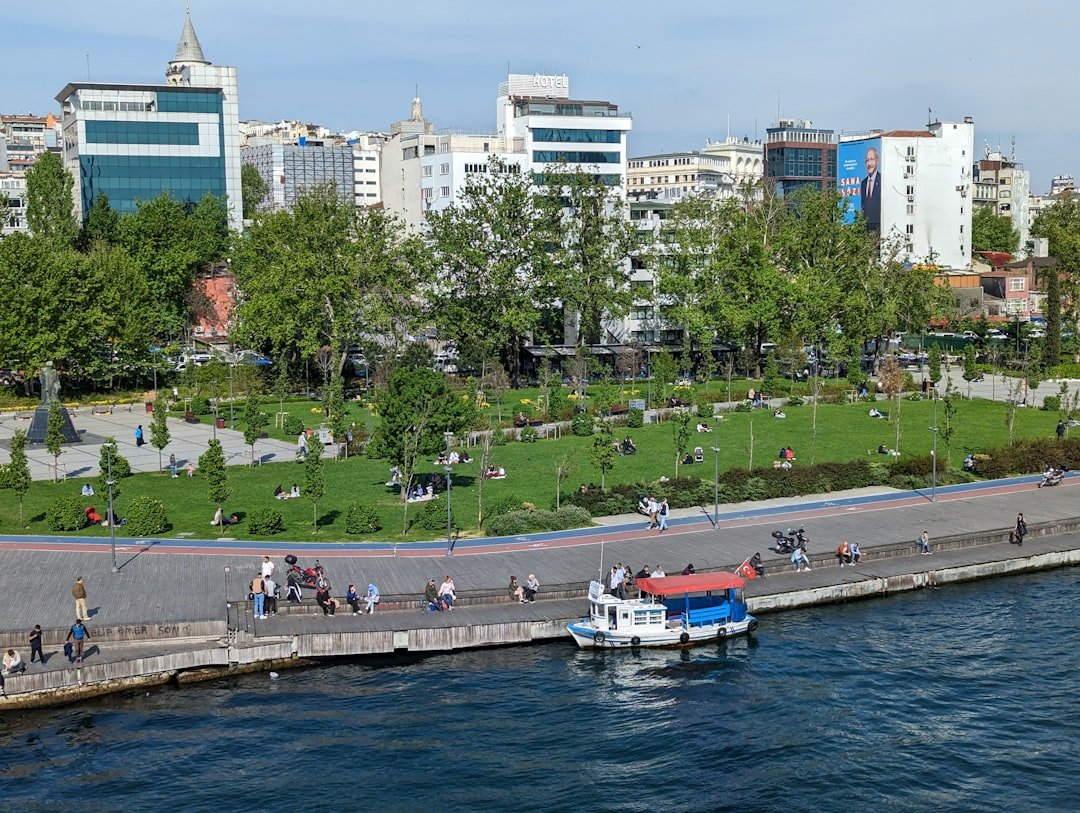
Eyüpsultan’s best-known natural feature is its relationship with the Golden Horn. The waterfront provides long views across the water, while the hills rising behind the historic center create elevated viewpoints and shaded cemetery paths.
Pierre Loti Hill remains the most famous viewpoint. The attraction is not only the panorama at the top; the approach through the historic cemetery gives the journey a different character. Old gravestones, cypress trees, changing elevations, and glimpses of the Golden Horn turn the slope itself into part of the experience.
Visitors who prefer not to climb can use the cable-car connection. The hill can become busy, particularly at popular sightseeing times, so early morning or later afternoon often provides a calmer experience.
The best part of Pierre Loti is not simply reaching the terrace. The combination of hillside cemetery, historic Eyüp below, and the Golden Horn stretching toward central Istanbul gives the viewpoint its context.
Exploring the Religious Sites of Eyüpsultan
The Eyüp Sultan Mosque and tomb form the spiritual center of the neighborhood. Ebû Eyyûb el-Ensârî was a companion of the Prophet Muhammad and is traditionally associated with the early Muslim campaigns against Constantinople. After the Ottoman conquest, the area around his grave became one of Istanbul’s most important places of visitation.
The mosque’s construction history needs an important distinction. The first mosque was built in 1458–59. After severe damage, particularly from the 1766 earthquake, the old building was ultimately demolished and rebuilt. The replacement was completed in 1800. This is why both 15th-century origins and late-18th-century rebuilding appear in historical descriptions.
Beyond the main mosque, Eyüpsultan contains numerous tombs, hazires, smaller mosques, fountains, and religious complexes. Zal Mahmut Paşa is especially worthwhile for visitors interested in Ottoman architecture, while the hillside cemetery itself preserves an unusually dense record of religious, political, and social history.
The district’s religious history is not exclusively Muslim. Eyüpsultan Municipality also documents historic Armenian Apostolic churches including Surp Asdvandzadzin and Surp Yeghia, reminders of communities that formed part of the area’s urban history.
Respectful Visit: Eyüp Sultan Mosque is an active place of worship and pilgrimage, not simply a tourist attraction. Dress modestly, keep voices low, avoid obstructing worshippers, follow local instructions about shoes and prayer areas, and expect heavier crowds around Friday prayers, Ramadan, religious holidays, and other important occasions.
Unearthing the Artistic Treasures of Eyüpsultan

Eyüpsultan’s art scene is easier to appreciate when traditional craft and contemporary culture are considered together. Historic calligraphy, manuscript arts, ceramic decoration, architectural ornament, and Ottoman gravestone carving are visible throughout the district, while restored buildings now support exhibitions and cultural programs.
Artİstanbul Feshane
One of the most important contemporary additions is Artİstanbul Feshane on the Golden Horn. Feshane began as an Ottoman state manufacturing operation connected with fez and textile production and evolved into a major industrial site. After restoration by Istanbul Metropolitan Municipality, it reopened in 2023 as a public culture and arts venue.
The official Artİstanbul Feshane page lists exhibitions, cultural spaces, and the Naile Akıncı Library. As of September 2026, its published visitor information lists Tuesday through Sunday opening, Monday closure, and free admission; verify the official page before visiting because exhibition schedules and operating details can change.
Experiencing Local Traditions and Events
Eyüpsultan’s public life changes noticeably during Ramadan, religious holidays, national celebrations, school holidays, and municipal cultural programs. The mosque square can become especially active in the evenings during Ramadan, when families gather after fasting and businesses stay busy later into the night.
It is better not to plan a trip around a supposed fixed “Eyüpsultan Tulip Festival” or a generic annual “Culture and Art Festival,” because those specific recurring claims are not reliably supported. Municipal programming changes from year to year and can include concerts, workshops, exhibitions, children’s festivals, neighborhood events, and seasonal programs.
Note: If an event is an important part of your visit, confirm the current date and venue shortly before traveling. Festival names, schedules, and locations can change from one year to the next.
Meeting Locals and Experiencing Everyday Eyüpsultan
The best way to understand Eyüpsultan’s community life is not to treat every street as a tourist attraction. Spend time in the square, stop for tea, browse local shops, walk the side streets, and observe how religious, commercial, and residential life overlap.
Public squares, markets, cafés, waterfront paths, libraries, and cultural spaces provide natural opportunities to experience the district without forcing interaction. A respectful visitor can learn far more from watching the rhythm of an ordinary neighborhood than from searching for a staged idea of “authentic” local life.
Traditional skills are also part of this story. Eyüp’s historical association with toy making, Ottoman calligraphy, decorative arts, manuscript culture, and craft education gives visitors concrete subjects to look for rather than relying on vague claims about artisans working on every street.
How to Get to Eyüpsultan and Plan Your Visit
For most visitors staying around central Istanbul, the T5 Eminönü–Alibeyköy tram is one of the easiest ways to reach the Golden Horn side of Eyüpsultan. The line includes both Feshane and Eyüpsultan Teleferik stations. At Eyüpsultan Teleferik, passengers can connect with the TF2 cable car toward Pierre Loti.
The official Metro Istanbul T5 page should be checked for current operating information before travel.
A Simple Half-Day Route
- Start at Eyüp Sultan Mosque and the tomb complex.
- Explore the nearby historic streets, tombs, fountains, and Mihrişah Sultan buildings.
- Look for the Historic Toymakers Bazaar and quieter lanes around the central quarter.
- Visit Zal Mahmut Paşa Mosque and its courtyards.
- Take the cable car toward Pierre Loti, or walk through the cemetery if you are comfortable with hills and uneven surfaces.
- Enjoy the Golden Horn panorama at the top.
- Return toward the waterfront and continue to Artİstanbul Feshane if time allows.
Allow roughly half a day for this core route if you want time to enter sites, stop for tea, photograph the cemetery, and visit Feshane. A faster visit can be done in a few hours, while adding museums, exhibitions, or a long meal can turn it into most of a day.
What Is Nearby but Not Actually in Eyüpsultan?
Golden Horn itineraries often blur district boundaries. That is convenient for sightseeing but can produce inaccurate travel articles.
Balat and Fener are in Fatih District, not Eyüpsultan. UNESCO documentation on the rehabilitation of Istanbul’s historic neighborhoods specifically identifies Balat and Fener as areas of Fatih. They are easy to combine with Eyüpsultan because the T5 tram follows the Golden Horn through all of these areas, but they should not be labeled Eyüpsultan neighborhoods. See the UNESCO World Heritage Centre’s documentation on Fatih, Balat, and Fener.
Miniatürk is also nearby rather than inside Eyüpsultan. Its official address places it in Sütlüce, Beyoğlu. If you want to add it to the same Golden Horn day, check the official Miniatürk visitor information, but treat it as a separate district stop.
Frequently Asked Questions
What are some hidden gems in Eyüpsultan?
Good lesser-known stops include the Historic Toymakers Bazaar, Mihrişah Sultan İmareti, Zal Mahmut Paşa Mosque and complex, quieter sections of the Eyüp Cemetery, Artİstanbul Feshane, and historic Armenian churches. Eyüp Sultan Mosque and Pierre Loti Hill are famous rather than hidden, but they make useful anchors for exploring these places.
What is Pierre Loti Hill?
Pierre Loti Hill is a historic viewpoint above the Golden Horn named after the French writer Pierre Loti, who spent time in the area. Visitors come for the panorama and historic café and can reach the hill by cable car or by walking uphill through the cemetery area.
What is the Eyüp Sultan Mosque?
Eyüp Sultan Mosque is one of Istanbul’s most important Islamic visitation sites. The complex developed around the tomb associated with Ebû Eyyûb el-Ensârî, a companion of the Prophet Muhammad. The first mosque dates to 1458–59; after major damage, the mosque was rebuilt at the end of the 18th century and completed in 1800.
Are Balat and Fener in Eyüpsultan?
No. Balat and Fener are in neighboring Fatih District. They are easy to combine with Eyüpsultan on a Golden Horn itinerary, particularly because the T5 tram serves Fener, Balat, and Eyüpsultan, but they are separate neighborhoods outside Eyüpsultan.
How much time should I spend in Eyüpsultan?
Plan about half a day for the mosque and tomb, nearby Ottoman monuments, the cemetery, Pierre Loti Hill, and a food or tea stop. Add more time if you want to visit Artİstanbul Feshane, explore side streets slowly, or combine Eyüpsultan with other Golden Horn neighborhoods.
What is the easiest public transport to Eyüpsultan?
The T5 Eminönü–Alibeyköy tram is convenient for many visitors. It stops at Feshane and Eyüpsultan Teleferik, where you can transfer toward Pierre Loti. Check Metro Istanbul before traveling for current service information.
Sources
- TDV İslâm Ansiklopedisi — Eyüp — district history, Ottoman development, Eyüp Sultan complex, cemetery, and Pierre Loti context.
- Eyüpsultan Municipality — Historical Sites and Structures — documented local monuments including Feshane, Mihrişah Sultan İmareti, Armenian churches, Pierre Loti, and the Toymakers Bazaar.
- Metro Istanbul — T5 Eminönü–Alibeyköy Tram — current route, stations, and Eyüpsultan transport connections.
- Istanbul Metropolitan Municipality — Artİstanbul Feshane — Feshane history, restoration, exhibitions, and visitor information.
- UNESCO World Heritage Centre — Historic Areas of Istanbul — confirms Balat and Fener as parts of Fatih District.
- Miniatürk Official Site — confirms its Sütlüce, Beyoğlu address.