Disclosure: As an Amazon Associate, we earn from qualifying purchases. If you click a link on this page and make a purchase, we may receive a small commission at no extra cost to you.
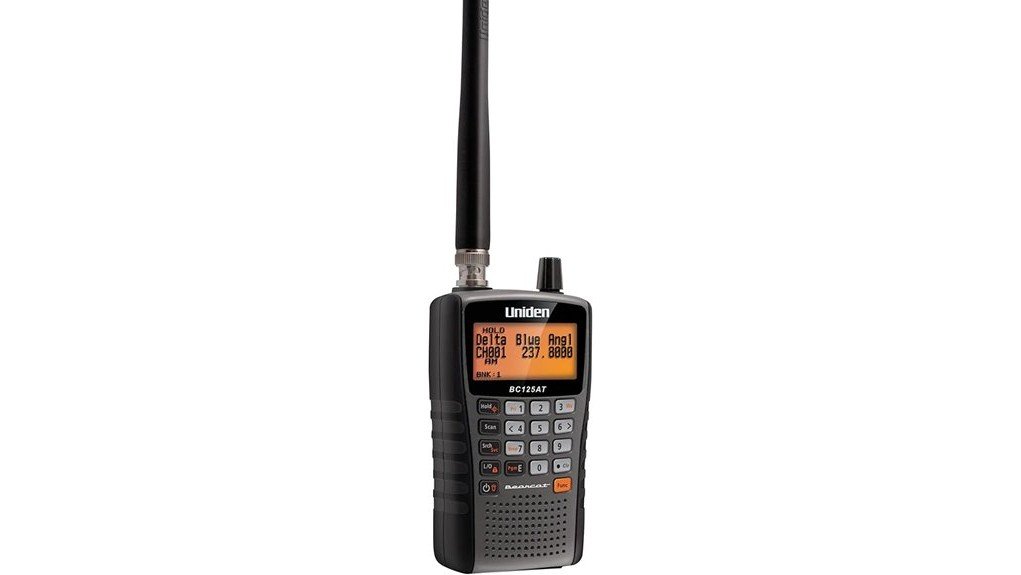
A handheld scanner is useful only when it can receive the radio systems you care about. The Uniden Bearcat BC125AT Scanner gives you 500 alpha-tagged channels, 10 storage banks, Close Call RF capture, service searches, and civilian and military air-band coverage in a compact analog receiver. It is a practical choice for aviation, rail, marine, racing, amateur radio, weather, and local conventional analog traffic. This review explains its verified features, setup needs, real-world strengths, and its major limitation: it cannot follow trunked systems or decode digital formats such as Project 25, DMR, or NXDN.
Quick Verdict
Rating: 8/10, recommended with caveats
Best For: Listeners who want a portable analog scanner for aviation, weather, rail, marine, racing, amateur radio, and conventional local channels.
Bottom Line: The BC125AT combines useful channel labeling, flexible search tools, and strong analog frequency coverage in a small handheld unit. Its value drops sharply when your target agencies use trunking, digital voice, or encryption.
Before You Buy: Confirm the exact radio system used in your area. The BC125AT receives conventional analog channels, but it does not track trunked systems, decode Project 25, DMR, or NXDN, or make encrypted traffic listenable.
Key Takeaways
- You can store 500 frequencies in 10 banks and label each channel with up to 16 characters.
- The scanner covers 25-54, 108-174, 225-380, and 400-512 MHz using AM or narrow FM where supported.
- Close Call RF Capture, service searches, custom searches, weather functions, and PC programming add useful control.
- This receive-only scanner cannot track trunked systems or decode Project 25, DMR, NXDN, or encrypted traffic.
Key Specifications
| Specification | Detail |
|---|---|
| Brand | Uniden |
| Model | Bearcat BC125AT |
| Product type | Handheld conventional analog radio scanner |
| Channel capacity | 500 channels, 50 channels in each of 10 banks |
| Channel labels | Alpha tags up to 16 characters |
| Frequency coverage | 25-54, 108-174, 225-380, and 400-512 MHz |
| Reception modes | AM and narrow FM, depending on band |
| Search features | 10 service searches, 10 custom search ranges, Quick Search, Turbo Search, and Close Call RF Capture |
| Tone support | CTCSS and DCS search and squelch modes |
| Display | 64 x 128 full dot-matrix LCD with orange backlight |
| Dimensions | 2.6 in wide x 1.3 in deep x 4.5 in high |
| Weight | 6.2 oz without antenna and batteries |
| Power | Two AA rechargeable Ni-MH batteries, two AA alkaline batteries, or supplied USB cable |
| Included items | Scanner with belt clip, flexible BNC antenna, rechargeable 2300mAh Ni-MH batteries, USB cable, and wrist strap |
| Weather functions | NOAA weather search, Weather Alert Standby, and Weather Alert Priority |
| Water resistance | Not waterproof |
| Warranty | One-year limited warranty for the original retail owner, subject to Uniden’s terms |
| Main limitation | No trunk tracking and no Project 25, DMR, or NXDN digital decoding |
What Is the Uniden Bearcat BC125AT Scanner?
The Uniden Bearcat BC125AT is a portable receiver that scans conventional radio frequencies and stops when it finds an active transmission. You can program frequencies manually or through Uniden’s Windows software, then organize them in 10 storage banks.
Its main selling point is control without the cost or complexity of a digital trunking model. You get named channels, preset service searches, Close Call detection, weather functions, CTCSS/DCS support, priority scanning, and several search modes. That feature set suits hobbyists who know that the traffic they want remains analog and conventional.
The scanner cannot transmit. It also cannot turn encrypted, digital, or trunked traffic into audio, so local compatibility matters more than the size of its frequency list.
Who Should Buy It?
Best For
- You monitor conventional analog aviation, rail, marine, racing, amateur radio, weather, or local public safety frequencies.
- You want 500 named channels and separate banks instead of an unlabeled list of frequency numbers.
- You need a compact receiver that runs on replaceable AA batteries and can travel to events.
Skip If
- Your target system is trunked, Project 25, DMR, NXDN, or encrypted.
- You need location-based database scanning or automatic programming by ZIP code.
- You need two-way communication, weather resistance, or a scanner that requires little frequency research.
Key Features of the Uniden Bearcat BC125AT Scanner
500 Channels and Clear Alpha Tags
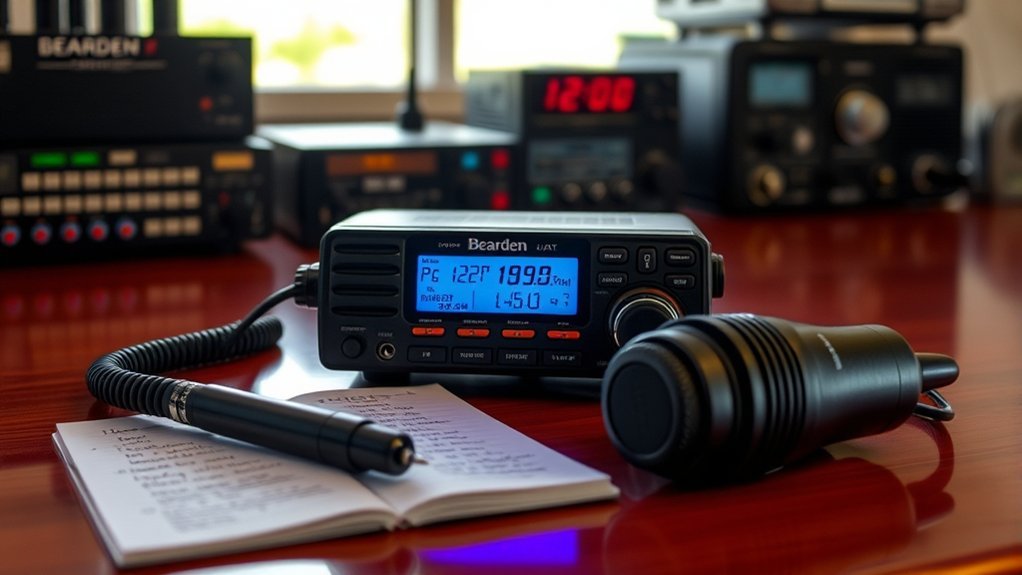
The BC125AT stores 500 frequencies across 10 banks, with 50 channels in each bank. Each channel can have a text tag up to 16 characters, so the display can show a useful label such as an airport, railroad, department, or event name instead of only a frequency.
Enable only the banks you need to reduce unwanted traffic and speed up scanning.
Close Call RF Capture
Close Call RF Capture looks for strong nearby transmitters and can help you find local activity when you do not know the frequency. Close Call Do-Not-Disturb checks between received transmissions, which helps prevent a Close Call check from cutting into audio you are already hearing.
It stores the last 10 Close Call hits temporarily, but it works best with strong nearby transmitters and cannot bypass unsupported formats.
Service Search, Custom Search, and Tone Control
Ten preset service searches cover Police, Fire/Emergency, Ham, Marine, Railroad, Civil Air, Military Air, CB, FRS/GMRS/MURS, and Racing. These presets help you explore supported bands, but they do not preload every local agency or guarantee that a nearby service still uses analog radio.
You can also set 10 custom search ranges, use Quick or Turbo Search, and identify or filter CTCSS and DCS tones.
Display, Controls, and Channel Management
The 64 x 128 dot-matrix LCD uses an orange backlight for low-light viewing. You can adjust backlight behavior, contrast, squelch, delay, priority channels, and temporary or permanent lockouts from the scanner’s controls.
The menus require some learning, so PC programming is often faster for large channel lists.
Portable Power and Included Accessories
The scanner measures 2.6 x 1.3 x 4.5 inches and weighs 6.2 ounces before you add the antenna and batteries. It includes two rechargeable 2300mAh Ni-MH AA batteries, a flexible BNC antenna, a USB cable, a wrist strap, and an attached belt clip.
You can use alkaline AAs, but the selector must match the battery type. In-scanner charging is for Ni-MH cells only and works while the unit is off.
Frequency Ranges: What You Can Listen To
The BC125AT covers four separate frequency blocks. The type of traffic you hear depends on the band plan, modulation, local radio use, antenna, terrain, distance, and whether the transmission is analog and conventional.
| Frequency Range | Default Mode | Common Supported Uses |
|---|---|---|
| 25.000-27.995 MHz | AM | CB, business, broadcast pickup, and related low-band activity |
| 28.000-54.000 MHz | NFM | 10-meter and 6-meter amateur radio plus VHF low band |
| 108.000-136.9916 MHz | AM | Civil aircraft communications |
| 137.000-174.000 MHz | NFM | VHF high band, 2-meter amateur radio, federal, military land mobile, marine, railroad, weather, and conventional local services where assigned |
| 225.000-380.000 MHz | AM | Military aircraft band |
| 400.000-512.000 MHz | NFM | Federal land mobile, 70-centimeter amateur radio, UHF business, and conventional public safety where used |
The scanner provides access to more than 40,000 possible frequencies across its coverage, but that does not mean every frequency is active near you. Start with a reliable local frequency list, then use service search and Close Call to explore nearby analog traffic.
Setting Up and Using Your Scanner
Start by attaching the supplied BNC antenna and installing either the included Ni-MH cells or two alkaline AA batteries. Set the battery selector to the correct type before connecting USB power. Never try to charge alkaline or other non-rechargeable batteries.
Enter a small group of known frequencies, add short alpha tags, group related channels by bank, and adjust squelch to stop open static without hiding weaker signals. Uniden’s Windows software is faster for large programming jobs.
Setup Tips Before First Use
- Check whether each target channel is conventional analog before you spend time programming it.
- Use short, distinct tags that fit the 16-character limit and remain easy to identify at a glance.
- Disable banks you do not need and use lockouts to skip unwanted channels.
- Test the supplied antenna and different listening positions before buying an upgrade.
Pro Tip: Build and test one bank at a time. A bank with 10 accurate, well-labeled local frequencies is more useful than 50 outdated entries that slow scanning and create silence.
How It Performs in Real Use
For Civil and Military Aviation
Civil air coverage from 108 to about 137 MHz and military air coverage from 225 to 380 MHz make it useful near airports and airshows. Alpha tags help separate tower, approach, ground, and event channels.
For Rail, Marine, Racing, and Events
Service searches and Close Call help at racetracks, rail locations, marinas, and events. Programmed frequencies remain more dependable for regular listening.
For Weather and Local Awareness
The weather functions can search NOAA broadcasts and monitor for alert tones. This makes the scanner useful as an added source of local information, but it should not replace official emergency alerts, a weather radio designed for unattended alerting, or instructions from local authorities.
For Home and Portable Listening
The compact body and AA power suit travel or desk use. Reception still changes with distance, terrain, interference, building materials, and antenna position.
Limitations of the Uniden Bearcat BC125AT Scanner
The main limitation is not channel capacity. It is radio-system compatibility. The BC125AT scans conventional analog frequencies, but it cannot follow control-channel instructions on a trunked network and cannot decode Project 25, DMR, or NXDN digital audio.
Buy the BC125AT for known conventional analog activity, not as a general promise that you will hear every police, fire, or emergency service in your area.
- No digital decoding or trunk tracking: Project 25, DMR, NXDN, and trunked systems remain unsupported.
- Manual research is required: Preset service bands do not create a current local channel database.
- Not waterproof: Keep the scanner away from rain and moisture.
- Charging has conditions: Charge only Ni-MH batteries, with the scanner turned off.
Compatibility and Safety Notes
The BC125AT is a receive-only scanner. Follow the laws that apply to scanner ownership, mobile use, restricted communications, and use near an incident. Do not try to modify the scanner to receive blocked, private, scrambled, or encrypted communications.
Use a comfortable volume before connecting an earphone or headset. Uniden states that the phone jack is monaural and warns that a sudden high volume level may harm your hearing. Keep the scanner dry because it is not waterproof.
When charging batteries inside the scanner, install only rechargeable Ni-MH cells, set the battery switch to Ni-MH, and turn the scanner off. The manual warns not to charge in temperatures below 40°F or above 113°F.
Pros and Cons
Pros
- 500 channels with 16-character labels provide useful organization.
- Close Call, custom search, service search, tone control, and lockouts give you flexible ways to find and manage analog traffic.
- Civil and military aviation coverage is useful for airport and airshow listening.
- Replaceable AA power, a compact body, belt clip, and wrist strap support portable use.
- The included USB cable and Windows software make large programming jobs easier.
Cons
- Cannot track trunked systems or decode Project 25, DMR, or NXDN.
- Needs local frequency research, programming, and some menu learning.
- Not waterproof, and in-scanner charging works only with Ni-MH batteries while the unit is off.
Is It Worth the Price?
The BC125AT sits above the most basic analog handheld scanners because it adds alpha tagging, broad air-band coverage, stronger search tools, and PC programming. It offers strong value for the price when those features match active analog services in your area.
You get the most value if you monitor aviation, rail, racing, marine, amateur radio, weather, or known conventional public safety channels. It is not a smart buy when your main target uses trunking or digital voice, because a longer frequency list cannot overcome that compatibility gap.
A digital trunking scanner costs more, but paying more is justified when the system you need requires it. Check compatibility first, then judge the BC125AT on the analog uses it is designed to handle.
How It Compares to Alternatives
The Uniden SR30C is a simpler 500-channel analog handheld with Close Call and service searches. The BC125AT makes more sense when you value alpha-tagged channel names and a more feature-rich analog setup.
The Uniden BCD325P2 is a major step up for unencrypted Project 25 and supported trunked systems, with far more dynamic channel capacity. Choose the BC125AT for lower-cost conventional analog listening, and compare a digital trunking model when your local system requires one.
Frequently Asked Questions
Can I use rechargeable batteries with the Uniden BC125AT?
Yes. It includes rechargeable 2300mAh Ni-MH AAs and charges compatible Ni-MH cells through USB while off. Set the selector to Ni-MH and never charge non-rechargeable batteries.
Can the BC125AT receive digital or trunked police systems?
No. It does not decode Project 25, DMR, or NXDN, and it does not track trunked radio systems. It can receive a police or fire channel only when that channel is conventional analog and within its supported frequency coverage.
Does the BC125AT come preprogrammed with local frequencies?
It includes preset service searches, not a current location-based database. You must still find and program the conventional analog frequencies used nearby.
Where can I get programming software for the scanner?
Uniden provides BC125AT SS software on its support site. Current downloads are intended for Windows, with limited Mac support.
What antenna is included, and can I replace it?
It includes a flexible BNC antenna. A compatible external or band-focused antenna may help, depending on your frequencies and location.
How do I reset the Uniden BC125AT?
Turn the scanner off, then hold the 2, 9, and Hold keys while turning it on. The reset clears your programmed channels and settings, so save your programming first when possible.
Can the BC125AT transmit or work as a two-way radio?
No. The BC125AT is a receive-only scanner. It can monitor supported transmissions but cannot transmit, reply, or replace a two-way radio.
Who should skip the Uniden Bearcat BC125AT?
Skip it for trunked, digital, or encrypted systems, or when you need automatic database programming, weather resistance, or two-way communication.
The Bottom Line
The Uniden Bearcat BC125AT earns an 8/10 and a recommendation with caveats for listeners who want a compact, well-organized analog scanner for aviation, rail, marine, racing, amateur radio, weather, and conventional local channels. Its 500 alpha-tagged channels, search tools, and Close Call feature are useful strengths, but buyers who need digital decoding or trunk tracking should choose a compatible digital scanner instead.