Disclosure: As an Amazon Associate, we earn from qualifying purchases. If you click a link on this page and make a purchase, we may receive a small commission at no extra cost to you.
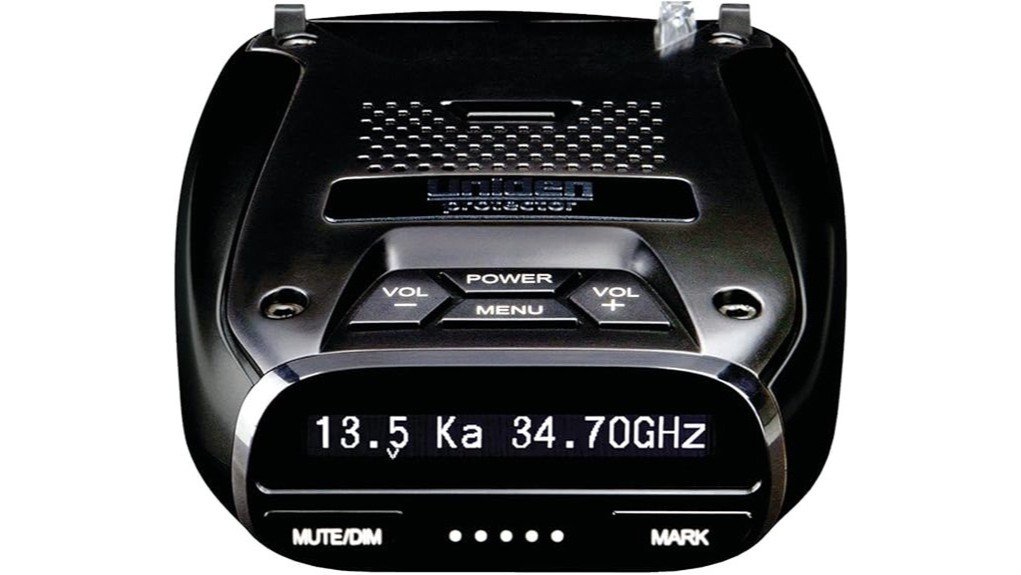
A radar detector can become more distracting than helpful when it reacts to every automatic door, traffic sensor, and nearby vehicle. The Uniden DFR7 radar detector tackles that problem with built-in GPS mute memory, adjustable filtering, voice alerts, and a detailed OLED display. This review explains its verified specifications, daily-use strengths, setup needs, and important limits. The DFR7 remains a practical choice for drivers who want useful GPS features without depending on a phone, but it lacks the directional arrows and connected tools found on newer premium models.
Quick Verdict
Rating: 8.3/10, Recommended with caveats
Best For: Daily commuters and road-trip drivers who want GPS-based false-alert control, voice warnings, and long-range X, K, Ka, and laser detection.
Bottom Line: The Uniden DFR7 offers a strong mix of GPS mute memory, camera-location alerts, readable signal details, and simple windshield mounting. Its main tradeoffs are the lack of directional arrows or phone-based connected alerts, plus the need for careful setup and periodic GPS database updates.
Key Takeaways
- The DFR7 detects X, K, and Ka radar bands plus laser signals, with long-range sensitivity designed for earlier warnings when road conditions allow.
- Built-in GPS lets you save alert locations and mute repeated fixed false alerts on familiar routes.
- The OLED display can show radar frequency, numeric signal strength, maximum-speed warning information, and vehicle battery voltage.
- The package includes the detector, a 12V DC RJ11 power cord, a premium suction cup mount, and a double-cup windshield mount.
- The DFR7 is still supported with GPS database downloads, but it does not offer the directional arrows or modern app-centered experience of higher-end alternatives.
| Specification | Detail |
|---|---|
| Brand | Uniden |
| Model | DFR7 |
| Product Type | Windshield-mounted radar and laser detector |
| Radar Bands | X: 10.525 GHz; K: 24.150 GHz; Ka: 33.400 to 35.700 GHz |
| Laser Range | 800 to 1,100 nm |
| GPS Features | Mute memory, user-marked locations, red-light camera alerts, and speed-camera alerts |
| Display | OLED display with band frequency, numeric signal strength, maximum-speed warning, and vehicle battery voltage |
| Alert Controls | Voice alerts, city and highway modes, filtering, mute memory, and speed-based alert control |
| Dimensions | 4.88 inches deep × 3.85 inches wide × 1.52 inches high |
| Weight | 6 oz (170 g) |
| Power | DC 11.0 to 16.0 V |
| USB Interface | USB 2.0/1.1 for supported update tasks |
| Operating Temperature | -4°F to 185°F (-20°C to 85°C) |
| Included Items | DFR7 detector, 12V DC RJ11 power cord, premium suction cup mount, and double-cup windshield mount |
| Warranty | One year |
What Is the Uniden DFR7?
The Uniden DFR7 is a portable radar and laser detector made for drivers who want location-aware alerts without a required phone connection. It monitors X, K, and Ka radar bands and laser signals, then reports the alert through tones, voice prompts, and the OLED screen.
Its biggest practical advantage is built-in GPS. You can mark locations, receive database-based red-light and speed-camera warnings, and mute fixed false alerts that appear repeatedly on the same route. That makes the DFR7 especially useful for commuters who pass shopping areas, traffic sensors, or other stationary radar sources every day.
Who Should Buy It?
Best For
- Daily commuters who want the detector to remember and mute repeat fixed false alerts.
- Drivers who prefer voice warnings and detailed screen information without relying on a phone app.
- Highway and road-trip drivers who want long-range radar sensitivity in a portable windshield unit.
Skip If
- You want directional arrows, Bluetooth controls, Wi-Fi updates, or cloud-shared alerts.
- You cannot place a windshield mount safely or do not have a suitable 12V power source.
- Radar detector use is restricted for your location, road, or vehicle type.
Before You Buy: Check the laws and windshield-mount rules where you drive. A radar detector cannot guarantee an early alert, detect every enforcement method, or protect you from a ticket.
Why Choose the Uniden DFR7 Radar Detector?
The DFR7 earns its place by combining useful GPS controls with a straightforward standalone design. You do not need to pair a phone before every drive, and the detector can learn fixed false-alert locations that would otherwise create the same warning each day.
It also gives you more context than a basic audio-only model. The OLED display can identify the radar band and frequency, show numeric signal strength, display vehicle battery voltage, and support a maximum-speed warning. Voice alerts help you identify the type of warning without staring at the screen.
The tradeoff is age and feature scope. The DFR7 does not provide directional threat arrows, and buyers who want Bluetooth, app controls, or automatic cloud-based alerts should compare newer models first.
Key Features of the Uniden DFR7 Radar Detector
Built-In GPS, Mute Memory, and User Marks
GPS lets the DFR7 connect an alert with a location. When a fixed false signal appears repeatedly, mute memory can keep that location quiet during later drives. You can also mark locations you want the detector to remember.
This feature improves daily usability because it lowers alert fatigue. It does not prove that every unmuted signal is police radar, so you still need to read the band, strength, location, and traffic conditions together.
OLED Display and Voice Alerts
The OLED display shows useful alert detail without filling the windshield with a large screen. You can see band frequency and numeric signal strength, while the voice system announces alert information so you can keep your attention on traffic.
Brightness and volume still need setup. A screen that is too bright can be distracting at night, while low volume may be hard to hear over road noise, music, or an open window.
False-Alert Filtering and Driving Modes
The DFR7 uses filtering and city or highway modes to manage sensitivity. Its filtering is designed to reduce K-band interference from sources such as blind-spot monitoring and collision-avoidance systems in nearby vehicles.
No filter removes every unwanted signal. City areas with automatic doors, traffic equipment, and many radar-equipped vehicles can still produce alerts, so GPS lockouts and sensible band settings matter.
Red-Light and Speed-Camera Database
The detector includes GPS-based alerts for known red-light and speed-camera locations in its database. These are location warnings, not live confirmation that a camera is active.
Database accuracy depends on updates. At the time of this July 2026 review, Uniden listed a DFR7-compatible GPS database dated July 2, 2026, released on July 10, 2026.
How the DFR7 Handles Radar and Laser Detection
The DFR7 monitors X at 10.525 GHz, K at 24.150 GHz, Ka from 33.400 to 35.700 GHz, and laser wavelengths from 800 to 1,100 nm. Long-range sensitivity can give you more notice on open roads, but actual warning distance changes with hills, curves, traffic, weather, signal direction, and mounting position.
| Detection Feature | What It Means for You |
|---|---|
| X, K, and Ka Detection | Covers the radar bands listed for the DFR7, with selectable settings to suit your area. |
| Long-Range Sensitivity | Can provide earlier warnings on clear, open roads, but range is never fixed or guaranteed. |
| Laser Detection | Adds laser awareness, although a laser alert is often more immediate than a radar warning. |
| GPS Camera Alerts | Warns about database-listed locations rather than detecting a camera signal in real time. |
Mounting quality matters. The detector needs a clear forward view, and windshield tint, wipers, dashboard clutter, or a low hidden position can reduce practical performance. It should also sit where you can reach the controls without stretching across the cabin.
Pro Tip: Use the included windshield mount, level the detector toward the road, then test display brightness, voice volume, city or highway mode, and your preferred mute settings before a long trip.
Understanding the DFR7’s User Interface and Alert System
The DFR7 uses physical controls, an OLED display, tones, and voice prompts. This makes it easy to operate without unlocking a phone, but it also means you should learn the buttons and alert patterns before driving in heavy traffic.
Signal strength helps you judge whether an alert is growing or fading, while the displayed frequency can help experienced users recognize repeated sources. Treat that information as context, not proof of what produced the signal.
Speed-based alert control can reduce noise at lower speeds after you configure it. GPS mute memory then handles fixed locations, giving you two different ways to make everyday alerts less repetitive.
Setup Tips Before First Use
- Choose the windshield position first. Keep the detector level, forward-facing, within reach, and outside your direct view of the road.
- Route the power cord safely. The 12V RJ11 cord should not cross steering controls, pedals, shifter movement, airbag paths, or your sightline.
- Select the right driving mode. Highway mode favors sensitivity, while city settings can help reduce noise in signal-heavy areas.
- Set brightness and volume. Test daytime and nighttime visibility and make sure voice alerts remain audible over normal cabin noise.
- Update carefully. Use the exact DFR7 files and Uniden instructions. GPS database files for another model can create update problems.
A permanent hardwire kit or alternate mount is optional and should be confirmed as DFR7-compatible before purchase.
Compatibility and Safety
The DFR7 runs from 11 to 16 volts DC, which suits common passenger-vehicle electrical systems when used with the supplied cord. If you move it between vehicles, each vehicle needs a secure mounting position and a compatible power connection.
Do not place the unit or cord where it can interfere with airbags, driver controls, or windshield visibility. Remove the detector from extreme direct heat when practical, and follow the operating and storage limits in the manual.
Use radar and camera alerts as extra information only. Follow posted limits, road conditions, local laws, and safe driving practices even when the detector stays quiet.
How It Performs in Real Use
For Daily Commuting
Repeat routes are where GPS mute memory adds the most value. Once you identify and save fixed false-alert locations correctly, the detector can become quieter without forcing you to mute the entire drive.
For Highway Driving
Open roads give long-range sensitivity its best chance to help. Highway mode can increase awareness, but hills, curves, traffic, instant-on radar, and signal direction can still shorten the warning.
For City Driving
Dense city areas create the hardest filtering environment. City mode, K-band filtering, speed-based controls, and GPS lockouts work together, but you should still expect occasional false alerts from moving vehicles and roadside equipment.
For Multi-Vehicle Use
At 6 ounces, the DFR7 is easy to transfer. Moving it regularly is more convenient when both vehicles already have a safe mount and compatible power arrangement, because repeated mounting can change the detector’s angle and visibility.
Pros and Cons
Pros
- GPS mute memory reduces repeated fixed false alerts on familiar routes.
- Detects X, K, Ka, and laser signals with long-range sensitivity.
- OLED display provides frequency, numeric strength, speed-warning, and battery-voltage information.
- Voice alerts let you identify warnings without watching the screen.
- Includes a power cord and two windshield mounting options.
Cons
- No directional arrows, Bluetooth controls, Wi-Fi, or cloud-shared alerts.
- False alerts still require filtering, location lockouts, and some trial-and-error setup.
- Camera-location accuracy depends on maintaining the GPS database.
Is It Worth the Price?
The DFR7 sits in a practical mid-range position. You are paying for built-in GPS, location lockouts, camera alerts, voice prompts, a detailed OLED display, and long-range radar sensitivity rather than directional arrows or connected services.
It offers the best value to commuters who can benefit from mute memory every day. A driver who uses the detector only a few times a year may get less value from the GPS learning and database features.
It is not the best fit if you already know you want arrows, automatic app-based sharing, or newer wireless update options. Those needs justify comparing a more advanced model before buying.
How It Compares to Alternatives
The Uniden R3 is worth comparing if you want a newer single-antenna model with stronger performance positioning. The Uniden R4 adds features such as digital signal processing, Bluetooth, app support, and automatic false-alert learning. The Uniden R7 costs more but adds dual antennas and directional arrows.
The DFR7 makes the most sense when you want GPS mute memory and clear standalone controls at a lower feature tier. Choose a newer alternative when directional awareness, wireless controls, or automatic connected features matter more than simplicity.
Frequently Asked Questions
What comes in the Uniden DFR7 box?
Uniden lists the DFR7 detector, a 12V DC RJ11 power cord, a premium suction cup mount, and a double-cup windshield mount. Check the seller’s package details if you buy used, renewed, or from a third-party marketplace seller.
Does the DFR7 automatically mute false alerts?
Its GPS mute memory can silence fixed alerts at saved locations after you identify them. Filtering and speed-based controls also reduce noise, but the detector still needs setup and can produce false alerts.
Does the DFR7 need GPS database or firmware updates?
Periodic GPS database updates help keep red-light and speed-camera locations current. Firmware is separate, so install only files listed for the DFR7 and follow Uniden’s update instructions rather than using another model’s package.
Can the DFR7 detect radar from every direction?
The detector is designed to alert to supported radar and laser signals, but it does not show directional arrows. Alert range and timing depend on signal strength, terrain, traffic, road shape, and mounting position.
Can you move the DFR7 between vehicles?
Yes. The detector weighs 6 ounces and uses windshield mounting, so it is portable. Each vehicle still needs a secure location, a compatible 12V connection, and safe cable routing.
Does the DFR7 work with a phone app?
The DFR7’s core controls and alerts work directly on the detector rather than through a required phone app. Compare the Uniden R4 or newer connected models if Bluetooth and app-based controls are priorities.
What is the DFR7 warranty period?
The listed warranty is one year. Confirm coverage, seller authorization, proof-of-purchase requirements, and regional terms before buying, especially for used or renewed units.
Who should skip the Uniden DFR7?
Skip it if you want directional arrows, Wi-Fi updates, cloud alerts, or an app-centered interface. You should also avoid it when local rules restrict detector use or safe windshield placement is not possible.
The Bottom Line
The Uniden DFR7 is recommended with caveats for commuters and highway drivers who want GPS mute memory, verified X/K/Ka and laser coverage, voice alerts, and a detailed OLED display. Its biggest strength is practical false-alert control on familiar routes, while its main limitation is the lack of directional arrows and newer connected features.
Ready to Buy?
Check the latest price, seller, package contents, and product details before you decide.