Disclosure: As an Amazon Associate, we earn from qualifying purchases. If you click a link on this page and make a purchase, we may receive a small commission at no extra cost to you.
A radar detector can have excellent range and still be frustrating if it gives constant false warnings or hides useful information in confusing menus. The Uniden R4W tries to balance long-range detection with GPS lockouts, Auto Learn, Wi-Fi updates, Bluetooth, voice alerts, and a readable OLED screen. This review explains where those features help, what setup they require, and how the R4W differs from detectors with directional arrows. Its strongest appeal is high-performance detection in a compact single-antenna design, but it is not the simplest or cheapest option.
Quick Verdict
Rating: 8.2/10
Best For: Drivers who want long-range detection, GPS-based false-alert control, wireless updates, and app support without paying for a directional-arrow model.
Bottom Line: The Uniden R4W offers a strong mix of range, filtering, route memory, and connected features in a compact detector. The tradeoff is that it has no directional arrows and needs thoughtful setup to stay quiet in busy areas.
| Specification | Detail |
|---|---|
| Brand | Uniden |
| Model | R4W |
| Product type | Long-range laser and radar detector |
| Detector design | Compact, single-antenna windshield-mounted unit without directional arrows |
| Manufacturer dimensions | 4.62 x 2.74 x 1.29 inches (depth x width x height) |
| Weight | 5.3 ounces (150 grams) |
| Display | Multi-color OLED display |
| Processing | Blackfin® digital signal processor |
| Radar bands | X, K, and Ka |
| Laser range | 800 to 1,100 nm |
| False-alert control | K/Ka filtering, GPS mute memory, and Auto Learn |
| GPS features | Location-based mute memory plus red-light and speed-camera database alerts |
| Connectivity | Wi-Fi, Bluetooth, and R/TACH app support |
| Alerts | Visual alerts and programmable voice notifications |
| Operating power | 11.0 to 16.0 volts DC |
| Operating temperature | -4°F to 185°F (-20°C to 85°C) |
| Included accessories | 12V power cord, premium suction-cup mount, double-cup windshield mount, and carrying case |
| Warranty | One year as listed for the current Amazon product |
| Best use | Daily commuting, highway driving, road trips, and routes with repeated stationary false alerts |
Key Takeaways
- The R4W combines long-range X, K, and Ka detection with laser alerts in a compact 5.3-ounce body.
- GPS mute memory and Auto Learn can reduce repeated stationary false alerts on familiar roads.
- Wi-Fi, Bluetooth, and R/TACH app support make updates and settings management easier than on a basic detector.
- The OLED display and programmable voice alerts help you understand warnings without watching the screen for long.
- The R4W does not include directional arrows, so it cannot tell you whether a signal is ahead or behind.
What Is the Uniden R4W Radar Detector?
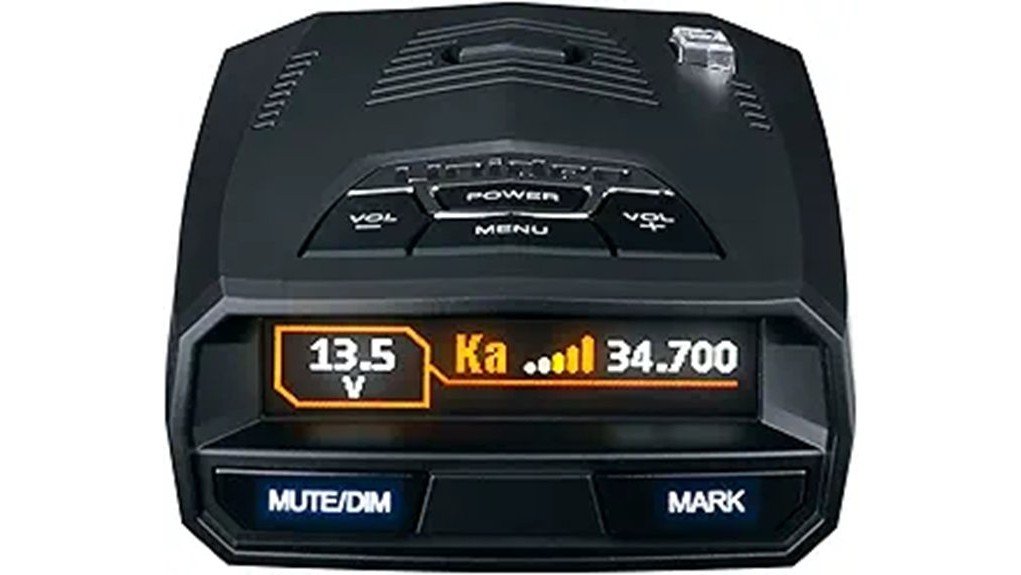
The Uniden R4W is a windshield-mounted laser and radar detector built around a single antenna and Blackfin® digital signal processing. It scans X, K, and Ka radar bands and also responds to laser signals. Uniden positions it as an extreme long-range model for drivers who want strong detection without moving up to a larger dual-antenna unit.
The “W” separates it from the standard R4 by adding Wi-Fi. It also includes Bluetooth, built-in GPS, a red-light and speed-camera database, and support for Uniden’s R/TACH app. These connected features matter most when you want easier updates, phone-based settings control, and route-specific false-alert management.
It is still a driver-awareness tool, not a guarantee against every speed-measurement method. You need to follow traffic laws, check local detector rules, and keep your attention on the road.
Design, Display, and Controls
The R4W measures 4.62 inches deep, 2.74 inches wide, and 1.29 inches high according to Uniden. At 5.3 ounces, it is light enough for a suction-cup windshield mount and compact enough to store in the included carrying case.
The multi-color OLED screen can show band and alert information in a small area. Programmable voice alerts provide a second way to identify warnings, which helps you keep your eyes on traffic instead of reading the display.
The main design limitation is the lack of directional arrows. The R4W can warn you about a detected signal, but it does not show whether that signal comes from the front, side, or rear. Buyers who want direction information should compare it with a dual-antenna arrow detector.
Radar and Laser Detection Performance
The R4W scans X, K, and Ka radar bands and uses a Blackfin® processor to handle incoming signals. Its main selling point is long-range radar performance, especially for drivers who spend time on open highways where earlier Ka-band alerts can be useful.
Uniden also markets the detector with “360° awareness.” You should read that as broad alert awareness rather than true directional detection. The single-antenna R4W does not provide front and rear arrows like the Uniden R8W.
Laser detection is included across the 800 to 1,100 nm range. Laser alerts are different from long-distance radar alerts, so you should not treat them as guaranteed advance notice. The detector adds awareness, but careful driving remains the only reliable approach.
False-Alert Filtering and Auto Learn
False K-band alerts often come from automatic doors and vehicle safety systems such as blind-spot monitoring. The R4W uses advanced K/Ka filtering to reduce these interruptions, but no detector can remove every unwanted signal without also risking missed alerts.
GPS mute memory helps with stationary sources. When the detector recognizes a repeated alert at the same location, it can mute that source on later drives. Auto Learn reduces the amount of manual marking needed as your regular routes become familiar.
The system works best when you give it several normal trips to learn your commute. Dense shopping areas and roads with many modern vehicles may still produce alerts, so band settings and filtering levels may need adjustment.
GPS, Wi-Fi, Bluetooth, and R/TACH App Support
Built-in GPS supports location-based mute memory and alerts from Uniden’s red-light and speed-camera database. Database coverage and camera rules can vary by region, so you should keep the database updated and confirm what is supported where you drive.
Wi-Fi is the key upgrade over the standard R4. It allows the R4W to handle firmware and database updates more conveniently, while Bluetooth connects the detector with compatible mobile features. Uniden also provides R/TACH app support for settings, software updates, and camera information.
Connected features add value only if you plan to use them. If you prefer a detector that stays at factory settings and never connects to a phone, a simpler model may cost less and require less setup.
Who Should Buy It?
Best For
- Highway drivers who want strong long-range detection without buying a directional-arrow model.
- Commuters who pass the same stores, signs, or stationary false-alert sources every day.
- Drivers who will use GPS memory, Wi-Fi updates, Bluetooth, voice alerts, and app-based controls.
Skip If
- You need arrows that show whether radar is ahead or behind you.
- You want a low-cost plug-in detector with very few settings.
- Radar detectors or windshield-mounted devices are restricted where or how you drive.
Before You Buy: Check current radar-detector and windshield-mount rules for every area and vehicle type you use. Do not assume a detector that is legal in one location is legal everywhere.
Compatibility and Safety Notes
The R4W is not vehicle-specific. It works from an 11.0 to 16.0-volt DC power source and includes windshield mounting hardware, so it can suit many passenger vehicles with a compatible 12V outlet and safe mounting position.
Mount the detector where you can hear and briefly see alerts without blocking your view. Route the power cord away from the steering wheel, pedals, shifter, airbag covers, and other controls. Follow the included manual and local windshield-placement rules.
Radar and laser alerts should support safe driving, not encourage speeding. The detector cannot identify every enforcement method, road hazard, or traffic condition.
Setup Tips Before First Use
Start with a secure mount and a clear forward view. Confirm that the detector does not shake, block your sightline, or pull on the power cord. Test the display brightness and voice volume before you begin driving.
Next, review the band and filtering settings instead of changing many options at once. Drive your normal route for several days, note where alerts repeat, and allow GPS mute memory and Auto Learn to build useful location data.
Update the firmware and camera database before a long trip, especially if the unit has been stored or recently purchased. Use the R/TACH app or Uniden’s supported update tools according to the current instructions.
Pro Tip: Change one filtering or sensitivity setting at a time, then test it on a familiar route. This makes it easier to tell which adjustment reduced noise without hiding useful alerts.
How It Performs in Real Use
For City Driving
City streets produce the hardest filtering test because automatic doors and nearby driver-assistance systems can trigger K-band warnings. GPS mute memory and Auto Learn are the R4W’s most useful city features, but you may still need to tune K-band settings for a quieter ride.
For Highway Driving
Open-road driving plays to the R4W’s long-range focus. Voice alerts and the OLED display help you identify the band and alert strength, while the compact case takes up less windshield space than larger dual-antenna units. The missing arrows matter more when several signals appear and you want to know their direction.
For Daily Commuting
Repeated routes give the GPS system time to become useful. Once regular stationary sources are learned or marked, the detector can stay quieter and make new alerts easier to notice. The benefit depends on correct setup and consistent GPS reception.
For Road Trips
Wi-Fi updates, Bluetooth, camera-database alerts, and the carrying case add convenience for longer trips. Check the law before crossing state, district, provincial, or national borders, and do not leave the detector mounted where it blocks your view.
What to Expect From Daily Ownership
The R4W is not a set-it-and-forget-it budget detector. You will get more from it if you learn the alert tones, adjust filtering for your region, keep software current, and let the GPS system learn common false-alert locations.
The included carrying case and two windshield-mount options make it easier to move or store the detector. Package contents can differ by seller or renewed bundle, so confirm the exact accessories before ordering.
The R4W’s key ownership tradeoff is simple: you get strong range and useful connected tools, but not directional arrows. That makes it a better fit for buyers who value detection performance and false-alert control more than front-versus-rear information.
How the Uniden R4W Compares to Alternatives
The standard Uniden R4 is the closest alternative. It offers similar core detection performance, but the R4W adds Wi-Fi for easier updating. If you do not care about wireless updates, the regular R4 may be the more economical choice when available.
The Uniden R8W is the better fit when you want dual antennas and directional arrows, but it is larger and belongs to a higher price tier. The Escort Redline 360c is another premium arrow-equipped option with a strong connected ecosystem. The R4W makes the most sense when you want long-range single-antenna performance, GPS lockouts, and wireless features without paying for arrows.
Pros and Cons
Pros
- Long-range X, K, and Ka detection with Blackfin® signal processing.
- GPS mute memory and Auto Learn reduce repeated stationary false alerts.
- Wi-Fi, Bluetooth, and R/TACH support improve updates and settings control.
- Multi-color OLED display and programmable voice alerts are easy to understand.
- Compact 5.3-ounce design includes two mount options and a carrying case.
Cons
- No directional arrows or separate front and rear radar antennas.
- Filtering and sensitivity settings may require trial and error in busy areas.
- Local laws, commercial-vehicle rules, and windshield restrictions can limit use.
Is It Worth the Price?
The Uniden R4W sits in the premium single-antenna part of the radar-detector market. Its value comes from combining long-range performance, GPS lockouts, Auto Learn, Wi-Fi, Bluetooth, app support, camera-database alerts, and voice notifications in one compact unit.
It is worth considering if false alerts on familiar routes are your main concern or if wireless updating matters to you. Highway drivers who want strong range but do not need arrows may also find it easier to justify than a more expensive dual-antenna model.
It is not the best value for occasional use, and buyers who want direction information should budget for a different detector. You will get the most from the R4W only if you keep it updated and spend time setting it up for your roads.
Frequently Asked Questions
What is the difference between the Uniden R4 and R4W?
The R4W adds Wi-Fi to the R4 platform, making firmware and GPS-database updates more convenient. Their core radar-detection performance is otherwise closely related, so the R4W mainly suits buyers who value wireless updating.
Does the Uniden R4W have directional arrows?
No. The R4W is a single-antenna detector and does not show whether a radar source is ahead or behind you. Compare it with the Uniden R8W if directional arrows are a priority.
How does the R4W reduce false alerts?
It combines K/Ka filtering with GPS mute memory and Auto Learn. Filtering targets common moving false sources, while GPS features can mute repeated stationary alerts on familiar routes.
Can the R4W update over Wi-Fi?
Yes, Wi-Fi is included to make firmware and GPS-database updates easier. Uniden also supports update tools and the R/TACH app, so follow the current official instructions for your device and phone.
What radar bands does the Uniden R4W detect?
The R4W detects X, K, and Ka radar bands. It also detects laser signals in the 800 to 1,100 nm range, but laser alerts should not be treated as guaranteed early warning.
What comes in the Uniden R4W box?
Uniden lists a 12V power cord, premium suction-cup mount, double-cup windshield mount, and carrying case. Confirm the seller’s package details because renewed units and special bundles may differ.
Will the R4W work in every vehicle?
It can work in many passenger vehicles that provide a compatible 11.0 to 16.0-volt DC power source and a legal mounting position. You still need enough windshield space, safe cord routing, and permission to use a detector in that location and vehicle type.
Who should skip the Uniden R4W?
Skip it if you want a basic low-cost detector, need directional arrows, or do not want to adjust settings. You should also avoid it where radar detectors or the planned windshield mount are restricted.
The Bottom Line
The Uniden R4W is a strong choice for drivers who want long-range radar detection, GPS-based false-alert control, Wi-Fi updates, Bluetooth, and clear voice alerts in a compact unit. Skip it if you need directional arrows, want the lowest-cost option, or drive where detector use is restricted. Its main strength is the balance of range and connected filtering, while its main limitation is the single-antenna design and setup learning curve.