Italian train stations still have small validation machines, and skipping them at the wrong moment can cost you a fine. Whether you need to validate a train ticket in Italy depends on what you bought: a paper regional ticket, a digital ticket, a contactless Tap&Tap fare, or a high-speed booking. This guide explains each one using Trenitalia’s current rules.
Quick Answer
Only Trenitalia single paper regional tickets need a station stamp. Validate them before boarding at the station where your trip starts, by 23:59 on the ticket date. Digital Regional Tickets activate automatically, Electronic Regional Tickets count as already validated, and Frecce, Intercity and Italo tickets need no validation. With Tap&Tap, you tap in and out instead.
Last checked: October 7, 2026. Dates and figures were verified against official sources.
Key Takeaways
- A validated paper ticket normally gives you four hours. If it expires on board, you can ride on to your destination without stopping off.
- A DRT is valid only on the train shown on it. Boarding another train that day costs €5 on board, or counts as travelling without a ticket.
- If the validators are missing or broken, tell the conductor as you board. They validate your ticket free of charge.
- The default fine for an unstamped paper ticket is €50 on the spot, €100 within 15 days, or €200 after that. Some regions set their own amounts.
- With Tap&Tap, forgetting to tap out means you pay the region’s maximum fare.
Which Italy train tickets need validation?
Only one common ticket still needs a physical stamp: the Trenitalia single paper regional ticket. Every other ticket either validates itself, is tied to a booked train, or uses a card tap instead. Use the table to identify yours before you head to the platform.
| Ticket type | Station validation? | What to do |
|---|---|---|
| Single paper regional ticket | Yes | Stamp it at a validator in your departure station before the train leaves. |
| Digital Regional Ticket (DRT) | No, automatic | It activates at the scheduled departure of your chosen train. Show the QR code and your ID on board. |
| Electronic Regional Ticket (ERT) | No | It counts as validated for the departure time you picked and stays valid for four hours. |
| Tap&Tap contactless fare | Tap in and tap out | Tap the same card on a Tap&Tap validator before boarding and again at your arrival station. |
| Regional season ticket | Only if no dates are printed | Passes with a printed validity period need no stamp. Passes without one are validated on first use. |
| Frecce or Intercity ticket | No | Board the booked train and show your ticket or PNR during inspection. |
| Italo high-speed ticket | No | Board the booked service and show your ticket when requested. |
You can buy single paper regional tickets at station ticket offices, ticket machines, authorised sales points and travel agencies. Each one is valid on the date you chose when you bought it. Trenitalia’s rules for travelling on Regional trains say you must validate it before departure, at the station where your journey begins.
You can validate it until 23:59 on the date shown on the ticket. From that moment you normally have four hours to finish your trip, unless a regional fare sets a different period, according to Trenitalia’s regional conditions of carriage. If the four hours run out while you’re on board, you can continue to your destination without intermediate stops. If your trip includes a change, take the first available train at the change station.
Regional season tickets work differently. A pass with a printed validity period needs no stamp; just write in your details with indelible ink before the first trip if the pass asks for them. A pass without a printed period must be validated the first time you use it.
Pro Tip: A paper regional ticket is tied to its travel date. If you return on another day, buy the return ticket for that date and stamp it only when the return trip starts.
Products Worth Considering

Christmas Express Tickets Set: This set includes 50 beautifully designed tickets for the North Pole Express, with ample quantities to ensure festive cheer for all guests! Thoughtfully packaged with a portable hole punch, you can freely choose where to punch holes and effortlessly create personalized Christmas decorations

Unforgettable Party Invitations: 100 gold Christmas North Pole train tickets are included in each package; Ideal for Christmas parties; Guests can treasure these invites, beautifully printed with words like "Believe", "North Pole Round Trip", and "Admit One"; Send these out to your friend and family as the party invites they'll ever receive

CHRISTMAS TRAIN TICKETS. 100 pcs Christmas believe tickets. 2.7’’ x 5.5’’. Sufficient quantity to meet your various uses, and you can share them with your family.
Do digital regional tickets need validation?
No. Trenitalia’s digital regional tickets never go into a station machine. The Digital Regional Ticket activates itself, and the Electronic Regional Ticket counts as validated from the time you chose. Your job is to show the ticket correctly, with ID, when the conductor asks.
Products Worth Considering


Case TITO Blank Ticket 16,000, (80 Bundles of 200)

Digital Regional Ticket (DRT)
The DRT is now the standard single ticket when you buy online. Since August 5, 2023, Trenitalia has issued single regional tickets sold through its website, app, the Trenitalia Tper site and enabled agencies as DRTs, and station ticket offices sell them too. You can buy one up to 5 minutes before departure. It validates automatically at the scheduled departure of the train you picked.
Until 23:59 on the day before travel, you can change the date and time as often as you like. On the day of travel, you can change the time until your train’s scheduled departure. Once the ticket activates, it can no longer be changed and is valid only for that train until its scheduled arrival, as Trenitalia’s Digital Regional Ticket page explains.
Taking a different train is the main trap. If you board another train on the same day, route, category and class, you must pay the conductor €5 or be treated as having no ticket. If your own train is cancelled or late, you can take the first available train at no extra cost.
During inspection, show the DRT with its dynamic green bar on your device, along with valid ID, because the ticket is personal and non-transferable. It can’t currently be added to a phone wallet, so open it from the Trenitalia app, the website, or the link in your confirmation email.
Warning: Trenitalia treats a DRT you can’t show on screen as no ticket at all. A flat battery or a QR code that won’t load can mean paying the full fare plus a fine.
Electronic Regional Ticket (ERT)
The ERT is now used only for certain purchases. These are group tickets, daily bike supplements, Link and other combined tickets, day tickets, tickets from agencies not set up for DRTs, and season tickets. It’s already validated for the departure time you selected, and it stays valid for four hours unless a regional fare says otherwise.
Within that window, you can use your chosen train or another train on the same route, and you can make unlimited intermediate stops. Show the PDF or QR code on a device, or a printed copy, together with valid ID.
Tap&Tap and contactless gates
Tap&Tap lets you pay for a regional trip by tapping a contactless Visa, Mastercard or American Express card on a validator marked with the Tap&Tap symbol. Tap in before boarding, then tap the same card again at your arrival station. You don’t need to tap at a station where you change trains. It covers only standard adult second-class single fares, one per card.
Tapping out is mandatory. If you forget, Trenitalia charges the maximum fare for that region instead of your actual trip. That maximum ranges from €7.00 on the Roma Ostiense–Montalto di Castro line to €32.00 in Puglia. During inspection, give the conductor the last four digits of your card.
Tap&Tap currently runs on selected routes in Campania, Friuli Venezia Giulia, Lazio, Liguria, Marche, Piedmont, Puglia, Sardinia, Sicily, Tuscany and Veneto. It also works on the Leonardo Express to Fiumicino Airport, where you don’t need to tap out, as Trenitalia’s Tap&Tap page notes. At Roma Termini and Fiumicino Airport stations, you can also pay by card at the automatic gates. That payment starts your ticket’s validity, so there’s nothing to stamp, and you can board the first train leaving after you pass the gate.
Do high-speed train tickets need validation in Italy?
No. Trenitalia’s national trains are Frecciarossa, Frecciargento, Frecciabianca, Intercity and Intercity Notte, and all of them require a seat reservation. According to Trenitalia’s passenger guide, these tickets are valid only for the booked day and train, so they don’t need validating. You can board until one minute before departure.
With a ticketless booking, you simply give your booking code (PNR) to the staff on board. You can also confirm you’re on board with the optional Self Check-in in the Trenitalia app or on its website. Keep the PNR handy: under Trenitalia’s ticketless rules, losing it means you’re treated as travelling without a ticket and must pay a fine.
Italo high-speed tickets don’t use station stamping either. Each booking is tied to a specific train and seat, so you board and show your QR code or ticket when asked, as Italo’s own validation guide confirms.
If you are deciding which operator suits your trip, you can also compare Italo vs Trenitalia.
How to validate a paper regional train ticket in Italy
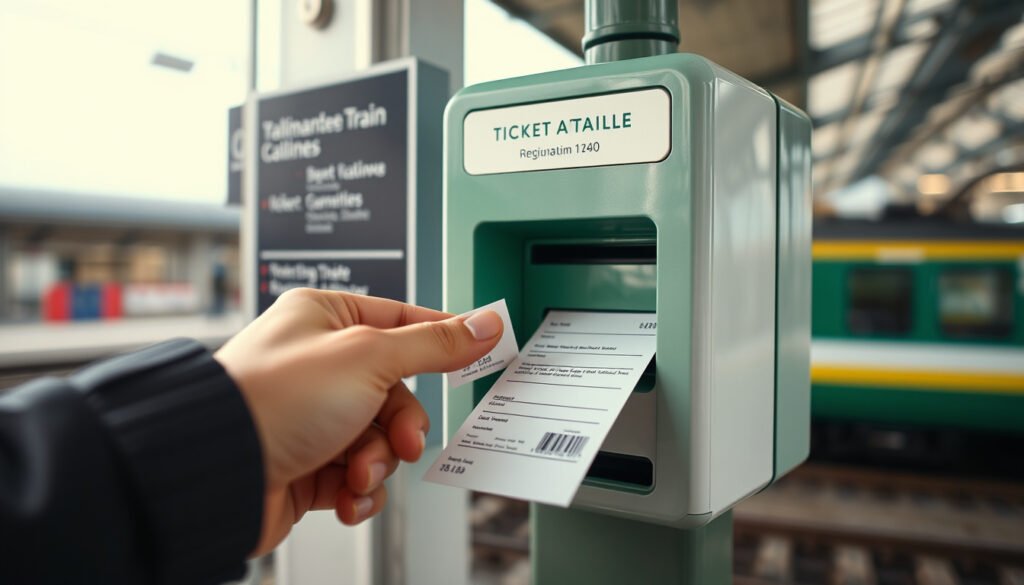
Validating takes a few seconds: put the paper ticket into a station validator and check that the date and time printed. Do it at the station where your trip starts, shortly before you board. Then keep the ticket until you’ve left your arrival station.
- Find a station validator. Look near the platform entrances, in the concourse, or on the platforms. Signs may say “Convalida” or “Validazione,” and Italians often call the machines obliteratrici.
- Insert the paper ticket. Follow the direction shown on the validator and let the machine print the validation details.
- Check the stamp. Make sure a readable date and time are printed on the ticket before you board.
- Keep the ticket. Hold on to it for the whole journey and until you’ve left the arrival station, because staff can ask to see it at any time.
What if the ticket validation machines are broken?
Find the conductor as soon as you board and show your unstamped paper ticket. If your departure station has no validators, or none of them work, Trenitalia validates the ticket on board with no surcharge, unless regional rules say otherwise.
Timing matters. Trenitalia’s conditions say you must approach the staff yourself when you board. If you stay in your seat and wait for the routine ticket check, the normal penalty rules can apply.
A similar no-surcharge rule covers buying a ticket on board. It applies when the station ticket office is closed or missing, the ticket machines are absent or broken, and there’s no authorised sales point within 350 metres of the station.
What happens if you forget to validate your ticket?
You can be fined, even though you paid for the ticket. Telling the conductor later doesn’t cancel the penalty, because free on-board validation applies only when the station’s validators are missing or out of order.
In regions without their own penalty law, Trenitalia’s penalty rules for regional trains set a €200 penalty for an unvalidated or wrongly validated ticket. It drops to €100 if you pay within 15 days of the notice, and to €50 if you pay the train staff on the spot by cash or card.
Regions and autonomous provinces with their own law apply their own amounts on their territory. Treat €50 to €200 as Trenitalia’s default range, not a single nationwide figure.
Tips for avoiding validation problems
- Identify the ticket type first: a paper regional ticket, DRT, ERT, Tap&Tap fare, or booked Frecce, Intercity or Italo ticket each follows a different process.
- Validate paper tickets before boarding: don’t leave the stamp until the train is about to leave.
- Don’t stamp a paper ticket too early: its four-hour validity starts at validation, not at departure.
- Make DRT changes in time: time changes must be made before your selected train’s scheduled departure.
- Carry valid ID: DRTs, ERTs and season tickets are personal, and a ticket in someone else’s name or without ID counts as no ticket.
- Follow the exact ticket conditions: if you bought through another operator or a third-party seller, read the instructions issued with that ticket rather than assuming every electronic ticket works the same way.
FAQs About Validating Train Tickets in Italy
Do I need to validate every train ticket in Italy?
No. Only Trenitalia single paper regional tickets need a station stamp before departure. Digital Regional Tickets activate automatically at the scheduled departure, Electronic Regional Tickets count as already validated, and Frecce, Intercity and Italo tickets are tied to a booked train, so they need no validation. Tap&Tap users tap their card instead.
Do online train tickets in Italy need to be validated?
Not by machine. A Trenitalia Digital Regional Ticket validates itself at the scheduled departure of the chosen train, and an Electronic Regional Ticket counts as validated for the departure time you picked. You only need to show the ticket and your ID on board. For other operators or third-party sellers, follow the instructions on the ticket.
Do I need to validate a Frecciarossa, Intercity, or Italo ticket?
No. Frecciarossa, Frecciargento, Frecciabianca, Intercity and Intercity Notte tickets include a mandatory seat reservation and are valid only for the booked train and day, so Trenitalia says they need no validation. Italo tickets work the same way. Just board your booked train and show the ticket, QR code or PNR when asked.
How long is a stamped paper regional ticket valid?
Usually four hours from the moment you validate it, unless a regional fare sets a different period. If the four hours run out while you are on the train, you can ride on to your destination without stopping off. If your trip includes a change, take the first available connecting train.
What if the ticket validation machines are broken?
Tell the conductor as soon as you board, on your own initiative, and show the unstamped paper ticket. When there are no working validators at the station, staff validate it on board with no surcharge. If you wait for the ticket check instead, you can be treated as travelling with an invalid ticket.
What happens if I forget to validate a paper regional ticket?
You can be fined. In regions without their own law, Trenitalia’s penalty for an unvalidated ticket is €200, cut to €100 if you pay within 15 days or €50 if you pay the train staff on the spot. Regions with their own rules set different amounts, so the exact fine depends on where you travel.
Can I take a different regional train with my Digital Regional Ticket?
Not freely. Once it activates, a DRT is valid only on the train shown on it. If you board another train on the same day, route, category and class, you must pay the conductor €5 or be treated as having no ticket. If your train is cancelled or late, you can take the first available train at no cost.
Do I need to tap out when I use Tap&Tap?
Yes. Tap the same contactless card on a Tap&Tap validator before boarding and again at your arrival station. If you skip the tap out, Trenitalia charges the maximum fare for that region instead of your actual trip. The Leonardo Express between Roma Termini and Fiumicino Airport is the exception: no tap out is needed.
What should you do before boarding?
Check which ticket you hold before you reach the platform. Stamp a single paper regional ticket at your departure station and confirm the print is readable. With a DRT, make sure it’s for the train you’re about to board; with Tap&Tap, tap in. Frecce, Intercity and Italo tickets need nothing extra. If the validators are broken, go to the conductor as soon as you step on board.
Sources
- Trenitalia: Travelling on Regional trains: paper, DRT and ERT rules, on-board validation and purchase without surcharge
- Trenitalia: Regional conditions of carriage, section 4 (valid from October 1, 2026): validation deadline, four-hour validity, DRT €5 rule, ERT uses, season tickets, Tap&Tap maximum fares, EMV gates
- Trenitalia: Regional conditions of carriage, section 7: penalties for unvalidated tickets
- Trenitalia: Digital Regional Ticket: automatic validation, changes and inspection
- Trenitalia: Tap&Tap: tap in, tap out and Leonardo Express exception
- Trenitalia: Passenger guide, national trains: no validation for Frecce and Intercity tickets
- Trenitalia: Ticketless: PNR on board and lost booking codes
- Italo: Train ticket validation in Italy: Italo tickets need no station validation