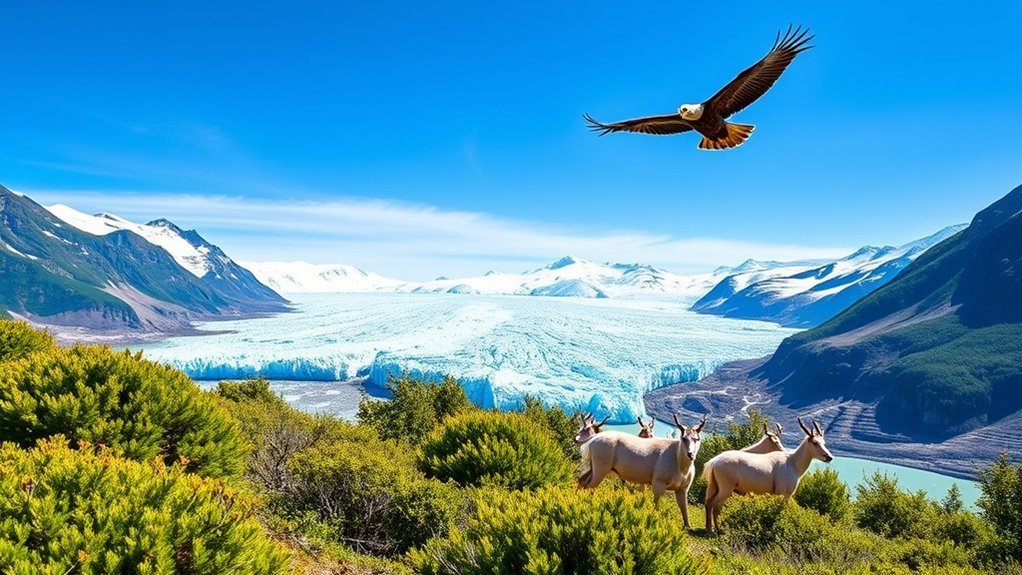
Wildlife viewing at Exit Glacier is best when you slow down, watch each habitat zone, and treat every animal as wild and unpredictable. This road-accessible area of Kenai Fjords National Park gives you a rare chance to scan river corridors, alder thickets, cottonwood forest, avalanche chutes, alpine slopes, and glacier-edge landscapes in one visit.
Quick Answer
The best wildlife viewing at Exit Glacier is usually in June, July, and August, especially early in the morning or late in the afternoon. Watch from the Glacier View Loop, Exit Glacier Overlook, road pull-outs, and lower Harding Icefield Trail, and keep at least 300 yards from bears and 25 yards from other wildlife.
Key Takeaways
- June through August offer the best mix of road access, visitor services, long daylight, and active wildlife.
- Look for birds along the river and forest edges, bears and goats near avalanche chutes, and marmots or alpine birds higher on the Harding Icefield Trail.
- There is no entrance fee for Kenai Fjords National Park, but commercial tours, transportation, and special permits may cost extra.
- Pets are not allowed on Exit Glacier trails, the Harding Icefield Trail, park buildings, campground, or coastal backcountry.
- Bear spray, binoculars, layers, water, and current trail-condition checks are essential for a safe visit.
At a Glance
| Time Required | 1–2 hours for short wildlife-viewing walks; 6–8 hours for the full Harding Icefield Trail. |
| Difficulty | Easy on the Glacier View Loop; moderate to strenuous on overlook and Harding Icefield routes. |
| Tools Needed | Binoculars, zoom lens, bear spray, rain layers, sturdy shoes, water, snacks, and current trail information. |
| Cost | No park entrance fee; transportation, guided trips, or commercial activities may cost extra. |
Overview of Exit Glacier and Its Wildlife
Exit Glacier flows from the Harding Icefield into a valley shaped by ice, meltwater, rock, and fast-changing plant communities. Near the glacier, you may see bare rock, silt, lichens, and pioneer plants. Farther away, alder, willow, cottonwood, and hemlock provide better cover and food for birds and mammals.
This mix of habitats is what makes wildlife viewing here rewarding. The official Alaska Department of Fish and Game Exit Glacier viewing guide lists black bear, brown bear, mountain goat, hoary marmot, several owl species, Steller’s jay, black-billed magpie, horned lark, violet-green swallow, warblers, snow bunting, and even ice worms as notable wildlife to watch for in the area.
Note: Exit Glacier is the only part of Kenai Fjords National Park accessible by road, but that does not mean it is accessible by car year-round. The road is usually not plowed in winter and is commonly inaccessible to cars from sometime in October to May, depending on snow and conditions.
Best Times for Wildlife Viewing
The best overall season for wildlife viewing at Exit Glacier is June through August. These are the main visitor months, with the best chance of open roads, ranger services, long daylight, and accessible trails. May and September can also be rewarding, but services are reduced and weather or trail conditions can be less predictable.
For the best chance of sightings, arrive early in the morning or return in the late afternoon. Animals are often more active in cooler parts of the day, and the area is usually quieter before and after the midday parking rush.
| Season | Wildlife Viewing Notes | Planning Tip |
|---|---|---|
| Spring | Bird activity increases, bears may become more active, and snow can linger on higher trails. | Check road and trail conditions before driving out. |
| Summer | Best mix of access, services, long daylight, birds, bears, mountain goats, and trail options. | Arrive before 10:00 a.m. or later in the afternoon to avoid limited parking. |
| Fall | Quieter trails, changing colors, active foraging, and reduced services. | Pack extra layers and expect fast weather changes. |
| Winter | Car access is usually closed, but tracks and signs may be visible for prepared winter travelers. | Plan for snow travel, short daylight, and no regular vehicle access. |
Top Wildlife Viewing Spots Near Exit Glacier
The best wildlife viewing at Exit Glacier is not one single viewpoint. It comes from moving slowly through the valley and scanning each habitat type.
Glacier View Loop
The Glacier View Loop is one of the easiest places to begin. It passes through cottonwood forest and gives you chances to listen for songbirds, watch for squirrels and small mammals, and scan openings for larger wildlife. This is also one of the better choices for visitors who want a shorter and less strenuous walk.
Exit Glacier Overlook Trail
The Exit Glacier Overlook Trail offers broader views into the glacially carved valley. Stop at safe viewpoints and scan the forest edges, slopes, and avalanche chutes instead of walking quickly from one sign to the next. Bears, mountain goats, and birds are often easier to spot when you pause and use binoculars.
River Corridor and Road Pull-Outs
The river corridor and road pull-outs can be good places to watch birds and moose from a safer distance. Violet-green swallows may fly over the river, while Steller’s jays and black-billed magpies are more likely around alder and forest edges. Pull completely out of the roadway before viewing wildlife from a vehicle.
Harding Icefield Trail
The Harding Icefield Trail is a much more strenuous option, but it opens access to alpine habitats where mountain goats, hoary marmots, horned larks, snow buntings, and ice worms may be seen. The full route is 8.2 miles round trip, gains about 1,000 feet per mile, and can take 6–8 hours. You do not need to hike the full trail for wildlife viewing; even the lower sections can be productive.
Pro Tip: Pick one spot and watch it for several minutes before moving on. Wildlife often appears after your eyes adjust to the slope, shadows, brush, and movement patterns.
Common Animals to Look For
Exit Glacier wildlife changes with habitat, weather, season, and time of day. You are never guaranteed a sighting, but these are the animals and birds most worth watching for.
| Wildlife | Where to Look | Viewing Notes |
|---|---|---|
| Black bears and brown bears | Avalanche chutes, berry patches, forest edges, and trail corridors | Use binoculars, make noise while hiking, and never approach. |
| Moose | Valley bottom, willows, cottonwoods, and road pull-outs | Give extra room to cows with calves; moose can charge. |
| Mountain goats | Rocky slopes and avalanche chutes | Scan high, open slopes with binoculars. |
| Hoary marmots | Alpine and rocky areas along Harding Icefield Trail | Listen for whistles and watch boulder fields. |
| Steller’s jays and black-billed magpies | Alders, forest edges, and developed areas | Often heard before they are seen. |
| Violet-green swallows and warblers | River corridor, alders, and forest edges | Best in spring and summer when insects are active. |
| Owls | Forested zones and evening listening spots | Western screech-owl, great horned owl, boreal owl, and northern saw-whet owl are possible. |
| Snow buntings, horned larks, and ice worms | Higher snowfields and alpine zones | Most relevant for prepared hikers on the Harding Icefield Trail. |
Unique Birdwatching Opportunities
Birdwatching is one of the most reliable wildlife experiences at Exit Glacier because birds use nearly every habitat zone in the valley. Bring binoculars and listen as much as you look.
Prime Birdwatching Seasons
Spring and early summer are the strongest birding periods because migratory birds return, nesting activity increases, and songbirds become easier to detect by sound. Summer remains productive, especially along the river, alder thickets, and forest edges. Autumn can bring movement as birds prepare for migration, while winter is quieter but still offers chances to notice hardy resident species and tracks in snow.
Notable Bird Species
| Bird Species | Notable Features | Best Place to Watch |
|---|---|---|
| Violet-green swallow | Fast, acrobatic flight over open areas and water | River corridor |
| Steller’s jay | Bold, vocal, dark blue-and-black jay | Alders and forest edges |
| Black-billed magpie | Long-tailed, high-contrast bird with loud calls | Open edges and brush |
| Warblers and sparrows | Small songbirds that forage actively in shrubs | Forest edges and alder zones |
| Horned lark | Open-country bird of higher, exposed terrain | Alpine sections of Harding Icefield Trail |
| Snow bunting | Hardy bird associated with open, cold, snowy habitats | Higher snowfields and alpine zones |
| Owls | Western screech-owl, great horned owl, boreal owl, and northern saw-whet owl are possible | Forested areas, especially around dusk |
Guidelines for Responsible Wildlife Viewing
Responsible viewing protects you, other visitors, and the animals that live here. The goal is to observe natural behavior without changing it.
- Use distance first. Follow Alaska National Park Service wildlife safety guidance: stay 300 yards from bears and at least 25 yards from other animals, dens, and nests.
- Never feed wildlife. Human food can make animals aggressive, sick, or more likely to approach people.
- Stay on designated trails. This protects fragile plant life and keeps you out of closed or hazardous terrain.
- Use binoculars or a zoom lens. Getting a closer view should never mean getting physically closer.
- Keep voices low when stopped. While hiking in bear country, make enough noise to avoid surprising bears; when safely viewing from a distance, stay calm and avoid shouting.
- Leave no attractants behind. Pack out food, wrappers, scented items, and trash.
Warning: Do not enter closed areas or leave designated trails to approach the glacier, creek, or wildlife. NPS warns that the canyon from the toe of Exit Glacier to the outwash plain is susceptible to sudden glacier outburst flooding with water, ice, rock, and debris.
Safety Precautions to Keep in Mind
Exit Glacier is accessible, but it is still Alaska. There is no cell phone service or public Wi-Fi in the Exit Glacier area, weather can change quickly, and wildlife encounters require calm decisions.
Bear Safety
Both black bears and brown bears may be present. Carry bear spray where you can reach it quickly, know how to use it before you hike, and make noise in brushy or loud areas where a bear may not hear you coming. If you see a bear, back away, give it lots of space, and never get between a sow and cubs. Do not run.
Moose Safety
Moose can be dangerous even though they are herbivores. Stay at least 25 yards away, give cows with calves even more room, and watch for laid-back ears or raised hackles. If a moose appears agitated, move away slowly or place a solid object, such as a tree or vehicle, between you and the animal.
Trail and Weather Safety
Before you go, check the Kenai Fjords current conditions page for road status, trail conditions, snow, closures, and safety alerts. Bring rain gear, warm layers, water, snacks, sturdy footwear, and sun protection. If you plan to hike the Harding Icefield Trail, remember that snow and avalanche risk can persist into early summer.
Photography Tips for Capturing Wildlife
Good wildlife photography at Exit Glacier depends on patience and distance. The safest close-up is the one made with a zoom lens, not your feet.
Camera Settings Essentials
- Shutter Speed: Use 1/500s or faster for moving animals and birds. Increase speed for birds in flight.
- Aperture: Use a wider aperture, such as f/4 or f/5.6, to separate wildlife from busy backgrounds.
- ISO: Raise ISO when light is low, especially in forests, early morning, or late afternoon.
- Focus Mode: Use continuous autofocus for moving wildlife.
- Lens Choice: A telephoto lens helps you keep a safe distance while still filling the frame.
Best Times to Shoot
| Time of Day | Animal Activity | Best Practices |
|---|---|---|
| Early Morning | Foraging, bird movement, quieter trails | Use a zoom lens and watch forest edges. |
| Midday | Lower activity; animals may rest in shade or cover | Scan slopes and shaded brush from safe viewpoints. |
| Late Afternoon | Renewed foraging and movement | Adjust ISO as light fades. |
| Dusk | Owls and evening routines may become more noticeable | Stay extra bear-aware and avoid pushing beyond your comfort or visibility. |
If an animal changes its behavior because of you, you are too close. Back up, give it space, and let the wild moment stay wild.
Resources for Further Exploration
Use official resources before and during your trip. Conditions at Exit Glacier can change quickly, and current information matters more than a general travel summary.
- Check NPS current conditions: Review road access, parking, closures, and trail conditions before leaving Seward.
- Stop at the Exit Glacier Nature Center: In summer, rangers can answer questions about recent wildlife activity, trail conditions, and safe viewing.
- Use ADF&G viewing information: The state wildlife guide helps you understand which species are associated with the Exit Glacier habitats.
- Bring binoculars: They make wildlife viewing safer, calmer, and more rewarding.
- Know pet rules before you go: Pets are allowed only in limited areas, not on Exit Glacier trails.
Frequently Asked Questions
Are there guided tours available for wildlife viewing at Exit Glacier?
The National Park Service offers ranger-led programs in the Exit Glacier area during the summer season, and rangers can help visitors understand the landscape, glacier, and wildlife safety. Commercial guided hikes or tours may also operate in the Seward area, but availability changes by season, so confirm directly with providers before relying on a wildlife-specific tour.
What should I do if I encounter a bear while viewing wildlife?
Stay calm, do not run, and give the bear plenty of space. Back away slowly if you can do so safely, speak calmly, group up with other people, and keep bear spray ready. Never approach a bear for a photo, never feed it, and never get between a sow and cubs.
Can I bring my pet while wildlife viewing at Exit Glacier?
Pets are allowed on Herman Leirer Road and in the Exit Glacier Nature Center parking lot, but they are not allowed on Exit Glacier trails, the Harding Icefield Trail, park buildings, the campground, public-use cabins, or coastal backcountry. Service animals are treated separately under accessibility rules.
Is there an entrance fee for visiting Exit Glacier?
No. Kenai Fjords National Park does not require an entrance pass, and no entrance fees are charged. You may still pay for optional costs such as shuttles, taxis, guided tours, lodging, commercial activities, or special-use permits.
What amenities are available near Exit Glacier for wildlife viewers?
The Exit Glacier area includes parking, picnic tables, toilets, summer potable water, bear-proof trash and recycling bins, maintained trails, and the Exit Glacier Nature Center. Parking can be limited during busy summer midday hours, so arrive early, visit later in the afternoon, carpool, bike, or use a shuttle or taxi when available.
Where is the best place to see animals at Exit Glacier?
Start with the Glacier View Loop and Exit Glacier Overlook Trail, then scan the river corridor, forest edges, and avalanche chutes. For alpine wildlife such as mountain goats, marmots, horned larks, and snow buntings, prepared hikers can explore portions of the Harding Icefield Trail.
How close can I get to wildlife at Exit Glacier?
Follow Alaska National Park Service guidance: stay 300 yards from bears and at least 25 yards from all other wildlife, dens, and nests. If an animal looks at you, moves away, stops feeding, changes direction, or reacts to your presence, you are too close.
Conclusion
Wildlife viewing at Exit Glacier is most rewarding when you combine patience, timing, and respect. Visit in summer for the easiest access, go early or late for quieter viewing, scan each habitat zone carefully, and use binoculars instead of approaching animals. With current trail information, bear-aware habits, and a light footprint, you can enjoy Exit Glacier’s wild character while helping keep its animals safe and truly wild.
Sources
- National Park Service: Exit Glacier Area — access, trails, facilities, pet restrictions, and planning details.
- Alaska Department of Fish and Game: Wildlife Viewing at Exit Glacier — notable species, habitats, and viewing tips.
- National Park Service: Kenai Fjords Fees & Passes — entrance-fee and pass information.
- National Park Service: Pets in Kenai Fjords National Park — where pets are and are not allowed.
- National Park Service Alaska: Wildlife Safety — wildlife distances, bear safety, moose safety, and responsible viewing rules.
- U.S. Fish & Wildlife Service: Essentials for Traveling in Alaska’s Bear Country — bear encounter prevention and response guidance.