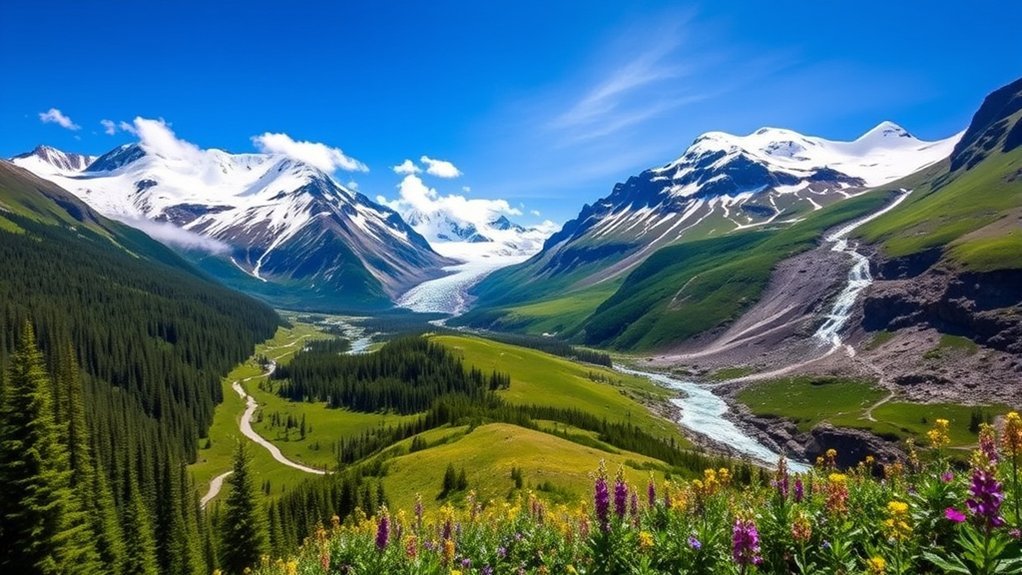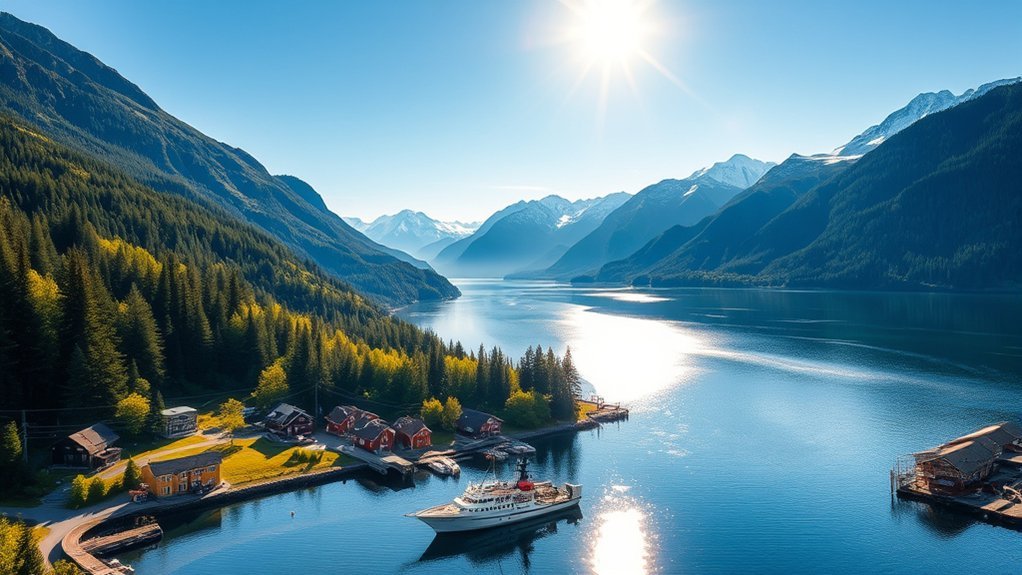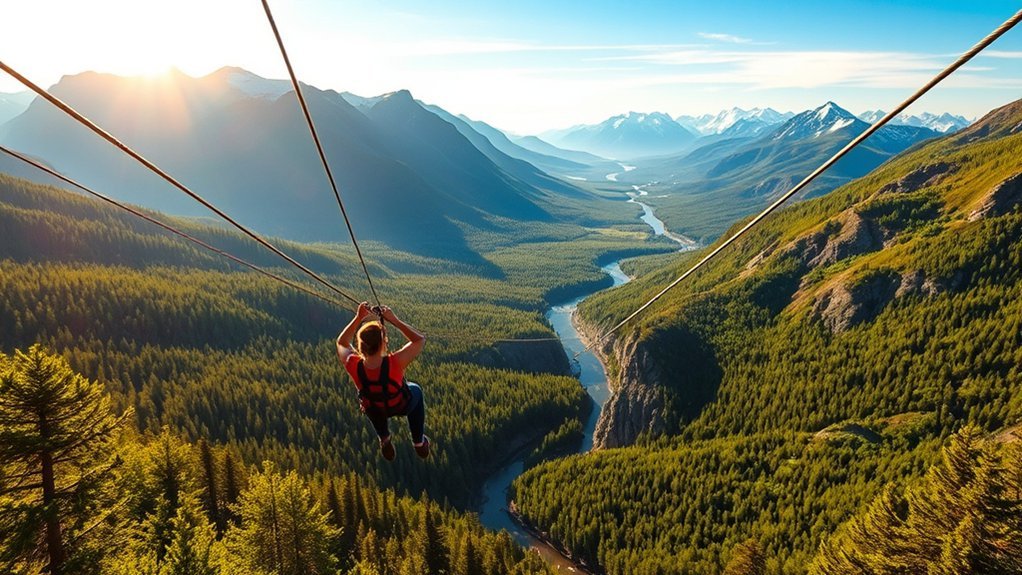
Ziplining in Alaska can take you through Southeast Alaska’s coastal rainforest, over mountain valleys, or down a long mountainside cable near the coast. Ketchikan, Skagway, Talkeetna, Denali, Icy Strait Point, Palmer, Juneau, and Seward offer different experiences. However, courses are seasonal, and availability, restrictions, and transportation arrangements can change.
Quick Answer
The best places to zipline in Alaska include Ketchikan for rainforest scenery, Skagway for waterfalls, Talkeetna and Denali for mountain views, and Icy Strait Point for one long, fast descent. Palmer offers a convenient option for Anchorage-area travelers. Juneau and Seward may also have seasonal tours, but confirm live availability before planning your trip.
Key Takeaways
- Ketchikan and Skagway are convenient choices for many Inside Passage cruise passengers.
- Talkeetna and Denali offer guided multi-line courses with mountain and boreal-forest scenery.
- Icy Strait Point’s ZipRider is a seated, single-descent ride rather than a traditional canopy tour.
- Age, weight, height, health, and mobility rules differ by operator and must be checked before booking.
- Wildlife may be visible near some courses, but no sighting is guaranteed.
At a Glance
| Time Required | About 1.5 to 4 hours, including orientation, equipment fitting, transfers, and the course |
| Difficulty | Beginner to moderately active; some courses require stairs, bridges, uneven walking, or rappelling |
| Tools Needed | Operator-supplied harness and helmet; you generally need closed-toe shoes and weather-ready clothing |
| Cost | Varies by destination, date, transportation, and booking channel; check the operator’s live price before paying |
How to Choose an Alaska Zipline
Start by deciding what type of experience you want. A traditional canopy tour uses several cables, platforms, and sometimes suspension bridges or rappels. An aerial adventure course may require more climbing and balance. A ZipRider uses a seated harness for one long descent and usually involves less platform-to-platform travel.
You should also consider your itinerary. Cruise passengers often prefer Ketchikan, Skagway, Juneau, or Icy Strait Point because excursions may connect with the port. Independent travelers can more easily reach Talkeetna, Denali, Palmer, or Seward by road.
Note: A tour shown on an old travel page may no longer operate on your date. Check the operator’s booking calendar and requirements before arranging transportation or building the rest of your day around it.
Alaska Zipline Destination Comparison
| Destination | Best For | Experience | Planning Note |
|---|---|---|---|
| Ketchikan | Rainforest canopy scenery | Multiple lines, elevated platforms, bridge, and rappel | Strict height, weight, and mobility rules may apply |
| Skagway | Waterfalls and a longer port excursion | Multi-line course, bridges, and mountain transport | Allow enough time for the transfer to and from Dyea |
| Talkeetna | Boreal forest and Alaska Range views | Nine lines, suspension bridges, and a rappel | Current operator minimum age is 10 |
| Denali area | Tundra and mountain scenery | Guided course with lines and elevated bridges | The course is outside the national park boundary |
| Icy Strait Point | Speed and one signature descent | Seated ZipRider with six side-by-side cables | Different from a multi-line canopy tour |
| Palmer | An Anchorage-area road trip | Side-by-side tandem lines and mountain views | Located outside Anchorage; private transport may be needed |
| Juneau or Seward | Travelers already visiting those communities | Seasonal canopy-tour listings | Confirm that a bookable departure exists for your date |
Ziplining in Juneau
Juneau’s alpine zipline experiences are associated with Douglas Island and the Eaglecrest Ski Area, where the setting includes Sitka spruce, western hemlock, mountain slopes, and views across the surrounding area. Listed tours may include several lines, a suspension bridge, and ground-based activities such as axe throwing.
Juneau tour inventory can change between seasons and booking channels. Some excursion pages have displayed limited or unavailable departures even while other listings remained visible. Treat Juneau as a possible option, not a guaranteed one, until you can select and pay for a departure on your exact date.
If you are arriving by cruise ship, verify the meeting point, total duration, transfer time, cancellation policy, and return time. Do not assume every tour leaves directly from the dock.
Ziplining in Ketchikan
Ketchikan is one of the strongest choices for a classic Alaska rainforest canopy experience. Kawanti Adventures operates a course near the Tongass National Forest with elevated lines, platforms, a skybridge, and a rappel. The operator describes cables reaching as high as 135 feet and a substantial network of dual-line cables.
Rainforest Scenery
The course setting includes spruce and hemlock forest, wetlands, streams, and coastal rainforest. Rain is common in Ketchikan, so wet foliage and cloudy conditions are part of the experience rather than a sign that the tour will automatically be canceled.
Possible Wildlife Sightings
Bald eagles, black bears, and other wildlife live in the region, but sightings are incidental. Never expect a guide to approach, feed, or control a wild animal. Follow the guide’s directions if wildlife appears near the course.
Ketchikan Restrictions
Current Ketchikan listings commonly specify minimum and maximum weights, a minimum height, closed-toe shoes, full use of the limbs, and the ability to manage an active course. Restrictions can change, so read the operator’s current rules rather than relying on limits quoted in an older article.
Ziplining in Skagway
Skagway’s best-known option is the Grizzly Falls Ziplining Expedition near Dyea. The experience combines a road transfer, a rugged mountain ride, multiple ziplines, suspension bridges, forest scenery, and passes near glacially fed waterfalls.
Course Style and Scenery
This is a multi-stage excursion rather than a quick ride beside the cruise terminal. The trip to the course is part of the experience, and the lines provide changing views of forest, mountain terrain, and water. It can suit first-time riders, but participants must be comfortable with heights and uneven ground.
Safety and Equipment
Guides provide the required equipment and explain riding and braking procedures used on that course. Do not copy a technique learned elsewhere because braking systems differ. Keep both hands and your body in the position demonstrated during the briefing.
Wildlife Around Skagway
Eagles, bears, and other animals may live or travel through the surrounding habitat. A sighting is possible, but the tour should be booked for the course and scenery—not as a wildlife guarantee.
Ziplining in Talkeetna
Denali Zipline Tours in Talkeetna offers a three-hour guided canopy adventure through boreal forest above the river valleys. The current course description lists nine ziplines, suspension bridges, a rappel, and a final line over a kettle pond.
The course can provide Alaska Range and Denali views when the weather is clear. Clouds can hide the mountains, so treat a full Denali view as a bonus rather than a promise. The operator currently lists a minimum age of 10, with separate adult and youth categories. Check its pre-trip information for current weight, footwear, health, and waiver requirements.
Pro Tip: If mountain views matter to you, choose an earlier departure when practical and keep the rest of your expectations focused on the forest course. Weather can change quickly, and no operator can guarantee a clear view of Denali.
Ziplining Near Denali National Park
Denali Park Zipline operates just outside the national park rather than inside it. Its course combines elevated bridges and ziplines above boreal forest and open terrain, followed by a dual-racing finish.
For the 2026 season, the operator lists a three-hour tour, a minimum age of eight, and a required weight range of 70 to 280 pounds. Participants are weighed before the tour. Those limits are specific to this course and should not be applied to other Alaska ziplines.
Icy Strait Point ZipRider
The Icy Strait Point ZipRider near Hoonah is different from a forest canopy course. Riders sit in a harness for one long descent from the mountain toward the waterfront. Six side-by-side cables allow several people to descend at once.
The operator lists a 5,495-foot cable and a 1,330-foot descent, making this a long single ride rather than a sequence of short canopy lines.
The current operator requirement is 75 to 275 pounds. Guests age 16 or younger must have a parent or guardian involved according to the operator’s supervision rules. The ride is not suitable for expectant mothers or people with certain back or neck conditions.
Ziplining Near Anchorage
The clearly verified Anchorage-area option is not in downtown Anchorage. Alaska Zipline Adventure Park is in Palmer, north of the city. It offers side-by-side tandem lines on a working farm with views of the surrounding mountains.
This option works best for travelers with a rental car or arranged transportation. Check the actual driving time from your Anchorage accommodation, allow extra time for traffic and check-in, and confirm whether the package includes any local transfer.
Ziplining in Seward
Seward has been associated with Stoney Creek canopy experiences north of town. Published descriptions include multiple ziplines, bridges, rappels, rainforest, and views over a glacial valley. However, online listings do not always provide consistent evidence of current departures.
Before adding Seward ziplining to your itinerary, confirm that the operator is actively accepting reservations for your date. Ask where the tour begins, whether transportation is included, how much walking is required, and what happens if weather closes the course.
Wildlife Expectations in Seward
Bald eagles and other wildlife may be visible in the Seward area, but a canopy tour is not a substitute for a dedicated wildlife cruise or guided nature tour. Do not expect bears, moose, otters, or marine mammals to appear during a particular departure.
Best Time for Seward Ziplining
Most Seward outdoor tours operate during the main visitor season from late spring into early fall. Longer summer daylight can make scheduling easier, but rain and cool temperatures remain possible throughout the season.
Ziplining in Fairbanks
A current, established commercial zipline operating in Fairbanks itself could not be reliably confirmed. Do not rely on generic names such as “Alaska Zipline Tours” or “Fairbanks Zipline Adventure” unless you can find a current operator page, physical address, booking calendar, and recent contact information.
If ziplining is important to your Interior Alaska itinerary, consider the verified Denali-area course or Talkeetna. Both require significant travel from Fairbanks, so compare driving time, lodging, and the rest of your route before booking.
Family-Friendly Ziplining in Alaska
Several Alaska courses accept children, but “family-friendly” does not mean every child can participate. Eligibility may depend on age, weight, height, reach, maturity, and the ability to follow instructions. A child who meets the age rule may still fall outside the required weight range.
- Check every participant: Compare each person’s current age, weight, and height with the operator’s rules.
- Ask about adult supervision: Minors may need an adult on the course or a guardian at specific locations.
- Consider the full course: Bridges, stairs, rappels, long waits on platforms, and uneven trails can be more challenging than the zip itself.
- Prepare nervous riders: Show children the operator’s official photos or videos and explain that backing out after check-in may not qualify for a refund.
Safety Tips for an Alaska Zipline Adventure
Choose an established operator that provides a structured briefing, properly fitted equipment, trained guides, documented inspection procedures, and a clear rescue plan. ACCT International publishes the ANSI/ACCT 03-2019 standards for challenge courses and canopy or zipline tours. However, you should not assume that every operator is accredited simply because it mentions safety.
- Follow the guide’s instructions for launching, body position, braking, and landing.
- Tell the operator about relevant medical, mobility, vision, hearing, or seizure concerns before paying.
- Wear a helmet and harness exactly as fitted; never loosen or adjust them without a guide.
- Use closed-toe shoes with secure laces or straps.
- Tie back long hair and avoid scarves, dangling jewelry, and loose clothing.
- Secure phones, cameras, glasses, and other items using only methods approved by the operator.
- Do not participate while impaired by alcohol, cannabis, sedating medication, or another substance.
Warning: Pregnancy, serious heart conditions, seizure disorders, recent surgery, back or neck injuries, and limited mobility may prevent participation. Rules differ by course. Contact the operator before booking and ask a qualified clinician if you are unsure whether the activity is appropriate for you.
What to Expect During Your Ziplining Experience
Your tour will usually begin with check-in, a waiver, and an eligibility check. Some operators weigh participants because cable speed and braking systems depend partly on rider weight. Guides then fit the harness and helmet and explain the course’s procedures.
A traditional canopy tour may include a short practice line before you move to longer lines. You may need to climb stairs, cross suspension bridges, walk on uneven trails, wait on elevated platforms, or complete a controlled rappel. A ZipRider usually involves transportation to the launch point, a seated-harness fitting, and one long descent.
Many tours run in light rain. Strong wind, lightning, heavy rain, or another unsafe condition may cause a delay or cancellation. Wear layers, bring a waterproof outer shell, and avoid cotton clothing that remains cold when wet.
Booking Checklist
- Confirm the exact date, departure time, meeting point, and total tour duration.
- Read the current age, weight, height, health, and footwear requirements.
- Check whether transportation is included.
- Read the weather and cancellation policy.
- Ask whether cameras or phones are permitted on the course.
- For a cruise visit, allow a generous buffer before the ship’s all-aboard time.
- Complete waivers before arrival when the operator provides them online.
Frequently Asked Questions
What is the best time of year for ziplining in Alaska?
Most Alaska zipline courses operate from May into September. June through August usually provides the widest availability and longest daylight. Exact opening and closing dates vary by course, weather, and demand, so check the live booking calendar.
Are there age or weight restrictions for Alaska zipline tours?
Yes. Every operator sets its own limits. Current examples include 50 to 265 pounds at some Skagway excursions, 70 to 280 pounds near Denali, and 75 to 275 pounds at Icy Strait Point. Minimum ages and height rules also vary. Check the exact tour before booking.
How long do Alaska zipline tours last?
Most complete excursions take about two to four hours. This normally includes transportation, check-in, equipment fitting, a safety briefing, and the course. Icy Strait Point’s single-descent experience is commonly listed at about 1.5 hours with its associated transport and preparation.
What should I wear for ziplining in Alaska?
Wear closed-toe shoes, long or flexible pants, and comfortable layers. Add a waterproof shell because many tours operate in light rain. Tie back long hair and avoid loose jewelry, scarves, sandals, and clothing that could interfere with the harness.
Is transportation provided to Alaska zipline locations?
It depends on the tour. Many cruise-port excursions include transportation from a designated pier or downtown meeting point. Independent courses may require you to drive to their office or course. Confirm the pickup point and return time before paying.
Do Alaska zipline tours operate in the rain?
Many operate during light rain, especially in Southeast Alaska. Operators may delay or cancel when wind, lightning, heavy rain, or another condition makes the course unsafe. Follow the operator’s instructions rather than deciding from the weather at your hotel or ship.
Is ziplining in Alaska suitable for beginners?
Many courses accept first-time riders and provide practice and guide assistance. Beginners should still check the amount of climbing, walking, bridging, and rappelling involved. A seated ZipRider may feel simpler physically, although its height and speed can feel more intense.
Can I carry a phone or camera while ziplining?
Policies vary. Some operators allow an approved action-camera mount or secure tether, while others require personal items to remain in storage. Do not hold a phone in your hand or attach equipment to the harness without the guide’s permission.
Sources
- ACCT International — current ANSI/ACCT challenge-course and canopy-tour standards
- Alaska.org Zipline Tours — Alaska destination and seasonal-tour directory
- Kawanti Adventures — Ketchikan rainforest course features
- Alaska X — Skagway Grizzly Falls excursion information
- Denali Zipline Tours — Talkeetna course format, duration, and age information
- Icy Strait Point — ZipRider specifications and participation requirements