DeSoto State Park sits on Lookout Mountain near Fort Payne in northeastern Alabama, combining forest trails, seasonal waterfalls, the West Fork of Little River, historic Civilian Conservation Corps structures, camping, cabins, and family-friendly recreation. The 3,502-acre park works well for anything from a short waterfall-and-picnic visit to a full weekend of hiking and camping. One detail is especially important when planning: famous DeSoto Falls is part of the park system but lies in a separate picnic area about seven miles from the main park.
Quick Answer
DeSoto State Park is one of northeast Alabama’s best bases for hiking, waterfalls, camping, mountain biking, fishing, and scenic drives. The park has more than 35 miles of hiking trails, while 104-foot DeSoto Falls is reached at a separate day-use area about seven miles from the main park.
Key Takeaways
- DeSoto State Park covers 3,502 acres on Lookout Mountain near Fort Payne and has more than 35 miles of hiking trails.
- DeSoto Falls is a 104-foot waterfall in a separate park area about seven miles from the main park, with a current $5-per-vehicle parking fee.
- Visitors can hike, mountain bike, fish, kayak, picnic, attend interpretive programs, view seasonal waterfalls, and use the park’s other recreation facilities.
- Overnight choices include 94 full-hookup improved campsites, primitive camping, backpacking sites, lodge rooms, cabins, and chalets.
- Spring, late fall, and winter usually bring stronger waterfall flow, while autumn is especially popular for fall color.
DeSoto State Park at a Glance
At a Glance
| Location | Lookout Mountain, about eight miles northeast of Fort Payne, Alabama |
| Park Size | 3,502 acres |
| Hiking | More than 35 miles of hiking trails, including an ADA-accessible boardwalk |
| Mountain Biking | 11-plus miles of designated mountain-bike trail opportunities |
| Main Park Entrance | No general gate or entrance fee for the main park area; individual facilities and day-use areas may charge fees |
| DeSoto Falls | 104-foot waterfall in a separate park area about seven miles away; current parking fee is $5 per vehicle |
| Trail Hours | Main park trails and picnic areas are generally open from dawn to dusk; check current facility schedules before visiting |
Current park information, maps, lodging links, events, and notices are available from the official DeSoto State Park website.
Activities and Attractions at DeSoto State Park
DeSoto State Park offers enough variety for hikers, cyclists, anglers, families, photographers, and travelers who simply want a quiet day outdoors. The main park’s trail network crosses wooded ridges, rocky terrain, creeks, small waterfalls, and sections of the West Fork of Little River.
Hiking is the biggest draw, but the park also has more than 11 miles of mountain-biking opportunities, fishing access, kayaking and paddling opportunities, geocaching, picnic areas, interpretive programs, seasonal swimming facilities, and a zipline attraction. The Benefield Interpretive Center and Civilian Conservation Corps exhibits add indoor or educational options to an outdoor-focused visit.
Picnic areas have tables and grills, making the park practical for families who want to combine a short trail with lunch. Some picnic facilities have their own day-use fees, so check the official park information before arriving.
Visiting DeSoto Falls
DeSoto Falls is one of the area’s signature sights, dropping about 104 feet along the West Fork of Little River. However, it is important not to confuse the waterfall with the main DeSoto State Park trail area. According to Alabama State Parks trip-planning information, DeSoto Falls Picnic Area is a separate section about seven miles from the main park.
The easiest side view is reached from the picnic area by a sidewalk and roughly 50 steps to an observation platform. Visitors who want other perspectives can use the Overlook Trail for a front view or the River Trail toward the basin. Those routes cross rocky mountain terrain and are rated from moderate to strenuous by the park.
Warning: DeSoto Falls parking is limited and can fill on busy weekends. There is no overflow roadside parking, and the park advises against taking RVs or trailers on County Road 613 to the falls. Wear closed-toe footwear, carry water, stay on established routes, and do not climb around waterfall edges.
The official DeSoto Falls page lists a $5-per-vehicle parking fee. The area is open during daylight hours. Because water levels depend heavily on rainfall, the waterfall can look very different from one season to another.
Hiking Trails at DeSoto State Park

DeSoto State Park has more than 35 miles of hiking trails, with terrain ranging from accessible boardwalks to rocky and strenuous mountain routes. Many trails interconnect, so carrying a current map is useful even on a short hike. The official DeSoto hiking page also recommends checking a route’s terrain before setting out.
DeSoto State Park currently has more than 35 miles of hiking trails, including routes to seasonal waterfalls, rocky formations, ridges, and the West Fork of Little River.
Talmadge Butler Boardwalk Trail
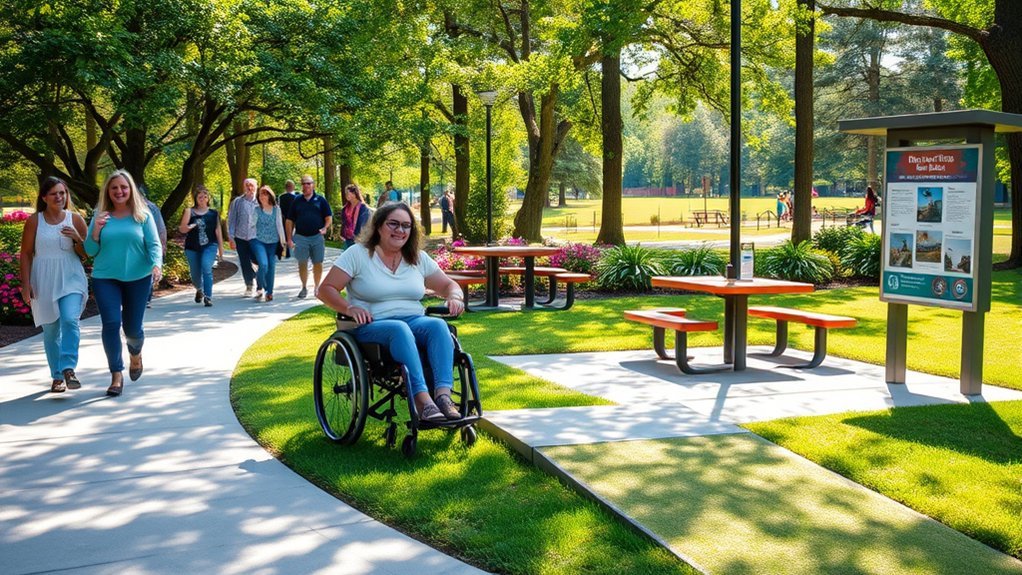
For an easy outing, the Talmadge Butler Boardwalk Trail is one of the best choices. The approximately 360-yard accessible trail allows people with a wide range of mobility levels to experience the forest and reaches the area around Azalea Cascade. It is especially useful for families, mixed-ability groups, or visitors who want a short nature walk rather than a long hike.
Laurel Falls
Laurel Falls is reached from the Orange Trail and sits about 0.75 mile from the Country Store and Information Center. Alabama State Parks describes the route as rugged and moderate, with uphill sections. Water flow is rainfall-dependent, so conditions are often better in wetter months.
Lost Falls
Lost Falls lies about 1.5 miles from the Country Store and is harder to find when water is low. The park describes the terrain as moderate to mildly strenuous. Spring and winter are typically better times to see water flowing here.
DeSoto Scout Trail and Little River
The DeSoto Scout Trail follows portions of the West Fork of Little River and offers a more rugged experience than the boardwalk. Sections can involve elevation changes, rocks, roots, and uneven surfaces. This is a better choice for hikers who want more time in the forest and along the river.
Mountain bikers also have several designated routes in the park. Bike terrain ranges from easy to strenuous, and riders should use only routes designated for bikes and yield appropriately to hikers.
Pro Tip: Pick up or download the current park trail map before hiking. Cell service can be spotty, so do not depend entirely on a phone connection for navigation.
Camping and Accommodations at DeSoto State Park
| Accommodation Type | Current Details | Good For |
|---|---|---|
| Improved Campsites | 94 full-hookup sites with water, sewer, and electric service | RVs, campers, and tents on eligible sites |
| Primitive Campsites | 18 individual wooded sites plus three large group sites; primitive-area amenities are limited | Tent campers seeking a simpler setup |
| Backpacking Campsites | Two backpacking sites with shelters are listed by the park | Hikers wanting a more remote overnight stay |
| Historic CCC Cabins | Four historic rustic cabins built by the Civilian Conservation Corps in the mid-1930s | Travelers wanting history with more comfort than camping |
| Lodge Rooms, Other Cabins and Chalets | Additional lodge, cabin, and chalet lodging is available through the park’s reservation system | Couples, families, and visitors who prefer indoor lodging |
Camping at DeSoto State Park allows visitors to stay close to the trail system and other recreation areas. The improved campground has 94 full-hookup sites and two centrally located comfort stations with restrooms, showers, and coin-operated laundry. Picnic tables and grills are provided at the sites.
The primitive campground has 18 individual wooded campsites, three large group sites, a wall-tent site, and a separate camping cabin. Primitive campers have fewer facilities immediately around their sites but can access comfort facilities in the improved campground.
Travelers who do not want to sleep in a tent can choose among lodge rooms, cabins, and A-frame chalets. Four of the park’s rustic cabins were built by the Civilian Conservation Corps in the mid-1930s. Amenities vary significantly by lodging type, so check the exact unit before booking. Cell service can be spotty, and the park states that Wi-Fi does not reach cabins or chalets.
Wildlife and Nature at DeSoto State Park
DeSoto State Park protects a mix of hardwood forest, rocky mountain habitat, streams, seasonal waterfalls, and river corridors. Visitors may encounter white-tailed deer, wild turkeys, squirrels, amphibians, reptiles, and many species of woodland birds. Wildlife sightings are never guaranteed, so early morning and quieter trails often provide the best chance to observe animals without disturbing them.
Black bears are native to Alabama and can occur in the region, but Alabama State Parks notes that seeing one in DeSoto State Park is still very uncommon. Visitors should never approach, feed, or intentionally attract wildlife.
Plant life also changes noticeably with the seasons. Spring brings wildflowers and increased stream flow, summer produces dense green forest, and autumn can cover Lookout Mountain in red, orange, and gold foliage. Smaller waterfalls are highly rainfall-dependent and may have little or no flow during dry summer periods.
The park’s naturalist and interpretive programs cover topics such as wildlife, plants, watersheds, night ecology, and local history. Event topics and schedules change throughout the year, so check the official events calendar rather than assuming a program will run on the day of your visit.
History and Culture of DeSoto State Park

People lived in and used this part of the Southeast long before European exploration. The park’s modern name honors Spanish conquistador Hernando de Soto, whose expedition entered what is now Alabama during the 16th century. However, the exact route of the expedition through northeastern Alabama remains disputed.
The National Park Service’s history of the de Soto expedition notes that scholars have proposed different Alabama routes. One interpretation places the expedition near the Coosa River and Little River Canyon area, while another, widely accepted interpretation places it north of Lookout Mountain. For that reason, it is safer to say the park was named for de Soto rather than claiming he certainly crossed the land that is now DeSoto State Park.
The most visible historic legacy inside the park comes from the Civilian Conservation Corps. CCC workers developed important park infrastructure during the 1930s and early 1940s. The historic lodge’s original stone structure dates to the mid-1930s, and four surviving rustic cabins were also built by CCC workers.
Visitors can still see stonework, roads, trails, and other features connected with this New Deal-era development. The park’s CCC museum and interpretive programs provide additional context for people who want more than an outdoor recreation visit.
Best Time to Visit DeSoto State Park
DeSoto State Park can be visited throughout the year, but the best season depends on what you want to see.
- Spring: One of the strongest periods for waterfalls, flowing creeks, mild hiking weather, and wildflowers.
- Summer: Green forests, swimming and water recreation are appealing, but temperatures are warmer and some small waterfalls may have limited flow.
- Fall: A popular period for cooler hikes and Lookout Mountain’s autumn foliage. Weekends can be busy during peak color.
- Winter: Leaf-off forest views can open sight lines, and the park says late fall and winter are often good periods for waterfall flow. Prepare for colder and changeable mountain weather.
Note: Waterfall conditions depend heavily on recent rainfall. A waterfall that is powerful after wet weather may shrink substantially during a dry period, so recent conditions matter more than the calendar alone.
Tips for Visiting DeSoto State Park
Check the weather before leaving, especially when thunderstorms or heavy rainfall are possible. Mountain conditions can change during the day, and wet rock, roots, and leaves can make otherwise manageable trails slippery.
Wear closed-toe shoes with adequate grip on hiking trails. Bring drinking water and snacks, and choose a route that matches the least-experienced member of your group. A paper or downloaded trail map is valuable because cellphone coverage can be inconsistent.
Dogs are allowed on DeSoto State Park trails but must remain on a leash. Keep pets away from wildlife and waterfall edges and clean up after them.
If you plan to swim or wade in allowed natural-water areas, remember that there is no lifeguard. River depth, current, temperature, and flow can change after rain. Parents should supervise children closely around all moving water.
Warning: Do not treat waterfall overlooks, wet rocks, riverbanks, or steep trail edges as photo platforms. Stay behind barriers where provided and remain on established paths.
For photography and wildlife observation, binoculars and a camera can be useful, but avoid approaching animals or leaving the trail to get a closer shot. Weekday mornings generally provide a quieter experience than busy fall-color or holiday weekends.
Drivers should also be cautious with navigation apps. Alabama State Parks specifically warns that GPS directions to DeSoto State Park and DeSoto Falls can be unreliable. This is particularly important for RVs, trailers, and other large vehicles. Follow the park’s written driving directions when bringing a large rig.
Nearby Attractions and Day Trips from DeSoto State Park
Little River Canyon National Preserve is the most natural extension of a DeSoto State Park trip. The preserve offers waterfalls, canyon overlooks, wooded trails, river access, backcountry areas, and a scenic drive along the canyon rim. It is a separate National Park Service site, so its rules, parking areas, hours, and fees should be checked independently.
The Little River Canyon Rim Parkway is especially useful for visitors who want dramatic scenery without committing to a long hike. Overlooks along the route provide views into the canyon, while more demanding trails descend toward the river. Technical rock climbing opportunities also exist within the broader Little River Canyon recreation area, making it a better reference point for climbers than the main DeSoto State Park trail system.
Fort Payne is another worthwhile stop. Downtown attractions introduce visitors to local railroad, industrial, and music history, while restaurants and shops make the city a practical break between outdoor activities.
Country-music fans can visit the ALABAMA Fan Club and Museum, which is dedicated to the award-winning group ALABAMA, formed in Fort Payne. Its exhibits include memorabilia, awards, and material covering the band’s career.
Mentone, north of the main park, is another easy addition to the trip. The small mountain community is close to DeSoto Falls and offers local shops, restaurants, and a quieter Lookout Mountain atmosphere.
If you’re planning a picnic after hiking, fresh fruit can be an easy option to pack. For a completely different food-focused read, you can also explore this guide to Asian melon varieties, including their different flavors and textures.
Frequently Asked Questions
What is DeSoto State Park?
DeSoto State Park is a 3,502-acre Alabama state park on Lookout Mountain near Fort Payne. It is known for hiking, seasonal waterfalls, the West Fork of Little River, camping, mountain biking, historic CCC structures, cabins, and other outdoor recreation.
What activities are available at DeSoto State Park?
Popular activities include hiking, mountain biking, fishing, kayaking, picnicking, geocaching, wildlife observation, interpretive programs, seasonal swimming, waterfall viewing, and camping. The park has more than 35 miles of hiking trails and 11-plus miles of mountain-biking opportunities.
Are there accommodations at DeSoto State Park?
Yes. Options include lodge rooms, historic and other cabins, chalets, 94 full-hookup improved campsites, primitive campsites, group camping, a camping cabin, and backpacking sites. Amenities differ considerably by accommodation type.
What are the notable features of DeSoto State Park?
Highlights include the West Fork of Little River, the accessible Talmadge Butler Boardwalk, Azalea Cascade, Laurel Falls, Lost Falls, CCC-era structures, forest trails, and the separate 104-foot DeSoto Falls area about seven miles from the main park.
Is DeSoto State Park open year-round?
The park operates year-round, but individual facilities, recreation services, and seasonal activities can have different schedules. Main trails and picnic areas are generally open from dawn to dusk. Check current park notices before traveling.
Is there an entrance fee for DeSoto State Park?
The main area of DeSoto State Park does not have a general gate or entrance fee. Some individual facilities and day-use areas charge their own fees. DeSoto Falls Picnic Area currently charges $5 per vehicle for parking.
Is DeSoto Falls inside the main DeSoto State Park area?
No. DeSoto Falls is part of DeSoto State Park, but its picnic area and trailhead are a separate unit about seven miles from the main park. Allow extra driving time rather than assuming you can walk there from the main campground or lodge.
What is the best time to see waterfalls at DeSoto State Park?
Spring, late fall, and winter generally offer stronger waterfall flow. Smaller falls and streams can become very low or dry during summer, especially after long periods without rain.
Are dogs allowed on DeSoto State Park trails?
Yes. Dogs are permitted on DeSoto State Park trails when kept on a leash. Pet rules for overnight accommodations are more limited, so confirm the exact lodging policy when reserving a room, cabin, or chalet.
Is DeSoto State Park accessible for visitors with limited mobility?
Several main facilities are accessible, and the Talmadge Butler Boardwalk provides an approximately 360-yard trail designed for visitors of varied abilities. DeSoto Falls also has a relatively easy side-view observation route, although it includes roughly 50 steps and other waterfall trails are much rougher.
Sources
- Alabama State Parks: DeSoto State Park — park size, recreation, hiking mileage, mountain biking, camping, lodging, and general visitor information.
- Alabama State Parks: Plan Your Trip — fees, hours, accessibility, driving guidance, DeSoto Falls location, and visitor logistics.
- Alabama State Parks: Hiking — trail mileage, terrain, pet rules, maps, and hiking safety.
- Alabama State Parks: DeSoto Falls Picnic Area — waterfall access, parking fee, viewpoints, parking limitations, and trail difficulty.
- Alabama State Parks: Improved Campsites — current full-hookup campground inventory and amenities.
- National Park Service: De Soto Expedition, 1539–1542 — historical context and uncertainty surrounding the expedition’s route through northeastern Alabama.