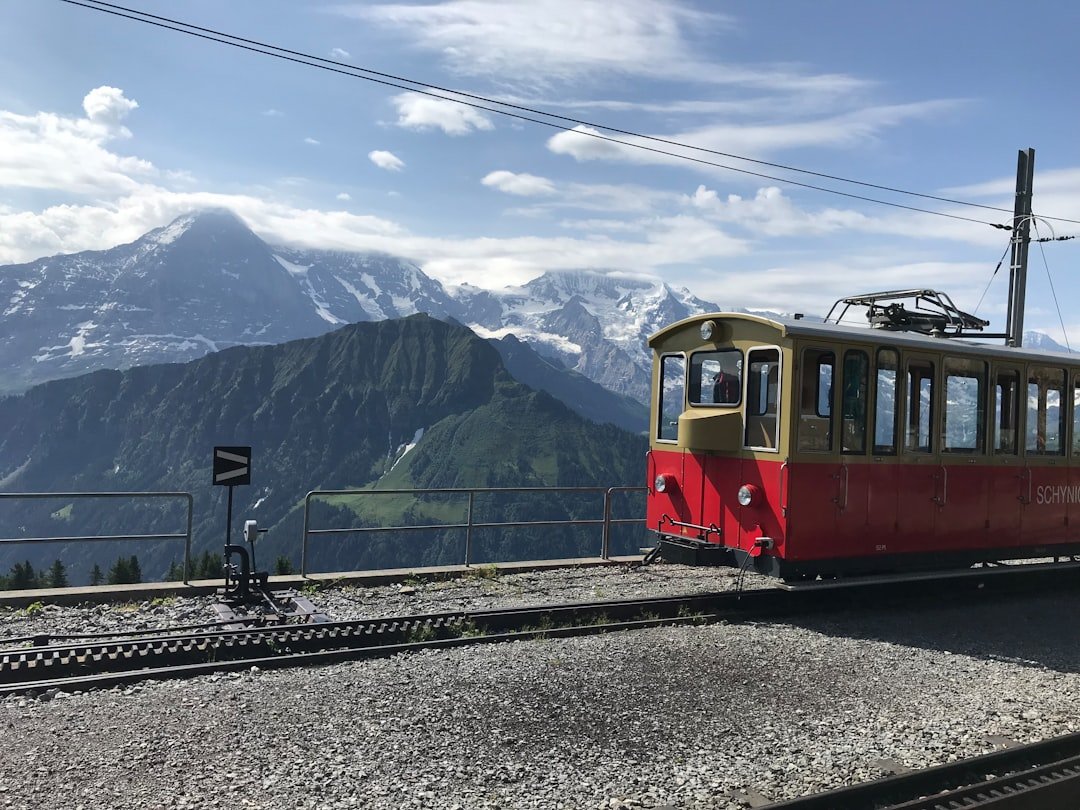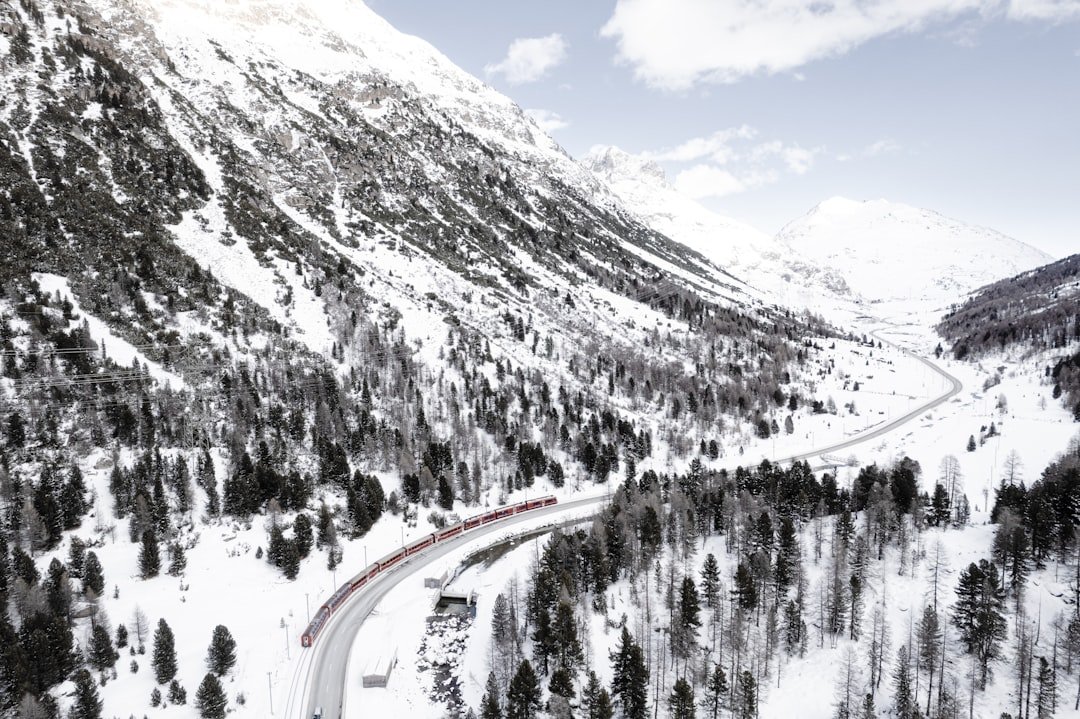
Switzerland is one of the easiest places in Europe to explore by train in winter. Snowy Alpine passes, deep valleys, lakes, mountain villages, and famous resort towns can all appear outside the window without requiring a car. The best-known winter scenic trains include the Glacier Express, Bernina Express, GoldenPass Express, and Luzern–Interlaken Express, but each has a different route, reservation policy, and timetable.
Quick Answer
The best winter scenic trains in Switzerland include the Glacier Express between Zermatt and St. Moritz, the Bernina Express to Tirano, the GoldenPass Express between Montreux and Interlaken, and the Luzern–Interlaken Express. Check winter timetables carefully because reservation rules, operating periods, and train frequencies differ by route.
Key Takeaways
- The Glacier Express is the classic full-day Alpine journey, running between Zermatt and St. Moritz in about eight hours.
- The Bernina Express crosses the UNESCO-listed Albula and Bernina railway landscape and descends to Tirano in Italy.
- The direct GoldenPass Express runs between Montreux and Interlaken Ost. Lucerne to Interlaken is a separate Zentralbahn panoramic service.
- A rail ticket or travel pass does not always include the required panoramic-train seat reservation.
- Winter snow, daylight, weather, and operating schedules vary, so check the official timetable shortly before traveling.
The Swiss Train Network: A Winter Wonderland
Switzerland’s winter rail experience is built around an integrated public-transport network rather than one railway company. Swiss Federal Railways, commonly called SBB, operates many national services, while specialist operators run important mountain and panoramic routes. Rhaetian Railway operates the Bernina network and works with Matterhorn Gotthard Bahn on the Glacier Express. MOB operates the western GoldenPass network, and Zentralbahn operates the Luzern–Interlaken Express.
This makes it possible to combine major cities, mountain resorts, villages, and scenic railway lines in one itinerary. Travelers can check connections through the SBB timetable, while reservations for certain panoramic trains are handled through their individual operators.
Switzerland’s most famous winter rail journeys are part of one connected transport system, but their operators, reservation rules, and onboard services are not identical.
Standard Swiss trains are warm and comfortable, but panoramic windows, at-seat catering, dining service, and compulsory reservations depend on the specific train. Do not assume that every ordinary train has the amenities advertised for a branded panoramic service.
Winter scenery also changes with elevation and weather. High Alpine sections may be deeply snow-covered while lower valleys remain green or wet. Lakes may look icy in cold periods, but travelers should use only officially opened skating areas, winter paths, or other designated surfaces rather than assuming natural ice is safe.
Scenic Train Routes for Exploring Switzerland in Winter
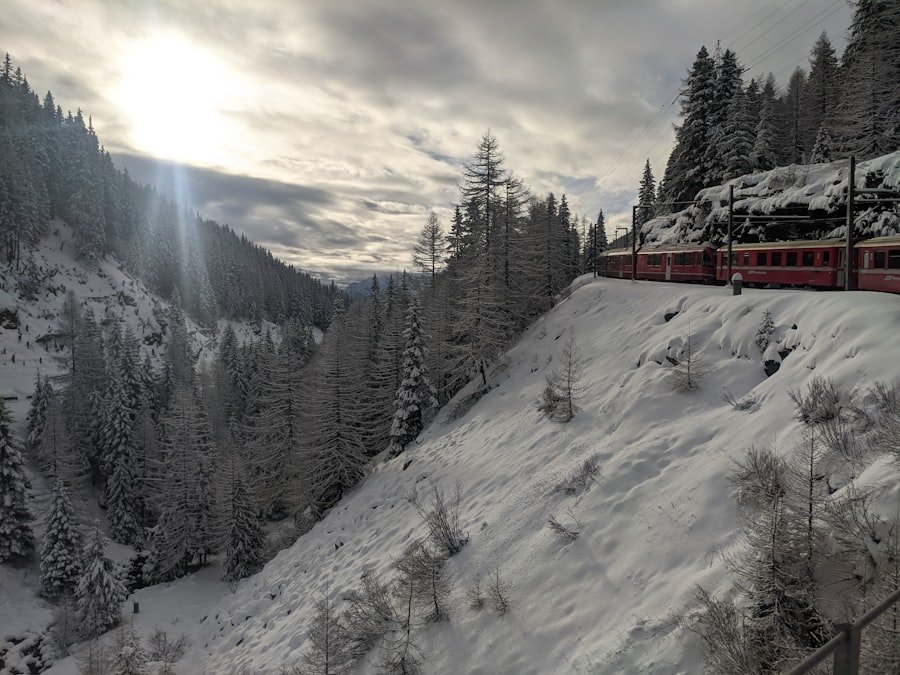
Switzerland offers several different styles of winter railway journey. Some are reserved panoramic trains designed mainly for sightseeing, while others are regular scheduled services that happen to cross exceptional scenery.
| Route | Main journey | Reservation | Best for |
| Glacier Express | Zermatt to St. Moritz, about 8 hours | Compulsory | A full-day Alpine panorama |
| Bernina Express | Chur or St. Moritz toward Tirano, depending on service | Required on Bernina Express panoramic trains | Glaciers, high passes, UNESCO railway scenery, and Italy |
| GoldenPass Express | Montreux to Interlaken Ost | Optional in 1st/2nd class but strongly recommended | Lake Geneva, Gstaad, villages, and the Bernese Oberland |
| Luzern–Interlaken Express | Lucerne to Interlaken Ost | Reservable; check current conditions | Central Swiss lakes and the Brünig route |
The Luzern–Interlaken Express is an especially useful scenic connection for travelers moving between central Switzerland and the Bernese Oberland. It operates between Lucerne and Interlaken Ost, passing lakes, valleys, and the Brünig area.
A regular rail journey from Montreux toward Zermatt can also be very scenic. It begins near Lake Geneva and continues through Valais before reaching Zermatt, where views of the Matterhorn depend on weather. It should not, however, be confused with one of Switzerland’s branded direct panoramic expresses.
The Glacier Express: A Spectacular Journey Through the Alps
| Metric | Details |
| Route Length | 291 kilometers |
| Duration | About 8 hours for the full panoramic journey |
| Highest Point | Oberalp Pass, 2,033 meters above sea level |
| Number of Tunnels | 91 |
| Number of Bridges | 291 |
| Seat Reservation | Compulsory in addition to a valid ticket or accepted travel pass |
The Glacier Express connects Zermatt and St. Moritz across 291 kilometers of Alpine railway. The full panoramic journey takes about eight hours and crosses 291 bridges and passes through 91 tunnels.
One of its highest and most memorable sections is the Oberalp Pass at 2,033 meters above sea level. In winter, this high section can be surrounded by deep snow, while other highlights include the Rhine Gorge, mountain valleys, villages, and the Rhaetian Railway section toward the Engadin.
The panoramic cars have tall windows designed for sightseeing. Food service is also available, with meals and other options varying by class and booking.
Warning: The Glacier Express is not a year-round, every-day service without interruption. For 2026, the official timetable states that trains do not run from October 11 through December 4. Always check the current Glacier Express timetable before booking an early-winter trip.
A seat reservation is compulsory. A Swiss Travel Pass, Saver Day Pass, Interrail, Eurail, or another accepted travel card may cover the transport fare, but it does not remove the separate reservation requirement. According to the published 2026 Glacier Express pricing, the standard 1st- and 2nd-class reservation charge is CHF 54. Prices and booking windows can change, so use the official price page for your travel date.
The Bernina Express: Crossing the Swiss-Italian Alps in Winter
The Bernina Express is one of Switzerland’s most varied scenic rail journeys. Depending on the timetable and train selected, Bernina Express services run from Chur or St. Moritz toward Tirano in northern Italy.
From Chur, the railway crosses 196 bridges and passes through 55 tunnels. Highlights can include the Landwasser Viaduct, the Albula railway, the Bernina high country, glaciers, Lago Bianco, Alp Grüm, Valposchiavo, and the Brusio Circular Viaduct before the train reaches Tirano.
The railway reaches 2,253 meters above sea level at Ospizio Bernina, the highest point on the Rhaetian Railway network. The Albula and Bernina railway landscape has been listed as a UNESCO World Heritage Site since 2008.
Winter makes the contrast especially noticeable. High sections around the Bernina Pass may be covered in snow while the train eventually descends toward the lower, milder landscape around Tirano.
Note: The panoramic Bernina Express and ordinary regional trains on the Bernina Line are not the same product. Bernina Express passengers need the appropriate reservation. Regional trains between St. Moritz and Tirano use the same famous railway but offer a more flexible experience; RhB currently offers optional regional-train seat reservations for CHF 5.
Travelers continuing to Tirano cross from Switzerland into Italy. Carry the passport, identity document, visa, or other entry documentation required for your nationality and trip.
The GoldenPass Line: Swiss Villages, Lakes, and the Bernese Oberland
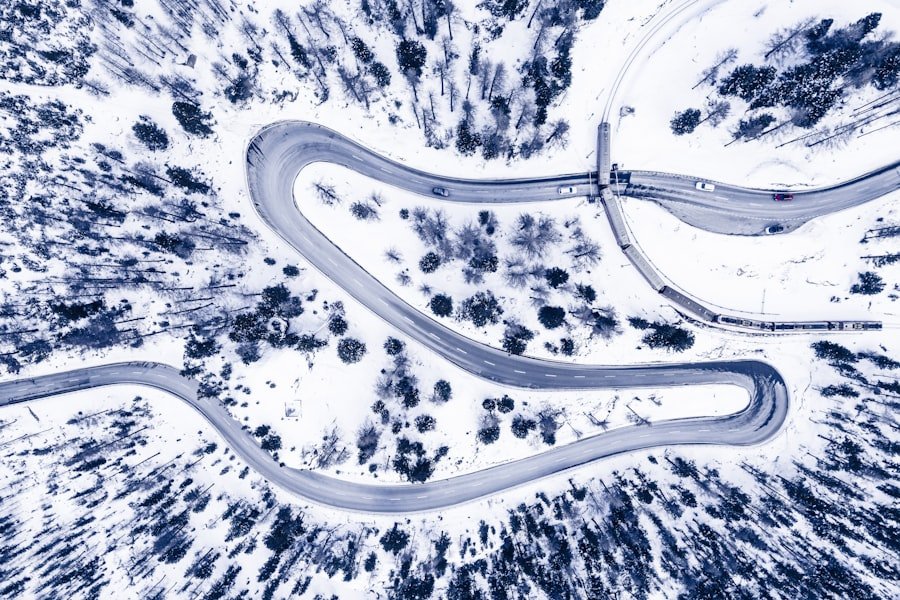
The name GoldenPass is sometimes used broadly for the scenic journey between Lucerne and Montreux, but travelers should understand how the present-day services are divided.
The direct GoldenPass Express operates between Montreux and Interlaken Ost, passing through areas such as Château-d’Oex, Gstaad, Zweisimmen, and the Bernese Oberland. The separate Luzern–Interlaken Express covers the Interlaken Ost to Lucerne section.
This distinction matters when booking. MOB explains that GoldenPass Express seats can be booked between Montreux and Interlaken Ost, while seats for the Interlaken–Lucerne section are handled through Zentralbahn. See the official GoldenPass booking guidance.
For winter scenery, the western part of the journey offers Lake Geneva views near Montreux before climbing toward mountain villages and resort areas such as Gstaad. Farther east, the route continues toward Spiez and Interlaken with the surrounding Bernese Oberland peaks.
GoldenPass Express reservations in ordinary 1st and 2nd class are optional but strongly recommended, particularly during busy travel periods. MOB currently lists a CHF 20 reservation charge for the GoldenPass Express. Prestige Class has separate rules and a compulsory reservation. Check MOB’s current reservation information before travel.
Food and drink service is available on the GoldenPass Express, so passengers can enjoy refreshments while watching the lakes, villages, forests, and mountain scenery pass outside.
Tips for Enjoying Scenic Train Journeys in Switzerland in Winter
Book the reservation as well as the ticket
One of the easiest mistakes is assuming that a rail pass or train ticket automatically guarantees a seat on every panoramic train. It does not. The Glacier Express requires a compulsory reservation. Bernina Express passengers also need the appropriate seat reservation, while GoldenPass Express reservations in standard 1st and 2nd class are optional but recommended.
Note: Treat the transport ticket and seat reservation as two separate items when planning panoramic trains. A Swiss Travel Pass may cover the rail fare on eligible routes while the panoramic reservation remains extra.
Check the exact winter timetable
Winter services are not identical throughout the season. Timetables can change in December, some panoramic services have annual operating breaks, and engineering or weather conditions can affect individual trains. Check the official operator and SBB timetable shortly before departure rather than relying only on an old itinerary.
Use daylight strategically
Winter days are shorter than summer days, so an early departure can provide more daylight for photography and mountain views. This is especially useful on long routes such as the Glacier Express.
Reduce window reflections
Panoramic windows are excellent for sightseeing, but interior lights and bright clothing can create reflections in photographs. Hold your camera or phone close to the glass without touching or blocking other passengers, avoid using flash, and wear darker clothing if photography is a priority.
Pro Tip: Do not build your entire plan around getting one exact side of the Glacier Express or Bernina Express. Railway operators cannot always guarantee carriage orientation or direction of travel. If traveling with someone else, seats facing each other can give your group access to views on both sides.
Dress in layers
The train interior will usually be much warmer than station platforms and outdoor stops. Wear layers that are easy to remove, especially if you will spend part of the day walking around Zermatt, St. Moritz, Gstaad, Interlaken, Tirano, or another destination.
Plan food and luggage before boarding
Onboard catering varies by train. Glacier Express offers meal service, Bernina Express offers snacks and drinks at the seat, and GoldenPass Express has food and drink options. Regional trains may have fewer services, so check your specific connection and carry water or a small snack when appropriate.
Luggage racks are available on many trains, but storage can be limited on panoramic services. Travelers with large suitcases should check each operator’s luggage information before departure.
Check accessibility requirements in advance
Accessible seating and boarding assistance are available on several panoramic services, but arrangements differ. For example, RhB advises travelers who need wheelchair-accessible Bernina Express seats to arrange them through Railservice. GoldenPass Express also provides accessible travel, while assistance may need to be registered in advance.
The Magic of Switzerland’s Winter Wonderland: A Train Journey to Remember
Winter rail travel in Switzerland combines practical transportation with scenery that would be difficult to experience from highways alone. Travelers can move from lake shores to high Alpine passes, deep valleys, resort towns, and historic railway structures while remaining inside a warm carriage.
The Glacier Express is the strongest choice for a long, dedicated panorama between Zermatt and St. Moritz. The Bernina Express stands out for its UNESCO railway, high Bernina crossing, and descent into Italy. GoldenPass Express combines Lake Geneva, Gstaad, and the Bernese Oberland, while the Luzern–Interlaken Express is a convenient scenic link through central Switzerland.
The best winter scenic train is not simply the one with the biggest windows. It is the route that fits your itinerary, operating date, daylight hours, reservation needs, and the landscapes you most want to see.
Snow conditions are never identical from one trip to the next, but careful planning makes these routes rewarding even when the weather changes. Confirm your timetable, buy the correct ticket, secure any required reservation, and leave enough flexibility for winter conditions.
For a completely different food-focused read elsewhere on the site, the original article also points readers to exploring the delightful world of Asian melon, which covers melon varieties and flavors found across Asia.
Frequently Asked Questions
What are winter scenic trains in Switzerland?
Winter scenic trains are railway services that travel through some of Switzerland’s most attractive mountain, lake, valley, and village landscapes during the colder months. Some, such as the Glacier Express and Bernina Express, use dedicated panoramic cars, while routes such as the Luzern–Interlaken Express are regular scenic services.
Which are the most popular winter scenic train routes in Switzerland?
Popular choices include the Glacier Express between Zermatt and St. Moritz, the Bernina Express toward Tirano, the GoldenPass Express between Montreux and Interlaken Ost, and the Luzern–Interlaken Express between Lucerne and Interlaken.
What are the highlights of the Glacier Express?
The full Glacier Express route is 291 kilometers long and crosses 291 bridges and 91 tunnels. Highlights include the Oberalp Pass at 2,033 meters, the Rhine Gorge, Alpine valleys, and panoramic railway sections between Zermatt and St. Moritz.
What makes the Bernina Express special in winter?
The Bernina route climbs to 2,253 meters at Ospizio Bernina before descending toward Tirano in Italy. Depending on the selected service, highlights can include the Landwasser Viaduct, glaciers, Lago Bianco, Alp Grüm, Valposchiavo, and the Brusio Circular Viaduct.
What can passengers expect on the GoldenPass Express in winter?
The GoldenPass Express runs between Montreux and Interlaken Ost. The journey includes Lake Geneva scenery near Montreux, villages such as Château-d’Oex, the Gstaad area, and views across the Bernese Oberland as the train approaches Interlaken.
Does the GoldenPass Express run directly from Lucerne to Montreux?
No. The direct GoldenPass Express runs between Montreux and Interlaken Ost. Travelers continuing to or from Lucerne use the separate Luzern–Interlaken Express between Interlaken Ost and Lucerne.
Do I need seat reservations for Swiss panoramic trains?
It depends on the train. Glacier Express requires a seat reservation in addition to a valid ticket or accepted travel pass. Bernina Express panoramic services also require a reservation. Standard 1st- and 2nd-class reservations on GoldenPass Express are optional but strongly recommended, while Prestige Class has compulsory reservation rules.
Can I use a Swiss Travel Pass on these scenic trains?
The Swiss Travel Pass is accepted on major routes including Glacier Express rail travel and GoldenPass services, but compulsory or optional panoramic seat reservations are normally separate. Always check the operator’s current conditions for your exact train and class.
Can I travel the Bernina Line without taking the Bernina Express?
Yes. Regional Rhaetian Railway trains also operate on the Bernina Line between St. Moritz and Tirano. They do not have the same panoramic-car service as the Bernina Express but can offer more flexibility. RhB currently allows optional seat reservations on these regional services.
How can I book tickets for winter scenic trains in Switzerland?
Use the official operator for the panoramic train you want and check the SBB timetable for connections. Glacier Express reservations can be booked through Glacier Express, Bernina Express through Rhaetian Railway, GoldenPass through MOB, and Luzern–Interlaken Express reservations through Zentralbahn. Book early when your chosen service requires or recommends a reservation.
Sources
- Glacier Express — official route, panoramic journey, bridges, tunnels, and onboard information.
- Glacier Express Timetable — operating dates, annual service break, reservations, and accepted travel cards.
- Rhaetian Railway: Bernina Express — routes, timetable periods, UNESCO railway, highlights, luggage, and accessibility information.
- MOB GoldenPass Reservation Information — GoldenPass Express reservation requirements and current reservation guidance.
- Zentralbahn: Luzern–Interlaken Express — official Lucerne–Interlaken route, frequency, and seat-reservation information.
- SBB Seat Reservations — national information about Swiss train and panoramic-train reservations.