Birmingham, England rewards food-focused visitors with much more than a single restaurant district. You can explore the city’s balti heritage, traditional markets, independent cafés, street-food culture and neighbourhood dining scenes, then connect the experience with Birmingham’s industrial and multicultural history. The best approach is to choose a few areas that fit your interests rather than trying to eat your way across the whole city in one day.
Quick Answer
Food tours in Birmingham, England, work best when you combine a guided tasting experience with neighbourhood stops. Start with Birmingham’s balti heritage, the Jewellery Quarter and city-centre markets, then add Digbeth or south Birmingham areas such as Moseley and Kings Heath. Check tour dates, dietary needs and walking requirements before booking.
Key Takeaways
- Balti is Birmingham’s standout local food story. The historic Balti Triangle developed around Sparkbrook, Sparkhill and Balsall Heath.
- Digbeth and the Jewellery Quarter suit visitors who want food with nightlife, creative spaces and independent venues.
- Birmingham’s Bull Ring markets are useful stops for fresh produce, fish, meat and the atmosphere of traditional city shopping.
- Moseley and Kings Heath work well as a separate south Birmingham food day and now have direct rail access from central Birmingham.
- Tell a tour operator about allergies, intolerances, mobility needs and children’s ages before booking. Routes, menus and participating venues can change.
The Culinary Scene in Birmingham
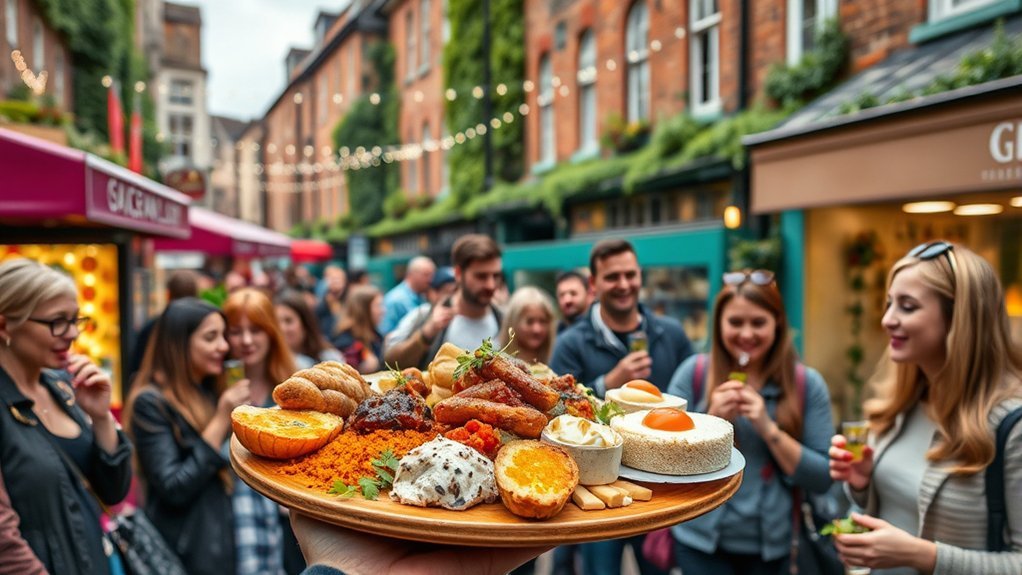
Birmingham’s food scene reflects generations of migration, manufacturing history and neighbourhood culture. You can move from South Asian cooking and historic pubs to contemporary tasting menus, bakeries, food halls and global street food without leaving the city.
The city’s official tourism organisation highlights its combination of international restaurants, street food, independent businesses, traditional markets and high-end dining. It also treats the Birmingham balti as one of the city’s defining food experiences.
That variety makes Birmingham particularly suitable for a food tour. A good tour is not simply a sequence of large meals. It should combine small tastings with stories about the neighbourhood, the people who cook there and the way Birmingham’s food culture developed.
Guided Food Tour or Self-Guided Food Trail?
A guided experience is the easiest option when you want local context and several pre-arranged tastings. Visit Birmingham lists dedicated food and drink experiences, including walking-based tastings and Jewellery Quarter experiences.
One listed Birmingham food tour, for example, combines several tasting stops with local history as the route moves from the Jewellery Quarter toward central Birmingham. Exact dates, stops, drinks and availability can change, so treat any published itinerary as current only after checking the booking page.
A self-guided food trail gives you more flexibility. It is usually better if you want to spend longer at markets, choose your own budget, accommodate children, or focus on vegetarian, vegan, halal or alcohol-free food.
Pro Tip: Do not plan seven Birmingham neighbourhoods as one walking food tour. Group the Jewellery Quarter, city centre and Digbeth together, then treat Moseley and Kings Heath as a separate south Birmingham outing.
Exploring Digbeth: A Food Lover’s Paradise
Digbeth sits close to Birmingham city centre but has a different character. The former industrial district has become one of the city’s major creative quarters, with independent businesses, bars, restaurants, entertainment venues and converted industrial spaces.
The area’s modern food reputation is closely connected with Birmingham’s street-food movement. Visit Birmingham notes that concepts such as Digbeth Dining Club helped develop the city’s appetite for rotating independent traders and casual food-hall dining.
When planning a Digbeth food stop, look for:
- Street-food and food-hall events: useful when your group wants to order different cuisines from the same location.
- Independent cafés and restaurants: a better choice if you want a slower meal away from the busiest entertainment venues.
- Craft beer and casual drinks: Digbeth has a strong evening economy, though alcohol-free choices should also be checked when planning a mixed group.
- Creative surroundings: street art, former factories and entertainment venues make the neighbourhood worth exploring between tastings.
Because traders, pop-ups and event programmes change frequently, check the venue or event organiser before travelling rather than relying on an old list of stalls.
The Historic Charm of Moseley
Moseley combines independent food businesses with green spaces, markets and a village-style centre. It works particularly well when you want your food day to include more than restaurants.
Rail travel to Moseley returned in 2026 as part of the reopening of stations serving Moseley, Kings Heath and Stirchley. This makes it easier to build a south Birmingham food itinerary without relying entirely on buses, taxis or a car.
Iconic Moseley Landmarks
A few local landmarks can break up a food-focused visit:
- Moseley Village: the neighbourhood centre, surrounded by cafés, restaurants, pubs and independent businesses.
- Moseley Park and Pool: an 11-acre private park with scheduled community access days as well as subscriber access. Check current public opening arrangements before making it part of your itinerary.
- Moseley Bog: a Birmingham Local Nature Reserve with woodland, wetland and links to J.R.R. Tolkien’s childhood.
- Moseley Farmers’ Market: a particularly useful food-tour stop when your visit falls on market day.
Culinary Gems to Explore
Moseley’s strongest food-tour appeal comes from its independent character. Rather than looking for one defining cuisine, use the neighbourhood to sample cafés, bakeries, international restaurants, pubs and seasonal market food.
Moseley Farmers’ Market is currently scheduled for the last Saturday of each month, generally from 9 a.m. to 2 p.m. Its traders include local producers, artisan food makers and ready-to-eat food stalls. Check the market website before travelling because individual dates can change.
Indulging in the Flavors of Kings Heath
Kings Heath is another strong choice for independent food and drink. York Road and the surrounding High Street area bring together cafés, bakeries, restaurants, pubs and specialist food businesses in a relatively compact neighbourhood.
Instead of expecting a single local speciality, build your Kings Heath visit around variety:
- Independent bakeries and cafés: useful for breakfast, coffee or an early tasting stop.
- International restaurants: current local options span South Asian, European and East Asian influences.
- Pubs and wine bars: suitable for an evening extension to a daytime food route.
- Small independent businesses: one of the main reasons to explore the neighbourhood rather than visiting only central Birmingham.
Kings Heath also regained rail service in 2026, making it easier to combine with central Birmingham or nearby Moseley.
Discovering the Hidden Gems of Harborne
Harborne is best approached as a restaurant-and-café neighbourhood rather than a street-food destination. Its High Street and surrounding roads offer independent cafés, pubs and restaurants alongside more established dining venues.
You may encounter Italian cooking, contemporary British menus, Middle Eastern flavours, burgers, artisan drinks and tasting-menu restaurants within the wider area. The useful strategy is to choose one or two planned reservations and leave room for an unplanned café, bakery or pub stop.
Harborne is also a good alternative when you want a food-focused evening away from the busiest parts of the city centre.
The Vibrant Markets of Birmingham
Birmingham’s traditional markets provide a different experience from a restaurant tour. Around Edgbaston Street, the Bull Ring Indoor Market, Open Market and Rag Market form a long-established shopping area close to the city centre.
The Bull Ring Indoor Market is especially known for fish as well as meat, poultry and fruit and vegetables. The nearby Open Market sells fresh fruit and vegetables alongside other goods.
A market visit is useful for:
- Fresh produce: see ingredients rather than only finished restaurant dishes.
- Fish, meat and specialist food shopping: particularly inside the Indoor Market.
- Affordable snacks and ingredients: a contrast to formal tasting menus.
- Local shopping culture: the markets show an everyday side of Birmingham that a restaurant-only itinerary can miss.
Note: Birmingham’s different Bull Ring markets do not all keep identical opening days and hours. Check Birmingham City Council’s current market pages before organising a visit around them.
A Taste of Birmingham’s Balti Heritage in Sparkbrook
Sparkbrook deserves special attention because it forms part of Birmingham’s historic balti story. Together with Sparkhill and Balsall Heath, it became associated with what was known as the Balti Triangle.
According to Visit Birmingham’s 2026 history of the Birmingham balti, migration from Kashmir helped establish cafés and restaurants in these neighbourhoods, while restaurateur Mohammed Arif is associated with developing the fast-cooked Birmingham balti served in a thin steel pan.
Popular Indian and South Asian Dishes
The area’s food culture is broader than one dish. Depending on the restaurant, you may find:
- Birmingham balti: the most locally distinctive choice and the dish with the strongest connection to Birmingham’s culinary identity.
- Biryani: aromatic rice prepared in many regional and restaurant-specific styles.
- Samosas and savoury snacks: useful for a lighter tasting stop.
- Grilled meats and kebabs: common across many Pakistani and Kashmiri menus.
- Vegetarian curries and lentil dishes: useful options for mixed dietary groups.
- South Asian sweets: worth considering as a separate dessert stop rather than finishing every tasting with another savoury dish.
Avoid treating all of these dishes as uniquely Birmingham creations. The Birmingham-specific story is the local development and popularity of balti and the communities that helped establish the city’s South Asian food culture.
Cultural Significance of Cuisine
Food in Sparkbrook, Sparkhill and Balsall Heath reflects decades of migration, family businesses and changing dining habits. A thoughtful food tour should explain that history instead of presenting the neighbourhood simply as a collection of curry restaurants.
This is also why speaking with restaurant staff, local guides and independent business owners can add more value than merely photographing a dish and moving to the next stop.
The Food and Drink Scene of the Jewellery Quarter
The Jewellery Quarter combines one of Birmingham’s best-known heritage districts with a substantial independent food-and-drink scene. The neighbourhood remains associated with jewellery manufacturing and craftspeople, but it also contains cafés, restaurants, pubs, bars and newer food concepts.
The Jewellery Quarter Business Improvement District describes the area as a destination for food, drink, art and culture as well as jewellery. It was also awarded World Craft City status in 2025.
Food-focused visitors can combine:
- historic jewellery-making streets and workshops;
- independent cafés;
- restaurants around St Paul’s Square and surrounding streets;
- traditional and modern pubs;
- food halls and casual shared-dining concepts;
- museums, galleries and industrial heritage between meals.
Because it sits close to central Birmingham, the Jewellery Quarter makes a practical starting point for a food tour that later continues toward the city centre.
Exploring Selly Oak’s Global Food Scene
Selly Oak should not be described as a Birmingham centre for U.S. Southern cooking. Its modern food identity is better understood through its large student population and varied casual dining scene.
You can find international restaurants, takeaways, cafés and affordable everyday dining along and around Bristol Road. Current tourism listings include Japanese food in Selly Oak, while the wider district offers cuisines shaped by the needs of residents, students and university visitors.
This makes Selly Oak useful when you want:
- a casual rather than formal food experience;
- international choices within a relatively small area;
- student-friendly meals and quick-service options;
- a food stop connected with the University of Birmingham area.
Selly Oak is less essential for a first-time visitor seeking Birmingham’s strongest culinary heritage, but it can be a good addition for repeat visitors or anyone staying near the university.
How to Plan a Birmingham Food Tour
A little planning prevents the most common food-tour problems: too much walking, too much food, missed market hours and discovering too late that a venue cannot meet a dietary requirement.
- Choose your priority. Decide whether you care most about balti heritage, street food, markets, independent restaurants, pubs or neighbourhood culture.
- Limit the geography. For a half-day trip, focus on one or two adjoining areas.
- Check the schedule. Guided tours, markets, pop-ups and individual restaurants can change operating days.
- Ask what is included. Confirm how many tastings, whether drinks are included, approximate walking distance and whether the tour ends somewhere different from where it begins.
- Disclose dietary requirements early. Do not wait until the group arrives at the first restaurant.
- Check accessibility. Ask about steps, standing time, toilets, seating and the accessibility of every participating venue if these affect anyone in your group.
- Dress for walking and weather. Even a food-focused tour may involve long periods outdoors between stops.
Warning: If you have a serious food allergy, contact the tour operator before booking and discuss it again with staff when necessary. Do not assume that “vegan,” “vegetarian” or “gluten-free” automatically means a dish is safe for an unrelated allergy.
The UK Food Standards Agency explains the allergen information food businesses must provide and advises people with allergies or intolerances to make safe food choices when eating out.
Suggested Self-Guided Birmingham Food Routes
City Centre, Jewellery Quarter and Digbeth
This is the strongest option for a first-time visitor who wants variety without travelling repeatedly across Birmingham.
- Begin in the Jewellery Quarter with coffee, brunch or a small tasting.
- Walk or use public transport toward the central shopping district.
- Explore the Bull Ring markets during their opening hours.
- Have a Birmingham balti or another South Asian meal if it fits your route, or save the dedicated Balti Triangle for a separate evening.
- Finish in Digbeth for street food, casual dining, drinks or an evening event.
Moseley and Kings Heath
Use this route when you prefer neighbourhood independents to city-centre attractions.
- Visit Moseley in the morning for coffee or brunch.
- If your dates align, explore Moseley Farmers’ Market.
- Allow time for Moseley Village or a permitted visit to Moseley Park and Pool.
- Continue to Kings Heath for bakeries, restaurants and the independent businesses around York Road and the High Street.
- Finish with dinner or drinks before returning by rail or bus.
Since rail services returned to these neighbourhoods in 2026, visitors have another practical alternative to driving between central and south Birmingham.
Must-Try Foods for a Birmingham Food Tour
Birmingham has no need for invented signature dishes. Its real strength is the combination of locally important food traditions and an unusually broad international dining scene.
- Birmingham balti: the city’s clearest signature dish and an essential choice for anyone interested in Birmingham’s culinary history.
- South Asian snacks and sweets: useful additions to a balti-focused meal and a way to experience more than one style of cooking.
- Independent bakery products: Birmingham’s neighbourhoods have a strong café and bakery culture, particularly around areas such as Kings Heath and Moseley.
- Street food: rotating traders and food halls allow groups to sample several cuisines without committing to the same menu.
- Market food and produce: the Bull Ring markets offer a different view of the city’s food culture through fish, meat, produce and specialist traders.
- Contemporary global cooking: restaurants across Digbeth, Harborne, the Jewellery Quarter and other districts show how Birmingham’s food scene continues to change.
Frequently Asked Questions
What are the best times to visit Birmingham for food tours?
Birmingham’s restaurant scene operates year-round, so there is no single food-tour season. Choose your date around the specific tour, restaurant or market you want to visit. Market days, festivals and outdoor street-food events are more date-sensitive than ordinary restaurant visits.
Are vegetarian or vegan options available on Birmingham food tours?
Birmingham has many vegetarian and vegan dining options, but a particular tour may use a fixed tasting menu. Contact the operator before booking and ask whether every stop can provide a suitable alternative rather than assuming substitutions will be available on the day.
How can I book a food tour in Birmingham?
Check current food-and-drink experiences through Visit Birmingham or book directly with the tour operator. Before paying, confirm the date, meeting point, duration, included tastings and drinks, cancellation policy, dietary arrangements and where the tour finishes.
Are there Birmingham food tours for families with children?
Some food experiences can work for families, but suitability varies. Ask about minimum ages, walking distance, portion sizes and whether stops are primarily pubs or other alcohol-focused venues. If alcoholic drinks are included, also confirm whether non-alcoholic alternatives are available.
What safety measures are in place for food tours in Birmingham?
There is no single citywide set of tour-specific measures such as social distancing that should be assumed for every operator. Check the individual operator’s terms. For a walking tour, consider weather, road crossings, footwear and mobility needs. For food safety, disclose allergies and dietary restrictions before the tour.
Can a Birmingham food tour accommodate serious food allergies?
It depends on the tour and participating kitchens. Contact the operator before booking and explain the specific allergy and cross-contamination concern. UK food businesses must provide required allergen information, but that does not mean every dish or kitchen can safely accommodate every allergy.
Which Birmingham neighbourhood is best for a first food tour?
For a first visit, the Jewellery Quarter, central Birmingham and Digbeth offer a convenient mix of heritage, markets, independent venues and nightlife. If Birmingham’s South Asian food history is your priority, dedicate time to the historic Balti Triangle area around Sparkbrook, Sparkhill and Balsall Heath.
Can I create my own Birmingham food tour?
Yes. A self-guided route works especially well if you want more control over budget, dietary choices and timing. Choose two or three nearby areas, check opening hours, make reservations where needed and plan small portions so you can comfortably try several stops.
Conclusion
Birmingham’s best food experiences come from understanding how its neighbourhoods differ. Digbeth brings creative energy and street-food culture; the Jewellery Quarter mixes heritage with independent food and drink; Birmingham’s markets show the everyday trading side of the city; Moseley and Kings Heath reward slower neighbourhood exploration; and Sparkbrook connects you directly with the history of the Birmingham balti.
You do not need to visit every district in one day. Choose a focused guided tour or build a self-guided route around two or three nearby areas, check current opening times and booking conditions, and leave enough appetite to enjoy each stop rather than rushing through a checklist.
Sources
- Visit Birmingham: Food & Drink — Birmingham’s current food scene, restaurants, street food and dining categories.
- Visit Birmingham: Birmingham Food Tours — example of a guided Birmingham tasting experience and tour format.
- Visit Birmingham: The Birmingham Balti — history of the Birmingham balti and Balti Triangle.
- Birmingham City Council: Bull Ring Indoor Market — official market information, products, location and opening details.
- Jewellery Quarter BID — Jewellery Quarter heritage, food-and-drink role and World Craft City status.
- Food Standards Agency: Food Allergies, Intolerances and Coeliac Disease — authoritative consumer guidance on eating out and allergen information.