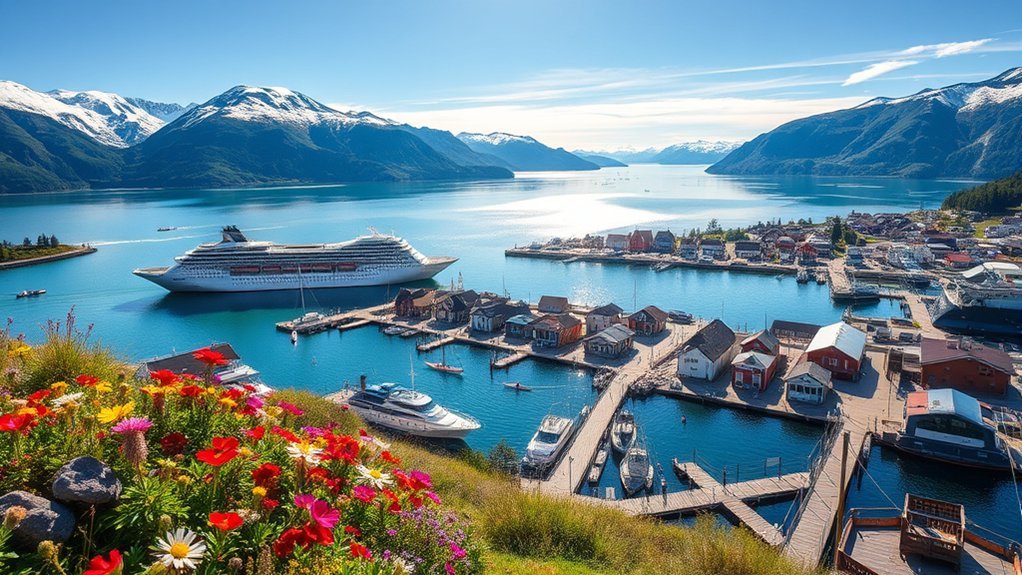
Known as the “Salmon Capital of the World” and the ancestral home of the Tlingit, Haida, and Tsimshian peoples, Ketchikan, Alaska, serves as the vibrant southern gateway to the Inside Passage. Perched on the steep slopes of Revillagigedo Island within the 16.7-million-acre Tongass National Forest, this coastal community blends living Indigenous traditions, historic boardwalks built over tidal waters, and rugged maritime wilderness.
Quick Answer
The best things to do in Ketchikan include exploring historic Creek Street boardwalk, viewing the world’s largest collection of standing totem poles across Totem Bight and Saxman Village, taking a flightseeing or boat tour into Misty Fjords National Monument, and watching black bears fish for salmon at Herring Cove.
Key Takeaways
- Creek Street & History: Walk the historic boardwalk over Ketchikan Creek to see Dolly’s House Museum, Married Man’s Trail, and the summer salmon ladder.
- Totem Artistry: Ketchikan hosts three major totem collections: the Totem Heritage Center (preserved 19th-century originals), Saxman Native Village (carving sheds and clan houses), and Totem Bight State Historical Park.
- Wilderness Access: Misty Fjords National Monument is reachable only by floatplane or catamaran tour; independent road access is not possible.
- Weather Reality: Ketchikan receives an average of 140 to 160 inches of rainfall annually; quality waterproof rain gear is required year-round.
Exploring the Natural Wonders of Ketchikan
Ketchikan sits directly within the Tongass National Forest, the largest national forest in the United States. Characterized by temperate coastal rainforest, western hemlock, Sitka spruce, and deep glacial valleys, the surrounding landscape offers direct encounters with Southeast Alaska’s raw ecology.
Pro Tip: Ketchikan is one of the wettest inhabited places in North America, recording roughly 150 inches of precipitation annually. Skip disposable plastic ponchos, which tear in coastal winds, and wear a breathable, seam-sealed waterproof rain shell with waterproof trail footwear.
Misty Fjords National Monument
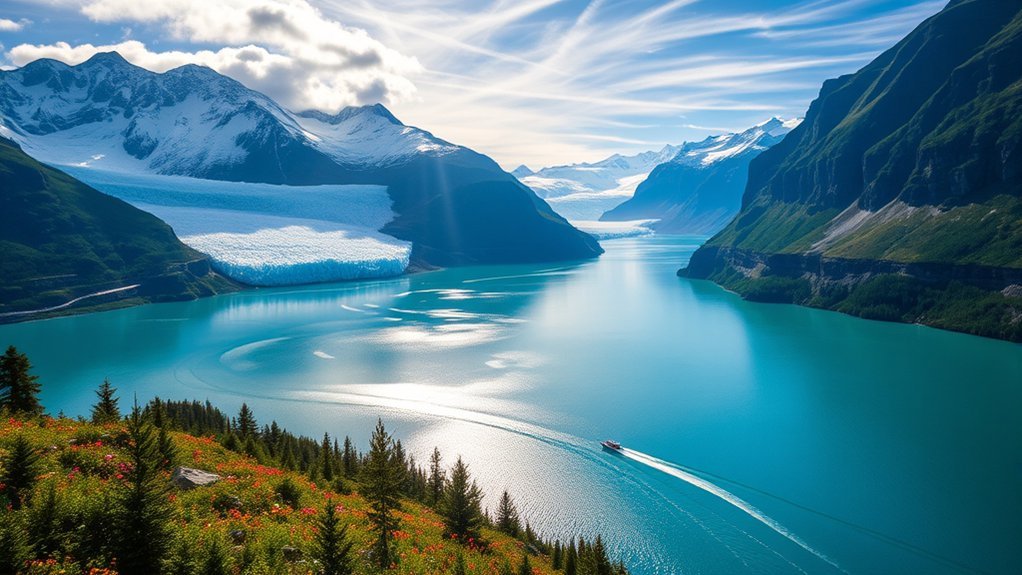
Encompassing 2.3 million acres of designated wilderness roughly 40 miles east of downtown Ketchikan, Misty Fjords National Monument features 3,000-foot granite sea cliffs that plunge straight into emerald ocean waters. Because no roads enter the monument, visitors must explore via two methods:
- Floatplane Flightseeing: DeHavilland Beaver or Otter seaplanes take off from Ketchikan harbor, flying over alpine lakes, hanging valleys, and Punchbowl Cove, often including a landing on a remote freshwater lake or fjord.
- Catamaran Marine Cruises: High-speed day boats navigate through the Behm Canal, providing water-level views of New Eddystone Rock (a 237-foot basalt volcanic plug) and cascading coastal waterfalls.
Wildlife Watching and Salmon Runs
From late July through mid-September, millions of Pacific salmon (pink, chum, and coho) return to their natal streams along Ketchikan’s coast to spawn. This massive migration draws substantial wildlife:
- Herring Cove: Located approximately 8 miles south of downtown along the road system, this estuary allows visitors to observe wild black bears, bald eagles, and harbor seals fishing for salmon at low tide.
- Inside Passage Marine Life: Guided zodiac and kayak excursions regularly encounter humpback whales, orcas, Steller sea lions, and river otters near the mouth of the Tongass Narrows.
Cultural Experiences and Historical Sites
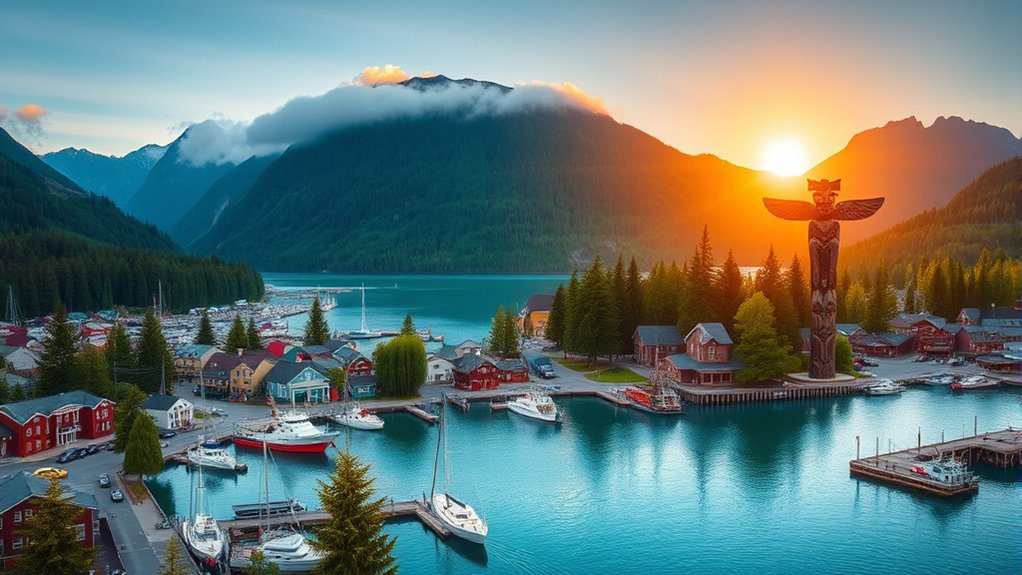
Ketchikan holds the world’s most extensive collection of historic and authentic standing Northwest Coast totem poles. The cultural landscape is rooted in the ancestral heritage of the Tlingit, Haida, and Tsimshian nations, complemented by the 19th-century mining, canning, and logging eras.
Where to See Totem Poles in Ketchikan
Rather than a single site, Ketchikan features three primary locations that each serve a distinct historical and educational purpose:
- Totem Heritage Center: Managed by the City of Ketchikan, this museum houses an extraordinary indoor collection of unrestored 19th-century totem poles rescued from deserted Tlingit and Haida village sites, including Tongass Island and Village Island.
- Saxman Native Village: Situated 2.5 miles south of downtown, Saxman features an active carving shed where master artisans carve new poles, a Beaver Clan House, and traditional dance performances.
- Totem Bight State Historical Park: Located 10 miles north of town on the oceanfront, this 33-acre park contains 14 replica poles and a detailed Clan House carved during the 1930s by Civilian Conservation Corps (CCC) artisans.
Creek Street Boardwalk
Built entirely on wooden stilts over Ketchikan Creek, Creek Street served as the town’s historic red-light district from 1903 through 1953. During the fishing and mining booms, over 30 bordellos lined this boardwalk. Today, the preserved buildings house local galleries, artisan workshops, and Dolly’s House Museum, the former brothel of madam Dolly Arthur preserved with its original furnishings and secret Prohibition-era liquor caches.
“Creek Street allowed fishermen, miners, and timber workers to access entertainment without violating city ordinances on the dry mainland side of town.”
Outdoor Adventures and Activities
Ketchikan provides diverse outdoor activities ranging from accessible coastal walks to challenging alpine ascents and ocean expeditions.
Scenic Hiking Trails
- Rainbird Trail (Moderate): A 1.3-mile one-way trail traversing the ridge above Ketchikan. Hikers pass through moss-covered old-growth forest with scenic vantage points overlooking the Tongass Narrows and cruise berths.
- Deer Mountain Trail (Strenuous): A demanding 3,000-foot elevation climb across 3 miles one-way. The trail rewards experienced hikers with panoramic alpine views of Revillagigedo Island, Nichols Passage, and surrounding peaks.
- Ward Lake Trail (Easy): A flat, gravel-surfaced 1.3-mile loop 7 miles north of town, winding around a calm freshwater lake beneath ancient Sitka spruce trees.
Sea Kayaking and Eco-Tours
Paddle excursions depart from downtown or Clover Pass, allowing kayakers to glide through protected coves and kelp beds where sea stars, sea cucumbers, and bald eagles are easily visible. For thrill-seekers, canopy zipline courses in the forest canopy offer multiple dual-cable zip runs and suspension bridges spanning deep mountain creeks.
Culinary Delights: Seafood and Local Cuisine
Sustained by nutrient-dense subarctic waters, Ketchikan’s food scene revolves around sustainably harvested wild seafood governed by the Alaska Department of Fish and Game.
Note: Most seasonal seafood eateries operate at peak capacity between May and September. If you are dining near the cruise docks during mid-day port calls, plan for peak lunch queues between 11:30 AM and 1:30 PM.
- Wild Alaska Salmon: Sample King (Chinook), Silver (Coho), and Sockeye salmon prepared as grilled cedar-plank fillets, hot-smoked strips, or cold-smoked lox.
- Pacific Halibut: A firm, mild whitefish caught along the continental shelf, commonly served beer-battered with fries or seared in garlic herb butter.
- Dungeness Crab & Spot Prawns: Sweet, tender shellfish steamed fresh from local pots, served alongside clarified butter and lemon wedges.
- Reindeer Sausage & Smoked Chowders: Classic Alaskan comfort food, available at local casual eateries, dockside carts, and historic saloons along Water Street.
Suggested Itineraries for Your Visit
Warning for Cruise Passengers: If your cruise ship berths at Ward Cove (Dock 5, used primarily by Norwegian Cruise Line and Oceania), you are 7 miles north of downtown. Allow at least 20 to 30 minutes each way via the port shuttle bus when planning independent downtown activities.
Option 1: The Classic 1-Day Port Call (6–8 Hours)
- Morning (8:30 AM – 11:30 AM): Take a morning seaplane flightseeing tour over Misty Fjords National Monument, or take a 15-minute city bus ride south to explore Saxman Native Village.
- Midday (11:30 AM – 1:30 PM): Return to downtown for fresh halibut fish and chips or Dungeness crab chowder near the harbor.
- Early Afternoon (1:30 PM – 3:30 PM): Stroll along Creek Street, visit Dolly’s House Museum, follow the Married Man’s Trail to the salmon ladder, and visit the Totem Heritage Center.
- Late Afternoon (3:30 PM – 5:00 PM): Browse local galleries for authentic Native Alaskan art and canned wild smoked salmon along Front Street before returning to your ship.
Option 2: Multi-Day Explorer (2–3 Days)
- Day 1: Thoroughly explore downtown, the Tongass Historical Museum, Creek Street, and complete the scenic hike along Rainbird Trail.
- Day 2: Rent a vehicle or book a full-day excursion to Misty Fjords by boat, followed by an evening wildlife watch for black bears at Herring Cove.
- Day 3: Explore Totem Bight State Historical Park, hike the old-growth loops at Ward Lake, and book a half-day guided salmon or halibut fishing charter in the Tongass Narrows.
Frequently Asked Questions
What Is the Best Time of Year to Visit Ketchikan?
The best time to visit Ketchikan is between June and August. During these summer months, daytime temperatures average 60°F to 67°F (15°C to 19°C), wildlife viewing is at its peak, and all seasonal tours, flightseeing operations, and historic sites are fully operational. May and September offer fewer crowds but cooler temperatures and higher chances of sustained rainfall.
Are There Any Local Festivals or Events in Ketchikan?
Yes. Ketchikan hosts several notable community celebrations, including the Ketchikan Blueberry Arts Festival every August (featuring live music, craft booths, and pie-eating contests), the multi-week King Salmon Derby running in late spring, the annual Wearable Art Show in winter, and lively Independence Day festivities on the 4th of July.
What Transportation Options Are Available Within Ketchikan?
Downtown Ketchikan is compact and easily walkable on foot. For destinations beyond downtown (like Saxman Village, Totem Bight, or Ward Cove), visitors can use the Ketchikan Gateway Borough public transit system (known as “The Bus”), summer harbor shuttle buses, local taxis, or rental car agencies. Water taxis and floatplanes provide transit to surrounding remote islands and wilderness cabins.
Is Ketchikan Family-Friendly With Activities for Children?
Yes, Ketchikan is highly family-friendly. Children especially enjoy viewing the Great Alaskan Lumberjack Show, watching live master carvers shape totem poles at Saxman Village, spotting bald eagles and sea stars along the harbor docks, and taking nature walks around the flat, easy paths at Ward Lake.
What Accommodations Are Available in Ketchikan?
Ketchikan offers varied lodging ranging from waterfront hotels overlooking the Tongass Narrows and hillside boutique lodges like Cape Fox Lodge (accessible via funicular from Creek Street) to local bed & breakfasts, vacation home rentals, and rustic U.S. Forest Service wilderness cabins accessible by floatplane or boat.
Conclusion
Ketchikan delivers a quintessential Southeast Alaska experience where lush temperate rainforest, deep Indigenous heritage, and thriving coastal wildlife converge. Whether you have six hours on a cruise port day to walk historic Creek Street and admire centuries-old totem poles, or three days to fly deep into the granite cliffs of Misty Fjords and hike subalpine ridges, planning for the elements ensures a rich and memorable adventure in Alaska’s “First City.”
Sources
- U.S. Forest Service — Tongass National Forest — Wilderness management, trail conditions, and Misty Fjords National Monument guidelines.
- City of Ketchikan Museum Department — Historical records for Totem Heritage Center and Tongass Historical Museum.
- Alaska Department of Natural Resources (State Parks) — Cultural history and site details for Totem Bight State Historical Park.
- Alaska Department of Fish and Game — Salmon migration patterns, marine wildlife protection, and regional sportfishing regulations.