Matanuska Glacier hikes range from an easy forest walk with glacier views to steep ridge hiking and guided trips directly onto the ice. The key is knowing the difference between public viewpoint trails and private glacier access, because the state recreation site does not lead onto the glacier itself.
Quick Answer
For the best Matanuska Glacier hikes, choose Edge Nature Trail for an easy public viewpoint, Lion’s Head for a steep elevated panorama, and a guided glacier walk if you want to step onto the ice. The state recreation site does not provide glacier access, so on-ice hiking requires separate private access and a guide.
Last checked: September 30, 2026. Dates and figures were verified against official sources.
Best Matanuska Glacier Hikes and Viewpoint Walks
The best route depends on whether you want a short viewpoint walk, a steep mountain climb, or time on the glacier itself. Matanuska Glacier is a roughly 27-mile-long valley glacier and the largest glacier in the United States that can be reached by vehicle, according to the official Alaska travel guide.
| Hike or Experience | Difficulty | Typical Time | Best For |
|---|---|---|---|
| Edge Nature Trail | Easy | About 20 minutes | Families and quick glacier views |
| Lion’s Head Trail | Difficult | About 1 hour to climb | Elevated glacier and valley views |
| Guided glacier walk | Easy to moderate | Often 1–2 hours on the ice | First-time glacier hikers |
| Longer glacier trek or ice climb | Moderate to strenuous | Varies by guided trip | More active glacier exploration |
Edge Nature Trail: The Easiest Public Glacier View
Edge Nature Trail is the simplest choice if you want impressive views without a demanding hike. The Matanuska Glacier State Recreation Site places the trail at Mile 101 of the Glenn Highway and describes it as a roughly 20-minute forest walk to glacier-viewing platforms.
The trail is well suited to a quick stop, a family outing, or anyone who does not want to walk on ice. Toilets, water, and picnic sites are available at the recreation site.
One detail matters: the trail does not provide access to the glacier. You can see the ice clearly, but you cannot continue from the state trail onto the glacier.
The Alaska State Parks fee schedule lists day-use parking at Matanuska Glacier State Recreation Site at $7 per vehicle in 2026.
Lion’s Head Trail: The Best Steep Viewpoint Hike
Lion’s Head gives you a much higher perspective over Matanuska Glacier and the surrounding river valley. It is a short but difficult climb rather than an easy sightseeing trail, with steep terrain and scrambling that demand careful footing.
The local Glacier View trail guide describes the route as steep, not clearly marked, and beginning near a telecommunications tower. Allow more time than the climb alone suggests for route-finding, photos, and a careful descent.
This hike makes more sense for fit hikers who want a panoramic view than for young children or anyone uncomfortable with steep ground. Follow all signs and current access instructions around the trailhead.
Guided Glacier Walk: The Best Way to Hike on the Ice
If your goal is to stand on Matanuska Glacier, a guided glacier walk is the most direct option. Access to the glacier is separate from the state recreation site, with guided trips starting from the private access area around Mile 102 of the Glenn Highway.
Guides typically provide glacier-specific equipment such as helmets, traction devices, and poles. They also choose routes around crevasses, meltwater channels, unstable ice, and other features that can change as the glacier moves and melts.
Travel Alaska states that guided glacier tours are available year-round, although individual trip schedules and difficulty levels vary by season.
Family-Friendly Hikes
For families and mixed-age groups, Edge Nature Trail is the most straightforward choice because it is short, public, and designed around glacier viewing rather than technical travel. It gives children and older adults a close look at the landscape without requiring them to negotiate glacier ice.
- Choose Edge Nature Trail for an easy walk and viewing platforms.
- Use the picnic area if you want to turn the stop into a relaxed break along the Glenn Highway.
- Choose a guided glacier trip carefully if your family wants to walk on the ice, because operators may set minimum ages and mobility requirements.
- Keep children close around steep slopes, riverbanks, ice, and roadside areas.
Pets are permitted at the state recreation site when kept under control, and owners must clean up their waste, according to Alaska State Parks guidance for the site. Private glacier-access and guided-tour rules are separate.
Challenging Adventures for Experienced Hikers
Experienced hikers have two very different ways to increase the challenge: climb the steep Lion’s Head route for an elevated view, or book a longer guided trek that travels farther across glacier terrain. Technical ice climbing adds another level of difficulty and requires specialized equipment and instruction.
Glacier travel should not be treated like an ordinary mountain trail. Crevasses may be hidden by snow, moraine can cover slippery ice, and meltwater can cut deep holes and channels into the surface.
Warning: Do not enter ice caves, approach unstable ice faces, or attempt unfamiliar glacier terrain without the skills and equipment needed for glacier travel. Conditions can change quickly, and apparently solid snow may hide crevasses.
The National Park Service guidance for glacier travel in Alaska notes that upper ice and snow crossings can require ropes, harnesses, ice axes, probes, and crampons, along with knowledge of crevasse rescue.
Unique Features of Matanuska Glacier
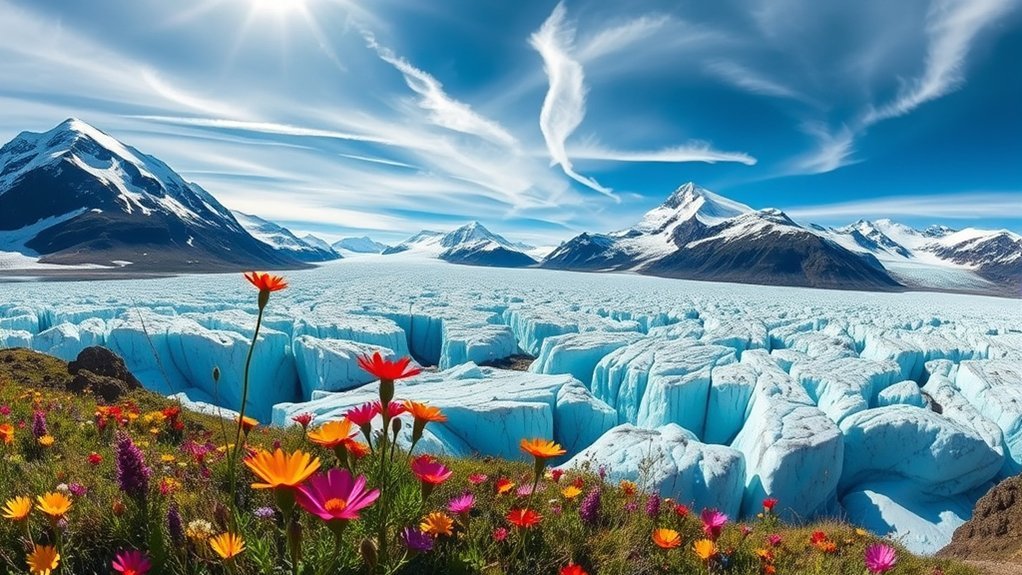
Matanuska Glacier is more than a scenic wall of white ice. Its moving surface creates blue ice, crevasses, meltwater channels, exposed moraine, and changing ice formations that make a guided walk look different from an ordinary hiking trail.
- Blue glacier ice: Dense ice can appear blue because it absorbs more long-wavelength red light while blue light is transmitted and scattered. The U.S. Geological Survey explains the blue-ice effect in detail.
- Crevasses: These fractures form as moving ice stretches and deforms. They can be open or concealed by snow.
- Moulins and meltwater: Surface water can drain into holes and channels within the glacier, creating serious hazards near their edges.
- Moraine: Rock and sediment carried by the glacier can cover sections of ice, sometimes making it difficult to tell where ordinary ground ends and glacier ice begins.
- Glacial river scenery: The glacier forms the headwaters of the Matanuska River, so viewpoints often combine ice, braided water, and mountain scenery.
These features are fascinating to observe, but crevasses, moulins, overhangs, and caves should be treated as hazards rather than places to explore casually.
Tips for Hiking in Glacier Country
Good preparation matters because the area combines steep trails, cold ice, strong sun reflection, wildlife, and rapidly changing mountain weather. Pack for the route you are actually doing rather than assuming every Matanuska Glacier hike requires the same equipment.
- Wear layers: Bring a moisture-managing base layer, an insulating layer, and a waterproof or wind-resistant outer layer.
- Use sturdy footwear: Hiking shoes or boots with good traction help on rocky, muddy, and uneven public trails.
- Protect your eyes and skin: Snow and ice can intensify glare, so sunglasses and sun protection are useful even on cool days.
- Carry water and food: Do not depend on finding supplies once you are on a trail or glacier trip.
- Use glacier equipment correctly: On guided ice walks, wear the helmet and traction equipment supplied or required by your guide.
- Know your route: This is especially important on lightly marked trails such as Lion’s Head.
- Be bear aware: Make noise where visibility is poor, keep food secure, give bears space, and never run from an encounter. The Alaska Department of Fish and Game bear-safety guidance explains how to reduce the risk of a conflict.
For the state recreation site, also remember that seasonal snow and ice can close access. If you are visiting outside the main summer hiking season, conditions may be very different from those shown in summer photos.
Frequently Asked Questions
What is the best time of year for hiking Matanuska Glacier?
Summer through early fall usually gives you the widest choice of snow-free public hiking, while guided glacier tours can operate year-round. Matanuska Glacier State Recreation Site remains open until winter snow and ice conditions force its seasonal closure.
Are guided tours available for Matanuska Glacier hikes?
Yes. Guided glacier walks are the standard way for visitors to hike directly on Matanuska Glacier, with guides providing glacier-specific equipment and choosing routes around changing ice hazards. Longer trekking and ice-climbing options are also available.
What should I wear for hiking on a glacier?
Wear warm layers, a waterproof or wind-resistant outer layer, sturdy footwear, gloves when conditions call for them, and sunglasses for glare. Guided trips typically provide or specify the traction equipment and other glacier gear required for the route.
Can I bring my dog on the hiking trails?
Dogs are allowed at Matanuska Glacier State Recreation Site when kept under control, and owners must clean up their pet’s waste. That state-park rule does not automatically apply to private glacier access or guided tours, which may have separate policies.
Are there restroom facilities at Matanuska Glacier?
Yes, toilets are available at Matanuska Glacier State Recreation Site at Mile 101 of the Glenn Highway. The site also lists water and picnic facilities, making it a practical stop before or after a short viewpoint hike.
Conclusion
The best Matanuska Glacier hike depends on how close you want to get to the ice. Edge Nature Trail is the easiest public option, Lion’s Head gives stronger elevated views for capable hikers, and a guided glacier walk is the appropriate choice for exploring the ice itself. Match the route to your fitness, weather, and comfort with steep or icy terrain.
Sources
- Travel Alaska — Matanuska Glacier: Glacier size, road access, guided glacier walks, location, and seasonal activities.
- Alaska State Parks — Matanuska Glacier State Recreation Site: Edge Nature Trail, facilities, Mile 101 location, seasonal closure, and lack of direct glacier access.
- Alaska State Parks — Fees by Park Facility: Current day-use parking fee.
- Glacier View, Alaska — Unguided Activities: Lion’s Head trail character and trailhead guidance.
- National Park Service — Backpacking in Alaska: Glacier-travel hazards and technical equipment guidance.
- Alaska Department of Fish and Game — Traveling in Bear Country: Bear-awareness and encounter guidance.
- U.S. Geological Survey — Why Is Glacier Ice Blue?: Explanation of blue glacier ice.
- Alaska State Parks — Matanuska Glacier Cabin: Pet rules and additional recreation-site information.