Yuma gives you an unusual mix of Arizona history, Colorado River scenery, restored wetlands, desert recreation, local food, and easy-to-reach cultural stops. The best visit combines the walkable historic core with one or two outdoor excursions, while treating summer heat and remote desert roads seriously. Use this guide to decide what deserves your time and what needs extra planning.
Quick Answer
The best things to do in Yuma include touring Yuma Territorial Prison, walking the Colorado River parks and wetlands, visiting downtown museums and galleries, watching sunset at Gateway Park, and exploring nearby desert destinations such as Imperial Sand Dunes, Castle Dome, and Kofa National Wildlife Refuge.
Key Takeaways
- Yuma Territorial Prison, the riverfront, downtown, and the Yuma Art Center make an easy first-day combination.
- Yuma East Wetlands and West Wetlands Park are the strongest close-to-town nature options.
- Imperial Sand Dunes, Kofa, Castle Dome, and Mittry Lake require more driving and preparation.
- Summer heat is severe. Plan outdoor activities early and use museums, galleries, restaurants, and other indoor stops during the hottest hours.
- Schedules, permits, event dates, road conditions, and international border requirements can change, so check the responsible agency before departure.
Plan Your Yuma Visit: Weather, Transportation, and Timing
Yuma is easiest to explore in cooler weather. Summer is possible, but it requires a different itinerary because normal July daytime highs are around 107°F and extreme heat can be higher. Check the National Weather Service Phoenix office before hiking, paddling, off-roading, or spending several hours outdoors.
Yuma’s 1991–2020 normal July daily maximum is about 106.7°F. In summer, schedule strenuous outdoor activity for the cooler part of the day and use air-conditioned stops during peak heat.
Warning: Do not treat desert heat as an inconvenience. Carry adequate drinking water, use sun protection, avoid leaving children or pets in vehicles, and change plans when an excessive-heat warning or dangerous conditions are in effect.
Downtown Yuma, the riverfront, and several historic attractions are relatively close together. Yuma County Area Transit (YCAT) serves Yuma and several surrounding communities, but remote destinations such as Kofa National Wildlife Refuge, Imperial Sand Dunes, Castle Dome, and Mittry Lake generally require a suitable private vehicle and more preparation.
Pro Tip: Build each day around geography. Pair the prison, Yuma Crossing, Gateway Park, downtown, and the Art Center together, then reserve a separate half-day or full day for a remote desert destination.
Explore Yuma Territorial Prison State Historic Park
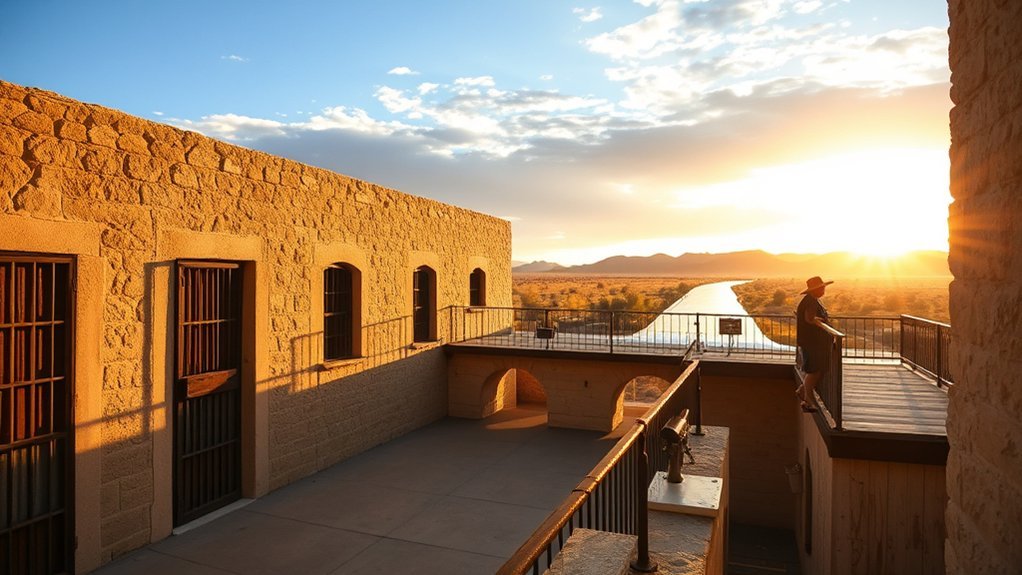
Yuma Territorial Prison State Historic Park is one of the city’s essential history stops. You can walk through surviving cell areas, see the dark cell, explore museum exhibits, and take in elevated views that help explain why the prison’s location above the Colorado River mattered.
The prison opened in 1876 and became one of the best-known institutions from Arizona’s territorial period. Rather than relying on Old West legends alone, spend time with the photographs, artifacts, prisoner stories, and interpretive displays. They provide a more useful picture of incarceration, daily life, and Yuma’s development.
Current admission, seasonal hours, accessibility information, and site rules are published by the Yuma Territorial Prison State Historic Park. In hot weather, an early visit makes the outdoor portions much more comfortable.
Walk the Yuma Crossing National Heritage Area
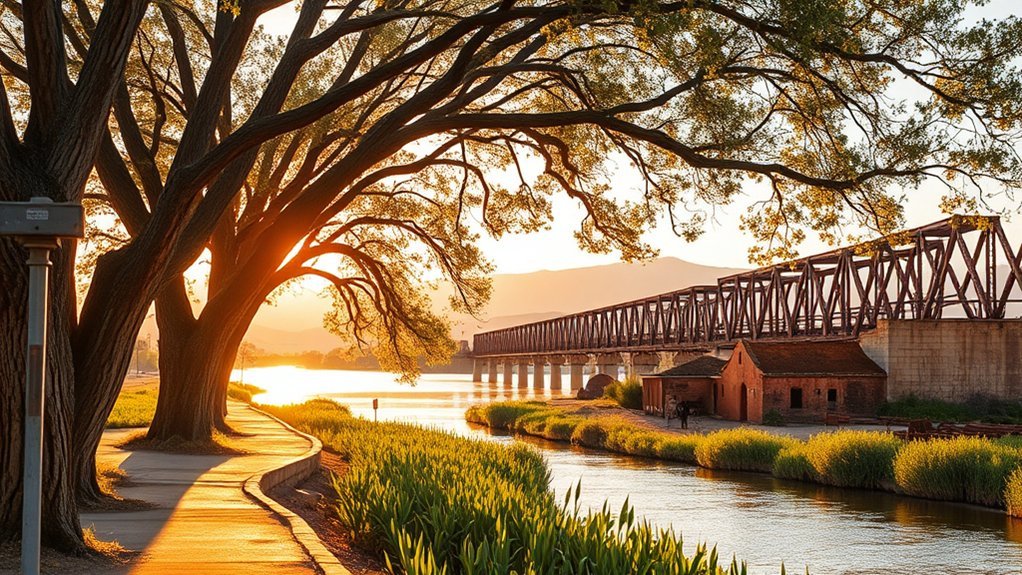
The Yuma Crossing National Heritage Area connects several of Yuma’s most important historic and riverfront landscapes. The heritage area includes historic sites, parks, trails, and restored Colorado River habitat, making it a good bridge between a museum-heavy morning and a quieter outdoor walk.
Follow the riverfront paths, look toward the historic crossings and bridges, and use interpretive signs to understand why this location became so important to Indigenous travel, overland migration, military supply, irrigation, rail transportation, and modern Yuma.
| Feature | What to Look For | Planning Tip |
|---|---|---|
| Historic crossings | Bridges and transportation history | Combine with the prison |
| Riverfront trails | Paved and natural areas | Walk early in warm weather |
| Wetlands | Restored riparian habitat | Bring binoculars |
| Interpretation | History and restoration signs | Allow time to read them |
| Nearby stops | Gateway Park and downtown | Easy to combine in one outing |
Watch Sunsets Along the Colorado River at Gateway Park
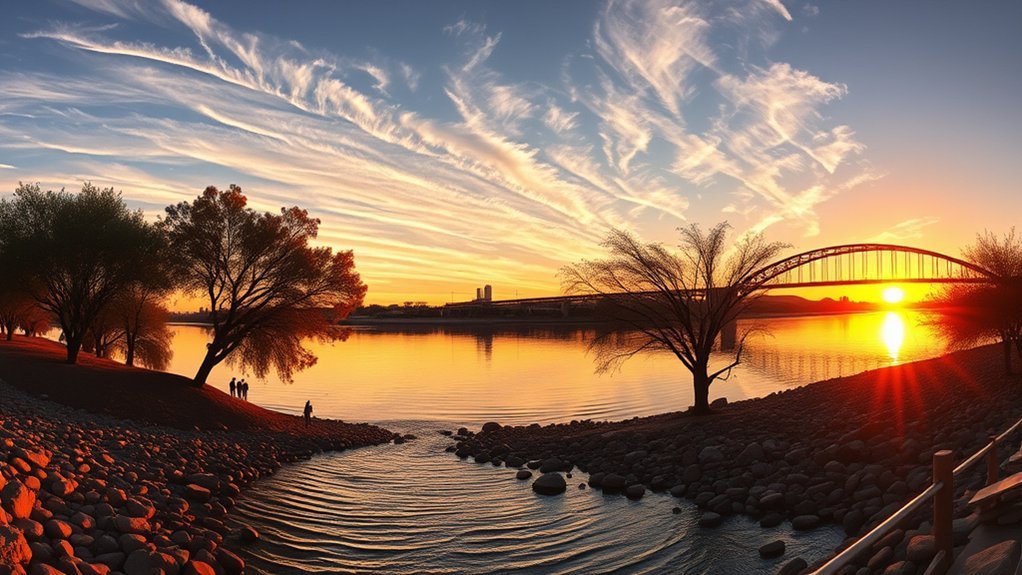
Gateway Park is one of the easiest places to relax beside the Colorado River. The city lists a sandy river beach, fishing docks, picnic facilities, ramadas, restrooms, grills, a playground, and an outdoor shower among its amenities.
Best Viewing Spots
For sunset, choose an open section of riverbank or park lawn where you can see the western sky and river reflections. Arriving before sunset gives you time to find a comfortable place without rushing. The light often becomes more interesting as the sun drops, so staying a little after sunset can be worthwhile.
Gateway Park also works well as the final stop after Yuma Territorial Prison or the Yuma Crossing riverfront. Check posted park rules and current river conditions before swimming or entering the water.
Sunset Picnic Tips
Bring a blanket or portable chair, drinking water, easy-to-pack food, and a small light for packing up. In warmer months, keep perishable food properly chilled. Mosquito activity can occur around water, so repellent can be useful when conditions warrant it.
Pack out all trash and leave wildlife alone. A simple picnic usually works better here than bringing bulky equipment that you must carry back after dark.
Tour Colorado River State Historic Park and the Former Quartermaster Depot

The attraction long associated with Yuma’s Quartermaster Depot is now known as Colorado River State Historic Park. The current interpretation connects two major chapters of Yuma history: the U.S. Army supply depot that operated here from 1865 to 1883 and the later Bureau of Reclamation work tied to the Yuma Irrigation Project.
Walk the historic grounds and buildings to understand how supplies moved through Yuma and why control of the Colorado River became so important to settlement and agriculture. Displays also help explain the engineering story behind bringing reliable irrigation water to the region.
| Focus | What It Explains | Tip |
|---|---|---|
| Army depot | Military supply and transportation | Start with the site overview |
| Historic buildings | Depot operations and daily life | Allow time for indoor exhibits |
| Reclamation history | Irrigation and water development | Connect it with the riverfront |
| Grounds | Colorado River setting | Use sun protection |
| Current information | Hours and programming | Check before visiting |
Visit the Sanguinetti House Museum and Gardens
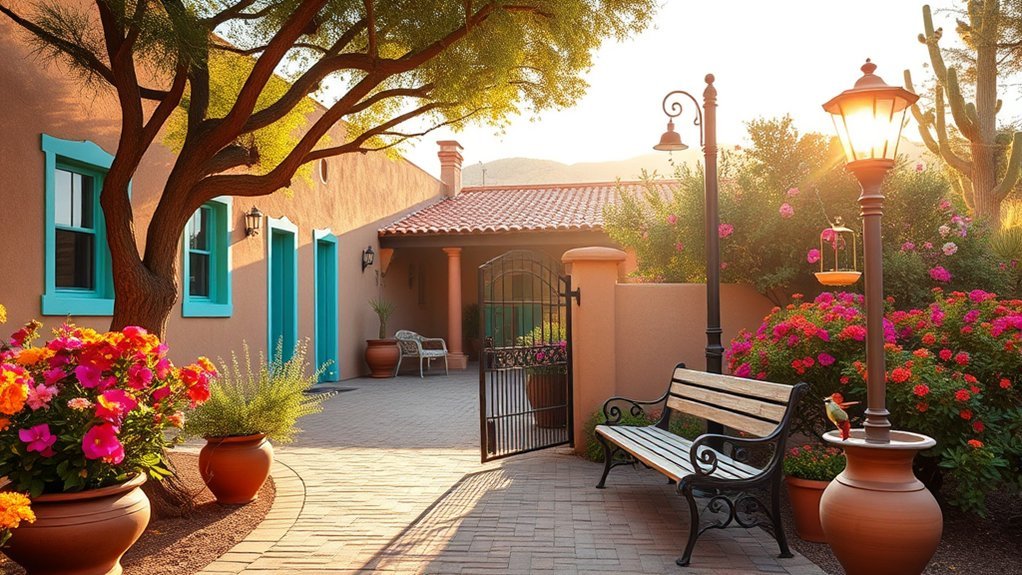
The Sanguinetti House is a historic adobe home associated with E. F. Sanguinetti, an influential Yuma merchant and civic figure. The property offers a more domestic view of local history than the prison or former military depot, with exhibits centered on Yuma’s community, commerce, and growth.
The garden is part of the appeal, especially when roses and other plantings are in bloom. Current visitor information is available through the organizations managing and interpreting the property, and opening days can be more limited than at larger attractions, so confirm the schedule before building your day around it.
- Tour the historic home and local-history exhibits.
- Look at the adobe construction and period details rather than assuming a grand Victorian-mansion style.
- Spend a few minutes in the garden when weather permits.
- Check for temporary exhibits or special historical programs before visiting.
Birdwatch at the Yuma East Wetlands
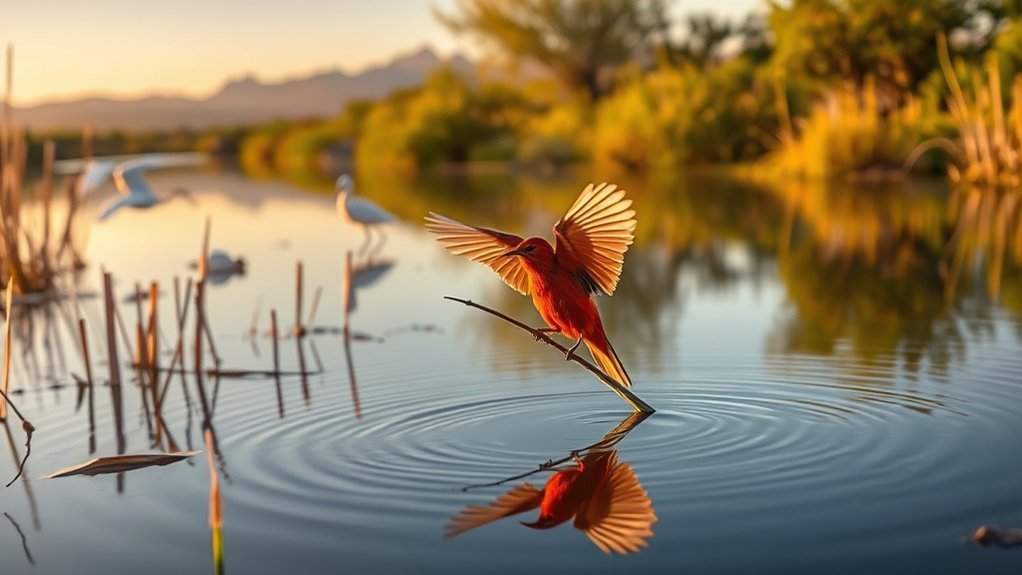
For a verified wetlands experience near central Yuma, head to the Yuma East Wetlands. Restoration work that began in 2004 transformed nearly 400 acres of degraded riverfront into a mosaic of wetlands, cottonwood and willow habitat, open water, and native vegetation.
The area is especially rewarding for birders because restored riparian habitat supports resident and migratory species. Walk quietly, carry binoculars, stay on established routes, and give wildlife plenty of room. Early morning generally offers cooler temperatures and more comfortable birding conditions.
The East Wetlands also provide useful context for the environmental side of Yuma’s Colorado River story. Pair the walk with the Yuma Crossing National Heritage Area to see how history, water management, habitat restoration, and recreation overlap.
See the Historic Yuma County Courthouse
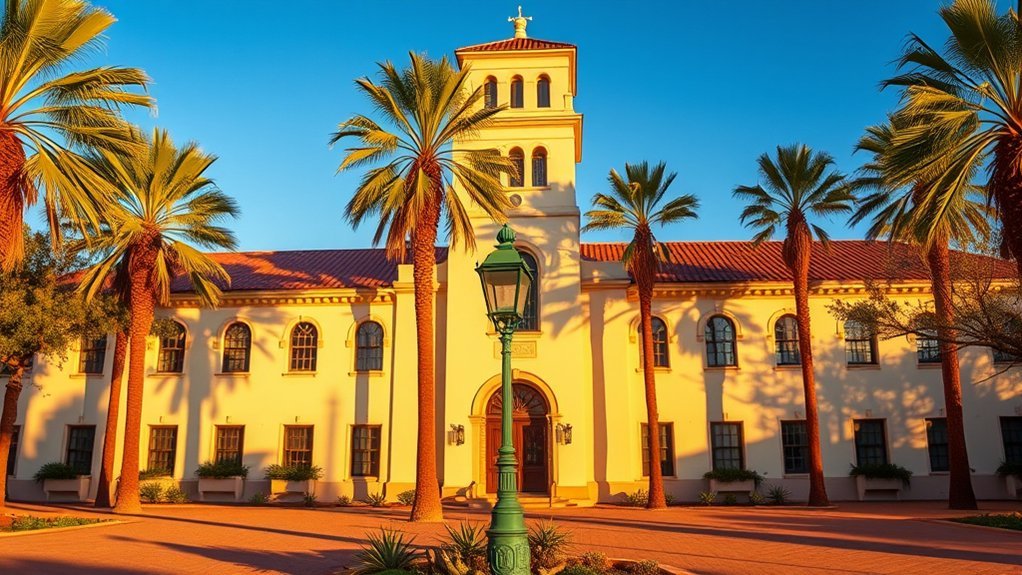
The Historic Yuma County Courthouse at 168 S. 2nd Avenue is worth noticing as part of a downtown architecture walk, but it should not be confused with a conventional courthouse museum. Yuma County still uses the historic courthouse complex for public functions, including its Law Library.
Enjoy the building primarily as a piece of Yuma’s civic landscape. Look at the exterior architecture, then combine the stop with nearby historic streets, the Sanguinetti House, or the Yuma Art Center rather than arriving expecting docent-led museum galleries.
Note: Because this is a functioning county property rather than a standard tourist museum, respect security rules, restricted areas, and normal government operations.
Stroll Downtown Main Street and Local Shops
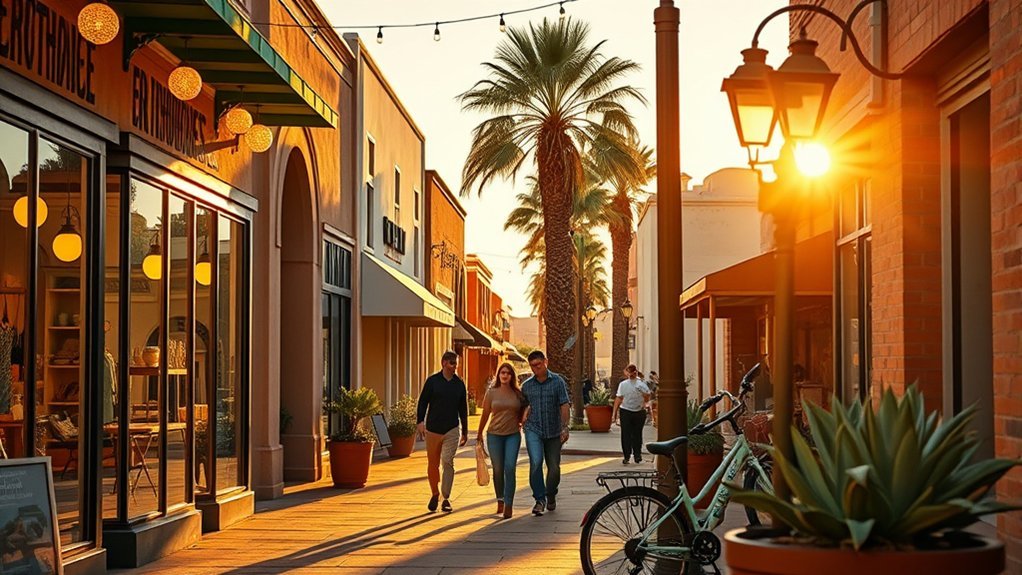
Downtown Yuma is an easy place to slow down between larger attractions. Main Street and the surrounding blocks mix restored storefronts, restaurants, local businesses, public art, and cultural venues. Because businesses change more quickly than historic sites, treat a downtown walk as a chance to explore what is open now rather than relying on an old list of specific shops.
Historic Storefronts and Murals
Look closely at older facades, architectural details, murals, and public-art installations as you walk. The City of Yuma maintains information on its public-art program through the Yuma Art Center, making that a better source than assuming every mural or installation is permanent.
- Photograph historic facades and streetscape details.
- Look for public-art pieces and interpretive plaques.
- Combine the walk with the Art Center or Historic Yuma Theatre.
- Return near sunset for softer light and cooler temperatures.
Local Shops and Galleries
Browse independent shops, galleries, and specialty businesses that are open during your visit. Downtown inventory changes, so the strongest strategy is to walk a few blocks and follow what interests you rather than planning around claims about a particular artisan or workshop that may no longer be there.
If you are buying locally made work, ask the shop or artist about the material, process, and maker. That gives you a more meaningful souvenir and helps distinguish locally produced pieces from mass-market merchandise.
Cafés, Breweries, and Patios
Downtown also works well for a meal or drink between museums. Choose an indoor table during extreme heat, or use a patio when evening temperatures are comfortable. Check current menus and opening hours before making a special trip because restaurant schedules can change seasonally.
- Use a café stop as a midday break from the heat.
- Check current brewery tap lists rather than expecting a specific beer.
- Choose shaded outdoor seating when temperatures are comfortable.
- Pair downtown dining with an Art Center or theater event.
Experience the Yuma Art Center and Cultural Events
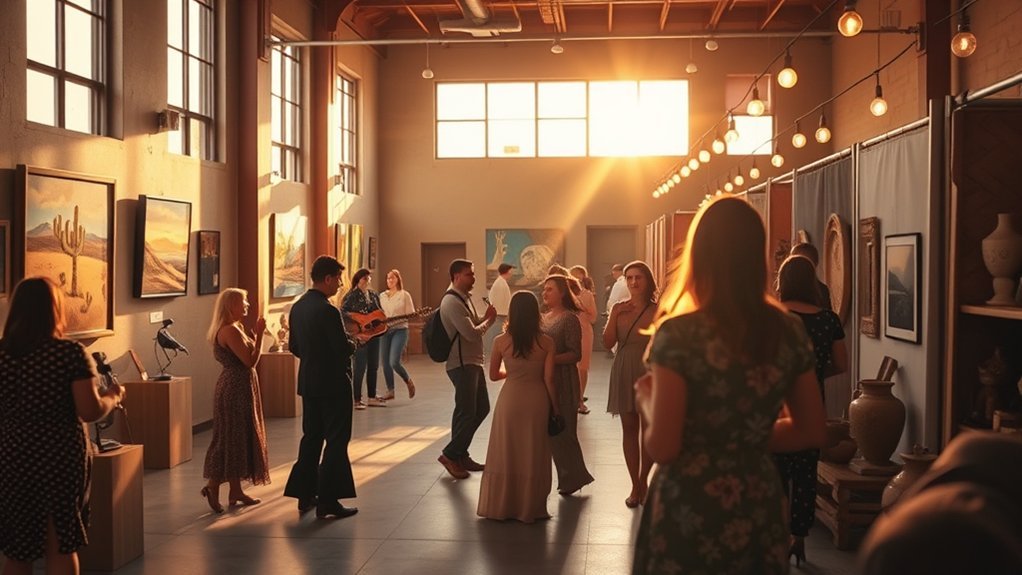
The Yuma Art Center is one of downtown’s strongest indoor stops. The city describes a complex with four galleries, art studios and classrooms, a pottery studio, an artisan shop, a black-box theater, and the Historic Yuma Theatre.
Exhibitions and classes rotate, so check the current calendar rather than expecting one permanent show. The Art Center is particularly useful in hot weather because it gives you an indoor cultural activity without leaving the downtown area.
If public art interests you, use the center’s public-art information to identify murals and installations elsewhere around Yuma. That turns a general downtown walk into a more focused self-guided art route.
Attend a Performance at the Historic Yuma Theatre

The Historic Yuma Theatre is part of the Yuma Art Center complex and dates to 1912. The restored 643-seat venue hosts changing programming rather than one fixed type of performance, so the city calendar is the place to confirm concerts, films, stage productions, and community events during your dates.
- Check the official calendar before your trip.
- Buy ahead when a performance has reserved seating or limited availability.
- Arrive early enough to look at the historic theater interior.
- Combine an evening show with dinner downtown.
Even if no performance fits your schedule, the surrounding Art Center remains worthwhile for galleries and other cultural programming.
Drive Out to Imperial Sand Dunes Recreation Area
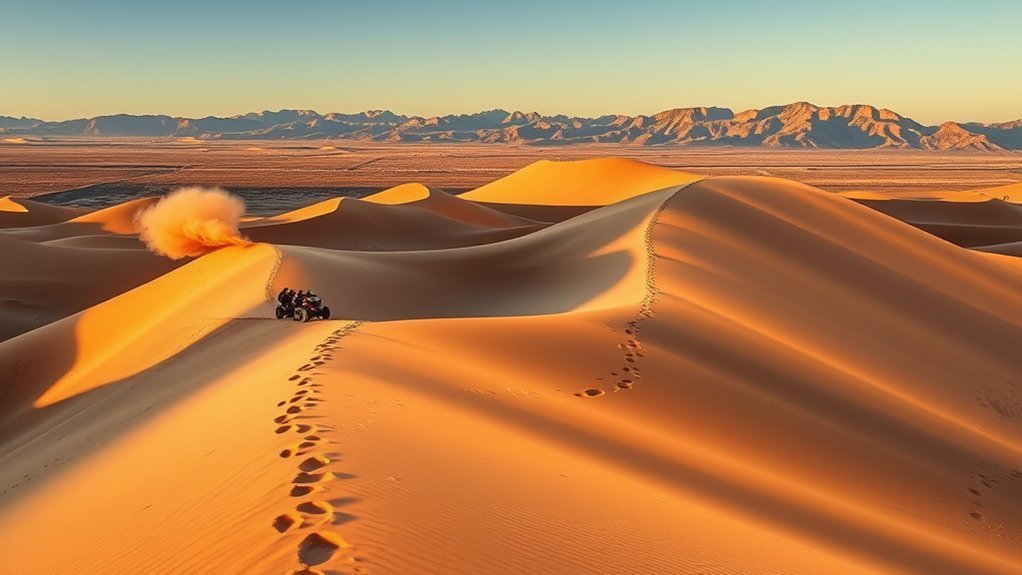
The Imperial Sand Dunes Recreation Area in California offers a dramatically different landscape from Yuma’s riverfront. BLM describes a dune system stretching for more than 40 miles, with dunes reaching roughly 300 feet in places.
Some visitors come to ride off-highway vehicles, while others come for desert scenery and photography. Either way, this is exposed desert terrain. Carry ample water, know where you are going, and check current weather, closures, permit requirements, and BLM regulations before leaving Yuma.
Off-Road Vehicle Adventures
Motorized dune travel demands skills that ordinary paved-road driving does not. Soft sand, steep dune faces, blind crests, other riders, and changing surface conditions can create serious hazards. Use a vehicle appropriate for the terrain and bring required safety equipment plus recovery gear.
- Read BLM’s current rules before entering the recreation area.
- Use the required safety flag and protective equipment for your vehicle/activity.
- Ride at a speed that gives you time to react beyond dune crests.
- Carry navigation, water, recovery equipment, and a way to summon help.
Scenic Photography Opportunities
Sunrise and late-day light reveal the shape of the dunes through long shadows and repeating ridgelines. Keep photography stops well clear of active vehicle traffic and avoid standing where riders cannot see you over a crest.
| Subject | Useful Approach |
|---|---|
| Wide vistas | Use a wide-angle view to show dune scale |
| Textures | Use a longer focal length to isolate ridges |
| Silhouettes | Work near sunrise or sunset |
| Patterns | Look for side light and repeating lines |
| People and vehicles | Stay out of active riding lines |
Safety and Permit Tips
BLM’s recreation-permit season runs from October 1 through April 15, with current fees and purchasing options published online. Rules differ by vehicle and activity, so do not assume that a generic “motorized permit” statement tells you everything you need to know.
Review the current Imperial Sand Dunes rules and regulations before departure. Pay attention to designated open and closed areas, camping rules, vehicle requirements, safety flags, and any temporary restrictions.
Browse Yuma Farmers Markets and Seasonal Local Events

Yuma’s agricultural setting makes a farmers market a natural addition to a visit, but market locations and schedules can change. Instead of assuming a permanent market at the former Quartermaster Depot, check Visit Yuma’s current farmers-market information shortly before your trip.
Depending on the market and season, you may find local produce, citrus, baked goods, spices, dried foods, crafts, jewelry, and other small-vendor products. Arriving earlier in the operating window can provide a better selection and cooler temperatures.
If no farmers market is running during your stay, check Yuma’s festival and event calendars instead. Agricultural fairs, food events, downtown celebrations, and community programs can provide a similar local experience.
Explore Fortuna Foothills and Desert Recreation
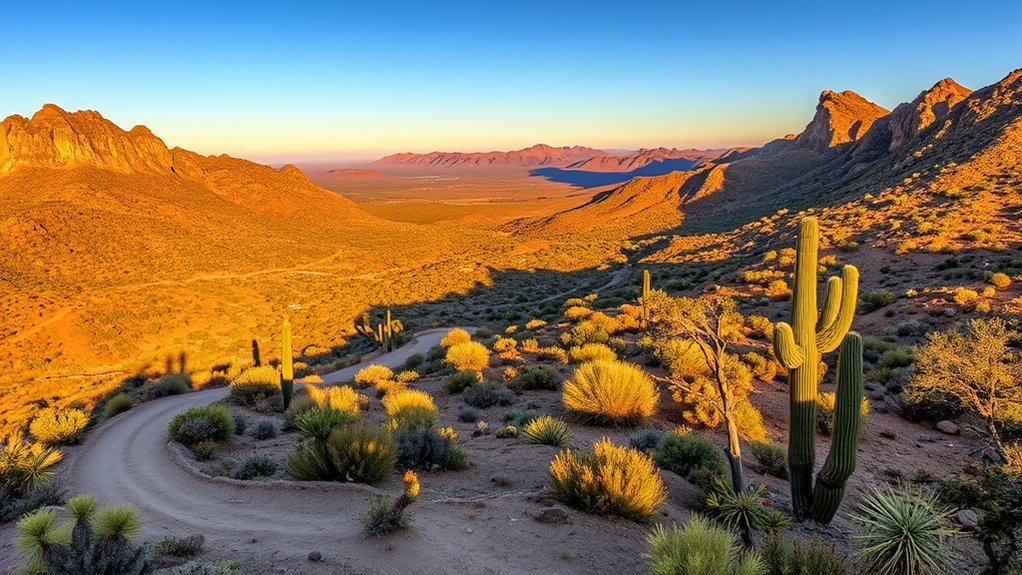
Fortuna Foothills sits east of central Yuma and gives you quick access to open desert scenery. The area’s documented recreational draw includes the Fortuna Foothills Offroad Recreational Area, which is used by dirt bikes, quads, side-by-sides, and other off-road vehicles.
- Use established recreational access rather than creating new tracks across undisturbed desert.
- Watch for other riders and vehicles in shared recreation areas.
- Visit near sunrise or late afternoon for softer light and cooler conditions.
- Bring water, sun protection, navigation, and equipment appropriate to your activity.
If your goal is specifically hiking rather than off-roading, choose a documented hiking destination around Yuma instead of assuming every foothill track is a maintained public trail.
Take a Scenic Drive to Mittry Lake Wildlife Area
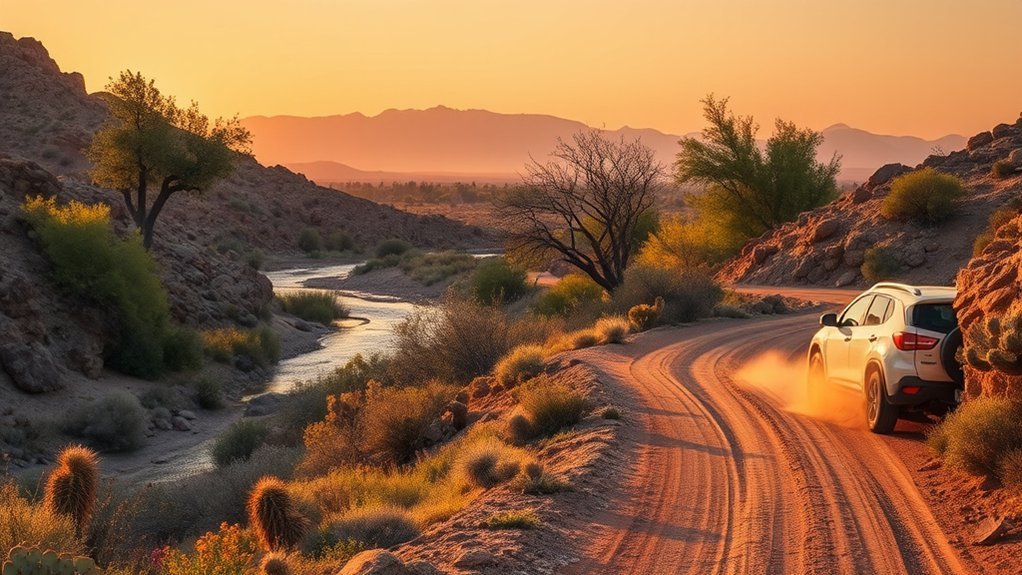
For a more dependable scenic alternative to the unverified “Gila River Backway,” plan a drive toward Mittry Lake Wildlife Area. The Arizona Game and Fish Department manages the area for wildlife habitat and public recreation.
Mittry Lake Drive Overview
The landscape changes from developed Yuma to a mix of desert, marsh, open water, and riparian habitat. The drive is best treated as a wildlife outing rather than a formal scenic byway with guaranteed services at every stop.
- Check current road and weather conditions.
- Carry drinking water and a charged phone.
- Download maps before leaving reliable service.
- Respect wildlife-area rules and posted access restrictions.
Scenic Stops and Wildlife Views
Look for designated places where you can safely stop to scan open water and shoreline habitat. Binoculars are useful for waterfowl, herons, raptors, and other birds. Keep vehicles out of sensitive habitat and avoid blocking roads or boat access.
Morning and late-day light can make the mix of desert and wetland especially photogenic. If you plan to fish or launch a boat, check the current Arizona Game and Fish rules separately before arrival.
Kayak, Canoe, or Tube the Colorado River
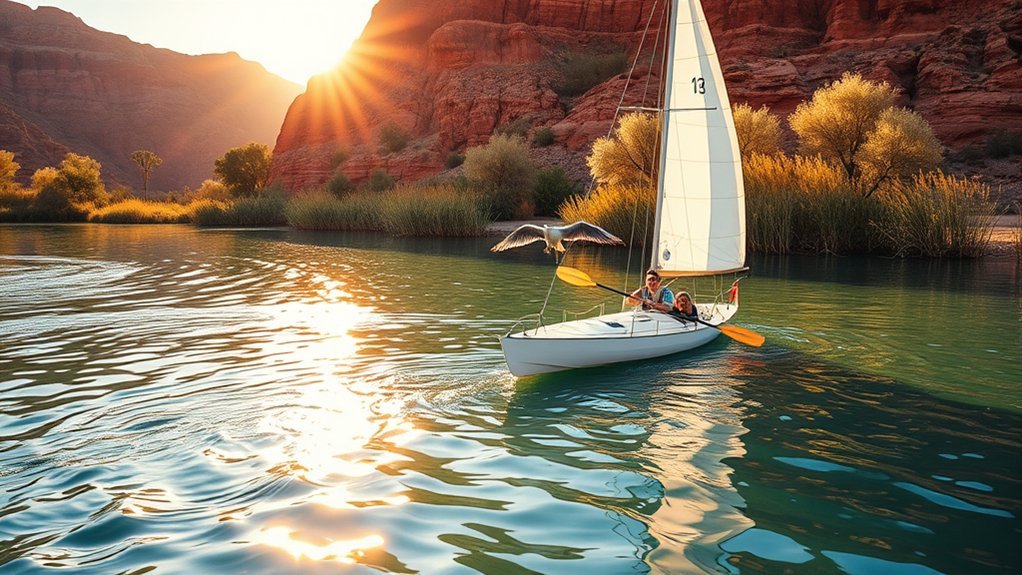
The Colorado River provides a completely different view of Yuma. Current destination guidance emphasizes kayaking, canoeing, and tubing, rather than the sailboat-charter experience previously described here.
Choose an outing that matches your ability, current flow conditions, weather, and available access points. Wear an appropriate personal flotation device, protect electronics in a dry bag, carry drinking water, and avoid launching when wind, thunderstorms, extreme heat, or other conditions make the trip unsafe.
- Kayak for a maneuverable, close-to-the-water experience.
- Canoe when you want more carrying capacity and have suitable skills.
- Tube only where conditions, access, and local guidance make it appropriate.
- Check your take-out point before launching so you are not improvising downstream.
Taste Local Brews at Yuma’s Breweries and Craft-Beer Spots
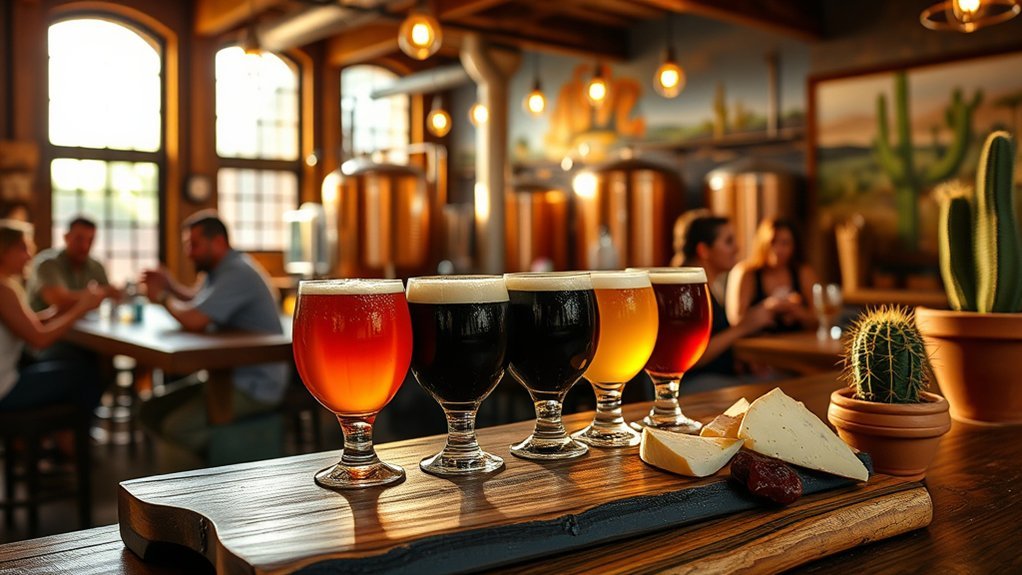
Yuma has a small craft-beer scene rather than a huge brewery district. Current Visit Yuma nightlife information identifies Prison Hill Brewing Company as a local producer and also lists bars carrying craft beer from the region.
Check current tap lists, hours, food service, and event schedules before visiting. A tasting flight can be a practical way to sample several styles without committing to a full pour of each.
If you are driving, keep alcohol consumption within safe and legal limits or use another transportation plan. In hot weather, remember that alcohol does not replace water.
Sample Mexican and Sonoran-Influenced Food in Yuma
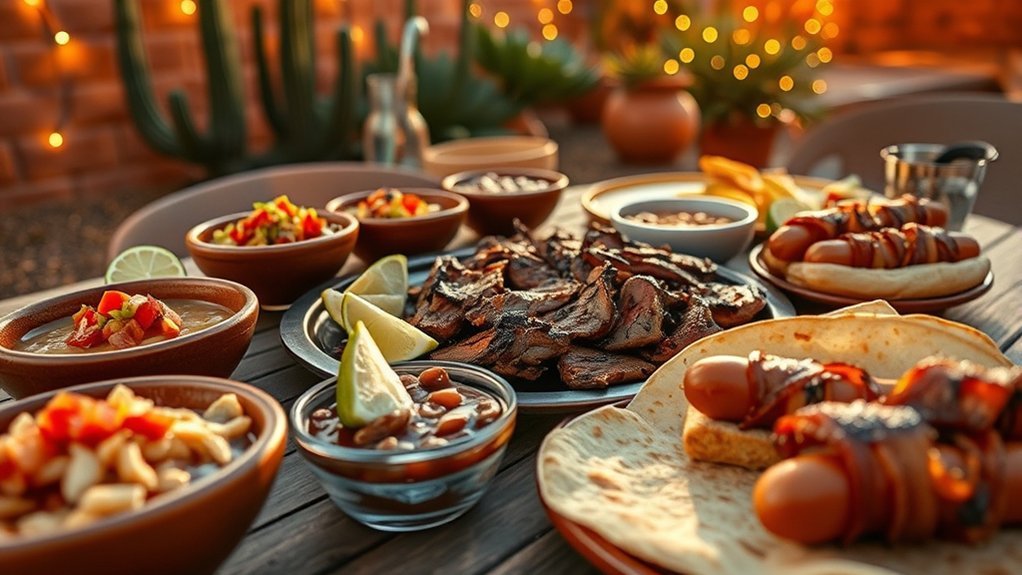
Yuma’s location near the Mexican border gives its food scene strong regional influences. Visit Yuma’s current Mexican-restaurant guide describes flavors connected not only with Sonora but also Oaxaca, Sinaloa, Baja California, and other Mexican traditions.
- Try tacos or carne asada from a well-reviewed local restaurant.
- Look for fresh tortillas, salsas, and chile-based dishes.
- Sample regional seafood preparations when they are a house specialty.
- Ask what the restaurant is best known for instead of ordering from a generic checklist.
For current restaurant listings, use Visit Yuma’s Mexican dining directory. It is more reliable than assuming individual restaurants or menus remain unchanged year after year.
Tour Castle Dome Mine Museum and Ghost Town
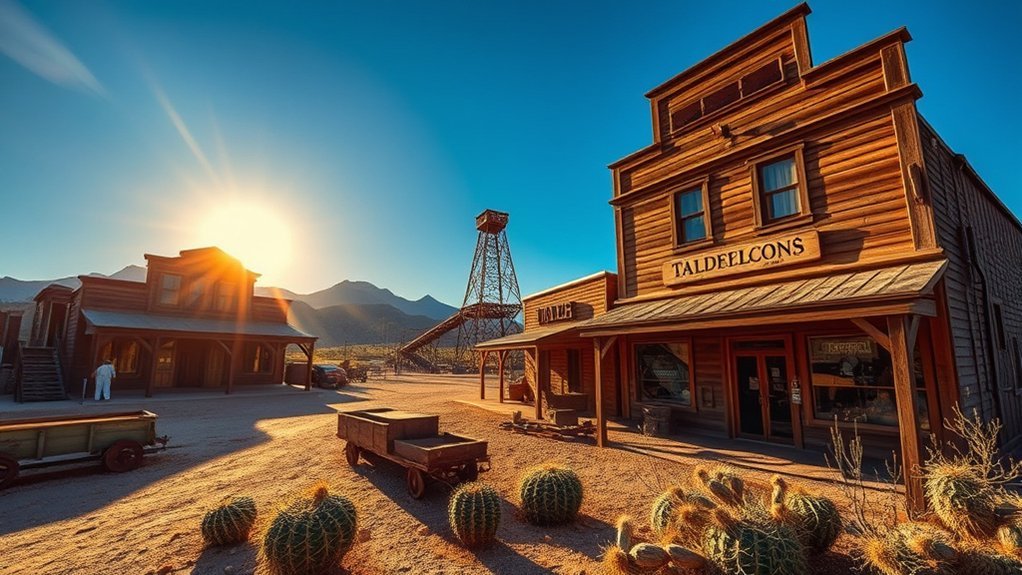
Castle Dome Mine Museum and Ghost Town preserves an extensive collection of buildings, mining artifacts, and desert history north of Yuma. It is a substantial outing rather than a quick downtown museum stop, so check seasonal hours, admission options, tour availability, and road directions before leaving.
History of the Mine
Castle Dome’s exhibits interpret the mining activity that developed around mineral deposits in the Castle Dome Mountains. Buildings, equipment, tools, household objects, and mining artifacts help visitors understand both the industrial work and the community that grew around it.
- Follow the exhibits chronologically where possible.
- Look closely at original mining tools and equipment.
- Read about working conditions and the people who lived in the district.
- Give yourself enough time to walk the spread-out site.
Restored Ghost Town
The ghost-town portion contains dozens of reconstructed or preserved historic-style structures filled with extensive collections. The desert setting makes the site visually striking, but the historical value comes from slowing down to read labels and understand what objects are original, restored, relocated, or interpreted.
Wear closed shoes, carry water, and expect outdoor walking between buildings. Summer operating arrangements can differ from the cooler season, so confirm them directly.
Consider the Hull Mine Tour
For a deeper mining experience, Castle Dome also offers guided access associated with the Hull Mine. This is different from casually wandering the ghost town and may require a separate ticket or reservation.
- Check whether the mine tour is operating on your date.
- Review age, mobility, footwear, and reservation requirements.
- Follow guide instructions underground.
- Allow additional time beyond the ghost-town visit.
Visit West Wetlands Park and the Riverfront Trails
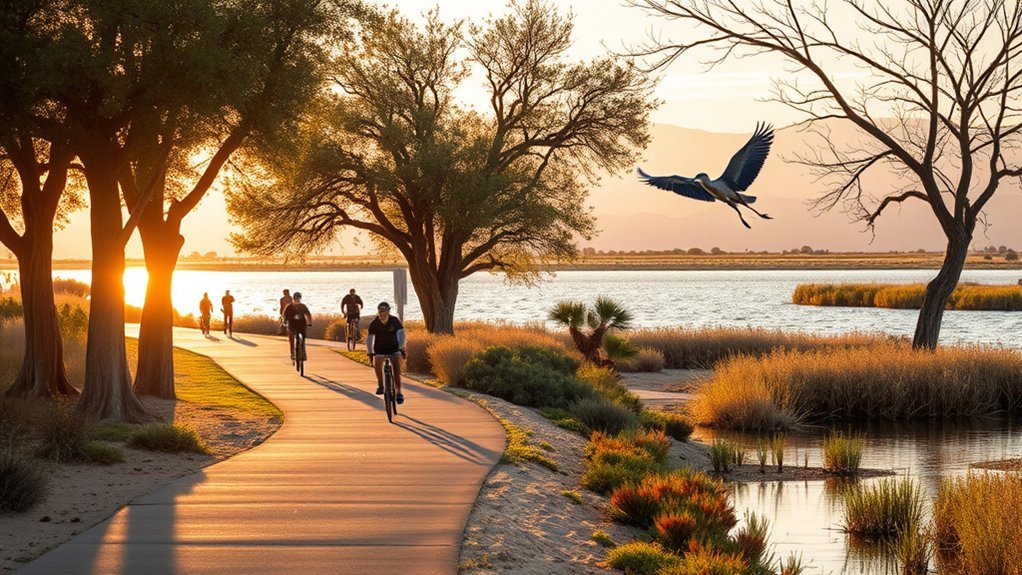
West Wetlands Park is one of Yuma’s most accessible outdoor recreation areas. The riverfront setting combines walking paths, picnic areas, recreation space, native vegetation, and access to the Colorado River corridor.
Use it for a gentle walk, family outing, birding stop, or picnic rather than a strenuous desert adventure. Early morning and evening are more comfortable in warm weather, and shaded structures can help during breaks.
If you are interested in ecological restoration and bird habitat, compare West Wetlands with the more habitat-focused East Wetlands. Together they show how the Colorado River corridor supports both recreation and restoration.
Explore Kofa National Wildlife Refuge
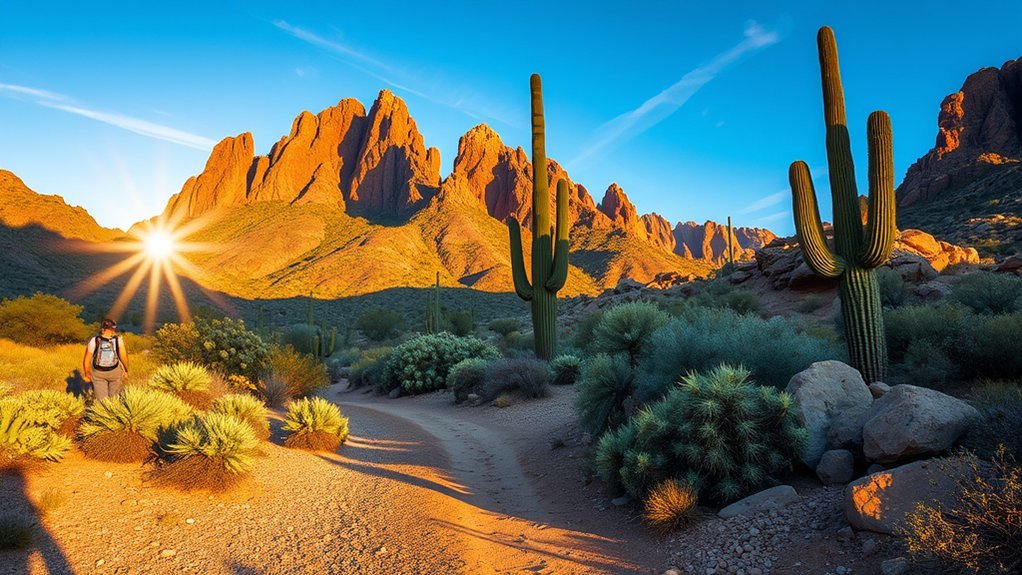
Kofa National Wildlife Refuge, roughly 40 miles north of Yuma, protects a rugged desert landscape known for desert bighorn sheep habitat, mountains, washes, and large wilderness areas.
This is not a developed urban park. USFWS warns that many refuge roads are unmaintained and that high-clearance or four-wheel-drive vehicles may be needed depending on the route. Fuel, potable water, and towing services are not available inside the refuge, and cell coverage is absent or unreliable across much of it.
One of the better-known short walks is Palm Canyon, but even a short desert outing deserves preparation. Check refuge conditions, carry more water than you expect to need, bring navigation, wear sturdy footwear, and avoid hiking in dangerous heat.
- Choose a destination that matches your vehicle and experience.
- Tell someone where you are going and when you expect to return.
- Carry water, food, navigation, sun protection, and emergency supplies.
- Observe wildlife from a distance and follow refuge closures and regulations.
Learn About Mission History at St. Thomas Indian Mission
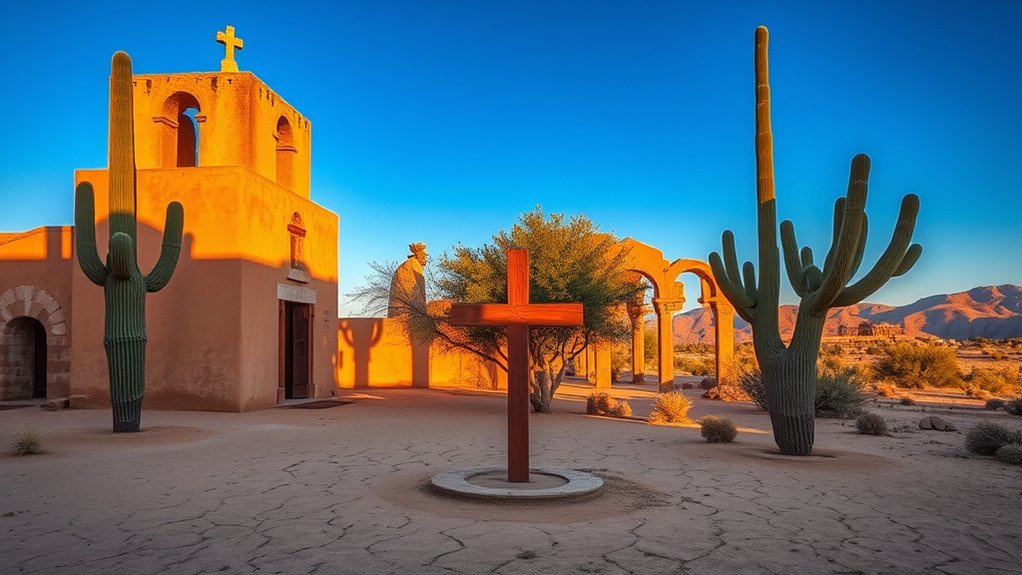
Mission history around Yuma is closely tied to Quechan history and the Spanish colonial period, so it deserves more care than a generic “old mission ruins” description. The present St. Thomas Indian Mission in Winterhaven, California, stands in the broader landscape of a mission established by Father Francisco Garcés in 1780 and the Quechan uprising of 1781.
The current church was built much later, in 1922, and it remains a religious place rather than a conventional tourist attraction. Current destination information notes that it is not generally open for casual tours, so visitors should respect parish and tribal access rules.
For historical context, the National Park Service’s Juan Bautista de Anza National Historic Trail material explains the mission period and associated sites. Approach the history as a story involving Indigenous communities, colonial expansion, conflict, and survival, not simply picturesque adobe architecture.
Go Fishing at Martinez Lake or Mittry Lake
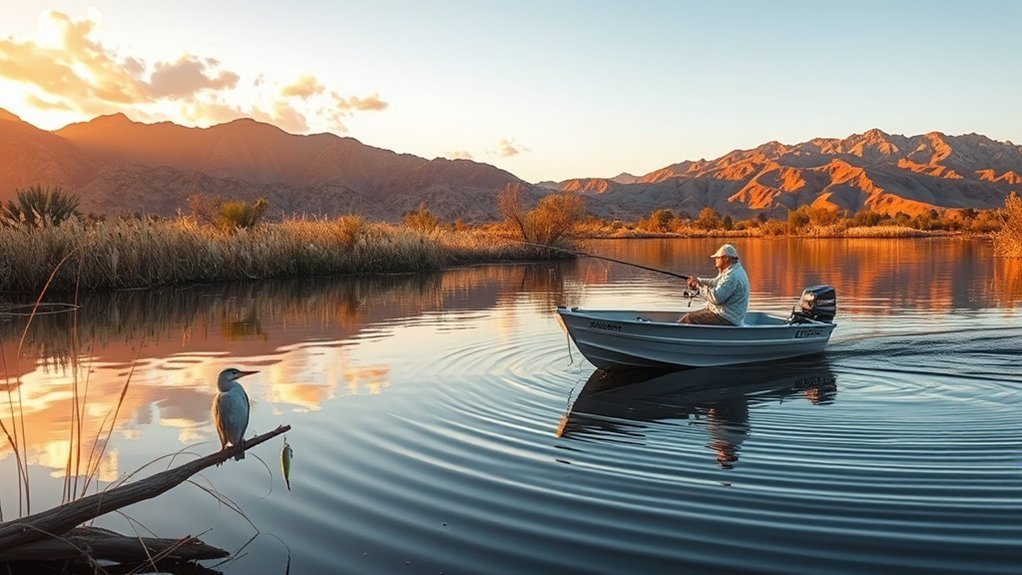
Martinez Lake and Mittry Lake are established recreation destinations in the greater Yuma area, with fishing, boating, wildlife viewing, and shoreline scenery. Mittry Lake Wildlife Area is managed by the Arizona Game and Fish Department, which should be your starting point for current access information.
For the best fishing day, verify the current Arizona license, species, season, and water-access rules before choosing tackle or a launch point.
- Pack: appropriate tackle, drinking water, sun protection, and required boating safety gear.
- Launch: use established public access and boat facilities.
- Conditions: check wind, heat, water level, and weather before leaving shore.
- Licenses: confirm current Arizona Game and Fish licensing and fishing regulations before casting.
Do not rely on a fixed promise that one species, lure, or time of day will always produce. Fishing conditions change with season, temperature, water levels, and recent weather.
Attend Seasonal Events at the Yuma County Fairgrounds
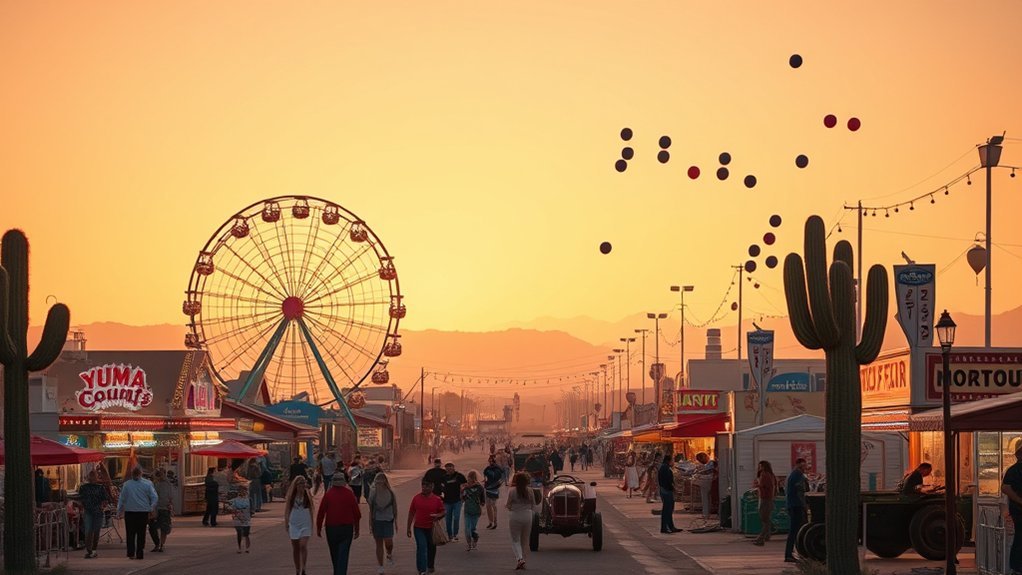
The Yuma County Fairgrounds hosts a wide variety of events, including the county fair, animal shows, concerts, trade shows, rodeos, demolition events, and seasonal festivals.
For 2026, the 74th Annual Yuma County Fair ran March 31 through April 5. The fairgrounds currently lists its 5th Annual Fall Fest for October 16–18, 2026. Because event calendars change, always check the current schedule before driving over.
| Event Type | What You Might Find | Tip |
|---|---|---|
| County fair | Livestock, exhibits, food, entertainment | Check annual dates |
| Fall festival | Carnival and seasonal entertainment | Verify admission and schedule |
| Special events | Shows, concerts, expos, rodeos | Use the live event calendar |
Explore Pottery, Murals, and Public Art Around Town
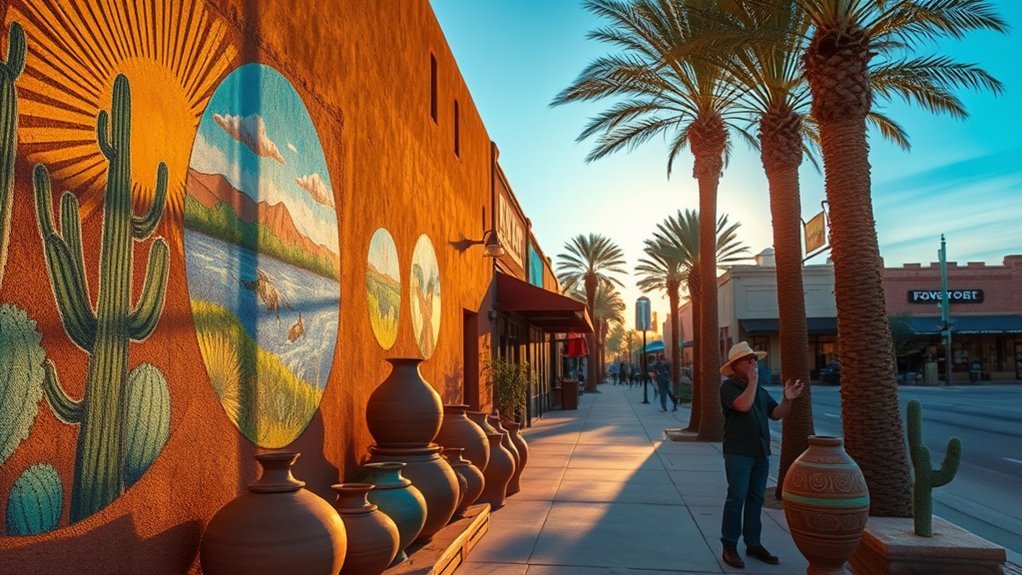
Public art adds another layer to a downtown Yuma walk. Murals, sculptures, and other installations appear around public spaces, while the Yuma Art Center supports galleries, studio programs, and a pottery studio.
- Use current Yuma Art Center information to identify public-art locations.
- Look for murals while walking the downtown blocks rather than assuming every older online mural remains unchanged.
- Visit galleries or studio programs when they are open to the public.
- Check for art walks, openings, classes, and seasonal cultural events.
Slowing down for public art works particularly well between downtown historical sites because it requires little extra driving and can be adjusted to the weather.
Take a Carefully Planned Day Trip to Los Algodones, Mexico
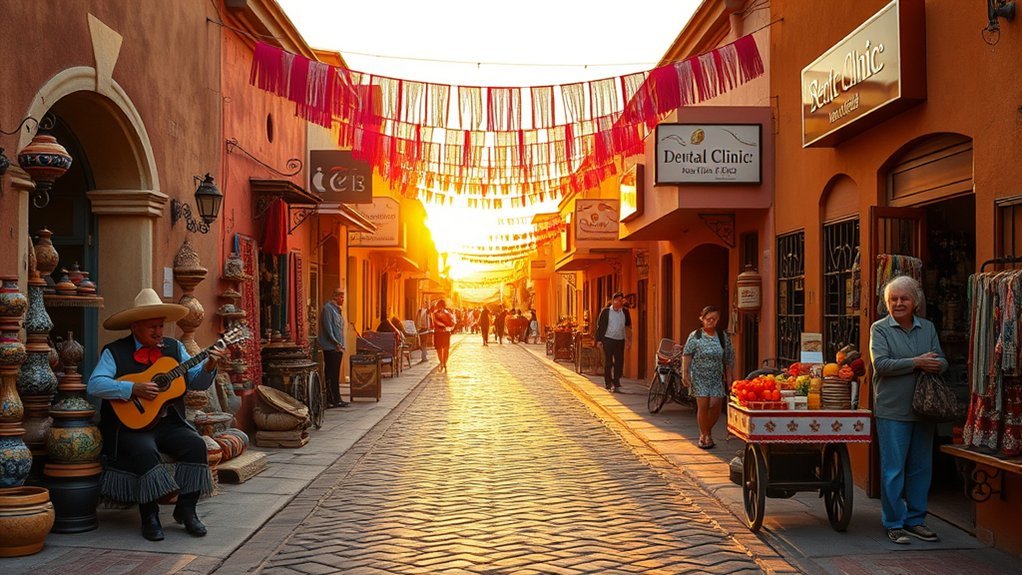
Los Algodones in Baja California is close enough to Yuma for an international day trip through the Andrade-area border crossing. Its compact commercial center is known for restaurants, shops, pharmacies, dental and optical businesses, and services aimed at cross-border visitors.
Do not treat the trip as casually as driving to another Arizona town. Before leaving, review the current U.S. State Department Mexico travel advisory, verify the Andrade port’s current operating hours and wait times through U.S. Customs and Border Protection, and make sure everyone in your party has the documents required for re-entry.
U.S. citizens returning by land generally need a WHTI-compliant travel document, such as a passport or passport card, subject to the detailed CBP rules that apply to the traveler. Requirements differ for non-U.S. citizens, children, permanent residents, and other categories, so check the rules for your situation rather than relying on a generic passport statement.
Warning: If you are considering medical, dental, optical, or pharmacy services in Mexico, independently verify the provider, treatment, medication, prescription requirements, insurance implications, and U.S. import rules. A travel article cannot establish that a particular provider or medication is safe, appropriate, or a bargain.
A Simple Two-Day Yuma Itinerary
Day 1: History, Riverfront, and Downtown
- Start at Yuma Territorial Prison State Historic Park.
- Walk part of the Yuma Crossing riverfront and East Wetlands.
- Visit Colorado River State Historic Park or Sanguinetti House.
- Spend the hotter part of the afternoon at the Yuma Art Center.
- Have dinner downtown and finish at Gateway Park near sunset.
Day 2: Choose One Bigger Outdoor Excursion
Do not try to cram all of Yuma’s remote attractions into one day. Choose the outing that best matches your vehicle, season, and interests:
- Imperial Sand Dunes: best for dune scenery, photography, and properly prepared off-road recreation.
- Kofa National Wildlife Refuge: best for remote desert landscapes, wildlife, and hiking when conditions are suitable.
- Castle Dome: best for mining history and a ghost-town experience.
- Mittry Lake or the Colorado River: best for water, paddling, wildlife viewing, or fishing.
If temperatures are dangerously high, replace a remote outdoor excursion with shorter riverfront walks, museums, galleries, restaurants, and indoor attractions.
Frequently Asked Questions
Are there guided ghost tours after dark in Yuma?
Ghost or haunted-history events have been offered seasonally in Yuma, but you should not assume a nightly year-round tour is operating. Check current calendars from local historical organizations, the City of Yuma, and Visit Yuma for dates during your trip.
What are typical summer temperatures in Yuma?
Yuma summers are extremely hot. The 1991–2020 normal July daily high is about 106.7°F, or roughly 41.5°C, and individual days can be hotter. Check the National Weather Service forecast, move strenuous activities to cooler hours, drink water regularly, seek shade or air conditioning, and know the signs of heat illness.
Is public transportation available to Yuma attractions?
YCAT serves Yuma and several surrounding communities, including some regional routes. It can help with urban travel, but many desert destinations in this guide are outside practical fixed-route access. Plan on a suitable vehicle for Kofa, Castle Dome, Imperial Sand Dunes, Mittry Lake, and similar remote outings.
Where can visitors find RV hookups or longer stays?
The Yuma area has numerous private RV parks and resorts, including properties designed for seasonal and longer stays. Availability, age restrictions, minimum stays, hookups, and monthly rates vary widely, so compare current listings and contact the property directly before arrival.
Are mosquitoes or scorpions a concern in Yuma?
Both occur in the desert Southwest. Mosquito exposure can increase around standing water and wetland habitat, while scorpions may occur around desert homes, camps, rocks, and debris. Use an effective insect repellent for mosquitoes, wear appropriate footwear outdoors at night, avoid reaching blindly under rocks or objects, and follow local pest guidance.
What is the best time of year to visit Yuma?
Cooler months are generally the easiest time for long walks, hiking, off-roading, and desert sightseeing. Summer can still work for indoor attractions and short early-morning outings, but triple-digit heat requires a much more conservative schedule.
Do I need a passport for a day trip to Los Algodones?
U.S. citizens returning to the United States by land must carry a WHTI-compliant travel document. A U.S. passport or passport card is accepted, and CBP recognizes certain other qualifying documents. Requirements vary by citizenship, immigration status, and age, so verify your exact document requirements with CBP before crossing.
Conclusion
Yuma is most rewarding when you balance its history with the landscapes that shaped it. Start with the Territorial Prison and riverfront, make time for downtown art and food, then choose a desert, wetlands, or water excursion that fits the season and your experience level.
The key is preparation. Check current hours and event calendars, respect extreme heat, verify permits and road conditions for remote areas, and treat an international border trip as real international travel. With those basics covered, Yuma offers far more variety than a quick Interstate 8 stop might suggest.
Sources
- Yuma Territorial Prison State Historic Park — current visitor information and prison-site features.
- Yuma Crossing National Heritage Area — Yuma Crossing, Colorado River State Historic Park, and riverfront restoration history.
- City of Yuma: Yuma Art Center and Historic Yuma Theatre — galleries, studios, theater, and cultural programming.
- Bureau of Land Management: Imperial Sand Dunes — recreation, permits, safety, and land-use rules.
- U.S. Fish & Wildlife Service: Kofa National Wildlife Refuge — road, service, wildlife, and visitor-safety information.
- U.S. Department of State: Mexico Travel Advisory — current travel-security guidance for international border trips.