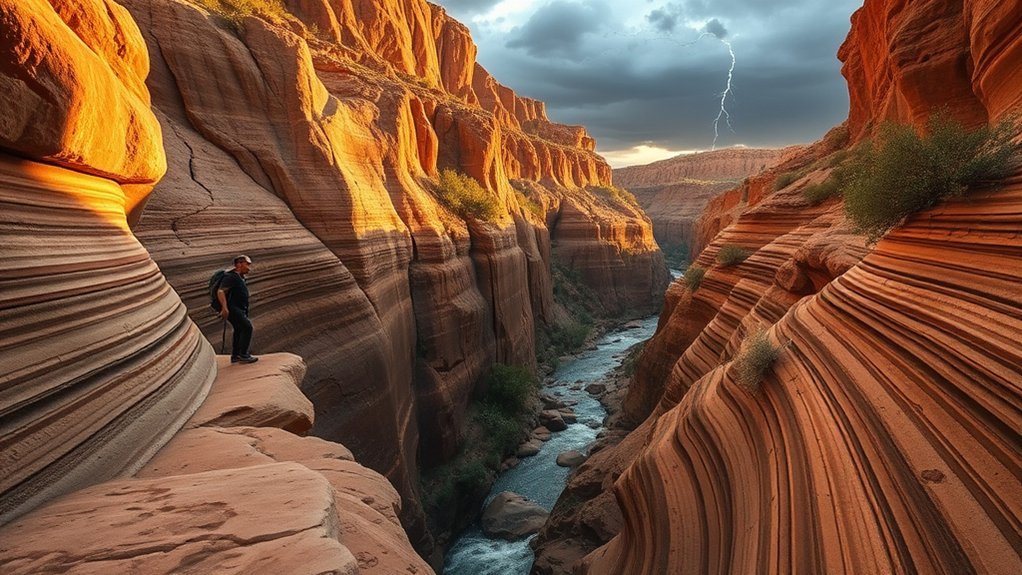
Arizona flash floods can turn a dry wash, canyon, swimming hole, or low-water crossing into a dangerous channel with very little warning. The safest strategy is prevention: check current forecasts and alerts, understand what is happening upstream, avoid flood-prone terrain when thunderstorms threaten, and know exactly how you will reach higher ground before you enter a canyon or wash.
Quick Answer
Arizona flash floods can develop rapidly during monsoon thunderstorms, including from rain miles upstream. Before entering a wash, canyon, swimming hole, or low-water crossing, check NWS forecasts and alerts. If storms threaten or a warning is issued, stay out. If water rises, move immediately to higher ground and never enter floodwater.
Key Takeaways
- A storm does not have to be directly overhead to cause a flash flood where you are.
- Avoid slot canyons, washes, drainage crossings, and swimming holes when thunderstorms or flooding are possible in the watershed.
- If water starts rising, immediately move to higher, stable ground. Never walk, swim, or drive through moving floodwater.
- Check National Weather Service alerts, park or land-manager notices, and road closures before and during your trip.
- Downloaded maps, signaling gear, backup communication, and a shared itinerary help when cell service fails, but they do not make a dangerous weather window safe.
At a Glance
| Time Required | About 10–15 minutes of pre-trip weather and route planning, plus continued monitoring during the trip |
| Difficulty | Easy to plan; potentially life-threatening if changing weather is ignored |
| Tools Needed | Current weather information, downloaded or paper map, charged phone, signaling gear, and backup communication when appropriate |
| Cost | Basic forecasts and alerts are free; optional weather radios, satellite messengers, and emergency gear vary in price |
Warning: A favorable forecast does not guarantee that a slot canyon or wash will remain safe. The National Weather Service warns that flash flooding can occur many miles from the thunderstorm producing the rain. Official warnings, closures, evacuation orders, and ranger instructions always take priority over general advice in this guide.
Understanding How Arizona Flash Floods Form
Flash floods develop when rain reaches the ground faster than the landscape and drainage system can absorb or carry it safely. Arizona has many steep drainages, rocky surfaces, dry washes, narrow canyons, and developed areas where runoff can collect quickly.
During a strong thunderstorm, water from a large upstream area can funnel into a much smaller wash or canyon. That means you may be standing under blue sky while heavy rain falls somewhere you cannot see. The National Weather Service Phoenix office specifically warns that flash flooding can occur many miles from the thunderstorm.
Urban pavement can also increase runoff, while wildfire burn scars can shed water, mud, rocks, branches, and other debris more rapidly than undisturbed ground. Narrow canyons are especially dangerous because rising water has little room to spread out.
Understand Flood Alerts Before You Go
Weather alerts tell you how urgently you need to act. Always read the full alert because the affected drainage, timing, and expected impacts matter.
- Flood Watch: Flooding is possible. Be prepared, monitor updates closely, and strongly reconsider trips into washes, slot canyons, swimming holes, or other terrain with limited escape routes.
- Flash Flood Warning: Dangerous flash flooding is occurring or expected soon in the warned area. If you are in a flood-prone location, move to higher ground immediately.
- Flash Flood Emergency: This designation is reserved for unusually severe, life-threatening flash-flood situations. Follow emergency instructions immediately and do not travel through affected areas unless authorities direct you to evacuate.
Check the National Weather Service active-alerts page along with the detailed local forecast for your exact route.
Recognizing Early Weather and Terrain Warning Signs
You should not wait for visible floodwater before making a decision. Thunder, rapidly building clouds, darkening skies, sudden strong gusts, or heavy rain anywhere in the drainage are reasons to reassess a canyon or wash.
Terrain clues matter too. Dry washes, narrow slots, steep gullies, culverts, low-water crossings, and drainage channels all concentrate runoff. Fresh mud, debris caught high in vegetation, scoured banks, damaged plants, and piles of branches can show where previous floods have traveled.
If you hear an unusual roar from upstream, see muddy water suddenly appear, notice floating debris, or see a normally dry channel beginning to flow, do not investigate from inside the drainage. Move toward higher, stable ground immediately.
Note: Weather cues such as wind or temperature changes can warn that a thunderstorm is developing, but they cannot tell you exactly when a distant upstream drainage will flood. Current alerts and a conservative route decision are more reliable than waiting for obvious visual signs.
Planning Routes to Avoid Flood-Prone Areas
Before you head out, examine both the weather and the shape of the terrain. Know which portions of your route enter washes, canyon bottoms, culverts, creek beds, low-water crossings, or enclosed slots, and identify where you can leave those areas quickly.
Check Recent Weather Forecasts
Check the latest National Weather Service forecast, radar when you have a current data connection, and all watches and warnings affecting both your location and the watershed upstream.
If your departure time changes, check again. A morning forecast viewed the night before is not enough for an afternoon canyon trip.
If thunderstorms or flooding are expected in the relevant drainage, choose a route that does not enter a wash or canyon, or postpone the trip. The National Park Service’s Grand Canyon weather-safety guidance warns that Northern Arizona canyon floods have been generated by thunderstorms many miles away.
Identify Drainage Patterns
Learn where water will naturally travel before you enter the route.
- Trace washes, creeks, and side canyons upstream as well as downstream on a topographic map.
- Look for narrow sections where water and debris could become concentrated.
- Identify ridges, benches, maintained trails, roads, or other established routes that lead out of the drainage.
- Mark more than one escape point whenever possible.
- Avoid camping, parking, or resting in a dry wash during threatening monsoon weather.
Choose Higher-Elevation Routes
When flood risk is elevated, routes that remain outside drainage bottoms can reduce your exposure. However, “higher” does not automatically mean “safer.” Exposed ridges can create serious lightning risk during thunderstorms, and steep unfamiliar terrain can introduce fall hazards.
Use established trails and terrain that you can navigate safely. Do not replace one emergency with another by attempting an exposed ridge traverse or technical climb simply to gain elevation.
Watch Burn Scars and Debris-Flow Risk
Recently burned landscapes deserve extra caution. Wildfire can remove vegetation and change how quickly rainfall becomes runoff. Heavy rain over a burn scar may produce fast water mixed with mud, rocks, logs, and other debris.
The National Weather Service Flagstaff office publishes burn-scar flash-flood information for affected areas in Northern Arizona. Check local NWS products when your route is below or near a recent wildfire.
Best Times and Conditions for Safe Monsoon Hiking
Earlier starts often reduce exposure to the afternoon and evening thunderstorms common during Arizona’s monsoon, but time of day is not a safety guarantee. The National Weather Service notes that dangerous flash floods can also happen at night.
- Check the forecast immediately before leaving rather than relying only on yesterday’s forecast.
- Start early when appropriate, but cancel or change the route if storms threaten the drainage regardless of the hour.
- Avoid narrow canyons and washes when thunderstorms or flooding are possible nearby or upstream.
- Set a turnaround time before the hike and follow it even if the group feels capable of continuing.
- Watch for lightning and heat risk as well as flooding. Arizona monsoon weather can produce several hazards at once.
Essential Gear for Flash Flood Preparedness
No piece of equipment makes it safe to enter a flood-prone canyon during dangerous weather. Gear is a backup for sound planning, not a substitute for it.
Useful equipment can include a charged phone, downloaded offline maps, paper map and compass, headlamp with spare power, whistle, first-aid kit, emergency bivy or space blanket, drinking water, food, sun protection, waterproof storage for electronics, and suitable footwear.
Where cellular coverage is unreliable, a satellite messenger or personal locator beacon may provide another way to request help. Learn how the device works before the trip and understand its limitations.
A battery-powered or hand-crank NOAA Weather Radio can provide official weather information where a suitable signal is available. NOAA Weather Radio broadcasts National Weather Service warnings, watches, forecasts, and other hazard information.
Pro Tip: Before leaving cellular coverage, download your map and route, save important phone numbers, confirm your check-in plan, and make sure everyone in the group knows the nearest safe exits. Do not depend on cached radar as if it were live weather data.
What to Do If You Encounter Rising Water
If water starts rising in a wash, canyon, drainage, or low-lying area, your first priority is to get out of the flood path and onto higher, stable ground. Do not wait to collect nonessential belongings or to see how high the water will become.
Just six inches of moving water can knock a person down. Never walk, swim, or drive through floodwater. Source: National Weather Service flood safety guidance.
Seek High Ground
Move uphill toward solid terrain as soon as flooding threatens. Avoid gullies, side drainages, culverts, creek beds, and other low routes that could become additional flood channels.
- Use the nearest safe, established escape route if one is available.
- Help children and slower group members move promptly without splitting the group unnecessarily.
- Leave nonessential equipment behind if carrying it would dangerously delay your escape.
- Once you are on stable high ground, stay away from the edge of eroding banks and monitor conditions.
- Do not descend simply because the rain has stopped. Additional runoff may still arrive from upstream.
Avoid Fast Water
Never attempt to cross a flooded wash, drainage, creek, or roadway on foot. Water may be deeper or faster than it appears, and the bottom can be unstable or hidden by mud and debris.
Backtrack if a dry route remains available. If floodwater cuts off your planned direction, staying on secure high ground is generally safer than attempting to force a crossing.
Signal For Help
If you cannot reach a safe exit but you are on stable ground above the flood, make your location easier for rescuers to identify.
- Call 911 if you have service and provide your location, route name, landmarks, injuries, and number of people in the group.
- Use a satellite messenger or emergency beacon according to its instructions if cellular service is unavailable.
- Use a whistle, bright clothing, reflective material, or a flashlight to attract attention.
- Conserve phone and light batteries once rescuers know your location.
- Follow instructions from emergency personnel rather than attempting a new crossing or technical escape on your own.
Escape Techniques for Narrow Slot Canyons and Washes
The most important slot-canyon escape technique happens before the flood: identify exits and leave the drainage before water arrives. Narrow canyons offer very little room for error, and flash floods can carry mud, rocks, branches, and other debris.
If water begins rising and a safe established exit is immediately accessible, move toward higher ground without delay. On dry, stable scrambling terrain, maintain secure footing and three points of contact where practical.
Do not depend on improvised chimneying, wedging yourself between canyon walls, free-climbing wet rock, or trying to outrun a flood downstream. A climb that looks possible when dry may become far more dangerous when rock is wet, loose, or covered by debris.
If the flood has already blocked every safe exit and you have reached stable ground above the flow, stay there, signal for rescue, and monitor for additional rises. Never attempt to swim through a flash flood.
Warning: Prevention is especially important in slot canyons. If thunderstorms or flash flooding are possible in the drainage, the safest choice is not to enter the slot.
Driving During Arizona Flash Floods
Flooded roads are another major monsoon hazard. Do not assume a familiar crossing is safe because you have driven through it before. Floodwater can hide washed-out pavement, debris, or a missing road shoulder.
If water covers a roadway, turn around and use another route. Do not drive around a Road Closed sign. Arizona transportation officials emphasize that drivers can easily underestimate the depth and force of moving water.
Check AZ511 for state-highway conditions and closures. Local authorities, tribal transportation agencies, counties, and land-management agencies may provide additional closure information for roads outside the state-highway system.
Communicating and Sharing Your Plans Effectively
Before entering Arizona’s backcountry, tell a reliable person exactly where you are going, which route you expect to follow, where your vehicle will be parked, and when they should expect your return.
- Share the route name, trailhead, planned direction, and important GPS coordinates or map references.
- List alternate exits if your route has them.
- Set a specific check-in time and explain what your contact should do if you miss it.
- Provide vehicle description and parking location.
- Update your contact if your route or return time changes while you still have communication service.
For remote trips, make sure the person receiving your itinerary understands that they should contact authorities rather than attempting an informal rescue themselves.
Local Resources, Alerts, and Weather Tools to Use
Use more than one source of weather information whenever possible. Cell service can disappear in remote canyons, and a single app should not be your entire warning system.
- NWS Active Alerts: Current watches and warnings.
- NWS Phoenix: Monsoon safety guidance for central and southwest Arizona.
- NWS Tucson: Monsoon and flash-flood information for southeast Arizona.
- NWS Flagstaff: Flash-flood guidance for Northern Arizona.
- NOAA Weather Radio: Continuous official weather broadcasts where reception is available.
- Wireless Emergency Alerts: Emergency alerts delivered to compatible mobile devices in affected areas.
- AZ511: Arizona state-highway conditions and closures.
Also check the current-conditions page for the specific national park, national forest, recreation area, tribal land, county, or state park you plan to visit. Local closures and ranger instructions may be more specific than a statewide forecast.
Training and Practice to Build Flash Flood Skills
Equipment helps most when you already know how to use it. Practice the parts of your safety plan under normal, dry conditions so that an emergency does not become the first time you open a map or activate a communication device.
- Route-exit practice: Study maps and identify how you would leave a drainage if the planned route became unsafe.
- Evacuation practice: Rehearse moving efficiently toward an established safe exit without running blindly or attempting technical climbing.
- Communication checks: Test phones, radios, satellite messengers, emergency contacts, and group signals before the trip.
- Navigation drills: Practice using downloaded maps, paper maps, and a compass without relying on continuous cellular service.
- Gear drills: Know how to use your headlamp, emergency shelter, first-aid supplies, signaling equipment, and communication devices.
The goal is not to practice entering floodwater. It is to recognize unsafe conditions early enough that you never need to cross it.
Frequently Asked Questions
Can flash floods affect dry riverbeds miles downstream?
Yes. Heavy rain in an upstream watershed can travel into a wash or canyon many miles from the thunderstorm. Clear sky directly overhead does not prove that the drainage is safe.
Can pets be rescued safely during a flash flood?
Keep pets leashed and under control before an emergency develops so they can evacuate with you. If a pet becomes separated across moving floodwater, do not enter the water and put additional lives at risk. Call emergency responders and explain the situation. A pet flotation device does not make swift floodwater safe.
Do flash floods damage pet microchips or GPS devices?
A pet microchip is an identification device, not a GPS tracker. The American Veterinary Medical Association explains that pet microchips do not provide real-time location tracking. External GPS trackers are separate electronic devices, and their water resistance varies by manufacturer and model.
Are drones useful for scouting slot-canyon hazards?
A drone should never replace current forecasts, alerts, maps, or a conservative go/no-go decision. Drone use is also restricted in many recreation areas. The National Park Service generally prohibits launching, landing, or operating drones from NPS-administered lands, with limited exceptions, and FAA rules also apply elsewhere. Never fly in a way that could interfere with emergency aircraft or rescue operations.
Will my travel insurance cover a flash-flood incident?
It depends on the individual policy. Coverage for medical treatment, evacuation, search and rescue, trip interruption, weather events, and adventure activities can have different limits and exclusions. Read the policy wording before your trip and contact the insurer if you need clarification about a specific activity or destination.
Can a flash flood happen when the sky above me is clear?
Yes. Rain falling upstream can enter the drainage where you are even when the local sky appears clear. This is one reason slot canyons and dry washes require checking the weather across the wider watershed rather than only looking overhead.
What should I do when a Flash Flood Warning is issued?
Treat it as an immediate safety threat if you are in the warned area. Leave washes, drainage channels, canyon bottoms, low crossings, and other flood-prone areas for higher, stable ground. Do not walk or drive through floodwater, and follow instructions from emergency officials and land managers.
Conclusion
Arizona flash floods demand conservative decisions, especially during monsoon season. Water in a narrow drainage can rise dramatically within seconds or minutes, and a storm miles upstream may be enough to create danger where you are. Check current alerts, understand the watershed, avoid canyons and washes when storms threaten, and identify safe exits before entering flood-prone terrain.
If rising water catches you outside, move immediately to higher, stable ground and stay out of floodwater. Good maps, communication tools, signaling equipment, and practiced emergency plans improve your options, but the most effective flash-flood safety measure is choosing not to enter hazardous terrain when conditions are questionable.
Sources
- National Weather Service Phoenix — Monsoon Safety — Arizona monsoon, flash-flood, hiking, and higher-ground guidance.
- National Weather Service — Flood Safety — flood alerts, moving-water hazards, higher-ground guidance, and flood preparedness.
- National Park Service — Grand Canyon Weather Dangers — Northern Arizona slot-canyon and distant-thunderstorm flash-flood risks.
- Arizona Department of Transportation — Flooded Road Safety — guidance against driving through flooded roadways.
- National Park Service — Uncrewed Aircraft in National Parks — current restrictions and safety considerations for drone use.
- American Veterinary Medical Association — Microchipping FAQ — explains that pet microchips provide identification rather than GPS tracking.