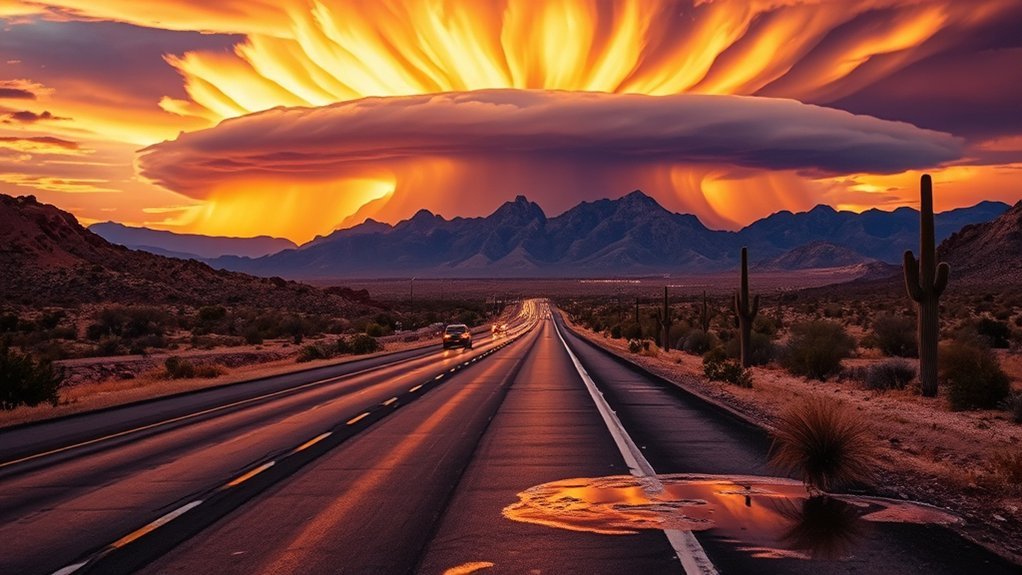
Arizona’s summer monsoon can transform a hot, dry afternoon into a fast-moving mix of dark clouds, lightning, strong wind, dust, and intense rain. The storms can be spectacular, but they can also create flash floods and dangerous driving conditions with little warning. A safe monsoon trip depends on checking the forecast, adjusting outdoor plans early, and knowing exactly what to do when thunder, floodwater, or blowing dust appears.
Quick Answer
Arizona’s official monsoon season runs from June 15 through September 30, although storm activity varies by region and year. Travelers should expect sudden thunderstorms, lightning, flash flooding, strong wind, and dust storms. Check forecasts before every outing, avoid washes and exposed high ground, never enter floodwater, and seek enclosed shelter as soon as you hear thunder.
Key Takeaways
- The National Weather Service defines Arizona’s official monsoon season as June 15 through September 30, but active storm periods do not begin everywhere at the same time.
- Flash flooding can reach a wash or canyon even when the storm is miles away or upstream.
- If you hear thunder, stop outdoor activities and seek a substantial building or hard-topped enclosed vehicle.
- Never drive, walk, or wade through flooded roads, washes, or streams.
- If severe blowing dust forces you off the highway, follow ADOT’s Pull Aside, Stay Alive procedure rather than leaving your hazard lights on.
- Check weather alerts, park conditions, and AZ511 road information before leaving and again during the day when service is available.
What Causes Arizona’s Monsoon Season and When It Happens
Arizona’s official monsoon season runs from June 15 through September 30, according to the National Weather Service. Those dates provide a consistent period for tracking monsoon rainfall and hazards, but they do not mean thunderstorms suddenly begin statewide on June 15 or stop on September 30.
The actual arrival and strength of monsoon moisture varies by year and region. In northern Arizona, for example, persistent monsoonal moisture often arrives later than it does in the southern part of the state.
The North American Monsoon develops as summer heating and shifting atmospheric circulation change the prevailing winds across Mexico and the Southwest. Moisture is transported northward from sources that include the Gulf of California and eastern Pacific Ocean. Combined with intense summer heating and mountain terrain, that added moisture helps produce showers and thunderstorms.
The National Weather Service notes that much of northern Arizona receives roughly 40% to 50% of its annual precipitation during the monsoon season.
Monsoon weather is highly uneven. One community may receive heavy rain while another a few miles away stays dry. That localized nature is one reason travelers should monitor radar and warnings rather than relying only on the weather visible from their current location.
Typical Weather Patterns and Regional Differences
Arizona’s monsoon does not affect every part of the state in the same way. Elevation, terrain, moisture availability, storm outflows, and the larger atmospheric pattern all influence where thunderstorms develop and how they move.
- Phoenix and the lower deserts: Extreme heat can continue between storms. Thunderstorms may produce brief heavy rain, lightning, damaging wind, and large walls of blowing dust.
- Tucson and southern Arizona: Summer thunderstorms are common during active monsoon periods, often developing around higher terrain before affecting lower elevations.
- Mogollon Rim and Flagstaff: Higher elevations are cooler than the low deserts but remain vulnerable to frequent lightning, heavy rain, hail, flash flooding, and rapidly changing trail conditions.
- Northeastern and western Arizona: Storm coverage can be less consistent, but isolated thunderstorms can still produce dangerous lightning, strong outflow winds, and localized flooding.
Note: Monsoon season does not eliminate Arizona’s heat risk. Temperatures can remain extremely high before storms form, and higher humidity can make exertion feel more difficult. Plan hydration and heat protection separately from rain protection.
Recognizing Flash Flood and Dust Storm Risks
Flash floods and dust storms are two of the most serious hazards travelers may encounter during Arizona’s monsoon season.
Flash Flood Warning Signs
A thunderstorm does not need to be directly overhead to create a flood where you are. Rain falling upstream can rush into dry washes, slot canyons, drainage channels, and canyon bottoms with little warning. The National Park Service advises visitors to know both the local forecast and conditions upstream when hiking around canyons or waterways.
Warning signs can include:
- Rapidly rising or suddenly muddy water
- A growing roar from upstream
- Floating branches, debris, or foam
- Heavy rain nearby or over higher terrain
- A Flash Flood Warning for your area or an upstream watershed
Warning: Never drive, walk, or wade through floodwater. Leave washes, drainage channels, low-water crossings, and canyon bottoms when flooding threatens. If a Flash Flood Warning is issued for your location, move away from drainages and toward higher ground when it is safe to do so.
Dust Storm Warning Signs
Thunderstorm outflow winds can lift desert soil into a dense wall of blowing dust, sometimes called a haboob. Visibility can deteriorate very quickly.
If you see a wall of dust approaching a highway, do not intentionally drive into it. Begin reducing speed while you still have good visibility and look for a safe opportunity to leave the highway or pull completely away from traffic.
Safety Tips for Driving During Monsoon Storms
Driving conditions can change quickly during monsoon thunderstorms. Heavy rain reduces visibility, water can collect on roads, strong crosswinds can affect vehicle control, and flooded washes can cut off routes that were dry minutes earlier.
- Slow down early. Leave more following distance and avoid sudden steering or braking when pavement is wet.
- Never enter floodwater. A road that disappears beneath moving water should be treated as closed, even when other vehicles attempt the crossing.
- Expect debris. Wind and runoff can leave branches, rocks, mud, or other material on the road.
- Check road conditions. Use AZ511 for current incidents, closures, delays, cameras, and state-highway information.
- Do not stop beneath vulnerable trees or beside washes. Choose a location away from flowing water and traffic whenever you need to wait out a storm.
What to Do in a Severe Dust Storm
The Arizona Department of Transportation tells drivers to avoid driving into a dust storm whenever possible. If blowing dust catches you and visibility is becoming dangerously poor:
- Check traffic around your vehicle and begin slowing down.
- Exit the highway completely if possible.
- Otherwise, pull as far off the paved portion of the roadway as safely possible. Do not stop in a travel lane or on the paved shoulder.
- Set the parking brake.
- Turn off all vehicle lights, including emergency flashers.
- Take your foot off the brake so the brake lights are not illuminated.
- Keep your seat belt fastened.
- Wait until visibility improves enough to travel safely.
Turning the lights off after you are safely away from the paved roadway matters because another driver may otherwise follow your lights and unintentionally leave the road behind you.
Lightning Safety During Arizona’s Monsoon
Lightning deserves its own plan. Do not wait for heavy rain before seeking shelter. According to the National Weather Service, if you can hear thunder, you are close enough to a thunderstorm to be at risk.
The safest practical choices are a substantial enclosed building or a hard-topped enclosed vehicle with the windows closed.
- Leave hilltops, ridges, overlooks, open fields, water, and exposed viewpoints.
- Do not shelter beneath an isolated tree.
- Tents, picnic shelters, open-sided structures, and covered porches do not provide adequate lightning protection.
- Remain in safe shelter for at least 30 minutes after the last thunder before resuming outdoor activities.
Pro Tip: Before starting a remote hike, identify where your nearest substantial building or enclosed vehicle will be. A trail with no realistic lightning shelter may be a poor choice on a day with thunderstorms in the forecast.
Hiking and Outdoor Activities: When to Go and When to Wait
Morning outings can reduce exposure to the commonly active afternoon thunderstorm period, but they do not guarantee storm-free weather. Check the forecast immediately before leaving and continue watching the sky.
During unsettled monsoon weather:
- Avoid slot canyons, narrow canyons, dry washes, drainage channels, and other places with limited escape routes.
- Do not hike on exposed ridges, summits, or high open terrain when thunderstorms threaten.
- Know what lies upstream. Heavy rain outside your immediate view can send floodwater toward your route.
- Turn around early when clouds grow rapidly, thunder begins, wind shifts sharply, or an alert is issued.
- Do not camp or park in a wash or immediately beside a stream channel.
- Check the individual park, monument, forest, or recreation-area website for closures and local warnings before departure.
If you hear thunder while hiking, stop treating the trip as a sightseeing opportunity. Move toward appropriate enclosed shelter if it can be reached safely, while avoiding exposed high ground, isolated trees, water, and other obvious lightning hazards.
What to Pack for Monsoon Travel in Arizona
Monsoon packing has to cover more than rain. Arizona travelers may encounter intense heat, wet trails, cooler high-elevation conditions, power or cell-service interruptions, and sudden road delays during the same trip.
Lightweight Waterproof Layers
Use lightweight rain protection that packs small and does not add unnecessary heat during summer travel.
- Breathable rain shell: A hooded, packable shell helps during sudden downpours.
- Light insulating layer: Useful at higher elevations where temperatures can fall during or after a storm.
- Quick-drying pants or protective outer layer: Helpful on wet or brushy trails.
- Emergency poncho or bivy: Useful backup equipment for remote outings, but not a substitute for safe lightning shelter.
Sturdy Non-Slip Footwear
Choose hiking shoes, trail shoes, or boots with reliable traction for wet rock, mud, and uneven ground. Secure hiking sandals may be practical for casual activities in appropriate terrain, but they provide less toe and ankle protection than closed footwear.
Whatever footwear you choose, do not use it as justification to cross floodwater. A grippy sole does not make a flowing wash, flooded road, or rising stream safe.
Pack dry socks and, if space permits, a second pair of shoes so you are not forced to continue a trip in soaked footwear.
Emergency Supplies Kit
A compact travel emergency kit should support hydration, communication, navigation, shelter, lighting, and basic first aid.
- Enough drinking water for the route plus a reserve: Do not assume streams or springs will be available. Water needs depend on heat, route, exertion, elevation, and trip length. Saguaro National Park, for example, advises backcountry campers to carry at least one gallon per person per day and more in low-country summer conditions.
- Navigation: Offline maps plus a physical map for remote trips.
- Light: Flashlight or headlamp with adequate battery power.
- Communication: Charged phone and portable power bank. Satellite communication can add another layer of protection on remote routes, but it does not replace trip planning.
- Basic first aid: Include blister care and any essential personal medications.
- Emergency shelter: A compact bivy, tarp, or similar backup for unexpected delays. Remember that these do not provide lightning-safe shelter.
- Sun and heat protection: Hat, sunscreen, and appropriate clothing remain necessary even on stormy days.
Best Times and Places to Experience Monsoon Scenery Safely
Monsoon clouds, rain shafts, changing light, and the smell of wet desert can create memorable scenery, but storm watching should never depend on remaining exposed during lightning.
Developed scenic drives and legal pullouts can offer good views because you can remain close to an enclosed vehicle. Examples include developed pullouts along scenic drives in areas such as Saguaro National Park and the Sedona region. Conditions and access can change, so check the managing agency before the trip.
| Viewing option | Safer approach |
|---|---|
| Saguaro National Park scenic pullouts | Use legal developed stops when conditions are calm and keep an enclosed vehicle immediately available. |
| Sedona-area scenic pullouts | Photograph distant clouds only when lightning is not threatening your location; return to the vehicle before the storm arrives. |
| Hotel, visitor-center, or restaurant windows | A substantial enclosed building is the better choice once thunder is audible. |
Do not choose exposed peaks, ridges, canyon rims, open parking lots, or isolated desert viewpoints because they offer a dramatic lightning view. If thunder is audible, move indoors or into an appropriate enclosed vehicle and remain sheltered for 30 minutes after the last thunder.
After a storm has clearly moved away and the lightning waiting period has passed, changing clouds and late-day light can still create excellent photography without requiring you to stay outdoors during the dangerous part of the storm.
How to Monitor Forecasts and Emergency Alerts
Check weather information before leaving your lodging and continue checking during the day whenever service is available. Monsoon thunderstorms can develop and move quickly enough that a morning forecast should not be your only weather check.
- Use weather.gov for official National Weather Service forecasts, radar, watches, and warnings.
- Keep Wireless Emergency Alerts enabled on your phone.
- Check the managing park or recreation area’s current-conditions page for trail, road, campground, and weather restrictions.
- Check AZ511 before highway trips and reroutes.
- Save important maps and directions offline because mobile coverage can disappear in remote parts of Arizona.
- If you are camping or traveling remotely, consider NOAA Weather Radio or another way to receive alerts without relying entirely on mobile data.
Watch vs. Warning: Know the Difference
The National Weather Service distinguishes between a watch and a warning:
- Watch: Hazardous weather or flooding is possible. Stay informed and be prepared to change plans.
- Warning: Dangerous weather is occurring, imminent, or has been reported. Take protective action immediately.
Do not wait for a formal warning when you can already see an immediate hazard such as rising water, a wall of dust, or lightning close enough for thunder to be heard.
Before You Leave: Monsoon Safety Checklist
- Check the National Weather Service forecast and radar.
- Look for Flash Flood, Severe Thunderstorm, and Dust Storm Watches or Warnings.
- Check park, forest, monument, or recreation-area alerts.
- Check AZ511 before a long drive.
- Identify washes, canyons, low-water crossings, and exposed ridges on your route.
- Carry enough water for the trip plus an emergency reserve.
- Charge phones and backup batteries.
- Download offline maps.
- Tell someone where you are going and when you expect to return if entering remote country.
- Know where you can reach a substantial building or enclosed hard-topped vehicle if thunderstorms develop.
Frequently Asked Questions
Can monsoon rains affect air travel delays and cancellations in Arizona?
Yes. Thunderstorms can disrupt airport and air-traffic operations through reroutes, holding, ground delays, or diversions. The FAA explains that persistent thunderstorms can force aircraft to wait or divert. Check your airline and airport status before leaving for the airport when strong storms are nearby.
Do monsoon conditions increase the presence of venomous wildlife near trails?
Arizona wildlife activity can vary with temperature, time of day, rainfall, food, and habitat, but it is too broad to assume that every monsoon storm pushes venomous snakes onto trails. Watch where you place your hands and feet, use a light after dark, give snakes and other wildlife plenty of space, and never attempt to handle or move a wild snake.
Will monsoons impact access to national parks and campground reservations?
They can. Heavy rain, flash flooding, lightning, washed-out roads, debris, or emergency operations can temporarily close trails, roads, campgrounds, or other facilities. A reservation does not guarantee that every road or trail will remain accessible during severe weather, so check the park’s official current-conditions page shortly before arrival.
Can monsoon season worsen pre-existing asthma or allergy symptoms?
Some travelers may be affected by dust, pollen, mold, smoke, or other airborne irritants around stormy weather. CDC guidance notes that air pollution and allergens can trigger asthma symptoms in susceptible people. Follow your existing asthma or allergy action plan, carry prescribed medication, and check air-quality conditions when these are known triggers for you. This is general travel information, not individualized medical advice.
Are rental-car insurance or roadside assistance recommendations different during monsoons?
There is no universal monsoon-specific rule requiring travelers to buy extra rental coverage. Before driving, review the rental agreement and any protection supplied by your personal auto insurance or eligible credit card. Pay particular attention to towing, roadside assistance, flood damage, prohibited roads, off-pavement use, and other exclusions. Never drive into floodwater because you assume insurance will cover the outcome.
Is it safe to visit Arizona during monsoon season?
Yes, travel is possible during monsoon season, but flexibility is essential. Avoid placing nonrefundable or tightly timed outdoor activities in locations vulnerable to flash flooding or lightning, check alerts repeatedly, and be willing to postpone a hike, scenic drive, or outdoor tour when hazardous weather develops.
What time of day are Arizona monsoon storms most likely?
Thunderstorms frequently develop during the afternoon and evening as daytime heating contributes to instability, but storms can occur outside that window. An early start can reduce exposure on many days, but it is not a guarantee. Always use the current forecast rather than relying only on the time of day.
Can I drive through a flooded road if the water looks shallow?
No. You may not be able to judge water depth, current strength, road damage, or hidden debris from inside the vehicle. Turn around and use another route or wait until authorities reopen the crossing.
Sources
- National Weather Service Flagstaff – Northern Arizona Monsoon Season — official season dates, moisture sources, and regional monsoon information.
- National Weather Service Tucson – Monsoon Safety — watches, warnings, and Arizona monsoon hazards.
- Arizona Department of Transportation – Pull Aside, Stay Alive — official dust-storm driving procedure.
- National Park Service – Monsoon Season — flash-flood, canyon, wash, and outdoor safety guidance.
- National Weather Service – Lightning Safety — safe shelter and lightning precautions.
- Centers for Disease Control and Prevention – Controlling Asthma — air pollution and asthma-trigger guidance.
Conclusion
Arizona’s monsoon season can bring dramatic clouds, cooling rain, vivid desert colors, lightning, flash flooding, strong winds, and dangerous dust storms within the same travel day. The best way to experience it is not to outrun the weather but to build flexibility into your plans.
Remember the essentials: Arizona’s official monsoon season is June 15 through September 30; check current forecasts and alerts; stay out of washes and flooded crossings; leave exposed terrain when thunderstorms approach; seek enclosed shelter when you hear thunder; follow ADOT’s specific procedure if severe blowing dust catches you on the road; and carry enough water for Arizona’s heat even when rain is in the forecast. With those precautions in place, you can enjoy the desert’s changing summer landscape without treating a dangerous storm as part of the adventure.