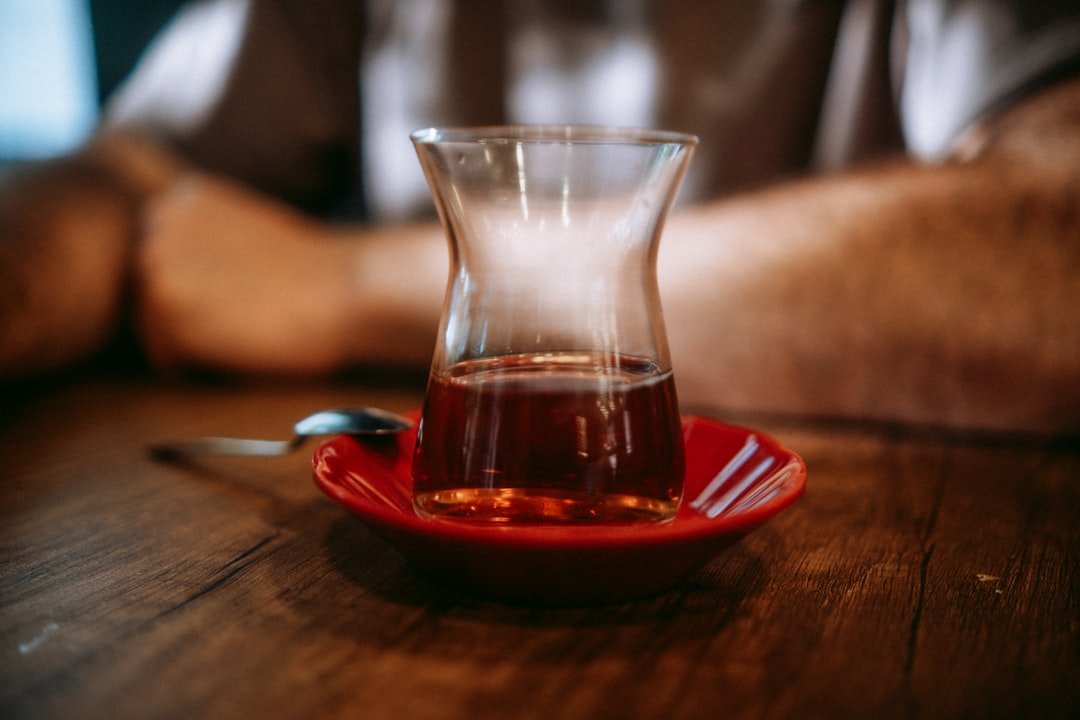
Turkish tea, or çay, is one of the simplest ways to experience everyday life in Istanbul. You will see the deep amber-red drink at breakfast tables, cafés, workplaces, ferry terminals, markets, and shops throughout the city. In the Grand Bazaar, a small tulip-shaped glass of tea is often as much about conversation and hospitality as it is about the drink itself.
Quick Answer
Traditional Turkish tea is strong black tea, usually grown in Türkiye’s eastern Black Sea region and brewed in a two-level çaydanlık. In Istanbul’s Grand Bazaar, tea is commonly offered as part of shop hospitality. For a wider selection of packaged tea, herbs, and infusions, the separate Spice Bazaar in nearby Eminönü is also worth exploring.
Key Takeaways
- Modern Turkish tea production developed mainly in the eastern Black Sea region during the 20th century, especially around Rize.
- Traditional Turkish tea is black tea brewed as a concentrate in the upper pot of a çaydanlık and diluted with hot water from the lower pot.
- Tea offered by Grand Bazaar shopkeepers is part of a long-established culture of hospitality and does not by itself require you to buy something.
- The Grand Bazaar and Spice Bazaar are separate markets. The Spice Bazaar is generally more focused on spices, herbs, food products, and tea.
- For souvenirs, check the producer, origin, ingredients, seal, and label rather than assuming loose tea is automatically more authentic.
How Turkish Tea Became Part of Daily Life
Tea was known in Ottoman lands before Türkiye developed a successful domestic tea industry, but the modern story of Turkish tea is much newer than many popular summaries suggest. Early cultivation experiments did not create a lasting industry. The decisive development came during the early Turkish Republic, when the eastern Black Sea region was identified as suitable for commercial tea production.
A 1924 law supported tea cultivation around Rize and Borçka. Effective plantation work expanded in the late 1930s, and official tea-industry histories record the first harvest of fresh tea leaves and production of dry tea in 1938. Tea Law No. 3788 followed in 1940, providing further support for the industry. The first tea factory in Rize opened in 1947, helping turn locally grown tea into a product available on a much larger scale.
Rize remains closely associated with Turkish tea because its humid Black Sea climate provides favorable growing conditions. Tea cultivation also extends into other parts of the eastern Black Sea region.
In 2022, UNESCO inscribed the “Culture of Çay (tea), a symbol of identity, hospitality and social interaction” of Türkiye and Azerbaijan on the Representative List of the Intangible Cultural Heritage of Humanity.
That recognition reflects what visitors quickly notice in Istanbul: tea is not reserved for a particular meal or social class. It is an everyday drink used to welcome guests, continue conversations, take a work break, or simply sit together.
The Grand Bazaar: A Cultural Icon
Istanbul’s Grand Bazaar, or Kapalıçarşı, developed from a commercial center established in the 15th century after the Ottoman conquest of Constantinople. It grew over the following centuries into one of the world’s best-known covered markets.
Today, the bazaar contains a network of roughly 61 covered streets and alleys and up to about 4,000 shops. Jewelry, carpets, textiles, leather goods, ceramics, antiques, souvenirs, and many other products fill its winding passages.
Tea has a natural place in this environment because commerce in the bazaar has traditionally involved more than a quick transaction. Shopkeepers and customers may sit, talk, negotiate, and drink tea together. For a visitor, accepting a glass of tea can provide a small glimpse of that social side of the market.
Note: The Grand Bazaar and the Spice Bazaar are different markets. The Grand Bazaar is centered on goods such as jewelry, textiles, carpets, leather, and souvenirs, while the Spice Bazaar in Eminönü has a stronger focus on spices, herbs, dried foods, sweets, and tea.
Exploring Turkish Tea at the Grand Bazaar

Do not expect every passage of the Grand Bazaar to be lined with specialist tea merchants. Tea is often most visible as part of the shopping experience itself. A carpet, jewelry, leather, or souvenir seller may offer a visitor a small glass of black tea while discussing merchandise.
If you want to buy tea, compare several sellers rather than relying on a single recommendation. Ask what type of tea is being sold, where it was produced, whether it is pure black tea or a flavored blend, and whether the package identifies a recognized producer or region.
For a broader food-focused selection, continue to the separate Mısır Çarşısı, or Spice Bazaar, in Eminönü. Its shops are known for spices, herbs, dried fruit, sweets, and various teas and infusions. Because it is a different market, it is best treated as a second stop rather than as a section of the Grand Bazaar.
The Art of Turkish Tea Making
Traditional Turkish tea is normally prepared in a stacked double teapot called a çaydanlık. The larger lower kettle is used to boil and hold hot water. The smaller upper pot is used to brew a concentrated black tea.
| Step | Typical Time |
|---|---|
| Bring water to a boil in the lower kettle | About 5–8 minutes |
| Add loose black tea to the upper pot and pour in boiling water | 1–2 minutes |
| Let the tea brew gently | About 10–15 minutes |
| Pour concentrate into the glass and dilute with hot water | 1–2 minutes |
| Add sugar if desired | Optional |
Once the concentrate is ready, a small amount is poured into a tulip-shaped glass. Hot water from the lower kettle is then added until the tea reaches the desired strength. A darker glass contains more concentrate; a lighter glass contains more water.
This two-pot system makes it easy to serve several people with different preferences from the same batch. Sugar is commonly offered separately, so each person can sweeten the drink if desired.
Pro Tip: If you prefer weaker tea, you can ask for it açık, meaning lighter. For a stronger, darker glass, demli is a useful word to know.
Sampling Different Types of Turkish Tea
When Turks simply say çay, they generally mean black tea. Much of Türkiye’s domestic black tea comes from the eastern Black Sea region, with Rize particularly associated with tea production.
You will also encounter herbal drinks such as linden (ıhlamur), sage (adaçayı), and rosehip (kuşburnu). These are better described as herbal infusions because they are not made from the leaves of the tea plant in the same way traditional black tea is.
Apple tea, or elma çayı, is widely available in tourist-oriented shops and cafés. It can be pleasant, but visitors should not confuse it with the strong black tea that forms the core of everyday Turkish tea culture.
Note: If your goal is to take home the tea most closely associated with everyday Turkish çay, look for plain Turkish black tea rather than a powdered fruit drink or heavily flavored tourist blend.
Pairing Turkish Tea with Traditional Turkish Delights
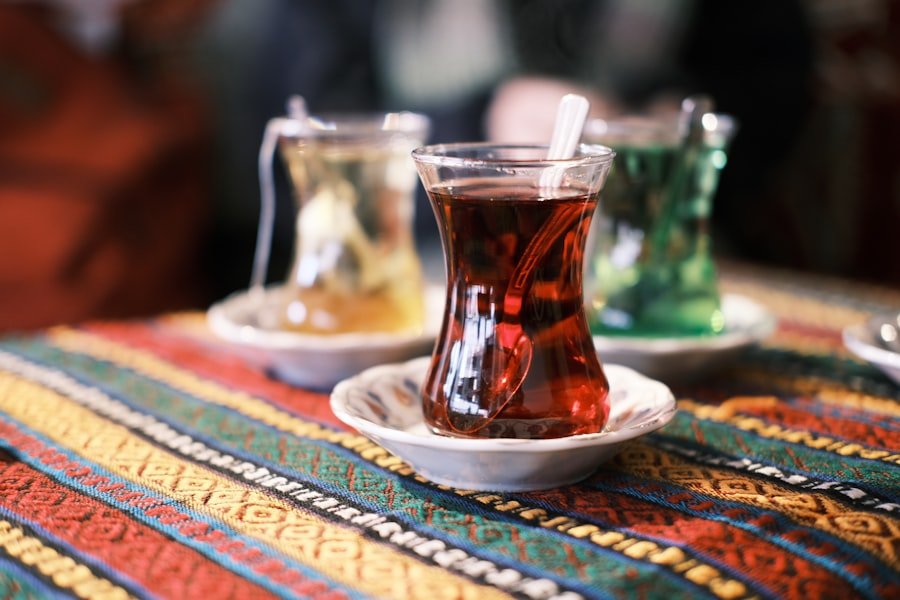
Turkish tea pairs naturally with sweets. Lokum, commonly called Turkish delight in English, may contain rose, citrus, pistachio, hazelnut, or other flavors. Its sweetness provides a pleasant contrast to unsweetened black tea.
Baklava is another classic pairing. Its layers of pastry, nuts, and syrup work especially well with a strong glass of tea, which helps balance the sweetness. Simit, the sesame-crusted bread ring seen throughout Istanbul, is a popular savory partner for tea and is especially common at breakfast or during a quick snack.
Visitors do not need an elaborate afternoon-tea service to enjoy these combinations. A simple glass of çay with simit, lokum, or a small pastry is closer to the everyday experience.
The Ritual of Turkish Tea Drinking
Drinking Turkish tea is about more than thirst. Offering tea is a familiar way to welcome a guest, continue a conversation, or make someone comfortable. UNESCO specifically recognizes tea culture in Türkiye and Azerbaijan for its role in hospitality and social interaction.
A small glass of tea can function as an invitation to sit, talk, and spend a little more time together.
Tea is usually served hot in small, clear, tulip-shaped glasses. The narrow middle makes the glass easy to hold while the shape shows the tea’s rich color. Sugar may be served on the side.
In a bazaar shop, accepting tea does not automatically mean you have agreed to purchase anything. You can drink it, continue the conversation, look at the merchandise, and still decline politely if you decide not to buy.
Meeting Local Tea Enthusiasts at the Grand Bazaar
The Grand Bazaar is a working commercial community as well as a visitor attraction. Shopkeepers, employees, delivery workers, and customers may have tea throughout the day, often supplied by nearby tea sellers or small çay ocağı operations.
If a conversation develops naturally, asking how someone likes their tea can be more rewarding than searching for a supposedly famous tea expert. Some people prefer it dark and strong; others add more hot water or sugar.
Keep the interaction relaxed. A tea invitation is a chance to experience hospitality, but sellers are also working. Respect their time, especially when a shop is busy.
How to Order Turkish Tea in Istanbul
Ordering tea is simple. Asking for “bir çay” means one tea. In most ordinary cafés and tea houses, that will be understood as Turkish black tea unless the menu says otherwise.
- Bir çay: one tea.
- Açık çay: lighter or weaker tea, made with less concentrate and more hot water.
- Demli çay: stronger tea with a larger proportion of brewed concentrate.
- Şekersiz: without sugar.
- Teşekkür ederim: thank you.
You do not need to use Turkish to order successfully in the Grand Bazaar or central tourist districts, but a few words can make the exchange warmer and clearer.
Tips for Purchasing Authentic Turkish Tea to Take Home
If you want to bring Turkish tea home, do not judge authenticity only by whether it is loose or packaged. Authentic tea is sold in both forms. A sealed package from an established Turkish producer can be easier to transport and may provide clearer information about ingredients and origin.
- Check the label: Look for the producer, product name, ingredients, net weight, and other normal packaging information.
- Look at the type: Choose plain black tea if you want the drink most closely associated with everyday Turkish çay.
- Ask about origin: Tea associated with Rize and the eastern Black Sea region is central to Türkiye’s tea industry.
- Inspect loose tea carefully: Buy from a clean, well-organized seller and make sure the tea has been stored away from moisture and strong odors.
- Compare prices: Check more than one shop, especially in heavily visited market areas.
- Know what you are buying: Fruit powders, herbal infusions, flavored blends, and traditional black tea are different products.
Pro Tip: If tea is mainly a souvenir for yourself rather than decorative gifting, compare market prices with ordinary supermarkets or established tea retailers before buying a large quantity.
Enjoying a Relaxing Tea Break Around the Grand Bazaar
After walking through crowded bazaar lanes, a tea break can provide a welcome pause. You will find cafés, restaurants, small tea counters, and other places to sit both inside the wider market district and on nearby streets.
A classic break can be as simple as Turkish tea with simit, baklava, lokum, or another small pastry. You do not need to search for a formal afternoon-tea service unless that is specifically the experience you want.
Tea is inexpensive compared with a full meal and takes little time, but sitting for an extra few minutes can be one of the most enjoyable parts of exploring old Istanbul.
Exploring the Surrounding Area for More Tea Experiences
The Grand Bazaar is only one place to experience Turkish tea in Istanbul. Nearby Eminönü is home to the Spice Bazaar, where food-focused shops sell spices, herbs, dried fruits, sweets, and many types of tea and infusions.
The Spice Bazaar is particularly useful if your main goal is shopping for edible souvenirs. Its tea displays often include traditional black tea alongside herbal and fruit products, so read labels and ask questions if you want a specific type.
You can also find tea throughout Istanbul’s waterfront districts, neighborhood cafés, ferry areas, restaurants, and traditional tea gardens. Rather than treating tea as an attraction found only in famous markets, notice how routinely people drink it during the rest of your visit. That everyday setting is one of the best ways to understand its place in Turkish culture.
Sources
- UNESCO — Culture of Çay — supports the cultural role of tea, hospitality, social interaction, black tea consumption, and the 2022 inscription.
- ÇAYKUR — Institutional History — supports major milestones in modern Turkish tea cultivation, including developments from 1924 through the late 1930s and 1940.
- Turkish Tea Board — History of Tea — supports the 1938 first harvest and the first Rize tea factory opening in 1947.
- GoTürkiye — Grand Bazaar — supports the bazaar’s 15th-century history, covered-street network, and current scale.
- GoTürkiye — Spice Bazaar — supports the distinction between the Grand Bazaar and the separate food- and spice-oriented Spice Bazaar.
- GoTürkiye — How to Make Turkish Tea — supports the traditional çaydanlık brewing method.
Frequently Asked Questions
What is Turkish tea?
Traditional Turkish tea is strong black tea, much of it produced in Türkiye’s eastern Black Sea region. It is normally brewed in a double teapot called a çaydanlık and served hot in small tulip-shaped glasses.
Where can I find Turkish tea in Istanbul?
Turkish tea is available throughout Istanbul in cafés, restaurants, tea gardens, bakeries, markets, workplaces, ferry areas, and many shops. You do not need to visit a specialist tea house to try traditional çay.
Can I drink Turkish tea in the Grand Bazaar?
Yes. Tea is commonly served in and around the Grand Bazaar, and shopkeepers may offer it during a conversation. Accepting a glass of tea does not by itself obligate you to purchase something.
Are the Grand Bazaar and Spice Bazaar the same place?
No. They are separate historic markets. The Grand Bazaar has a broad range of products such as jewelry, textiles, carpets, leather goods, and souvenirs. The Spice Bazaar in Eminönü focuses more heavily on spices, herbs, dried foods, sweets, and tea.
Is apple tea traditional Turkish tea?
Apple tea is widely sold in tourist-oriented shops and cafés, but everyday Turkish çay generally means black tea. If you want the drink most closely associated with Turkish tea culture, order plain black tea.
Is Turkish tea served with anything?
Sugar is commonly offered, and tea pairs well with simit, lokum, baklava, biscuits, pastries, and other sweets. People also drink it on its own throughout the day.
What is the best time of day to enjoy Turkish tea in Istanbul?
There is no single best time. Turkish tea is commonly enjoyed from breakfast through the evening. A mid-morning break, an afternoon pause while sightseeing, or a glass after a meal can all provide an authentic experience.
What should I check when buying Turkish tea as a souvenir?
Check the producer, ingredients, tea type, origin information, packaging seal, and labeling. Do not assume loose tea is automatically better or more authentic than sealed packaged tea.