Finding a capable full suspension mountain bike under $400 in [2026] may seem difficult, yet several models stand out for trail comfort, control, and value. The VEVOR, Ecarpat, CamPingSurvivals, and Max4out options each offer different strengths, from gearing to brake performance and frame design. The real question is which of them delivers the best balance for different riders, and the answer depends on a few details that matter more than price alone.
Key Takeaways
- VEVOR Mountain Bike offers 24 speeds, 29-inch wheels, dual suspension, and disc brakes, making it a strong budget trail option.
- Ecarpat Full Suspension Mountain Bike for Adults has 21 speeds, dual disc brakes, and a steel frame for riders 52 to 69 inches tall.
- CamPingSurvivals Full Suspension Mountain Bike uses a shock-absorbing fork, rear shock, and 7-speed drivetrain for rough trails.
- Max4out 26-Inch Full Suspension Mountain Bike supports up to 330 pounds, has dual suspension, and includes a 7-speed twist shifter.
- Ecarpat Full Suspension Mountain Bike for Kids and Teens provides full suspension, 7 speeds, and V-brakes for lighter off-road riding.
VEVOR Mountain Bike with 7/21/24 Speed Options
The VEVOR Mountain Bike with 7/21/24 speed options is a strong pick for taller adult riders who want an affordable full suspension option without giving up comfort or control. Its lightweight aluminum frame, 29-inch wheels, and adult sizing for riders 5’10” and above support a stable fit. The 24-speed gear system and twist shifting help maintain smooth cadence across varied terrain. Front or dual suspension, dual disc brakes, and all-terrain tires improve handling on gravel, dirt, and rocky routes. A padded saddle reduces pressure, while 85% pre-assembly simplifies setup.
Best For: Taller adult riders 5’10” and above who want a comfortable, affordable mountain bike with smooth shifting, strong braking, and capable all-terrain performance.
Pros:
- Lightweight aluminum frame with 29-inch wheels for a stable, adult-sized ride
- 24-speed twist shifting with front or dual suspension for smoother handling across varied terrain
- Dual disc brakes, all-terrain tires, and a padded saddle for control and comfort
Cons:
- Best suited for taller riders, so it may not fit shorter adults well
- 85% pre-assembled still requires some setup before riding
- Heavier than some entry-level bikes at 38.36 pounds
Ecarpat Full Suspension Mountain Bike, 21-Speed Dual Disc Brakes
Built for riders who want an affordable trail-ready setup, the Ecarpat stands out with full dual suspension. Its steel frame, 26-inch wheel option, and 30-pound build support adult riders between 52 and 69 inches tall, with a 250-pound limit. A front fork and rear shock help smooth rough paths, while 26×2.125-inch puncture-resistant tires add grip on unpaved terrain. The 21-speed drivetrain uses a thumb shifter for clean changes, and mechanical dual disc brakes keep stopping reliable. It arrives 85% assembled, requiring basic final setup.
Best For: Adult intermediate riders between 52 and 69 inches tall who want an affordable full-suspension mountain bike for unpaved trails and mountain terrain.
Pros:
- Full dual suspension helps absorb bumps on rough trails.
- 21-speed drivetrain with thumb shifter offers smooth, versatile gear changes.
- Mechanical dual disc brakes and puncture-resistant tires improve control and reliability.
Cons:
- Steel frame and 30-pound weight make it less lightweight than some alternatives.
- 85% assembly means some setup is still required after delivery.
- Best suited for intermediate riders, so it may be less ideal for beginners or advanced riders seeking higher-end performance.
CamPingSurvivals Full Suspension Mountain Bike, 7 Speed
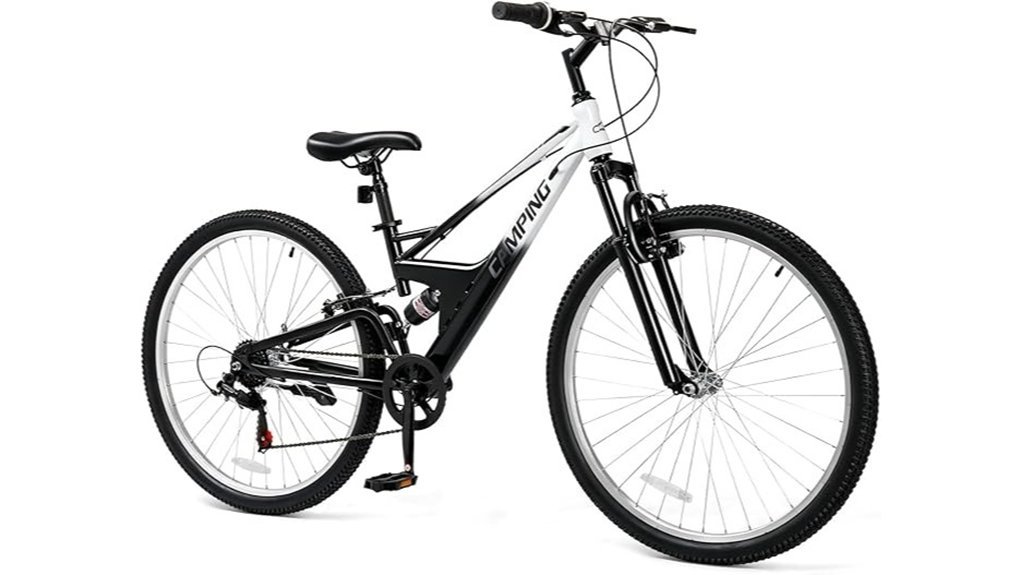
CamPingSurvivals suits riders wanting dual suspension control on rough, loose trails. Its frame reduces lateral flex, improving cornering grip and rear-wheel traction when the ground gets unstable. A shock-absorbing fork and rear shock deliver true dual suspension, softening hits on gravel, dirt, and rocks for less rider fatigue. The 7-speed drivetrain shifts cleanly and quickly, helping it adapt to changing terrain without hesitation. High-carbon steel construction adds durability, while the quick-adjust seat clamp simplifies fit changes. It arrives 85% assembled, with tools included for basic setup.
Best For: Riders who want an affordable full-suspension mountain bike for rough, loose trails and simple gearing.
Pros:
- Dual suspension helps smooth out gravel, dirt, and rocky terrain.
- 7-speed drivetrain offers quick, reliable shifting across changing conditions.
- High-carbon steel frame and quick-adjust seat clamp add durability and convenience.
Cons:
- Assembly is still required for several key parts despite being 85% pre-assembled.
- 7-speed drivetrain may feel limited for more advanced riders or steep terrain.
- High-carbon steel can be heavier than aluminum alternatives.
Ecarpat Full Suspension Mountain Bike for Kids/Teens
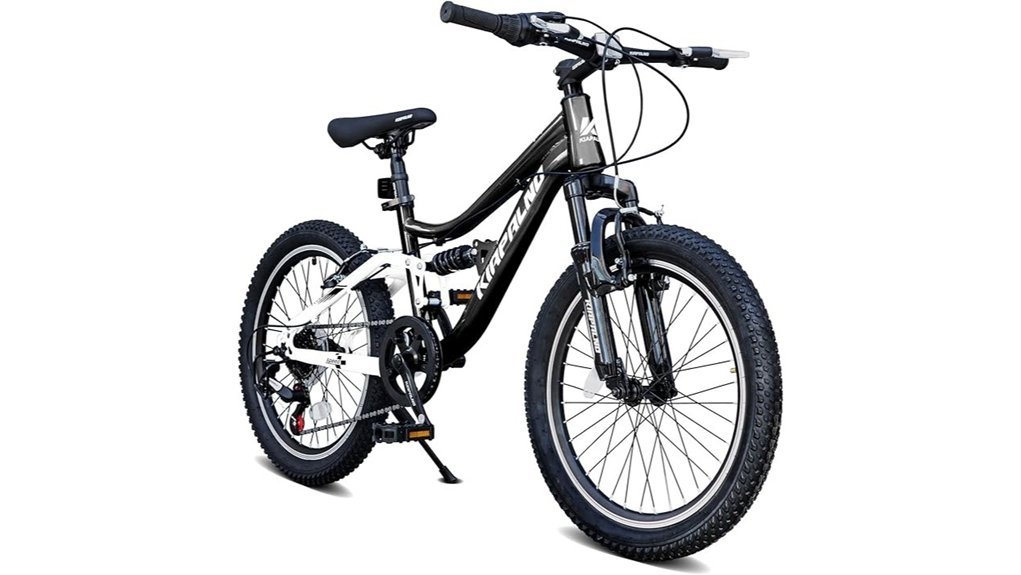
Ecarpat’s full suspension setup suits kids and teens who want a smoother, more forgiving ride. Its carbon steel frame adds durability while staying manageable for younger riders, and the lightweight build supports easy control. Front fork and rear shock help soften hits from rocks, roots, and rough pavement. A 7-speed drivetrain gives useful range for flats, hills, and trail climbs. Dual V-brakes add dependable stopping power in varied conditions. Suitable for dirt paths, park trails, and neighborhood rides, it offers practical versatility for young riders exploring beyond the street.
Best For: Kids and teens who want a durable, easy-to-handle full suspension bike for neighborhood rides, trails, and light off-road adventures.
Pros:
- Full suspension helps smooth out bumps on rough paths and trails.
- Carbon steel frame offers solid durability for younger riders.
- 7-speed drivetrain and dual V-brakes provide practical control and dependable stopping.
Cons:
- Heavier than comparable aluminum-frame kids’ bikes.
- Not ideal for serious mountain biking or aggressive off-road use.
- V-brakes may require more frequent adjustment than higher-end brake systems.
Max4out 26-Inch Full Suspension Mountain Bike
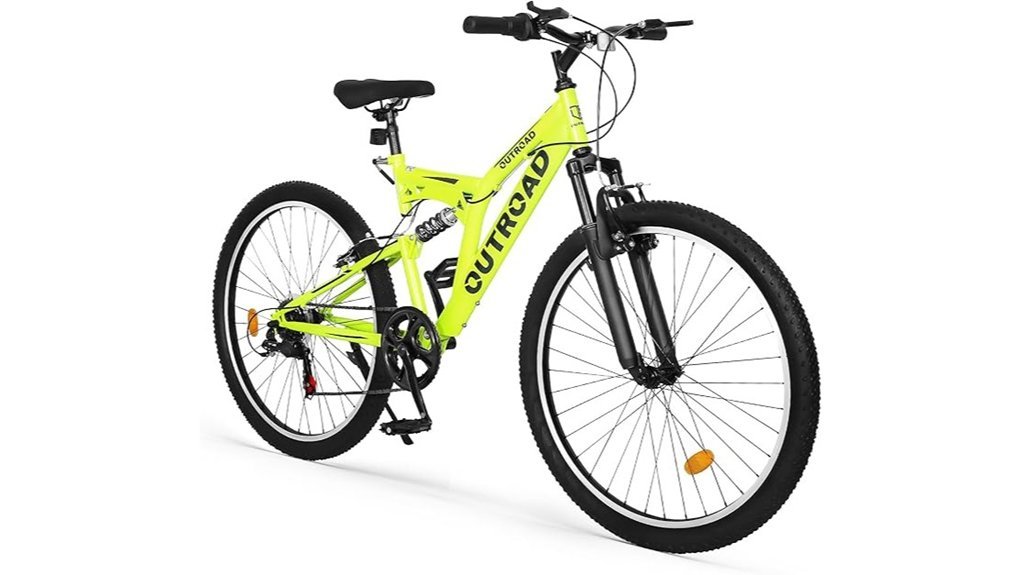
The Max4out 26-inch full suspension mountain bike suits riders needing a sturdy, budget-friendly trail option. Its high-carbon steel frame, front fork, and rear coil shock provide dual suspension for comfort on rough ground. The 26-inch all-terrain tires add traction across dirt, gravel, road, and trail surfaces. A 7-speed drivetrain with twist shifters supports simple gear changes, while V-brakes deliver dependable stopping power. At 39 pounds, it supports riders 52 to 62 inches tall and up to 330 pounds. Assembly takes about 20 minutes, and a 1-year warranty adds reassurance.
Best For: Riders looking for a budget-friendly, sturdy 26-inch full suspension mountain bike for dirt, gravel, road, and trail use.
Pros:
- Dual suspension with a front fork and rear coil shock helps smooth out rough terrain.
- 7-speed drivetrain with twist shifters makes gear changes easy and intuitive.
- Supports riders up to 330 lbs and comes with a 1-year warranty.
Cons:
- At 39 lbs, it may feel heavy for some riders.
- V-brakes are dependable, but not as advanced as disc brakes.
- Assembly is fairly quick, but still requires setup and included tools.
Factors to Consider When Choosing a Full Suspension Mountain Bike Under 400
When choosing a full suspension mountain bike under 400, frame material and suspension quality are key factors that shape durability and ride comfort. Brake type and gear count also affect control and versatility across different terrain. Tire traction should be assessed to help guarantee steady handling on loose or uneven surfaces.
Frame Material
Frame material plays a major role in how a full suspension mountain bike under 400 feels and performs on the trail. Aluminum frames are usually favored for their low weight and solid stiffness, helping riders climb more efficiently and accelerate quickly. That makes them appealing for those who want agile handling on varied trails. High-carbon steel frames are heavier, but they bring strong durability and better resistance to deformation, which can be useful on rugged terrain and in rough riding conditions. Material choice also affects price, with aluminum often costing more than steel while offering stronger long-term performance. The best option depends on intended use, terrain, and desired ride feel, since each material influences comfort, handling, and overall bike character.
Suspension Quality
Suspension quality is a major factor in how well a full suspension mountain bike under 400 handles rough trails. A capable system absorbs shocks from gravel, rocks, and uneven ground, creating a smoother ride and improving control. Dual suspension, with front forks and a rear shock, usually offers better stability and traction on steep or loose paths. The materials used in the suspension, such as high-carbon steel or durable aluminum, also influence strength and resistance to deformation over time. Adjustable suspension adds value by letting riders tune responsiveness for different terrain conditions. Well-designed suspension reduces rider fatigue on longer rides by limiting the impact of repeated jolts. For budget buyers, suspension quality often determines whether a bike feels merely functional or genuinely dependable on demanding trails.
Brake Type
Brake type is a key factor in a full suspension mountain bike under 400 because it directly affects control, safety, and confidence on the trail. Disc brakes are usually preferred over V-brakes because they deliver stronger stopping power, especially in wet or muddy conditions. Mechanical disc brakes use cables, so they are simpler to adjust and maintain, making them appealing to riders who want easier servicing. Hydraulic disc brakes offer smoother, more consistent braking with less hand effort, but they can require more specialized maintenance. Rotor size also matters; larger rotors, such as 180mm, improve heat control and braking force on steep descents. Although disc systems add some weight, their performance advantage often justifies it for trail use and rough terrain.
Gear Count
Gear count is another important factor when choosing a full suspension mountain bike under 400, since it affects how easily the bike can handle different grades and trail conditions. Most models fall between 7 and 24 speeds, giving riders varying levels of control over cadence and effort. A 21-speed or 24-speed setup can provide smoother shifting and finer tuning on steep or uneven routes, which may suit more demanding rides. By contrast, a 7-speed bike can be adequate for casual use or mostly flat terrain. More speeds can improve versatility, but they also add mechanical complexity and may need more upkeep. The best choice depends on intended use, riding skill, and the terrain that will be encountered most often.
Tire Traction
Tire traction also plays a major role in how well a full suspension mountain bike under 400 performs on different surfaces. Reliable grip helps the bike stay stable on gravel, dirt, and rocky trails, where control can change quickly. All-terrain tires with deeper treads and wider profiles usually improve handling on uneven ground, giving the rider better maneuverability. Wider tires also create a larger contact patch, which can boost traction in loose or slippery conditions. Tire material matters as well, since high-quality rubber often adds puncture resistance and durability while supporting consistent grip. Proper tire pressure is equally important: too little increases rolling resistance and weakens traction, while too much can reduce comfort and ground contact.
Rider Fit
Rider fit is one of the most important factors when choosing a full suspension mountain bike under 400, since the frame should match the rider’s height and body proportions for better control and comfort. Adult-oriented models often suit riders around 5’10” and taller, while other frame sizes serve narrower height ranges. A proper match supports handling, stability, and confidence on rough terrain, especially during longer rides where fatigue can build. Saddle height matters as well, and a quick-adjust seat post can help fine-tune comfort without tools. Because body proportions and riding style vary, test riding different sizes is often the most reliable way to identify the best fit. Personal comfort can influence performance as much as frame geometry does.
Assembly Ease
Assembly ease is an important consideration because most full suspension mountain bikes under 400 arrive about 85% pre-assembled, with only a few parts such as the handlebars, saddle, front wheel, and pedals left to attach. This reduced setup burden helps riders begin using the bike quickly without advanced mechanical skills. Many models include basic tool kits with wrenches and screwdrivers, which removes the need for specialized equipment. Clear user manuals further simplify the process by explaining each step in a straightforward way. Some brands also provide video guides, giving visual support that can reduce mistakes. After assembly, quick-adjust seat post clamps add convenience by allowing tool-free height changes. Together, these features make initial setup manageable for beginners and practical for home assembly.
Weight Capacity
Weight capacity is a key safety factor when choosing a full suspension mountain bike under 400, since most models are designed to support roughly 250 to 330 lbs, including the rider and any gear. Staying within that range helps preserve stability, braking control, and suspension performance on rough trails. Exceeding the limit can place stress on the frame, wheels, and joints, increasing the risk of damage or failure. Bikes built with high-carbon steel or aluminum frames often offer stronger load support and improved durability. Build quality also matters, since a well-engineered design handles weight more effectively. For added safety, the rider’s weight should remain comfortably below the maximum rating to account for accessories, water, and trail equipment.
Frequently Asked Questions
Which Full Suspension Bike Is Best for Beginner Riders?
The best full suspension bike for beginner riders is usually one with a lightweight frame, reliable disc brakes, and simple suspension tuning. A model offering 100 to 120 mm of travel, stable geometry, and easy shifting helps new riders build confidence quickly. Comfort and control matter more than aggressive performance. If possible, a bike with a reputable warranty and local support is often the safest choice for a first full suspension purchase.
How Much Assembly Do These Mountain Bikes Require?
Assembly is usually modest, though the boxes arrive as if expecting a mechanic’s applause. Most bikes need the front wheel, handlebars, saddle, pedals, and sometimes the rear shock setup installed. Brake and gear adjustments may be needed, especially on budget models. A basic toolkit helps, but a shop tune-up is wise for beginners. In practice, assembly is straightforward, yet the final safety check remains the least glamorous, and most important, step.
Are These Bikes Suitable for Commuting on Paved Roads?
Yes, they can be suitable for commuting on paved roads, though they are not ideal for speed or efficiency. A full suspension frame adds comfort on rough streets and broken pavement, but it also increases weight and reduces pedaling economy. Wider, knobby tires may feel slower on asphalt. For short, mixed-surface commutes, they work well enough; for long road rides, a hybrid or road bike would be more practical.
What Maintenance Do Full Suspension Bikes Need Regularly?
Regular maintenance for full suspension bikes is gloriously simple: clean the frame, lube the chain, check tire pressure, and inspect brakes before problems become expensive. They also need regular bolt checks, suspension pivot inspection, and occasional shock and fork servicing, since dirt and wear enjoy sabotage. Cables or hoses should be examined for fraying or leaks. After muddy rides, a quick rinse and drying help preserve performance and longevity.
Do These Bikes Fit Riders Over 6 Feet Tall?
They can fit riders over 6 feet tall, but only if the frame geometry offers enough reach, standover height, and seatpost adjustment. In this price range, sizing options are often limited, so taller riders may need to check size charts carefully and test the bike if possible. A large frame is usually preferable, though some models may still feel cramped for riders above six feet.