In [2026], full suspension mountain bikes under $2500 are drawing attention from riders who want comfort, control, and real trail value. The Ecarpat and CamPingSurvivals models offer practical entry points, while the Schwinn Traxion brings a stronger all-around profile for more demanding terrain. Each bike answers a different need, but the real question is which one delivers the best balance of price, performance, and durability.
Key Takeaways
- Ecarpat Full Suspension Mountain Bike is a budget-friendly option for commuting, fitness, and light trail riding.
- CamPingSurvivals offers dual suspension, a 7-speed drivetrain, and stable control for casual rough-trail riding.
- Schwinn Traxion has a lightweight aluminum frame, 24-speed Shimano drivetrain, and strong traction for rough trails.
- Ecarpat 21-Speed MTB features full suspension, mechanical dual disc brakes, and comfortable fit options for teens and adults.
- For under $2500, choose based on frame material, suspension quality, drivetrain range, brake reliability, and wheel size.
Ecarpat Full Suspension Mountain Bike for Adults
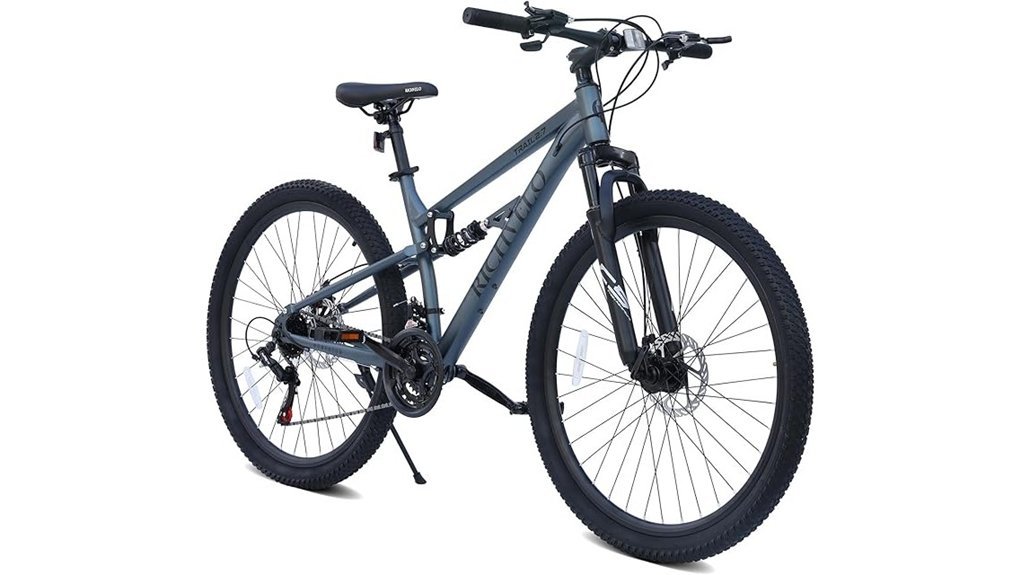
The Ecarpat Full Suspension Mountain Bike for Adults is a strong choice for riders who want a budget-friendly bike that handles both city streets and rough trails with ease. Available in 24-, 26-, and 27-inch sizes, it suits a wide range of riders from 13 years and up. Its high-carbon steel frame adds durability, while the full suspension system helps smooth out bumps. A 21-speed drivetrain with twist shifters supports easy gear changes, and linear pull brakes offer dependable stopping power. Grippy all-terrain tires, adjustable fit, and quick assembly further improve its practicality.
Best For: Riders aged 13 and up who want a budget-friendly, versatile mountain bike for commuting, fitness, and light trail riding.
Pros:
- Full suspension and grippy all-terrain tires help deliver a smoother, more stable ride on rough roads and trails.
- 21-speed drivetrain with twist shifters makes gear changes simple and adaptable to different terrains.
- Adjustable fit, durable high-carbon steel frame, and quick assembly add convenience and practicality.
Cons:
- Linear pull brakes are reliable, but may not feel as powerful as higher-end braking systems.
- High-carbon steel frame can be heavier than aluminum alternatives.
- Best suited for casual to moderate riding rather than advanced mountain biking.
CamPingSurvivals Full Suspension Mountain Bike, 7 Speed
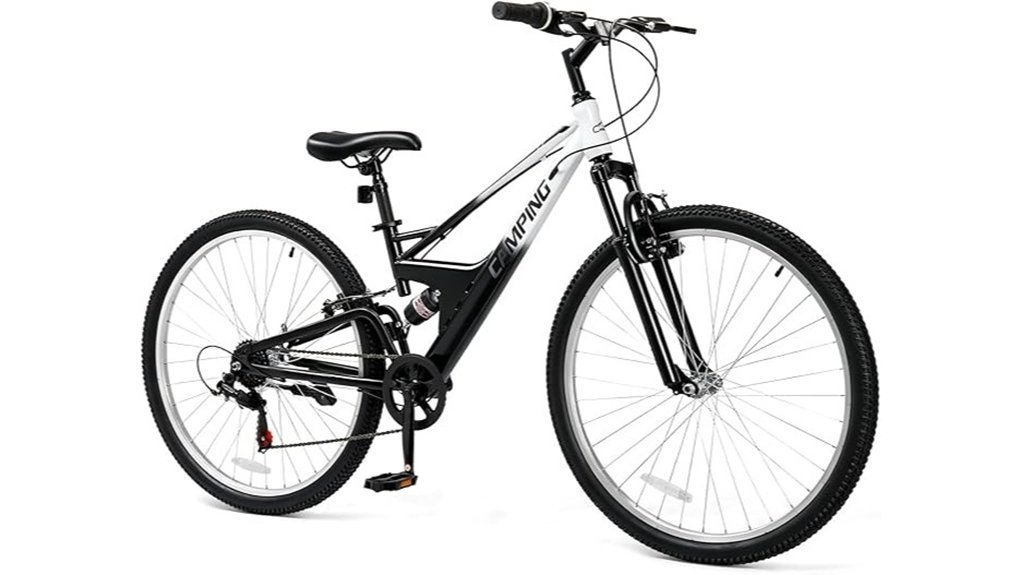
CamPingSurvivals suits riders who want affordable dual suspension and stable control on rough trails. Its frame is built to reduce lateral flex, which helps improve cornering and rear-wheel grip on loose terrain. A front fork and rear shock absorber work together to smooth gravel, dirt, and rocks, lowering fatigue on longer rides. The 7-speed drivetrain offers quick, accurate shifting for changing climbs and descents, while all-terrain tires add versatility. High-carbon steel construction supports durability, and the tool-free seat post clamp makes fit adjustments simple. It arrives 85% assembled with installation support included.
Best For: Riders who want an affordable full-suspension mountain bike with stable handling, simple gear changes, and comfort on rough trails.
Pros:
- Dual suspension with front fork and rear shock helps absorb bumps on gravel, dirt, and rocky terrain.
- 7-speed drivetrain provides quick, precise shifting for different climbs and descents.
- High-carbon steel frame and tool-free seat post clamp add durability and easy adjustability.
Cons:
- 85% assembly means some setup is still required out of the box.
- Steel construction can be heavier than comparable aluminum frames.
- Best suited for casual to moderate trail riding rather than advanced technical performance.
Schwinn Traxion 29-Inch Full Suspension Mountain Bike
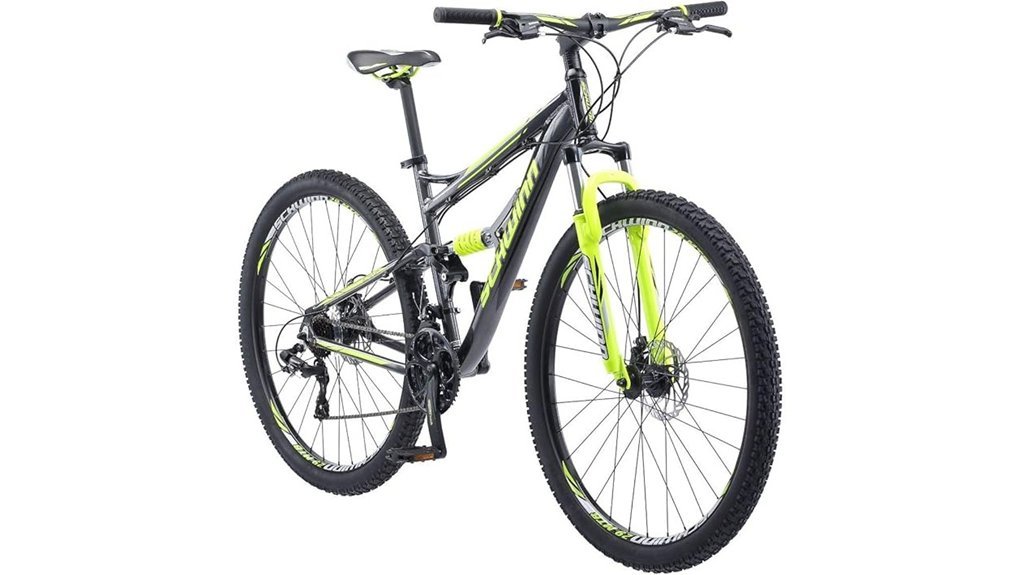
Built for rough trails, the Schwinn Traxion suits riders wanting full suspension and reliable control. Its lightweight aluminum frame, sized at 18 inches, keeps handling manageable, while the matte grey and neon green finish adds a sharp look. A high-performance suspension fork and full suspension setup help soften impacts on uneven ground. The 24-speed Shimano drivetrain, trigger shifter, and front and rear derailleurs support smooth shifting and easier climbs. Mechanical disc brakes provide dependable stopping. Large 29-inch wheels, double-wall alloy rims, and 2.25-inch knobby tires improve traction. It arrives 80% assembled, with tools needed for final setup.
Best For: Riders who want a capable 29-inch full suspension mountain bike for rough trails, improved control, and easier climbing on uneven terrain.
Pros:
- Full suspension and a high-performance fork help absorb bumps and impacts on rough trails.
- 24-speed Shimano drivetrain with trigger shifter supports smooth shifting and versatile gearing.
- Mechanical disc brakes and wide knobby tires provide reliable stopping power and strong traction.
Cons:
- Arrives only 80% assembled, so final setup requires some tools and effort.
- 18-inch frame size may not fit all riders comfortably.
- Full suspension bikes can be heavier and more maintenance-intensive than hardtail models.
Ecarpat Full Suspension Mountain Bike, 21-Speed MTB
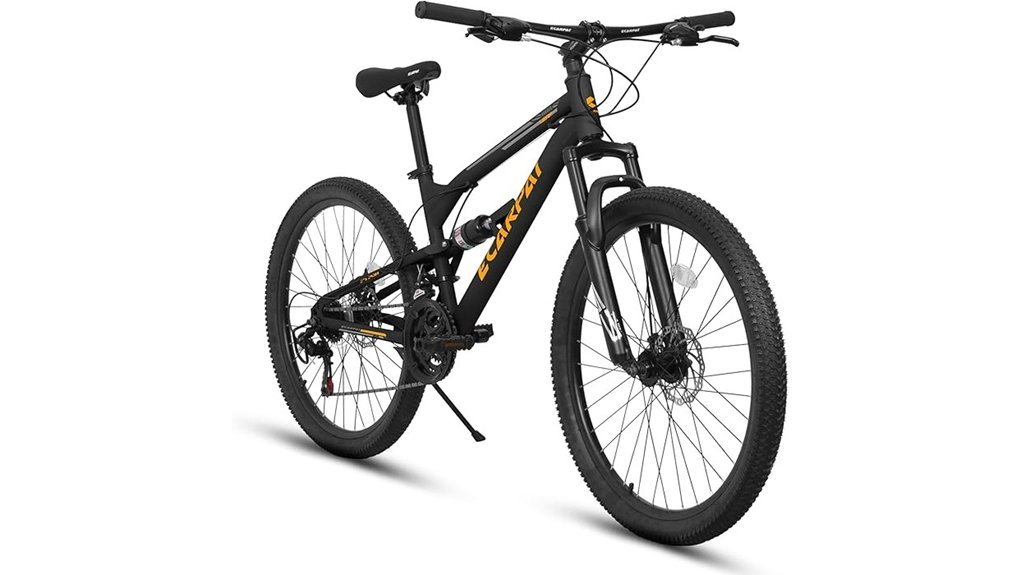
Ecarpat’s full suspension design suits teens and adults who want comfort on rough trails. This 24/26-inch MTB uses a front fork and rear shock absorber to smooth rocks, bumps, and uneven ground, helping reduce hand and wrist fatigue while improving traction. A 21-speed drivetrain with thumb shifters delivers quick, precise gear changes for climbs, flats, and mixed commuting. Mechanical dual disc brakes provide dependable stopping power in wet or dry conditions. Its carbon steel frame adds strength without excess weight, and the 85% pre-assembled setup should take about 20 minutes to finish.
Best For: Teens and adults looking for a comfortable, versatile full-suspension mountain bike for trail riding and commuting.
Pros:
- Full suspension helps absorb bumps and rough terrain for a smoother, more comfortable ride.
- 21-speed drivetrain with thumb shifters allows quick, precise gear changes for varied riding.
- Mechanical dual disc brakes offer reliable stopping power in wet or dry conditions.
Cons:
- Carbon steel frame is durable, but typically heavier than aluminum alternatives.
- 85% pre-assembled still requires some setup before riding.
- Best suited for casual trail and commuter use rather than advanced mountain biking performance.
Factors to Consider When Choosing a Full Suspension Mountain Bike Under 2500
When choosing a full suspension mountain bike under 2500, frame material quality and suspension performance are key starting points because they affect durability and trail comfort. Gear system range and brake type reliability also matter, since they influence control and adaptability across different terrain. Wheel size choice should be considered as well, as it can shape handling, stability, and overall ride feel.
Frame Material Quality
Frame material quality plays a major role in how a full suspension mountain bike performs, lasting through rough trails and repeated impacts. Aluminum and high-carbon steel are the most common options in this price range, each offering distinct advantages. Aluminum frames are typically lighter, which improves maneuverability and makes handling easier on technical terrain. High-carbon steel frames are heavier, but they provide strong durability and excellent shock absorption, which can benefit riders who prioritize toughness and comfort on demanding routes. A well-built frame also resists fatigue and deformation, supporting reliable use over time. Material choice affects overall cost as well, so buyers should weigh performance gains against budget limits when comparing models under 2500.
Suspension Performance
Suspension performance is one of the most important factors in a full suspension mountain bike under 2500, because both the front fork and rear shock work together to absorb impacts and keep the rider in control on rough terrain. A quality setup with a dedicated rear shock and an effective fork helps reduce fatigue on gravel, dirt, and rocky trails. It also influences handling by limiting lateral flex, which improves cornering stability and traction on loose surfaces. Adjustable suspension settings add value because they let the rider tune the bike for steep climbs or fast descents. In this price range, suspension quality can make a major difference in comfort, control, and confidence.
Gear System Range
Beyond suspension, the gear system range also plays a major role in how a full suspension mountain bike under 2500 performs on varied terrain. Most models offer 7 to 24 speeds, giving riders enough flexibility to match pedaling effort to climbs, flats, and descents. A 21- or 24-speed setup adds finer control, helping maintain cadence when terrain changes quickly. By contrast, a 7-speed drivetrain is simpler, easier to maintain, and well suited to casual riders or commuting. Shifter design also matters. Twist, thumb, and trigger shifters each affect how quickly gears change and how intuitive the bike feels in motion. On rugged trails, advanced drivetrains with quality derailleurs can improve shifting precision and reduce missed shifts.
Brake Type Reliability
Reliable braking is a key factor when choosing a full suspension mountain bike under 2500, especially for riders who tackle wet trails, steep descents, or technical terrain. Mechanical disc brakes are often the most dependable option in this price range because they deliver strong stopping power in varied weather, including wet conditions where rim brakes can struggle. Dual disc setups improve control by balancing front and rear braking, which is valuable on long descents and rough trails. They also tend to be simpler to maintain than hydraulic systems, making them appealing to riders who prefer straightforward upkeep. Consistent performance across different surfaces helps reduce brake fade, while easy adjustment features allow finer tuning for safer, more confident riding.
Wheel Size Choice
Wheel size plays a major role in how a full suspension mountain bike under 2500 handles on the trail. Sizes commonly range from 24 to 29 inches, and each brings distinct advantages. Smaller 24-inch wheels are more maneuverable, making them useful on technical trails and appealing to younger or shorter riders. A 26-inch wheel offers a balanced mix of agility and stability, suiting varied terrain and riding styles. Larger 29-inch wheels roll more efficiently over obstacles, maintain speed well, and improve traction on rough ground, which helps on long cross-country rides. Tire width compatibility also matters, since it influences traction and stability. Selecting the right wheel size depends on terrain demands, riding goals, and the balance between control, speed, and responsiveness.
Fit And Adjustability
Fit and adjustability matter just as much as wheel size when choosing a full suspension mountain bike under 2500. A proper frame should match the rider’s height and weight, since many models are built for specific height ranges, often from 48 to 72 inches. Seat height and handlebar position should be easy to change so the rider can maintain a balanced, comfortable posture. Quick-adjust seat post clamps add convenience because they permit tool-free changes when fit needs shift across riders or trail conditions. Correct positioning improves comfort, but it also sharpens control on rough climbs, steep descents, and uneven surfaces. Ergonomic geometry can reduce strain on the back and wrists, helping riders stay relaxed and efficient during longer outings.
Assembly Complexity
Assembly can be a practical factor when choosing a full suspension mountain bike under 2500, since some models arrive up to 85% pre-assembled while others require more hands-on setup. Bikes with clear manuals and included toolkits usually reduce frustration and help less experienced riders complete the process more confidently. Typical final tasks may include fitting handlebars, pedals, and wheels, with total build time ranging from 20 minutes to over an hour. Designs with advanced dual suspension systems can demand closer attention, especially during alignment and adjustment. After the bike is built, brake and gear tuning may still be needed to improve performance, and these steps can require greater technical skill. For buyers, assembly demand can influence convenience, setup cost, and overall ownership satisfaction.
Terrain Versatility
Terrain versatility is a key consideration because a full suspension mountain bike under 2500 should handle a range of surfaces with confidence, from gravel paths and dirt trails to rocky descents. A robust suspension system matters most, since it absorbs impacts and preserves control on uneven ground. Quick, precise gearing helps the rider climb steep sections efficiently and maintain speed on flatter stretches. Tire choice also affects performance: wider, knobby tires improve traction and stability across both urban routes and mountain terrain. Frame material should balance durability and weight, with aluminum or high-carbon steel offering dependable strength. Adjustable seat and handlebar settings further improve fit, allowing better comfort and control when conditions change. A versatile bike should feel composed on every surface.
Frequently Asked Questions
What Frame Materials Offer the Best Ride Quality for Rough Trails?
Carbon and high-quality aluminum frames generally offer the best ride quality for rough trails. Carbon can mute trail chatter more effectively, giving a smoother, more compliant feel, while premium aluminum can still ride impressively if the design is tuned well. Steel is also admired for its lively suppleness, though it is less common in modern full-suspension builds. Overall, frame geometry and suspension setup matter nearly as much as material choice.
How Much Maintenance Do Full Suspension Bikes Typically Require Annually?
Typically, full suspension bikes require 20 to 40 hours of annual maintenance, depending on mileage, terrain, and riding conditions. Routine care includes cleaning, drivetrain lubrication, brake checks, bearing inspection, and suspension servicing. Hitting the nail on the head, riders who use them aggressively may need more frequent attention, especially for pivots and shock components. With consistent upkeep, the bike stays responsive, reliable, and less prone to costly repairs.
Which Suspension Travel Suits Cross-Country Versus Downhill Riding Best?
Cross-country riding typically suits 80 to 120 mm of suspension travel, favoring efficiency, climbing, and quick handling. Downhill riding usually benefits from 180 to 200 mm or more, providing maximum absorption, stability, and control on steep, rough terrain. Longer travel adds comfort and confidence on descents, while shorter travel keeps pedaling responsive and light. Trail riders often choose a middle range to balance both demands effectively.
Do Tubeless Tires Improve Performance on Budget Mountain Bikes?
Tubeless tires can improve performance on budget mountain bikes by allowing lower pressures for better grip, comfort, and puncture resistance. They may also reduce rolling resistance slightly. However, the benefits depend on rim quality, sealant maintenance, and proper installation. On cheaper bikes, the upgrade can feel noticeable on rough trails, but it may not transform overall speed. For some riders, simpler tubes remain easier, cheaper, and more reliable.
What Upgrades Matter Most for Improving a Sub-$2500 Bike?
The most impactful upgrades on a sub-$2500 bike are usually tires, suspension setup, and contact points. Better tires improve grip and rolling efficiency immediately. A proper fork or shock service, plus correct sag and damping, can transform handling. Upgrading to a quality saddle, grips, and pedals improves comfort and control. Brakes and drivetrain parts matter next, but only after the basics are dialed in and reliable.