Electric mountain bikes in [2026] are no longer built only for lighter riders. The best options for bigger guys now blend stronger frames, higher weight limits, and motors powerful enough for steep climbs and rough trails. From fat-tire models to full-suspension builds, each one aims to balance comfort with performance. A few stand out for their range and durability, but the real differences are in the details that matter most.
Key Takeaways
- Big riders should prioritize e-MTBs with 330–450 lb load capacity, reinforced frames, and stable geometry for safety.
- TST 1500W Fat Tire Electric Bike supports 450 lbs, offers 60-mile PAS range, and uses a 1500W peak motor.
- Funhang 1000W Peak Electric Mountain Bike is a budget-friendly option with 330 lb capacity, 26×4.0 fat tires, and 55–60 miles PAS range.
- Jasion EB5 MAX delivers 1500W peak power, over 28 MPH, and 65-mile PAS range, but its bulky design may feel heavy.
- PASELEC and the “Electric Bike for Adults” add strong options with hydraulic or dual disc brakes, higher peak power, and long battery range.
TST 1500W Fat Tire Electric Bike for Adults
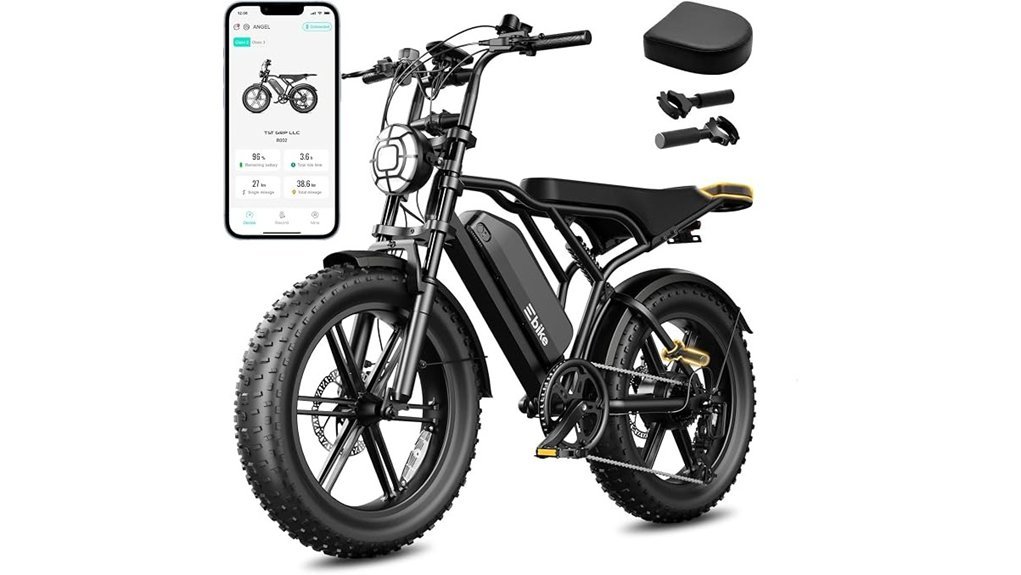
The TST 1500W Fat Tire Electric Bike for Adults stands out as a strong option for bigger riders, thanks to its 450-pound load capacity, full suspension, and wide 20×4 puncture-proof fat tires that add stability and comfort across rough terrain. Its 750W motor, peaking at 1500W, supports 2 to 3 riding modes for commuting or trail use. The 48V 15Ah removable battery charges in 6 to 7 hours and delivers up to 60 miles in PAS mode. Mechanical disc brakes, bright lighting, and an SGS UL 2849-tested battery add safety.
Best For: Adult riders, especially bigger riders or those wanting a stable, comfortable fat-tire e-bike for commuting, trail riding, and mixed terrain.
Pros:
- Strong 750W motor with 1500W peak power for versatile riding
- 450 lb max load capacity and full suspension for comfort and stability
- Long-range 48V 15Ah removable battery with up to 60 miles in PAS mode
Cons:
- Heavy at 66 lbs, which can make lifting and transport harder
- Full charge time of 6 to 7 hours is fairly long
- Best suited for adults, so it’s not ideal for younger riders without supervision
Funhang 1000W Peak Electric Mountain Bike (26″)
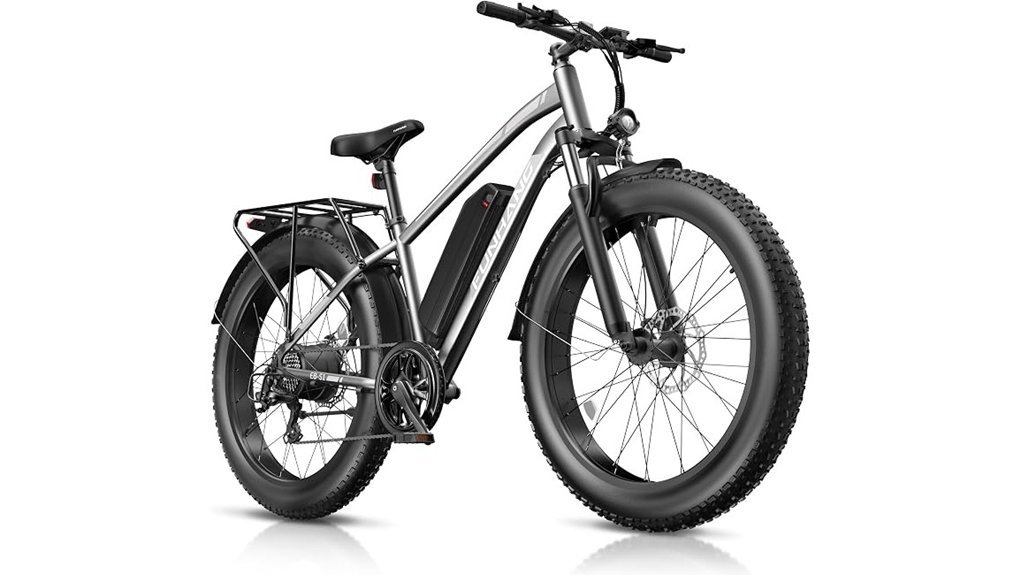
Built for heavier riders, the Funhang 26-inch ebike pairs a 330-pound capacity with 66.6 N·m torque. Its 500W motor peaks at 1000W and pushes up to 20 mph, while 26 x 4.0 fat tires and front suspension add control on sand, snow, gravel, and trails. The 48V 13Ah removable battery delivers 30 to 35 miles in electric mode or 55 to 60 miles with pedal assist. Dual disc brakes, headlight, taillight, and turn signals improve safety. A rear rack, soft saddle, LCD display, and five riding modes round out the package.
Best For: Heavy riders and commuters who want a stable, high-capacity 26″ fat-tire e-bike for mixed terrain like sand, snow, gravel, and trails.
Pros:
- 330-lb weight capacity and 66.6 N·m torque make it a strong choice for heavier riders.
- 26 x 4.0 fat tires plus front suspension improve comfort and control on rough surfaces.
- Removable 48V 13Ah battery offers solid range up to 55 to 60 miles with pedal assist.
Cons:
- 20 mph top speed may feel limited for riders wanting more speed.
- 6.5-hour charging time is fairly long for daily heavy use.
- 85% pre-assembled still requires some setup before riding.
Jasion EB5 MAX Electric Mountain Bike with 1500W Motor
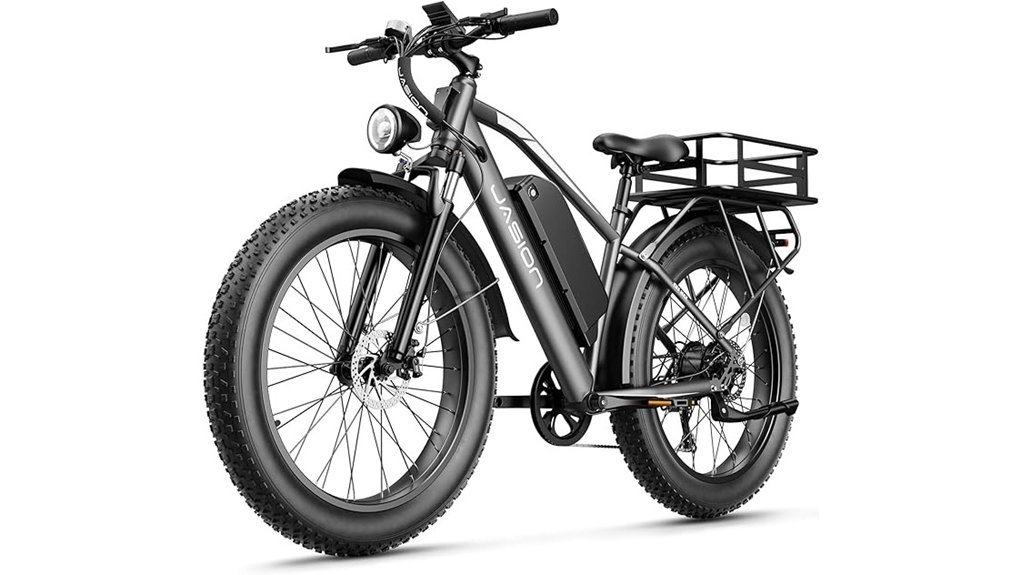
Jasion EB5 MAX suits heavier riders who need serious power and stability. Its 1500W peak motor pushes speeds past 28 MPH and delivers strong climbing ability on steep grades. The 48V 15Ah battery stores 720 Wh, offering up to 65 miles with pedal assist or 35 miles on throttle, and it removes for easy charging. A color display, bright lights, and fenders improve visibility and cleanliness. Fat 26 x 4.0 tires, a lockable suspension fork, and 180 mm dual disc brakes support comfort, grip, and control. REAR rack, cruise control, and password protection add utility.
Best For: Heavier riders, commuters, and adventure seekers who want a powerful, stable electric mountain bike with strong hill-climbing ability and long-range support.
Pros:
- 1500W peak motor delivers fast speeds and excellent climbing power.
- 48V 15Ah battery offers up to 65 miles of range with pedal assist.
- Fat tires, suspension fork, and dual disc brakes improve comfort, grip, and control.
Cons:
- Heavier power and fat-tire design may make the bike bulky to transport.
- Throttle-only range is much shorter than pedal-assist range.
- High-performance features may come at a higher price than basic e-bikes.
Electric Bike for Adults 1500W Peak Motor
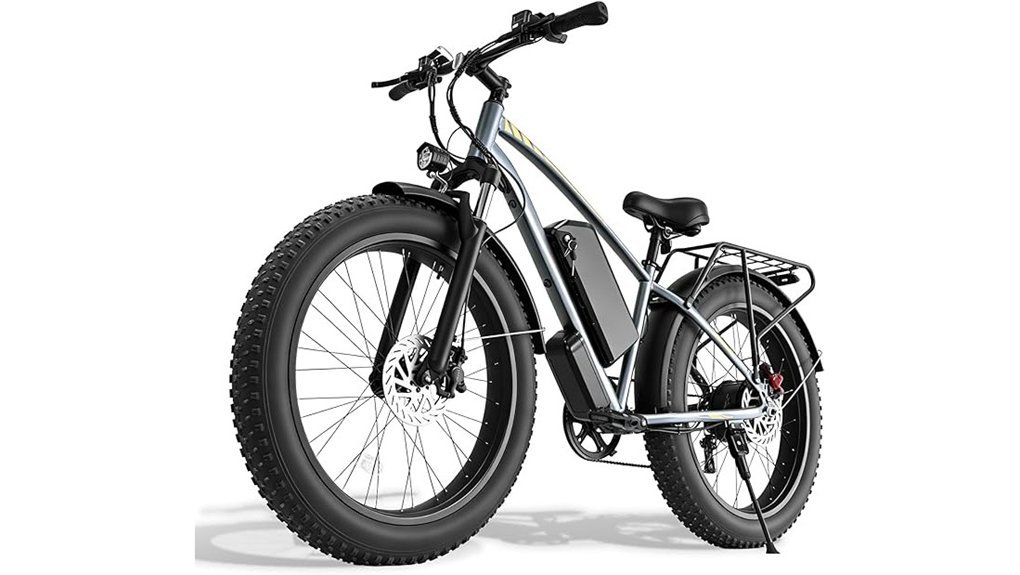
With a 1500W peak brushless motor, this electric mountain bike suits bigger riders needing strong hill-climbing power. It reaches up to 32 mph and delivers 62 Nm of torque, handling 30° inclines under a 200-pound test load. Three speed settings and 7 gears support varied terrain. A 48V 18.2Ah removable battery provides up to 50 miles of electric range, or 80-100 miles with assistance. Built with 26 x 4.0 fat tires, steel-alloy construction, front suspension, and UL 2849 certification, it supports up to 330 pounds.
Best For: Adults and bigger riders who want a powerful all-terrain electric bike for commuting, hill climbing, and long-distance rides.
Pros:
- 1500W peak motor with 32 mph top speed and strong 62 Nm torque for steep hills.
- Long-range removable 48V 18.2Ah battery with up to 50 miles of electric-only riding.
- 26 x 4.0 fat tires, front suspension, and UL 2849 certification add versatility and safety.
Cons:
- 81 lbs, so it may be heavy to lift, carry, or transport.
- Charging takes 9–10 hours, which is slower than some riders may want.
- Best performance claims are based on test conditions, so real-world range and climbing power may vary.
PASELEC Electric Bike with Full Suspension and Fat Tires
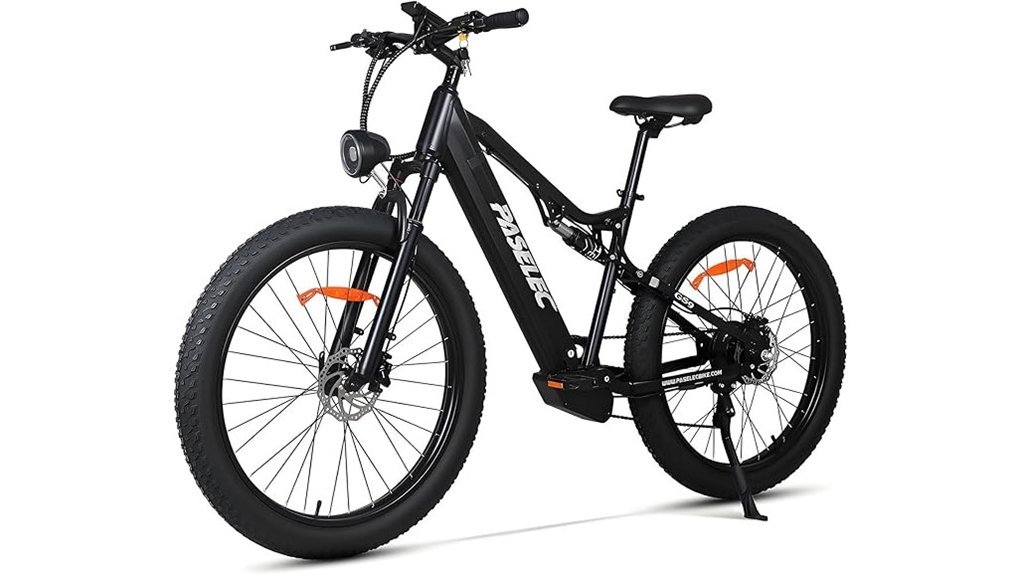
The PASELEC electric bike suits heavier riders needing power, stability, and strong braking control. Its 1300W peak motor delivers up to 28 mph and 70N.M of torque, helping it tackle 30-degree climbs with confidence. The 48V 15.6Ah removable battery charges in 4 to 6 hours and can reach 70 miles. Dual hydraulic disc brakes improve wet-weather stopping, while full suspension and 27.5-by-3.0 puncture-resistant fat tires add comfort and grip. An 8-speed Shimano system, five riding modes, and an LCD display support controlled riding. It also holds up to 330 pounds.
Best For: Riders who want a powerful, stable, and versatile fat-tire e-bike for commuting, trail riding, and heavier loads.
Pros:
- Strong 1300W peak motor with 28 mph top speed and 70N.M torque for hills and rough terrain.
- Dual hydraulic disc brakes and full suspension improve control, comfort, and wet-weather safety.
- Long-range 48V 15.6Ah removable battery, plus 8-speed Shimano gearing and five riding modes.
Cons:
- At about 64 pounds, it may be heavy to lift or transport.
- 90% assembly still requires some setup after delivery.
- Minimum rider height of 5.4 feet may limit smaller users.
Factors to Consider When Choosing an Electric Mountain Bike for Big Guys
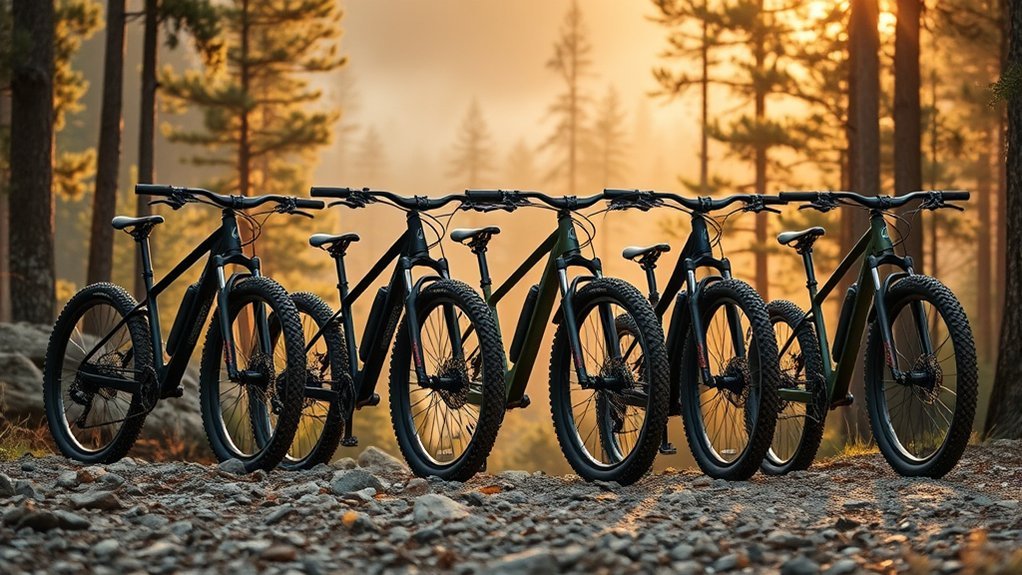
When choosing an electric mountain bike for big guys, weight capacity should be checked first to guarantee safe support and stable handling. Motor power and battery range also matter, since stronger assistance and longer rides help match heavier loads and varied terrain. Frame durability and tire stability complete the picture by improving toughness, control, and overall ride confidence.
Weight Capacity
Weight capacity should be one of the first checks before choosing an electric mountain bike for a larger rider. Many models are rated between 264 lbs and 450 lbs, so matching the rider’s size to the manufacturer’s limit is essential. A higher limit can also accommodate backpacks, tools, or other cargo without stressing the frame. Frame material and overall design matter because sturdier construction usually supports greater loads and improves long-term durability. Suspension deserves attention as well; a dual-suspension setup often offers better stability and comfort for heavier users on rough terrain. Before buying, the published weight rating should be verified carefully, especially for off-road use, where impacts and uneven trails place extra demands on the bike.
Motor Power
Motor power plays a major role in how well an electric mountain bike handles a larger rider’s demands, especially on climbs and uneven trails. For bigger riders, motors in the 750W to 1500W range usually deliver stronger acceleration and more reliable support on steep grades. Torque is equally important, since ratings around 62 N·m to 70 N·m help the bike push through rough ascents with less strain. Peak power can provide short bursts of extra force when a hill suddenly steepens or quick acceleration is needed. Multiple speed modes, often two to five, let riders match assistance to terrain and comfort. With sufficient motor output, heavier riders can better maintain speeds near 20 mph, depending on bike design and setup.
Battery Range
Battery range becomes a major factor once power needs are covered, because a strong motor is only useful if the battery can support longer rides. Battery capacity is the main indicator: higher amp-hour ratings usually mean more distance, and a 15Ah pack may reach about 60 miles in pedal-assist mode. Pure electric riding typically shortens that figure to roughly 30 to 40 miles, so mode selection matters. Terrain and rider weight also affect efficiency, and big riders may see less range than manufacturers advertise, especially on steep routes. Charging time should not be overlooked, since many models need 6 to 10 hours for a full recharge. A removable battery can improve convenience, allowing charging in different locations without moving the whole bike.
Frame Durability
Frame durability is a top priority for bigger riders, since the bike must support higher weight limits, which can range from about 264 to 450 lbs depending on the model. High-carbon steel and aerospace-grade alloy frames are often preferred because they combine strength with long-term resilience on rough terrain. Reinforced joints and welds matter as well, since they help the structure handle repeated stress during steep climbs and demanding rides. Heavier electric mountain bikes, often weighing 66 to 81 lbs, can also feel more planted and stable on uneven ground. Adjustable seat and handlebar positions further improve fit, helping larger riders maintain a secure, efficient posture. A well-built frame reduces flex, supports performance, and improves rider confidence.
Tire Stability
Tire stability is especially important for bigger riders, because large puncture-proof fat tires—typically 4 inches wide or more—offer better grip, shock absorption, and overall control on rough terrain. Wider tires spread load more evenly, helping the bike feel steadier on trails, gravel, and uneven pavement. Lower tire pressure can further improve traction by increasing surface contact, especially on loose or irregular ground. Tread design also matters: deeper patterns bite better off-road, while smoother treads roll more efficiently on hard surfaces. For heavier riders, regular tire checks are essential, since wear and improper inflation can reduce stability and comfort. Well-maintained tires support confident handling and consistent performance across varied conditions.
Brake Performance
Braking power is a top priority for heavier riders, since extra weight and higher speeds demand a system that can stop the bike quickly and predictably. Dual disc brakes are usually the better choice because they distribute stopping force more effectively and improve control on steep or technical trails. Larger rotors add another advantage by shedding heat faster, which helps prevent fade during long descents. Hydraulic disc brakes are especially valuable, offering smoother modulation and more consistent response than mechanical systems. For riders above higher weight limits, reinforced brake parts can improve durability and reduce failure risk under load. Even strong brakes need upkeep, so checking pad wear and hydraulic fluid levels regularly remains essential for dependable performance.
Frequently Asked Questions
How Do I Maintain Battery Health in Cold Weather?
Battery health in cold weather is best maintained by storing it indoors at moderate temperature, charging it only when warm, and avoiding full discharge. A detached view suggests using lower assist levels, insulating the battery during rides, and letting it acclimate before charging after exposure to freezing conditions. It also helps to keep contacts dry, inspect for damage, and follow the manufacturer’s recommended storage and charging ranges consistently.
What Accessories Improve Comfort on Longer Mountain Rides?
Like a well-tuned suspension bridge, comfort on longer mountain rides comes from support and control. Padded gloves, a quality chamois, and a well-fitted saddle reduce pressure and fatigue. Ergonomic grips, a suspension seatpost, and wider tires smooth rough trails. A hydration pack keeps water accessible, while lightweight knee and elbow pads add confidence. Adjustable stems and proper footwear help maintain efficient posture and reduce strain over extended rides.
Are Fat Tires Better for Sand and Snow Riding?
Fat tires are generally better for sand and snow riding because their wider contact patch spreads weight over a larger area, reducing sinking and improving floatation. They also run at lower pressures, which boosts traction and stability on loose surfaces. However, they add rolling resistance and can feel slower on hardpack or pavement. For mixed terrain, a rider may prefer them only when soft conditions are frequent and expected.
How Often Should I Service the Suspension System?
Suspension servicing should typically occur every 50 to 100 hours of riding, or at least once per year, depending on use and conditions. Hard riding, mud, dust, and heavier loads can shorten that interval. A basic lower-leg service may be needed more often, while a full damper overhaul comes less frequently. Regular cleaning and inspection help detect wear early, preserving performance, comfort, and long-term reliability on rough terrain.
Can I Transport a Heavy E-Bike on a Standard Car Rack?
A 65-pound e-bike can overload a standard car rack, as one rider discovered when a hatchback-mounted rack bent on a highway trip. It is often unsafe unless the rack is explicitly rated for the bike’s weight and frame geometry. A hitch rack with a higher capacity, integrated loading ramp, and secure wheel trays is usually the better choice. Checking vehicle limits, rack ratings, and battery removal helps prevent damage and accidents.