Palermo is one of Sicily’s most rewarding cities to photograph. Mountains rise behind a historic center shaped by Greek, Roman, Arab, Norman, Spanish and later Italian influences, while markets, churches, palaces and waterfront streets give you subjects ranging from architecture to candid street scenes. The best photo spots in Palermo are also surprisingly varied: you can photograph medieval stonework in the morning, colorful markets before lunch, panoramic rooftops in the afternoon and coastal light near sunset.
Quick Answer
The best photo spots in Palermo include Palermo Cathedral, Quattro Canti, Palazzo dei Normanni, Ballarò Market, the Kalsa district, Teatro Massimo, La Cala, Piazza Pretoria, Monte Pellegrino and Mondello Beach. Visit major monuments early for fewer crowds, use the markets for street photography, and save elevated or coastal viewpoints for softer late-day light.
Key Takeaways
- Palermo Cathedral and Quattro Canti are the easiest iconic landmarks to photograph in the historic center.
- Monte Pellegrino and the Cathedral rooftops are strong choices for wide city views.
- Ballarò and Vucciria are better for people, food, color and street-life images than formal architecture.
- Piazza Pretoria, La Cala and Mondello add fountains, boats, water and open skies to your photo collection.
- Rules vary inside churches, palaces and museums. The Capuchin Catacombs specifically prohibit photography and video.
The Iconic Cathedral of Palermo
Palermo Cathedral is one of the city’s most recognizable architectural subjects. The present Norman cathedral was consecrated in 1185, although the site had already served different religious communities over earlier centuries. Later alterations added Gothic, Renaissance, Baroque and Neoclassical elements, which is why the building looks different depending on the side you photograph.
For exterior photographs, walk around the cathedral instead of stopping at the first frontal view. Its towers, arches, apses and long southern façade give you several compositions. A wider lens is useful close to the building, while a normal or short telephoto lens can isolate towers, decorative stonework and architectural layers.
Inside, focus on features that genuinely distinguish Palermo Cathedral: the Royal Tombs, treasury, chapels, crypt and architectural details. The royal burials include Roger II, Frederick II, Henry VI and other members of Sicily’s medieval ruling dynasties. You can verify the cathedral’s history and monumental-area information on the official Palermo Cathedral website.
Photographing Palermo from the Cathedral Rooftops
The Cathedral rooftops can be even more useful to photographers than the interior. When access is available, the elevated route provides views across Palermo’s domes, tiled roofs and surrounding mountains. It also lets you photograph architectural details on the cathedral from much closer than you can at street level.
Note: Rooftop access can change because of weather, maintenance, religious services or special events. Check the cathedral’s official visitor information shortly before your visit rather than relying on an old timetable.
The Stunning Views from Monte Pellegrino
Monte Pellegrino gives you a completely different view of Palermo. The mountain rises beside the city and the Gulf of Palermo and is closely associated with Santa Rosalia, Palermo’s patron saint. Her sanctuary is built around the sacred grotto on the mountain and remains an important pilgrimage destination.
If you enjoy landscape photography, use the mountain for wide views that place Palermo between rugged terrain and the sea. Clear days work best for distant detail. Late afternoon can produce softer shadows and warmer light, but do not arrive so late that you have to negotiate unfamiliar paths in darkness.
The traditional pedestrian ascent associated with Santa Rosalia is known as the Acchianata. The Sanctuary of Santa Rosalia provides background on the pilgrimage and the saint’s connection with Monte Pellegrino.
Pro Tip: For a stronger landscape image, include a foreground element such as rock, vegetation or a section of the mountain road instead of photographing only the distant city.
Exploring Quattro Canti Square
| Aspect | Details |
| Location | Piazza Vigliena, Palermo, Italy |
| Historical Significance | Baroque crossroads associated with the four seasons, Spanish kings and historic patron saints of Palermo |
| Architectural Style | Baroque |
| Surrounding Attractions | Via Maqueda, Via Vittorio Emanuele, Piazza Pretoria, churches, shops and restaurants |
| Visitor Traffic | Often busy; early morning usually gives you cleaner compositions |
Quattro Canti, or Piazza Vigliena, sits where Via Maqueda crosses Via Vittorio Emanuele. Construction of its curved corner façades began in the early 17th century. The decorative levels include representations of the four seasons, Spanish monarchs and female saints historically associated with Palermo’s four districts.
The geometry is what makes Quattro Canti especially useful for photography. Stand farther back along one of the approaching streets for a symmetrical composition, or use a low angle to emphasize the curved façades against the sky. Details such as fountains, statues, balconies and columns also work well when the square is too crowded for a wide photograph.
The Comune di Palermo provides a detailed description of the monument on its official Quattro Canti page.
The Vibrant Markets of Ballarò and Vucciria
Ballarò and Vucciria are essential stops when you want photographs of Palermo’s everyday street life instead of another monument. Fruit, vegetables, signs, food preparation, narrow lanes and the movement of shoppers give you many layers to work with.
Ballarò is described by the Comune di Palermo as the city’s oldest and largest historic market, with origins extending back to the period of Arab rule. The market is particularly useful for colorful food photography and environmental street portraits. Morning usually gives you more active stalls and a stronger sense of the working market.
Vucciria has a different character. Historically it was one of Palermo’s major food-market areas, and the streets around Piazza Caracciolo and Via Argenteria remain strongly associated with the old market. The atmosphere changes during the day, so a morning visit and an evening walk can produce very different photographs.
You can read the city’s own background on Ballarò and Vucciria.
For close portraits, ask before placing a camera directly in someone’s face. You can still make strong street photographs by capturing hands arranging produce, signs, food, shopfronts, silhouettes and wider scenes that show how people interact with the market.
Capturing the Beauty of Palermo’s Street Art
Palermo’s historic neighborhoods also work as an open-air photography setting. Painted walls, weathered doors, old stone, balconies and newer murals create a contrast with the city’s churches and palaces.
The Kalsa area is particularly useful for this kind of photography because its streets combine traces of Palermo’s long history with contemporary urban life. Street art changes more quickly than monuments do, so treat any specific mural as temporary rather than assuming it will still be there years later.
Instead of photographing only the mural straight on, look for compositions that include doorways, passing pedestrians, bicycles, signs or surrounding architecture. That context makes the photograph feel connected to Palermo rather than like a record of a wall painting.
The Majestic Palazzo dei Normanni
Palazzo dei Normanni, also called the Royal Palace, is one of Palermo’s most important historic buildings. The Sicilian Regional Assembly states that the earliest built part of the complex dates to the period of Arab rule in the ninth century. The Normans later transformed it into a central seat of their monarchy.
The most celebrated interior is the Palatine Chapel, commissioned by Roger II after his coronation in 1130. Its architecture and decoration bring together Byzantine, Islamic and Latin traditions, and its gold mosaics are among the visual highlights of Arab-Norman Palermo.
For photographers, the palace gives you two distinct subjects: the imposing exterior and the much more detailed interior spaces. Inside, work with architectural symmetry, mosaic detail and repeating arches rather than trying to fit everything into one frame.
The palace and Palatine Chapel form part of the UNESCO-listed Arab-Norman Palermo and the Cathedral Churches of Cefalù and Monreale property. The Sicilian Regional Assembly also provides official historical information about the palace.
The Serene Orto Botanico di Palermo
Orto Botanico di Palermo gives you a quieter alternative to the stone architecture of the historic center. Its institutional history begins in 1779, when the Royal Academy of Studies established a chair of Natural History and Botany and received land for an early botanical garden. Work on the present site began in 1789, and the new garden was formally inaugurated in 1795.
Today, the University of Palermo describes the Botanical Garden as covering about 10 hectares and cultivating roughly 6,000 species. Tropical and subtropical plants, palms, succulents, formal botanical collections and monumental trees give photographers very different textures within one location.
The University of Palermo lists the Botanical Garden at about 10 hectares with around 6,000 cultivated species.
Look for large leaves against simple backgrounds, repeating palm trunks, reflections, roots and wide scenes that include the garden’s historic buildings. Overcast light can be useful here because it reduces harsh contrast on glossy foliage.
The University of Palermo Botanical Garden is the best source for current visitor and collection information.
The Charming Streets of La Kalsa
La Kalsa is one of Palermo’s most historically layered districts. Its name is connected to the Arabic al-Khāliṣa, the fortified area developed for Palermo’s ruling administration during the Islamic period. Centuries of rebuilding have left the neighborhood with churches, palaces, courtyards, narrow streets and worn façades that work especially well for detail and street photography.
Do not rush through Kalsa looking only for famous monuments. Some of the strongest compositions come from ordinary corners: a doorway framed by old stone, laundry above a narrow lane, shadows under an arch or a bright wall beside a weathered façade.
Nearby historic sites such as Santa Maria dell’Ammiraglio, commonly called La Martorana, add Byzantine and Norman-era visual detail to a walk through this part of central Palermo.
The Historic Teatro Massimo
Teatro Massimo is one of Palermo’s signature architectural landmarks. The first stone was laid in 1875, and the theatre opened on May 16, 1897 with Verdi’s Falstaff. That means 22 years passed between the cornerstone ceremony and opening, including periods when construction was interrupted.
The monumental staircase and Neoclassical façade make the exterior easy to photograph from Piazza Verdi. A central position emphasizes symmetry, while a position toward one side can give the columns and steps more depth. People crossing the broad foreground can provide scale.
Guided visits also provide access to parts of the interior. Check the official Teatro Massimo guided-tour information for current access before planning an indoor photography session.
The Picturesque Waterfront of La Cala
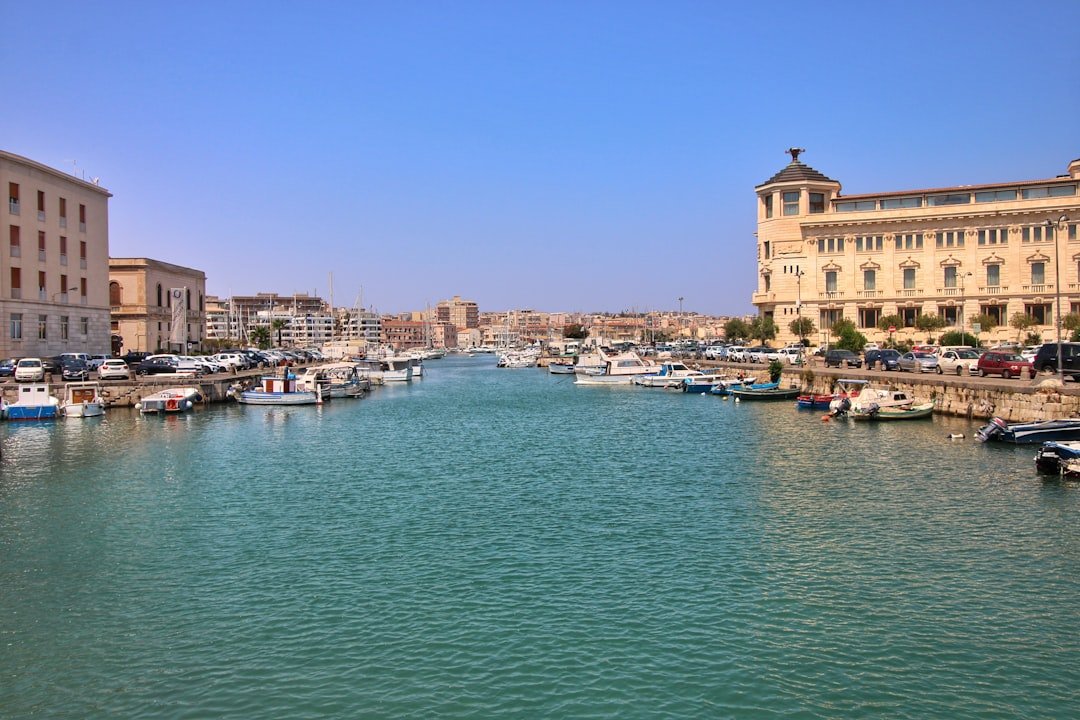
La Cala gives Palermo photographers open space, boats, masts and water only a short distance from the dense historic center. The harbor area has been tied to Palermo’s maritime identity for centuries, while its present marina creates a cleaner and more contemporary contrast with the old streets nearby.
Use the lines of the waterfront to lead the viewer through the image. Boats and masts can become foreground elements, while city buildings and mountains provide background layers. Reflections are easier to capture when the water is calm.
Late afternoon is particularly useful because the lower sun softens the light on boats and buildings. Stay into blue hour if you want a cooler sky mixed with artificial lights around the waterfront.
Piazza Pretoria and Fontana Pretoria
Piazza Pretoria deserves its own stop on a Palermo photography route. Its large fountain was originally created in Tuscany in the 16th century and later purchased by Palermo, transported in hundreds of pieces and reassembled in the city.
The fountain’s statues, stairways, basins and surrounding historic buildings let you create both wide and detailed compositions. A wide lens can emphasize the scale of the fountain, while a longer focal length helps isolate individual statues or compress the surrounding architecture.
Because Piazza Pretoria is close to Quattro Canti, you can photograph both during the same early-morning walk. The Comune di Palermo provides official historical information about Fontana Pretoria.
Mondello Beach for Coastal Photography
For a completely different Palermo look, travel north to Mondello. The seaside district lies between Monte Pellegrino and Monte Gallo and is known for its broad beach, turquoise-to-blue water, Liberty-style villas and distinctive waterfront architecture.
Mondello works best when you want open coastal compositions rather than tightly framed city scenes. Use the curve of the bay, beach umbrellas, boats, mountains and waterfront structures to create layers.
Early morning is useful when you want fewer people and cleaner beach photographs. Late-day light can be better for atmosphere, portraits and reflections. During warm-weather peak periods, expect a much busier shoreline.
The Comune di Palermo’s Mondello guide provides current destination information.
Zisa Palace for Arab-Norman Geometry
Zisa Palace is another useful photo stop when you want architecture without repeating the same cathedral-and-square compositions. It forms part of Palermo’s UNESCO Arab-Norman World Heritage property and reflects the cultural exchange that shaped Norman Sicily.
The strongest images often come from symmetry, arches, stone surfaces and the relationship between the palace and its surrounding open space. A centered composition works well for formal architecture, while closer photographs can isolate decorative details.
Best Times of Day to Take Photos in Palermo
There is no single best time for every Palermo photo spot. Match the light to the subject:
- Early morning: Best for Quattro Canti, Piazza Pretoria and Palermo Cathedral when you want fewer people and cleaner architectural compositions.
- Morning: A strong time for Ballarò because the market is active and stalls are full of fresh produce.
- Midday: Often harsh for open squares in summer, but useful inside shaded streets, markets and some interiors.
- Late afternoon: Good for warm stone façades, La Cala, portraits and elevated views.
- Golden hour: Excellent for Monte Pellegrino, rooftops and coastal scenes when access and weather cooperate.
- Blue hour and evening: Useful around Teatro Massimo, central streets and the waterfront when architectural lighting begins to balance with the sky.
Weather matters as much as the clock. Thin cloud can soften contrast, while a clear day is better when your goal is a long-distance panorama from Monte Pellegrino.
Photography Etiquette and Restrictions in Palermo
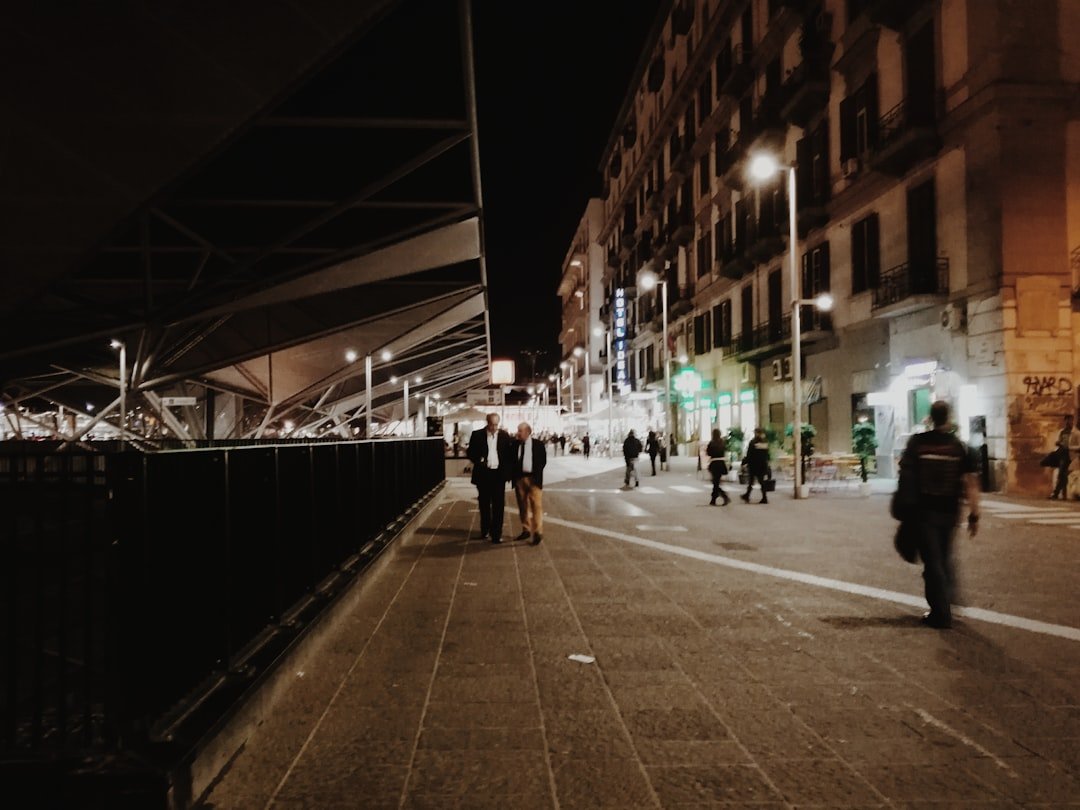
Palermo is a living city, not an outdoor film set. Markets are working businesses, churches remain places of worship and many historic buildings operate under their own visitor rules.
- Ask before taking a close, identifiable portrait of a vendor, worshipper or other individual.
- Avoid interrupting religious services for photographs.
- Follow posted rules for flash, tripods and restricted areas.
- Do not block narrow market lanes or church entrances while composing a shot.
- Keep your equipment close to you in busy pedestrian areas.
- Check current rules at ticketed monuments because access policies can change.
Warning: The Capuchin Catacombs of Palermo are an important historic attraction, but they are not a photography location. The official visitor rules prohibit visitors from taking photographs or shooting video inside. Check the official Capuchin Catacombs visitor rules before visiting.
A One-Day Palermo Photography Route
If you have only one full day, you can cover many of Palermo’s strongest photo spots on foot before finishing at a viewpoint or the waterfront.
- Start at Palermo Cathedral early. Photograph the exterior before the main daytime crowds arrive.
- Walk toward Palazzo dei Normanni. Use the exterior architecture first, then visit the Palatine Chapel if it fits your schedule.
- Move to Ballarò Market. Morning activity gives you a change from formal architecture to street photography.
- Continue to Quattro Canti. Photograph details if the intersection has become crowded.
- Walk a few steps to Piazza Pretoria. Use the fountain, statues and surrounding façades for layered compositions.
- Explore Kalsa. Photograph old streets, architectural textures and changing street art.
- Continue toward La Cala. Use the harbor for late-afternoon or blue-hour photographs.
- Use Monte Pellegrino or Mondello on a separate half-day. Both sit away from the compact historic-center route and deserve more time than a rushed detour.
Conclusion
Palermo rewards photographers because it does not offer only one type of image. You can move from Norman architecture and Baroque squares to working markets, old neighborhoods, gardens, mountain views and the sea within the same trip.
For the most complete set of photographs, combine the obvious landmarks with smaller details. Photograph Palermo Cathedral and Quattro Canti, but also watch the light on a Kalsa doorway, the movement of a Ballarò vendor, reflections at La Cala or the mountain backdrop behind Mondello. Those contrasts are what give Palermo its distinctive visual character.
If you are planning your own list of the best photo spots in Palermo, choose locations according to light and subject rather than simply visiting them in the order they appear on a sightseeing list. That small change can make the difference between ordinary travel snapshots and a varied photographic story of the city.
Frequently Asked Questions
What are the best photo spots in Palermo?
Top choices include Palermo Cathedral, Quattro Canti, Palazzo dei Normanni, Teatro Massimo, Ballarò Market, Piazza Pretoria, La Kalsa, La Cala, Monte Pellegrino and Mondello Beach. The Capuchin Catacombs are historically important but should not be treated as a photo spot because photography and video are prohibited inside.
Are there specific times of day that are best for taking photos in Palermo?
Early morning is usually best for uncrowded landmark photos, while late afternoon and golden hour give warmer light for stone façades, viewpoints and waterfront scenes. Morning is especially useful at Ballarò Market because you can photograph more of the working-market activity.
Are there photography restrictions at Palermo attractions?
Yes. Rules can differ between churches, museums and historic buildings, especially for flash and tripods. The Capuchin Catacombs explicitly prohibit photography and video. Always follow signs and staff instructions at the location you are visiting.
What should I consider when taking street photos in Palermo?
Respect people who live and work in the city. Ask before taking close portraits, avoid obstructing market stalls or narrow streets, and look for wider scenes when someone does not want to be photographed. At religious sites, avoid disrupting worship or ceremonies.
Are there hidden gems for photography in Palermo?
Yes. Orto Botanico di Palermo offers plants, roots and historic garden architecture; Zisa Palace provides Arab-Norman geometry; La Kalsa is excellent for street details and changing murals; and the Cathedral rooftops can provide elevated city views when they are open.
Can I photograph Palermo’s main sights in one day?
You can photograph many central locations in one day because Palermo Cathedral, Palazzo dei Normanni, Ballarò, Quattro Canti, Piazza Pretoria, Kalsa and La Cala can be combined into a walking route. Monte Pellegrino and Mondello are better saved for a separate outing.
Sources
- UNESCO World Heritage Centre — Arab-Norman Palermo — verifies the UNESCO property and its Arab-Norman, Byzantine and Western cultural significance.
- Palermo Cathedral — Official Chronology — supports the cathedral’s Norman history and 1185 consecration.
- Comune di Palermo — Quattro Canti — supports the monument’s design, construction and statues.
- Comune di Palermo — Historic Markets — supports information on Ballarò, Vucciria and Palermo’s traditional markets.
- University of Palermo — Orto Botanico — supports the garden’s current size, collections and institutional history.
- Fondazione Teatro Massimo — Official History — supports the 1875 cornerstone and 1897 opening of Teatro Massimo.