The best time to visit Interlaken depends on what you want to do in the surrounding Jungfrau Region. Interlaken sits between Lake Thun and Lake Brienz, with easy access to the Eiger, Mönch and Jungfrau, so lake cruises, high-mountain hikes, festivals and skiing each have different ideal seasons. This guide compares the weather, crowds, transport and activities month by month.
Quick Answer
For most travelers, the best time to visit Interlaken is June or September. You get mild-to-warm valley weather, broad access to lakes and mountain transport, and typically fewer crowds than July and August. Choose December through March for skiing; April, May, October and November suit quieter trips but bring more seasonal closures.
Last checked: October 1, 2026. Dates and figures were verified against official sources.
Key Takeaways
- July is the warmest month by long-term Interlaken station normals, with an average high of about 24.3°C (76°F).
- July and August offer the broadest summer access but also bring the strongest holiday demand.
- Mountain transport is seasonal: many 2026 Schynige Platte offers run June 13 to October 25, while the Jungfrau summer-pass season runs April 3 to November 29.
- Lake Thun boats run year-round, while Lake Brienz navigation runs from April 3 to December 6 in 2026.
- For winter sports, December through March gives the safest overlap among the main Jungfrau ski areas, although individual sectors open and close on different dates.
Best Time to Visit Interlaken by Month
June and September give many visitors the best balance of weather, mountain access and manageable crowds. July and August are warmer and busier, while winter visitors should focus on December through March if skiing is the main goal.
The temperatures below use the 1991–2020 climate-normal period used by MeteoSwiss climate normals. They describe Interlaken in the valley; conditions at Jungfraujoch, Schynige Platte and other high elevations can be much colder.
| Month | Average High / Low | What to Expect |
|---|---|---|
| January | 3.2°C / -2.8°C (38°F / 27°F) | Cold valley weather; strong choice for skiing and snow-based day trips. |
| February | 5.4°C / -2.5°C (42°F / 28°F) | Winter-sports season continues; local sport-holiday timing varies. |
| March | 10.5°C / 0.9°C (51°F / 34°F) | Spring begins in the valley while higher ski areas can remain wintry. |
| April | 14.7°C / 4.1°C (58°F / 39°F) | Quieter transition month; some summer transport restarts while high trails may still have snow. |
| May | 18.7°C / 8.3°C (66°F / 47°F) | Green valleys and comfortable sightseeing weather; high routes can remain seasonal. |
| June | 22.4°C / 12.1°C (72°F / 54°F) | Excellent balance for hiking, lake trips and mountain excursions as summer access expands. |
| July | 24.3°C / 13.8°C (76°F / 57°F) | Warmest month, broad mountain access and heavy summer demand. |
| August | 23.7°C / 13.6°C (75°F / 56°F) | Warm, busy and well suited to hiking, paragliding and lake activities. |
| September | 19.2°C / 10.0°C (67°F / 50°F) | One of the best all-round months, with cooler hiking weather and many summer services still operating. |
| October | 14.1°C / 6.0°C (57°F / 43°F) | Cooler autumn conditions, colorful scenery and a growing risk of seasonal closures. |
| November | 7.8°C / 1.2°C (46°F / 34°F) | Quiet transition period; many summer attractions close before the full ski season starts. |
| December | 3.7°C / -1.8°C (39°F / 29°F) | Winter-sports season builds, with Advent markets and stronger holiday demand late in the month. |
Climate and Weather in Interlaken
Interlaken has four distinct seasons, but the town and the mountains around it do not share the same conditions. Interlaken lies at roughly 580 meters above sea level, while many popular excursions climb well above 1,000 or 2,000 meters, so temperature, snow and visibility can change quickly with elevation.
Summer in the valley is mild to warm rather than consistently hot. Long-term average highs reach about 22.4°C (72°F) in June, 24.3°C (76°F) in July and 23.7°C (75°F) in August. Average nighttime lows during those months are about 12–14°C (54–57°F).
Winter is cold in town and much colder higher in the Alps. December through February average highs are roughly 3–5°C (37–42°F), while average lows are about -3 to -2°C (27–29°F). Snow can fall in Interlaken itself, but the more reliable snowpack for skiing is found at higher elevations around Grindelwald, Wengen and Mürren.
Spring and autumn are transition seasons. You can have pleasant walking weather in Interlaken while snow still affects high trails, or an early cold spell can reach the valley. That difference between valley and mountain conditions is one of the main reasons to plan activities by elevation rather than by the town forecast alone.
Interlaken’s position between the two lakes has shaped its identity for centuries. The settlement developed around a medieval monastery and became increasingly important as an Alpine tourism center after transport links expanded during the 19th century.
Peak Tourist Seasons in Interlaken
The main high-demand periods are summer, especially July and August, and the core winter-sports season around the Christmas-New Year period and ski holidays. Summer brings the widest choice of hiking and lake activities, while winter demand is tied closely to snow conditions and the operating calendars of nearby ski areas.
)
July and August combine the warmest valley temperatures with school holidays and broad access to mountain railways, lake boats and hiking areas. Accommodation and popular excursions can therefore be more competitive during these months, particularly on clear-weather weekends.
Local school calendars are only one part of the crowd picture because Interlaken receives international visitors, but they are useful context. For the German-speaking part of Canton Bern, the official 2026/27 school-holiday calendar lists summer holidays from July 4 to August 9, 2026, autumn holidays from September 19 to October 11, and winter holidays from December 24, 2026 to January 10, 2027. Alpine tourism municipalities can vary some spring-holiday weeks.
Winter demand rises as the Jungfrau ski areas open. Christmas through February is the most straightforward period if snow sports are your priority, while late November, early December and April depend more heavily on the exact sector and altitude.
Off-Peak and Shoulder Seasons in Interlaken
April to May and October to November are generally the quieter transition periods. They can work very well for town sightseeing, lake views and lower-elevation walks, but you need to accept that some mountain railways, hiking routes and seasonal businesses may not be operating.
Spring has a striking contrast between green valleys and snowy peaks. By May, Interlaken’s average high is close to 19°C (66°F), but that does not mean every high trail is snow-free. The same applies in reverse during autumn: comfortable conditions may continue in town while mountain services begin reducing their schedules.
Harder Kulm is one example of why exact operating calendars matter. The official Harder Kulm information lists the 2026 Jungfrau summer-pass period from April 3 to November 29, and the funicular journey from the valley station takes about 10 minutes.
Schynige Platte has a shorter season. Current Schynige Platte offers for 2026 are available from June 13 to October 25. The historic railway from Wilderswil takes about one hour, so it is a full excursion rather than a quick viewpoint ride.
September is the strongest shoulder-season choice for many first-time visitors. Average temperatures remain comfortable, lake navigation is running, and major summer mountain services are still available. October can be rewarding for autumn scenery, but the risk of reduced mountain access rises as the month progresses.
Special Events and Festivals in Interlaken
Interlaken’s event calendar covers classical music, rock festivals, theater, running and traditional Swiss culture rather than one single festival season. Exact dates change each year, so year-specific dates matter when an event is part of your reason for traveling.
The official Holiday Region Interlaken top-events calendar currently lists the following major dates:
| Event | Confirmed Date | Why It Matters |
|---|---|---|
| Interlaken Classics | March 25–April 19, 2027 | Classical-music program during the spring shoulder season. |
| Greenfield Festival | June 10–12, 2027 | Major rock festival at the start of the summer travel season. |
| William Tell Open-Air Theatre | July 24–September 4, 2027 | Traditional open-air theater spanning late summer. |
| International Jungfrau Marathon | September 10–11, 2027 | Large mountain-running event during a popular hiking month. |
| Unspunnenfest | Summer 2029 | A major traditional Swiss festival held periodically rather than every August. |
For winter visitors, the official 2026 Christmas-market program covers November and December at various locations across the Holiday Region Interlaken, from Brienz toward Thun.
These dates also affect crowd levels. A festival weekend can make an otherwise moderate month feel busy, so event timing matters as much as the season if you are choosing accommodation close to Interlaken’s center.
Outdoor Activities and Adventures by Season in Interlaken
Interlaken works year-round because the activity mix changes with the seasons. Summer favors hiking, paragliding and lake trips; winter shifts attention to skiing and snow activities; spring and autumn are strongest for lower-elevation walks, sightseeing and quieter excursions.
)
Spring: Lakes, Valleys and Lower Trails
March through May is a transition from winter to summer. Lower paths and lakeside areas usually become practical before high-altitude hiking routes, so spring is better for flexible sightseeing than for a trip built entirely around exposed Alpine trails.
Lake cruises become increasingly useful as spring develops. According to the BLS 2026 navigation schedule, boats on Lake Thun operate year-round, while Lake Brienz boats run from April 3 to December 6, 2026. Interlaken West is the boat connection for Lake Thun, while Interlaken Ost serves Lake Brienz.
Paragliding is another option because tandem flights around Interlaken are not limited to midsummer. Actual flight operations still depend on wind, visibility and other daily weather conditions.
Summer: Hiking, Paragliding and Both Lakes
June through August offers the broadest range of outdoor choices. This is the main period for high-mountain hiking, lake activities, paragliding, sightseeing railways and long day trips into the Jungfrau Region.
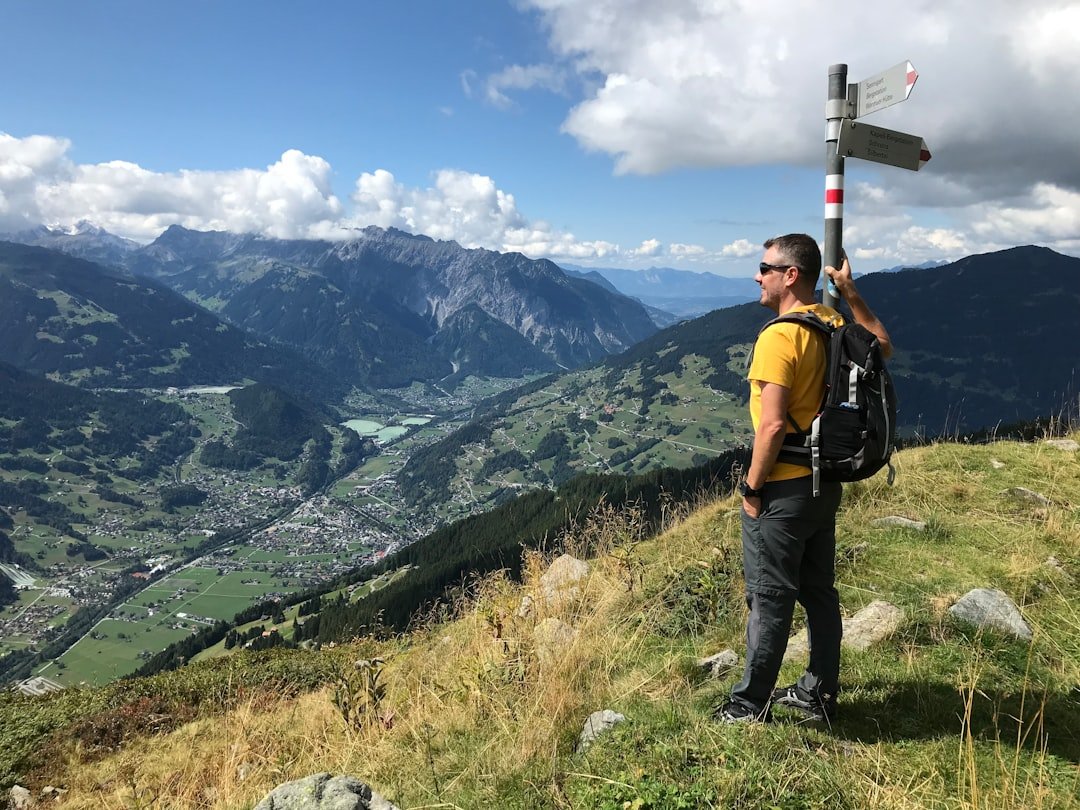
The Eiger Trail and routes around Schynige Platte are popular summer objectives once conditions allow. Harder Kulm provides a much shorter outing from Interlaken, while Lake Thun and Lake Brienz support sightseeing cruises and other warm-season water activities.
Summer weather can still change quickly in the Alps. A warm, sunny morning in Interlaken does not guarantee the same conditions at a high viewpoint, so plan clothing for the highest elevation you will visit rather than for the temperature outside your hotel.
Autumn: Cooler Hiking and Fewer Peak-Summer Crowds
September is one of the most useful months for active travelers because many summer services continue while temperatures ease. October brings stronger autumn color at lower elevations but also a greater chance that seasonal transport or high trails will be unavailable.
September is therefore a good compromise if hiking matters more than swimming or peak-summer warmth. By late October and November, build the trip around Interlaken, the lakes and year-round attractions rather than assuming every mountain railway will run.
Winter: Skiing, Snowboarding and Snow Excursions
December through March is the core winter-sports period, but the Jungfrau Region does not open and close every sector on the same day. The official Jungfrau Ski Region slope schedule currently lists these 2026/27 operating periods, subject to operating conditions.
| Ski Sector | 2026/27 Scheduled Period |
|---|---|
| Wengen, Kleine Scheidegg, Eigergletscher | November 21, 2026–April 25, 2027 |
| Grindelwald, Holenstein, Männlichen | December 12, 2026–April 4, 2027 |
| Grindelwald-First | December 19, 2026–March 29, 2027 |
| Mürren-Schilthorn | November 21, 2026–May 2, 2027 for the full stated upper-area period |
This staggered calendar is why December through March is a safer general recommendation than simply saying “winter.” Skiers traveling near either end of the season should choose their area based on the specific lifts and slopes they want to use.
Winter hiking, sledging and maintained ice-skating facilities provide alternatives for non-skiers. Natural ice should never be assumed safe simply because temperatures are below freezing; use officially opened areas and follow local access restrictions.
Tips for Visiting Interlaken During Different Times of the Year
Pack for both the valley and the highest point on your itinerary. Interlaken may feel mild while a mountain station is windy, cold or snowy, so layers are more useful than relying on one heavy or lightweight outfit.
- Spring: Bring a waterproof outer layer and shoes suited to wet ground. Build at least one lower-elevation alternative into the itinerary in case snow affects your preferred mountain route.
- Summer: Use comfortable walking shoes, sun protection and a light layer for higher viewpoints. Reserve must-do excursions and accommodation earlier if traveling in July or August.
- Autumn: Pack layers for larger temperature swings between morning and afternoon. September offers the widest activity range; later autumn requires more flexibility around seasonal transport.
- Winter: Use insulated footwear, warm layers and a weather-resistant outer shell. If skiing, base your plans on the operating dates for the exact ski sector rather than on a generic winter-season label.
Check the mountain forecast and live operating status once each day before committing to a high-altitude excursion. In the Alps, visibility and wind can matter as much as temperature, especially for viewpoints, paragliding and exposed hikes.
Best Time to Visit Interlaken for Different Trips
There is no single month that is best for every traveler. The right period depends on whether you value warm weather, high-altitude hiking, snow sports, events or quieter streets most.
- Best overall balance: June or September, when many summer services are open without relying on the absolute warmest weeks.
- Warmest weather and broadest summer access: July and August.
- High-mountain hiking: Summer into early autumn, once the chosen route is officially open and free of unsafe snow conditions.
- Skiing and snowboarding: December through March for the strongest overlap among the major Jungfrau ski sectors.
- Lake cruises: Lake Thun is available year-round; Lake Brienz navigation runs April 3 to December 6 in 2026.
- Quieter sightseeing: April, May, October and November, provided you are comfortable with reduced seasonal mountain access.
- Summer festivals and events: Match the trip to the exact event dates, because major concerts, theater and races can change local demand.
- Christmas atmosphere: November and December, when Advent and Christmas markets take place across the Holiday Region Interlaken.
If this is your first trip and you want both lakes and mountains, June and September are the most versatile starting points. Choose July or August if maximum summer access matters more than crowds, and choose the heart of winter if snow sports are the main reason for visiting.
Frequently Asked Questions
What is the best time to visit Interlaken?
June and September are the best all-round months for many visitors to Interlaken. They combine comfortable valley weather with broad access to lake and mountain activities, while July and August are usually busier. Skiers should instead target December through March.
What is the weather like in Interlaken during summer?
Summer is mild to warm in Interlaken, with average highs of about 22.4°C in June, 24.3°C in July and 23.7°C in August. Mountain destinations are colder than the town, and weather can change quickly with altitude.
What major events are held in Interlaken?
Major scheduled events include Interlaken Classics from March 25 to April 19, 2027, Greenfield Festival from June 10 to 12, William Tell Open-Air Theatre from July 24 to September 4, and the Jungfrau Marathon on September 10 and 11, 2027.
Is Interlaken crowded during summer?
July and August are among the busiest periods because warm weather, school holidays and broad mountain access overlap. June and September can provide a better balance if you want summer activities with less peak-season pressure.
What outdoor activities are popular in Interlaken during summer?
Popular summer activities include hiking, paragliding, lake cruises and mountain excursions around the Jungfrau Region. Routes and railways at higher elevations are seasonal, so access depends on the date and current mountain conditions.
Is September a good time to visit Interlaken?
Yes, September is one of the strongest months for an Interlaken trip. The long-term average high is about 19.2°C, many summer mountain and lake services are still running, and hiking temperatures are cooler than in July and August.
Does it snow in Interlaken in winter?
Yes, snow can fall in Interlaken during winter, but snow cover in the town is less dependable than at higher elevations. For skiing and more reliable winter conditions, visitors generally travel upward to the Jungfrau Region’s ski areas.
Do boats run on Lake Thun and Lake Brienz all year?
Lake Thun boats operate year-round, but Lake Brienz navigation is seasonal. For 2026, BLS lists Lake Brienz boat service from April 3 through December 6, which makes Lake Thun the more dependable choice for a winter boat trip.