November in Alaska is the start of serious winter in many parts of the state, but what you experience depends heavily on where you go. Anchorage may have snowy streets and temperatures near freezing, Fairbanks can already be well below zero, and Southeast Alaska can be milder and wetter. Short daylight, long dark nights, northern lights potential, wildlife, and early-season winter adventures can make November rewarding if you plan around changing conditions.
Quick Answer
November is early winter in Alaska, but conditions vary sharply by region. Anchorage often runs about 17–31°F, Fairbanks around -3–14°F, and Juneau around 29–40°F. Expect short daylight, snow or ice, good aurora potential, limited seasonal services, and winter activities that depend on snow, ice, road, and operator conditions.
Key Takeaways
- Alaska does not have one November climate. Interior Alaska is much colder than Southcentral or Southeast Alaska.
- November offers long dark nights for northern lights viewing, but clear skies and geomagnetic activity are still required.
- Dog sledding, skiing, snowshoeing, and ice fishing can be available, but early-season snow and ice conditions determine what is actually possible.
- Moose remain active in winter, while most brown and black bears are in dens by the winter season.
- Check weather, road conditions, attraction hours, and tour availability immediately before each outing.
November Weather Patterns in Alaska
November usually brings winter conditions to much of Alaska, but temperatures differ dramatically across the state. According to Travel Alaska’s monthly weather guidance, typical November temperature ranges are approximately:
| Destination | Typical November Range | What It Can Feel Like |
|---|---|---|
| Anchorage | About 17–31°F | Cold, snowy or icy, with occasional milder periods |
| Fairbanks | About -3–14°F | True Interior winter with much colder nights possible |
| Juneau | About 29–40°F | Milder, wetter conditions with rain, snow, or a mix |
Daylight also shrinks quickly as you travel farther north. Fairbanks has substantially less daylight near the end of November than at the beginning, while Alaska’s far northern communities experience even more extreme seasonal darkness. That extra darkness improves your opportunity to look for the northern lights, but aurora displays are never guaranteed.
The best combination is a dark location, clear sky, low artificial light, and favorable solar activity. You can use current aurora forecasts and local cloud forecasts rather than choosing a trip date solely because it falls in the middle or end of November.
Note: November is early winter. Snow depth can vary considerably from one year, region, and elevation to another, so a snowy forecast does not automatically mean every ski trail, dog-sled route, or frozen lake is ready.
The Transition to Winter: What to Expect
November changes Alaska quickly. Snow cover becomes more common, daylight contracts, temperatures fall, and rivers and lakes begin or continue freezing. In the Interior, winter may already feel well established. Coastal areas can still experience warmer storms, mixed precipitation, wet snow, and freeze-thaw cycles.
That transition matters when you plan outdoor activities. A trail that looks firm in the morning can become slippery later. Fresh snow can hide ice, rocks, roots, or uneven surfaces. Mountain areas can develop avalanche hazards, while lakes and rivers may freeze unevenly.
Warning: Never assume a lake or river is safe simply because it looks frozen. Early-season ice can vary in thickness and strength over short distances, especially near currents, springs, inlets, outlets, bridges, or recently frozen areas. Verify local conditions before traveling onto ice.
Winter driving also becomes part of the trip. Snow, black ice, blowing snow, limited daylight, and changing mountain-pass conditions can lengthen drive times. Before a road trip, check the Alaska 511 road-condition system along with the National Weather Service forecast for your route.
Wildlife Sightings: Moose, Caribou, and More
Wildlife does not disappear when winter arrives, but November viewing is different from summer. Some animals remain active and easier to notice against snow, while others become less visible or move to seasonal habitat.
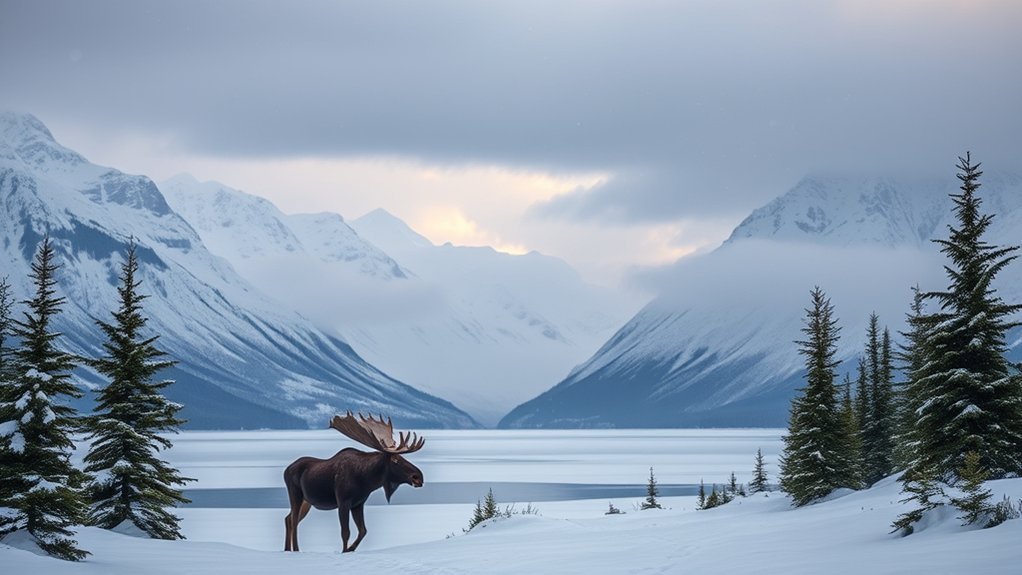
- Moose: Moose remain active throughout winter. The Alaska Department of Fish and Game describes how they use different habitats through the year. In winter, they may move toward lower areas where food is easier to reach.
- Caribou: Caribou movement depends on the specific herd, region, weather, and seasonal range. A November migration should not be treated as a guaranteed tourist sighting.
- Bald Eagles: Eagles can still be seen in parts of Alaska during winter, particularly where food remains available, although numbers and locations vary.
- Snowshoe Hares: Their white winter coats make them well adapted to snowy surroundings. Tracks may sometimes be easier to spot than the animals themselves.
Bear expectations should be different. According to the Alaska Department of Fish and Game’s brown bear profile, most brown bears spend winter in dens, although denning timing and behavior vary by region and individual.
Never approach wildlife for a photograph. Give animals room to move, do not feed them, and be especially cautious around moose near roads and trails.
Popular Outdoor Activities in November
November can open the door to Alaska’s winter recreation season, but flexibility is essential. Conditions may be excellent in one area and marginal in another. Check snow reports, trail status, tour operators, and weather immediately before heading out.
Winter Sports Adventures
Depending on snow and ice conditions, November possibilities can include:
- Cross-country or alpine skiing: Groomed Nordic trails may begin opening as snow accumulates. Alpine ski-area opening dates vary by snowfall and operating schedule, so do not assume every mountain is open in early November.
- Snowboarding: Resort riding can be possible later in the month in some years, while backcountry riding requires much more experience, avalanche knowledge, and appropriate equipment.
- Snowshoeing: Once adequate snow arrives, snowshoes can make packed and moderately deep winter trails easier to explore.
- Ice fishing: It becomes a winter option only after local ice conditions are suitable. Never treat November as an automatic start date.
The National Park Service lists cross-country skiing and snowshoeing among winter activities at Denali National Park, but it also warns that snow conditions can range dramatically during winter.
Wildlife Viewing Opportunities
November wildlife viewing works best when you focus on species that remain active rather than expecting summer-style viewing. Moose, foxes, hares, ravens, and other resident wildlife may be encountered in suitable habitat. Along parts of the coast, sea otters, seals, and marine birds can also be present.
Bear sightings normally become less likely as winter denning progresses. If you do encounter a bear, treat it as a wildlife-safety situation rather than an opportunity to move closer for photographs.
Pro Tip: Fresh snow can reveal tracks long after an animal has moved away. Looking for tracks, browse marks, and other signs often gives you a better understanding of winter wildlife without disturbing the animals.
Scenic Photography Spots
Snow, low-angle light, frozen water, and long twilight can make November especially rewarding for landscape photography. Four locations worth considering are:
- Denali National Park: Winter can produce dramatic mountain and forest scenery, but much of the park road has limited vehicle access during winter. Check current NPS road and visitor-center information before making the drive.
- Turnagain Arm: Roadside viewpoints south of Anchorage can frame tidal water, snow-covered mountains, and winter light. Watch road conditions and use established pullouts.
- Anchorage Coastal Trail: Accessible sections can provide coastal, mountain, and city-edge scenes, but ice and snow can make traction devices useful.
- Hatcher Pass: Snowy mountains and historic structures can create excellent compositions, but winter road access, weather, and avalanche conditions require careful checking before you go.
Cold temperatures drain camera and phone batteries faster than many travelers expect. Carry a spare battery close to your body, protect electronics from snow and condensation, and bring a headlamp for the dark trip back.
Dog Sledding Adventures: A Unique Experience
Dog sledding is one of Alaska’s signature winter experiences, and November can mark the beginning of the snow-sled season in some areas. Availability depends on sufficient snow, trail conditions, location, and the operator’s schedule. Some kennels may use alternative training methods when snow is not yet deep enough for traditional sleds.
Types of Dog Sledding
Experiences vary by kennel and destination. Common options include:
- Guided Trail Rides: Ride in a sled while an experienced musher handles the dog team.
- Scenic Tours: Combine mushing with views of snowy forests, valleys, or mountain scenery.
- Kennel and Mushing Programs: Meet working sled dogs and learn how teams are trained, fed, conditioned, and cared for.
- Hands-On Experiences: Some operators allow guests to stand on the runners or try basic mushing techniques under direct supervision.
Travel Alaska includes dog mushing among the state’s major winter recreation options, but snow-dependent tours should always be confirmed before arrival.
Best Locations in Alaska
Fairbanks is one of the strongest winter bases because Interior Alaska tends to establish colder, snowier winter conditions earlier than many coastal areas. It also combines mushing with excellent opportunities for dark-sky aurora viewing.
Talkeetna and the broader Mat-Su region have a long mushing tradition and access to kennels and winter trails. November tour availability varies with snowfall.
Girdwood and Southcentral Alaska offer dramatic mountain scenery, but early-winter conditions near the coast can fluctuate. Confirm whether the experience uses a snow sled, training cart, or another format when you book.
Denali also has an important sled-dog tradition. The National Park Service maintains working sled dogs, and winter kennel hours and operations can be checked through the park before a visit.
What to Expect
A typical guided mushing experience may include:
- Winter Scenery: Forests, open valleys, mountain views, or snow-covered trails depending on location.
- Cold Exposure: Riding on a sled can feel colder than walking because you generate less body heat, so dress more warmly than you would for an active hike.
- Time With the Dogs: Many tours explain the dogs’ personalities, training, harnesses, and teamwork.
- Local Knowledge: Mushers can explain how dog teams have been used for transportation, recreation, racing, and winter work in Alaska.
Snowshoeing Trails and Tips for Beginners
Snowshoeing can be one of the easiest ways to explore Alaska after enough snow has accumulated. Beginners should start on relatively flat, clearly marked routes and avoid committing to remote terrain until they understand winter travel, daylight limitations, and local hazards.
Areas around Anchorage, including Kincaid Park and the Eagle River area, can offer winter recreation opportunities, but trail designations and grooming rules matter. Check current trail information before leaving, and never walk or snowshoe directly on ski-only groomed tracks where foot traffic is prohibited or discouraged.
| Beginner Tip | Why It Matters |
|---|---|
| Dress in layers | You may feel cold at the trailhead and warm quickly once you start moving. |
| Choose easy terrain | Flat, marked routes make it easier to learn your stride and turn around before dark. |
| Use a natural, slightly wider stride | This reduces the chance of stepping on the opposite snowshoe. |
| Carry water and a snack | Cold weather can disguise thirst even while you are working hard. |
| Carry a headlamp | November daylight disappears quickly, especially farther north. |
For remote routes, tell someone your plan, carry navigation and emergency equipment, and understand avalanche terrain before entering steep mountain areas.
Cultural Events and Festivals in November
November is not only about snow. It is also National Native American Heritage Month, a time that recognizes the histories, languages, traditions, and contributions of American Indian and Alaska Native communities.
Instead of relying on a fixed list of festivals that may change from year to year, build your November plans around current programs:
- Alaska Native Heritage Center: In Anchorage, check the official events calendar for exhibitions, workshops, performances, cultural programs, and community events.
- Museums and Cultural Centers: Anchorage, Fairbanks, Juneau, and other communities offer indoor exhibits that are especially useful when outdoor weather turns difficult.
- Local Art and Performance Calendars: Galleries, theaters, universities, museums, and community organizations often schedule winter performances and exhibitions.
- Thanksgiving and Holiday Events: Community meals, bazaars, craft markets, and seasonal events may take place later in the month, but dates and public access change annually.
The Anchorage Market should not be treated as a regular November attraction because Anchorage’s major outdoor market season generally runs during the warmer months. Always verify the current year’s event calendar before building a trip around a festival or market.
Preparing for Your Trip: What to Pack
Start with a layering system. A moisture-managing base layer, insulating fleece or puffy mid-layer, and weather-resistant outer shell let you adjust as temperatures and activity levels change. Add insulated gloves or mittens, a warm hat, neck protection, wool or synthetic socks, and waterproof winter footwear with good traction.
For icy sidewalks and packed trails, removable traction aids can be useful. A headlamp is also important because November daylight is limited, and a simple outing can extend past sunset sooner than expected.
For wildlife viewing and photography, bring binoculars, a camera or phone with adequate zoom, spare batteries, and a protective bag. Cold conditions can shorten battery life quickly.
If you are driving outside urban areas, carry warm clothing where you can reach it, not buried beneath luggage. A winter emergency kit, food, water, phone charging option, scraper, and other appropriate vehicle supplies add another layer of protection. Check Alaska 511 and weather forecasts before longer drives.
Finally, do not build an inflexible itinerary. November weather can change what is open, safe, or enjoyable. Keeping a museum, cultural center, café, or other indoor option available for bad-weather periods makes the trip much easier.
Frequently Asked Questions
What is the best time to visit Alaska in November?
There is no single best week. Early November generally gives you more daylight, while later November brings longer nights and may offer more established winter conditions. Northern lights viewing depends on darkness, clear skies, location, and solar activity rather than a specific November date.
How cold does Alaska get during November?
It depends on the region. Travel Alaska lists typical November ranges of roughly 17–31°F in Anchorage, -3–14°F in Fairbanks, and 29–40°F in Juneau. Individual cold snaps can be colder, so check the forecast for your exact destination.
Are there indoor attractions in Alaska for November visitors?
Yes. Museums, cultural centers, galleries, visitor centers, and attractions such as the Alaska SeaLife Center can provide indoor options. Winter hours can be shorter, so verify the official schedule before traveling.
What wildlife is less active during November in Alaska?
Most brown and black bears are in winter dens, so bear-viewing opportunities are generally much lower than during warmer months. Moose do not hibernate and remain active through winter. Other wildlife activity depends on species, habitat, food availability, and location.
How should I dress for Alaska’s November weather?
Use layers: a moisture-managing base layer, insulating middle layer, and weather-resistant outer layer. Add insulated boots, warm socks, gloves or mittens, a hat, and neck protection. Pack for the coldest destination on your itinerary rather than relying on a statewide average.
Can you see the northern lights in Alaska in November?
Yes. November’s long nights provide plenty of darkness, particularly in Interior and northern Alaska. You still need clear skies and sufficient auroral activity, so check both the aurora forecast and the local cloud forecast.
Is dog sledding available in Alaska in November?
It can be. November is often the beginning of winter dog-sledding operations, especially in colder areas, but snow depth and trail conditions determine whether traditional sled tours can run. Confirm the exact experience with the operator before booking.
Can you visit Denali National Park in November?
Yes. Denali National Park remains open for winter recreation, but vehicle access, visitor services, lodging, and nearby businesses are much more limited than during summer. Check the National Park Service’s current winter road and visitor information before making the trip.
Sources
- Travel Alaska: Alaska Weather by Month — November regional temperatures and seasonal weather.
- Travel Alaska: Winter Outdoor Recreation — northern lights and winter activity guidance.
- National Park Service: Denali Winter Activities — snow variability, skiing, snowshoeing, and winter recreation.
- Alaska Department of Fish and Game: Moose — moose biology and seasonal behavior.
- Alaska Department of Fish and Game: Brown Bear — winter denning and bear behavior.
- U.S. Indian Affairs: National Native American Heritage Month — official November heritage-month information.