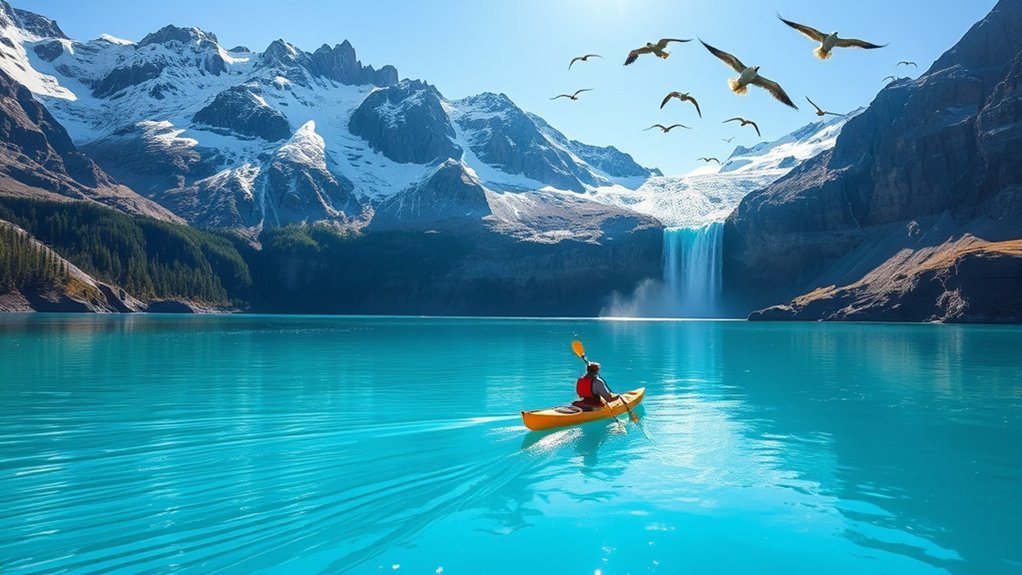
Kayaking in Alaska puts you at water level with glacier-carved fjords, forested islands, seabird colonies, sea otters, and some of the wildest coastline in North America. The best place to paddle depends on your experience: sheltered day trips near towns can suit first-timers with a guide, while remote destinations such as Kenai Fjords, upper Glacier Bay, and Tracy Arm demand stronger sea-kayaking skills, careful weather planning, and cold-water preparation.
Quick Answer
The best places to kayak in Alaska include Glacier Bay, Kenai Fjords, Prince William Sound, Resurrection Bay, Tracy Arm, Kodiak Island, and Sitka Sound. Beginners should favor guided trips in sheltered water, while experienced sea kayakers can explore more remote fjords after checking tides, marine weather, access rules, and cold-water safety requirements.
Key Takeaways
- Glacier Bay and Kenai Fjords deliver classic glacier scenery but require more planning than an ordinary recreational paddle.
- Resurrection Bay and selected sheltered routes are better starting points for visitors who want a guided half-day or day trip.
- Alaska’s coastal water stays cold, so wear a properly fitted life jacket and dress for immersion rather than only for the air temperature.
- Check tides, currents, marine weather, launch conditions, and return options before every trip.
- Stay well away from calving glaciers and wildlife. In Alaska, federal rules prohibit approaching a humpback whale within 100 yards.
How to Choose an Alaska Kayaking Destination
Start with your paddling experience rather than the scenery you want to photograph. A calm morning near town and a multiday crossing in a remote fjord may both be called “Alaska kayaking,” but they require very different skills.
- First-time or occasional paddlers: Choose an organized trip in protected water with a guide, stable kayak, safety briefing, and straightforward shore access.
- Intermediate paddlers: Look for longer coastal routes where you can practice navigation, wet exits, assisted rescues, and tide planning without committing to an isolated expedition.
- Experienced sea kayakers: Remote Glacier Bay, Kenai Fjords, Tracy Arm, and longer Prince William Sound routes can involve significant distances, cold water, rapidly changing weather, difficult landings, wildlife, and limited rescue options.
A guided trip is especially valuable if you are unfamiliar with Alaska’s tides, marine forecasts, glacier hazards, or cold-water rescue techniques. For independent travel, your group should be comfortable with capsize recovery, navigation, communication, and changing a route when conditions deteriorate.
Essential Safety Before Kayaking in Alaska
Warning: Alaska sea kayaking is cold-water boating. Wear a properly fitted U.S. Coast Guard-approved life jacket, dress for immersion, and do not assume calm-looking water is safe. Wind, tide, fog, rain, currents, calving ice, and distance from help can change the risk quickly.
Alaska requires a properly sized, serviceable U.S. Coast Guard-approved life jacket to be carried for each person aboard a boat. For paddlers, wearing it while underway is the practical choice. Review the Alaska Office of Boating Safety guidance before your trip, especially if you are new to cold-water paddling.
Carry equipment appropriate to the route, including a whistle or other effective sound-signaling device, waterproof communication, navigation tools, first-aid supplies, food and water, emergency layers, and dry storage for essentials. Remote trips may also justify a VHF marine radio and satellite communicator because cell coverage cannot be assumed.
Before launching, check the nearest NOAA tide and current predictions and the appropriate National Weather Service marine forecast. File a float plan with someone ashore that includes your route, group, expected return time, and what they should do if you are overdue.
Pro Tip: Plan around the conditions you are willing to paddle in, not the mileage you hope to complete. Build extra time into remote trips so a weather delay does not pressure you into launching in unsafe conditions.
Glacier and Wildlife Safety
Calving glaciers are powerful and unpredictable. In Kenai Fjords National Park, the National Park Service tells kayakers to remain at least one-half mile from the terminus of a tidewater glacier. Falling ice can create large waves even at that distance. The park also advises against landing on beaches within two miles of a tidewater glacier because calving waves can sweep far up the shore. Review the park’s kayak and boat safety guidance before paddling in glacial water.
Wildlife should be watched without pursuing it. NOAA Fisheries requires vessels, including kayaks, to stay at least 100 yards from humpback whales in Alaska. Give seals and sea lions plenty of room as well, especially animals resting on rocks or ice. If an animal changes direction, leaves, repeatedly looks toward you, or otherwise reacts to your presence, increase your distance.
Glacier Bay National Park
Glacier Bay National Park and Preserve is one of Alaska’s signature sea-kayaking landscapes, with glacier-cut waterways, mountains, islands, seabirds, sea otters, and opportunities to see whales from a responsible distance. Glacier Bay is also part of the international Kluane / Wrangell-St. Elias / Glacier Bay / Tatshenshini-Alsek UNESCO World Heritage property.
The experience varies greatly depending on where you launch. Bartlett Cove and the nearby Beardslee Islands offer a more approachable introduction, while deeper backcountry routes can become serious wilderness journeys involving tides, exposed crossings, camping, and limited access.
From May 1 through September 30, overnight backcountry users, including kayakers, must register for a free permit and complete the required backcountry orientation. Check the current Glacier Bay kayaking information before departure because wildlife closures, access procedures, and backcountry rules can change.
As you paddle, look for sea otters, seabirds, harbor seals, and distant whale activity while keeping required viewing distances. Glacier Bay rewards slow travel: sheltered coves, beaches, and changing ice-carved terrain often matter as much as reaching a particular glacier.
Kenai Fjords National Park
Kenai Fjords National Park combines deep fjords, steep coastal mountains, tidewater glaciers, rocky beaches, and rich marine habitat. Sea otters, harbor seals, sea lions, seabirds, and whales may all occur here, but wildlife sightings are never guaranteed.
This is not a place where every route should be treated as beginner-friendly. The National Park Service states that paddling in Kenai Fjords requires proper skills and preparation. Many remote areas are reached by water taxi or other boat transport from Seward, and changing weather can delay pickup or make a planned landing unsuitable.
Beginners who want the Kenai Fjords experience should choose a reputable guided itinerary matched to their ability. Experienced paddlers can consider areas such as Aialik Bay or other remote fjords after evaluating weather, tide, beach access, communication, camping, and glacier hazards.
Near tidewater glaciers, follow the National Park Service’s minimum half-mile stand-off guidance and avoid beaches within two miles of a tidewater glacier. Never paddle between floating ice and a glacier face simply to get a closer photograph.
Prince William Sound
Prince William Sound spreads a maze of islands, fjords, protected coves, glaciers, waterfalls, and forested shoreline across south-central Alaska. The Chugach National Forest highlights kayaking, boating, glacier viewing, and marine-life viewing among the recreation opportunities here.
The Sound can offer wonderfully sheltered paddling, but describing all of it as calm would be misleading. Wind funnels through passages, tides affect shore access, and longer crossings may expose paddlers to rougher water. Route selection matters.
Whittier and Valdez are common access points for guided excursions and boat-supported kayaking. A guided day trip can be a practical choice for visitors who want glacier scenery without the logistical burden of transporting boats and camping equipment into a remote fjord.
Watch for sea otters, harbor seals, sea lions, Dall’s porpoises, orcas, seabirds, and other marine life without changing course to chase an animal. Give yourself enough time to stop, wait, or turn around when weather or visibility changes.
Resurrection Bay
Resurrection Bay, beside Seward, is one of the most convenient places to combine Alaska kayaking with wildlife viewing and dramatic coastal scenery. Its coves and nearshore areas can provide a more approachable introduction than a remote multiday expedition, particularly when you paddle with a local guide.
Sea otters and harbor seals can appear throughout the bay, while Steller sea lions use haul-outs around the region. Humpback whales and killer whales may also occur farther out. Puffins, murres, kittiwakes, and other seabirds become especially interesting during the spring and summer breeding period.
| What You May See | Useful Timing Note |
|---|---|
| Sea otters and harbor seals | Possible through much of the year; sightings vary by conditions and location |
| Glacial scenery | Summer offers the broadest range of commercial access and longer daylight |
| Puffins and nesting seabirds | Best treated as a spring-and-summer breeding-season attraction rather than a year-round guarantee |
Guided tours can add wildlife interpretation, route planning, safety equipment, and local knowledge. If you are new to sea kayaking, confirm that the tour is designed for beginners and ask what clothing, footwear, immersion protection, and personal items you need to bring.
Tracy Arm Fjord
Tracy Arm lies within the remote Tracy Arm-Ford’s Terror Wilderness south of Juneau. Steep rock walls, waterfalls, floating ice, and tidewater glaciers make it one of Southeast Alaska’s most dramatic paddling environments.
This is wilderness travel rather than a casual city-front paddle. U.S. Forest Service field information for the area describes sea-kayak travel that can involve substantial daily mileage and arduous conditions. Weather, cold water, long distances, vessel traffic, ice, tides, and limited landing options all deserve serious attention.
Highlights can include:
- Glacier Views: See the glaciers at the head of Tracy Arm from a conservative distance rather than approaching an active calving face.
- Wildlife Spotting: Watch for seals, sea lions, whales, and seabirds while maintaining appropriate viewing distances.
- Scenic Coves: Explore quieter side areas when conditions and navigation allow.
- Photography Opportunities: Use a zoom lens or binoculars so photographs do not become a reason to approach glaciers or wildlife too closely.
For most visitors, a guided or boat-supported trip is the more practical way to experience this area. Independent paddlers should have remote sea-kayaking experience and a conservative backup plan.
Kodiak Island
Kodiak Island combines rugged coastline, bays, offshore islands, marine wildlife, and some of Alaska’s most famous brown-bear habitat. Conditions can range from protected coves to exposed ocean coastline, so choose routes based on weather, paddling skill, transportation, and shore access rather than distance alone.
Scenic Paddling Routes
Several areas are commonly considered by paddlers exploring Kodiak’s road-accessible and boat-accessible coastline:
- Pasagshak Bay: Paddle coastal water backed by open scenery and rugged shoreline, choosing your route according to wind and swell.
- Chiniak Bay: Explore beaches, rocky shoreline, and protected sections while watching for marine wildlife.
- Kizhuyak Bay: Offers quieter scenery and coves for paddlers prepared for more remote travel.
- Afognak Island: A more committing option involving remote channels and island coastline where transportation and emergency planning become especially important.
Wildlife Viewing Opportunities
Kodiak’s coastal waters support sea otters, harbor seals, sea lions, seabirds, and whales. Bald eagles are common around coastal habitat, and wildlife activity can change dramatically with season, tides, fish movement, and weather.
Kodiak brown bears also require attention whenever you land, hike, camp, cook, or store food. Do not assume that being on a beach or beside salt water keeps you away from bear habitat. The Kodiak National Wildlife Refuge provides current bear-safety information and resources, including guidance on food storage and bear-aware travel.
Note: If you see a bear from the water or shore, enjoy the sighting from a distance. Never land near a bear simply to get a better photograph, and avoid separating a bear from its travel route or food source.
Local Guided Tours
A local guided tour can simplify route selection, transportation, equipment, wildlife viewing, and weather decisions. Local guides can also explain how tides and wind affect particular bays.
Reasons to consider a guide include:
- Safety: A guide familiar with the area can select a route that matches the day’s conditions and your experience.
- Wildlife Viewing: Local knowledge can improve your chances of finding active wildlife areas without chasing animals.
- Local Context: Guides can explain Kodiak’s ecology, communities, and natural history.
- Equipment: Many commercial trips provide kayaks and core paddling equipment, but inclusions vary, so verify exactly what clothing and personal gear you must bring.
Sitka Sound
Sitka Sound offers island-dotted coastal paddling with mountain views, forested shorelines, marine wildlife, and relatively easy access from Sitka. Sheltered routes can work well for guided beginners, while longer crossings and exposed water require stronger sea-kayaking judgment.
Wildlife Viewing Opportunities
Wildlife is one of the main reasons to paddle around Sitka. Depending on season and location, you may encounter:
- Humpback Whales: Watch blows, backs, and flukes from the legally required distance of at least 100 yards.
- Sea Otters: Often seen floating, feeding, or resting in coastal habitat.
- Puffins and Other Seabirds: Summer breeding colonies around offshore islands can create excellent birding opportunities.
- Bald Eagles: Frequently seen flying over shoreline habitat or perched in coastal trees.
Wildlife activity is unpredictable, so treat every sighting as a bonus rather than something a tour or route can guarantee.
Scenic Kayaking Routes
Protected water close to Sitka can provide a gentle introduction to Southeast Alaska paddling, while routes toward more distant islands and open-water passages raise the difficulty. Kruzof Island, offshore coves, rocky shorelines, and beaches create many possible itineraries, but the safest route depends on weather, swell, tide, vessel traffic, and your group’s experience.
Before leaving protected water, know where you can land and how you will return if wind increases. Fog and low cloud can also make navigation harder than the distance on a map suggests.
Local Guided Tours
A guided Sitka trip can be a good choice when you want wildlife interpretation without managing navigation and equipment yourself. Depending on the operator and itinerary, a tour may provide:
- Local Guides: Knowledge of routes, tides, wildlife, history, and ecology.
- Wildlife Viewing: Opportunities to see sea otters, seals, seabirds, and whales while following responsible viewing practices.
- Scenic Stops: Rest breaks in protected areas when conditions allow.
- Kayaking Equipment: Kayak, paddle, and safety equipment are commonly included on commercial trips, but confirm the exact equipment list before booking.
Southeast Alaska Paddling Adventures
Southeast Alaska extends far beyond Sitka and Tracy Arm. The Inside Passage includes islands, protected channels, exposed crossings, rainforest coastline, glacial fjords, small communities, and remote wilderness. That variety is part of the appeal, but it also means there is no single difficulty rating for “Inside Passage kayaking.”
Some trips are short guided outings near a town. Others are multiday expeditions requiring strong navigation, cold-water rescue ability, tidal planning, camping skills, and reliable communication. Sea otters, bald eagles, seals, sea lions, whales, and seabirds may appear along the way, but paddlers should never alter course aggressively to pursue wildlife.
June through August is generally the easiest window for visitors to find commercial kayaking services, long daylight, and summer wildlife activity, though cold water and rapidly changing weather remain concerns throughout the season. Shoulder-season paddling can be rewarding for experienced groups but may bring shorter days, colder conditions, and fewer transportation or tour options.
Wherever you paddle, make a conservative plan, check conditions again immediately before launch, and be willing to shorten or cancel the trip when the water does not match your group’s skills.
Frequently Asked Questions
What Is the Best Time of Year for Kayaking in Alaska?
For most visitors, summer is the most practical season. June through August generally provides long daylight, the widest availability of guided tours and water transportation, and strong opportunities for marine-wildlife viewing. Late spring and early fall can also work, but expect colder conditions, shorter daylight, and fewer services. Always judge the actual marine forecast rather than the calendar alone.
Do I Need a Permit to Kayak in These Areas?
There is no single statewide recreational kayaking permit that covers every Alaska destination. Requirements depend on the land manager and your activity. For example, Glacier Bay requires overnight backcountry users, including kayakers, to obtain a free permit and complete an orientation from May 1 through September 30. Cabins, camping areas, wilderness zones, protected wildlife areas, and commercial operations may have separate requirements, so check the managing agency before departure.
What Safety Gear Should I Bring for Kayaking?
Wear a properly fitted U.S. Coast Guard-approved life jacket and dress for cold-water immersion. Depending on the route, carry a whistle or other sound signal, spray skirt, bilge pump, paddle float or other rescue equipment you know how to use, waterproof first-aid supplies, navigation tools, dry clothing, food, water, sun protection, and reliable communication. Remote groups should consider VHF and satellite communication rather than relying on a phone.
Are There Age Restrictions for Guided Kayaking Tours?
Age limits are set by individual tour operators and may vary by route, weather exposure, kayak type, and whether a child shares a tandem kayak with an adult. Do not assume there is a universal minimum age. Check the specific operator’s current age, height, weight, swimming, and adult-supervision requirements before booking.
Can I Kayak Without Prior Experience in Alaska?
Yes, but choose a beginner-oriented guided trip in sheltered water rather than attempting a remote glacial expedition independently. A good introductory tour should include paddling instruction, safety procedures, properly fitted equipment, and a route selected for the day’s conditions. Kenai Fjords and other wilderness areas contain routes that require substantially more experience.
How Close Can I Kayak to a Glacier?
Do not treat a calving glacier as something to approach closely. In Kenai Fjords National Park, kayakers are instructed to remain at least one-half mile from a tidewater-glacier terminus because falling ice can create large waves. Local rules and hazards differ, so follow the managing agency or guide’s instructions and increase your distance when conditions are uncertain.
How Close Can I Kayak to Whales and Other Marine Mammals?
In Alaska, federal regulations prohibit approaching humpback whales within 100 yards. Give other whales, seals, sea lions, sea otters, and marine wildlife generous space as well. Never chase an animal, block its travel path, surround it, or continue approaching after it reacts to your presence.
Sources
- National Park Service — Glacier Bay Kayaking — backcountry kayaking, permits, orientation, and trip planning.
- National Park Service — Kenai Fjords Kayak and Boat Safety — glacier stand-off distances, landing hazards, and paddling safety.
- NOAA Fisheries — Alaska Marine Mammal Viewing Guidelines and Regulations — whale, seal, and sea-lion viewing rules.
- Alaska Office of Boating Safety — life jackets, cold-water boating education, equipment, and paddling safety.
- NOAA Tides & Currents — official tide and current predictions for trip planning.
- U.S. Fish & Wildlife Service — Kodiak National Wildlife Refuge — Kodiak bear-safety information and visitor resources.