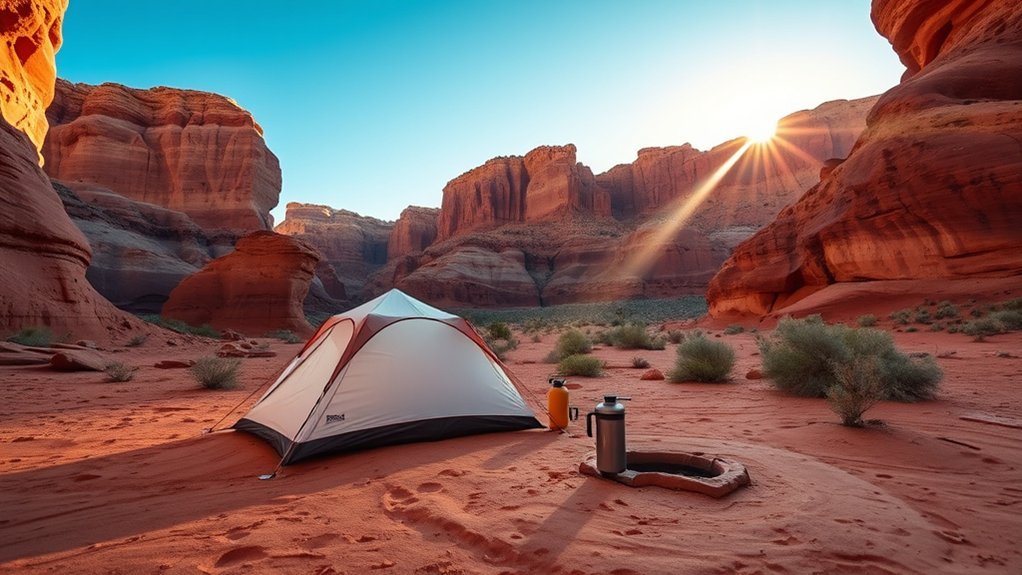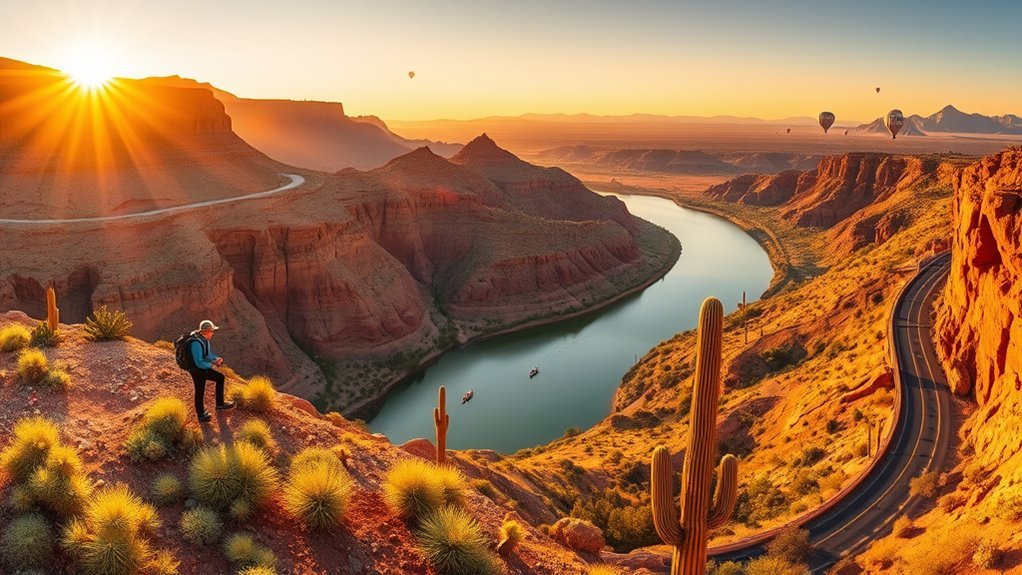
Arizona in December can feel like several seasons in one trip. You may spend the afternoon hiking under mild desert sun in Phoenix or Tucson, watch sunset turn Sedona’s red rocks orange, then drive north toward Flagstaff or the Grand Canyon and encounter freezing temperatures, snow, and icy roads. The key is choosing the right region for the winter experience you want and packing for Arizona’s large elevation changes.
Quick Answer
December is a good time to visit Arizona if you want mild desert hiking, holiday activities, stargazing, or winter recreation. Phoenix and Tucson are generally mild, while Flagstaff and the Grand Canyon can be snowy and freezing. Pack layers, check road conditions before driving north, and expect heavier demand around Christmas and New Year.
Key Takeaways
- Phoenix and Tucson are best if you want mild daytime weather, golf, desert hiking, and patios rather than a snowy vacation.
- Sedona combines red-rock scenery with cool days, freezing nights, occasional snow, hiking, and excellent dark-sky viewing.
- Flagstaff offers a true winter climate, with snow and skiing possible when mountain conditions cooperate.
- Grand Canyon South Rim remains open year-round, but winter snow, ice, temporary closures, and reduced services are possible.
- Grand Canyon North Rim roads close to vehicles from December 1 through May 14 under the normal winter closure.
- Check forecasts and road conditions immediately before travel. Arizona’s elevation changes can take you from mild desert weather to freezing mountain conditions in a few hours.
Is December a Good Time to Visit Arizona?
Yes, December can be one of Arizona’s most interesting months because you can choose between desert warmth and mountain winter. It is especially attractive if summer heat would normally keep you away from lower-elevation destinations such as Phoenix and Tucson.
December is also a good month for travelers who prefer cool-weather hiking, stargazing, golf, holiday events, scenic drives, or snow recreation. The main tradeoff is that you need to plan around shorter winter days and rapidly changing conditions in northern Arizona.
Christmas and New Year can also create a different travel pattern from early December. Popular resorts, cabins, ski areas, and Grand Canyon lodging may attract more visitors during the holiday period, so reserve important accommodations and activities in advance if your dates are not flexible.
December Weather by Region
Arizona’s December weather changes dramatically with elevation. Lower desert communities can have comfortable afternoons and chilly mornings, while northern Arizona may be below freezing with snow or ice.
| Region | December Feel | Best For | Main Concern |
|---|---|---|---|
| Phoenix / Scottsdale | Mild days and cool mornings and nights | Golf, desert hiking, resorts, patios | Large temperature change after sunset |
| Tucson | Generally mild afternoons with cold nights | Desert trails, cycling, sightseeing | Cold mornings and strong sun exposure |
| Sedona | Cool days, freezing nights possible, occasional snow | Red-rock hikes, photography, stargazing | Ice or snow on shaded trails and roads |
| Flagstaff | Cold mountain winter with snow possible | Skiing, snow play, winter scenery | Snowstorms, icy roads, freezing temperatures |
| Grand Canyon South Rim | Cold, with snow and ice possible | Winter canyon views, photography, rim walks | Icy trails, winter roads, possible temporary closures |
For perspective, the National Weather Service’s 1991–2020 normals for Tucson put the December average high at about 65.5°F and the average low at about 40.5°F. Around Christmas, Phoenix normally has a high near 65°F and a low near 44°F. Those are climate averages, not forecasts for your trip, so always check the actual forecast shortly before departure.
At the other extreme, the National Park Service says winter afternoon highs along the Grand Canyon rim average in the 40s, while nighttime lows are generally in the teens. Snow, icy roads, and icy trails are normal winter possibilities.
Arizona’s elevation matters as much as the calendar: the same December trip can include mild desert afternoons, freezing nights, and snow-covered mountain roads.
Best Places to Visit in Arizona in December
Phoenix and Scottsdale for Mild Winter Weather
Choose the Phoenix area if your priority is escaping severe winter weather. December is well suited to desert hiking, golf, botanical gardens, outdoor dining, and resort time. Early mornings can still feel cold, so carry a light jacket even when the afternoon forecast looks comfortable.
Tucson for Desert Trails and a Quieter Pace
Tucson combines generally mild daytime temperatures with access to desert scenery and mountain foothills. It works well for hiking, cycling, cultural attractions, and travelers who want a lower-desert base without spending the entire trip at a resort.
Sedona for Red Rocks and Winter Atmosphere
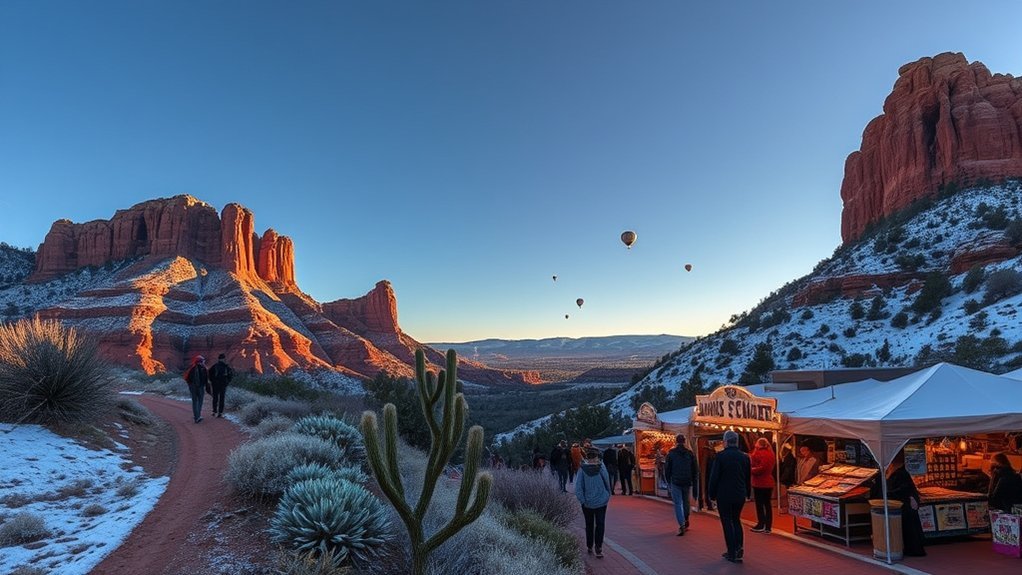
Sedona is cooler than Phoenix and Tucson. December can bring crisp hiking weather, dramatic light, cold nights, and occasional snow that briefly transforms the red-rock landscape. Shaded trails can remain icy after storms, so footwear and current trail conditions matter.
Flagstaff for Snow and Winter Recreation
Flagstaff is the better choice when you actively want winter. Snow can create opportunities for skiing, snow play, and snowy forest scenery. Ski operations still depend on weather, snowmaking, open terrain, wind, and daily mountain conditions, so check Arizona Snowbowl’s current conditions instead of assuming every December date will have the same skiing experience.
Grand Canyon South Rim for Winter Scenery
December can give the Grand Canyon a quieter, colder atmosphere, especially outside the holiday period. Snow along the rim can be beautiful, but it also changes the risk level of trails, sidewalks, parking areas, and access roads.
Outdoor Activities and Winter Recreation
Whether you’re looking for snow in the high country or desert trails beneath clear skies, December lets you combine very different outdoor experiences in one Arizona trip.
Near Flagstaff, you may be able to ski or snowboard at Arizona Snowbowl when the resort is operating and terrain is open. Snowshoeing and other snow activities may also be possible in northern Arizona, but conditions change quickly after storms.
Farther south, hiking in Phoenix, Scottsdale, Tucson, and Sedona can be much more comfortable than during the hottest months of the year. Carry water even in cool weather, use sun protection, and remember that temperatures drop quickly as the sun goes down.
At higher elevations, traction can become more important than warmth alone. Icy shaded sections may remain slippery even when exposed ground looks dry.
Warning: Do not treat a clear desert forecast as evidence that northern Arizona roads are also safe. Before driving toward Flagstaff, the Grand Canyon, or other high-elevation areas, check the weather and current road restrictions. Snow and ice can develop quickly during winter storms.
Visiting the Grand Canyon in December
The most important December distinction is between the South Rim and North Rim.
The South Rim is open year-round. Grand Canyon Village and Desert View remain accessible when roads and weather permit, although some facilities have reduced winter schedules. Snow and ice can temporarily affect roads, trails, viewpoints, and parking areas.
The North Rim is different. According to the National Park Service, North Rim roads are closed to all vehicles from December 1 through May 14 as part of the normal winter closure. Do not plan a December road trip to the North Rim as an alternative entrance to the South Rim.
If you hike below the South Rim, remember that conditions can change with elevation. Snow or ice near the trailhead does not mean every part of the trail has the same temperature, and a downhill hike still requires enough energy, daylight, food, water, and time for the climb back out.
Note: The National Park Service advises winter visitors to expect potentially slippery, snow-covered roads, limited visibility, and temporary road closures during storms. Check current park conditions shortly before you leave.
Holiday Events and Festivals
After a day on snowy slopes or sun-warmed desert trails, Arizona’s December evenings can include holiday lights, seasonal markets, concerts, tree lightings, and community events.
Phoenix, Scottsdale, Tucson, Sedona, Flagstaff, and other communities commonly schedule seasonal activities, but dates, admission rules, parking arrangements, and operating nights can change every year. Check the organizer’s current calendar before planning a trip around a particular event.
In Sedona, holiday lighting pairs well with the area’s dark skies. Official Sedona tourism information also highlights stargazing opportunities and night-sky experiences, making it possible to combine seasonal activities with astronomy on clear evenings.
Dress more warmly than the daytime forecast suggests. Desert temperatures can fall quickly after sunset, and Sedona or Flagstaff evenings can be freezing.
Where to Stay and Cozy Dining Spots
Choose your lodging based on the climate and activities you want rather than simply looking for the lowest room rate. A desert resort works well for pools, golf, and mild weather; a Sedona inn gives you fast access to red-rock scenery; and Flagstaff puts you closer to snow and mountain recreation.
Mountain lodges and cabins can feel especially inviting after a cold day, while Phoenix and Scottsdale resorts may have heated pools, outdoor fire pits, and easy access to restaurants. In cities, an urban hotel can reduce driving if dining and evening activities are priorities.
| Stay Type | Dining Vibe |
|---|---|
| Mountain lodge | Hearty, rustic |
| Desert resort | Fresh, inventive |
| Urban hotel | Intimate bistros |
| Boutique inn | Farm-to-table communal |
If you’re traveling during Christmas week or around New Year, reserve high-priority lodging earlier than you would for an ordinary early-December weekday. Holiday demand can be very different from the quieter parts of the month.
Packing List and Practical Travel Tips
Pack for Arizona’s contrasts rather than for one statewide temperature. Lightweight daytime clothing may be comfortable in the lower desert, while the same trip may require an insulated jacket, gloves, and winter footwear in northern Arizona.
Pack so you can add or remove layers as you move between desert sun, cold evenings, and high-elevation winter conditions.
- Bring breathable base layers. They make it easier to adjust between cold mornings and warmer afternoons.
- Pack sun protection. Bring sunscreen, sunglasses, and a hat even in December, especially for exposed desert trails.
- Carry a warm outer layer. An insulated jacket is especially important for Sedona, Flagstaff, and Grand Canyon nights.
- Add gloves and a warm hat for northern Arizona. Wind can make exposed overlooks feel much colder.
- Wear sturdy footwear. If your itinerary includes snowy or icy trails, consider appropriate traction for the conditions.
- Carry water. Cool weather can make thirst less noticeable, but Arizona’s dry climate and physical activity still increase hydration needs.
- Download offline maps. Cell coverage can be unreliable in remote areas and around some public lands.
- Keep a basic vehicle emergency kit. For mountain drives, add warm clothing, food, water, a flashlight, charger, ice scraper, and other winter essentials.
Pro Tip: Keep your cold-weather gear in the car instead of buried under luggage. A drive that starts in mild Phoenix sunshine can end in freezing temperatures near Flagstaff or the Grand Canyon.
Winter Driving in Arizona
Winter driving deserves its own plan if you will travel into northern or high-elevation Arizona.
The Arizona Department of Transportation advises drivers to prepare for snow and ice and notes that snow tires, chains, or studded tires may be recommended or required depending on road conditions.
Before leaving, check ADOT road restrictions and AZ 511 information for closures, delays, roadwork, and current highway conditions. Do this again on the morning of a mountain drive because winter conditions can change overnight.
If you rent a car, do not assume the company supplies tire chains or permits you to install them. Policies differ by company, location, vehicle, and rental agreement. Check the exact contract before pickup if your route may involve chain restrictions or significant snow.
During bad conditions, slow down, increase following distance, avoid abrupt braking and steering, and be prepared to delay or change the route rather than forcing the original itinerary.
Frequently Asked Questions
Is December a good time to visit Arizona?
Yes. December is especially useful if you want mild desert sightseeing in Phoenix or Tucson, cooler hiking weather in Sedona, or snow recreation near Flagstaff. The main challenge is packing and planning for very different climates across the state.
Does it snow in Arizona in December?
Yes, particularly in higher-elevation areas such as Flagstaff and the Grand Canyon rims. Snow is much less common in the lower deserts around Phoenix and Tucson. The amount varies considerably from year to year, so check current forecasts rather than assuming snow will be present.
Can you visit the Grand Canyon in December?
Yes, you can visit the South Rim in December, although snow, ice, reduced winter services, and temporary road closures are possible. The North Rim is not a normal December driving destination because North Rim roads close to vehicles from December 1 through May 14.
Are there guided stargazing tours in Arizona in December?
Yes. Areas such as Sedona offer night-sky and astronomy experiences, and December’s long nights can work well for stargazing when skies are clear. Tour schedules vary, so verify availability for your exact date. Bring warm clothing because temperatures can drop sharply after dark.
Can I see desert wildflowers during December visits?
Possibly, but do not count on a major wildflower display. Some winter flowers can appear in warm desert locations when rainfall and temperatures cooperate, but the Arizona-Sonora Desert Museum identifies the main spring flowering season in the Arizona Upland Sonoran Desert as beginning around mid-February, with peak displays generally later in spring.
Are national parks less crowded on weekdays in December?
Non-holiday weekdays can feel quieter than peak-season periods, but crowd levels are never guaranteed. Christmas and New Year travel can increase demand, and the National Park Service recommends reservations for some Grand Canyon services during the December holiday period.
Do rental car companies offer winter equipment like chains?
Policies vary, so do not assume chains, snow tires, or other winter equipment will be supplied or permitted. Check the exact rental company’s policy before pickup. If significant snow is forecast for your route, also review current ADOT road restrictions before driving into the high country.
Is it safe to hike solo in remote Arizona areas in December?
It depends on the route, weather, your experience, and current trail conditions. Winter can add ice, snow, short daylight, freezing temperatures, and weak cell coverage. If you hike alone, choose a route within your ability, tell someone your plan and return time, carry navigation and emergency supplies, and turn around if conditions deteriorate.
Conclusion
Arizona in December gives you a choice that few destinations can match: mild desert afternoons in Phoenix or Tucson, crisp red-rock scenery in Sedona, and genuine winter conditions around Flagstaff and the Grand Canyon.
The best trip comes from planning around elevation. Pack layers, keep winter gear available when driving north, check forecasts and road conditions, and remember that the Grand Canyon South Rim remains accessible while North Rim roads close to vehicles for winter. If snow conditions cooperate, you can even combine desert hiking with skiing during the same Arizona vacation.
Holiday lights, seasonal markets, stargazing, cozy lodging, and cool-weather outdoor activities add plenty to do after the summer heat has disappeared. Choose the region that matches the experience you want, then stay flexible enough to adjust when Arizona’s winter weather changes.
Sources
- National Park Service — Visiting Grand Canyon During Winter — winter access, road conditions, services, and holiday-period planning.
- National Park Service — North Rim Winter Access — North Rim vehicle closure dates.
- Arizona Department of Transportation — Know Snow and Ice — winter driving preparation, snow tires, and chains.
- National Weather Service Tucson — Monthly Climate Normals — December temperature and precipitation normals.
- Arizona-Sonora Desert Museum — Desert Wildflower Blooms — typical Sonoran Desert flowering season.
- Arizona Snowbowl — Weather, Conditions and Webcams — current ski-area and mountain conditions.