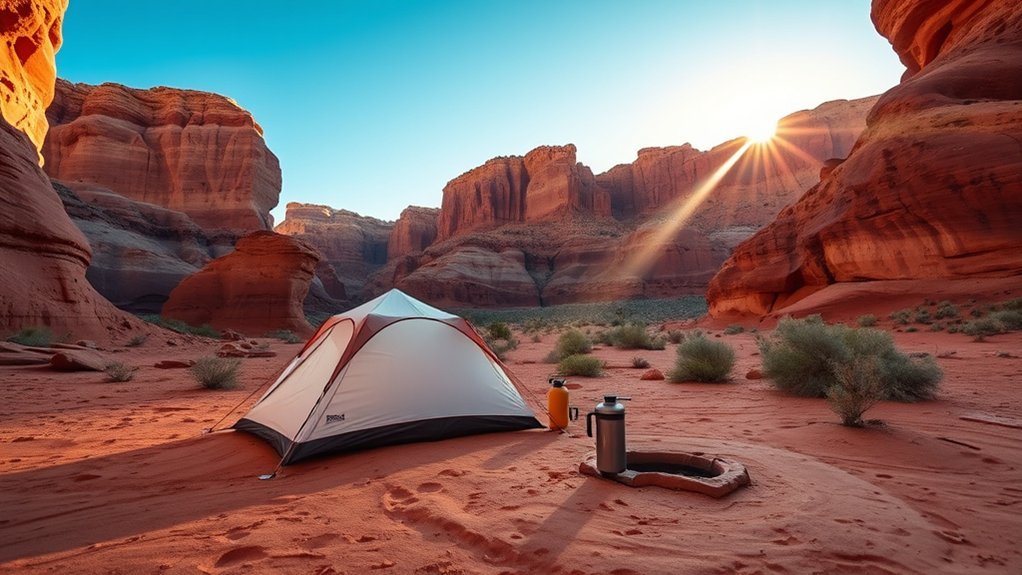
If you are planning to camp near Antelope Canyon, choose your overnight base before you reserve a canyon tour. You cannot camp inside Upper or Lower Antelope Canyon, but you can find primitive tent sites, beach camping, full-hookup RV parks, and boat-access campsites around Page, Lake Powell, and Lees Ferry.
Quick Answer
Camping is not allowed inside Upper or Lower Antelope Canyon. Visit with an authorized Navajo guide, then stay near Page at Beehives, Lone Rock Beach, Wahweap, a private RV park, or Lees Ferry. Fees, facilities, reservation rules, road conditions, and sanitation requirements differ, so compare the options before booking.
Key Takeaways
- No public camping is offered inside Antelope Canyon. Upper, Lower, and other Antelope Canyon locations require an authorized guided tour.
- Beehives is the closest basic NPS campground near Page. It costs $14 per night but has no water, no campfires, and a three-night limit.
- Lone Rock Beach is the main drive-on sand option. Camping costs $14 per vehicle per night, and the Glen Canyon entrance fee is separate.
- Lees Ferry is about 42 road miles from Page. Its upper campground loop is closed through September 30, 2026, while the lower loop remains open.
- Colorado River campsites are boat-access only. Campsite use is free, but each watercraft group needs a free Lees Ferry Backcountry River Permit.
Where Antelope Canyon Is and How to Get There
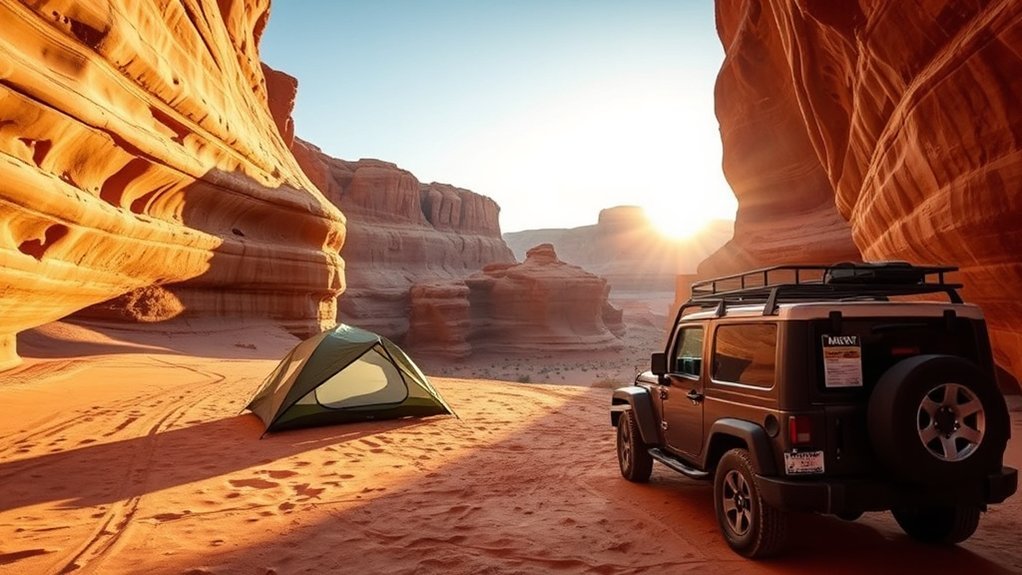
Antelope Canyon is part of the Lake Powell Navajo Tribal Park near Page, Arizona. The two best-known sections are Upper Antelope Canyon and Lower Antelope Canyon.
Upper Antelope Canyon has a wider, ground-level canyon floor, but current one-way tour routes may include soft sand, an outdoor hill, stairs, and ramps after you leave the slot canyon. Lower Antelope Canyon is narrower and includes several stairways and ladders.
All Antelope Canyon locations require a guide. Self-guided entry is not allowed. Reserve through an operator listed by Navajo Nation Parks and Recreation, and follow that operator’s check-in location, arrival time, mobility requirements, and prohibited-item rules.
Warning: Never enter a slot canyon when storms or flash floods are forecast nearby. Rain can create a dangerous flood even when the sky above your location appears clear. Authorized operators may delay or cancel tours when conditions are unsafe.
Can You Camp Inside Antelope Canyon?
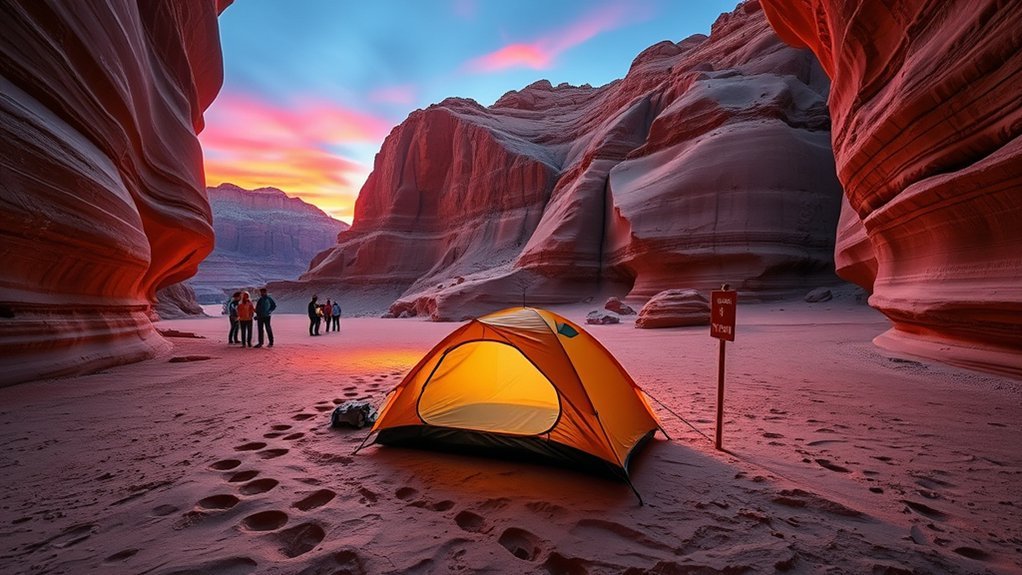
No. Upper and Lower Antelope Canyon are open to visitors through authorized guided tours, not as public overnight camping areas. A Navajo Nation backcountry permit for another approved location does not allow you to camp inside Upper or Lower Antelope Canyon.
Treat your canyon visit as a day activity and choose a legal campsite around Page, Glen Canyon National Recreation Area, or a developed private campground.
Nearby Overnight Options
- Closest simple tent or dry-camping option: Beehives Primitive Campground.
- Drive-on beach camping: Lone Rock Beach.
- Reservable tent and RV camping near Lake Powell: Wahweap RV and Campground.
- Full-hookup RV camping close to the canyon: Antelope Point RV Campground.
- Colorado River scenery and a quieter base: Lees Ferry Campground, about 42 miles from Page.
- Boat-access primitive camping: Five designated sites between Lees Ferry and Glen Canyon Dam.
Best Campgrounds Near Page, Arizona
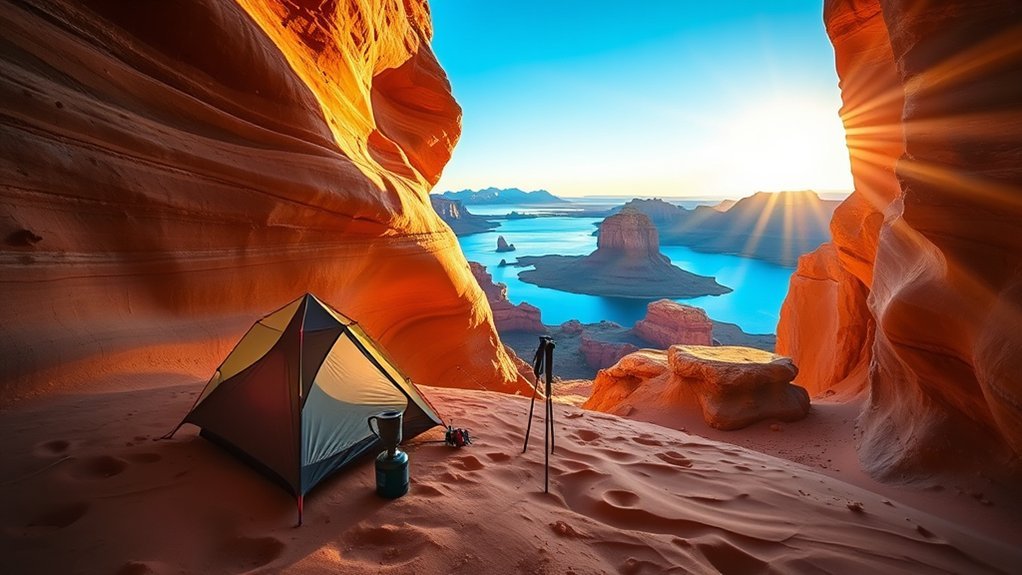
The best campground depends on your vehicle, desired facilities, and how close you want to be to Page. The fees below were checked on July 23, 2026, but campground conditions and private-property rates can change.
| Campground | Current Fee | Reservations | Facilities and Access | Best For |
|---|---|---|---|---|
| Beehives Primitive Campground | $14 per night | No; first-come, first-served | 21 sites, picnic tables, no water, no hookups, no dump station, no trash service, no campfires | Simple camping close to Page |
| Lone Rock Beach | $14 per vehicle per night, plus entrance fee | No | Undesignated sand and dune camping; seasonal toilets, water, cold showers, and dump station | Beach views and flexible site choice |
| Lees Ferry Campground | $26 per site per night | No; first-come, first-served | 54 total sites, no hookups, potable water, restrooms, seasonal dump station; upper loop closed through September 30, 2026 | Colorado River access and scenic stays |
| Wahweap RV and Campground | Rates vary by site and season; entrance fee applies | Yes | Tent, self-contained RV, and full-hookup sites; showers, laundry, restrooms, and campground store | Families and travelers wanting facilities |
| Antelope Point RV Campground | Rates vary | Yes | Full-hookup RV sites near Antelope Point Marina, about three miles from Antelope Canyon | RVs prioritizing proximity and hookups |
| Colorado River Primitive Sites | No campsite fee; entrance and vessel fees apply | No; first-come, first-served | Five designated boat-access sites with toilets and fire pits; free river permit required for watercraft | Experienced paddlers and small-vessel campers |
NPS Campgrounds Near Page
Beehives Primitive Campground is across the highway from the Wahweap South Entrance and is the most convenient basic NPS campground for Page-area sightseeing. It has 21 designated sites and does not accept reservations. You must choose an open site before paying.
- Camping fee: $14 per night.
- Maximum stay: three consecutive nights.
- No potable water, hookups, dump station, campfires, or trash collection.
- Pack in all water and pack out all garbage.
Lees Ferry Campground is about 42 road miles from Page, so it is better for travelers who want Colorado River access than for those seeking the shortest drive to an Antelope Canyon tour. It has no hookups but normally offers potable water, restrooms, grills, and a seasonal RV dump station.
2026 Status Note: The upper loop at Lees Ferry Campground is closed through September 30, 2026. The lower loop remains open, which reduces the available capacity. Check the current Glen Canyon alerts before driving there.
RV Parks and Full-Hookup Options
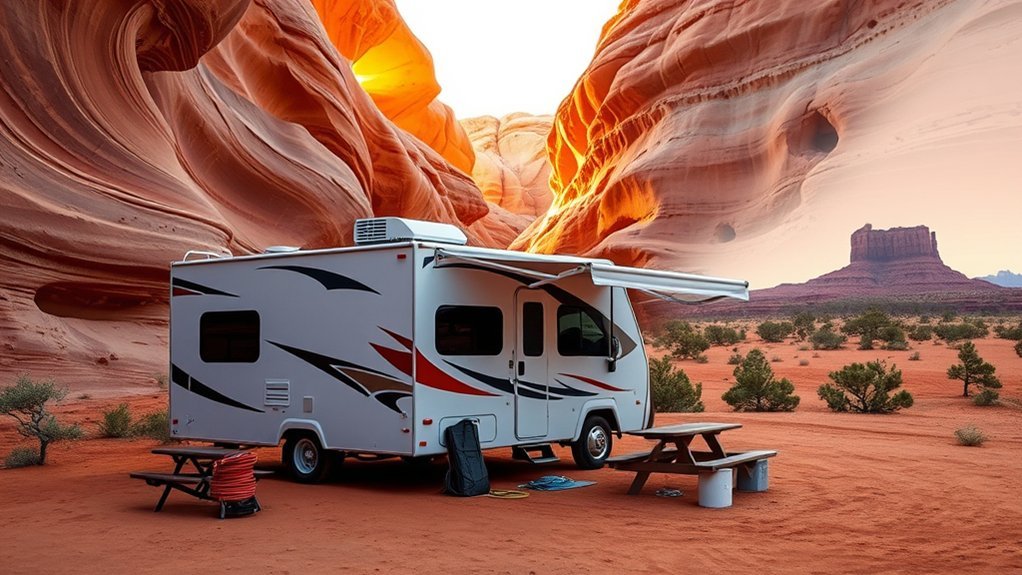
Developed RV campgrounds are the easiest choice when you want electricity, water, sewer service, showers, or a confirmed reservation.
- Wahweap RV and Campground: Offers full-hookup sites, tent sites, and sites for self-contained RVs. Amenities include restrooms, showers, laundry, picnic tables, fire rings or grills, Wi-Fi with variable connectivity, and a campground store.
- Antelope Point RV Campground: A reservable full-hookup RV option approximately three miles from Antelope Canyon, with access to Antelope Point Marina services.
- Roam Horseshoe Bend: A private Page-area option for travelers who prefer to stay closer to town, groceries, restaurants, and other Page attractions.
Pro Tip: Reserve the Antelope Canyon tour before booking a nonrefundable campsite. Tour operators use different offices and meeting points, so compare the actual check-in location with your campground rather than relying only on the words “near Antelope Canyon.”
Dispersed and Backcountry Camping in Glen Canyon
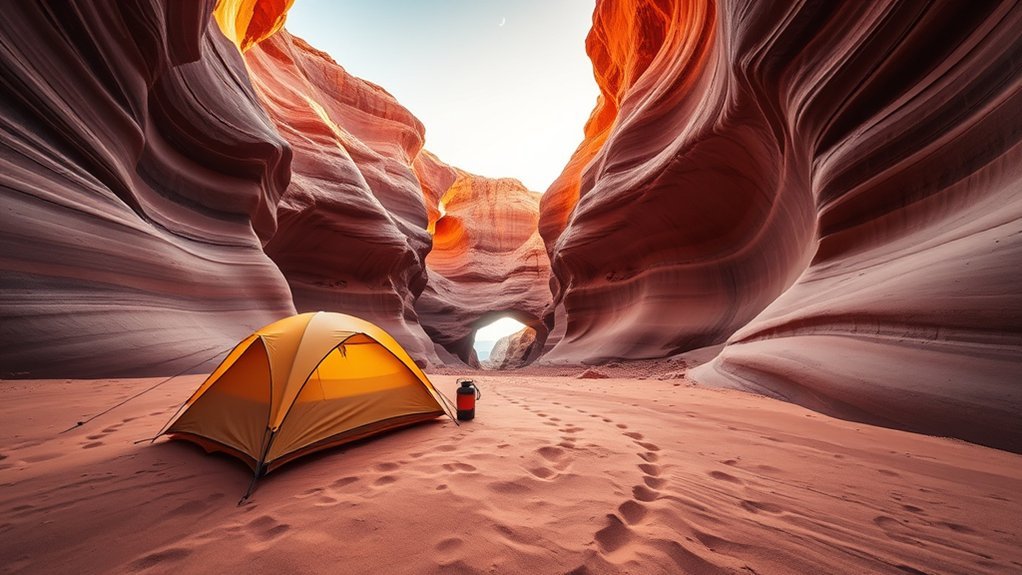
Glen Canyon allows land-based backcountry camping in many undeveloped areas, but it is not allowed near developed campgrounds, picnic areas, or trailheads. Backcountry travelers must be self-sufficient and should use an existing durable site instead of creating a new campsite on plants or fragile desert soil.
Review the current Glen Canyon camping regulations before leaving paved roads.
- General camping is limited to 14 consecutive days and 30 total days in the park during a calendar year.
- Individual designated campsites normally allow no more than eight people and two tents.
- Quiet hours are normally 10 p.m. to 6 a.m.
- Food, pet food, garbage, and scented supplies must be stored in containers that resist entry by wildlife.
- When camping at least 100 feet from Lake Powell outside a developed campground, groups should not exceed 12 people and three vehicles.
- Overnight trips in the Escalante District require a backcountry permit.
- Orange Cliffs backcountry camping requires a permit from Canyonlands National Park.
Human Waste Rules
Solid human waste must be carried out in a portable toilet or a specifically designed and approved bag-based waste system where packing it out is required. An ordinary plastic or paper bag is not an approved disposal system.
Packing out waste is required within one-quarter mile of Lake Powell and several major rivers, and wherever you cannot remain at least 300 feet from a water source.
Beach Camping on Lake Powell and Lone Rock
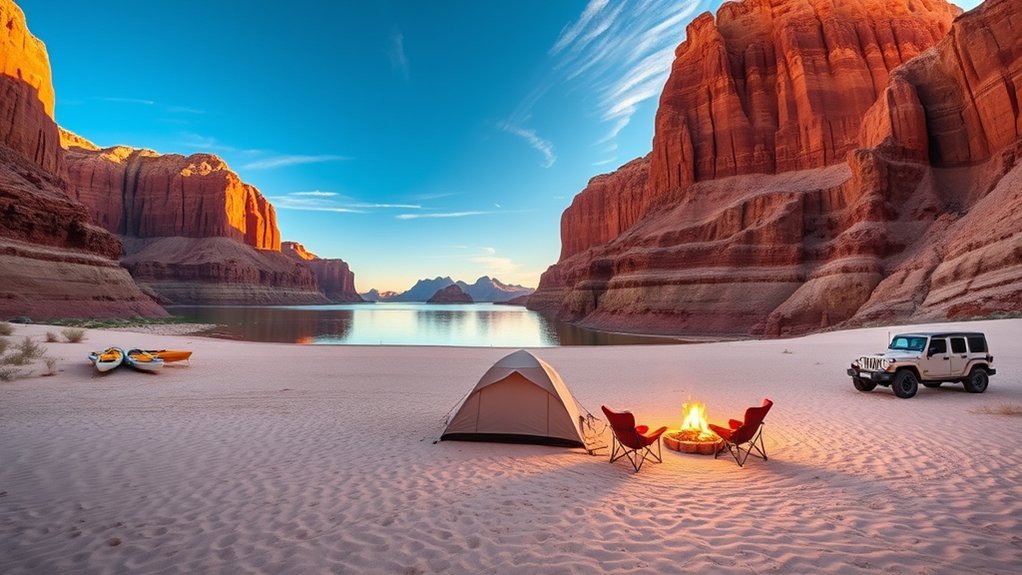
Lone Rock Beach is the best-known drive-on sand campground near Page. There are no marked individual campsites, so you choose an available area on the beach or in the dunes.
Lone Rock Beach Access and Facilities
Overnight camping costs $14 per vehicle per night in addition to the Glen Canyon entrance fee. Reservations are not accepted.
Seasonal amenities can include toilets, potable water, outdoor cold showers, trash collection, and an RV dump station. There is no boat-launch ramp at the campground.
Warning: Lone Rock has soft sand and exposed desert conditions. Walk questionable sand before driving onto it, avoid low areas when storms are possible, and do not drive farther than your vehicle or recovery equipment can safely handle. Summer monsoon storms can wash out access roads.
Lake Powell Beach-Camping Rules
Primitive camping is allowed on undeveloped Lake Powell shorelines except in developed marinas and other restricted areas. There is no separate shoreline-camping fee or camping permit, but park entrance and vessel-use fees still apply.
- Carry a portable toilet unless a toilet is available on your vessel or within 200 yards of the campsite.
- Do not bury human waste, pet waste, garbage, or food on a beach.
- Do not camp beneath overhanging rocks, where falling material or storm runoff can create a hazard.
- Anchor boats securely because sudden wind can push a vessel into rocks.
- Keep separate houseboats at least 100 feet apart to reduce carbon-monoxide buildup.
- Check current fire restrictions before starting any fire.
Primitive Campsites on the Colorado River
There are five designated primitive camping areas along the approximately 15-mile Colorado River corridor between Lees Ferry and Glen Canyon Dam. The campsites are marked with signs and are available on a first-come, first-served basis.
These are not roadside campsites. They can be reached only by small vessel, and each site requires a short walk uphill from the river. The sites have toilets and fire pits, but no regular trash collection or potable water.
There is no campsite fee. However, anyone using watercraft on this section of the Colorado River must obtain one free Lees Ferry Backcountry River Permit per group. The permit is available from the self-service kiosk near the Lees Ferry launch area and does not reserve a campsite.
- Wear a U.S. Coast Guard-approved life jacket while operating paddlecraft on this river section.
- Do not travel below the downstream cable at Lees Ferry unless you hold the required Grand Canyon river permit.
- Use the provided fireplace or a portable fire pan; ground fires are not allowed.
- Carry out all garbage and burned charcoal.
- Do not collect wood or disturb historic and archeological resources.
Permits, Fees, and Reservation Tips
Antelope Canyon Fees
Navajo Nation Parks and Recreation currently lists an entry fee of $15 per person, per location, per day. The authorized tour operator’s price is additional. In many cases, the permit fee is collected as part of the tour reservation, but you should review the operator’s checkout details.
Confirm the authorized operator and current Navajo Nation fee information before purchasing through a third-party seller.
Glen Canyon Entrance and Camping Fees
A standard Glen Canyon private-vehicle entrance pass costs $30 and is valid for seven consecutive days. The park does not accept cash. Campground fees, vessel fees, concessioner reservations, and Antelope Canyon tour charges are separate.
See the official Glen Canyon fees and passes page for current vehicle, motorcycle, individual, annual-pass, and vessel charges.
Reservation Tips
- Book popular Antelope Canyon tour times well in advance, especially for spring, summer, holidays, and weekends.
- Confirm the tour’s meeting address rather than assuming you will enter directly from the highway.
- Read the cancellation and bad-weather policy before paying.
- Beehives, Lees Ferry, and Lone Rock do not accept campsite reservations.
- Paying an NPS campground fee online does not reserve a first-come, first-served site.
- Keep a backup campground in mind when arriving on a weekend or holiday.
What to Pack for Camping Near Antelope Canyon
Camping Gear
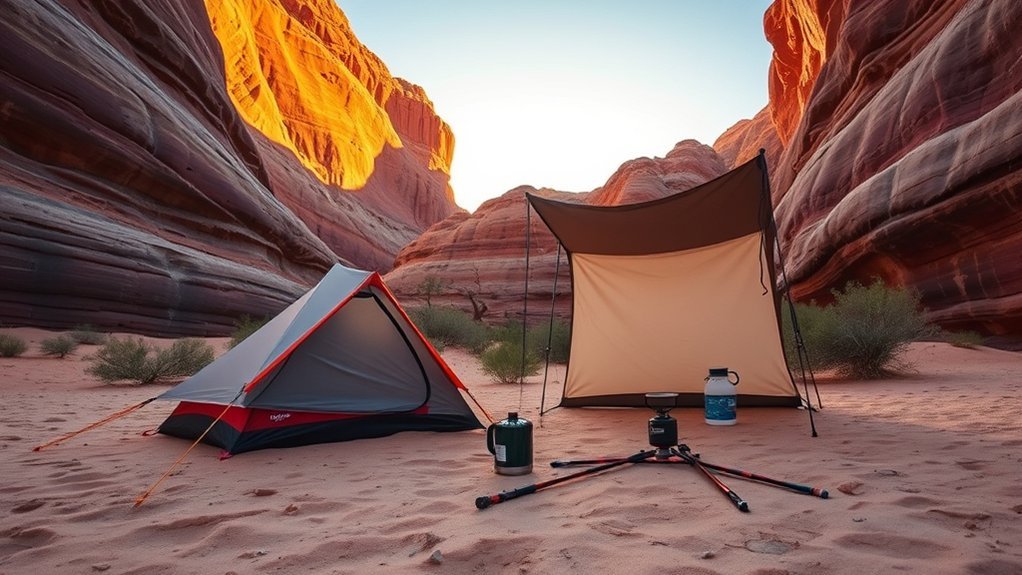
- More drinking water than you expect to use, especially at Beehives and backcountry sites.
- Sun hat, sunscreen, light-colored clothing, and shade shelter.
- Warm layers for cool desert nights and winter temperatures.
- Strong tent stakes or sand anchors for exposed and sandy campsites.
- Headlamp, first-aid kit, offline map, and charged power bank.
- Portable toilet or approved waste bags when required.
- Trash bags and containers that resist wildlife.
- Tire gauge, shovel, traction boards, or other suitable recovery equipment if driving onto sand or remote dirt roads.
Items for the Antelope Canyon Tour
Pack lightly and follow the exact rules in your confirmation email. Restrictions differ among authorized operators.
- A phone or handheld camera, if permitted.
- A water bottle when allowed by the operator.
- Closed-toe walking shoes with good grip.
- Weather-appropriate clothing that will not catch on narrow passages or stairs.
- Required medication in the form allowed by the operator.
Many standard tours prohibit backpacks, purses, fanny packs, hydration packs, tripods, monopods, selfie sticks, drones, GoPros, and professional camera equipment. For examples, review the current rules from your selected operator, such as Ken’s Tours or Antelope Canyon Tours.
Warning: Summer temperatures in Glen Canyon can reach about 110°F, and shade is limited. Carry water, avoid strenuous activity during the hottest hours, and move to higher ground immediately if storms or rising water threaten your campsite.
Leave No Trace and Local Regulations
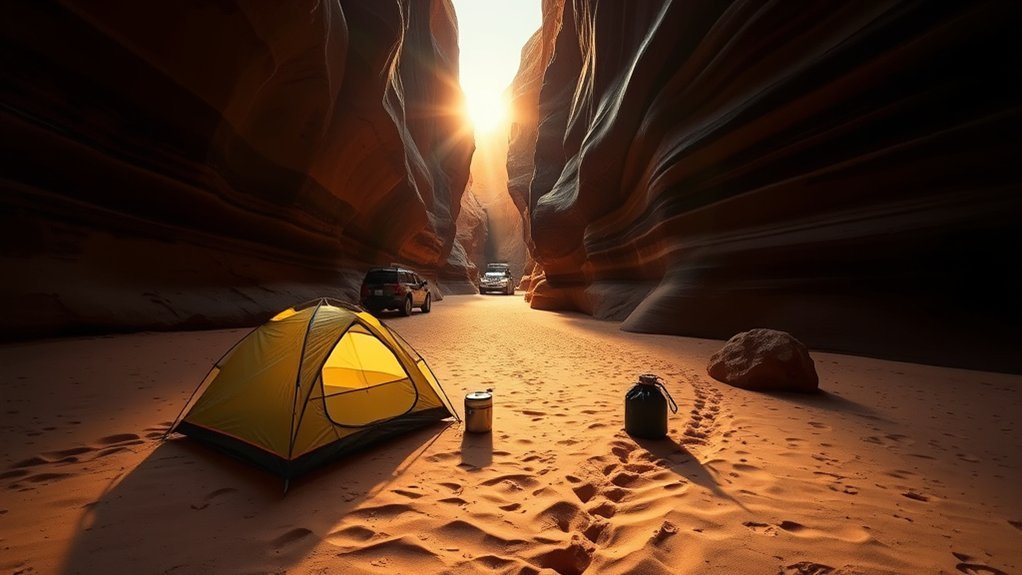
- Camp only in legal areas and use an established durable site when one is available.
- Do not camp on or disturb archeological sites.
- Pack out food scraps, trash, solid human waste where required, and pet waste.
- Do not carve, write on, touch unnecessarily, or remove sandstone, plants, fossils, or artifacts.
- Follow current fire restrictions. Fireworks are prohibited on federal public land.
- Respect Navajo Nation laws and cultural rules while traveling on tribal land.
- Keep pets under control where they are allowed. Dogs are prohibited at Navajo Tribal Park locations.
- Check the weather, road conditions, campground status, and Glen Canyon alerts immediately before departure.
Frequently Asked Questions
Can you camp inside Antelope Canyon?
No. Upper and Lower Antelope Canyon are guided-tour locations and do not offer public overnight camping. Stay at a legal campground around Page, Lake Powell, or Lees Ferry.
What is the closest campground to Antelope Canyon?
Antelope Point is one of the closest developed options for full-hookup RVs. For simple NPS tent or dry camping near Page, Beehives Primitive Campground is usually the most convenient choice.
Can you reserve Beehives, Lees Ferry, or Lone Rock?
No. These NPS camping areas do not accept reservations. Beehives and Lees Ferry have designated first-come, first-served sites, while Lone Rock has undesignated primitive camping areas on sand and dunes.
Do you need a permit for Lake Powell shoreline camping?
NPS does not require a separate camping permit or camping fee for undeveloped Lake Powell shoreline camping. Entrance and vessel fees still apply, and sanitation, fire, access, and restricted-area rules must be followed.
Do you need a permit for the Colorado River campsites?
The five designated upriver campsites have no campsite fee, but visitors using watercraft between Lees Ferry and Glen Canyon Dam must obtain one free Lees Ferry Backcountry River Permit per group.
How should you choose a backcountry campsite?
Use a previously disturbed, flat, durable surface. Avoid plants, cryptobiotic soil, drainage channels, archeological sites, overhanging rocks, developed recreation areas, and any location exposed to rising water or flash floods.
How can you avoid crowds at Antelope Canyon?
Choose a weekday, consider late fall or winter, and reserve an early or later tour when available. Crowd levels and light conditions vary, so prioritize a reputable authorized operator and a tour time that fits your itinerary.
What is the difference between campground and backcountry camping?
A developed campground has marked sites and may provide tables, toilets, water, trash service, or hookups. Backcountry camping is more remote and normally requires you to carry your own water, sanitation system, navigation tools, food storage, and emergency equipment.
Can you bring a backpack into Antelope Canyon?
Often, no. Many operators prohibit backpacks and other bags, although exact restrictions vary. Review the rules in your tour confirmation instead of assuming that an item allowed by one operator will be accepted by another.
Conclusion
You cannot camp inside Antelope Canyon, but several legal options are available nearby. Beehives works well for simple camping close to Page, Lone Rock offers primitive camping on sand, Wahweap and private RV parks provide reservable facilities, and Lees Ferry gives you a scenic Colorado River base farther from town.
Choose the campground that matches your vehicle and comfort needs, then check current fees, closures, weather, road conditions, and tour restrictions. Bring enough water, use an approved sanitation system where required, and remember that the five Colorado River campsites require boat access and a free river permit.
Sources
- Navajo Nation Parks and Recreation: Antelope Canyon Tour Operators — guided-tour requirement, entry fee, and authorized operators.
- National Park Service: Glen Canyon Camping — campground fees, site counts, shoreline camping, sanitation, stay limits, and backcountry rules.
- National Park Service: Glen Canyon Fees and Passes — current entrance-pass and payment information.
- National Park Service: Lees Ferry — campground status, river access, boat-only campsites, and free river-permit requirement.
- National Park Service: Lone Rock Beach — camping fee, facilities, reservations, and beach conditions.
- National Park Service: Glen Canyon Safety — extreme heat, wind, flash floods, fire, boating, and water-safety guidance.