Arizona in July can feel like several seasons in one state. Phoenix and Yuma face intense desert heat, Flagstaff and other high-elevation towns stay much cooler, and monsoon thunderstorms can change hiking, driving, lake, and event plans within minutes. A safe trip depends on choosing the right region, starting outdoor activities early, and keeping a flexible indoor backup plan.
Quick Answer
July is extremely hot in Arizona’s low desert, milder in the high country, and active with monsoon storms. Plan hikes and sightseeing near sunrise, spend the hottest hours indoors or near safe water, check alerts and road conditions daily, and never enter flooded roads, washes, or exposed areas during thunderstorms.
Key Takeaways
- Phoenix, Yuma, Lake Havasu City, and other low-desert areas often reach or exceed 100°F in July, with very warm nights.
- Flagstaff, Prescott, Payson, the Mogollon Rim, and other higher-elevation areas are usually more comfortable, but storms and lightning remain serious risks.
- Arizona’s official monsoon season runs from June 15 through September 30, though storm coverage varies greatly by day and location.
- Sunrise is usually the safest outdoor window. Midday and afternoon are better for museums, meals, pools, shaded stops, or travel that can be changed quickly.
- Check weather alerts, trail notices, fire restrictions, smoke forecasts, and AZ511 road conditions before each day’s drive or outdoor activity.
July Climate and Temperature Trends Across Arizona
Arizona’s July weather changes sharply with elevation. The low desert can remain dangerously hot from late morning through the evening, while mountain towns may feel mild during the day and cool after sunset. Do not use one statewide forecast for a multi-city trip.
The latest standard climate reference is the 1991–2020 climate normals from the National Weather Service. These are long-term averages, not a promise for your travel dates. Heat waves can push temperatures well above normal, and a monsoon storm can briefly cool one neighborhood while nearby areas stay dry.
| Area | Typical July High | Typical July Low | What It Means for Travelers |
|---|---|---|---|
| Phoenix | About 106.5°F | About 84.5°F | Plan short outdoor stops near sunrise. Nights may still be very warm. |
| Tucson | About 100.2°F | About 76.3°F | Expect strong heat plus a greater chance of monsoon humidity and storms. |
| Flagstaff | About 81.3°F | About 50.7°F | Bring a light layer and rain shell. Afternoon lightning can interrupt hikes. |
| Grand Canyon South Rim | Generally in the 80s | Cooler than the inner canyon | Rim weather can feel pleasant while temperatures near the river exceed 100°F. |
Phoenix averages a July high near 106.5°F and a low near 84.5°F. Tucson’s July normals are about 100.2°F and 76.3°F. Flagstaff, at roughly 7,000 feet, averages about 81.3°F and 50.7°F. These figures show why elevation is one of the best tools for planning a comfortable Arizona trip.
Note: Higher elevation does not remove every summer hazard. Mountain areas can have strong UV exposure, fast temperature changes, hail, lightning, and heavy rain even when the low desert stays dry.
July humidity often rises when monsoon moisture reaches central and southern Arizona. The air may still feel drier than many coastal climates, but added moisture can slow sweat evaporation and increase heat stress. In desert cities, move strenuous activity to the coolest hours and use air-conditioned museums, restaurants, shopping areas, hotel pools, or shaded spaces during the middle of the day.
Understanding the Monsoon: Storms, Lightning, and Flash Flood Risks
The North American monsoon is a seasonal wind and moisture pattern, not one individual thunderstorm. Arizona’s official monsoon season runs from June 15 through September 30. In northern Arizona, deeper monsoon moisture often becomes more common in early July, but timing and rainfall vary from year to year.
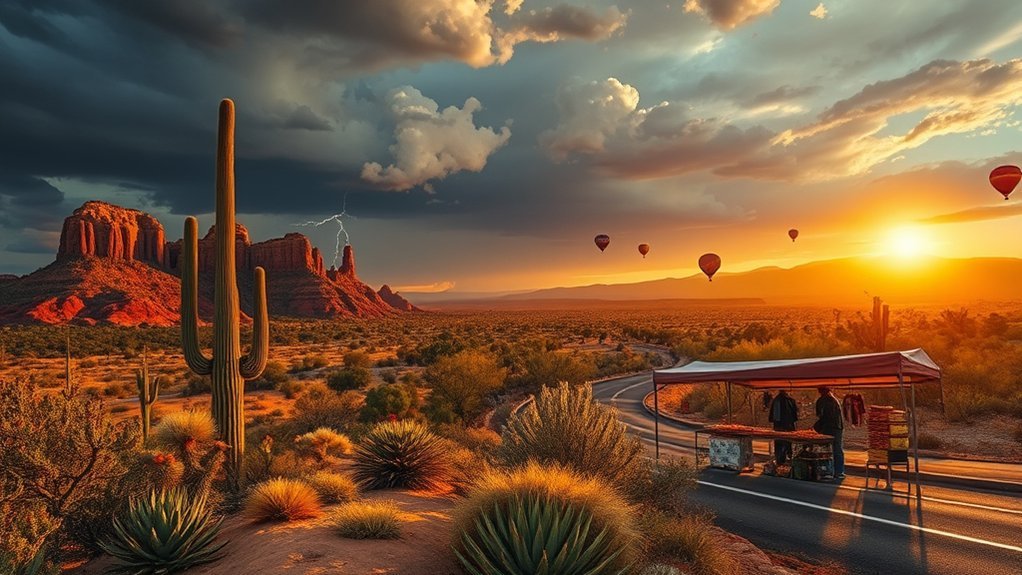
Storms often build over higher terrain and then move toward valleys. They may produce lightning, downpours, hail, strong outflow winds, blowing dust, and sudden temperature drops. A clear morning does not guarantee a safe afternoon hike, lake trip, canyon visit, or long drive.
Warning: Never enter a flooded road, flowing wash, slot canyon, storm drain, or low-water crossing. Rain can fall many miles away and send fast water into a dry-looking channel. Turn around and use another route.
Lightning is a serious threat before, during, and after the heaviest rain. If you hear thunder, move into a substantial building or a hard-topped vehicle. Avoid exposed ridges, open desert flats, isolated trees, cliff edges, fences, golf courses, pools, lakes, and small shelters. Wait at least 30 minutes after the last thunder before returning outdoors.
Use the National Weather Service monsoon safety guidance before outdoor plans. Check the forecast in the morning, review radar before leaving cell service, watch the sky, and know your nearest shelter or higher ground. Do not camp or park in a wash during monsoon season.
The safest July plan is flexible: start early, cool down midday, check alerts often, and treat thunder, dust, flowing washes, and flooded roads as reasons to stop or change plans.
Safety Tips for Heat, Sun Exposure, and Outdoor Activities
Arizona heat can become dangerous quickly. Drink water regularly, carry more than you expect to use, and do not rely on trailheads or roadside stops having water. For long or strenuous activity, balance fluids with meals or appropriate electrolyte replacement. People with fluid restrictions, kidney disease, heart disease, or medicines affected by heat should follow advice from their clinician.
The CDC recommends staying cool, staying hydrated, and knowing heat-illness symptoms. Wear loose, lightweight clothing, a wide-brim hat, UV-blocking sunglasses, and broad-spectrum SPF 30 or higher sunscreen. Reapply sunscreen according to the product label and after swimming or heavy sweating.
- Start near sunrise: Choose short, familiar, shaded routes and finish before the heat builds.
- Use a turnaround time: Turn back at the planned time even if you have not reached your goal.
- Rest in real cooling: Use air conditioning, deep shade, a cooled vehicle, or water-based cooling.
- Use a buddy system: Watch each other for confusion, poor coordination, weakness, or unusual behavior.
- Protect children and older adults: Shorten outdoor time and schedule more cooling breaks.
- Protect pets: Test pavement with your hand, carry water, avoid exposed trails, and never leave an animal in a parked vehicle.
- Share your plan: Tell someone your route, vehicle, trailhead, and expected return time.
Heat Exhaustion and Heat Stroke Warning Signs
Heat exhaustion may include heavy sweating, headache, dizziness, weakness, nausea, muscle cramps, or fainting. Stop activity, move to a cooler place, loosen clothing, apply cool wet cloths, and sip water if the person is awake and able to drink.
Warning: Confusion, loss of consciousness, seizures, very hot skin, or severe worsening symptoms may signal heat stroke. Call 911, move the person to a cooler place, and cool them rapidly with wet cloths, cold water, or ice packs while help is coming. Do not give fluids to an unconscious or confused person.
Pro Tip: Build a two- to four-hour cooling block into every low-desert day. Schedule lunch, a museum, a movie, shopping, a spa visit, or a hotel break before anyone starts feeling overheated.
A Safer Daily Rhythm for an Arizona July Trip
A simple day structure makes July travel easier:
- Before sunrise to about 9 a.m.: Hike, walk, photograph viewpoints, golf, paddle, or visit outdoor sites.
- Late morning through afternoon: Eat, rest, swim where supervised, visit indoor attractions, or drive only after checking storms and road conditions.
- Late afternoon and evening: Recheck radar and alerts before outdoor dining, concerts, markets, or sunset viewpoints. Do not assume cooler air means lightning or flooding risk has ended.
Exact safe times change with location, elevation, heat warnings, cloud cover, and your fitness. On an excessive heat day, even sunrise activity may be a poor choice in Phoenix, Tucson, Lake Havasu City, or the Grand Canyon’s inner canyon.
Best Places to Visit in Arizona in July
July can work well when you match each destination to its elevation, best time of day, and storm risks. Keep at least one indoor or flexible option for every outdoor plan.
Phoenix and Scottsdale
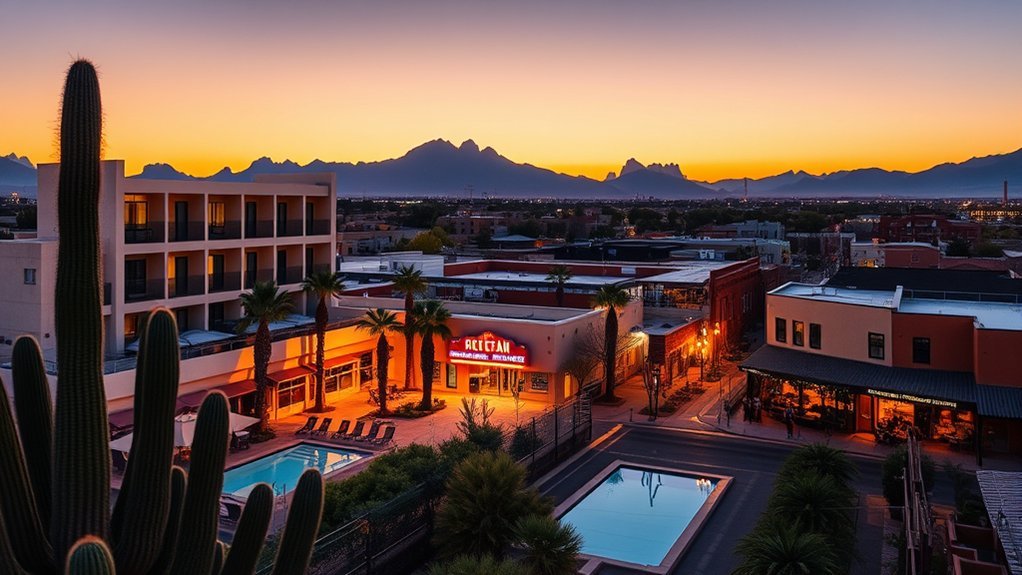
Phoenix and Scottsdale are best for resort pools, spas, restaurants, museums, indoor attractions, early morning desert walks, and evening entertainment. Avoid long midday hikes on exposed trails. Camelback Mountain, Piestewa Peak, South Mountain, and similar routes can become unsafe quickly, so start near sunrise and skip the hike during excessive heat or storm alerts.
Flagstaff and Northern Arizona
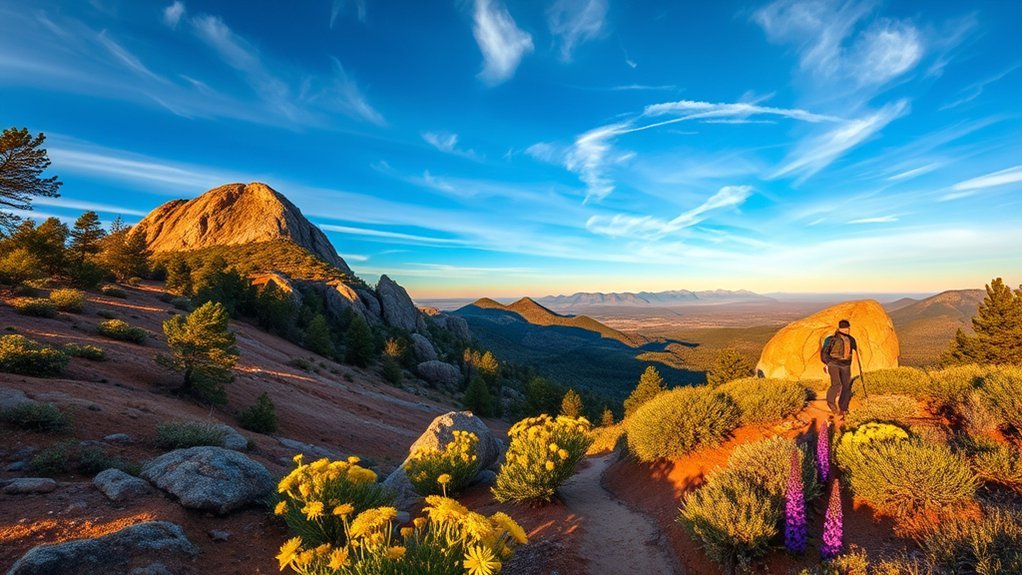
Flagstaff offers pine forests, a walkable historic center, scenic drives, breweries, and access to higher-elevation trails. Its cooler climate makes it one of the easiest July escapes from the desert. Bring a light layer and rain shell, begin trails early, and leave exposed terrain when clouds build or thunder is heard.
Grand Canyon
The Grand Canyon’s rim and inner canyon have very different climates. The South Rim may have highs in the 80s while the inner canyon exceeds 100°F. The National Park Service strongly discourages strenuous inner-canyon hiking from 10 a.m. to 4 p.m. in summer. Phantom Ranch has a normal July shade high around 104°F, and direct sun can feel much hotter.
For many July visitors, rim viewpoints, shuttle stops, short paved walks, ranger programs, and early morning rim trails are safer than ambitious below-rim hikes. Check current trail conditions and water availability. During thunderstorms, leave exposed overlooks and do not shelter under isolated trees.
Sedona
Sedona is cooler than Phoenix but still hot on exposed red-rock and slickrock trails. Plan sunrise hikes, shaded creek time, galleries, spas, and indoor lunch breaks. Never enter a narrow canyon or low-lying drainage when storms are possible, even if the storm appears distant.
Tucson and Southern Arizona
Tucson combines desert scenery, museums, mountain drives, and a strong food scene. Visit Saguaro National Park early, then move indoors for the hottest hours. Mount Lemmon can offer cooler air, but drivers should watch for cyclists, falling rock, heavy rain, lightning, and sudden road restrictions.
Prescott, Payson, and the Mogollon Rim
These higher-elevation areas can provide cooler forests, lakes, and mountain-town stops within driving distance of the low desert. They are popular during summer weekends, so reserve lodging and campsites early. Check for lightning, wildfire closures, muddy forest roads, and flash-flood risk before remote outings.
Wildfire, Smoke, Closures, and Road Conditions
July conditions can change because of wildfire activity, fire restrictions, smoke, storm damage, or road closures. Check these official tools before leaving:
- Arizona fire restrictions: Review the land manager and restriction stage for your exact destination. Rules can differ between federal, state, tribal, county, and city lands.
- Arizona air quality and wildfire smoke forecasts: Check smoke impacts, especially if anyone in your group has asthma, heart disease, or another condition affected by poor air quality.
- AZ511: Review crashes, closures, weather alerts, cameras, and road conditions before long drives.
- National Weather Service: Check local forecasts, HeatRisk, watches, warnings, and radar for each destination, not only your hotel city.
Note: Fire restrictions and closures can change during your trip. A legal campfire, trail, forest road, or fireworks event on one day may be restricted later. Recheck on the day you go.
Top Events and Festivals Happening in July
Arizona’s July calendar often includes Independence Day celebrations, concerts, art walks, night markets, cultural programs, baseball, indoor performances, and mountain-town festivals. Exact dates, venues, parking rules, and weather policies change each year, so confirm details through the organizer or city event page before traveling.
Fireworks and outdoor celebrations may be delayed, moved, or canceled because of lightning, strong wind, heat, wildfire danger, or fire restrictions. Choose refundable or flexible tickets when possible. For outdoor events, arrive with water, sun protection, a cooling towel, and a plan for reaching an indoor building or hard-topped vehicle.
Note: Check the event’s official update page on the day of attendance. Social media posts, old tourism calendars, and third-party ticket pages may not show a last-minute weather cancellation.
Ways to Stay Cool: Water Activities, Nightlife, and Indoor Options
Arizona in July works best when you move with the heat instead of fighting it. Start with sunrise paddleboarding, a supervised pool, or an early lake outing. Use the afternoon for museums, galleries, theaters, cafés, shopping, spas, or a long meal. Return outside only after checking current heat and storm conditions.
A successful July itinerary combines one early outdoor activity, one long cooling break, and one flexible evening plan.
- Use hotel pools, public pools, splash pads, or water parks with posted safety rules.
- Paddle, kayak, or boat early, wear a properly fitted life jacket when required, and return to shore at the first thunder.
- Choose evening concerts, rooftop venues, patios, or night markets only after checking heat and lightning alerts.
- Recharge in museums, galleries, theaters, indoor play spaces, restaurants, and coffee shops.
Possible water stops include Lake Pleasant, Tempe Town Lake, Saguaro Lake, Canyon Lake, Lake Havasu, and guided Verde River trips. Availability, launch rules, water quality, currents, and rentals vary. Check the managing agency or outfitter before arrival, never swim in closed areas, and leave the water immediately if thunder develops.
Indoor options are your July safety net. Phoenix, Scottsdale, Tucson, Mesa, Tempe, Flagstaff, and Sedona offer museums, galleries, shopping, restaurants, coffee shops, spas, and family attractions. Book or identify these stops before the trip so you are not searching for relief after someone becomes overheated.
What to Pack for Arizona in July
Packing for both extreme heat and sudden storms makes the trip safer and more comfortable.
- Water bottle or hydration pack: Carry enough for the activity plus delays.
- Electrolyte option and salty food: Useful during prolonged heavy sweating, but avoid forcing excessive fluid.
- Wide-brim hat: Offers more coverage than a baseball cap.
- Broad-spectrum SPF 30+ sunscreen: Reapply according to the label and after swimming or sweating.
- UV-blocking sunglasses: Helpful for desert glare and long drives.
- Breathable, quick-drying clothing: Light-colored long sleeves can protect skin better than bare arms.
- Light rain shell: Useful for monsoon rain and cooler high-country air.
- Closed-toe shoes: Better for hot pavement, rocky trails, and storm debris.
- Cooling towel or bandana: Small and useful during outdoor waits.
- Portable charger: Weather alerts, navigation, and rideshare apps can drain a phone quickly.
- Offline maps: Download routes before remote drives or hikes.
- Car emergency kit: Include extra water, snacks, flashlight, first aid, required medication, and basic tire tools.
Bring a light insulating layer for Flagstaff, the Grand Canyon rims, the White Mountains, and other high elevations. A hot desert forecast does not mean every stop will stay warm after sunset or a storm.
Driving and Rental Car Tips for July Heat
Before a long drive, check fuel, tire pressure, warning lights, coolant warnings, and air conditioning. In a rental car, test the AC before leaving the lot. Report weak cooling, warning lights, tire problems, or unusual noises immediately and request another vehicle when necessary.
Keep drinking water and essential medication inside the passenger cabin. Never leave children, pets, electronics, medication, aerosol cans, or other heat-sensitive items in a parked vehicle. Use covered parking when available, and handle steering wheels, buckles, and dark seats carefully after the car has been in direct sun.
What to Do in a Dust Storm
The safest choice is to avoid driving into blowing dust. Exit the highway before the dust reaches you when that can be done safely. If you are caught and cannot exit, follow the Arizona Department of Transportation’s Pull Aside, Stay Alive guidance:
- Check surrounding traffic and slow down.
- Pull completely off the paved roadway if it is safe. Do not stop in a travel lane or on the shoulder.
- Set the parking brake.
- Turn off headlights, taillights, brake lights, and emergency flashers.
- Take your foot off the brake.
- Keep seat belts fastened and wait in the vehicle until visibility improves.
During heavy rain, increase following distance and avoid low spots, flowing washes, and barricaded roads. Use main routes when storms are active, and tell someone your route and expected arrival time before remote travel.
Frequently Asked Questions
Can I visit the Grand Canyon safely during July monsoon season?
Yes, but stay flexible and respect the difference between rim and inner-canyon temperatures. Many visitors should focus on rim viewpoints, short walks, and early activities. Avoid exposed overlooks during lightning, check trail and water conditions, and do not plan strenuous below-rim hiking from 10 a.m. to 4 p.m.
When is Arizona’s monsoon season?
The official Arizona monsoon season runs from June 15 through September 30. Storm timing and rainfall vary greatly. Northern Arizona often sees deeper monsoon moisture become more common in early July, while some days remain mostly dry.
Are there wildflowers or special blooms in Arizona in July?
Monsoon rain can trigger grasses, flowers, and fresh growth in some desert and high-elevation areas, but blooms are not guaranteed. Timing depends on rainfall, elevation, soil, and recent temperatures. Enjoy blooms when you find them without leaving trails or entering washes.
Do hotels offer free pool access for non-guests?
Policies vary, but many hotel pools are limited to registered guests. Some resorts sell day passes, cabanas, spa packages, or limited pool access. Check the property’s current policy and reservation rules before traveling there.
How common are power outages during summer storms?
Outages can occur when wind, lightning, flooding, or falling branches damage equipment, but frequency varies by storm and location. Keep phones charged, carry a flashlight, save essential numbers offline, and ask your lodging provider about emergency procedures.
Are rental cars prepared for intense heat or AC failure?
Do not assume every vehicle is problem-free. Test the air conditioning before leaving the lot, look for warning lights, and inspect the tires. Contact the rental company and request help or a replacement if cooling is weak or the vehicle seems unreliable.
Is July a bad time to visit Arizona?
July is difficult for unprepared low-desert travel, but it can still be rewarding. Use early mornings, long cooling breaks, flexible reservations, and higher-elevation destinations. It is a poor time for ambitious midday desert hiking or rigid outdoor schedules.
What is the best time of day to hike in Arizona in July?
Near sunrise is usually the best window, especially in the low desert. Choose a short route and finish before heat builds. Skip the hike when excessive heat, lightning, flash flooding, smoke, or trail closures make conditions unsafe.
Where can I find cooler weather in Arizona during July?
Flagstaff, Prescott, Payson, the Mogollon Rim, the White Mountains, and the Grand Canyon rims are generally cooler than Phoenix, Yuma, and Lake Havasu City. Elevation helps, but always check storms, lightning, wildfire restrictions, and road conditions.
Should I book outdoor tours for the morning?
Yes, morning departures are usually better for July heat, but ask about cancellation and weather policies. A morning booking does not remove all risk, especially during an excessive heat warning or when storms begin earlier than expected.
Conclusion
Arizona in July brings extreme low-desert heat, cooler high-country escapes, and fast-changing monsoon weather. Carry water, protect your skin, start outdoor activities near sunrise, and make midday cooling part of the itinerary rather than an emergency response.
Check weather alerts, road conditions, fire restrictions, smoke forecasts, trail notices, and event updates every day. If thunder, dust, flowing washes, confusion, severe weakness, or dangerous heat appears, stop and change plans. With flexible timing and respect for the conditions, July can still offer lakes, mountain towns, museums, night events, red-rock scenery, and memorable summer skies.
Sources
- National Weather Service: 1991–2020 Climate Normals — supports Phoenix climate-normal context.
- National Weather Service Flagstaff: Northern Arizona Heat — supports Flagstaff July average temperatures and elevation differences.
- National Weather Service Tucson: Monthly Normals and Records — supports Tucson July average temperatures.
- National Weather Service: Monsoon Safety — supports lightning, dust, flash-flood, and wash safety guidance.
- CDC: About Heat and Your Health — supports heat prevention, hydration, cooling, and symptom guidance.
- National Park Service: Grand Canyon Hike Smart — supports inner-canyon temperature and summer hiking guidance.