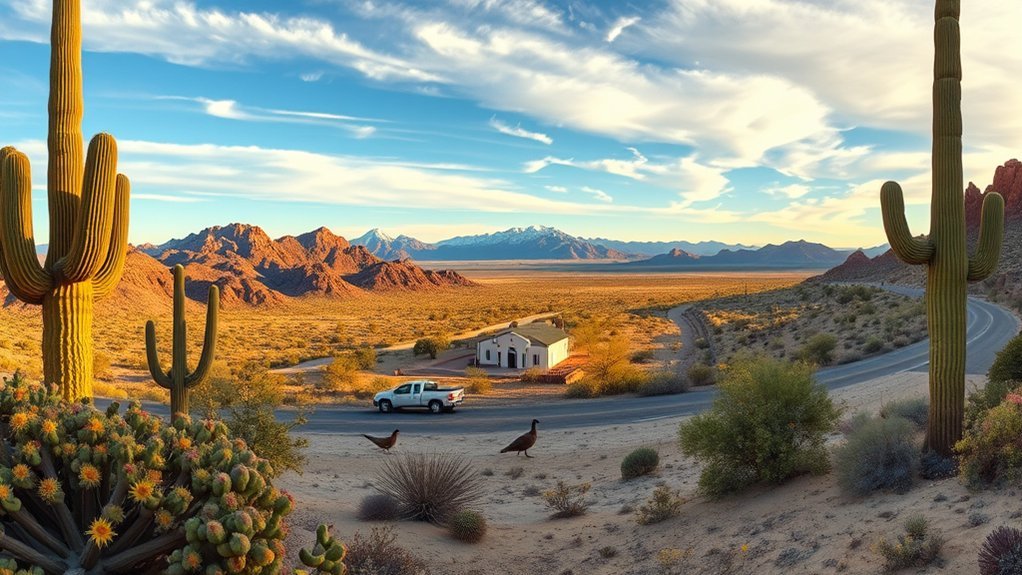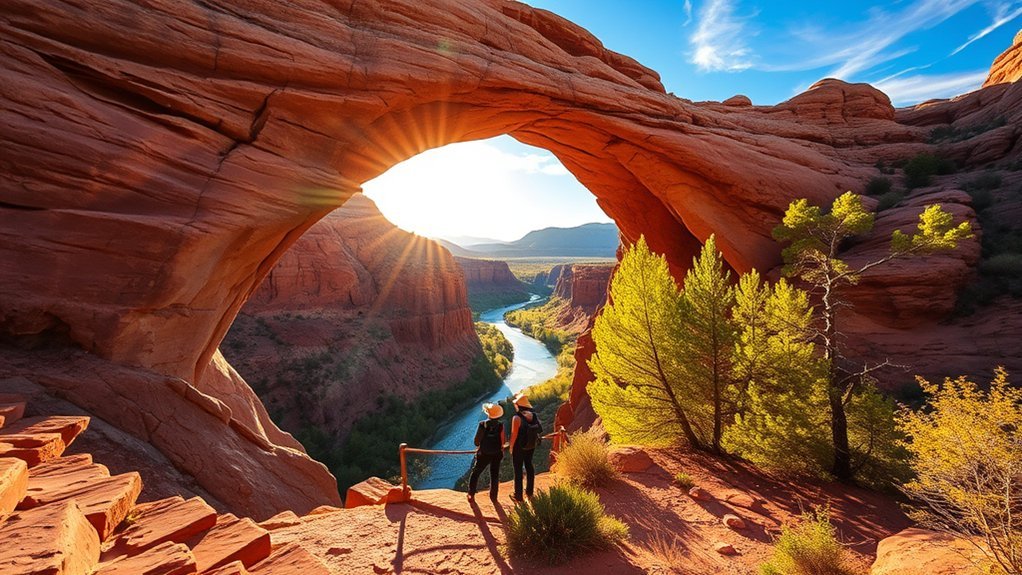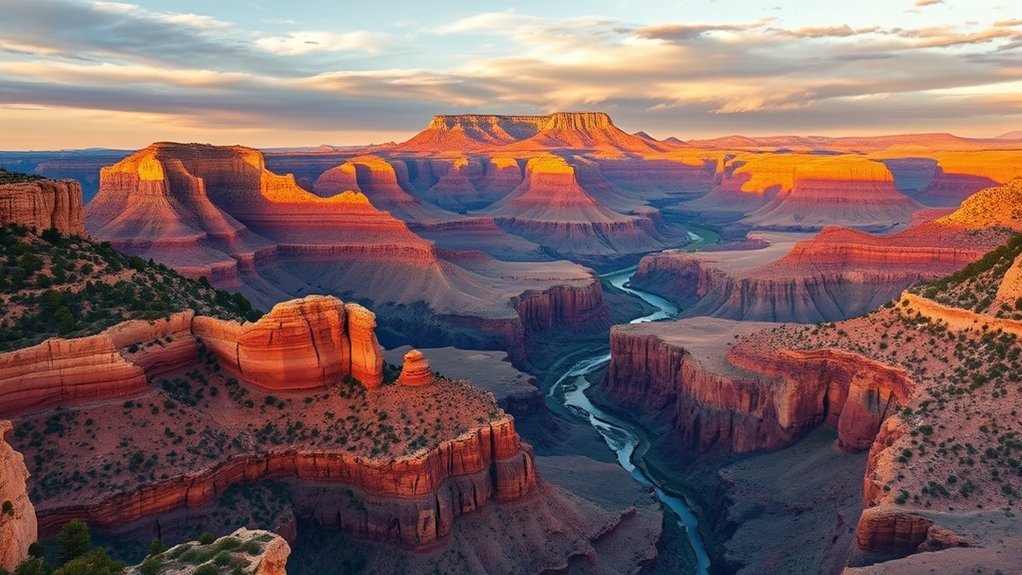
An eight-day Arizona road trip gives you enough time to combine desert city sights, Sedona’s red-rock country, two days at the Grand Canyon, Flagstaff’s mountain setting, and Prescott’s historic downtown without changing hotels every night. This route starts and ends in Phoenix, making it practical for travelers flying into Phoenix Sky Harbor International Airport and renting a car.
Quick Answer
For an 8-day Arizona road trip, spend two days in Phoenix, one day in Sedona, two days at the Grand Canyon, then loop through Flagstaff and Prescott before returning to Phoenix. A rental car is the simplest option. Plan hiking around heat, parking, trail conditions, seasonal closures, and your fitness level.
Key Takeaways
- The route is Phoenix → Sedona → Grand Canyon South Rim → Flagstaff → Prescott → Phoenix.
- Give the Grand Canyon two days so you can separate viewpoints from more demanding hiking.
- Arizona’s weather changes sharply with elevation, so Phoenix heat does not reflect conditions in Flagstaff or at the Grand Canyon.
- Check current road, trail, attraction, and shuttle information shortly before each travel day.
- For summer trips, move strenuous outdoor activities to early morning and avoid underestimating desert heat.
Before You Start: Route, Driving, and Reservations
This itinerary works best as a self-drive trip. In normal conditions, most transfers between overnight stops take roughly two hours or less, although traffic, construction, winter weather, monsoon storms, and park congestion can add substantial time. Before a driving day, check the Arizona Department of Transportation road-condition information.
- Nights 1–2: Phoenix
- Night 3: Sedona
- Nights 4–5: Grand Canyon South Rim or Tusayan
- Night 6: Flagstaff
- Night 7: Prescott
- Day 8: Return to Phoenix for your flight or final night
Book Grand Canyon lodging or camping well ahead when traveling during busy periods. Also check museum hours, trail closures, parking rules, and seasonal shuttle schedules because these can change after an itinerary is published.
Warning: Arizona heat can become dangerous quickly. Carry more water than you expect to need, protect yourself from the sun, avoid strenuous desert hiking during the hottest part of the day, and turn around before fatigue or heat symptoms become serious.
Day 1: Arriving in Phoenix
Your Arizona road trip starts in Phoenix. After collecting your rental car and checking in, keep the first day flexible rather than filling it with a long hike or cross-city schedule. Phoenix has a mix of contemporary art, Southwestern history, desert scenery, restaurants, murals, galleries, and neighborhoods that work well for an easy arrival day.
Spend part of the afternoon exploring downtown or Roosevelt Row if you are interested in galleries and street art. For dinner, look for Southwestern and Sonoran-influenced dishes, then finish with a sunset viewpoint if your arrival time and weather allow.
Phoenix sunsets can be memorable, but summer temperatures may remain very high until late evening. In hot weather, favor indoor attractions, shaded dining, or a short sunset stop instead of a strenuous afternoon trail.
Day 2: Exploring Phoenix
Start early at the Desert Botanical Garden, where trails introduce you to desert plants from Arizona and other arid regions. Hours can change seasonally and during periods of extreme heat, so confirm the day’s schedule before leaving your hotel.
Next, visit the Heard Museum to learn through exhibitions focused on American Indian art, history, and living cultures. The museum uses seasonal schedules, including different summer opening days, so check current hours before planning your visit.
For lunch, choose a local restaurant and try regional flavors such as tacos or other Sonoran and Southwestern dishes. Later, head to Papago Park for an easy scenic outing. Its sandstone formations and short trails make it a more flexible option than committing to a long desert hike.
If you still have energy in the evening, choose a rooftop bar, restaurant patio, or another city viewpoint. Keep the evening relaxed because Day 3 includes the drive to Sedona and optional hiking.
Day 3: Sedona’s Red Rocks
Drive north to Sedona and give yourself most of the day for its red-rock scenery. Popular trailheads can be busy, so an early start is useful. Sedona’s appeal comes from its unusual sandstone formations, hiking and mountain-biking network, scenic drives, arts scene, and wellness culture.
Iconic Red Rock Formations
Cathedral Rock, Bell Rock, Courthouse Butte, and the surrounding cliffs create some of Sedona’s most recognizable views. Their colors change noticeably as the angle of the sun shifts through the day, which makes early morning and late afternoon especially rewarding for photography.
Cathedral Rock is visually dramatic, but its upper route is steep and involves scrambling. If you prefer something easier, the Bell Rock Pathway provides views of Bell Rock and Courthouse Butte without requiring you to climb the steepest terrain.
Outdoor Activities and Adventures
Choose one main outdoor activity rather than trying to fit every famous trail into a single day. Cathedral Rock can suit experienced hikers comfortable with steep terrain, while sections of the Bell Rock Pathway offer a more moderate alternative. Sedona is also a major mountain-biking destination, and guided jeep tours are available for travelers who want to see rugged landscapes without a long hike.
If you want a quieter break near Oak Creek, choose a designated creekside recreation area or scenic walk rather than assuming conditions are suitable for paddleboarding. Water levels, access, currents, crowds, and seasonal conditions vary.
Pro Tip: Sedona operates free trailhead shuttles to several popular hiking areas. Regular trailhead routes generally run Thursday through Sunday year-round, with expanded service during selected busy periods. Check the official Sedona Shuttle schedule before driving to Cathedral Rock or other high-demand trailheads.
Spiritual Vortex Sites
Sedona is widely associated with sites that visitors and spiritual practitioners describe as “vortexes,” including areas around Cathedral Rock and Bell Rock. Some people visit them for meditation, yoga, reflection, or a sense of personal connection with the landscape.
These energy and healing ideas are spiritual beliefs rather than scientifically established medical effects. You can still enjoy the locations for their scenery, quiet atmosphere, and cultural significance to Sedona’s wellness community without treating the claims as proven health benefits.
Day 4: Grand Canyon National Park
Continue to Grand Canyon National Park’s South Rim. The scale of the canyon is difficult to appreciate until you reach the rim, where exposed rock layers record an immense span of geologic history. Some rocks in the inner gorge are nearly two billion years old, while the modern Colorado River and canyon-cutting process are much younger.
Use your first Grand Canyon day for orientation rather than immediately committing to a strenuous below-rim hike.
- Walk part of the Rim Trail for broad views with relatively easy access.
- Stop at the Grand Canyon Visitor Center or another staffed information point to check current conditions.
- Visit several viewpoints rather than spending the entire day at the first overlook.
- Attend a ranger program or guided activity if one fits your schedule.
- Plan either sunrise or sunset, but leave enough time to reach your viewpoint before the best light.
The canyon’s rock layers are far older than the canyon itself. The National Park Service explains that the Colorado River began carving the modern canyon roughly 5 to 6 million years ago, while basement rocks exposed deep in the canyon formed almost two billion years ago.
Day 5: More Grand Canyon Adventures
Use your second day to explore viewpoints you missed and, if conditions and your fitness allow, take a carefully planned hike below the rim. The extra day makes the Grand Canyon far more enjoyable because you do not have to rush viewpoints, hiking, photography, and visitor facilities into a few hours.
Scenic Viewpoints Exploration
Several South Rim viewpoints provide noticeably different perspectives:
- Mather Point: One of the most accessible classic viewpoints near the main visitor area.
- Yavapai Point and Yavapai Geology Museum: A useful stop for understanding the canyon’s geology while enjoying expansive views.
- Desert View Watchtower: Combines canyon scenery, views toward the Colorado River, architecture, and cultural interpretation.
- Lipan Point: Offers a broad perspective into the eastern canyon and the Colorado River corridor.
- Hopi Point: Known for wide east-and-west views, particularly around sunset.
Access to some South Rim viewpoints changes seasonally because sections of the park use shuttle buses and restrict private vehicles at certain times. Check the current park map and transportation information before setting out.
Hiking Trails Highlights
Bright Angel Trail and South Kaibab Trail both descend below the South Rim and provide increasingly dramatic views as you lose elevation. For a day hike, choose a conservative turnaround point based on your fitness, temperature, daylight, water availability, and trail conditions. Remember that the return is uphill and usually takes longer than the descent suggests.
Warning: The National Park Service does not recommend hiking from the rim to the Colorado River and back in one day. This is especially dangerous from May through September, when inner-canyon heat can become life-threatening. Review the official Grand Canyon day-hiking guidance before choosing a route.
2026 Note: Trail access is changing as infrastructure work continues. As of August 16, 2026, Bright Angel and South Kaibab are open, but the National Park Service has announced additional inner-canyon closures beginning October 15, 2026. Check the current hiking updates and closures immediately before your trip.
Day 6: Flagstaff and Surrounding Areas
Leave the Grand Canyon for Flagstaff, where pine forest and higher elevation create a very different environment from Phoenix. Temperatures can be dramatically cooler, even during summer, so keep a light layer in the car.
- Walk or hike in the Coconino National Forest, choosing a route suitable for the day’s weather and fire restrictions.
- Explore Flagstaff’s Route 66 history.
- Walk through the compact downtown area for shops, galleries, restaurants, and breweries.
- Visit the Lowell Observatory for astronomy exhibits and, when conditions cooperate, evening sky programs.
- Allow time simply to enjoy the cooler mountain setting before continuing south the next day.
Lowell Observatory currently operates into the evening on most open days, making it a natural way to finish a Flagstaff day. Hours and programs vary, so buy tickets or verify the schedule before arriving.
Day 7: Prescott’s Historical Charm
Continue to Prescott for a mix of Arizona history, downtown architecture, public spaces, and nearby granite scenery. Courthouse Plaza forms the center of the historic district, while Whiskey Row preserves an important part of the city’s Old West identity.
| Attraction | Why Visit | Planning Note |
|---|---|---|
| Sharlot Hall Museum | Arizona territorial history, historic buildings, and exhibits | Currently Tue–Sat 10 AM–5 PM May–Sep, Tue–Sat 10 AM–4 PM Oct–Apr, Sun noon–4 PM; closed Mondays. Verify before visiting. |
| Whiskey Row | Historic downtown block with restaurants, bars, shops, and Old West connections | Individual businesses set their own hours. |
| Yavapai County Courthouse Plaza | Historic downtown architecture and a central public gathering space | Enjoy the plaza independently of courthouse office hours. |
| Prescott Public Library | Local resources, events, reading space, and community information | Current hours vary by day, including later closing Tue–Thu and shorter Sunday hours. |
| Granite Dells | Distinctive granite formations, trails, lakes, and outdoor scenery | Choose a trail or viewpoint based on weather, daylight, and your available time. |
If history is your priority, begin with the Sharlot Hall Museum, then walk toward Courthouse Plaza and Whiskey Row. If you prefer outdoor scenery, reserve part of the afternoon for the Granite Dells area.
Day 8: Departure From Phoenix
Drive back to Phoenix with enough time for traffic, fuel, rental-car return, airport procedures, and any final activity. Rather than repeating everything from Days 1 and 2, choose one stop you missed earlier.
Use your final Phoenix hours as flexible time, not a rigid sightseeing schedule. Your flight departure should determine how much you attempt.
- Return to the Desert Botanical Garden if you skipped it earlier or want more time there.
- Have breakfast or coffee at a local café.
- Visit the Phoenix Art Museum if you prefer an indoor final stop.
- Take a short walk at Papago Park if temperatures and departure time allow.
- Enjoy an unhurried meal before heading to the airport.
Leave a generous buffer before your flight. Phoenix traffic, rental-car returns, and airport security can take longer than expected, particularly during busy travel periods.
Best Time to Take This Arizona Road Trip
Spring and fall are often the easiest seasons for combining Phoenix, Sedona, the Grand Canyon, Flagstaff, and Prescott because temperatures are generally more comfortable for outdoor sightseeing. However, no single Arizona temperature describes the whole route.
Phoenix is a low-desert city and can experience extreme summer heat. Flagstaff and the Grand Canyon South Rim sit much higher and are usually much cooler. Winter can bring snow, ice, and difficult road or trail conditions to northern Arizona even when Phoenix weather is mild.
If you travel during summer, schedule Phoenix and Sedona hikes near sunrise and keep afternoons flexible for indoor attractions. During winter, carry warm layers and check road conditions before driving between high-elevation destinations.
What to Pack and Book
- Reusable water bottles or hydration system: Carry enough water for every outdoor activity and keep extra in the vehicle.
- Sun protection: Bring sunscreen, sunglasses, a brimmed hat, and lightweight protective clothing.
- Layers: Temperatures can differ sharply between Phoenix and northern Arizona.
- Supportive footwear: Use shoes appropriate for rocky desert and canyon trails.
- Offline directions: Download maps in case mobile service becomes unreliable.
- Advance lodging: Reserve Grand Canyon and Sedona stays early during popular travel periods.
- Attraction tickets: Check Lowell Observatory, museums, tours, and other timed attractions before arrival.
- Current-condition checks: Review ADOT roads, National Park Service trail alerts, and Sedona shuttle information shortly before each relevant day.
Sources
- National Park Service: Grand Canyon Day Hiking — hiking difficulty and heat-safety guidance.
- National Park Service: Grand Canyon Critical Hiking Updates — current trail conditions and closures.
- City of Sedona: Trailhead Shuttles — shuttle routes, schedules, and trailhead access.
- Heard Museum: Plan Your Visit — current visitor information and seasonal hours.
- Lowell Observatory: Plan Your Visit — current hours, admission, and visitor information.
- Sharlot Hall Museum: Hours & Admission — current seasonal operating hours.
Frequently Asked Questions
What is the best time to visit Arizona?
For this Phoenix-to-Grand-Canyon route, spring and fall usually provide the easiest balance of temperatures. Summer brings extreme heat to Phoenix and other low-desert areas, while winter can bring snow and ice to Flagstaff and the Grand Canyon South Rim.
Are there health precautions for hiking in Arizona?
Yes. Hydrate before and during your hike, protect yourself from the sun, avoid the hottest part of the day, wear suitable footwear, watch weather forecasts, and choose routes appropriate for your fitness. At the Grand Canyon, remember that descending is easier than climbing back to the rim.
What is the average temperature in Arizona during summer?
There is no useful single statewide summer temperature because elevation changes conditions dramatically. Phoenix often has summer daytime highs above 100°F, while Flagstaff’s July average high is around the low 80s°F and Grand Canyon South Rim summer highs are generally in the 80s°F. Always check the forecast for each stop.
Do I need a permit for camping in national parks?
It depends on where and how you camp. At Grand Canyon National Park, developed campgrounds use their own reservation or availability systems, while a backcountry permit is required for overnight hiking and certain camping outside developed campgrounds. Check the official permit and reservation page for your exact plan.
What is the best way to get around Arizona on this itinerary?
A rental car is the most practical choice for this route because the destinations are spread across the state. Sedona and Grand Canyon also use local shuttle systems for certain busy trailheads and park areas, so you will not always need to drive once you reach a destination.
How much driving is involved in this eight-day Arizona road trip?
Most destination-to-destination transfers are manageable half-day or shorter drives, but actual times change with traffic, construction, storms, snow, park congestion, and scenic stops. Avoid planning tightly timed attractions immediately after a long transfer.
Do I need the Sedona Shuttle for Cathedral Rock?
Often, yes. Cathedral Rock trailhead parking is restricted when the Sedona Shuttle is operating. Check the current shuttle schedule and parking rules before your hiking day rather than assuming you can park directly at the trailhead.
Conclusion
This eight-day Arizona road trip packs a surprising range of landscapes into one loop. You begin among Phoenix’s desert scenery and museums, move into Sedona’s red-rock country, spend two days exploring the Grand Canyon, cool down among Flagstaff’s pines, and finish with Prescott’s historic character before returning to Phoenix. Give yourself flexible travel time, respect the heat and elevation, and check current trail and road conditions so the itinerary stays enjoyable rather than rushed.