A three-day Arizona trip can give you a memorable first look at the Grand Canyon South Rim, Sedona, and Phoenix, but the route works best when you plan around driving time, heat, parking, and opening hours. This itinerary keeps the original north-to-south order: Grand Canyon on Day 1, Sedona on Day 2, and Phoenix on Day 3.
Quick Answer
For a three-day Arizona itinerary, spend Day 1 at the Grand Canyon South Rim, drive to Sedona for Day 2, then continue to Phoenix for Day 3. Allow about two hours between the South Rim and Sedona and roughly 90 minutes to two hours from Sedona to Phoenix, depending on traffic and your exact route.
Key Takeaways
- Use the Grand Canyon South Rim for this route; it is the practical rim for travel to and from Sedona and Phoenix.
- This itinerary works best if you are already near the South Rim at the start of Day 1 and stay overnight in Sedona after leaving the canyon.
- Start outdoor activities early, especially in warm months, and avoid ambitious below-rim Grand Canyon hikes during peak heat.
- Use Sedona’s trailhead shuttle when it is operating and check whether your parking area requires a Red Rock Pass.
- On your Phoenix day, choose one major museum plus one outdoor attraction instead of trying to see everything.
At a Glance
| Time Required | 3 full days, ideally with arrival near the Grand Canyon the previous evening |
| Difficulty | Moderate; most sightseeing is easy, but optional hikes can be strenuous |
| Tools Needed | Car or arranged transfers, offline maps, refillable water bottles, sun protection, sturdy walking shoes |
| Cost | Variable. Grand Canyon standard private-vehicle admission is $35 for seven days; additional 2026 nonresident fees may apply. Lodging, food, museums, tours, and some Sedona parking areas cost extra. |
Before You Go: Route and Overnight Plan
This itinerary assumes that you begin Day 1 at or near the Grand Canyon South Rim. That gives you a useful sightseeing day instead of spending the morning driving from Phoenix. The National Park Service lists Sedona at about 119 miles from the South Rim. Phoenix is about 231 miles from the South Rim, so driving from Phoenix to the canyon and trying to complete a full canyon day immediately afterward would make this three-day schedule much more tiring.
A practical overnight pattern is:
- Night before Day 1: Grand Canyon Village, Tusayan, Williams, or another South Rim-area base.
- Night after Day 1: Sedona.
- Night after Day 2: Phoenix or Scottsdale.
Note: If you are flying into and out of Phoenix, you can reverse the trip: Phoenix to Sedona to the Grand Canyon. Just leave enough time for the long return drive to Phoenix if your flight departs immediately after the canyon portion.
Day 1: Exploring the Grand Canyon South Rim
Start at the South Rim, which is open year-round and provides the easiest combination of viewpoints, visitor services, trails, historic buildings, and shuttle transportation for a short Arizona road trip. Rather than trying to hike deep into the canyon, spend this day seeing several perspectives from the rim and taking one short walk that fits your fitness level.
Morning: Mather Point and the Rim Trail
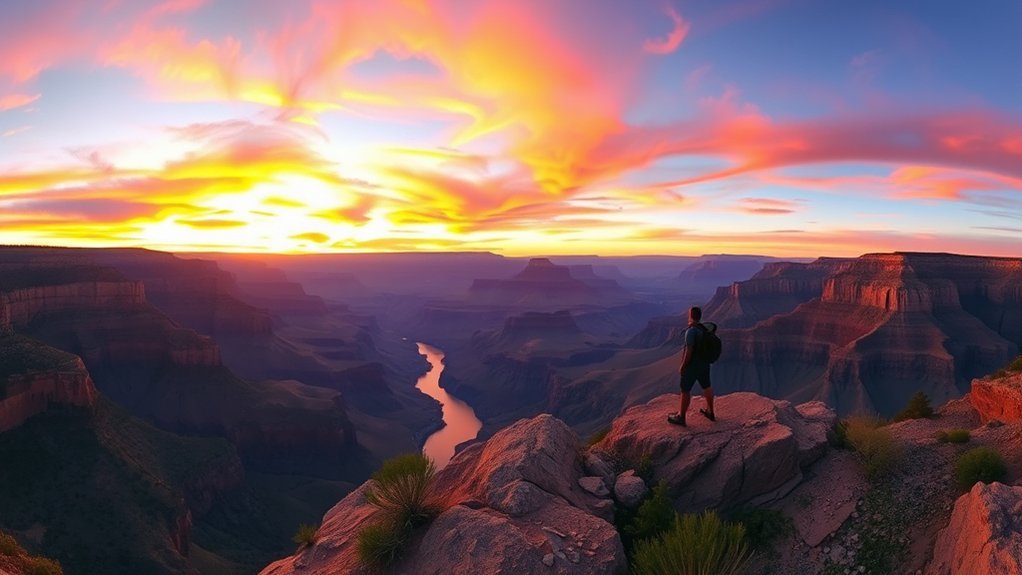
Begin near the Grand Canyon Visitor Center and walk to Mather Point. The first view can be overwhelming in scale: layer after layer of cliffs, buttes, and side canyons stretches toward the horizon, while portions of the Colorado River are visible from selected overlooks.
Continue along a section of the Rim Trail. You do not have to hike the entire trail to enjoy it. A short walk between viewpoints gives you changing angles without committing to a strenuous descent below the rim.
The National Park Service operates free South Rim shuttle buses, and the current route system connects the Visitor Center, Grand Canyon Village, Yavapai-area viewpoints, trailheads, and seasonal Hermit Road stops. Check the current Grand Canyon shuttle schedule before your visit.
Midday: Grand Canyon Village
Spend part of midday in Grand Canyon Village. Historic buildings, viewpoints, lodging, food services, and visitor facilities make this an easy place to slow down during the warmest part of the day.
If you want a closer look below the rim, the upper portion of Bright Angel Trail is accessible from the village. Treat it as an optional short hike, not as a challenge to see how far you can descend. Every step down must be climbed on the return.
Warning: Summer conditions below the Grand Canyon rim can be far hotter than conditions at the top. The National Park Service advises avoiding strenuous inner-canyon hiking during the hottest part of the day when extreme heat is present. Carry water, turn around well before you are exhausted, and check current trail and hiking advisories before descending.
Afternoon: Viewpoints and Sunset
For the afternoon, choose between additional Rim Trail walking, the village’s historic area, or the scenic overlooks along Hermit Road. Access changes seasonally. During much of the busy season, private vehicles are restricted and the park shuttle provides motorized access.
Finish at a rim viewpoint for late-afternoon light or sunset. Give yourself time to return to your vehicle afterward because shuttle lines can grow around sunset.
The Grand Canyon is about 277 miles long, but a first-time visitor does not need to cover huge distances. A few carefully chosen South Rim overlooks can show dramatically different views in a single day.
Pro Tip: Park once near the Visitor Center or your lodging and use the free shuttle where practical. You will spend less time searching for parking and more time at the overlooks.
After your canyon visit, drive south toward Sedona. The National Park Service lists Sedona at roughly 119 miles from the South Rim. Plan for around two hours or more depending on your route, traffic, weather, stops, and where you are staying.
Day 2: Discovering Sedona
On Day 2, focus on Sedona’s red-rock scenery rather than trying to complete several major hikes. An early trail, a relaxed midday break, and a scenic sunset provide a better one-day experience than racing between trailheads.
Scenic Red Rock Views
Start early when temperatures are usually cooler and parking is easier. Cathedral Rock, Bell Rock, Airport Mesa, Schnebly Hill-area viewpoints, and Doe Mountain all offer different perspectives on the red-rock landscape.
| Viewpoint | Best Time to Visit | Photography Tips |
|---|---|---|
| Cathedral Rock | Early morning | Use a wide-angle view for the formation and surrounding landscape |
| Bell Rock | Morning | Use side light to show texture in the red rock |
| Airport Mesa | Late afternoon or sunset | Arrive before golden hour to choose a viewpoint |
| Schnebly Hill Road | Morning or late afternoon | Use foreground vegetation to add depth |
| Doe Mountain | Late afternoon | Include nearby rock formations in wide landscape frames |
Outdoor Adventure Activities
If you want a hike, Cathedral Rock Trail is one of Sedona’s best-known choices. The U.S. Forest Service lists it at about 1.1 miles round trip with an estimated hiking time of around 1.5 hours. Do not let the short distance fool you: parts of the route involve steep rock and hands-on scrambling.
Check the U.S. Forest Service Cathedral Rock information before going. If steep scrambling does not appeal to you, consider an easier walk around Bell Rock or another lower-angle trail.
On normal operating days, the Sedona Shuttle serves several popular trailheads and can save you from searching for scarce parking. Some Forest Service recreation sites require a Red Rock Pass or another accepted recreation pass when you park, so check signage and the current Coconino National Forest pass information.
For more adventure, you can spend part of the day mountain biking or booking an off-road tour. A hot-air balloon ride can also provide a completely different view of the region, but it requires advance booking and is subject to wind and weather conditions.
Midday: Art, Food, and a Slower Pace
After your morning activity, take a break from the sun. Sedona has restaurants, galleries, shops, and arts areas where you can spend the warmest hours without squeezing another difficult hike into the day.
Sedona is also known for places described as vortex sites. They are part of the area’s spiritual and wellness tourism tradition. Some visitors consider them personally or spiritually meaningful; others simply visit for the scenery, meditation, or quiet time. Treat claims about special energy as spiritual beliefs rather than established scientific effects.
Sunset in Sedona
Airport Mesa and other west-facing overlooks are popular around sunset. Arrive before the best light because parking and viewing areas can become busy. Once the sun drops, allow time for dinner before continuing to Phoenix or staying another night if you prefer a slower trip.
Sedona is roughly a 90-minute to two-hour drive north of the Phoenix area under normal conditions, although traffic on Interstate 17 and local roads can increase travel time.
Day 3: Experiencing Phoenix
Phoenix combines desert landscapes, museums, neighborhoods, restaurants, and arts venues. With only one day, resist the temptation to visit every attraction listed below. A better plan is to choose one outdoor stop, one museum or cultural attraction, and one evening neighborhood or dining area.
Local Attractions Exploration
- Desert Botanical Garden: Explore desert plants and landscaped trails at one of Phoenix’s signature attractions. Check the official Desert Botanical Garden schedule, especially in summer when heat can affect trail access and operating patterns.
- Phoenix Art Museum: See collections and changing exhibitions, but check the official museum hours first. The museum has day-specific opening hours and regular closure days.
- South Mountain Park/Preserve: The City of Phoenix manages more than 16,000 acres here, with more than 100 miles of trails. Early morning is the sensible time for hiking in warm weather. Check current South Mountain access and safety information.
Warning: Do not treat Phoenix summer hiking like a normal midday walk. High temperatures can become dangerous quickly. Start very early, carry more water than you expect to need, and switch to an indoor attraction if conditions are too hot.
Cultural Stops
If art and history matter more to you than another outdoor activity, substitute a museum for South Mountain. The Heard Museum focuses on American Indian art and cultures and is accessible by light rail. Check the Heard Museum’s current schedule, because summer opening days differ from the rest of the year.
You can then spend late afternoon or evening around Roosevelt Row, where murals, galleries, restaurants, cafés, and arts venues make it easy to explore without committing to another long attraction visit.
Culinary Delights Sampling
Phoenix is a good place to explore both long-established Southwestern flavors and newer restaurants influenced by the city’s diverse population. Start with a local café if you arrive early, then look for tacos, enchiladas, grilled dishes, regional Mexican food, or other Southwestern specialties at lunch.
In the evening, food trucks, independent restaurants, breweries, and rooftop venues give you plenty of choices. Arizona-associated foods worth looking for include Sonoran-style hot dogs, chimichangas, prickly pear preparations, mesquite-flavored dishes, and regional Mexican specialties. You do not need to chase every item; pick one or two that fit naturally into your route.
Must-See Attractions at the Grand Canyon South Rim
The Grand Canyon extends for roughly 277 miles, but a one-day visit should focus on the South Rim’s most accessible highlights.
For a short visit, quality beats distance: combine a few South Rim overlooks, part of the Rim Trail, and Grand Canyon Village instead of attempting an exhausting below-rim hike.
- Mather Point and the South Rim: An easy first stop near the Visitor Center with broad canyon views.
- Bright Angel Trail: A famous route into the canyon, but on a three-day sightseeing itinerary it is best treated as an optional short descent for prepared hikers rather than a full-day objective.
- Grand Canyon Village: Historic buildings, viewpoints, visitor services, trail access, restaurants, and shuttle connections make it one of the most useful bases on the rim.
- Yavapai-area viewpoints: Convenient for combining scenery with geological interpretation and Rim Trail walking.
Before your trip, check the National Park Service’s Grand Canyon planning page for weather, closures, trail conditions, and current services.
Outdoor Activities in Sedona
Sedona is a strong destination for hikers because its trails pass through red-rock buttes, mesas, canyons, and desert vegetation. The right activity depends on your fitness, temperature, parking availability, and comfort with steep terrain.
- Cathedral Rock: Short but steep, with scrambling.
- Bell Rock area: Better for travelers who want scenic walking with more flexibility in distance and difficulty.
- Mountain biking: A popular option on designated trails for riders with appropriate experience and equipment.
- Guided off-road tours: Useful if you want backcountry scenery without planning your own route.
- Scenic and contemplative stops: Vortex-associated locations can be enjoyed simply as landscapes, meditation spots, or spiritual destinations according to personal belief.
If you are visiting during hot weather, hike early. During periods of storms, fire activity, flash-flood risk, or road closures, check current Coconino National Forest conditions before heading into the backcountry.
Cultural Hotspots in Phoenix
Phoenix has enough museums and arts districts to fill far more than a single day. These three stops give you different perspectives:
For one day in Phoenix, choose one major museum and leave time for a neighborhood such as Roosevelt Row rather than rushing through several ticketed attractions.
- Phoenix Art Museum: A broad art museum with changing exhibitions and collections. Verify opening days before building your schedule around it.
- Heard Museum: Explore American Indian art, artists, exhibitions, and cultural interpretation. Seasonal hours can affect Monday visits.
- Roosevelt Row: Walk through an arts district known for murals, galleries, creative businesses, cafés, and restaurants.
These stops give Phoenix a cultural dimension that balances the outdoor focus of your first two days.
Tips for Traveling in Arizona
- Carry water: Arizona’s heat and low humidity can increase fluid needs, especially during hiking.
- Plan for large elevation changes: The Grand Canyon South Rim sits around 7,000 feet above sea level, while Phoenix is much lower and often considerably hotter.
- Use mornings wisely: Schedule strenuous walks early and save museums, meals, shopping, or driving for hotter afternoon periods.
- Check road and trail conditions: Summer storms, wildfires, winter snow, construction, and temporary closures can change plans quickly.
- Download offline maps: Cell coverage can be inconsistent in remote parts of northern Arizona.
- Respect trail closures and barriers: Stay on established routes and follow Leave No Trace practices.
- Reserve popular lodging early: Grand Canyon and Sedona accommodations can fill during peak travel periods.
- Do not overbook tours: A three-day itinerary already includes several hours of driving. Leave buffer time for meals, parking, traffic, and scenic stops.
What to Pack
Bring breathable layers, sturdy walking shoes, sunscreen, sunglasses, a wide-brimmed hat, refillable water bottles, snacks, a small daypack, and a phone charger or power bank. At the Grand Canyon, temperatures can differ significantly from Phoenix, so a light insulating layer can be useful even when the desert forecast looks warm.
Grand Canyon Fees and Passes in 2026
The standard Grand Canyon private-vehicle entrance pass is $35 and is valid for seven days. The park is cashless at entrance stations, so plan to use an accepted electronic payment method.
There is an important 2026 rule for international visitors: non-U.S. residents age 16 and older are subject to an additional $100 per-person nonresident fee at Grand Canyon National Park unless covered by an applicable pass. Check the official Grand Canyon fee page immediately before traveling because entrance policies can change.
Frequently Asked Questions
What is the best time of year to visit Arizona?
Spring and fall are often comfortable for this route, but Arizona’s elevations make a single “best season” difficult to define. Phoenix can be very hot while the Grand Canyon South Rim is much cooler. Winter can bring snow and icy roads at the canyon, so check destination-specific forecasts rather than relying on one statewide temperature.
Are there entrance fees for the Grand Canyon?
Yes. In 2026, the standard private-vehicle entrance pass is $35 and is valid for seven days. Non-U.S. residents age 16 and older may also owe an additional $100 per-person nonresident fee unless they are covered by an applicable pass. Check the National Park Service fee page before traveling.
What should I pack for a trip to Arizona?
Pack breathable clothing, sturdy shoes, sunscreen, sunglasses, a hat, refillable water bottles, snacks, and a light layer for cooler elevations. Offline maps and a portable phone charger are also useful because some remote areas have weak cell coverage.
How do I get around Arizona without a car?
A car is the easiest way to follow this exact three-day itinerary. Without one, you will need to combine intercity shuttle or tour services with local transportation. Sedona has trailhead shuttles and local transit options, while Phoenix has public transit and rideshare services. There is no single local transit system connecting all three destinations conveniently.
Are there local foods I should try in Arizona?
Look for Sonoran-style hot dogs, chimichangas, prickly pear foods and drinks, mesquite-flavored dishes, tacos, enchiladas, and regional Mexican specialties. Phoenix has the widest dining selection on this itinerary, so Day 3 is a convenient time to try several Arizona-associated flavors.
Is three days enough for the Grand Canyon, Sedona, and Phoenix?
Three days is enough for a fast highlights trip, but not for deep exploration. It works best when you begin near the Grand Canyon on Day 1, limit yourself to one major Sedona hike or activity, and choose only two or three Phoenix stops. Four or five days would give you a more relaxed pace.
Do I need reservations for this Arizona itinerary?
You do not normally need a timed-entry reservation simply to enter the Grand Canyon South Rim, but lodging and campgrounds can fill well in advance. Reserve hotels, hot-air balloon rides, guided off-road tours, and other limited-capacity activities early, then verify current park and attraction requirements shortly before departure.
Sources
- Grand Canyon National Park: Fees & Passes — current entrance-pass and 2026 fee information.
- Grand Canyon National Park: Key Hiking Messages — current trail conditions, closures, and hiking-safety guidance.
- Grand Canyon National Park: South Rim Shuttle Buses — seasonal shuttle routes and access restrictions.
- Coconino National Forest: Cathedral Rock Trail — trail distance, estimated time, and recreation-pass guidance.
- Sedona Shuttle: Trailhead Routes — current trailhead transportation information.
- City of Phoenix: South Mountain Park/Preserve — park size, trails, hours, and desert-safety information.
Conclusion
A three-day Arizona trip moves quickly, but it can still give you three very different experiences: the enormous scale of the Grand Canyon South Rim, Sedona’s red-rock landscape, and Phoenix’s mix of desert scenery, food, art, and culture. The key is to keep each day focused rather than trying to see every attraction.
Spend Day 1 enjoying rim viewpoints instead of pushing too far into the canyon, give Sedona one well-chosen outdoor adventure on Day 2, and balance Phoenix’s heat with a museum, garden, neighborhood, or early-morning desert stop on Day 3. With realistic driving time and a little flexibility for weather and closures, the route becomes much easier to enjoy.