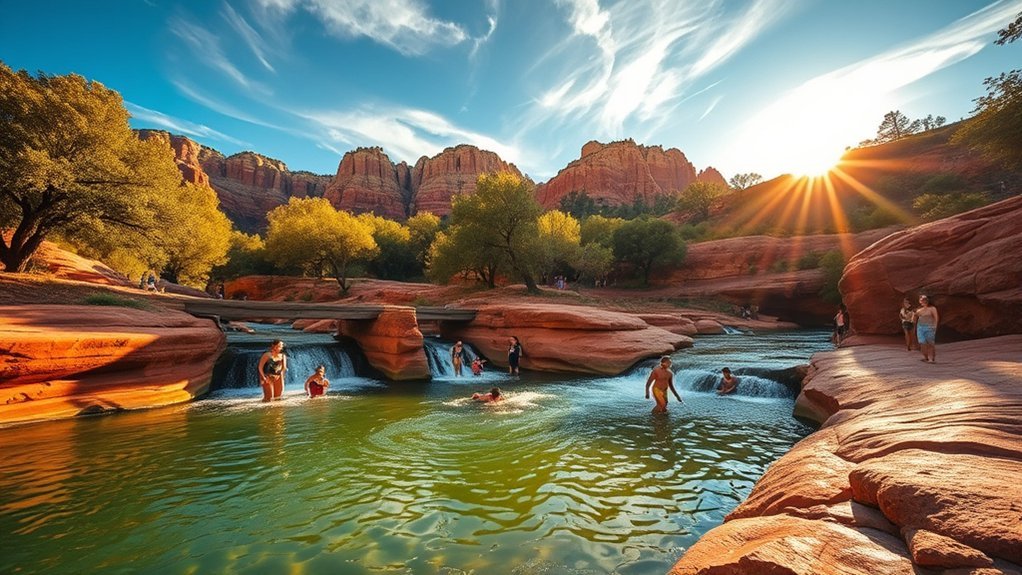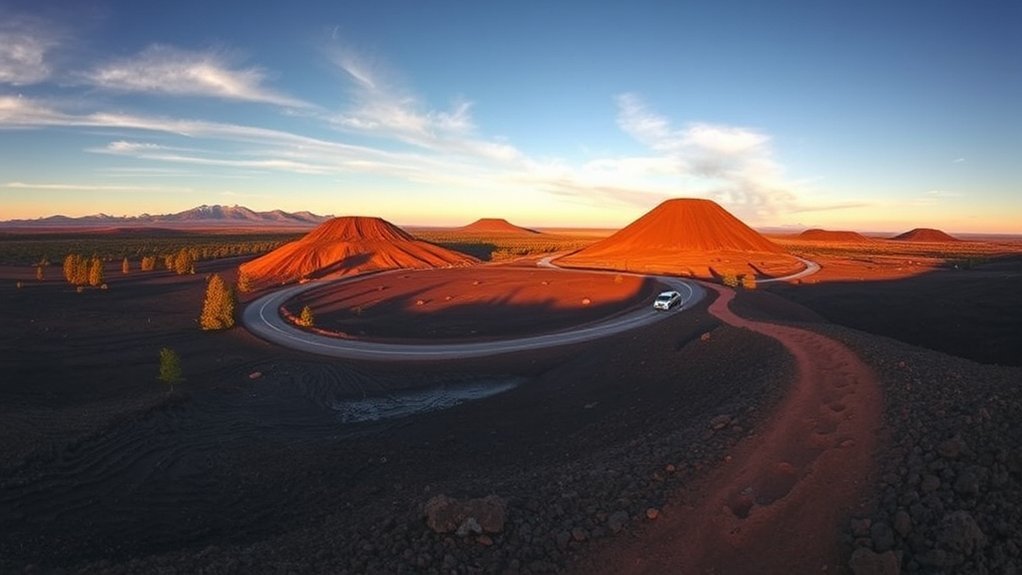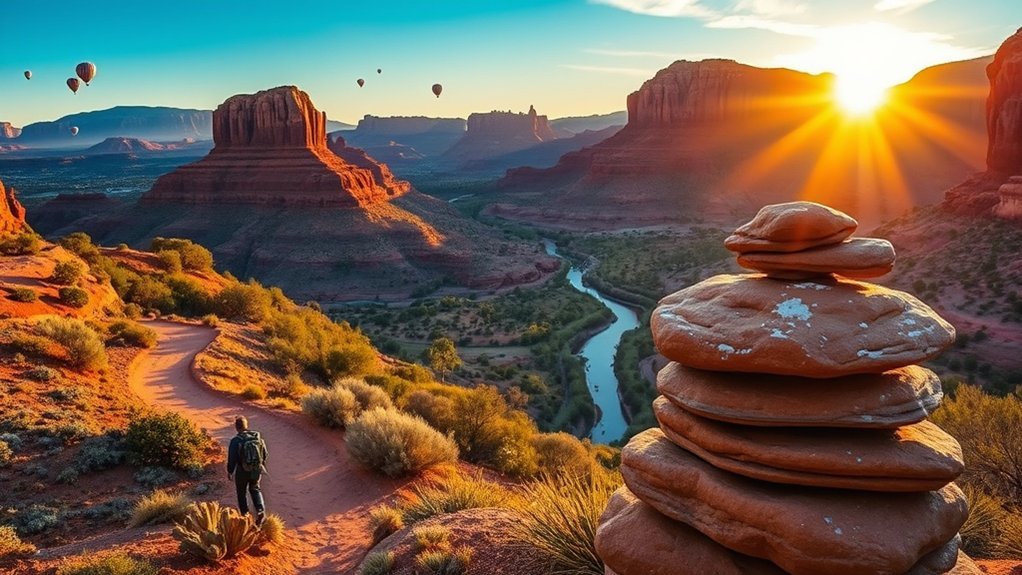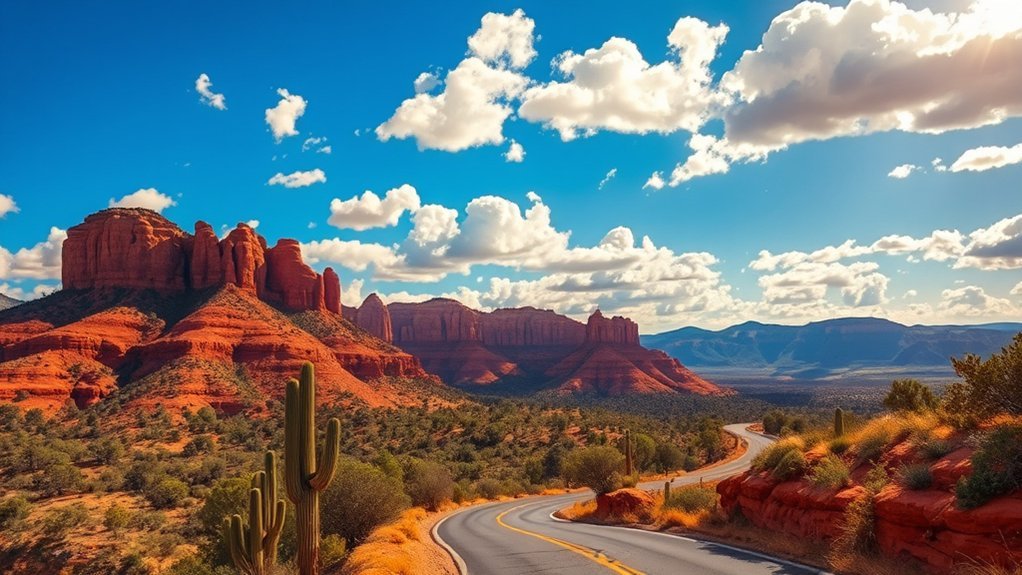
Arizona has three places officially designated as national parks: Grand Canyon, Saguaro, and Petrified Forest. A well-planned Arizona national parks road trip connects all three while taking you from Sonoran Desert cactus forests to colorful badlands and the rim of the Grand Canyon. Seven days is enough for the main route, although nine or ten days gives you more time for hiking and national-monument side trips.
Quick Answer
The best Arizona national parks road trip is a seven- to ten-day loop linking Saguaro National Park near Tucson, Petrified Forest National Park near Holbrook, and Grand Canyon National Park. Start and finish in Phoenix, allow at least one full day per park, and plan extra time for Grand Canyon viewpoints and hiking.
Key Takeaways
- Arizona has three formally designated national parks, although the National Park Service manages 22 park units in the state.
- A seven-day Phoenix loop works, but nine or ten days creates a more relaxed trip.
- The standard private-vehicle entrance fees total $85 for all three parks before lodging, fuel, food, and any applicable nonresident fees.
- Saguaro and Petrified Forest do not have drive-in campgrounds inside the parks.
- Summer heat can make desert and inner-canyon hiking dangerous, so start early and check official alerts before every hike.
At a Glance
| Time Required | 7 days for the core route; 9 to 10 days for a slower trip with side stops |
| Difficulty | Easy to moderate for scenic drives and rim walks; strenuous hikes are optional |
| Tools Needed | Reliable vehicle, offline maps, refillable water containers, sun protection, layers, first-aid kit, and portable charger |
| Cost | At least $85 in standard private-vehicle entrance fees for all three parks, plus fuel, lodging, food, camping, and any applicable 2026 nonresident fees |
Warning: Arizona heat can become life-threatening. Grand Canyon National Park advises summer visitors to avoid strenuous inner-canyon hiking between 10 a.m. and 4 p.m. Saguaro National Park advises finishing hikes by 10 a.m. when the forecast high is 95°F to 110°F and avoiding hiking when the high exceeds 110°F.
Planning Your Arizona National Parks Itinerary
The simplest route begins and ends in Phoenix. From Phoenix, travel south to Tucson and Saguaro National Park, continue northeast to Petrified Forest National Park, and then head northwest to Grand Canyon National Park’s South Rim. This route limits unnecessary backtracking and places the longest transfer between two full park days.
Seven-Day Arizona National Parks Itinerary
| Day | Route | Main Plan |
|---|---|---|
| 1 | Phoenix to Tucson | Arrive, collect supplies, and visit the Tucson Mountain District of Saguaro National Park near sunset. |
| 2 | Tucson | Explore the Rincon Mountain District in the morning. Spend the afternoon resting, visiting a museum, or returning to a scenic drive near sunset. |
| 3 | Tucson to Holbrook | Use this as a travel day. Leave early, refuel before remote stretches, and stay near Holbrook or the park entrance. |
| 4 | Petrified Forest National Park | Drive the park road and stop at Painted Desert overlooks, Puerco Pueblo, Blue Mesa, Jasper Forest, and Giant Logs. |
| 5 | Holbrook to Grand Canyon South Rim | Travel through northern Arizona and arrive in time for a short Rim Trail walk or sunset viewpoint. |
| 6 | Grand Canyon South Rim | Explore Mather Point, Yavapai Point, Grand Canyon Village, the Rim Trail, and Hermit Road viewpoints when shuttle service is operating. |
| 7 | Desert View and return to Phoenix | Visit Desert View Watchtower early, then begin the return trip to Phoenix. |
How to Extend the Trip
With nine or ten days, add one or two stops rather than rushing through more places. Useful options include:
- Chiricahua National Monument: Add it before or after Saguaro for rhyolite rock formations and the 3.3-mile Echo Canyon Loop.
- Organ Pipe Cactus National Monument: Add it as a separate Sonoran Desert extension southwest of Tucson. It is a national monument, not one of Arizona’s three designated national parks.
- Sunset Crater Volcano and Wupatki National Monuments: Add them near Flagstaff between Petrified Forest and Grand Canyon.
- Grand Canyon North Rim: Add at least two days because the North and South rims are separated by a long drive. Services are limited in 2026.
Pro Tip: Do not schedule a long transfer and a major hike on the same day. Arizona’s elevation changes, dry air, and heat can make an apparently simple day more tiring than expected.
Best Time for an Arizona National Parks Road Trip
March through April and October through early November usually provide the best compromise for a trip covering all three parks. However, conditions differ by location:
- Saguaro National Park: Late fall through early spring offers the most comfortable desert temperatures. Summer daytime temperatures regularly exceed 100°F.
- Petrified Forest National Park: It can be visited throughout the year, but spring winds, summer thunderstorms, and winter cold may affect your plans.
- Grand Canyon South Rim: Spring and fall are popular, but snow and freezing temperatures remain possible. Summer is comfortable at the rim but dangerously hot below it.
- Grand Canyon North Rim: The normal visitor season is much shorter than the South Rim season. Always check the current status before driving there.
Review each park’s official alerts on the morning of your visit. Also check Arizona 511 for highway conditions, construction, crashes, snow, and closures.
Must-See National Parks in Arizona
The National Park Service manages 22 park units connected to Arizona, but only three are formally designated national parks. Those three parks form the core of this road trip.
Grand Canyon National Park Highlights
Grand Canyon National Park protects 278 miles of the Colorado River and surrounding uplands. For a first visit, the South Rim is the easiest base because it remains open throughout the year and has the largest selection of viewpoints, lodging, campgrounds, food, and shuttle services.
Start at Mather Point or Yavapai Point, then walk a section of the Rim Trail. Many parts of the rim route provide wide canyon views without the demands of descending into the canyon. Grand Canyon Village adds historic buildings, museums, shuttle connections, and access to more overlooks.
Desert View Watchtower is an important stop near the park’s East Entrance. The viewpoint provides a broad look toward the Colorado River and the eastern canyon. Check current building hours before relying on interior access.
The Bright Angel Trail gives prepared hikers a closer view of the canyon, but every step downhill creates an uphill return. Carrying enough water does not make a hot midday hike safe. Set a turnaround time, check drinking-water availability, and do not attempt to reach the river and return to the rim in one day.
Warning: There are no easy trails into or out of the Grand Canyon. A short descent may take much longer to climb on the return. In summer, use the Rim Trail instead of descending during the hottest hours.
Grand Canyon North Rim in 2026
The North Rim reopened for the 2026 season with limited services. As of July 23, 2026, paved scenic roads and the North Kaibab Trail are open, but several trails remain closed because of Dragon Bravo Fire impacts. Overnight lodging is not available inside the North Rim in 2026, potable water is not generally available at the rim, and visitors must prepare for a remote experience.
The North Rim Campground reopened on June 1, 2026, but reservations and current operating details should be confirmed before travel. Review the official North Rim status page for trail closures, fire restrictions, water information, and service updates.
Saguaro National Park and Nearby Cactus Landscapes
Saguaro National Park surrounds Tucson in two districts. The Tucson Mountain District lies west of the city, while the Rincon Mountain District lies east. The districts are about 30 miles apart, and urban traffic can make the drive take 45 to 60 minutes.
The western district is known for dense stands of saguaro cacti, sunset views, the Bajada Loop Drive, and short desert trails. The eastern district includes the Cactus Forest Loop Drive, lower-elevation desert walks, and longer routes climbing toward the Rincon Mountains.
A standard Saguaro entrance pass is valid for seven days and covers both districts. The park is cashless, so bring a credit or debit card or purchase an accepted pass in advance.
Organ Pipe Cactus National Monument also protects impressive Sonoran Desert landscapes, but it is not a national park. Lake Mead is a national recreation area spanning parts of Arizona and Nevada. Both can be worthwhile destinations, but neither should be counted among Arizona’s three designated national parks.
Note: Saguaro National Park has no drive-in or RV campground. Its six designated campsites are in the Rincon Mountain wilderness and require hiking and an overnight reservation.
Petrified Forest National Park Wonders
Petrified Forest National Park combines fossilized wood, badlands, grasslands, petroglyphs, ancestral sites, and a preserved section of historic Route 66. The park’s main road connects its northern and southern entrances, making it easy to visit a series of overlooks and short trails in one full day.
Begin with the Painted Desert overlooks in the northern part of the park. Continue to Puerco Pueblo and Newspaper Rock for cultural history, then walk the Blue Mesa Trail if weather and trail conditions are suitable. Jasper Forest and the Giant Logs area display large concentrations of petrified wood.
The colorful material is fossil wood in which minerals replaced or filled parts of the original tree structure over geologic time. Leave all petrified wood, pottery fragments, rocks, and other natural or cultural items where you find them. Removing park resources is prohibited.
Petrified Forest is primarily a day-use park. Check the current closing time before beginning a long trail because visitors must leave the developed road corridor by closing unless they hold an authorized wilderness permit.
Hidden Gems to Explore Along the Way
Arizona has many worthwhile public lands outside the three national parks. Treat these as optional additions rather than trying to squeeze all of them into a seven-day trip.
Off-the-Beaten-Path Trails
Honey Bee Canyon Park in Oro Valley is a local desert stop north of Tucson. It offers short walking routes, desert scenery, and cultural features. It is managed locally and is not part of Saguaro National Park. Check the Town of Oro Valley information before visiting.
Black Canyon National Recreation Trail is an 80-mile Bureau of Land Management trail system north of Phoenix. It supports hiking, mountain biking, and equestrian use. Most road-trippers should select a short section from an established trailhead instead of attempting the entire route. Review the official BLM trail information and carry offline navigation.
Picketpost Mountain near Superior is a steep and exposed backcountry side trip outside the national parks. Route descriptions and mileage vary depending on the mapped route. Do not rely on a general “14-mile” description. Check current Tonto National Forest conditions, use a current topographic map, and avoid the hike during high heat.
Echo Canyon Loop is a 3.3-mile route in Chiricahua National Monument. It is a strong option for an extended trip, but Chiricahua is a national monument rather than one of the three Arizona national parks. The route passes through rock formations and includes uneven terrain.
Scenic Overlook Spots
- Desert View: A wide eastern Grand Canyon view near Desert View Watchtower.
- Yavapai Point: A convenient South Rim overlook near geological exhibits and the Rim Trail.
- Pintado Point and Kachina Point: Painted Desert overlooks in Petrified Forest National Park.
- Valley View Overlook: A short Saguaro National Park walk with views across the Tucson Mountain District.
- Gates Pass: A popular sunset viewpoint near Tucson and Saguaro’s western district, but outside the national park boundary.
Note: Chisos Basin is in Big Bend National Park, Texas. It is not an Arizona overlook and does not belong on this road-trip route.
Tips for a Safe and Enjoyable Road Trip
- Inspect your vehicle: Check tires, brakes, coolant, battery condition, oil, windshield fluid, and spare-tire equipment before entering remote areas.
- Refuel early: Do not assume the next park entrance or trailhead has fuel. Keep the tank above one-quarter when driving between rural communities.
- Download offline maps: Cell service can be weak or unavailable in park interiors and along remote highways.
- Carry extra water: Keep drinking water in the passenger compartment when possible. Do not rely on every trail water source being available.
- Balance water with food: During long, hot activity, eat regular snacks and follow current NPS hydration guidance rather than forcing excessive water.
- Avoid midday desert hiking: Start before sunrise or shortly after daylight during warm months.
- Watch the sky: Monsoon storms can produce lightning, strong wind, hail, flash flooding, and debris flows. Never enter a wash or narrow drainage when storms threaten.
- Check wildfire restrictions: Smoke, closures, fire bans, and road restrictions can change quickly.
- Stay away from edges: Loose rock, wind, ice, and poor footing make overlooks and canyon edges dangerous.
- Tell someone your plan: Share your route, trail, vehicle description, and expected return time before entering the backcountry.
A successful Arizona road trip is not measured by how many stops you complete. It is measured by whether you leave enough time to enjoy each place safely.
Best Hiking Trails in Arizona’s National Parks
| Park | Trail or Area | Best For | Important Note |
|---|---|---|---|
| Grand Canyon | Rim Trail | Flexible walks and major viewpoints | Choose a short out-and-back section or combine walking with shuttle service. |
| Grand Canyon | Bright Angel Trail | Prepared hikers seeking a below-rim experience | Strenuous return climb. Avoid a rim-to-river-to-rim day hike, especially from May through September. |
| Saguaro | Desert Discovery Nature Trail | A short introduction to Sonoran Desert plants | Visit early in warm weather because the route is exposed. |
| Saguaro | Mica View and nearby trails | Easy desert walking in the eastern district | Check the park map because several connecting routes create different distances. |
| Petrified Forest | Painted Desert Rim Trail | Short views over colorful badlands | Expect wind and limited shade. |
| Petrified Forest | Blue Mesa Trail | Close views of blue, purple, and gray badlands | The climb back can feel demanding in heat, wind, or high elevation. |
| Petrified Forest | Giant Logs Trail | Large petrified logs near Rainbow Forest Museum | Stay on the established route and leave all natural material in place. |
Before every hike, check official trail conditions, water availability, weather, fire restrictions, and park closing times. Carry a paper map or saved offline map even on short trails.
Wildlife Spotting and Photography Opportunities
Arizona’s parks protect wildlife ranging from desert reptiles and birds to mule deer, elk, bighorn sheep, javelinas, coyotes, and many smaller animals. Sightings are never guaranteed, but early morning and late afternoon often provide better light and more animal activity.
- Grand Canyon: Watch for mule deer, elk, California condors, ravens, and bighorn sheep.
- Saguaro: Look for Gila woodpeckers, cactus wrens, javelinas, jackrabbits, lizards, and seasonal wildflowers.
- Petrified Forest: You may see pronghorn, ravens, rabbits, lizards, snakes, and migrating birds.
Use a telephoto lens or phone zoom rather than approaching an animal. Never feed wildlife, block its path, surround it for a photograph, or allow a pet to chase it. Return to your vehicle or create more distance if an animal changes direction, stops feeding, watches you closely, or appears agitated.
Essential Packing List for Your Adventure
| Road Essentials | Personal Comfort | Hiking and Emergency Gear |
|---|---|---|
| Refillable water containers | Broad-spectrum sunscreen | Supportive hiking shoes |
| Salty and high-energy snacks | Wide-brimmed hat | First-aid kit |
| Offline maps and paper map | Sunglasses | Flashlight or headlamp |
| Portable phone charger | Warm layers and rain shell | Whistle and emergency blanket |
| Vehicle emergency supplies | Lip balm and moisturizer | Trekking poles for steep routes |
| Entrance pass and photo ID | Lightweight blanket | Camera or binoculars |
Pack for both desert heat and high-elevation cold. Tucson may be warm while the Grand Canyon rim has strong wind, freezing nights, snow, or ice.
Entrance Fees, Passes, and Reservations
The following standard private-vehicle fees were listed by the National Park Service when this guide was checked on July 23, 2026. Fees and policies can change, so verify them before travel.
| Park | Private Vehicle | Validity and Notes |
|---|---|---|
| Grand Canyon | $35 | Valid for seven days. No timed-entry reservation is currently required. The park does not accept cash at entrance stations. |
| Saguaro | $25 | Valid for seven days and covers both districts. The park is cashless. |
| Petrified Forest | $25 | Valid for seven days. No timed-entry reservation is currently required. The park is cashless. |
The three standard vehicle fees total $85. A resident America the Beautiful annual pass may cost less than separate entry if you will visit additional federal recreation sites. Current 2026 NPS pages list separate annual-pass pricing for non-US residents.
International Visitor Note: Grand Canyon’s current 2026 fee page states that non-US residents age 16 and older must pay an additional $100 per person unless they are admitted with an eligible Annual or America the Beautiful Pass. Check the official fee page before buying individual park passes.
Camping and Accommodations
| Park | Inside-Park Camping | Convenient Overnight Bases |
|---|---|---|
| Grand Canyon | Developed South Rim camping is available. Reservations are strongly recommended. Backcountry camping requires a permit. | Grand Canyon Village, Tusayan, Valle, or Williams |
| Saguaro | No vehicle or RV camping. Six hike-in wilderness campgrounds require reservations. | Tucson, Oro Valley, or nearby developed campgrounds outside the park |
| Petrified Forest | No car, RV, or frontcountry campground. Wilderness backpacking is allowed with a permit. | Holbrook or nearby communities and campgrounds outside the park |
Book Grand Canyon lodging and camping well ahead for spring, summer, fall, holiday weeks, and weekends. For Saguaro and Petrified Forest, staying outside the park is usually the simplest choice for a road trip.
Frequently Asked Questions
How many national parks are in Arizona?
Arizona has three places formally designated as national parks: Grand Canyon, Petrified Forest, and Saguaro. The National Park Service manages 22 park units associated with the state, including national monuments, historic sites, recreation areas, memorials, and trails.
How many days do I need for an Arizona national parks road trip?
Plan at least seven days for all three parks. Nine or ten days is better if you want longer hikes, a slower pace, or side trips to Arizona national monuments.
What are the best times of year to visit Arizona’s national parks?
March through April and October through early November usually provide the best balance across all three parks. Saguaro is most comfortable in the cooler months, while Grand Canyon’s rims can experience snow and freezing temperatures in winter. Always check individual park forecasts.
Are there entrance fees for the national parks?
Yes. As checked on July 23, 2026, the standard private-vehicle fee is $35 at Grand Canyon, $25 at Saguaro, and $25 at Petrified Forest. The three fees total $85. International visitors should also review Grand Canyon’s current nonresident-fee rules.
Can I bring my pet to the parks?
Pet access differs by park. Grand Canyon allows leashed pets on South Rim trails above the rim and in selected developed areas, but not below the rim or on shuttle buses. Saguaro limits pets to roads, selected paved trails, picnic areas, and developed areas. Petrified Forest allows leashed pets on public roads, trails, and wilderness areas, but not inside buildings.
What accommodations are available near the parks?
Tucson has the widest lodging selection for Saguaro. Holbrook is a convenient base for Petrified Forest. Grand Canyon visitors can stay inside the South Rim area or in Tusayan, Valle, and Williams. Reserve early during busy seasons.
Is it possible to camp in all three national parks?
Camping is possible in all three, but the options differ. Grand Canyon has developed campgrounds and permitted backcountry camping. Saguaro has only hike-in wilderness campsites. Petrified Forest permits wilderness backpacking but has no car, RV, or frontcountry campground.
Do I need reservations to enter the parks?
Grand Canyon and Petrified Forest do not currently require timed-entry reservations. However, lodging, developed campgrounds, wilderness campsites, backcountry permits, and some activities may require advance booking. Verify current rules before departure.
Conclusion
An Arizona national parks road trip gives you three very different landscapes in one route: the Sonoran Desert at Saguaro, the fossil wood and Painted Desert at Petrified Forest, and the vast canyon views of Grand Canyon National Park. Give yourself at least seven days, start hikes early, keep your route flexible, and check official conditions each morning. Careful planning will help you experience more while avoiding unnecessary driving, unsafe heat, and last-minute accommodation problems.
Sources
- National Park Service: Arizona Park List — verifies Arizona’s park units and their official classifications.
- Grand Canyon National Park: Fees and Passes — supports current entrance fees, entry reservations, cashless payment, and nonresident information.
- Grand Canyon National Park: Day Hiking — supports Bright Angel, inner-canyon, and summer hiking guidance.
- Grand Canyon National Park: North Rim Status — supports current 2026 access, campground, water, service, and trail-closure information.
- Saguaro National Park: Plan Your Visit — supports district information, activities, safety, camping, and visitor planning.
- Petrified Forest National Park — supports current fees, hours, attractions, pet guidance, and trip planning.