Choosing where to stay in Istanbul can change the entire feel of your trip. The best areas to stay in Istanbul are spread across the Historic Peninsula, Beyoğlu, the Bosphorus waterfront, and the Asian side, so the right base depends on whether you value major sights, nightlife, food, local atmosphere, or easy transport most.
Quick Answer
For a first visit focused on famous sights, stay in Sultanahmet. Choose Taksim or another part of Beyoğlu for nightlife, restaurants, and metro access; Kadıköy for food and a more local Asian-side base; Beşiktaş or Ortaköy for Bosphorus atmosphere; and Üsküdar for a quieter Asian-side stay with strong transport.
Last checked: October 1, 2026. Dates and figures were verified against official sources.
Key Takeaways
- Sultanahmet minimizes travel time if Hagia Sophia, the Blue Mosque, and Topkapı Palace are your priorities.
- Taksim is part of Beyoğlu, not a separate district; it is the most transport-focused and nightlife-heavy part of the area.
- Kadıköy combines restaurants, markets, ferries, nightlife, and direct M4 metro access to Sabiha Gökçen Airport.
- Beşiktaş and Ortaköy suit travelers who prioritize the Bosphorus over walking access to Old City monuments.
- Üsküdar offers an Asian-side atmosphere while retaining fast connections by Marmaray, M5 metro, and ferry.
Where to Stay in Istanbul: Quick Area Comparison
No single neighborhood is best for everyone. Istanbul is large and divided by the Bosphorus and Golden Horn, so choosing a base near the places you expect to visit most can save considerable travel time.
| Area | Best For | Main Transport Advantage | Main Trade-Off |
|---|---|---|---|
| Sultanahmet | First visits and historic sights | T1 tram and walking | Tourist-heavy and quieter at night |
| Taksim | Nightlife, shopping, late evenings | M2 metro and F1 funicular | Noise and crowds |
| Beyoğlu | Food, culture, nightlife | M2, Tünel, tram and ferries depending on location | Steep streets in Galata and Cihangir |
| Kadıköy | Food, local life, Asian side | Ferries, M4 and Marmaray nearby | Longer trips to Sultanahmet |
| Beşiktaş | Bosphorus life and ferries | Major ferry hub | No direct T1 or M2 station in central Beşiktaş |
| Ortaköy | Bosphorus views and couples | Buses, taxis and some ferry services | Less convenient for rail-based sightseeing |
| Üsküdar | Quieter Asian-side stay | Marmaray, M5 and ferries | Less nightlife than Kadıköy or Beyoğlu |
Sultanahmet: Best for First-Time Sightseeing
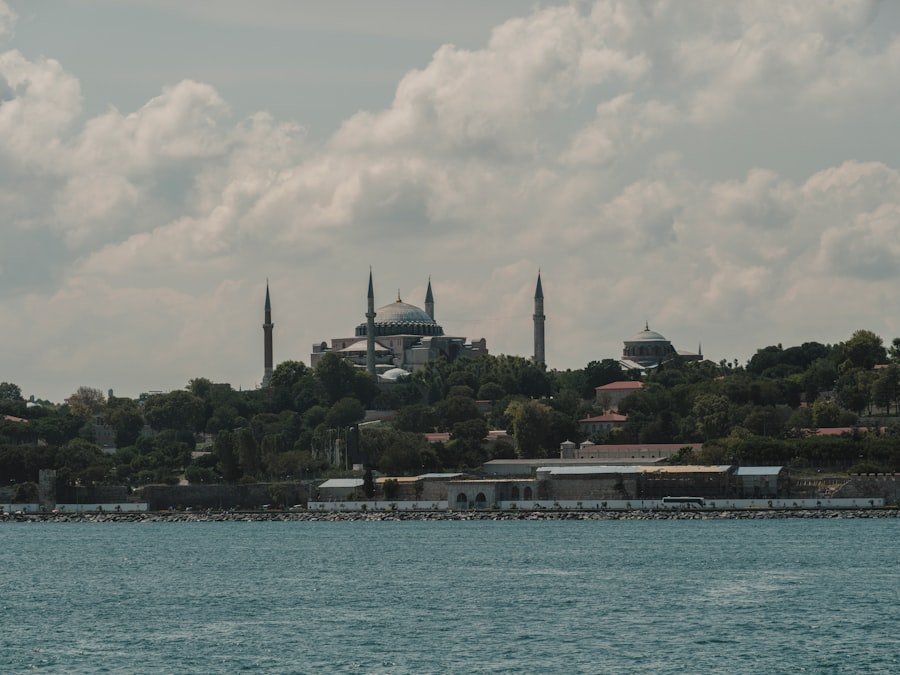
Sultanahmet is the strongest choice if your priority is Istanbul’s headline historic attractions. Staying here puts Hagia Sophia, the Blue Mosque, Topkapı Palace, the Hippodrome area, and several museums within easy walking distance.
Hagia Sophia was built under Byzantine Emperor Justinian I between 532 and 537 and now functions as a mosque as well as one of Istanbul’s defining historic monuments. Across Sultanahmet Square, the Blue Mosque was built for Sultan Ahmed I between 1609 and 1617 and is known for its six minarets and İznik-tile interior.
The main advantage is simple: you can start sightseeing before making any long transport journey. This makes Sultanahmet especially practical for a short stay or for travelers who want to spend most of their time in the Historic Peninsula.
The neighborhood is less suitable if late-night restaurants, bars, and contemporary city life are major priorities. It also attracts large numbers of visitors during the day, so streets around the biggest landmarks can feel busy.
Transport is still useful even if you plan to walk. Metro Istanbul’s T1 tram serves Sultanahmet and continues through Sirkeci, Eminönü, Karaköy, and Kabataş, making it one of the most useful lines for visitors.
Taksim: Best for Nightlife, Shopping, and Metro Access
Taksim is a good base if you want central transport, busy evenings, restaurants, shopping, and easy access to İstiklal Avenue. It is important to understand that Taksim is part of the wider Beyoğlu district rather than a separate district of Istanbul.
Taksim Square sits at one end of İstiklal Avenue, the long pedestrian street lined with shops, restaurants, cultural venues, churches, passages, and side streets leading toward Galata. The historic red tram adds character, but most visitors will cover much of the area on foot.
Transport is one of Taksim’s biggest advantages. The M2 metro line stops at Taksim and Şişhane, while the F1 funicular links Taksim with Kabataş on the Bosphorus. At Kabataş, you can connect with the T1 tram and ferry services.
The trade-off is noise. Hotels directly on or immediately beside the busiest parts of İstiklal Avenue can experience late-evening foot traffic and street noise. If sleep matters more than being in the middle of the action, look a few streets away from the main entertainment corridors.
Beyoğlu: Best for Culture, Restaurants, and an All-Round City Stay
Beyoğlu works well for travelers who want historic architecture, galleries, restaurants, cafés, nightlife, and reasonable access to the Old City. The district includes several distinct areas, so staying in Galata, Pera, Cihangir, or Taksim can produce very different experiences.
| Category | Metric |
|---|---|
| Best for | Culture, dining, nightlife, repeat visitors |
| Main areas | Taksim, Pera, Galata, Cihangir, Karaköy |
| Useful transport | M2 metro, F1/F2 funiculars, T1 from Karaköy, ferries |
| Main trade-off | Steep streets and nightlife noise in some pockets |
Beyoğlu was historically associated with Pera and still contains many late-19th-century European-influenced buildings. Today, its appeal comes from the mix of historic streets and contemporary cultural life.
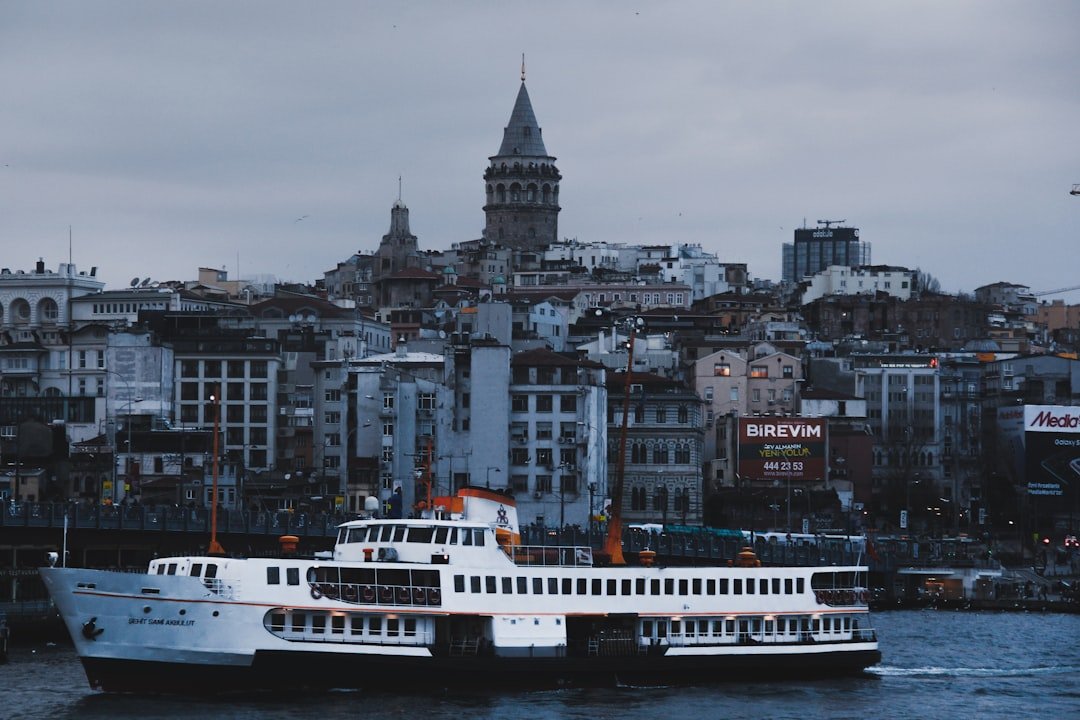
Galata is one of the most recognizable parts of the district. The Genoese-built Galata Tower dates in its present form to 1348. The Ministry of Culture and Tourism currently lists the museum as open daily from 08:30 to 18:30, with ticket-office closing shortly before the site closes.
Pera is a strong option for galleries, museums, historic hotels, and a more cultured evening atmosphere. Cihangir feels more residential, with cafés and sloping streets, while Karaköy gives you quick access to the waterfront, ferries, and the T1 tram.
Pro Tip: Check the elevation around your hotel before booking in Galata or Cihangir. A property that looks close on a map may involve a steep uphill walk with luggage.
Kadıköy: Best for Food and Local Asian-Side Life
Kadıköy is one of the best areas to stay in Istanbul if you care more about markets, restaurants, cafés, nightlife, and neighborhood life than sleeping beside the Old City’s major monuments. It is on the Asian side but remains well connected by ferries, metro, and Marmaray.
The Kadıköy market area is packed with fishmongers, bakeries, delicatessens, produce shops, restaurants, and traditional meyhanes. Bahariye Avenue and the streets toward Moda add cafés, bars, shops, music venues, and a more residential atmosphere.
Moda is especially appealing if you want waterfront walks and a slower pace while remaining close to central Kadıköy. The district’s T3 heritage tram loops through Kadıköy and Moda, while ferries cross the Bosphorus to several European-side terminals.
Kadıköy is also particularly convenient for Sabiha Gökçen Airport. The M4 Kadıköy-Sabiha Gökçen Airport Metro Line runs directly between Kadıköy and the airport; Metro Istanbul lists the complete line journey at about 52 minutes.
The main downside is the daily journey to Sultanahmet if most of your itinerary is on the Historic Peninsula. A ferry ride can be one of the pleasures of staying here, but repeated cross-city sightseeing adds travel time.
Beşiktaş: Best for the Bosphorus and Everyday City Energy
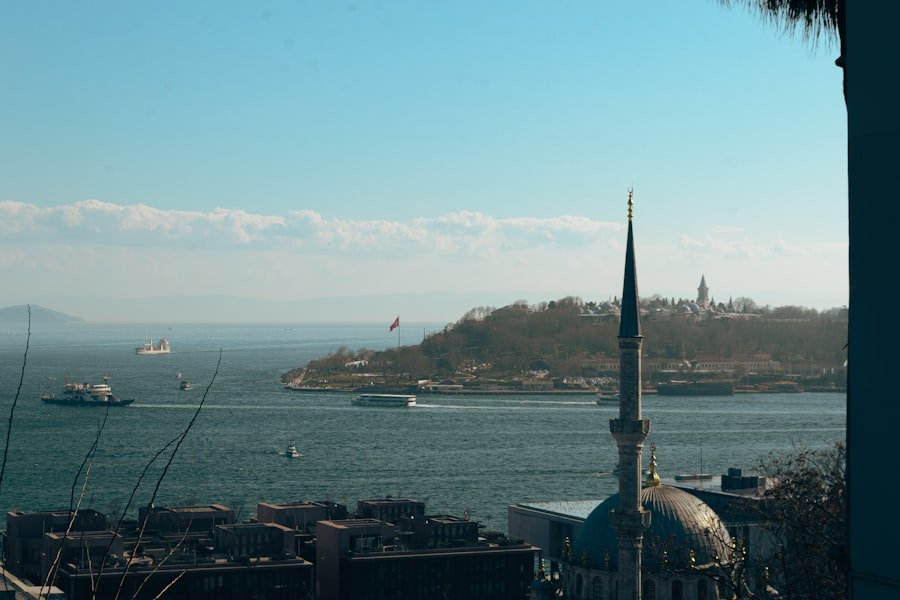
Beşiktaş suits travelers who want a lively European-side neighborhood beside the Bosphorus without staying in the most tourist-heavy part of the city. Cafés, markets, universities, ferries, restaurants, and football culture give the center of Beşiktaş a busy local rhythm.
One of the area’s major landmarks is Dolmabahçe Palace, completed in 1856 and used by Ottoman sultans after Topkapı Palace ceased to be the principal royal residence. Current National Palaces visitor information lists Monday as the weekly closing day and ticket-office hours from 09:00 to 17:00.
Beşiktaş is also a major ferry hub. This makes Kadıköy and other Bosphorus destinations easy to reach without relying only on road traffic.
The main limitation is rail access. Central Beşiktaş is not directly on the T1 tram or M2 metro, so trips to Sultanahmet often involve a ferry, bus, walk, or a connection through nearby Kabataş.
Stay here if you want the Bosphorus and neighborhood energy to be part of your everyday experience rather than something you visit only while sightseeing.
Ortaköy: Best for Bosphorus Views and a Romantic Setting
Ortaköy is a picturesque Bosphorus neighborhood that suits travelers who prioritize waterfront atmosphere, cafés, views, and evenings by the water. Its setting beneath the Bosphorus Bridge makes it one of Istanbul’s most recognizable waterfront areas.
The Büyük Mecidiye Mosque, usually called Ortaköy Mosque, stands directly beside the water. Around Ortaköy Square, cafés and street-food stalls serve local favorites including kumpir, the neighborhood’s well-known stuffed baked potatoes.
Ortaköy becomes especially lively on weekends. You can walk along the waterfront, watch ferries and other boats pass through the Bosphorus, or continue toward Beşiktaş and other shoreline neighborhoods.
The drawback is transport. Ortaköy is not directly served by the T1 tram or M2 metro, so buses, taxis, walking, and available ferry services are more important here than in Sultanahmet or Taksim.
For that reason, Ortaköy is strongest for a relaxed or romantic trip where the Bosphorus itself is one of your main reasons for visiting. It is less efficient for travelers planning several full days around the Historic Peninsula.
Üsküdar: Best for a Quieter Asian-Side Base
Üsküdar is a strong choice if you want an Asian-side neighborhood with excellent cross-Bosphorus transport but less nightlife than Kadıköy. It combines Ottoman mosques, local shopping streets, waterfront parks, ferry piers, Marmaray, and the M5 metro.
One of its defining views is Maiden’s Tower, which stands on a small islet just offshore. The Üsküdar waterfront also gives you broad views toward the Historic Peninsula, Galata, and the European shore.
Historic mosques include Mihrimah Sultan Mosque beside the ferry area and Yeni Valide Mosque farther inland. The district also gives you access to neighborhoods such as Kuzguncuk, known for colorful streets and a quieter residential feel.
Transport makes Üsküdar much more practical than its position across the Bosphorus might suggest. Marmaray crosses beneath the Bosphorus, the M5 begins at Üsküdar, and Şehir Hatları operates regular Üsküdar-Karaköy-Eminönü ferry services.
Choose Üsküdar if you want a more residential atmosphere while keeping straightforward links to both sides of the city. Choose Kadıköy instead if nightlife and a dense restaurant scene matter more.
Which Area Is Best for Istanbul Airport Access?
Airport convenience depends on which Istanbul airport you use. For Istanbul Airport, areas with easy access to the M2 metro can connect to the M11 airport line at Gayrettepe; for Sabiha Gökçen Airport, Kadıköy has the clearest rail advantage because the M4 runs directly to the terminal.
Taksim and nearby Beyoğlu are practical for Istanbul Airport because Taksim is on M2. Sultanahmet requires additional transfers, while Bosphorus neighborhoods such as Ortaköy depend more heavily on road transport before reaching a rail connection.
If you are landing at Sabiha Gökçen, Kadıköy is particularly convenient. Üsküdar is also workable, but reaching the M4 generally requires another connection.
Do not choose an airport-area hotel for an entire sightseeing trip simply to simplify arrival day. For most visitors, staying near the places they want to explore saves more time over several days than staying near an airport.
How to Choose Between the European and Asian Sides
The European side is usually easier for a first trip centered on Istanbul’s most famous historic attractions. The Asian side is better suited to travelers who want neighborhood life, food, waterfront walks, and repeated ferry journeys to be part of the experience.
Sultanahmet places you beside the Historic Peninsula’s major sights. Beyoğlu, Taksim, Beşiktaş, and Ortaköy offer more nightlife, contemporary culture, and Bosphorus access while remaining on the European side.
Kadıköy has the Asian side’s strongest combination of dining and nightlife. Üsküdar offers faster access to the European side through Marmaray and ferries, with a quieter feel around much of its waterfront.
For a short first visit, reducing daily travel usually matters more than choosing a side for atmosphere alone. For a longer stay, the ferry commute from Kadıköy or Üsküdar can become part of the appeal rather than a drawback.
Frequently Asked Questions
What are the best areas to stay in Istanbul?
Sultanahmet, Taksim/Beyoğlu, Kadıköy, Beşiktaş, Ortaköy, and Üsküdar are all strong choices, but they suit different trips. Pick Sultanahmet for headline sights, Beyoğlu for nightlife and city energy, Kadıköy for food and local life, and the Bosphorus districts for waterfront atmosphere.
What is the best area to stay in Istanbul for sightseeing?
Sultanahmet is the most convenient area for sightseeing focused on the Historic Peninsula. Hagia Sophia, the Blue Mosque, Topkapı Palace, and Sultanahmet Square are close together, while the T1 tram provides easy connections to Sirkeci, Eminönü, Karaköy, and Kabataş.
Which area in Istanbul is best for nightlife?
Taksim and the wider Beyoğlu district are the strongest choices for nightlife. İstiklal Avenue and nearby areas such as Asmalımescit and Cihangir offer bars, restaurants, live music, and late-night activity, while Kadıköy is the main Asian-side alternative.
What is the most affordable area to stay in Istanbul?
Kadıköy often provides better value than the most tourist-heavy parts of Sultanahmet and central Beyoğlu, but hotel prices change by season, events, and booking dates. Compare properties for your exact travel dates rather than assuming one district will always be cheapest.
Is it better to stay on the European or Asian side of Istanbul?
The European side is usually more convenient for a short first visit because most headline historic attractions are there. The Asian side, especially Kadıköy and Üsküdar, suits travelers who prefer local neighborhoods, waterfront life, restaurants, and regular ferry journeys.
What is the best area in Istanbul for families?
Sultanahmet is convenient for families whose itinerary centers on historic attractions because many major sights are walkable. Families who prefer a more residential atmosphere may like Üsküdar or quieter parts of Kadıköy, while accommodation noise and steep streets deserve extra attention in parts of Beyoğlu.
Where should I stay for easy access to Istanbul Airport?
Taksim and other areas with convenient M2 metro access are practical for Istanbul Airport because M2 connects with the M11 airport line at Gayrettepe. The best choice still depends on your sightseeing plans, since staying near an airport connection is only one part of daily transport.
Where should I stay for easy access to Sabiha Gökçen Airport?
Kadıköy is the most straightforward choice among the neighborhoods in this guide for Sabiha Gökçen Airport. The M4 metro runs directly from Kadıköy to the airport, so you can avoid crossing the Bosphorus before starting the airport journey.
If you are browsing other topics on this site, you can also read this homemade cottage cheese recipe or this article about Ozzy Osbourne.
Sources
- Visit Istanbul — Hagia Sophia Mosque: construction dates and current identity of Hagia Sophia.
- Visit Istanbul — The Blue Mosque: construction dates and architectural details.
- Metro Istanbul — T1 Kabataş-Bağcılar Tram Line: Sultanahmet, Sirkeci, Eminönü, Karaköy, and Kabataş connections.
- Metro Istanbul — M2 Yenikapı-Hacıosman Metro Line: Taksim, Şişhane, Gayrettepe, and M11 transfer information.
- Republic of Türkiye Ministry of Culture and Tourism — Galata Tower Museum: Galata Tower history and current visitor hours.
- Metro Istanbul — M4 Kadıköy-Sabiha Gökçen Airport Metro Line: stations and full-line journey information.
- National Palaces — Dolmabahçe Palace: palace history and current visiting information.
- Şehir Hatları — Üsküdar-Karaköy-Eminönü Line: current ferry route and timetable information.