Choosing a beginner mountain bike under $600 in [2026] means balancing value, comfort, and reliability without overspending. Several models now offer aluminum frames, front suspension, and enough gearing to handle trails and city paths alike. Some stand out for easy assembly, while others focus on control and durability. The differences are subtle at first glance, but they can shape the riding experience in ways that matter more than many new riders expect.
Key Takeaways
- Best beginner-friendly picks under $600 include Mongoose Flatrock, WEIZE 21-Speed, Betterland, QARSWA, and Max4out models.
- Choose aluminum frames for lighter handling, or steel frames for extra durability and stability on rougher trails.
- For beginners, 7-speed bikes are simpler, while 21-speed drivetrains offer better flexibility on hills and mixed terrain.
- Front suspension is usually enough for casual riding, while full suspension adds comfort but increases weight and cost.
- Look for reliable brakes, 85% pre-assembly, and an adjustable fit to make setup easier and improve rider confidence.
Mongoose Flatrock
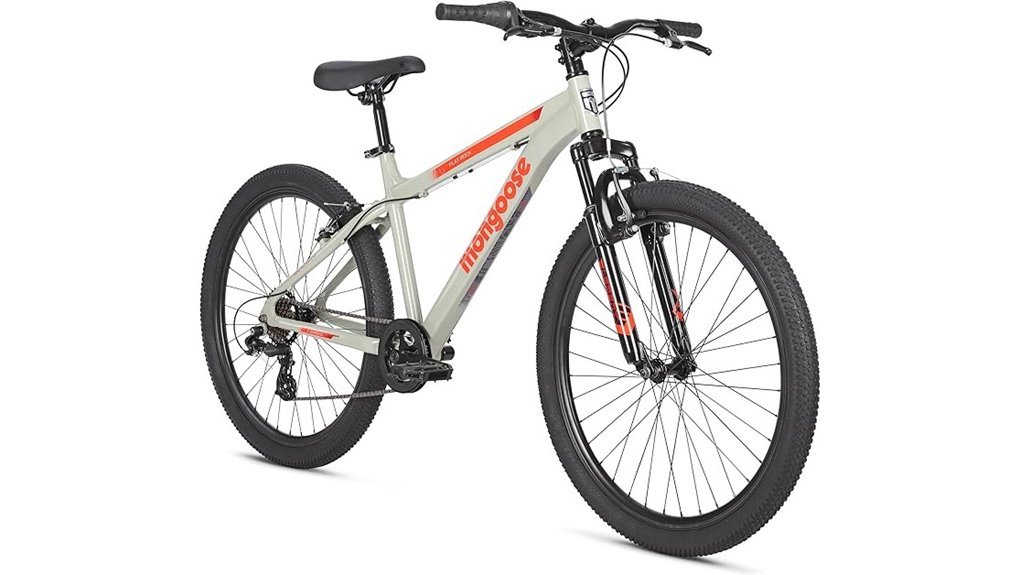
The Mongoose Flatrock is a practical entry point for riders who want a beginner-friendly mountain bike for trail riding and unpaved paths, especially those between 54 and 62 inches tall. This 2025 hardtail uses a lightweight aluminum frame, 26-inch wheels, and double wall alloy rims for a balance of durability and manageable weight. Front suspension helps absorb bumps, while knobby tires improve traction. Linear pull brakes provide dependable stopping power, and 7-speed twist shifters support simple gear changes. Assembly is required, and Mongoose backs the frame with a 5-year limited warranty.
Best For: Riders between 54 and 62 inches tall who want a beginner-friendly 2025 hardtail mountain bike for trail riding and unpaved paths.
Pros:
- Lightweight aluminum frame with 26-inch wheels and double wall alloy rims for a durable, manageable ride
- Front suspension fork and knobby tires help smooth bumps and improve traction on rough terrain
- 7-speed twist shifters and linear pull brakes offer simple shifting and dependable stopping power
Cons:
- Assembly is required
- 26-inch wheels may feel limiting for taller or more advanced riders
- Basic 7-speed setup may not be ideal for more demanding trail performance
WEIZE Mountain Bike Adult Bicycle 21-Speed MTB
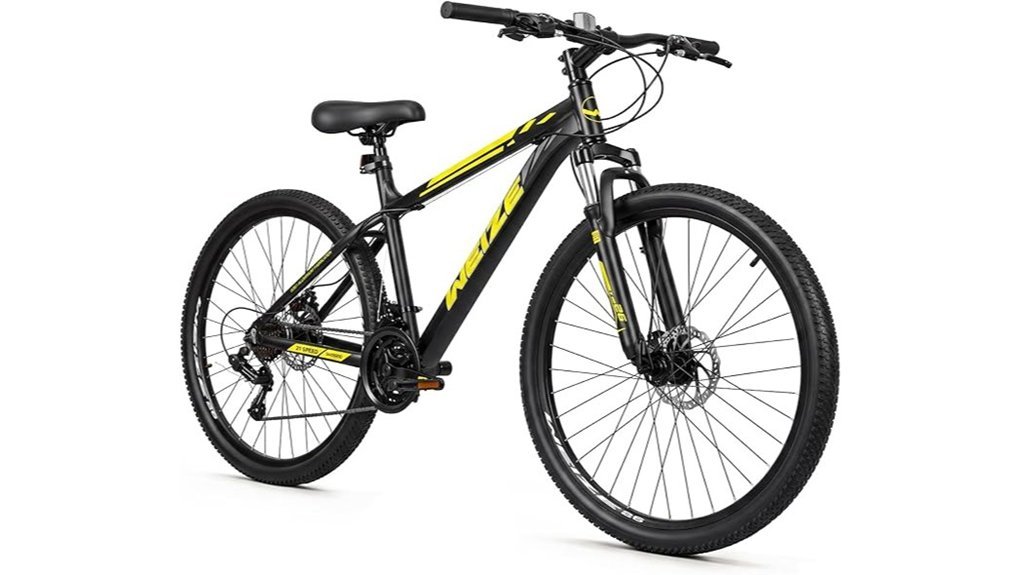
With 21 speeds and a lightweight aluminum frame, the WEIZE mountain bike suits new riders seeking versatility. Available with 26-inch or 27.5-inch wheels, it aims to balance agility and stability. Twist shifters, paired with front and rear derailleurs, let riders change gears smoothly for climbs or faster pavement stretches. A front suspension fork helps soften bumps, while an ergonomic saddle supports longer rides. For control, it uses a front mechanical disc brake and a rear disc brake, offering dependable stopping in wet or dusty conditions. It arrives 85% assembled, with tools, instructions, and a setup video included.
Best For: New riders and casual cyclists who want a versatile, easy-to-assemble mountain bike for commuting, trail riding, and mixed terrain.
Pros:
- 21-speed gearing with twist shifters makes climbing and speed changes easier.
- Front suspension and an ergonomic saddle improve comfort on longer rides.
- Mechanical and rear disc brakes provide dependable stopping in varied conditions.
Cons:
- May not be ideal for advanced riders seeking higher-end components.
- 85% assembly still requires some setup and adjustment.
- Best suited for light to moderate trail use rather than aggressive mountain biking.
Betterland 26 Inch Mountain Bike with 7/21 Speed
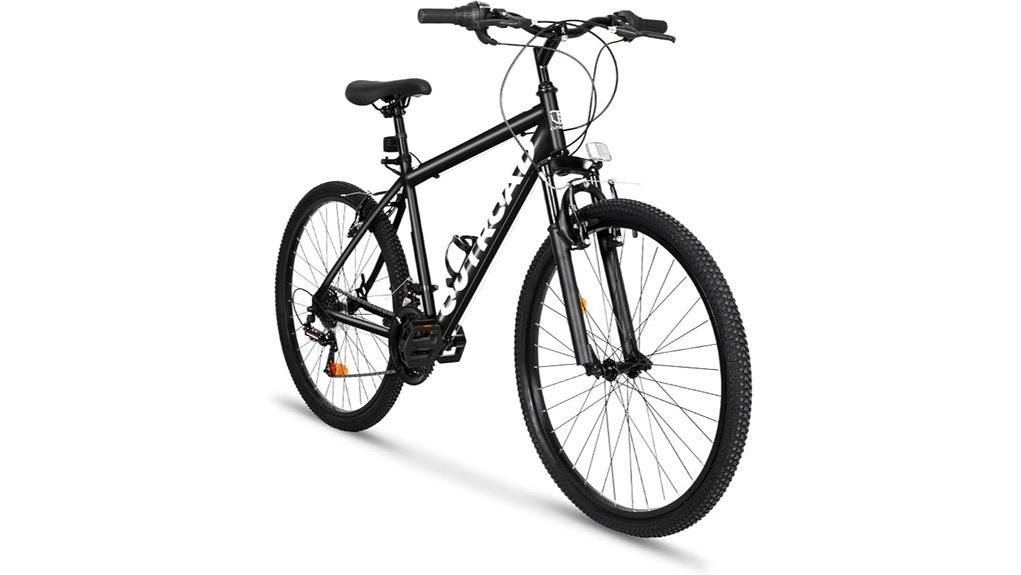
Betterland’s 26-inch mountain bike suits beginner riders between 5’2″ and 6′ tall. Its high-carbon-steel frame balances lightness with durability, while the 37-pound build supports stability on outdoor rides. A 330-pound weight capacity adds versatility. The dual V-type braking system delivers responsive control, and the adjustable ergonomic seat helps improve comfort. With a 7-speed drivetrain, shifting remains smooth for mixed terrain. Front suspension and anti-skid tires enhance grip and shock absorption on rough paths. The bike arrives 85% pre-assembled, with instructions, videos, and customer support available for setup help.
Best For: Beginner riders between 5’2″ and 6′ tall who want a durable, stable mountain bike for mixed terrain and recreational outdoor riding.
Pros:
- High-carbon-steel frame offers a strong balance of durability and lightness.
- Dual V-type brakes, front suspension, and anti-skid tires improve control and comfort on rough paths.
- 85% pre-assembled with instructions, videos, and customer support for easier setup.
Cons:
- At 37 pounds, it may feel somewhat heavy for some riders.
- 7-speed drivetrain may be limiting for more advanced or performance-focused cyclists.
- Best suited to riders within the 5’2″ to 6′ height range, so fit is less flexible.
26/27.5 Inch Lightweight Aluminum Mountain Bike with 21-Speed Gears
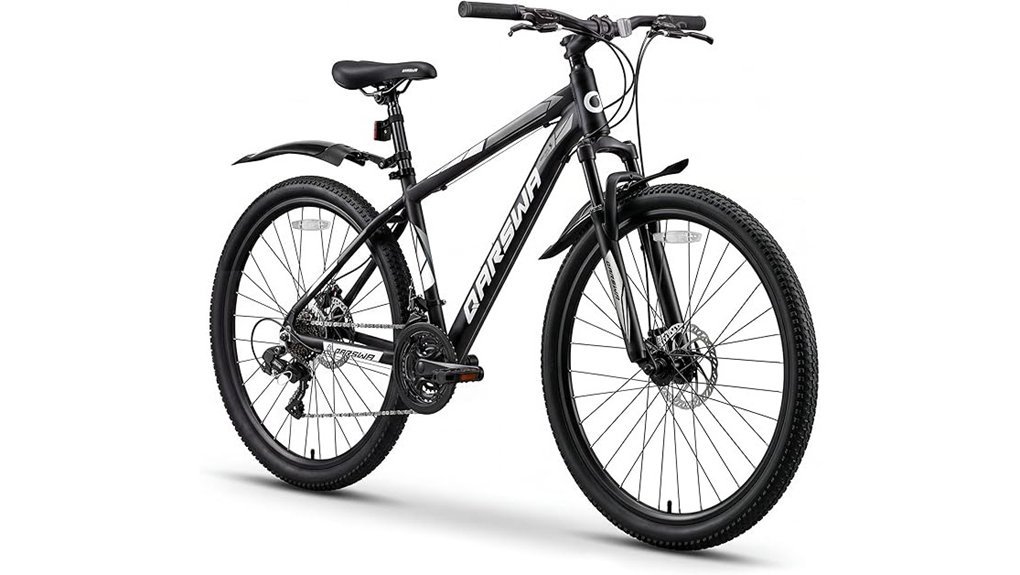
QARSWA’s lightweight aluminum frame and 21-speed drivetrain make it a strong fit for new riders seeking control. Available with 26- or 27.5-inch wheels, it suits men and women who want a versatile beginner bike under $600. Dual mechanical disc brakes deliver dependable stopping power, while the front suspension fork helps smooth rough trails. The high-elastic foam saddle and adjustable seat height improve comfort and fit. With 85% pre-assembly, setup is straightforward. Supporting up to 300 pounds, it works well for trail riding, commuting, and other outdoor use, offering practical value for active riders.
Best For: New riders, men and women, and budget-conscious cyclists looking for a versatile beginner mountain bike for trail riding, commuting, and light outdoor use.
Pros:
- Lightweight aluminum frame with 26- or 27.5-inch wheel options for easier handling and versatility.
- 21-speed drivetrain, front suspension fork, and dual mechanical disc brakes for control and dependable stopping power.
- 85% pre-assembled with adjustable seat height and a comfortable foam saddle for a more convenient setup and ride.
Cons:
- As a beginner-oriented bike, it may not be ideal for advanced riders seeking high-performance components.
- Assembly is mostly done, but some setup is still required before riding.
- The comfort and suspension are good for casual trail use, but may be limited on very rough terrain.
Mongoose Grafton Mountain Bike, 21 Speed, Aluminum Frame
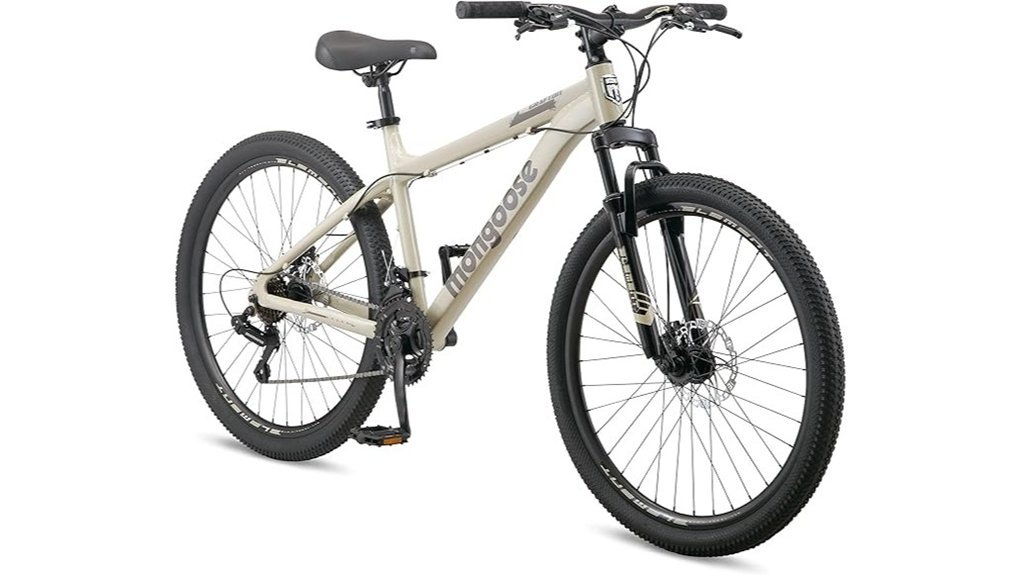
The Mongoose Grafton suits beginner riders 52 to 61 inches tall. This hardtail mountain bike uses a 26-inch wheelset and a lightweight aluminum frame for responsive handling. Its modern geometry and internal headset create a clean, streamlined appearance, while aluminum rims add durability. Front suspension helps smooth out rough trails, and 2.3-inch knobby tires improve grip and stability. A 21-speed drivetrain with trigger shifters supports easy gear changes, and mechanical disc brakes deliver dependable stopping in varied weather. Mongoose’s long BMX heritage and included assembly instructions add practical appeal.
Best For: Beginner riders 52 to 61 inches tall who want a lightweight, hardtail mountain bike for casual trail riding and everyday use.
Pros:
- Lightweight aluminum frame with modern geometry for responsive handling
- 21-speed drivetrain and trigger shifters for smooth, easy gear changes
- Mechanical disc brakes and front suspension improve control and comfort
Cons:
- 26-inch wheels may feel small for taller riders
- Hardtail design offers less rear-end cushioning on rough trails
- Assembly is required, even though instructions are included
Max4out 26 Inch Dual Suspension Mountain Bike
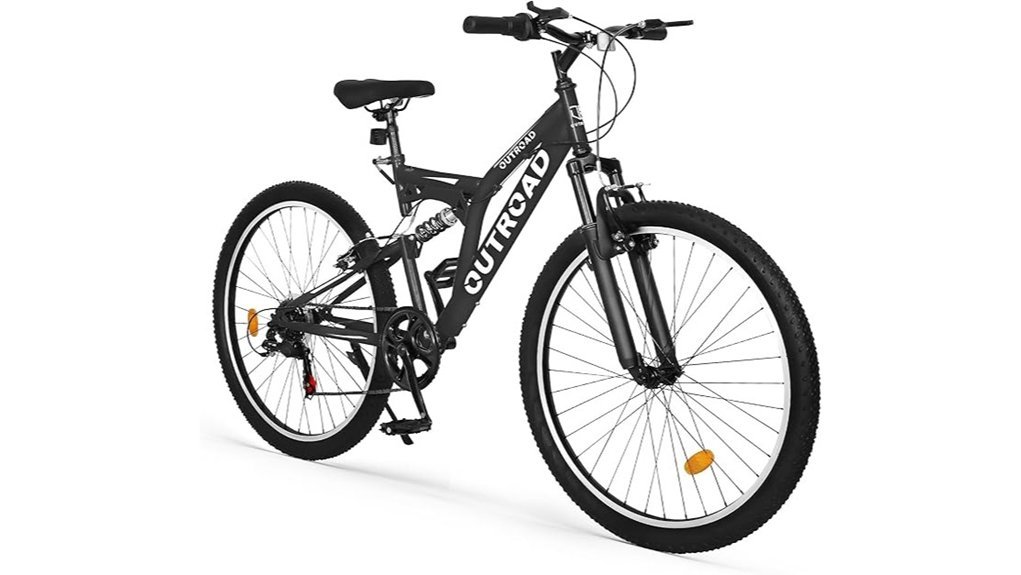
Built for newcomers needing comfort and control, the Max4out 26 inch dual suspension bike suits shorter riders best. Its adjustable frame fits riders from 52 to 62 inches tall, while the rugged high-carbon steel build supports up to 330 pounds. Dual suspension, pairing a responsive front fork with a rear coil shock, helps soften rough trails. The 26-inch all-terrain tires add traction, and the 7-speed drivetrain with twist shifters keeps gear changes simple. High-performance V-brakes provide dependable stopping power. At 39 pounds, it arrives nearly ready to ride in about 20 minutes.
Best For: Shorter beginners or casual riders looking for a comfortable, easy-to-control 26-inch mountain bike with dual suspension and simple gearing.
Pros:
- Dual suspension with front fork and rear coil shock helps smooth out rough trails.
- Adjustable frame fits riders from 52 to 62 inches tall and supports up to 330 lbs.
- 7-speed drivetrain with twist shifters and V-brakes keeps riding and stopping straightforward.
Cons:
- At 39 lbs, it may feel heavy for some riders to carry or maneuver.
- Best suited for shorter riders, so taller users may not get an ideal fit.
- High-carbon steel frame is durable but less lightweight than aluminum alternatives.
Goplus 26″ Mountain Bike with 6-Speed Drivetrain
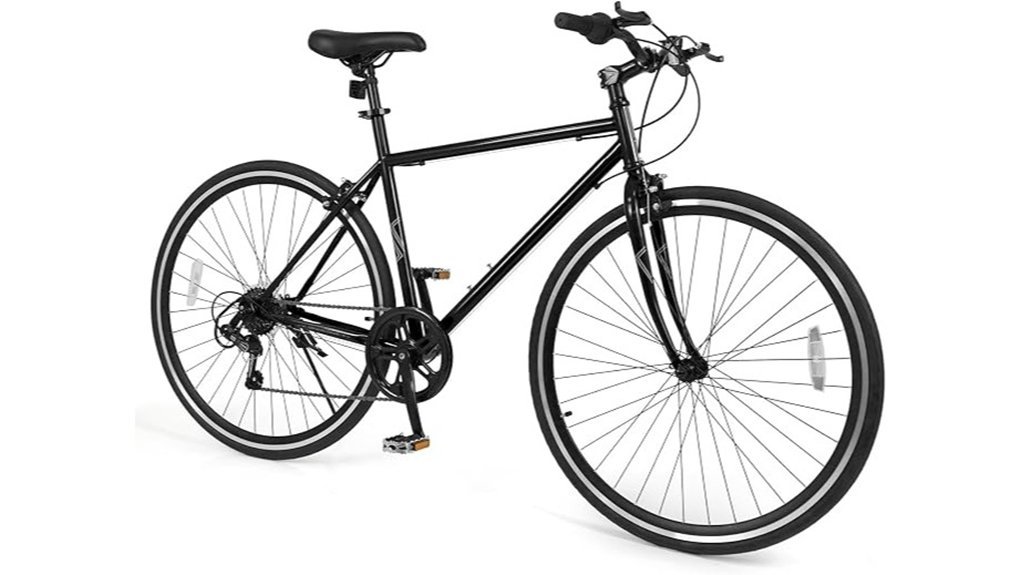
Goplus’s 26-inch mountain bike suits beginners needing simple control and reliable all-terrain performance. Its 6-speed drivetrain, paired with a straightforward twist shifter, allows smooth shifts across varied surfaces without complexity. Front and rear C-brakes provide secure, sensitive stopping, while the sturdy metal frame adds durability. The soft-padded saddle improves comfort on longer rides. Adjustable saddle height from 35.5 to 42 inches helps fit riders 64 to 74 inches tall. Puncture-proof, anti-skidding tires support traction, and 85% pre-assembly, plus included tools, streamline setup.
Best For: Beginners, teens, and adults who want a simple, durable 26-inch mountain bike with easy gearing and dependable all-terrain performance.
Pros:
- 6-speed drivetrain with a twist shifter makes gear changes simple and smooth
- Front and rear C-brakes offer secure, sensitive stopping power
- Adjustable saddle height and soft-padded seat improve comfort and fit
Cons:
- 6-speed setup may be too basic for riders wanting more gear options
- C-brakes are reliable but not as strong as some higher-end brake systems
- Assembly is mostly done, but still requires some setup with tools included
26″ 7-Speed Mountain Bike with Front Suspension
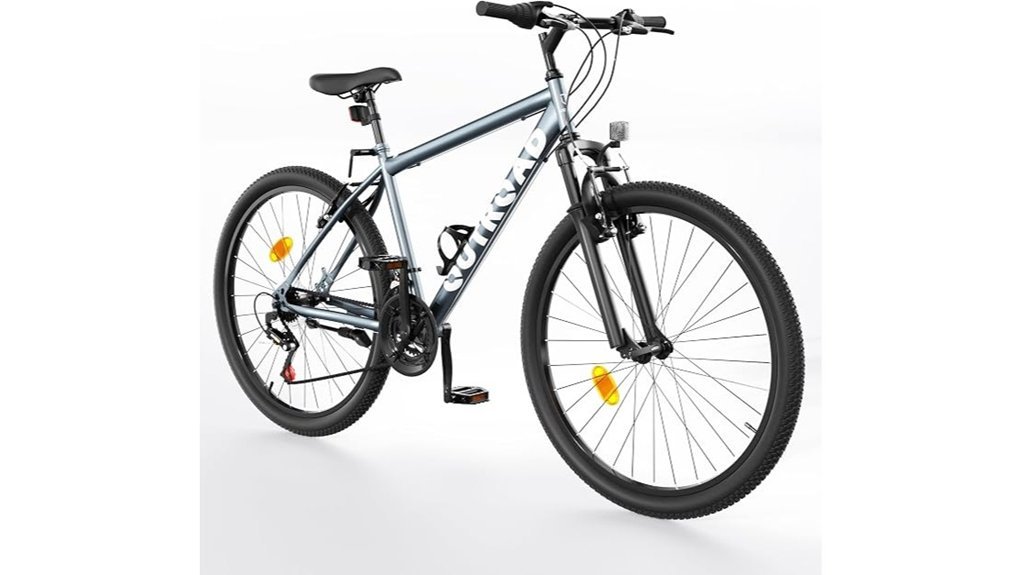
With a 330-pound capacity and adjustable 52-to-62-inch fit, this 26-inch model suits growing beginners. Its high-carbon steel frame uses aviation-grade tubing for stability, while the lightweight build and waterproof paint improve durability. A 7-speed drivetrain gives enough range for casual trail riding and neighborhood climbs. Front suspension helps soften bumps, and V-brakes provide dependable stopping control. The quick-release ergonomic seat and shaped handlebars support a more natural riding position. Because it arrives 90% pre-assembled with tools included, setup takes about 20 minutes. Video guides and 24/7 support further simplify ownership.
Best For: Beginners or growing riders who want a sturdy, easy-to-assemble 26-inch mountain bike for casual trail rides and neighborhood hills.
Pros:
- 330-pound capacity with a high-carbon steel frame for solid stability
- 7-speed drivetrain and front suspension make rides smoother on light trails
- 90% pre-assembled with tools, video guides, and 24/7 support for easy setup
Cons:
- 26-inch wheel size may not suit riders looking for larger, faster-rolling wheels
- V-brakes are dependable but less powerful than many disc-brake systems on wet or steep terrain
- Best suited for casual riding rather than serious mountain biking or technical trails
Max4out 26 Inch Mountain Bike for Adults
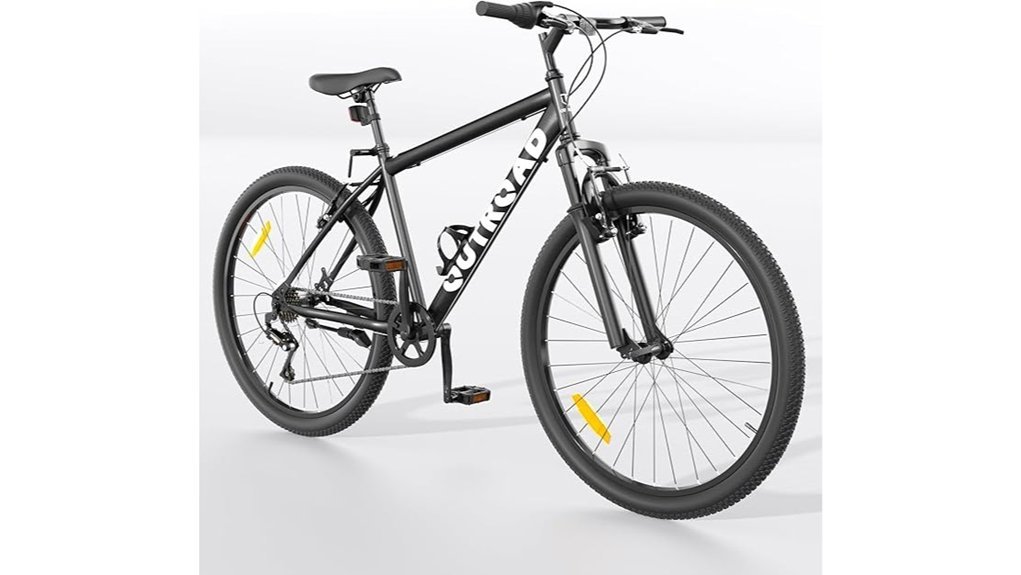
The Max4out 26 inch mountain bike suits beginner riders seeking a sturdy, affordable all-terrain option. It uses a solid iron frame with quality welding, a lightweight build, and front suspension to improve control on hills. The bike offers 7 or 21 speeds, 26-inch wheels, and a 330-pound weight capacity, making it adaptable for many riders between 52 and 60 inches tall. Front and rear double disc brakes add confidence, while quick-release wheels simplify upkeep. Arriving 90% assembled, it typically takes 15 to 20 minutes to finish setup.
Best For: Beginner and casual riders looking for a sturdy, affordable 26-inch mountain bike for light off-road, city, beach, or all-terrain use.
Pros:
- Solid iron frame with quality welding and a lightweight design for easier handling
- Front suspension and double disc brakes improve comfort and safety on varied terrain
- Arrives 90% assembled and usually takes only 15–20 minutes to set up
Cons:
- 26-inch wheel size and rider height range may not suit taller riders
- Iron frame can be heavier than aluminum alternatives despite the lightweight design
- Best suited for casual riding rather than advanced mountain biking or extreme trails
24/26 Inch 21-Speed Full Suspension Mountain Bike
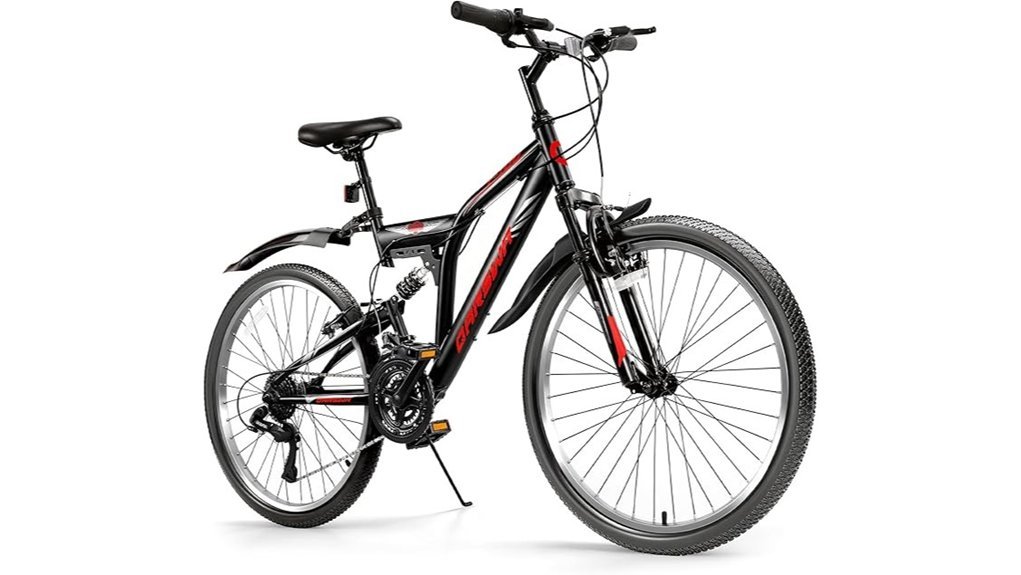
This 24/26-inch 21-speed full suspension bike suits beginners seeking comfort, control, and versatility. Built for adults from 4.2 to 6.0 feet tall, it supports up to 260 pounds and includes dual fenders for splash protection. The 21-speed drivetrain offers smooth shifting and better control across varied terrain. Front and rear suspension help absorb bumps, making daily rides more comfortable. A thickened, ergonomic saddle improves long-ride comfort for men and women. Arriving 85% pre-assembled, it includes tools, a setup video, and a quick-release front wheel for easier installation, storage, and maintenance. It works well for commuting and light trail use.
Best For: Beginners and everyday riders who want a comfortable, versatile 24/26-inch mountain bike for commuting and light trail use.
Pros:
- 21-speed drivetrain provides smooth shifting and good control across different terrain.
- Full front and rear suspension helps absorb bumps for a more comfortable ride.
- 85% pre-assembled with tools, a setup video, and a quick-release front wheel for easier assembly and maintenance.
Cons:
- Best suited for light trails rather than aggressive mountain biking.
- Full suspension and added features may make the bike heavier than simpler models.
- The height range listed may not fit every rider perfectly, so sizing should be checked carefully.
Factors to Consider When Choosing a Beginner Mountain Bike Under 600
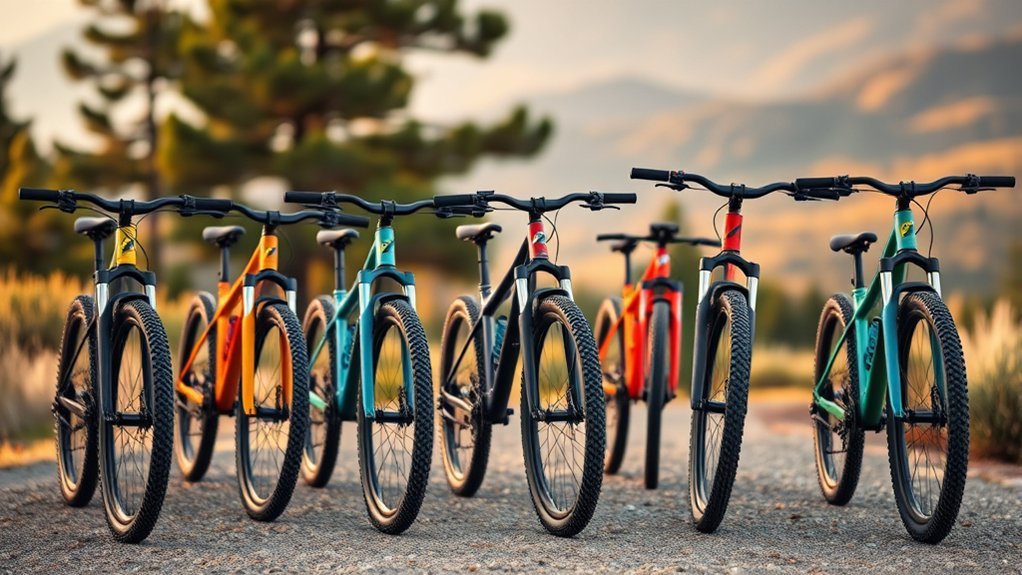
Choosing a beginner mountain bike under $600 often starts with evaluating frame material, since it affects weight, durability, and ride feel. Wheel size, suspension type, brake system, and gear range also shape how well the bike handles trails and everyday use. A balanced combination of these features can help a new rider get better control, comfort, and value.
Frame Material
Frame material is a key factor in a beginner mountain bike’s weight, comfort, and handling. Aluminum frames are typically lighter than steel, which makes them easier to maneuver and less tiring for new riders. They also resist corrosion and hold up well over time, offering a practical mix of durability and low maintenance. Steel frames, especially high-carbon versions, provide added strength and stability, which can be useful on rough trails. They usually weigh more, but their flexibility can soften bumps and create a smoother, more natural feel. For beginners, the best choice depends on intended use. A casual rider may value comfort and easy handling, while a more aggressive rider may prefer the steadier ride of steel.
Wheel Size
Wheel size plays a major role in how a beginner mountain bike feels on the trail, affecting both handling and stability. For many new riders, 26-inch wheels remain a practical choice because they turn quickly, handle tight corners well, and usually keep the bike lighter. That lighter feel can make early trail learning less intimidating. Larger 27.5-inch and 29-inch wheels can roll over roots, rocks, and uneven ground more easily, but they may feel less nimble and demand more control. Fit matters too, since wheel size should suit the rider’s height and the terrain they expect to ride. Tire width also matters, as wider tires can add traction and confidence on mixed surfaces, helping beginners stay steady.
Suspension Type
Suspension type shapes how a beginner mountain bike feels just as much as wheel size, especially once the trail gets rough. Two main options exist: hardtail and full suspension. A hardtail uses front suspension only, making it lighter, simpler, and usually more efficient on climbs. It is also easier to maintain and often costs less, which suits beginners and riders who stay on smoother trails. Full suspension adds rear travel for greater shock absorption, improving comfort and control on rocky, technical, or downhill routes. It feels more forgiving, but it also brings extra weight and higher cost. The best choice depends on intended use. Casual riders often value hardtail simplicity, while those expecting steep, demanding terrain may benefit more from full suspension.
Brake System
Brake system is one of the most important safety factors in a beginner mountain bike under $600, because it directly affects stopping power, control, and rider confidence. V-brakes and C-brakes are common on entry-level models because they are simple, dependable, and easier to maintain for novice riders. Mechanical disc brakes usually provide stronger stopping power than rim brakes, which can be valuable in wet or muddy conditions. Dual mechanical disc brakes often improve overall braking balance, while linear pull brakes remain a practical, budget-friendly choice. Responsiveness matters on steep descents and rough trails, where predictable control can make riding feel safer. A beginner-friendly bike should match the rider’s skill level and offer a brake system that feels stable, smooth, and easy to adjust.
Gear Range
Gear range can shape how comfortably a beginner mountain bike under $600 handles different trails and inclines. A broader setup, usually spanning 7 to 21 speeds, gives new riders enough flexibility to move from steep climbs to flatter paths without feeling limited. A 7-speed system is often the simplest choice, offering manageable control for basic trail use and reducing confusion for novice riders. By contrast, a 21-speed drivetrain provides finer adjustments, which can help on mixed terrain and support gradual skill development. Twist shifters are common in this category because they let riders change gears with an easy, familiar motion. Bikes with both front and rear derailleurs also handle changing gradients more effectively, improving adaptability as confidence grows.
Assembly Ease
Assembly setup can be an important factor for beginners choosing a mountain bike under $600, especially when the bike arrives about 85% pre-assembled. That level of readiness can help riders get on the trail sooner with less stress. Clear instructions and video guides further simplify the process, reducing confusion for first-time owners. Most beginner models require only common household tools, so specialized equipment is rarely necessary. Some bikes also include quick-release wheels or handlebars, which make adjustments and maintenance easier. Depending on the design and familiarity with bike mechanics, assembly usually takes 15 to 30 minutes. For new riders, ease of setup can make the buying experience smoother and the first ride more enjoyable.
Frequently Asked Questions
How Do I Choose the Right Frame Size for My Height?
The right frame size is chosen by matching rider height and inseam to the manufacturer’s sizing chart, then checking reach and standover clearance. A rider should stand over the bike with a few centimeters of clearance and be able to sit with a slight knee bend at the pedal’s lowest point. If between sizes, the smaller frame is usually easier to control, while the larger one can feel more stretched and stable.
Which Bike Maintenance Tasks Should Beginners Learn First?
First, beginners should learn tire pressure checks, chain lubrication, brake inspection, and cleaning the drivetrain; these four tasks prevent most early problems. A mechanic once compared a bicycle to a houseplant: ignore the basics, and it wilts quietly. Regularly tightening bolts and checking for worn brake pads also builds confidence. In 2024, cyclists who maintained these essentials reported fewer breakdowns and safer rides, according to shop service data.
Are Hydraulic Brakes Worth It on a Budget Mountain Bike?
Hydraulic brakes are often worth it on a budget mountain bike because they deliver stronger stopping power, smoother modulation, and less hand fatigue than mechanical brakes. They also need less frequent adjustment. However, they can raise the price and may cost more to service if issues arise. For a beginner, they are a good upgrade if the bike still fits the budget and the rest of the components are reliable.
What Tire Width Is Best for Mixed Trail and Pavement Riding?
A 2.1 to 2.3 inch tire width is often best for mixed trail and pavement riding. It offers enough volume for trail grip, comfort, and stability, while staying efficient on hard surfaces. Narrower tires roll faster on pavement, but lose traction off-road. Wider tires improve control on loose ground, though they add drag. For a beginner, this middle range usually provides the most balanced performance overall.
How Often Should I Service a Beginner Mountain Bike?
A beginner mountain bike should be serviced every 3 to 6 months, or after about 20 to 40 hours of hard riding. Regular checks, regular cleaning, regular lubrication help prevent wear and improve safety. Tires, brakes, chain, and bolts deserve frequent attention, while cables and suspension may need less frequent but scheduled inspection. If the bike is ridden in mud, rain, or dust, service should happen sooner than usual.