Page, Arizona makes an excellent base for red-rock scenery, slot canyons, Lake Powell, and Colorado River country, but these outings require very different levels of planning. You can pair Antelope Canyon with Horseshoe Bend in one day, spend a few hours around Glen Canyon Dam, or devote a full day to Rainbow Bridge, Vermilion Cliffs, or the Lees Ferry area. The key is checking reservations, permits, weather, and changing lake access before you leave.
Quick Answer
The best day trips from Page include a guided Antelope Canyon visit, Horseshoe Bend, Glen Canyon Dam and Lake Powell, Rainbow Bridge, Vermilion Cliffs and Paria Canyon, Marble Canyon and Lees Ferry, and a Navajo-led cultural experience. Reserve Antelope Canyon early, treat Rainbow Bridge as a full-day outing, and always check current desert and lake conditions.
Key Takeaways
- Antelope Canyon requires an authorized guide; you cannot independently walk into the tribal park canyon.
- Horseshoe Bend is one of the easiest outings, with a 1.5-mile round-trip accessible trail, but much of the rim remains exposed.
- Rainbow Bridge is a full-day commitment, and low Lake Powell levels can change dock and shoreline access.
- Paria Canyon and Coyote Buttes use different permit systems; do not assume one permit covers The Wave or Coyote Buttes South.
- Heat, flash floods, road conditions, and limited cell service can turn a simple desert outing into a serious backcountry trip.
Page, Arizona Day Trips at a Glance
| Day Trip | Time to Allow | Booking / Permit | Best For |
| Antelope Canyon | Half day | Authorized guided tour required | Slot-canyon scenery and photography |
| Horseshoe Bend | 1–2 hours | No hiking reservation; paid city parking | Easy scenic overlook |
| Glen Canyon Dam and Lake Powell | 2–4 hours | Park fees may apply depending on stops | Scenic driving and short walks |
| Rainbow Bridge | Full day | Boat access or permitted backcountry route | Remote scenery |
| Vermilion Cliffs / Paria Canyon | Half to full day | Permit requirements depend on area | Backcountry hiking |
| Marble Canyon / Lees Ferry | Half to full day | Glen Canyon entrance fees apply | River views, history and wildlife |
| Navajo-led cultural experience | Varies by program | Usually advance booking | Culture, food, music and storytelling |
Warning: Summer heat and flash floods are serious hazards around Page. Start exposed hikes early, carry more water than you expect to need, and do not enter slot canyons or narrow washes when storms or flash flooding are possible. Remote roads may also become impassable after rain.
Antelope Canyon Guided Tour and Photography
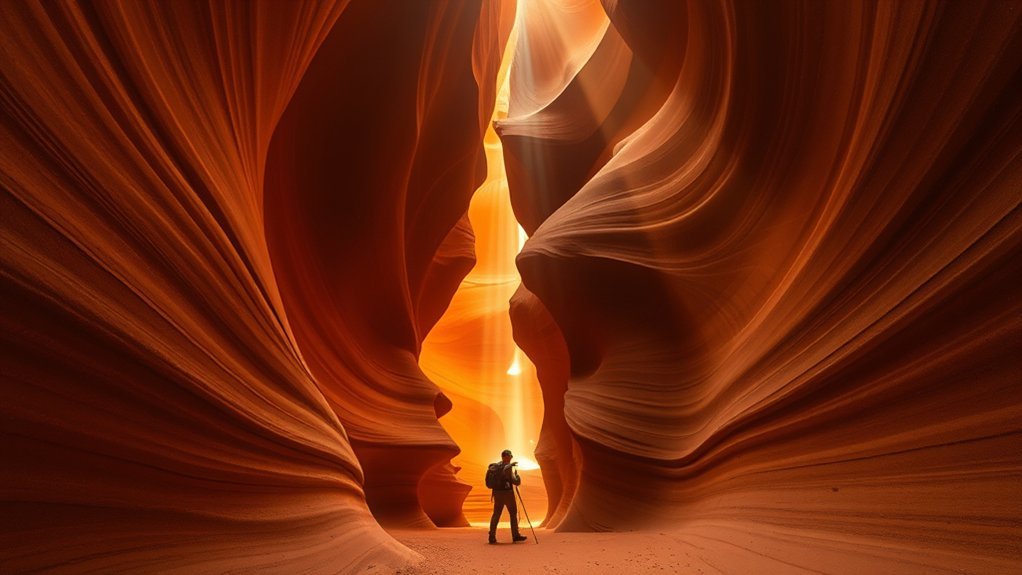
Antelope Canyon’s narrow sandstone corridors are among the most memorable sights near Page, but this is not an independent hike. Navajo Nation Parks requires an authorized guide for all Antelope Canyon locations. Book through an approved operator and follow that operator’s rules for arrival time, bags, cameras, and other equipment.
Inside the canyon, your guide leads you through sculpted walls where color changes with the sun angle. Wide-angle lenses and modern phone cameras work well in the confined space, but do not assume tripods or other photography equipment will be allowed. Rules differ among operators, and dramatic shafts of light depend on the season, weather, sun angle, and tour time.
If photography is your priority, concentrate on the curves, reflected light, sandstone layers, and smaller abstract details instead of waiting for one famous composition. Other guided slot-canyon experiences around Page may offer a different pace, but use only authorized operators and confirm exactly which canyon your reservation covers.
Note: Navajo Nation Parks prohibits dogs at its park locations. If you have accessibility needs or travel with a service animal, contact your chosen operator before booking so you can confirm the current arrangements for that specific tour.
Horseshoe Bend at Sunrise or Sunset
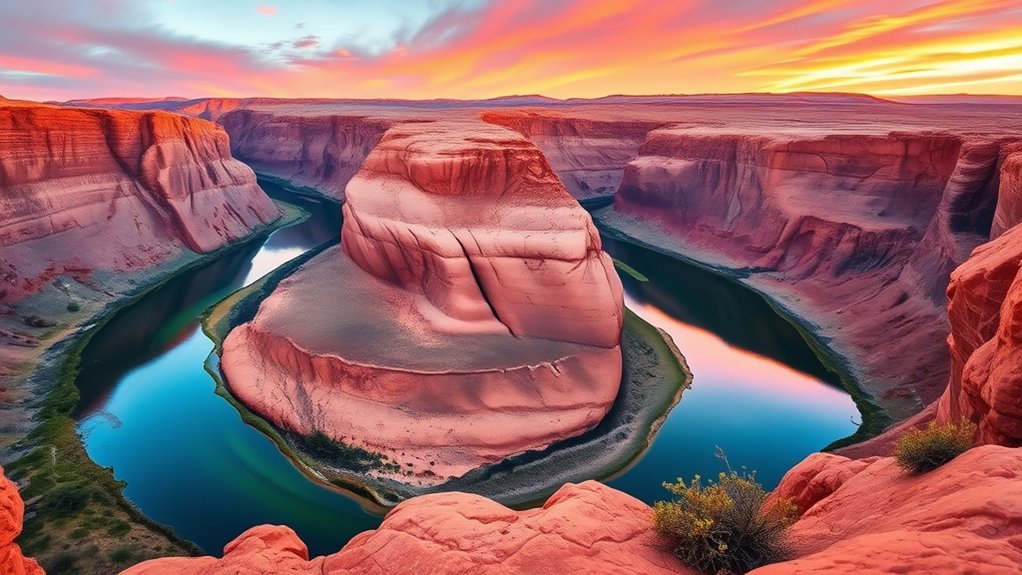
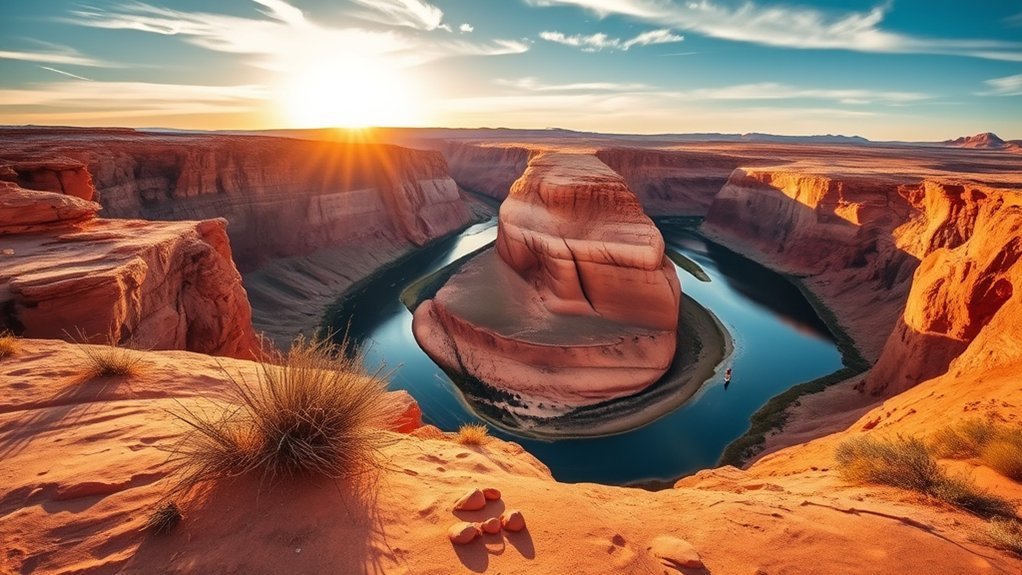
At dawn or late in the day, Horseshoe Bend gives you a broad view of the Colorado River wrapping around a massive sandstone escarpment. The light changes quickly, so arriving with time to watch the canyon brighten or darken is often more rewarding than rushing in for a single photograph.
According to the National Park Service, the hardened trail is about 1.5 miles round trip and meets Architectural Barriers Act accessibility standards. Two shade structures sit along the route, but there is no shade at the overlook. The City of Page charges for trailhead parking, and federal recreation passes do not cover that parking fee.
The main Horseshoe Bend viewing platform has a safety railing, but much of the surrounding rim remains exposed. Stay well back from unprotected edges and keep children and pets close.
- Visit early or late to avoid the strongest midday heat.
- Carry water even though the walk is relatively short.
- Use a wide-angle lens or panorama mode for the full river bend.
- Do not mistake the protected viewing platform for a fully fenced rim.
- Leashed pets are permitted on the Horseshoe Bend trail.
Glen Canyon Dam and Lake Powell Scenic Drive
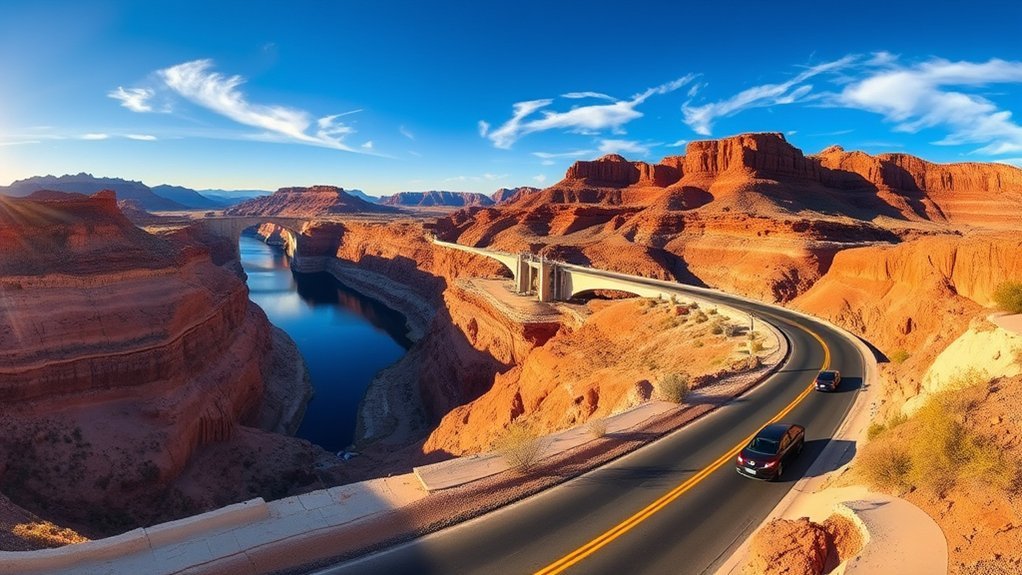
Glen Canyon Dam and the southern end of Lake Powell are easy to combine with Horseshoe Bend because they sit close to Page. Start at the Carl Hayden Visitor Center for exhibits and broad views of the dam, then choose a short overlook or continue toward the Wahweap area to see Lake Powell’s sandstone shoreline.
The separate Glen Canyon Dam Overlook gives you another perspective over the Colorado River, but the short route includes steep, uneven rock steps and intermittent handrails. It should not be confused with the more accessible visitor-center experience.
Current access note: As checked August 16, 2026, the NPS seasonal-hours page lists the Carl Hayden Visitor Center as open daily but dam tours as closed. Check the page again before your trip because hours and tours can change.
Lake Powell access also changes with reservoir elevation. The NPS changing-lake-levels page tracks current launch ramps and boating infrastructure. On August 13, 2026, NPS reported a lake elevation of 3,520.25 feet; at that level, several traditional launch points had restrictions or closures. If your day includes a boat, confirm your usable ramp immediately before leaving Page.
Rainbow Bridge National Monument Boat Excursion
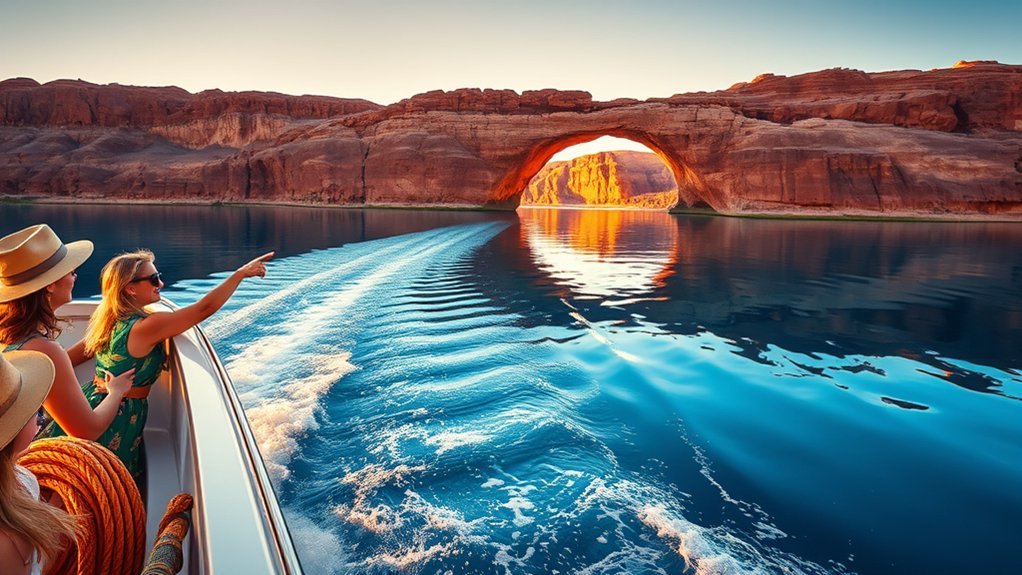
Rainbow Bridge is the most demanding outing on this list. There are no roads to the monument. Most visitors arrive by boat across Lake Powell, while the overland approach from the Navajo Nation is a long backcountry route that requires permission and substantial preparation.
The National Park Service’s current Rainbow Bridge guidance says a boat trip with no additional stops and about an hour at the monument takes roughly seven hours round trip. Concession-operated tours may run on a limited schedule, so this trip deserves most or all of your day rather than being added casually to several other attractions.
Low lake levels have also changed the final approach. At current conditions, the courtesy dock does not connect directly to land. Visitors may encounter unstable or muddy shoreline conditions before reaching the approximately 1.2-mile trail to the bridge. Check the current NPS access notice before committing to the trip.
Rainbow Bridge is sacred to several Indigenous peoples of the Four Corners region. Visit quietly, follow posted guidance, stay on the established route, and treat the site as a culturally important landscape rather than simply a photo stop.
- Check current lake level, dock access, weather, and boat-tour schedule.
- Allow a full day rather than trying to squeeze the trip between other reservations.
- Carry drinking water, food, sun protection, and everything you need for the boat trip.
- Do not rely on mid-lake fuel or services.
- Pets are not permitted within Rainbow Bridge National Monument beyond the limited vessel exception at the courtesy dock.
Vermilion Cliffs and Paria Canyon Day Hike
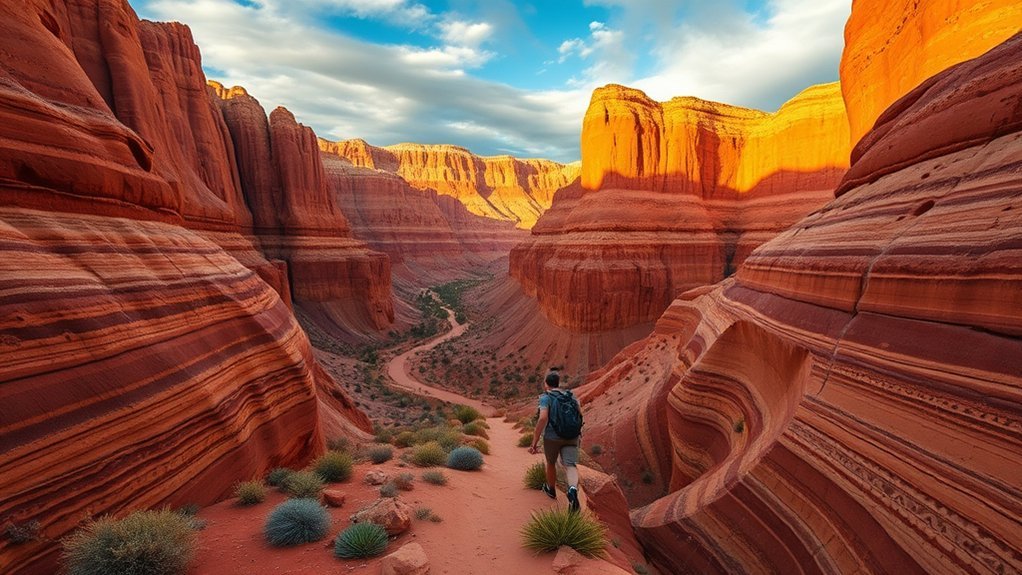
Vermilion Cliffs National Monument is spectacular, but it is not one single trail with one permit rule. Paria Canyon, Buckskin Gulch, Coyote Buttes North, Coyote Buttes South, and other parts of the monument have different access requirements. Decide exactly where you intend to hike before applying for anything.
Permits and Access
For ordinary day use in the Paria Canyon and Buckskin Gulch permit area, the Bureau of Land Management requires a day-use permit. BLM provides trailhead QR-code payment and an advance Recreation.gov option. General Paria Canyon day use does not have the limited daily quota used for Coyote Buttes.
That distinction matters because Coyote Buttes North, including The Wave, and Coyote Buttes South require separate permits. A Paria Canyon day-use permit does not authorize you to enter those areas. Overnight travel through Paria Canyon also uses a separate advance-permit system.
- Identify your exact trailhead and permit area before leaving Page.
- Carry proof of the correct permit and follow BLM display instructions.
- Do not assume a Paria Canyon permit covers The Wave.
- Check road and weather conditions before committing to remote access roads.
- Carry offline navigation because dependable cell service should not be assumed.
Hike Route Options
Paria Canyon and Buckskin Gulch day-use access includes trailheads such as White House, Wire Pass, Buckskin Gulch, and Lees Ferry. A short out-and-back lets you enjoy sandstone walls and desert scenery without committing to a long through-hike, while longer routes require more navigation, water, and time.
Do not judge the difficulty only by mileage. Deep sand, uneven washes, water, mud, heat, route-finding, and changing conditions can make a modest distance much slower than a maintained park trail. Choose a conservative turnaround time and be willing to shorten your route.
Safety and Preparation
The BLM warns visitors about extreme heat and cold, flash floods, deep sand, rough roads, and remote conditions in Vermilion Cliffs National Monument. House Rock Valley Road may become impassable when wet, and some other routes require high-clearance four-wheel drive.
- Carry ample water, sun protection, food, and emergency supplies.
- Download a map and route information before losing service.
- Do not enter narrow canyons when flash flooding is possible.
- Wear footwear suited to sand, rock, mud, and uneven ground.
- Tell someone your route and planned return time.
- Do not take an unsuitable vehicle onto roads described as requiring high clearance or four-wheel drive.
Marble Canyon and Lees Ferry River Access
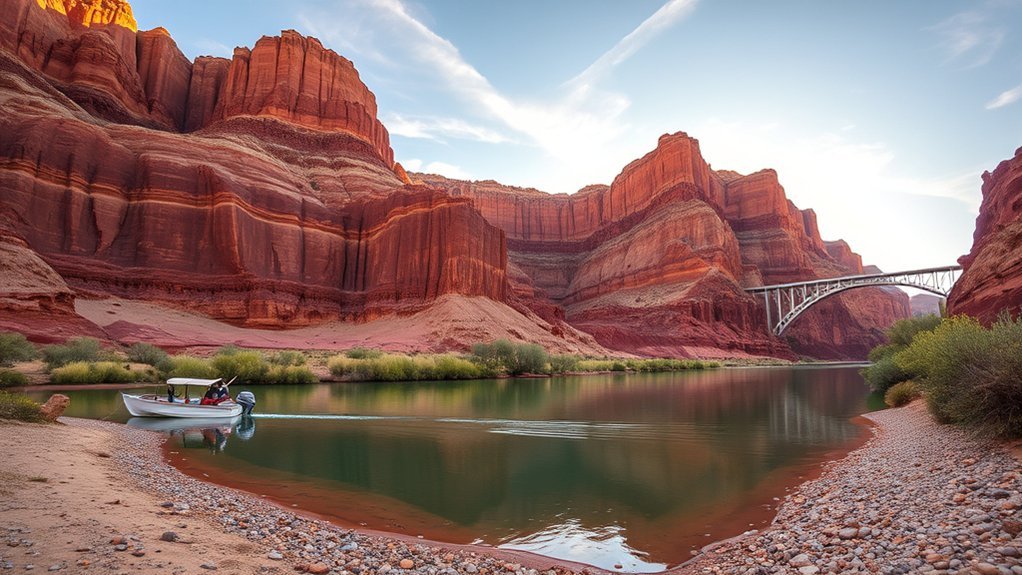
Marble Canyon and Lees Ferry make a natural scenic-drive day from Page. The National Park Service places Lees Ferry about 42 miles from Page by highways 89 and 89A. Stop at Navajo Bridge before descending toward the river so you can see the canyon from above as well as from water level.
Marble Canyon Overview
At Marble Canyon, the Colorado River cuts between steep desert walls as the landscape transitions toward Grand Canyon country. Navajo Bridge gives you one of the easiest elevated views of this stretch of river, and the nearby interpretive center adds useful geological and human-history context.
Look overhead as well as down. California condors are sometimes observed around Navajo Bridge, particularly when birds are using the cliffs and river corridor. Sightings are never guaranteed, but the stop is worthwhile even without wildlife.
- Walk Navajo Bridge for high views into Marble Canyon.
- Bring binoculars if wildlife watching interests you.
- Use marked pullouts rather than stopping along narrow highway shoulders.
- Expect strong sun and limited shade at exposed viewpoints.
- Continue to Lees Ferry for river-level scenery and historic sites.
Lees Ferry River Access
At Lees Ferry, you can drive down to the Colorado River and watch anglers, kayakers, guides, and permitted river trips prepare for the water. The area includes public launch facilities, a campground, historic sites, and short walks near the river.
Current NPS information lists potable water and launch-ramp restrooms as available. If you are visiting in 2026, note that the upper loop of the Lees Ferry campground is scheduled to remain closed for renovations through September 30, 2026. Day-use river access remains a worthwhile stop, but check NPS alerts if construction could affect your plans.
Morning and late afternoon bring softer light to the cliffs, while midday can be intensely hot. If you want a longer water-based experience, look for an authorized commercial river or kayaking operator rather than assuming you can launch any type of vessel without checking the applicable river rules.
Navajo-Led Cultural Experience in Page
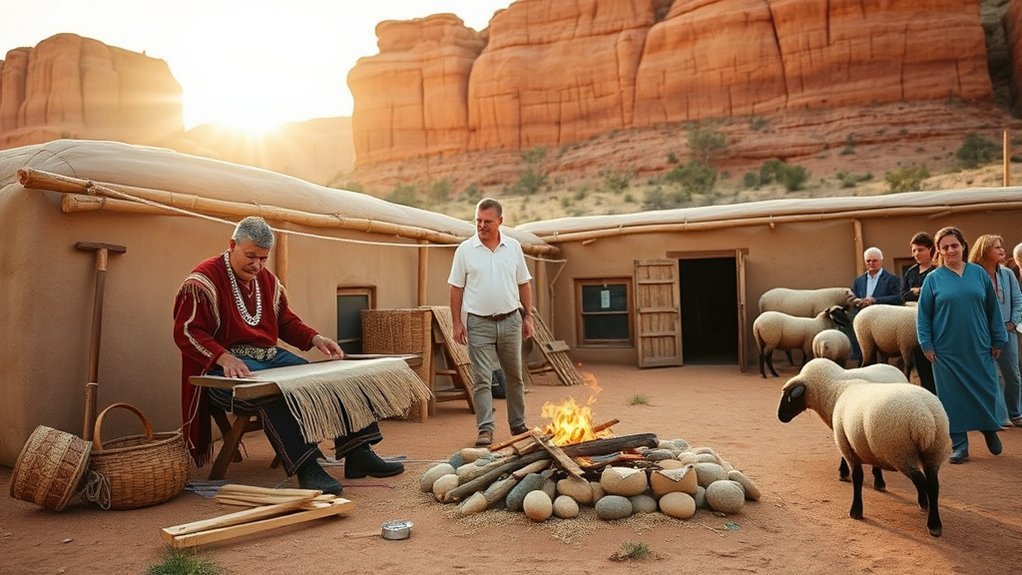
A cultural experience can add important context to the landscapes surrounding Page, but avoid treating Navajo communities as an open-air attraction. Choose a program that is Navajo-owned or Navajo-led, book through the operator, and let the hosts decide what traditions, stories, foods, demonstrations, or spaces are appropriate to share.
One current option in Page is Red Heritage, a Navajo-owned and operated dinner theater that presents Native music and dance alongside a meal. Other Navajo-owned guides and businesses offer different experiences, so compare the program with your interests rather than assuming every cultural tour includes the same activities.
- Book directly with a Navajo-owned or authorized operator when possible.
- Ask before photographing people, ceremonies, artwork, or private spaces.
- Listen to the language and terminology your hosts use for their own culture.
- Purchase jewelry, weaving, or art directly from local artists when practical.
- Do not expect access to ceremonies or private homes simply because you booked a tour.
The most rewarding cultural visits are usually the ones where you arrive ready to listen rather than with a checklist of experiences you expect someone to perform.
Easy One-Day Combinations From Page
You do not need to cram every attraction into the same day. A few combinations work naturally, while the more remote trips are better treated as the day’s main event.
- Classic first day: reserve Antelope Canyon, then visit Horseshoe Bend before or after your tour.
- Easy scenic day: combine Horseshoe Bend with Carl Hayden Visitor Center, Glen Canyon Dam viewpoints, and Lake Powell overlooks.
- Colorado River day: drive to Navajo Bridge, Marble Canyon, and Lees Ferry, leaving time for short walks and wildlife watching.
- Remote boat day: devote the day to Rainbow Bridge and avoid scheduling a fixed evening activity immediately afterward.
- Backcountry day: make Vermilion Cliffs or Paria Canyon your main objective so you have generous margins for roads, weather, navigation, and heat.
Pro Tip: Put fixed reservations, especially Antelope Canyon tours, on your schedule first. Fit flexible stops such as Horseshoe Bend or scenic overlooks around them instead of risking a missed check-in because an earlier hike or drive took longer than expected.
Frequently Asked Questions
Are pets allowed on these tours or trails?
Rules vary sharply by destination. Navajo Nation Parks prohibits dogs at its park locations, including Antelope Canyon. Rainbow Bridge also prohibits pets beyond the limited vessel exception at the courtesy dock. Leashed pets are permitted at Horseshoe Bend and in many other parts of Glen Canyon National Recreation Area. Check the current NPS pet rules and your tour operator’s policy before leaving.
What cellphone coverage is available at each destination?
Service is generally easier to find around Page and major developed areas than in slot canyons, backcountry sections of Vermilion Cliffs, or remote parts of Lake Powell. Do not rely on a phone connection for wilderness navigation. Download maps, permits, reservation details, and emergency information before your trip.
Are restrooms and drinking water available along the routes?
It depends on the stop. Horseshoe Bend has restrooms at the parking area but not along the trail. Lees Ferry currently has potable water and launch-area restrooms. Rainbow Bridge has very limited dock facilities and no services along the trail. Backcountry areas may have no reliable water or facilities at all, so start remote hikes carrying everything you need.
Do any sites require permits or special passes beforehand?
Yes. Antelope Canyon requires an authorized guided tour. Paria Canyon and Buckskin Gulch require the appropriate day-use or overnight permit, while Coyote Buttes North and South use separate permit systems. Glen Canyon entrance or vessel fees may also apply. Horseshoe Bend does not require a hiking reservation, but the City of Page charges for parking.
Are these trips wheelchair- or stroller-accessible?
Horseshoe Bend has an ABA-compliant trail and an accessible protected viewing area, and the Carl Hayden Visitor Center is accessible. Many backcountry routes are not: sand, stairs, rough rock, changing shorelines, and unmaintained terrain create barriers. Rainbow Bridge’s current low-water approach is particularly difficult. Check the NPS accessibility information and individual tour operators before booking.
Can I visit Rainbow Bridge in half a day?
Usually not if you are traveling by boat from the Page area. NPS describes a no-stop boat outing with roughly an hour at the monument as about seven hours round trip. Changing lake conditions can add uncertainty, so plan Rainbow Bridge as a full-day excursion.
Do I need a four-wheel-drive vehicle for Vermilion Cliffs?
Not for every destination, but some remote roads require high-clearance four-wheel drive and experience in deep sand. Even maintained dirt roads can become impassable when wet. Check the exact BLM access guidance for your chosen trailhead rather than assuming an ordinary passenger car will work.
Can I do Antelope Canyon and Horseshoe Bend on the same day?
Yes. They are one of the easiest combinations from Page. Reserve your Antelope Canyon tour first because it has a fixed check-in time, then place the more flexible Horseshoe Bend visit before or after it. Leave extra time for parking, meals, traffic, and photography rather than scheduling the two stops back to back.
Conclusion
Page gives you several very different day trips within one red-rock region. For an easy first day, pair Antelope Canyon and Horseshoe Bend. Choose Glen Canyon Dam and Lake Powell when you want shorter scenic stops, Lees Ferry and Marble Canyon for river scenery and history, or Vermilion Cliffs when you are prepared for real backcountry conditions. Save Rainbow Bridge for a day when changing lake access and a long boat trip can set the schedule. A little advance planning gives you more time to enjoy the landscape instead of solving permit, parking, or access problems after you arrive.
Sources
- Navajo Nation Parks & Recreation — Antelope Canyon Tour Operators — guided-access requirements and official operator information.
- National Park Service — Horseshoe Bend — trail distance, accessibility, shade, parking, pets, and exposed-rim safety.
- National Park Service — Changing Lake Levels — current Lake Powell elevation, launch-ramp status, and Rainbow Bridge water access.
- National Park Service — Rainbow Bridge Basic Information — boat-trip timing, current shoreline access, trail distance, and facilities.
- Bureau of Land Management — Paria Canyon Permits — day-use, overnight, Buckskin Gulch, and permit-system distinctions.
- National Park Service — Lees Ferry — distance from Page, river access, facilities, and current campground information.