A crimson sunrise over red rock feels like a promise you can reach out and touch. Sedona, Arizona combines rugged backcountry trails, quiet canyon creeks, high-energy vortex sites, and a thriving artisan culinary culture. Whether you are scrambling slickrock along Cathedral Rock, floating over the desert at dawn in a hot-air balloon, or browsing southwestern galleries in Tlaquepaque, planning logistics in advance ensures you spend less time searching for parking and more time taking in the views. This ultimate guide covers the 25 best things to do in Sedona, complete with exact trail stats, seasonal timing, permit details, and local safety rules to help you map your ideal Southwest itinerary.
Quick Answer
The top things to do in Sedona include iconic hikes like Devil’s Bridge, Cathedral Rock, and Bell Rock; taking a scenic drive along the Red Rock Scenic Byway (SR 179); swimming at Slide Rock State Park; and exploring Tlaquepaque Arts & Shopping Village. For smooth logistics, utilize the free Sedona Trailhead Shuttle for popular trailheads and purchase a Red Rock Pass in advance.
Key Takeaways
- Parking & Shuttles: Trailhead lots at Cathedral Rock and Dry Creek Road fill before dawn. Use the free Sedona Shuttle (running Thursday through Sunday and during peak seasons) from park-and-ride lots.
- Passes Required: A Red Rock Pass ($5/day, $15/week) or an America the Beautiful Interagency Pass is mandatory when parking at USFS trailheads throughout Coconino National Forest.
- Timing & Weather: Spring (March–May) and Autumn (September–November) offer the most pleasant hiking weather. Summer requires dawn trail starts to avoid life-threatening triple-digit desert heat.
- Leave No Trace: Stay on marked slickrock paths, preserve fragile biological soil crusts, and respect indigenous archaeological heritage at all cave alcoves.
1) Bell Rock Trail
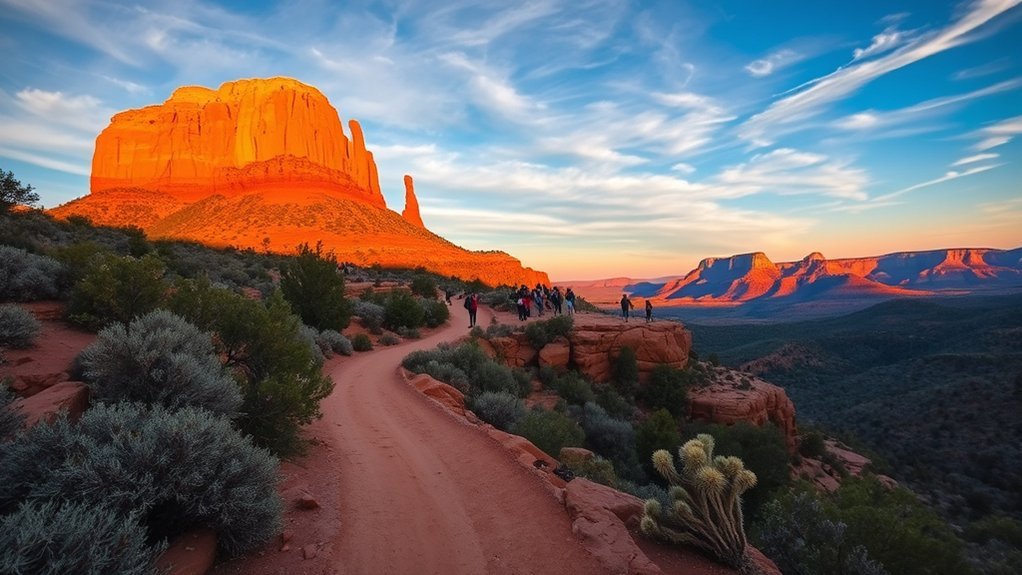
Bell Rock is one of Sedona’s most recognizable landmarks and houses one of its primary energetic vortexes. The Bell Rock Pathway and Trail is a customizable ~1.2 to 1.8-mile out-and-back route that lets you choose your own adventure—ranging from an easy, level stroll along the base to technical Class 3–4 scrambles up the formation’s northern face for experienced climbers.
The lower loop delivers wide-open, sweeping red-rock panoramas toward Courthouse Butte, making it ideal for families and casual walkers. If you choose to ascend higher up the formation, follow the wire-cairn trail markers carefully; the slickrock steepens quickly, requiring shoes with aggressive grip and secure handholds. Sunset is prime time here, as the western face catches the late-afternoon glow.
Pro Tip: Park at the Bell Rock North Trailhead for faster access to the upper ascent route, or utilize the Courthouse Vista lot. Buy your Red Rock Pass at the automated self-service kiosk on-site before heading out.
2) Devil’s Bridge Trail
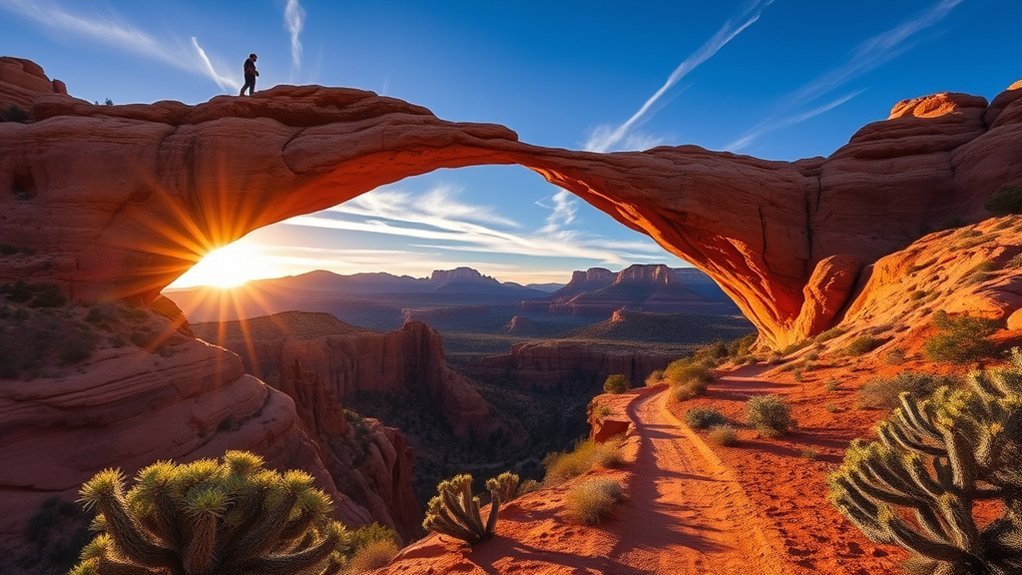
Devil’s Bridge is the largest natural sandstone arch in the Sedona area, standing over 50 feet high. Reaching this geological marvel involves a scenic hike followed by a rock-stair climb and a short slickrock scramble to the bridge deck. It is Sedona’s most photographed spot, which means crowds and long photo queues form daily.
Trailhead Options & Parking
Your total hiking distance depends heavily on your starting point and vehicle capability:
- Mescal Trailhead Approach (Recommended for Standard Vehicles): Approximately ~4.0 miles round trip with ~400 ft of elevation gain. This scenic connector weaves around Mescal Mountain before linking to the Devil’s Bridge Trail.
- Dry Creek Road via Chuckwagon Trail: Approximately ~4.2–4.6 miles round trip. Avoids walking on the dusty 4WD road by utilizing a forested singletrack route.
- Dry Creek 4WD Trailhead: Approximately ~2.0 miles round trip. Accessible only by high-clearance, modified 4×4 vehicles (standard AWD crossovers will bottom out).
- Sedona Shuttle Access: The free public shuttle runs directly to the Dry Creek Vista Trailhead from the Posse Grounds Park-and-Ride, bypassing parking hassles.
Best Times to Visit
To experience Devil’s Bridge without an hour-long wait for photos, aim to be at the arch by first light. The morning sun illuminates the red-rock amphitheater behind the bridge, creating clean lighting for photography before the midday glare sets in.
Safety & Photo Tips
- The bridge deck is wider than it looks in photos (~5 feet across), but steep drops flank both sides. Walk deliberately, avoid jumping or posing near edges, and keep hands free while traversing the final rock staircase.
- Never step off marked paths onto the cryptobiotic desert crust.
- Pack at least 1.5 to 2 liters of water per person, even on cooler mornings.
3) Cathedral Rock Trail
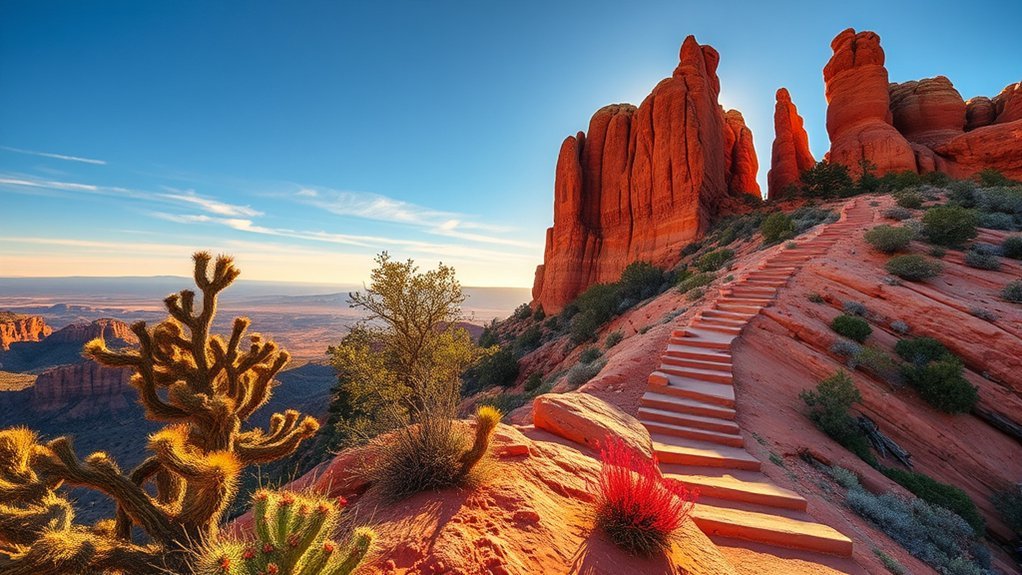
Cathedral Rock is one of Sedona’s premier hikes and the site of a strong updraft vortex. Although relatively short at ~1.4 miles round trip, this is an intense, non-technical climb featuring ~650 feet of vertical gain across exposed red sandstone.
Warning: The Cathedral Rock Trailhead parking lot on Back O’ Beyond Road is closed to private vehicles from Thursday through Sunday year-round. You must use the free Sedona Shuttle from the SR-179 Park-and-Ride lot during these days.
Trail Overview & Stats
- Distance: ~1.4 miles out-and-back.
- Elevation Gain: ~650–740 feet.
- Difficulty: Strenuous (includes a Class 2 rock-crevice scramble where you must use hands and feet).
- Permit: Red Rock Pass required if visiting on Monday–Wednesday when private parking is allowed.
Scenic Viewpoints & Vortexes
The trail tops out at the Cathedral Rock Saddle, framed by towering spires. To the right, a narrow ledge trail hugs the canyon wall, leading to an iconic cliffside perch overlooking the Verde Valley. The saddle area is renowned for its calming, reflective vortex atmosphere.
Tips for Timing
- Cathedral Rock faces west, making it Sedona’s premier sunset destination. Bring a reliable headlamp for the steep descent down slickrock in the dusk.
- Footwear with sticky rubber outsoles (such as approach shoes or trail runners) is essential for grip on polished sandstone chutes.
4) West Fork Trail (Oak Creek Canyon)
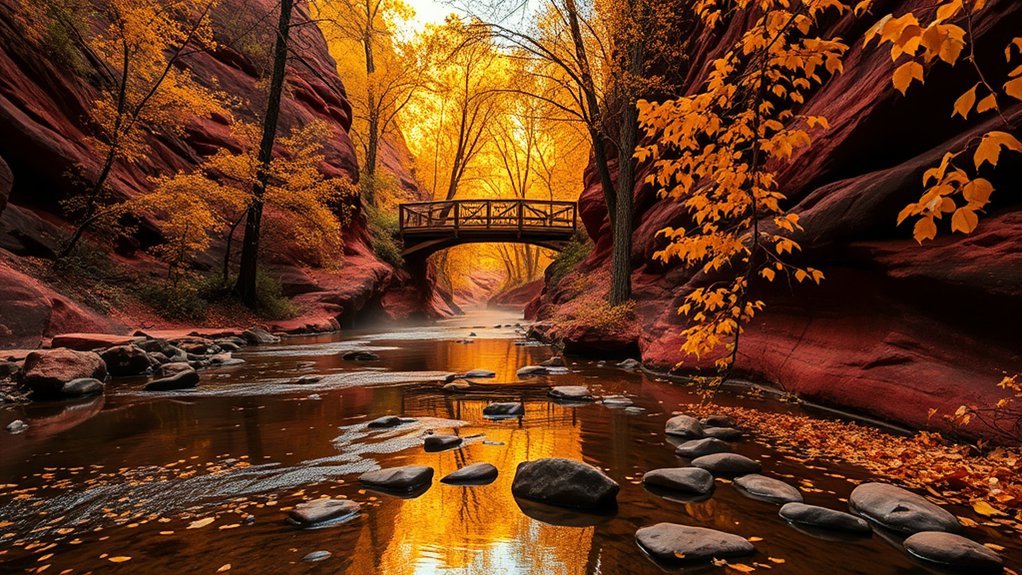
Located in the heart of Oak Creek Canyon along Highway 89A, the West Fork of Oak Creek (Trail #108) offers a stark, lush contrast to Sedona’s arid open desert. Towering canyon walls rise hundreds of feet on either side, shading a flowing creek lined with box elder, sycamore, and cottonwood trees.
At a Glance: West Fork Trail
| Distance & Time | ~6.9 to 7.2 miles RT | 3 to 4.5 hours |
| Difficulty | Easy to Moderate (Flat terrain with 13+ shallow creek crossings) |
| Best Season | October (Golden Autumn Foliage) or Summer (Canyon Shade) |
| Access & Fee | $12 per vehicle day-use fee (Standard Red Rock Pass not accepted) |
The maintained trail ends around mile 3.5, where the canyon narrows into a dramatic “subway” gorge of sheer rock walls and flowing water. Stepping stones facilitate most creek crossings, but waterproof hiking shoes or trekking poles make balancing over slippery river rocks significantly easier.
5) Subway Cave Hike (via Boynton Canyon)
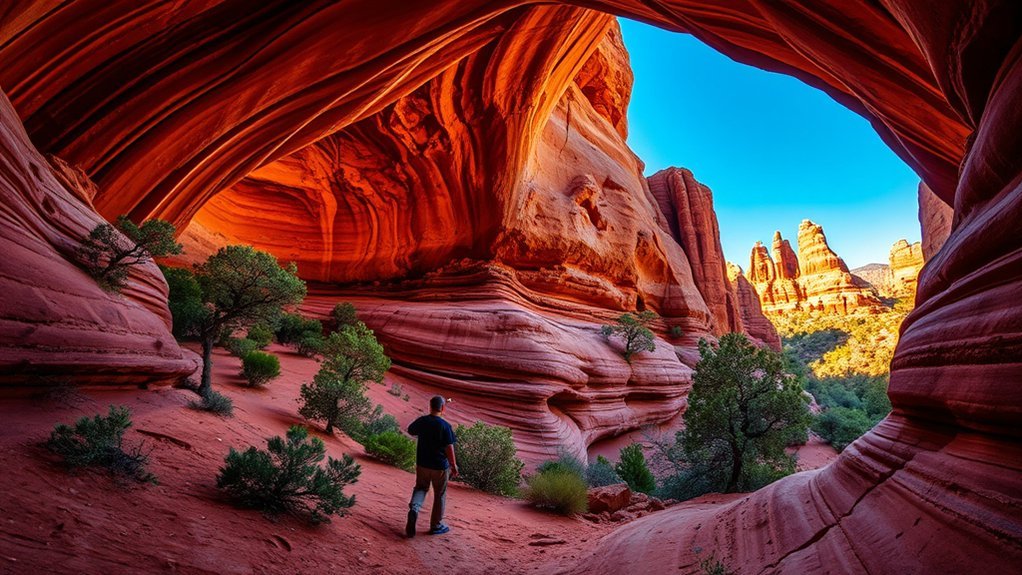
The Subway Cave is a dramatic, keyhole-shaped alcove tucked inside Boynton Canyon. To reach this hidden geological formation, begin on the official USFS Boynton Canyon Trail #47.
The total hike is ~5.5 to 6.0 miles round trip with roughly 600 ft of elevation gain. The turnoff is an unmarked social spur located approximately 2.0 to 2.2 miles into Boynton Canyon, marked by a prominent alligator juniper tree standing directly in the center of the trail. Turn right onto this side path and continue for 0.4 miles toward the canyon wall.
Heritage Preservation Warning: Ancient Sinagua cliff dwelling ruins sit directly adjacent to the Subway Cave ledge. Under the Archaeological Resources Protection Act, it is strictly illegal to touch ruins, enter restricted alcoves, remove artifacts, or mark stone walls. Treat this sacred indigenous site with the utmost reverence.
6) Doe Mountain Trail
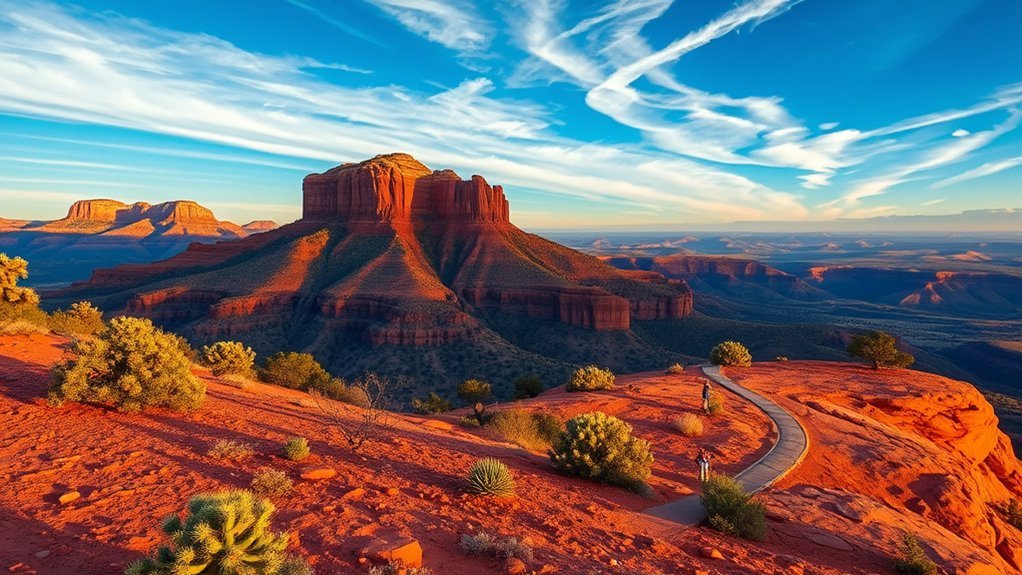
For high panoramic rewards with modest physical exertion, Doe Mountain Trail is one of Sedona’s best moderate switchback routes. Spanning ~1.5 miles round trip with ~400–500 ft of elevation gain, the trail climbs the northern slopes of an isolated mesa before topping out onto a wide, flat sandstone summit.
Once you reach the top, you can freely wander the 25-acre mesa top via informal perimeter paths. The northern rim delivers direct, head-on views of Bear Mountain and Fay Canyon, while the southern rim overlooks Cockscomb, Chimney Rock, and hot-air balloons rising at dawn. Allow an extra mile of easy strolling to circumnavigate the mesa perimeter.
7) Little Sugarloaf Summit Trail
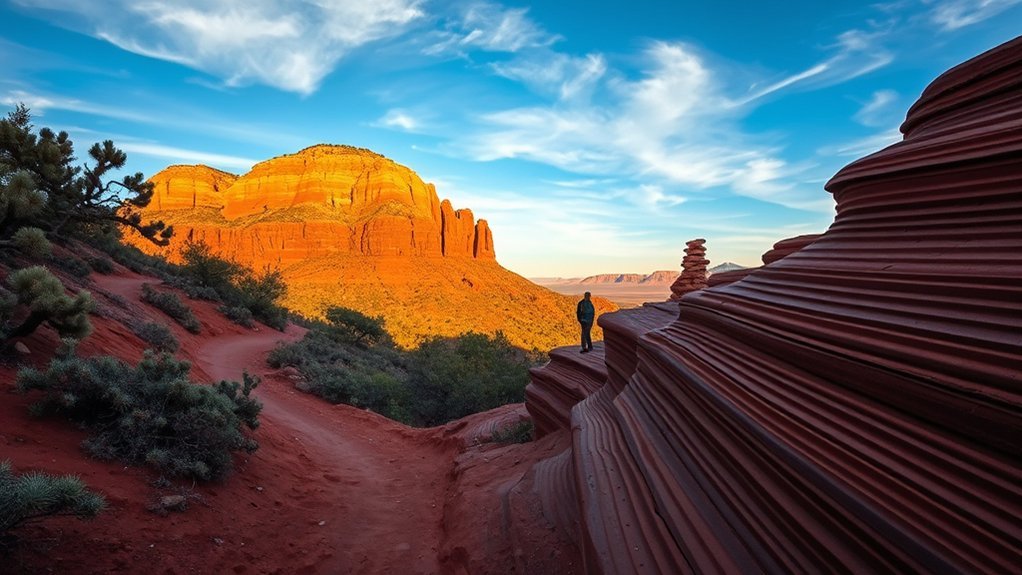
Little Sugarloaf is an underrated ~1.1-mile round-trip summit trail located in West Sedona. Accessible from the Posse Grounds or Sanborn Trailheads, the path rises steadily over packed red dirt and slickrock up to a pointed knob overlooking the entire western basin.
Because Little Sugarloaf sees a fraction of the foot traffic common to Cathedral or Bell Rock, it provides a quiet, introspective setting for early morning meditation or golden-hour photography with clear sightlines toward Thunder Mountain (Capitol Butte) and Coffee Pot Rock.
8) Robber’s Roost Trail (Hideout Cave)
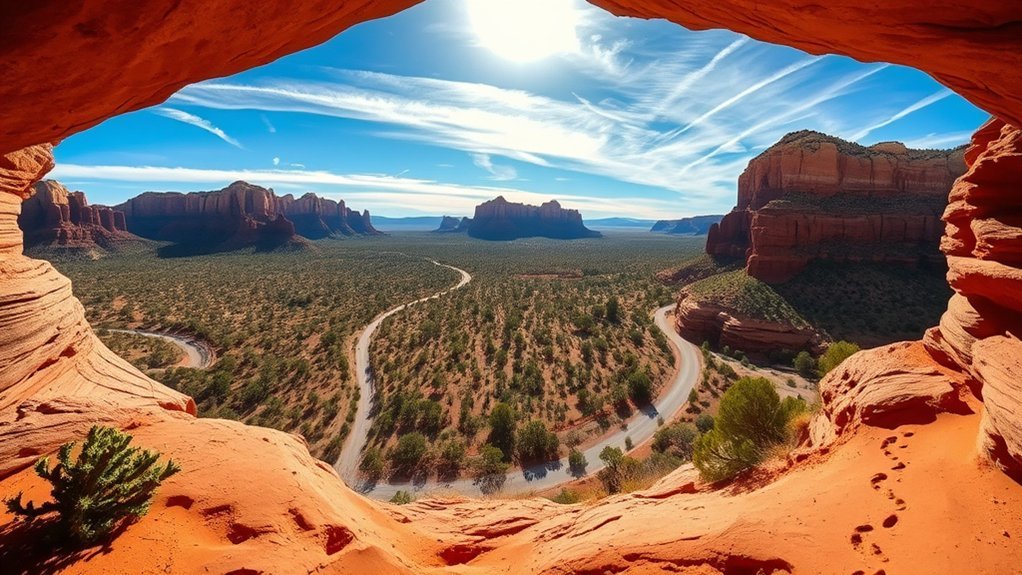
Robber’s Roost (also known as the Shameless Hideaway) is a historic natural rock alcove with a circular stone window overlooking western Sedona’s red-rock wilderness. Historically used by outlaws and bootleggers in the late 19th and early 20th centuries, this remote site offers rugged solitude.
The hike itself is brief—roughly ~0.8 to 1.0 miles round trip—but access requires driving down unpaved Forest Road 525 for several miles. While dry gravel roads are usually passable in 2WD vehicles, rutted sections make a crossover or SUV preferable. The trail descends along an exposed cliff shelf with sheer drop-offs, so watch your footing carefully.
9) Birthing Cave Trail
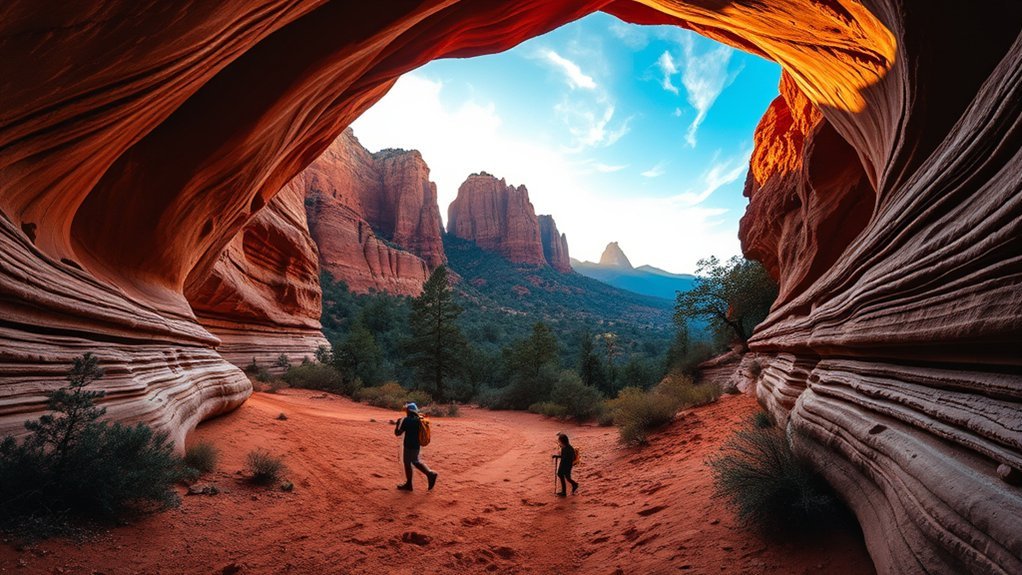
Branching off from the Long Canyon Trailhead, the Birthing Cave is a shallow, bowl-shaped red-rock alcove carved high into a sandstone cliff wall. The route is an easy-to-moderate ~2.0-mile round trip across flat canyon floor, concluding with a short, steep climb up loose red scree into the cave recess.
Photography Note: To capture the entire cave opening framing the canyon, you will need a true ultra-wide-angle lens (12–16mm on full-frame) and must carefully climb into the natural center depression in the back wall. Step gingerly to avoid slipping on smooth sandstone.
10) Slide Rock State Park
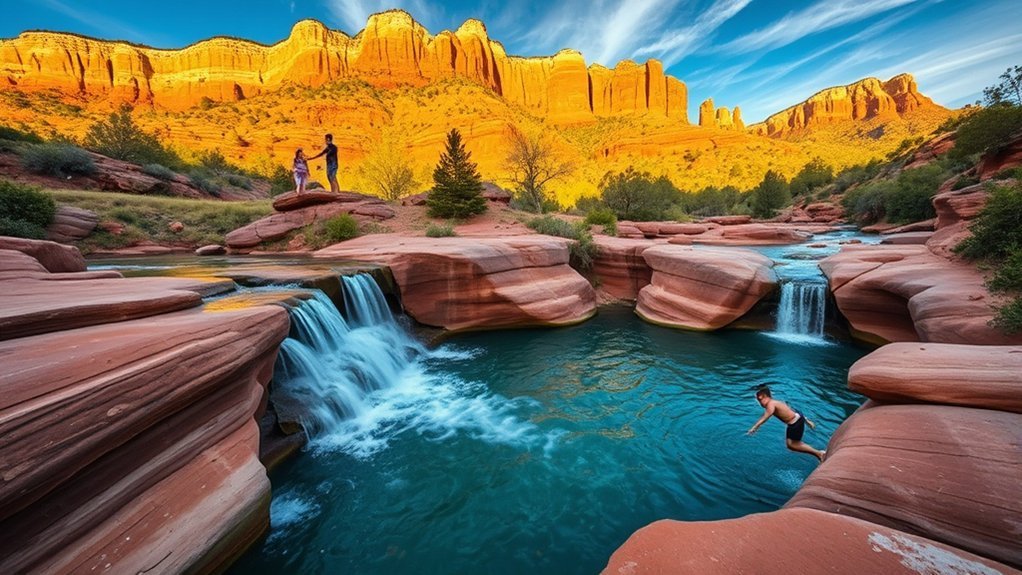
Nestled in Oak Creek Canyon, Slide Rock State Park is a historic 43-acre apple orchard home to an 80-foot natural water chute carved into slippery red sandstone. Visitors can glide down the gentle natural flume propelled by the brisk mountain water of Oak Creek or relax on sun-warmed rock sunbaths along the banks.
- Admission Fees: $20–$30 per vehicle depending on the season and day of the week.
- Amenities: Restrooms, picnic tables, seasonal concession stands, and historical orchard displays.
- Visitor Tip: Wear neoprene water shoes or durable sandals; the creek bed can be slick with natural algae.
11) Broken Arrow Pink Jeep Tour

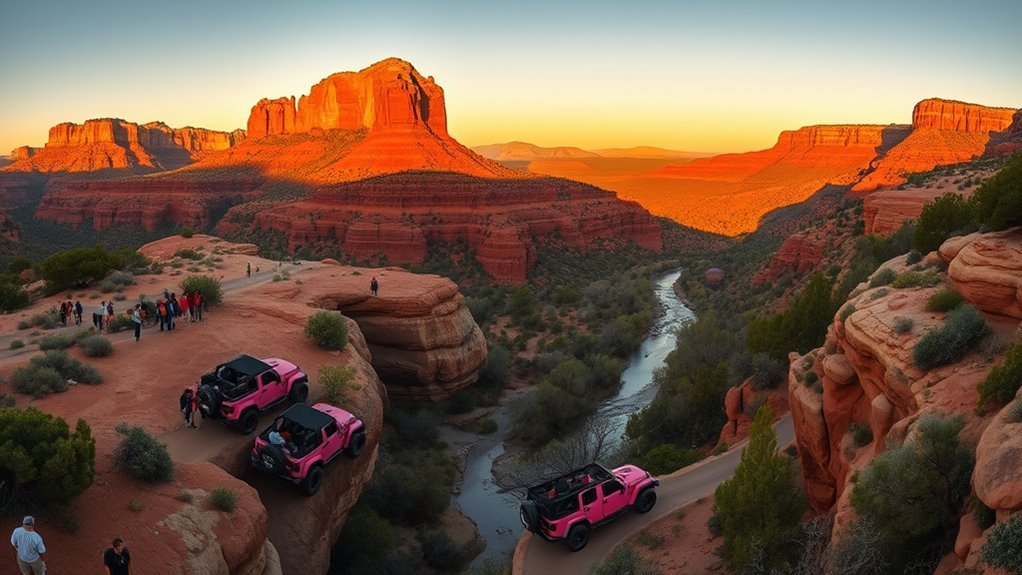
Sedona’s custom Pink Jeep Tours have operated in the red rocks since 1960. The Broken Arrow Tour is their premier off-road excursion, taking passengers on an exclusive, permit-restricted USFS 4WD route over steep slickrock fins, including famous features like Submarine Rock, Chicken Point, and the steep “Road of No Return” descent.
This 2 to 2.5-hour tour combines local geology, indigenous history, and off-road thrills. Advance reservations are essential during peak spring and autumn travel seasons.
12) Sedona Off-Road ATV & Side-by-Side Rentals
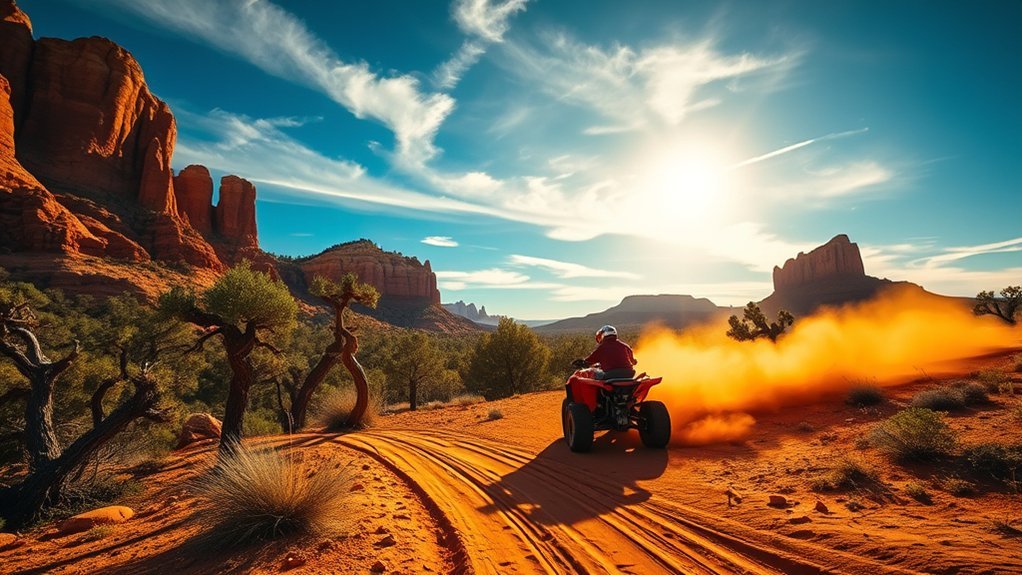
If you prefer to take the wheel yourself, renting an off-road UTV (Side-by-Side) or joining a guided ATV tour allows you to explore western Sedona’s expansive backcountry trail network. Popular routes include the historic Outlaw Trail and Forest Road 525, offering unobstructed views of the western canyon escarpments.
Rentals generally run for 2, 4, or 8 hours and include GPS-enabled trail mapping, safety gear, and helmets. Make sure to stay strictly on designated motorized trails to preserve fragile desert washes and wildlife corridors.
13) Hot Air Balloon Ride with Red Rock Balloons
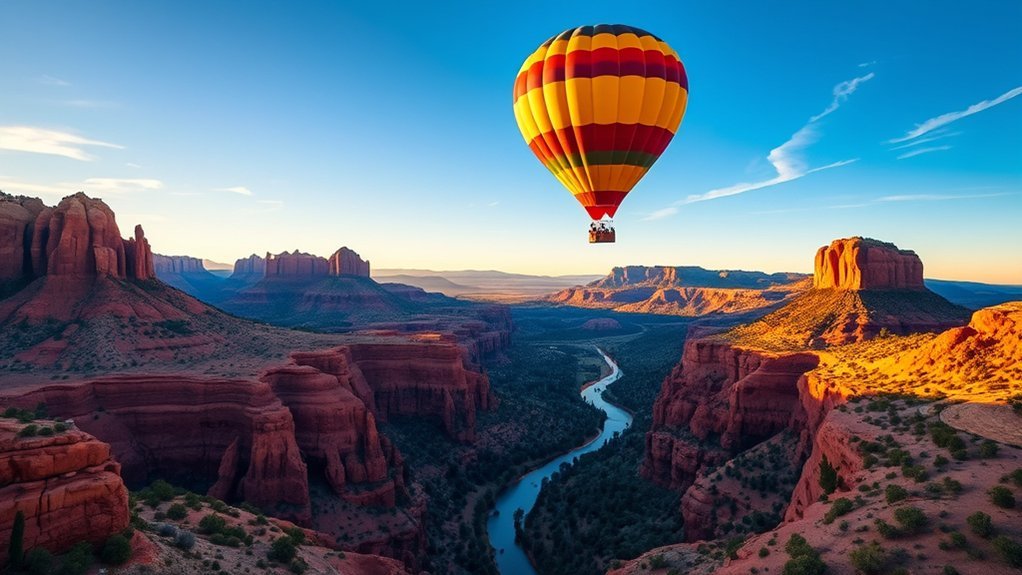
Soaring at sunrise aboard a hot-air balloon provides a quiet perspective over Sedona’s canyon geography. Flights launch at daybreak from the Dry Creek basin, rising with the morning thermals to drift over Dry Creek Canyon, Fay Canyon, and the Mingus Mountain foothills.
Total experience time is approximately 3.5 to 4 hours, including pre-flight inflation, a ~1-hour flight, and a traditional celebratory post-landing toast. Flights operate weather-permitting, so book your ride early in your trip to allow for potential weather reschedules.
14) Guided Mountain Biking in Red Rock Country

Sedona is an internationally recognized mountain biking destination, featuring over 250 miles of interconnected singletrack. From flowy, beginner-friendly desert loops on the Bell Rock Pathway to expert, highly technical double-black slickrock routes like Hiline and Hangover, the terrain caters to every riding style.
Local outfitters such as Hermosa Tours and Absolute Bikes offer high-end full-suspension bike rentals, e-bikes for paved byway routes, and guided skills sessions tailored to technical slickrock riding.
15) Tlaquepaque Arts & Crafts Village
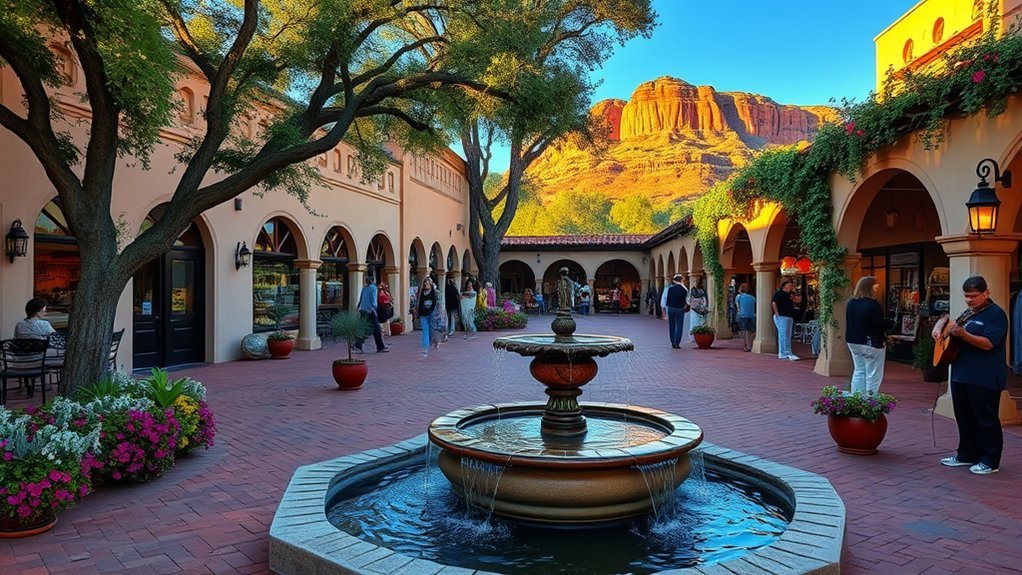
Designed in the style of a traditional Mexican village, Tlaquepaque (meaning “the best of everything”) has been an artistic anchor of Sedona since the 1970s. Nestled along the banks of Oak Creek under giant sycamores, the village features cobblestone walkways, arched entryways, hand-painted tiles, and bubbling courtyards.
Spend a relaxing afternoon browsing more than 50 specialty shops, working artist studios, bronze sculpture galleries, fine jewelers, and courtyard dining spots like the Oak Creek Brewery & Grill and El Rincon Restaurante Mexicano.
16) Chapel of the Holy Cross
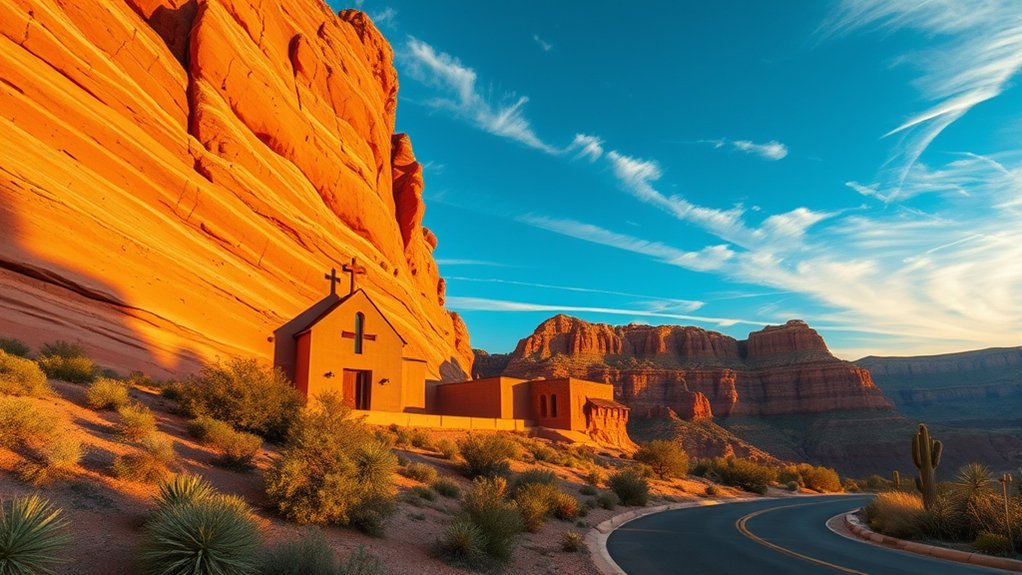
Completed in 1956, the Chapel of the Holy Cross is a modernist architectural marvel built directly into a 200-foot red sandstone cliff. The project was conceived by sculptor and philanthropist Marguerite Brunswig Staude (a student of Frank Lloyd Wright) and brought to fruition by architects Richard Hein and August K. Strotz of Anshen & Allen.
Architectural Features
- A 90-foot concrete cross anchors the floor-to-ceiling glass wall on the chapel’s southwestern face.
- The minimalist interior frames direct views of Cathedral Rock, Bell Rock, and Courthouse Butte.
Visitor Tips & Access
- Access: Located at the end of Chapel Road off SR-179. Parking is extremely tight along the winding ramp; golf-cart shuttles run continuously to assist visitors from lower parking spots.
- Hours: Open daily from 9:00 AM to 5:00 PM. Admission is free.
17) Sound Baths at Amitabha Stupa & Peace Park
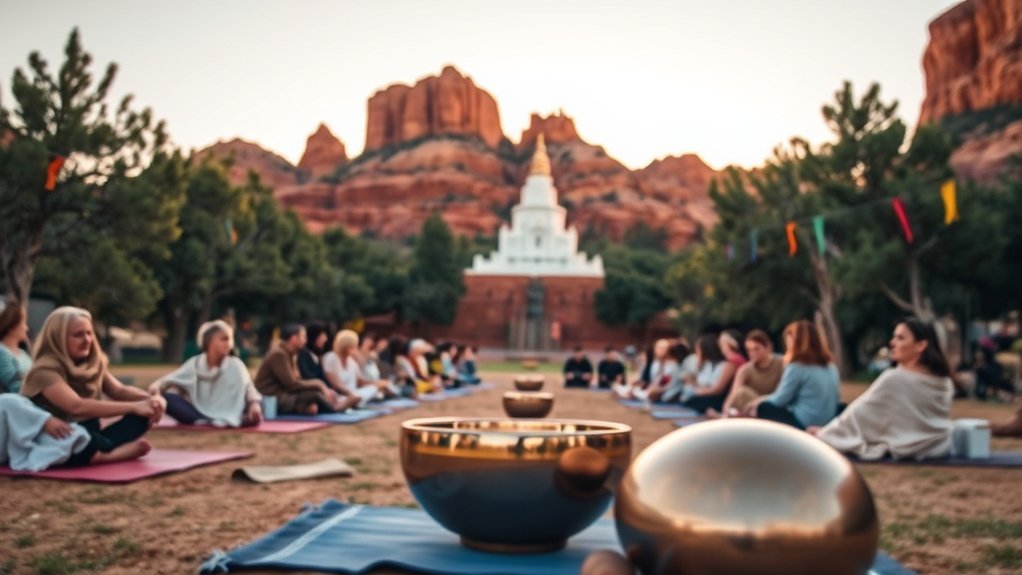
Nestled across 14 sacred acres at the base of Thunder Mountain, the Amitabha Stupa & Peace Park is an outdoor spiritual sanctuary for quiet prayer, meditation, and healing. The park is anchored by a 36-foot Buddhist stupa filled with sacred relics, Buddhist scriptures, and prayers.
Outdoor acoustic sound healing sessions featuring quartz crystal singing bowls, Tibetan metal bowls, and gongs are frequently hosted in the park and nearby studios, allowing participants to experience deep acoustic relaxation against the quiet backdrop of the desert cliffs.
18) Spirit Animal Readings & Aura Photography

Sedona’s metaphysical scene is internationally famous, drawing intuitive practitioners, astrologers, and spiritual guides. Boutiques like Bohemian Dreamer and the Sedona Center for the New Age offer spirit animal card readings, biofeedback aura photography, and chakra balancing sessions to help visitors interpret their personal archetypes.
19) Crystal Shopping at Local Boutiques
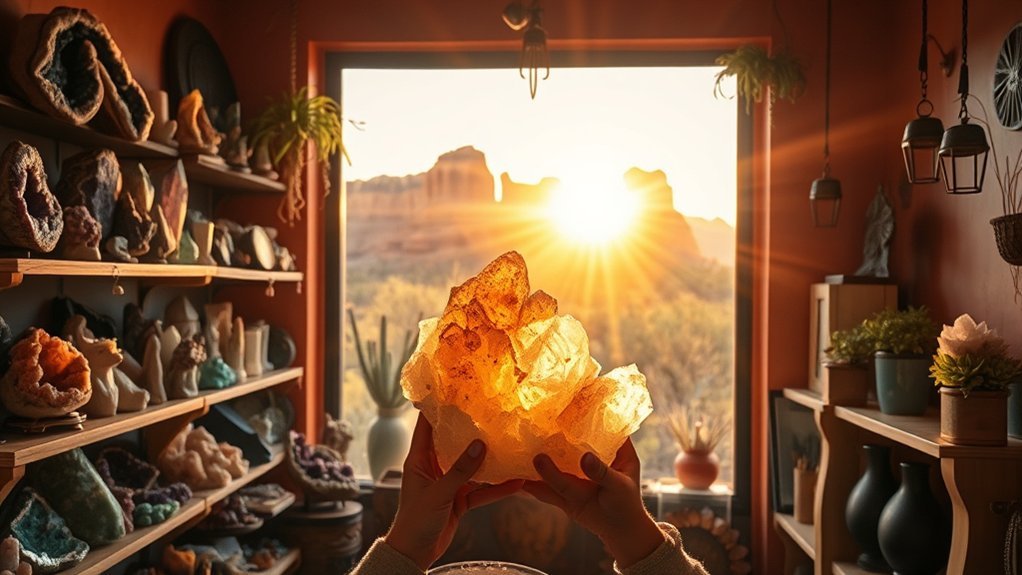
Whether you are a mineral collector or interested in energy healing, Sedona hosts some of the country’s best crystal shops, offering ethically sourced raw minerals, giant amethyst geodes, polished thumb stones, and handcrafted jewelry.
| Shop Name | Specialty / Focus | Best For |
|---|---|---|
| Crystal Magic | Hundreds of categorized minerals with educational cards | Beginner collectors & reference guides |
| Mystical Bazaar | Fine gem jewelry, singing bowls & aura readings | Holistic wellness gifts |
| Sedona Crystal Temple | Museum-grade large specimen quartz & geodes | High-end home display pieces |
20) Page Springs Wine Tasting & Vineyards
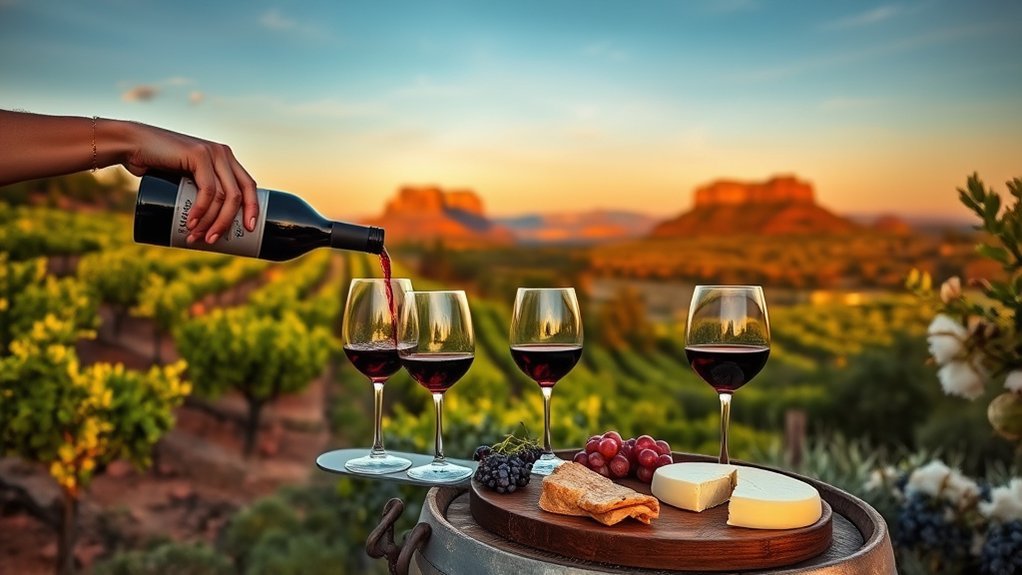
Just a 15-minute drive southwest of Sedona lies the Verde Valley American Viticultural Area (AVA) along Oak Creek. The mineral-rich volcanic soil, hot desert days, and cool mountain canyon nights produce distinctive Rhône-style varietals like Syrah, Petite Sirah, and Viognier.
- Page Springs Cellars: Features outdoor riverside tasting bars, estate vineyards, and artisanal tapas along Oak Creek.
- Alcantara Vineyards: A scenic estate situated at the confluence of Oak Creek and the Verde River, offering vineyard kayak tours and live music.
- D.A. Ranch: A family-owned vineyard setting complete with a historic log-cabin tasting room and tranquil pond.
21) Coffee Pot Restaurant (101 Omelettes)

Named after the red-rock monolith rising behind it, the Coffee Pot Restaurant is a beloved West Sedona breakfast staple. Famous for its staggering menu of 101 specialty omelettes, choices range from classic cheddar and bacon to adventurous Southwestern fillings with chorizo, green chiles, and nopales (cactus).
Lines form quickly after 8:00 AM on weekends, so arrive early or enjoy browsing their southwestern gift shop while you wait for a table.
22) Sabrina’s Gourmet Ice Cream

Located in Uptown Sedona, Sabrina’s Gourmet Ice Cream is the premier stop after an afternoon of hiking. Serving small-batch, handmade ice cream, waffle cones made fresh in-house, and rich gelato, flavors rotate frequently to include fresh prickly pear sorbet, espresso chip, and classic salted caramel.
23) Scenic Drives & Photo Stops
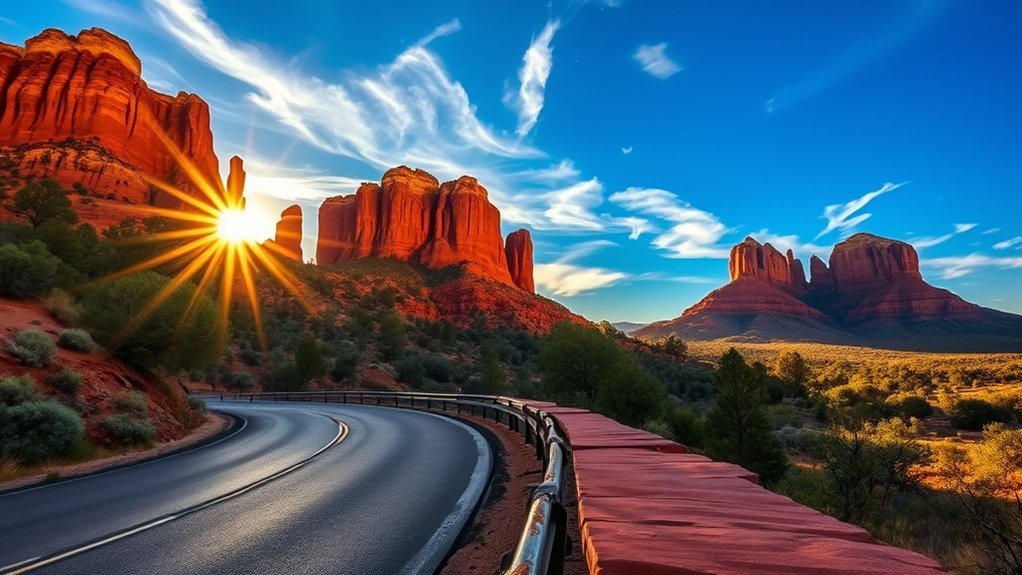
If you want to take in Sedona’s geology from the comfort of your vehicle, these three scenic byways are not to be missed:
- Red Rock Scenic Byway (State Route 179): An officially designated National Scenic Byway running from Interstate 17 into Sedona, delivering views of Bell Rock and Courthouse Butte.
- Oak Creek Canyon Scenic Road (Highway 89A): A 14-mile drive weaving along river bends and sheer canyon cliffs up to the Oak Creek Vista lookout near Flagstaff.
- Red Rock Loop Road: A scenic backroad loop in West Sedona offering elevated viewpoints of Cathedral Rock across the canyon valley.
24) Sunset Viewing at Bell Rock & Cathedral Rock
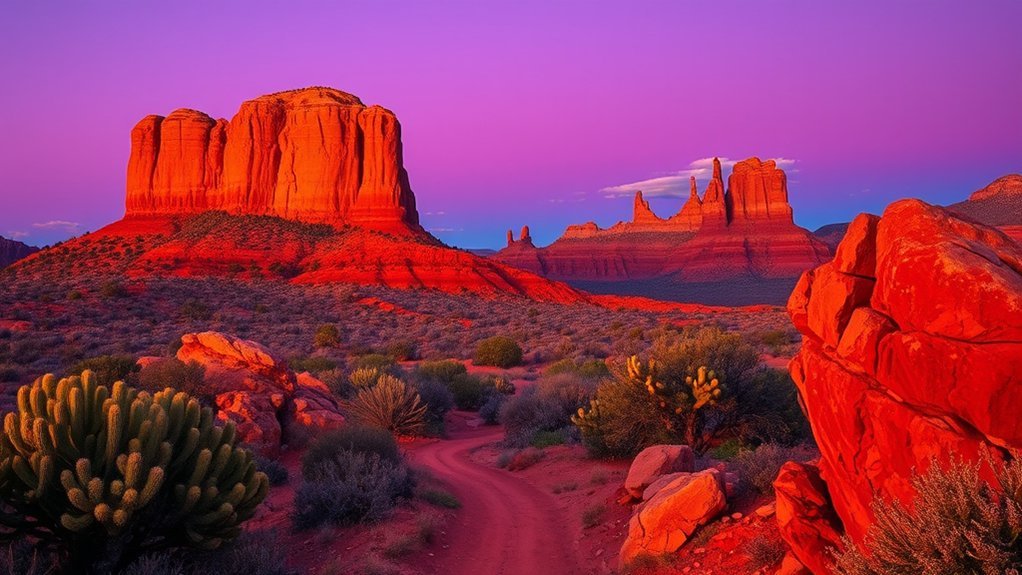
Sedona’s iron-rich Schnebly Hill sandstone blazes into vivid crimson and molten gold during the final 30 minutes of daylight. Both Bell Rock and Cathedral Rock offer prime western-facing perches to watch the canyon shadows lengthen.
“Watching the golden-hour light wash across Cathedral Rock reveals why this landscape has inspired artists, writers, and spiritual seekers for generations.”
Arrive at your chosen lookout at least 45 minutes before sunset, carry a lightweight folding camp chair, and ensure everyone in your party has a working headlamp for the hike out.
25) Airport Mesa Overlook
For an expansive 360-degree panorama of the entire Sedona valley with minimal hiking, head up Airport Road to the Airport Mesa Overlook. From this elevated mesa center, you can look out across West Sedona, Coffee Pot Rock, Thunder Mountain, Cathedral Rock, and the distant Mogollon Rim.
The small parking lot directly at the saddle fills quickly; if full, continue up to the paved public lot at the top of Airport Mesa (small $3 parking fee) and walk the scenic perimeter loop trail.
Hiking Preparation: Safety, Gear, and Tips
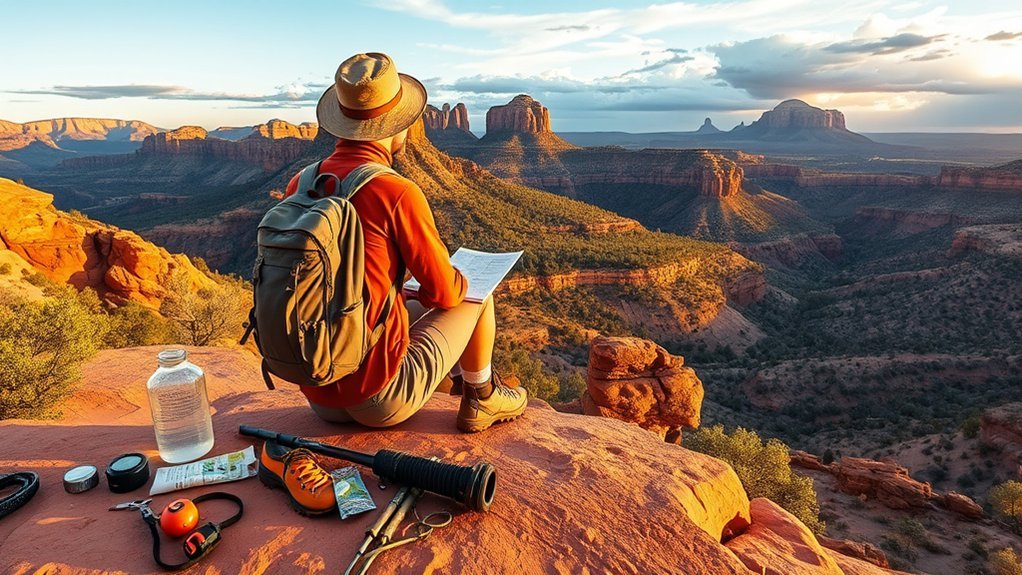
Sedona’s high-desert climate (elevation ~4,500 feet) presents real physical demands. Intense UV radiation, dry air, and steep slickrock terrain require smart advance preparation:
- Hydration: Carry a minimum of 0.5 to 1.0 liter of water per hour of hiking. In warmer months, pack electrolyte powders to maintain sodium balance.
- Sun Protection: Broad-spectrum SPF 50 sunscreen, UV-rated sunglasses, and a wide-brimmed sun hat are essential—most trails have little to no shade.
- Footwear: Choose trail runners or hiking boots with sticky rubber lugs (Vibram or stealth rubber) to maintain grip on smooth slickrock angles.
- Navigation: Download offline GPS maps (such as AllTrails or Gaia GPS) before heading out; cellular service drops rapidly in deep canyons.
- Monsoon Awareness: During July and August, afternoon monsoon thunderstorms can generate life-threatening flash floods in narrow slot canyons like West Fork. Check local National Weather Service Flagstaff forecasts before hiking.
Frequently Asked Questions
What is Sedona, Arizona best known for?
Sedona is world-famous for its towering red sandstone formations, subtle energy vortex sites, classic hiking trails like Devil’s Bridge, vibrant southwestern art galleries, and scenic Oak Creek Canyon.
What are the absolute must-do activities in Sedona for first-timers?
First-time visitors should not miss: (1) Watching sunrise at Devil’s Bridge or Cathedral Rock, (2) Touring the Chapel of the Holy Cross, (3) Driving the Red Rock Scenic Byway, (4) Walking the courtyards of Tlaquepaque Arts & Crafts Village, and (5) Taking a guided Pink Jeep tour through Broken Arrow.
What is the first thing you should do when arriving in Sedona?
Stop by the Red Rock Visitor Center on SR-179 to purchase your Red Rock Pass, pick up trail maps, and confirm Sedona Trailhead Shuttle schedules before heading into town.
What is the best month to visit Sedona, Arizona?
Late September through October and April through May are the best months. Daytime temperatures average in the mid-70s to low-80s °F (24–28 °C), ideal for hiking and outdoor exploration.
Do you need a pass to hike in Sedona?
Yes. A Red Rock Pass ($5/day, $15/week) or an America the Beautiful National Parks Pass is required to park at most USFS trailheads in Coconino National Forest. Note that Slide Rock State Park and West Fork Trail charge separate day-use entrance fees.
Conclusion
From the exposed heights of Cathedral Rock to the tranquil apple orchards of Slide Rock State Park and the serene cloisters of Tlaquepaque, Sedona offers an unforgettable blend of desert adventure and southwestern culture. Getting the most out of your trip comes down to smart timing: leverage the free Sedona Trailhead Shuttle, pack plenty of water, start your hikes at dawn, and leave time for relaxed afternoon wine tastings and sunset viewpoints. Pick your favorite activities from this list of 25 must-dos and start exploring red rock country with confidence.
Sources
- U.S. Forest Service (Coconino National Forest) — Trail guidelines, recreation passes, and trail condition notices.
- Sedona Shuttle Official Transit System — Trailhead shuttle schedules, park-and-ride pickup locations, and trailhead closure updates.
- Arizona State Parks & Trails: Slide Rock — Park operational rules, day-use entry fees, and water quality advisories.
- City of Sedona Official Government Portal — Municipal parking regulations, community parks, and sustainable tourism guidelines.