Mountain trails in [2026] demand e-bikes that balance power, control, and comfort over rough ground. The five models ahead stand out for different reasons, from fat tire traction to stronger motors and longer range. Each one promises a slightly different ride, and not all of them are built for the same kind of terrain. What separates the best from the merely capable becomes clearer with a closer look.
Key Takeaways
- For steep mountain trails, choose a 1500W fat-tire e-bike with full suspension and 20×4-inch tires for maximum power and grip.
- For balanced trail performance, a 500W peak mountain e-bike offers lighter handling, decent climbing torque, and up to 50 miles of assist range.
- For long-range off-road rides, a 48V 15Ah battery can deliver up to 60 miles in pedal-assist mode under ideal conditions.
- Wide fat tires with aggressive tread improve traction on loose, wet, or uneven terrain, especially at lower tire pressures.
- Front and rear disc brakes with motor cutoff are essential for safe, controlled stopping on technical mountain descents.
Electric Mountain E-Bike for Adults, 20 MPH
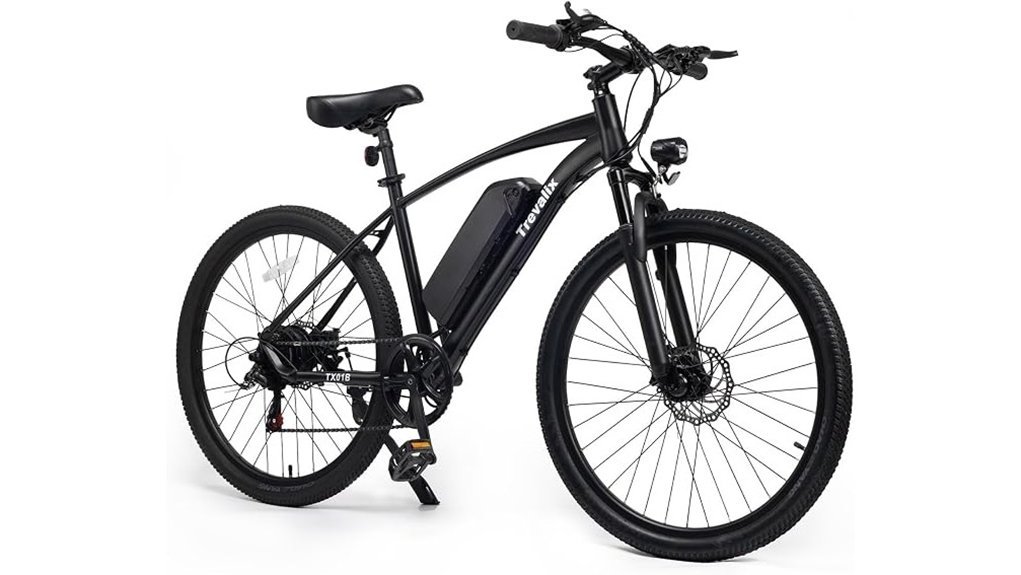
The Electric Mountain E-Bike for Adults, 20 MPH is a strong option for riders who want reliable trail power without sacrificing control, offering a 500W peak motor, 41.8N.m torque for climbing, and multiple ride modes to suit different terrain and range needs. Its cadence sensor delivers smooth assistance, while the brake motor cutoff adds safety on descents. A 374.4Wh removable battery supports up to 50 miles in PAS 1. Built on a fatigue-tested frame, it carries 264 pounds, yet weighs 46.96 pounds. Shimano 6-speed shifting, puncture-resistant tires, and a 360-lumen headlight enhance usability.
Best For: Riders who want a dependable adult electric mountain bike with smooth pedal assistance, solid hill-climbing power, and practical features for commuting or light trail use.
Pros:
- 500W peak motor with 41.8N.m torque provides strong support for climbing and varied terrain.
- Multiple ride modes and a removable 374.4Wh battery offer flexible range and speed options.
- Durable, comfort-focused build with puncture-resistant tires, Shimano 6-speed shifting, and a bright headlight.
Cons:
- 20 MPH top speed may feel limiting for riders seeking more speed.
- 46.96-pound weight is manageable, but not especially light for carrying or lifting.
- Range varies significantly by mode, so higher assist levels reduce how far you can ride.
Electric Mountain Bike for Adults with Fat Tires
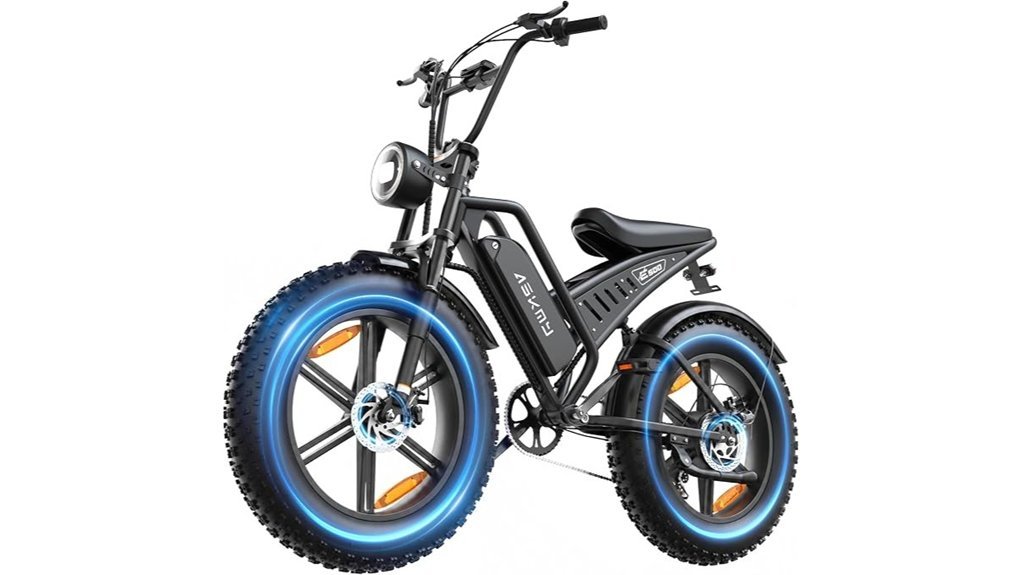
Built for adult riders tackling rugged mountain trails, this electric fat-tire bike prioritizes stability and control. Its 1500W peak motor, driven by a 500W brushless unit, delivers strong torque for climbs up to 35 degrees while maintaining smooth, quiet, energy-efficient output. A removable 48V 15Ah battery supports up to 40-60 miles in pedal assist or 25-28 miles in pure electric mode, then recharges in 5-6 hours. Twenty-by-four-inch tires, full suspension, and an ergonomic sport seat improve comfort. Front and rear disc brakes, LED lighting, 7-speed gearing, and an LCD display enhance safety and control.
Best For: Adult riders who want a powerful, stable fat-tire electric mountain bike for rugged trails, steep climbs, and versatile all-terrain commuting.
Pros:
- Strong 1500W peak motor with high torque for climbing up to 35-degree slopes.
- Long-range removable 48V 15Ah battery with fast 5-6 hour charging.
- Full suspension, 20×4 inch fat tires, disc brakes, LED light, and LCD display for comfort and control.
Cons:
- Heavier and bulkier than standard e-bikes due to the fat tires and full suspension.
- Pure electric range is more limited than pedal-assist range.
- May be more bike than casual riders need for flat, easy terrain.
TST 1500W Fat Tire Electric Bike for Adults
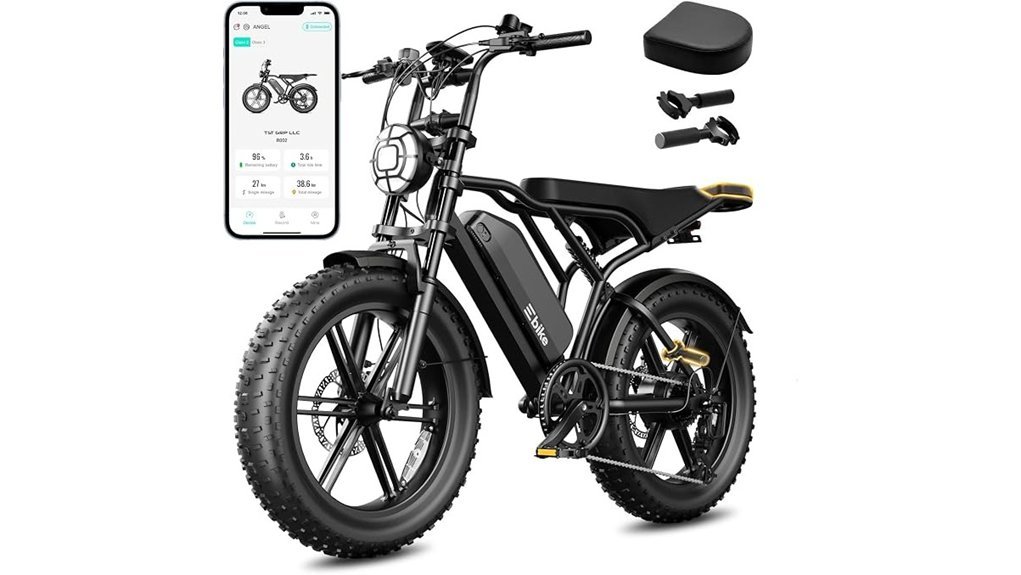
With 1500W peak power and 20×4 fat tires, the TST suits riders tackling rough mountain trails and mixed terrain. Its 750W motor pairs with a 48V 15Ah removable battery, delivering up to 60 miles in PAS mode or 40 miles with throttle. Full suspension softens bumps, while 7-speed gearing and 2 to 3 assist settings help manage climbs and commutes. Mechanical disc brakes, bright lighting, and a reflective taillight support safer riding. An LCD display shows key data. The bike arrives 90% assembled, carries up to 450 lbs, and includes a 180-day warranty.
Best For: Adults who want a powerful fat tire e-bike for commuting, trail riding, and mixed terrain with long range and strong load capacity.
Pros:
- 1500W peak motor and 48V 15Ah removable battery provide strong performance and up to 60 miles of PAS range.
- Full suspension, 20×4 fat tires, and 7-speed gearing make it comfortable and capable on rough terrain.
- Safety and convenience features include mechanical disc brakes, bright lights, an LCD display, and 90% pre-assembly.
Cons:
- At 66 lbs, it may be heavy to lift or transport.
- Battery charging still takes 6–7 hours, which is not especially fast.
- Its size and power may be more than some casual riders or city commuters need.
Fat Tire Electric Bike for Adults, 750W 48V Battery
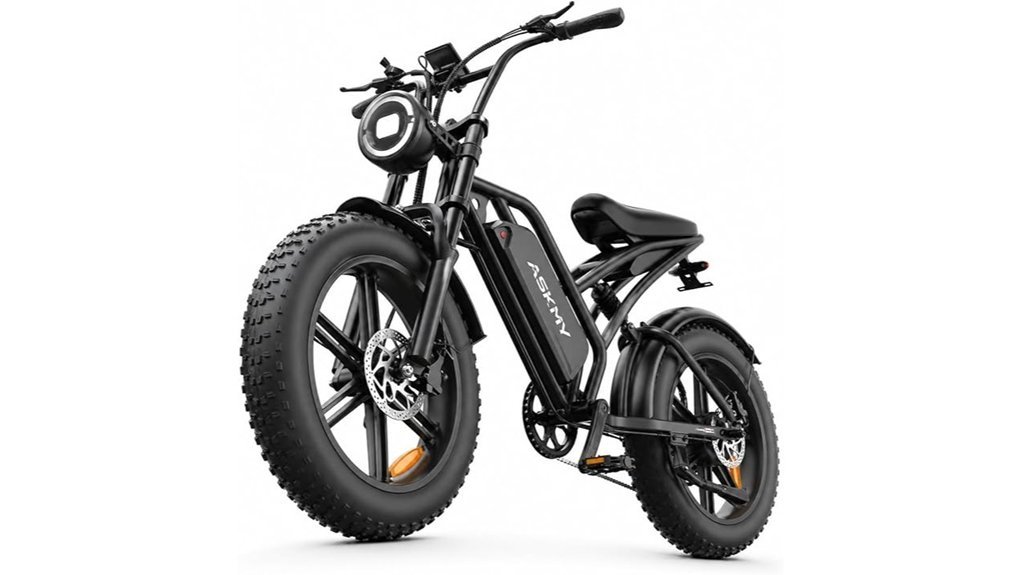
This fat tire electric bike suits adults needing dependable power and stability on rugged trails. Its 750W motor reaches 1000W peak output, while the 48V 15Ah removable battery delivers up to 30 miles in electric mode or 60 miles with pedal assist. The 20 x 4.0-inch tires handle pavement, gravel, sand, and snow, and pressure can be adjusted with standard pumps. Triple suspension, an extra-wide saddle, and a reinforced frame improve comfort and control. UL 2849 certification, IPX4 protection, cruise control, reverse gear, and a 7-speed drivetrain add practical value.
Best For: Adults who want a powerful, stable fat tire e-bike for commuting and off-road riding on pavement, gravel, sand, or snow.
Pros:
- 750W motor with 1000W peak power provides strong performance for varied terrain.
- 48V 15Ah removable battery offers up to 30 miles in electric mode and 60 miles with pedal assist.
- Triple suspension, wide saddle, and fat tires improve comfort, control, and ride stability.
Cons:
- 20-inch wheel size may feel small for riders who prefer a more traditional bike feel.
- Electric-only range may be limited for longer rides without pedaling.
- The bike may be heavier and less convenient to transport due to the motor, battery, and fat tire build.
PUCKIPUPPY 26″ Fat Tire Electric Mountain Bike
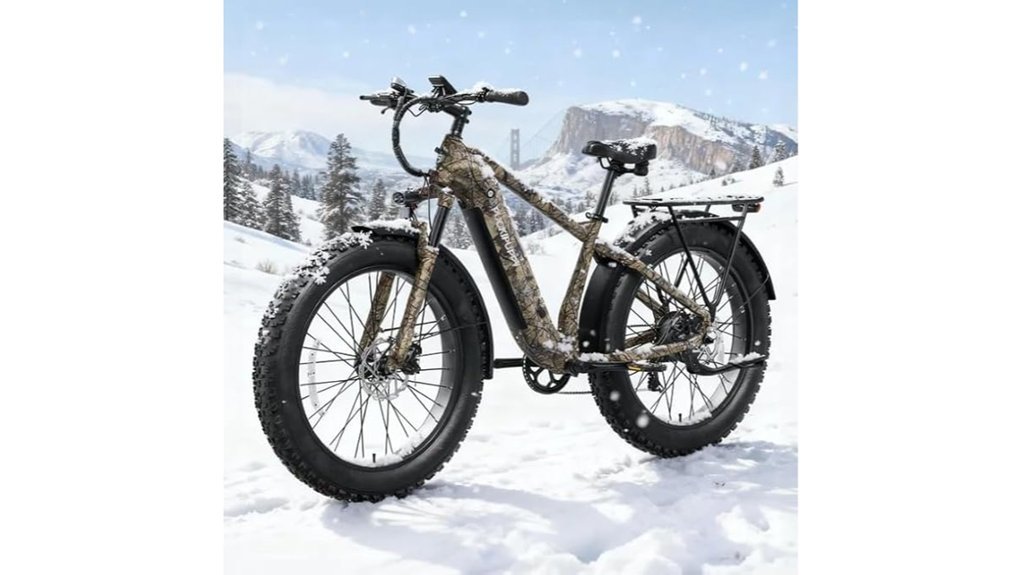
The PUCKIPUPPY Beagle suits riders who want serious power on steep, uneven trails. Its 960W peak rear hub motor delivers up to 80NM of torque, helping it handle slopes as steep as 35 degrees and reach 28MPH. The 48V 15Ah removable battery charges in 7 to 8 hours and can extend rides to 60 miles, depending on conditions. A 6061 aluminum frame, embedded battery protection, 26 x 4-inch flat-proof tires, and front suspension improve durability and control. Five riding modes, a full-color LED display, and 85% pre-assembly add convenience.
Best For: Riders who want a powerful, rugged fat-tire e-bike for steep trails, mixed terrain, and longer recreational commutes.
Pros:
- Strong 960W peak motor with up to 80NM torque for climbing and quick acceleration
- 26 x 4-inch flat-proof fat tires plus front suspension improve stability and comfort on rough terrain
- Removable 48V 15Ah battery offers up to 60 miles of range and convenient charging
Cons:
- At 66 pounds, it may be heavy to lift, transport, or store
- Full performance and range can vary significantly depending on terrain, rider weight, and riding mode
- 7 to 8 hour charging time is relatively long if you need frequent turnaround
Factors to Consider When Choosing an E Bike for Mountain Trails
When choosing an e-bike for mountain trails, motor power and battery range are key for handling steep climbs and longer rides. Tire traction and suspension quality also affect control, comfort, and stability on rough terrain. Frame durability is equally important, since the bike must withstand repeated stress from demanding trail conditions.
Motor Power
Raw climbing power often determines how well an e-bike handles mountain trails, especially on steep, technical grades. Motor output becomes a primary indicator of uphill capability, with higher-wattage systems in the 500W to 1500W range delivering stronger torque for sustained climbs. Peak power also matters, since it reflects the motor’s maximum burst output during demanding sections; some trail-ready models reach 1500W. Torque, measured in Newton-meters, is equally important, and figures around 41.8 N.m can support effective hill ascent on steep slopes. Smooth assistance improves control on loose or uneven ground, especially when cadence sensors refine power delivery. Multiple riding modes add versatility, letting riders adjust support for technical climbs, rolling trail sections, or more conservative effort when terrain changes.
Battery Range
Battery range plays a major role on mountain trails because it determines how far an e-bike can go before needing a recharge, usually measured in miles per charge. On steep or extended routes, a longer range reduces the risk of running out of power before the ride is complete. Many models provide different distances depending on riding mode, with pedal assist often lasting longer than full electric use. Battery specs such as voltage and amp-hours help indicate capacity; for example, a 48V 15Ah pack may reach up to 60 miles under ideal pedal-assist conditions. Charging time also matters, since a full recharge can take 5 to 8 hours. Terrain, rider weight, and riding style can lower real-world range considerably.
Tire Traction
Tire traction is one of the most important factors for mountain trail riding, as it affects how well an e-bike grips loose, uneven, or wet ground. Wider tires, especially fat tires around 4 inches, offer better stability and control on sand, gravel, and mud by spreading weight over a larger surface. Tread design matters too: aggressive, multi-directional patterns bite into uneven terrain and help reduce slippage. Tire pressure also affects grip; slightly lower pressure increases contact with the trail, improving traction on soft surfaces. Softer rubber compounds generally provide stronger adhesion than harder ones, particularly in wet or loose conditions. For changing weather and mixed trail surfaces, all-terrain tires with specialized tread patterns give more consistent performance and reliable handling.
Suspension Quality
Suspension quality is a major factor in mountain trail performance, with full suspension systems offering front and rear shock absorption that helps smooth out bumps, reduce vibration, and improve control on rough terrain. This setup also helps keep tires planted on uneven surfaces, which improves traction on technical climbs and descents. Adjustable suspension settings are valuable because they let riders tune stiffness and travel for rocky, root-filled, or smoother sections of trail. Progressive compression is another useful feature, since it adds supple response to small impacts while resisting bottoming out on bigger hits. E-bike weight can also affect how well suspension works, and lighter models often feel more responsive and easier to steer through rough sections.
Frame Durability
Beyond suspension, frame durability is a key factor in how well an e-bike performs on mountain trails. A robust frame made from aluminum or high-strength steel can better endure impacts, vibration, and repeated stress from rough terrain. Extensive fatigue testing is worth noting, especially on models rated to support up to 450 lbs, since that suggests reliable performance under demanding off-road use. Weight also matters: frames in the 46–66 lb range often preserve agility while still maintaining structural integrity. Reinforced construction and corrosion-resistant materials further extend lifespan in wet, rocky environments. When integrated thoughtfully, frame design can also support suspension systems that improve comfort and stability over uneven trails and obstacles, helping the bike remain dependable on long, technical rides.
Brake Safety
Brake safety is essential on mountain trails, where steep descents and changing terrain can demand quick, reliable stopping power. Effective braking becomes even more important on loose gravel, mud, and technical sections, where sudden stops may be necessary. Front and rear disc brakes are preferred because they deliver stronger control and better performance in wet conditions than rim brakes. Motor cutoff systems add another layer of protection by stopping power delivery the moment the brakes engage. Regular inspection for pad wear, rotor condition, and proper alignment helps maintain consistent response. Load also matters: heavier riders, cargo, or robust frames can increase stopping distance and place greater strain on the system, making reliable brakes a key selection factor for trail-ready e-bikes.
Frequently Asked Questions
How Much Trail Maintenance Do E-Bikes Typically Require?
Typically, e-bikes on trails require regular but modest maintenance, often less than traditional mountain bikes if cleaned and inspected after rides. One useful statistic is that about 30% of drivetrain wear on off-road bikes comes from dirt and grit, making routine cleaning especially valuable. They need battery checks, brake inspections, tire care, and occasional suspension servicing. Rough terrain increases upkeep, but consistent attention usually keeps them reliable and trail-ready.
Are Full-Suspension E-Bikes Better for Rocky Descents?
Full-suspension e-bikes are generally better for rocky descents because they absorb impacts more effectively, improve traction, and help maintain control on uneven terrain. The rear shock and front fork reduce fatigue and keep both wheels tracking the ground. Hardtails can still work, but they demand more skill and comfort from the rider. On technical descents, full-suspension designs usually provide a safer, smoother, and more forgiving ride overall.
Can I Ride Mountain Trail E-Bikes in Wet Weather?
Yes, mountain trail e-bikes can be ridden in wet weather, though the trail becomes a mirror and the tires a judge of caution. Water, mud, and slick roots reduce traction, so speed should be lowered and braking handled gently. The rider should also check the bike’s water resistance, battery sealing, and drivetrain care. Afterward, cleaning and drying help preserve performance, like sunlight returning after storm clouds pass.
How Long Does a Typical E-Bike Battery Last on Trails?
A typical e-bike battery lasts about 2 to 6 hours on trails, or roughly 20 to 60 miles, depending on terrain, rider weight, assist level, and wind. Steep climbs, loose surfaces, and frequent acceleration can reduce range considerably. Conservation modes, lower assist settings, and efficient pedaling extend ride time. For mountain use, battery capacity in watt-hours matters more than brand alone, since real-world trail conditions vary widely.
Do Mountain Trail E-Bikes Need Special Insurance Coverage?
Mountain trail e-bikes may need special insurance coverage if they are classified as motorized vehicles, used off-road, or have high-value components. Standard homeowners or renters policies often exclude trail damage, theft away from home, or liability from riding accidents. A detached review would suggest checking whether the bike is covered for theft, collision, and third-party injury, then confirming local regulations and any insurer requirements before riding.