Front suspension mountain bikes in [2026] bring a mix of refined control, lighter frames, and more adaptable forks. The best options now balance trail comfort with dependable braking and durable construction, but not every model suits every rider or terrain. Some stand out for technical climbs, while others favor rough descents and mixed-use riding. A closer look at the five leading choices reveals which features actually matter most.
Key Takeaways
- Choose front suspension bikes with 100–120mm travel for cross-country efficiency and 120mm+ for more aggressive trail and downhill control.
- Prioritize disc-brake-compatible forks, preferably with Post Mount or International Standard mounts for reliable stopping power and easy parts replacement.
- Look for lightweight aluminum or magnesium alloy forks that balance maneuverability, shock absorption, and long-term durability.
- Select models with rebound and lockout adjustments to fine-tune comfort and performance across varied terrain.
- Favor bikes with strong construction, polished surfaces, and quality welding for better resistance to rough-trail stress and wear.
MEGHNA Lightweight Air Suspension Bike Front Fork
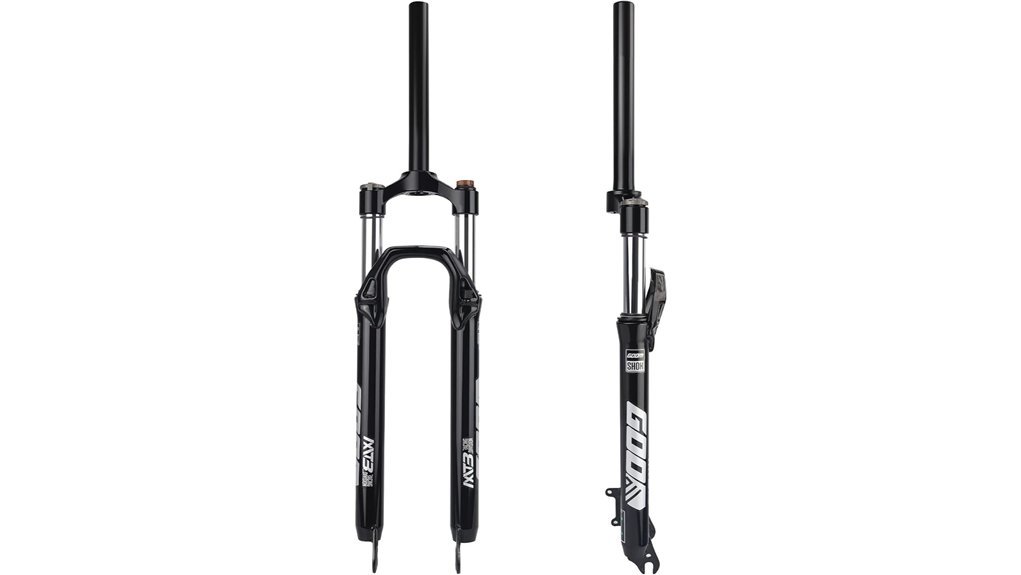
The MEGHNA Lightweight Air Suspension Bike Front Fork is a strong fit for riders who want a durable, lightweight upgrade for 26-, 27.5-, or 29-inch mountain bikes with disc brakes only. Built from high-strength aluminum alloy, it aims to cut fatigue while maintaining toughness for off-road use and long rides. Its seamless construction and high-temperature fish scale welding improve structural stability and crack resistance. A polished surface adds scratch resistance. With a 1-1/8 inch threadless steerer, 100 mm O.L.D., and 3 kg weight, it supports jumping and hard braking impacts.
Best For: Riders with 26-, 27.5-, or 29-inch mountain bikes who want a lightweight, durable front fork for disc-brake off-road riding and long-distance comfort.
Pros:
- High-strength aluminum alloy construction offers a strong yet lightweight upgrade.
- Seamless forming and fish scale welding improve stability and crack resistance.
- Compatible with multiple wheel sizes and built to handle jumping and hard braking impacts.
Cons:
- Only compatible with disc brake bikes.
- Weight is 3 kg, which may still feel heavy for riders seeking an ultra-light fork.
- Front fork only; no extra accessories or installation parts are included.
LYNICESHOP 26″ Mountain Bike Air Suspension Fork
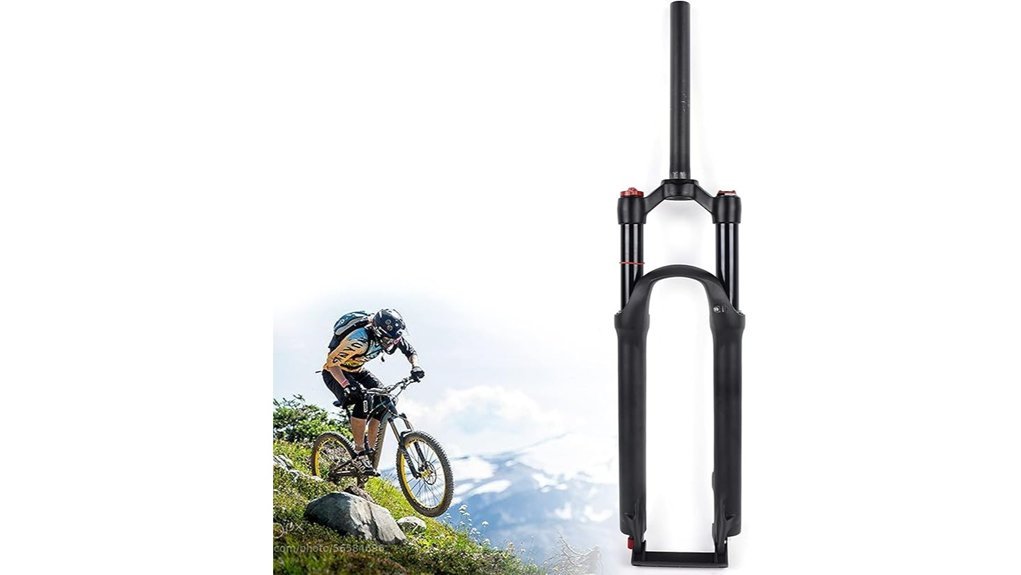
LYNICESHOP’s 26-inch air fork suits riders who want adjustable comfort and control. This 120mm suspension fork includes rebound tuning and a lockout mode, letting riders adapt quickly from rough descents to efficient climbs. Its aluminum and magnesium alloy construction, plus a coated inner tube, supports durability against wear and impact. At 4.83 pounds, it stays relatively light, and the U-shaped design helps maintain stability on corners and uneven ground. A one-piece structure simplifies installation on 26-inch bikes, while the disc brake mount and smooth, low-maintenance finish aid compatibility and upkeep.
Best For: Riders of 26-inch mountain bikes who want a lightweight, adjustable air suspension fork for improved comfort, control, and versatility on both trails and pavement.
Pros:
- 120mm travel with rebound adjustment and lockout for versatile riding and climbing efficiency
- Lightweight aluminum and magnesium alloy construction with a coated inner tube for durability
- Easy installation and broad disc brake compatibility with a low-maintenance finish
Cons:
- Only compatible with 26-inch mountain bikes, limiting use on other wheel sizes
- May require periodic air pressure tuning to maintain preferred ride feel
- Not ideal for riders who prefer a simpler non-adjustable rigid fork
RockShox Recon Silver RL Suspension Fork 29″ 100mm
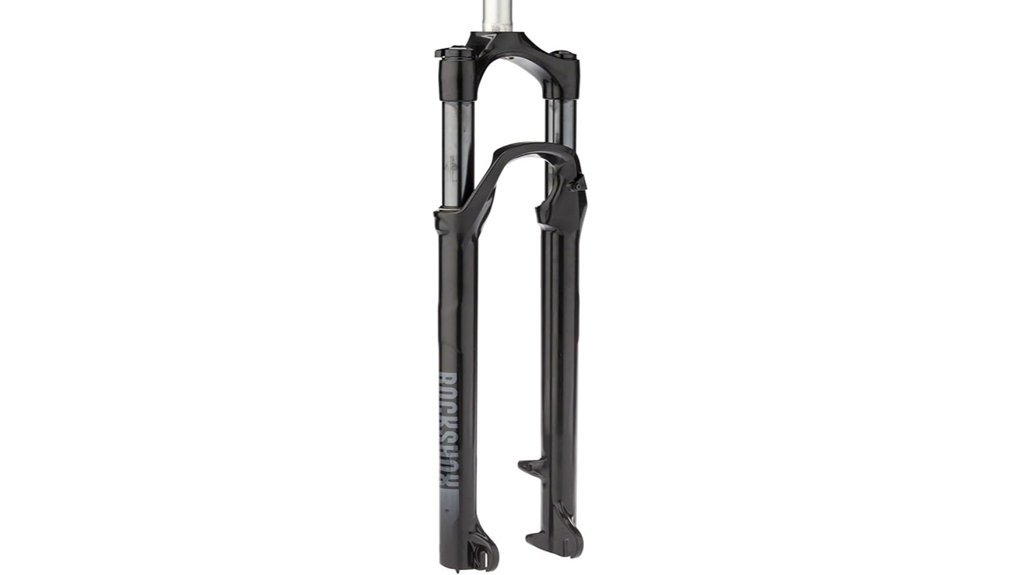
With 29-inch wheels and 100mm of travel, the RockShox Recon Silver RL suits cross-country riders seeking dependable control. Its Solo Air spring offers tunable support, while the Motion Control damper helps smooth trail impacts and improve handling. Built for disc brakes, it uses a 9 mm QR axle and a 1-1/8 inch aluminum steerer with a 51 mm offset. The black finish keeps the look understated. Crown adjustment replaces a remote, and a star nut comes included. This fork targets riders wanting reliable front-end performance without unnecessary complexity.
Best For: Cross-country riders who want a dependable 29″ suspension fork with simple, reliable performance and adjustable air-spring support.
Pros:
- Solo Air spring offers easy, tunable setup for rider weight and terrain.
- Motion Control damper helps smooth impacts and improve handling on rough trails.
- Includes disc brake compatibility and a star nut for straightforward installation.
Cons:
- 9 mm QR axle is less modern than thru-axle standards.
- Crown adjustment instead of a remote may be less convenient while riding.
- 100 mm travel may be limiting for riders wanting more aggressive trail performance.
Huffy Stone Mountain Bike for Men and Women
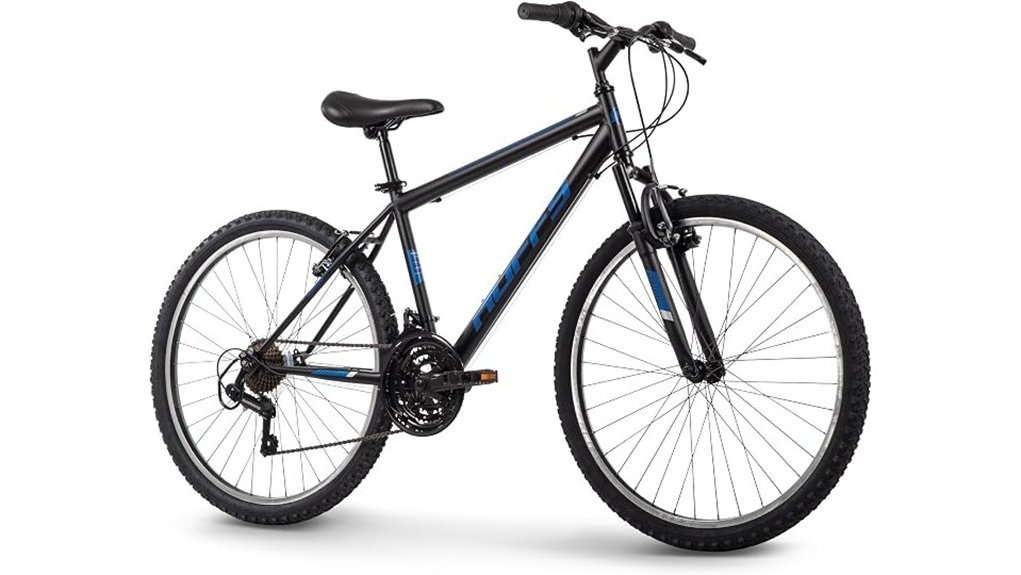
Built for men and women, the Huffy Stone Mountain pairs a matte black frame with reliable trail-ready versatility. Offered in 20-, 24-, and 26-inch sizes, it balances rugged construction with a clean, modern look. A 21-speed Shimano twist shifter supports smooth shifts across flat pavement and uneven trails. The front suspension fork softens bumps, improving control on rough ground. A padded comfort saddle helps riders stay supported during longer outings. With robust wheels and climb-ready gearing, this bike suits daily excursions, casual adventure, and mixed-terrain riding without unnecessary complexity.
Best For: Men and women seeking a versatile, entry-level mountain bike for casual trail rides, daily commuting, and mixed-terrain adventures.
Pros:
- 21-speed Shimano twist shifting provides smooth and easy gear changes.
- Front suspension fork helps absorb bumps for a more comfortable ride on rough ground.
- Matte black frame with multiple size options offers a solid blend of style and versatility.
Cons:
- May not be ideal for advanced riders looking for higher-end performance features.
- Mechanical components are basic compared with premium mountain bikes.
- Best suited for casual and moderate terrain rather than aggressive technical trails.
BOLANY Bike Suspension Air Fork, 100/135mm Travel
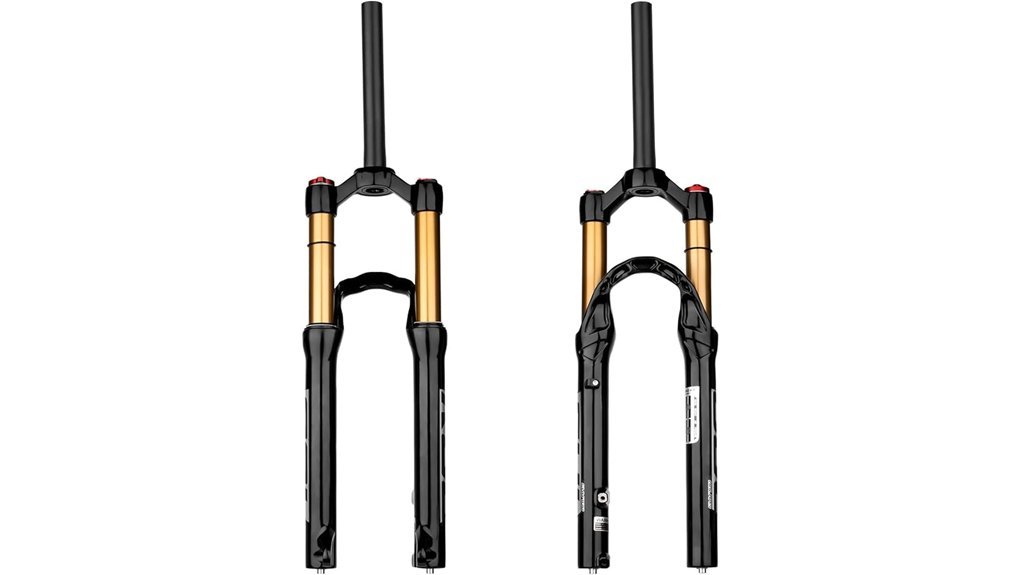
The BOLANY 20/24-inch air fork suits riders needing compact suspension for smaller wheel bikes. It uses a 32mm stanchion, reverse arch layout, and aluminum-magnesium construction to balance strength with reduced weight. Travel options of 100mm or 135mm provide flexibility for kids bikes, folding bikes, and BMX setups. The fork fits 20/24-inch wheels, supports tires to 2.3 inches, and accepts 9mm quick release or 15mm thru-axle hubs. A Teflon bearing sleeve and internal sponge washer help reduce friction, noise, and oil leakage, while ABS manual valve lock controls damping.
Best For: Riders with 20/24-inch bikes—especially kids’ bikes, folding bikes, and BMX setups—who want a lightweight suspension air fork with adjustable travel and damping control.
Pros:
- 32mm stanchion with reverse arch design for solid strength and compact suspension performance
- Fits both 9mm quick release and 15mm thru-axle setups, with 100mm or 135mm travel options
- Teflon bearing sleeve and internal sponge washer help reduce friction, noise, and oil leakage
Cons:
- Limited to smaller wheel sizes, so it won’t work for most standard full-size mountain bikes
- Maximum tire width is only up to 2.3 inches
- Larger rotor sizes need a separate adapter, and setup requires checking hub and brake compatibility
Factors to Consider When Choosing a Front Suspension Mountain Bike
Choosing a front suspension mountain bike begins with checking wheel size compatibility, suspension travel, and brake type fit. Fork material also matters, since it influences both ride feel and long-term performance. Weight and durability should then be weighed together to guarantee the bike suits the intended terrain and use.
Wheel Size Compatibility
Wheel size compatibility is a key factor when selecting a front suspension mountain bike, since adult models typically use 26-inch, 27.5-inch, or 29-inch wheels. Matching the fork to the intended wheel size helps preserve correct handling, steering response, and overall bike performance. A 29-inch wheel can roll over rocks and roots more easily and may offer improved traction on mixed terrain, while 26-inch and 27.5-inch setups remain common for riders who prefer different ride characteristics. Suspension forks are built for specific wheel diameters, so an incompatible fork can create fit problems and reduce efficiency. Buyers should review manufacturer specifications carefully before choosing a fork or complete bike to confirm the recommended wheel size and ascertain proper compatibility.
Suspension Travel
Suspension travel is a key measure of how far a front fork can compress, typically ranging from 100mm to 150mm on mountain bikes. It determines how well the fork absorbs impacts from rough ground, roots, and drops. Longer travel, usually 120mm or more, suits aggressive downhill riding because it handles larger bumps with greater composure and control. Shorter travel, around 100mm, fits cross-country use, where efficiency and steady comfort on smoother trails matter more. Travel also affects geometry; added travel often creates a slacker head angle, which can improve stability at higher speeds. Rebound and lockout adjustments further refine performance, letting riders match the fork’s response to changing trail conditions without sacrificing overall balance or predictability.
Brake Type Fit
Brake compatibility is essential when selecting a front suspension mountain bike fork, because forks are typically built for either disc brakes or rim brakes. Most modern models favor disc brake mounts, but the mount format still needs checking. Post Mount and International Standard are the two common standards, and each requires the correct adapter setup. Adapter length and configuration can differ by fork, so matching the fork to the brake system specification is necessary for proper alignment and secure installation. If the brake type does not fit, stopping power may suffer and installation can become difficult. That mismatch can also affect safety on rough trails. Careful verification of brake standard, mount type, and adapter requirements helps guarantee reliable performance and avoids compatibility problems before purchase.
Fork Material
Beyond brake compatibility, fork material is another key factor that shapes how a front suspension mountain bike performs on the trail. Aluminum alloys remain a common choice because they combine strength with low weight, giving riders a practical balance for varied terrain. High-strength aluminum alloy is especially valued in suspension forks for its toughness and impact resistance on rough routes. Magnesium alloys offer another option, adding shock absorption while keeping the structure light. Manufacturing details also matter; seamless forming technology helps create a stable fork structure suited to demanding conditions. Surface treatments such as polishing further improve resistance to scratches and wear, helping the fork endure harsh riding environments. Together, these material choices influence ride quality, responsiveness, and long-term trail readiness.
Weight And Durability
Weight and durability are among the most important considerations when choosing a front suspension mountain bike, since a lighter fork can improve maneuverability and reduce rider fatigue on long rides. Aluminum alloy and similar lightweight materials often help reduce overall mass without sacrificing too much strength. At the same time, durability remains essential because rough trails, drops, and repeated impacts place constant stress on the fork. High-strength construction, advanced welding, and seamless forming techniques improve structural stability and reduce failure risk. A polished surface can also resist scratches, while high-temperature welding supports long-term reliability. The best designs balance low weight with toughness and effective shock absorption, allowing the bike to remain responsive, resilient, and capable across demanding terrain.
Frequently Asked Questions
How Often Should Front Suspension Forks Be Serviced?
Front suspension forks should be serviced regularly, typically every 25 to 50 riding hours for basic cleaning and lubrication, and every 100 to 200 hours for a full lower-leg service. Heavier use, muddy conditions, or aggressive riding may require shorter intervals. Manufacturer guidelines should always be followed, since specific fork designs differ. Neglecting service can reduce performance, increase wear, and shorten the fork’s lifespan considerably over time.
Can I Upgrade a Hardtail to a Suspension Fork?
Yes, a hardtail can often be upgraded to a suspension fork, provided the frame and wheel standards are compatible. It should match the bike’s wheel size, steerer tube type, axle standard, and intended travel range. Excessive fork travel can change handling or stress the frame. A bicycle shop can confirm fit and safety before installation, especially on older frames or those not designed for suspension.
What Air Pressure Should My Fork Use?
Fork air pressure should match the rider’s weight, the fork’s design, and the desired sag, usually set at 15–25% of travel. A light rider may need less pressure, while a heavier rider needs more. The manufacturer’s chart provides a good starting point. Then the pressure is adjusted in small steps after testing. Too much pressure makes the fork harsh; too little causes excessive dive and bottoming out.
Do Front Suspension Bikes Work Well for Bikepacking?
Yes, front suspension bikes can work well for bikepacking, apparently because suffering should be cushioned only somewhat. A hardtail front fork adds comfort on rough roads, reduces hand fatigue, and keeps maintenance simpler than full suspension. They are often lighter and better for carrying loads. Still, for very technical trails or heavily packed trips, efficiency can drop. Success depends on terrain, luggage weight, and how much compromise one tolerates.
How Do I Reduce Fork Stiction and Noise?
Fork stiction and noise are reduced by cleaning and lubricating the fork seals and stanchions, checking air pressure or coil preload, and ensuring the axle, brake bolts, and crown are properly torqued. It also helps to service the lower legs, replace worn bushings or foam rings, and confirm the fork is aligned correctly. If noise persists, a full suspension service is often needed to restore smooth, quiet travel.