Finding the best home builders in Oklahoma City is less about choosing the biggest name and more about finding the right builder for your lot, budget, design goals, and preferred level of customization. Compare builders on the same specifications, verify their credentials, read the contract carefully, and understand what is included before you sign.
Quick Answer
The best home builders in Oklahoma City are those that match your project type, budget, lot, and customization needs while providing a clear written contract, verifiable registration and insurance, references, warranty terms, and a documented change-order process. Compare several builders using the same specifications rather than choosing by price or online ratings alone.
Last checked: September 30, 2026. Dates and figures were verified against official sources.
Key Takeaways
- Oklahoma does not require a state general-contractor license, but Oklahoma City requires residential building contractors working within city limits to register with the City.
- A fixed-price contract can improve budget predictability, but you still need to understand allowances, exclusions, change orders, site-work assumptions, and escalation clauses.
- Years in business matter, but there is no reliable rule that a builder must have 30 years of experience to be a good choice.
- Financing, warranty coverage, included features, and post-closing service can differ as much as the home price itself.
How to Choose the Best Home Builders in Oklahoma City
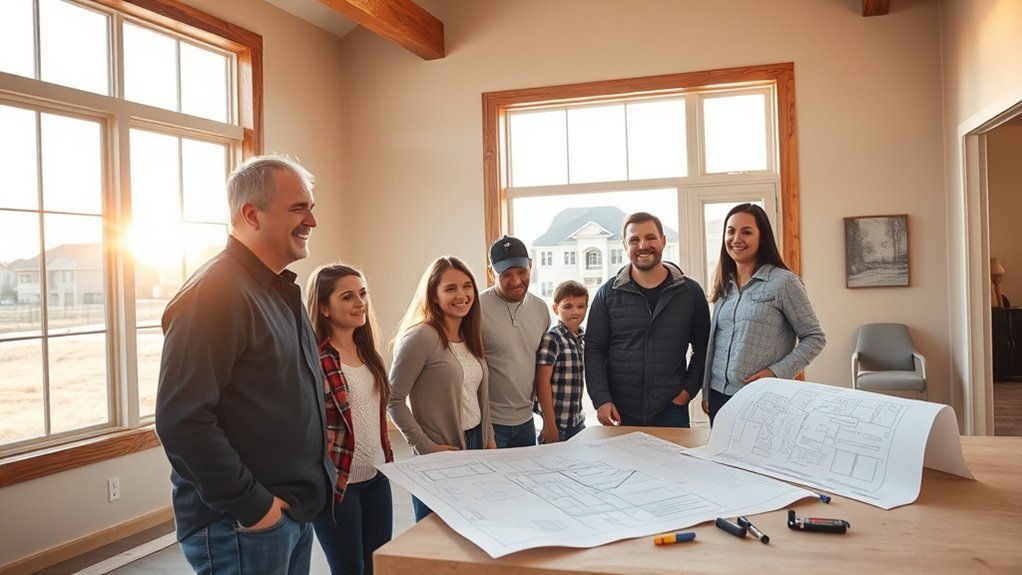
Start by defining exactly what you are building. A production home in a planned community, a semi-custom home, and a fully custom home on your own land involve different builders, contracts, timelines, and design choices.
Next, verify the builder rather than relying on marketing claims. Oklahoma does not currently require a state license for general contractors, but the City of Oklahoma City requires residential building contractors to register before performing covered work within city limits. The City requires documentation including liability insurance, and licensed trades have additional requirements.
You can also use the Central Oklahoma Home Builders Association member directory to identify builders working in the region. Membership alone does not guarantee quality, so continue checking references, contracts, completed homes, and warranty service.
Don’t use 30 years in business as a hard cutoff. The National Association of Home Builders’ consumer checklist says it usually takes about three to five years to establish a financially sound building business. More experience can be reassuring, but recent workmanship, financial stability, communication, insurance, references, and warranty support matter too.
Before choosing a builder, compare these points using the same house specifications:
- Project type: production, semi-custom, or fully custom.
- Base price: what the quoted price actually includes.
- Allowances: amounts reserved for items such as flooring, fixtures, cabinets, or appliances.
- Site work: grading, utilities, driveway work, drainage, clearing, foundation conditions, and other lot-related costs.
- Change orders: how changes are approved, priced, and added to the schedule.
- Construction schedule: milestones, expected completion, and how delays are handled.
- Warranty: what is covered, for how long, and who handles claims.
- Communication: how often you receive updates and who your main contact will be.
Ask each builder for a complete written proposal. A lower starting price is not necessarily cheaper if important work is excluded or major selections are carried as unrealistic allowances.
How to Evaluate Builders Through Client Testimonials
Client testimonials are useful when they describe specific parts of the building process rather than simply saying the builder was “great.” Look for repeated comments about workmanship, communication, budget changes, scheduling, warranty service, and how problems were handled.
What Useful Builder Reviews Should Tell You
The strongest reviews describe what happened before, during, and after construction. Pay attention to whether homeowners understood their selections and costs, received regular updates, and could get warranty problems addressed after closing.
Also look for patterns. One complaint may reflect an unusual situation, while repeated complaints about the same issue can be more meaningful. Read both positive and negative reviews, then ask the builder directly about any concern that appears more than once.
Whenever possible, speak with recent customers yourself. Ask whether they would hire the builder again, whether the final cost matched the contract, what changes occurred during construction, and how responsive the builder was after move-in.
What to Verify Beyond Testimonials
Reviews should support your research, not replace it. Ask to see finished homes and, if the builder permits it, a project still under construction so you can evaluate workmanship at different stages.
Request proof of insurance, written warranty terms, references, and a sample construction agreement before making a large deposit. Confirm who supervises the job and which major trades are subcontracted.
Finally, ask how warranty requests are documented. A clear written process is more useful than a vague promise that the builder will “take care of everything.”
What Customizations Can Make Your Home Truly Yours?
Useful customization starts with how you live, not just finishes. Prioritize floor-plan changes, storage, electrical needs, lighting, accessibility, energy efficiency, and spaces that would be expensive to alter after construction.
Before choosing finishes, ask which parts of the plan can actually change. Production builders may limit you to predetermined packages, while semi-custom builders may allow selected structural changes. Fully custom builders generally offer broader design freedom, although that can increase design time and cost.
Consider practical features such as pantry storage, laundry placement, garage space, home-office needs, additional outlets, exterior lighting, insulation upgrades, and future charging or technology needs. Ask which items are included in the base specification and which are upgrades.
Smart-home features can add convenience, but the equipment itself should not determine which builder you choose. Find out whether devices require subscriptions, which systems they work with, whether they can function without cloud services, and who provides support after the builder’s warranty ends.
Pro Tip: Before signing, create a written list of must-have structural features, preferred upgrades, and optional finishes. Price the must-haves first because structural changes are usually harder to make after the home is built.
Fixed Price vs. Cost-Plus: What to Choose?
A fixed-price contract gives you a stated contract amount for an agreed scope, while a cost-plus contract generally requires you to pay the actual project costs plus the builder’s agreed fee or markup. Neither structure eliminates the need for a detailed scope, allowances, change-order rules, and documentation.
| Contract Type | How Pricing Works | Main Point to Check |
|---|---|---|
| Fixed-price | A defined price covers the scope stated in the contract. | Allowances, exclusions, escalation clauses, site conditions, and change orders. |
| Cost-plus | You pay documented project costs plus an agreed builder fee or markup. | Fee calculation, reimbursable costs, spending controls, documentation, and any maximum price. |
When a Fixed-Price Contract Helps
A fixed-price agreement can make budgeting easier when the plans, specifications, selections, and site conditions are well defined. You know the agreed starting contract price before construction begins.
However, “fixed price” does not automatically mean the final amount can never change. Owner-requested changes, allowances, exclusions, unforeseen conditions, or contract clauses can still alter the price. Read exactly what triggers an adjustment.
When a Cost-Plus Contract May Fit
A cost-plus arrangement can provide flexibility when the scope or selections are likely to evolve. In exchange, you usually carry more uncertainty about the eventual total cost.
If you consider cost-plus, ask how invoices will be documented, which expenses receive the builder’s markup, whether you can review subcontractor invoices, how often costs are reported, and whether the agreement includes a budget limit or guaranteed maximum price.
Note: A construction contract can create significant financial and legal obligations. If any pricing, allowance, change-order, lien, warranty, or cancellation term is unclear, consider having an Oklahoma construction or real-estate attorney and your lender review it before you sign.
Why Safety and Smart Home Features Matter
Safety begins with code compliance, permits, inspections, and sound construction. Smart locks, thermostats, cameras, and similar devices can be useful additions, but they should come after the fundamentals of structural, electrical, plumbing, mechanical, fire, and weather protection.
The Oklahoma Uniform Building Code Commission lists the 2024 International Residential Code, with Oklahoma amendments, as effective September 14, 2026. Ask your builder which state and local code provisions apply to your particular permit and project.
For construction within Oklahoma City, residential new construction requires the City’s permit process. Required inspections are tied to the permit, so ask who schedules inspections, how failed inspections are corrected, and how you will receive final documentation.
When comparing builders, ask which features exceed minimum code and which are optional. Also ask about drainage, insulation, ventilation, electrical capacity, water-management details, security equipment, and any storm-safety options that matter to your household.
If smart-home products are included, get the brand and model information before closing. Confirm whether you need a paid subscription, whether accounts are transferred to you, and how to reset access credentials once you take possession.
Financing Your New Home: Essential Insights for Homebuyers
Financing a new build may work differently from financing an existing home. Depending on the builder and project, you may use a normal purchase mortgage for a completed or builder-financed home, or a construction-to-permanent loan for a home built specifically for you.
Before committing to a floor plan, ask your lender what the approved budget must cover. The calculation may include the home, land, site preparation, permits, utility connections, upgrades, contingency requirements, closing costs, and other expenses depending on the loan structure.
If you are building outside the urban core, the USDA Single Close Construction-to-Permanent program may be worth investigating. USDA offers the program through approved lenders for qualifying borrowers and properties in eligible rural areas; eligibility depends on the borrower, property location, lender, and program requirements.
Eligible veterans can also ask participating lenders about VA-backed construction loans. VA notes that construction financing requires additional documentation and that borrowers need to find a participating lender offering the product.
Land equity can sometimes affect construction financing when you already own the building site, but the treatment depends on the loan program and lender. Do not assume that owning land automatically means you can build with no cash required.
Builder or preferred-lender incentives can also reduce certain upfront costs, but compare the entire loan rather than the advertised credit alone. Review the interest rate, APR, points, lender fees, required closing date, loan type, and whether using the builder’s preferred lender is optional.
Pro Tip: Ask each builder for a price based on the same floor-plan size, site assumptions, specifications, allowances, and upgrades. A side-by-side comparison is much more useful than comparing different builders’ advertised base prices.
Frequently Asked Questions
Which House Builder Has the Best Reputation?
There is no single Oklahoma City builder that is automatically best for every buyer. Compare recent customers’ experiences, city registration, insurance, completed homes, warranty service, contract terms, communication, and the builder’s experience with the type of home you want.
Is $300,000 Enough to Build a House in Oklahoma City?
It can be enough for some projects, but $300,000 is not a reliable universal budget for a new build. The answer depends on whether land is included, home size, design, finishes, site preparation, utilities, permits, upgrades, financing costs, and the builder’s pricing structure.
How Much Does It Cost to Build a 2,000 Sq Ft House in Oklahoma?
There is no single verified citywide price for building a 2,000-square-foot house in Oklahoma City. A meaningful estimate needs a specific lot, plans, specifications, foundation and site conditions, utility requirements, allowances, and finish level, so obtain detailed bids rather than relying on a generic cost-per-square-foot figure.
Who Is a Better Builder, Lennar or Pulte?
Neither builder is automatically better for every buyer. Compare the specific community and home you are considering, including base specifications, included features, options, warranty terms, price, completion schedule, lender incentives, and post-closing service; also confirm that each builder currently serves your target Oklahoma City location.
Do Home Builders Need a Contractor License in Oklahoma?
Oklahoma does not currently require a state general-contractor license, but local requirements still apply. Oklahoma City requires residential building contractors to register with the City, while regulated trades such as electrical, plumbing, and mechanical work have separate licensing and registration requirements.
Conclusion
The best home builder for your Oklahoma City project is the one whose experience, contract, specifications, communication, warranty, and pricing fit your particular home. Shortlist several builders, verify their credentials and references, compare detailed written proposals, and understand every allowance and change-order rule before signing.
Sources
- City of Oklahoma City — Contractor Registration: Residential building contractor registration, insurance, and local contractor requirements.
- Central Oklahoma Home Builders Association — Member Directory: Central Oklahoma builder and residential-industry directory.
- National Association of Home Builders — Builder Hiring Checklist: Experience, references, insurance, contracts, warranties, and builder-selection guidance.
- Oklahoma Uniform Building Code Commission — International Residential Code Adoptions: Adoption of the 2024 International Residential Code with Oklahoma amendments effective September 14, 2026.
- City of Oklahoma City — Building & Trade Permits: Residential new-construction permits and local trade requirements.
- USDA Rural Development — Single Close Construction-to-Permanent Financing: USDA construction financing for eligible borrowers and rural properties.
- U.S. Department of Veterans Affairs — Construction Loans: VA-backed construction-loan availability and borrower considerations.