Sit-in fishing kayaks continue to appeal to anglers who want stability, comfort, and protection from the elements. The [2026] lineup brings options for solo paddlers, tandem trips, and compact storage, with models that suit calm lakes and slow-moving rivers. Each kayak offers different trade-offs in weight, seating, and deck space. A closer look at these nine picks shows which features matter most, and which models may fall short.
Key Takeaways
- Best sit-in fishing kayaks for 2026 include stable, lightweight models like the Pelican Argo 100XR and Argo 100X Angler.
- The Pelican Argo 136XP suits tandem anglers needing extra stability, adjustable seating, and shared comfort on calm water.
- Compact options like the Sentinel 100X are easy to transport and store, but they offer lower capacity for gear and larger paddlers.
- Fishing-focused features such as rod holders, hatches, tank wells, and accessory tracks improve convenience and organization.
- Choose by portability, weight capacity, hull stability, and seat adjustability to match your fishing style and water conditions.
Pelican Argo 100XR Recreational Kayak (10 ft)
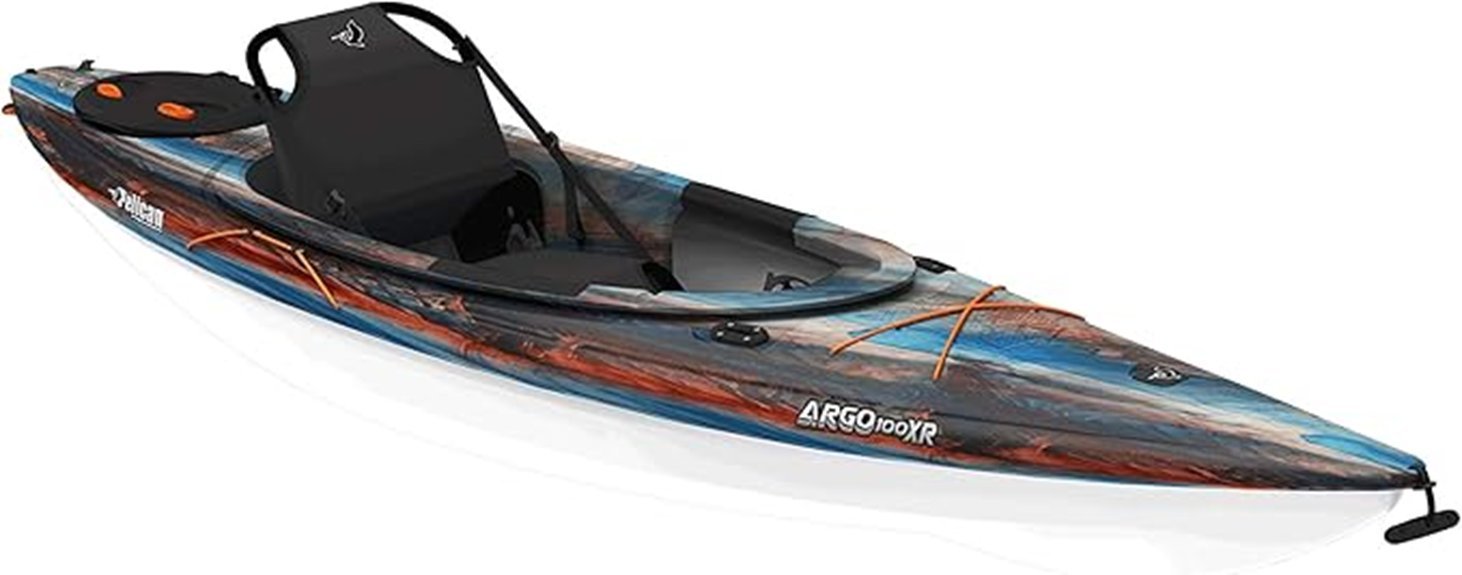
The Pelican Argo 100XR is a strong fit for anglers who want a lightweight, stable sit-in kayak that is easy to move and simple to paddle, especially on calm waters and shorter fishing trips. At 10 feet and 43 pounds, it is built from HDPE and supports up to 300 pounds. The twin-arched Multi Chine Hull and flatter profile improve stability and make entry and exit easier. Ergocoast seating adds comfort and can serve as a beach chair. Storage includes a rear hatch, front deck bungees, and rigging tracks for accessories.
Best For: Anglers and casual paddlers who want a lightweight, stable 10-foot sit-in kayak for calm waters, short trips, and easy transport.
Pros:
- Lightweight at 43 lb, making it easy to carry, load, and store.
- Very stable twin-arched Multi Chine Hull with a flatter design for easier entry and exit.
- Comfortable Ergocoast seating plus useful storage and accessory compatibility.
Cons:
- Better suited to calm waters than rough conditions or serious touring.
- 300 lb maximum capacity may feel limiting for larger paddlers with gear.
- At 10 feet, it offers less tracking and speed than longer kayaks.
Pelican Argo 136XP Tandem Sit-in Kayak
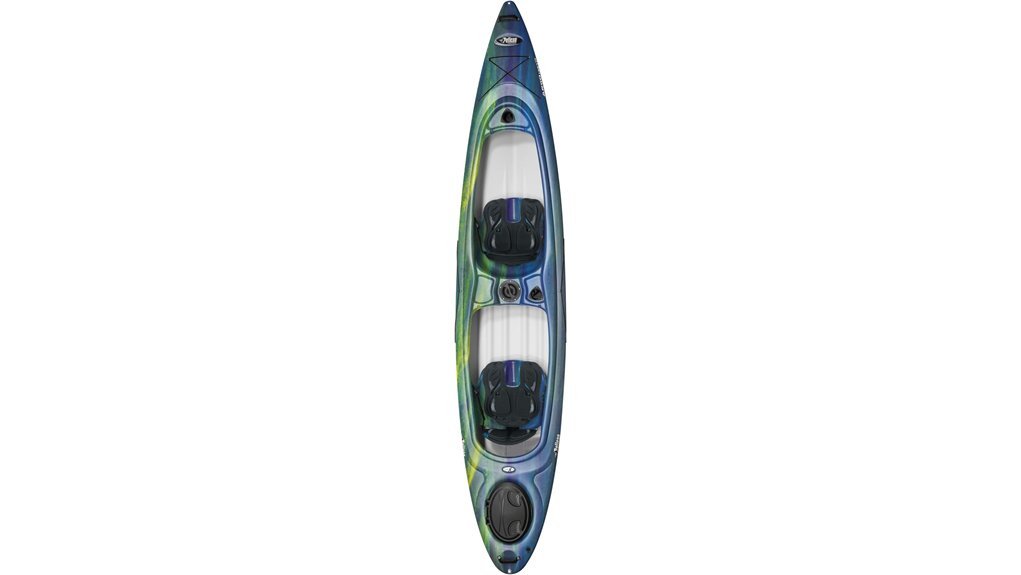
Built for two anglers, the Pelican Argo 136XP Tandem suits paddlers seeking stability and comfort. Its multi-chine flat bottom hull and keel extension help deliver a steady platform, smooth glide, and reliable tracking on calm water. Constructed with patented Ram-X material, it balances durability with a lighter carry weight for varied skill levels. The Ergofit seating system supports comfortable, adjustable positioning, while adjustable footrests provide fit for different body sizes. At 13 feet, this sit-in tandem kayak offers a practical layout for shared outings and efficient paddling.
Best For: Paddlers, especially two anglers or tandem users, who want a stable, comfortable sit-in kayak for calm-water outings and shared trips.
Pros:
- Multi-chine flat bottom hull with keel extension offers strong stability and improved tracking.
- Ram-X construction provides a durable yet lightweight feel for a range of skill levels.
- Ergofit seating and adjustable footrests improve comfort and fit during longer paddles.
Cons:
- Tandem design may be less convenient for solo paddling or easy transport.
- Best suited for calm water, so it may not be ideal for rougher conditions.
- Sit-in layout can feel less open and accessible than a sit-on-top kayak.
Pelican Seek 100X Sit-on-Top Recreational Kayak
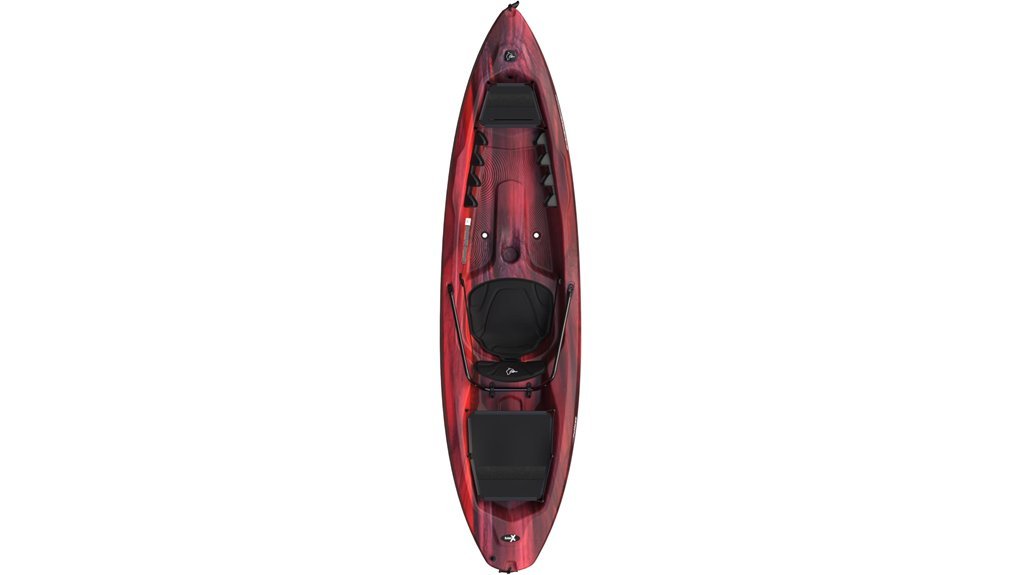
Pelican Seek 100X suits anglers who want a stable, lightweight kayak with easy access and comfort. This 10-foot sit-on-top recreational kayak weighs 43.1 pounds, supports up to 300 pounds, and uses polyethylene construction for durability. Its twin-arched multi-chine hull promotes steadiness and a smoother ride on calm water. The adjustable Ergoform seating system adds soft cushioning, while the Ergobar system and slip-resistant standing area simplify entry and exit. Storage includes a ripstop tankwell cover, bow ripstop bag, and dual-position bottle holder. Pelican backs it with a lifetime limited warranty and one-year coverage for parts and accessories.
Best For: Anglers and casual paddlers who want a stable, lightweight 10-foot sit-on-top kayak with comfortable seating and easy access on calm water.
Pros:
- Stable twin-arched multi-chine hull delivers a steady, smooth ride.
- Lightweight 43.1-lb build makes transport and launching easier.
- Handy storage and comfort features, including an Ergoform seat, tankwell cover, bow bag, and bottle holder.
Cons:
- 300-lb weight capacity may be limiting for heavier paddlers or extra gear.
- Best suited for calm recreational use rather than rough water or long-distance touring.
- At 10 feet, it may not track as efficiently as longer kayaks.
Pelican Sentinel 100X Angler Fishing Kayak
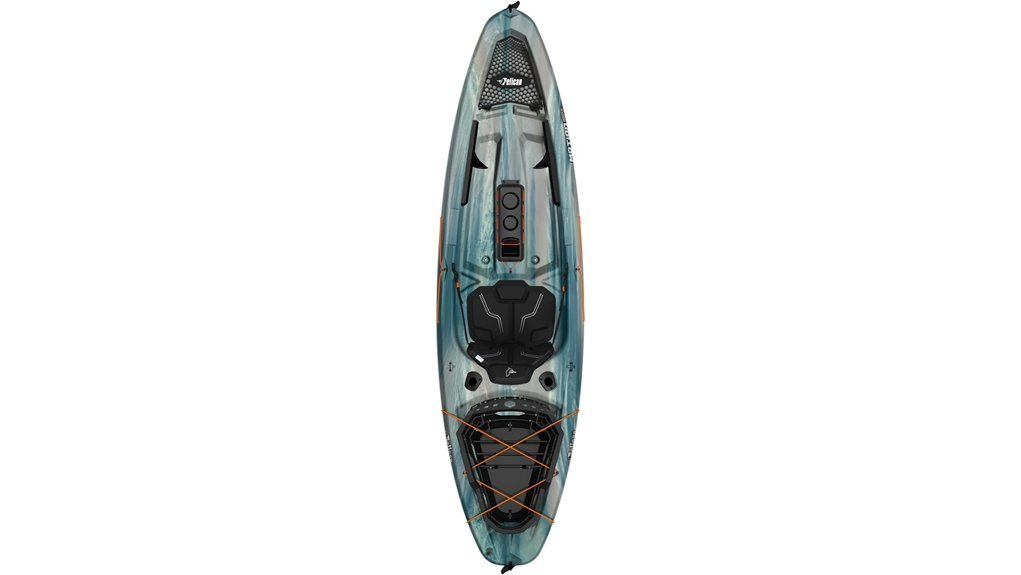
With its compact under-10-foot frame, the Sentinel 100X suits anglers who need easy storage and transport. Pelican builds this sit-on-top kayak from polyethylene, keeping weight to 44 pounds while supporting up to 275 pounds. The Ergolounge seating adds extra-thick cushioning and a high, wide padded backrest for better comfort during longer outings. Four rod holders, including two flush-mount and two vertical mounts in the removable ExoPak, improve tackle organization. Molded side handles aid carrying, and the Forest Mist model carries a lifetime limited warranty on defects, plus one year on parts and accessories.
Best For: Anglers who want a lightweight, compact sit-on-top fishing kayak that’s easy to store, carry, and outfit for short to medium fishing trips.
Pros:
- Under-10-foot length makes it easy to transport and store.
- Lightweight 44-lb build with molded side handles improves portability.
- Four rod holders and removable ExoPak add convenient fishing storage and organization.
Cons:
- 275-lb maximum capacity may be limiting for heavier paddlers or lots of gear.
- Compact size may be less stable or spacious than longer fishing kayaks.
- Includes only the kayak, so additional accessories may need to be purchased separately.
Pelican Argo 100X Angler Sit-In Fishing Kayak
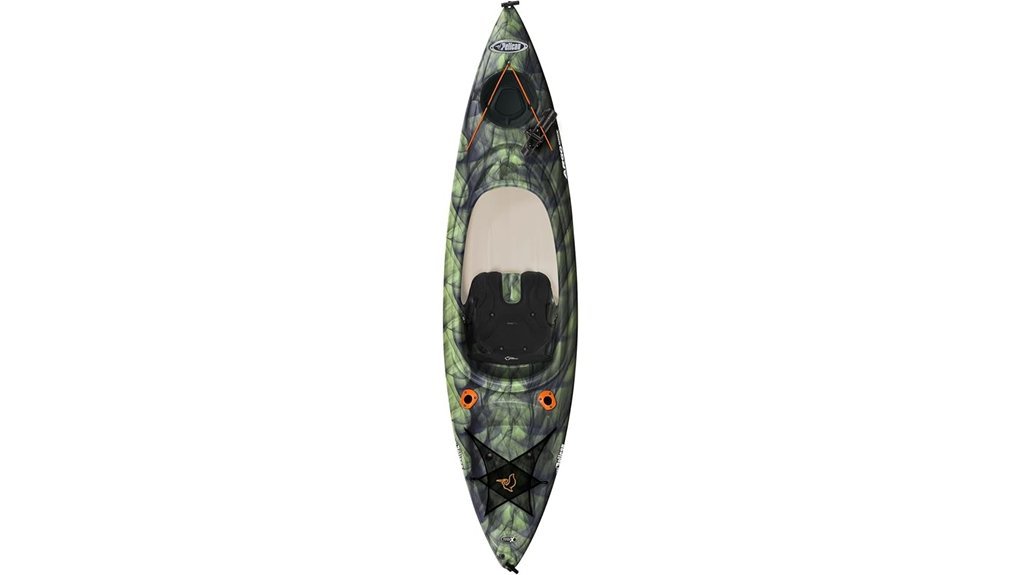
The Argo 100X Angler suits casual anglers who want a lightweight, stable sit-in kayak. At 10 feet and 36 pounds, the Pelican model is easy to carry, launch, and store. Its Ram-X construction adds impact resistance, while the Ergoform padded seat and backrest improve comfort on longer outings. Adjustable footrests help paddlers find a secure fit. Fishing utility comes from a swivel rod holder, two flush-mount rod holders, a front hatch with bungee cords, and a rear tank well. A cockpit table, bottle holder, and 275-pound capacity round out its practical design.
Best For: Casual anglers and average paddlers who want a lightweight, stable, easy-to-transport sit-in kayak with useful fishing features.
Pros:
- Lightweight at 36 lb, making it easy to carry, launch, and store
- Stable and comfortable with an Ergoform padded seat, backrest, and adjustable footrests
- Handy fishing setup with a swivel rod holder, two flush-mount rod holders, and extra storage options
Cons:
- 275-pound maximum capacity may be limiting for larger paddlers or heavier gear loads
- Sit-in design offers less open storage and accessibility than some sit-on-top fishing kayaks
- Best suited to casual use, so it may not satisfy more advanced or specialized anglers
Pelican Catch Mode 110 Kayak
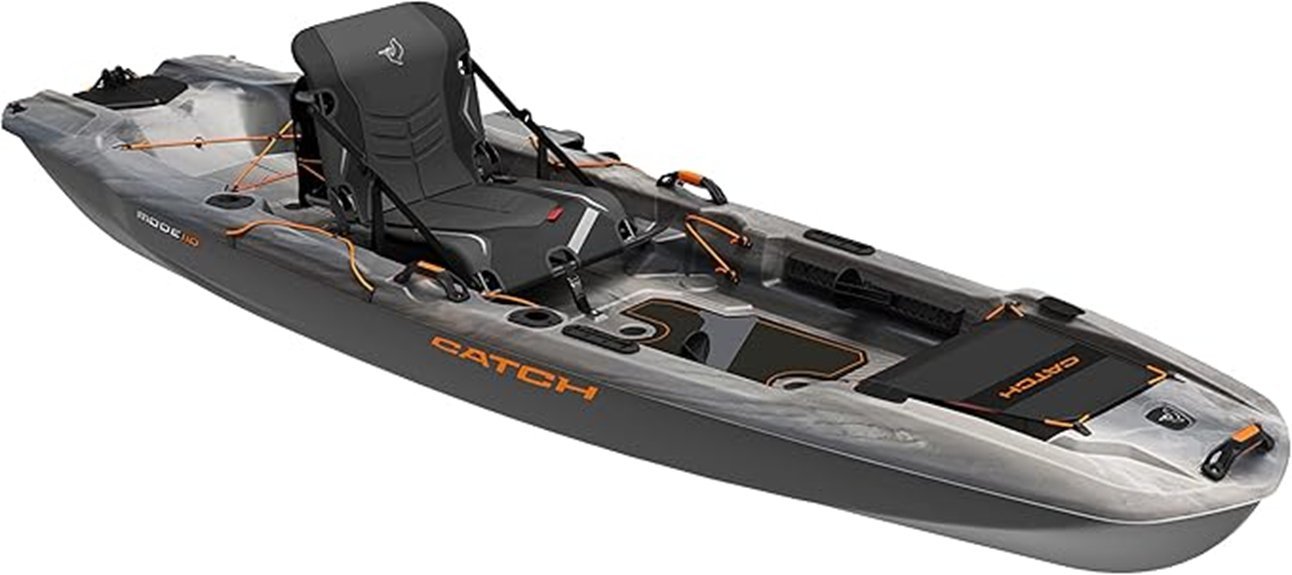
Its tunnel hull delivers exceptional stability, making it ideal for anglers who want a secure platform for standing and casting. The wide, flat deck and anti-slip carpet support confident movement, while the ERGOBOOST seat adds adjustable height and an EVA pad for long-session comfort. Under-seat storage helps keep essentials organized. For rigging, the kayak offers two 4″ tracks, three flush mount rod holders, paddle and rod tie-downs, front and rear tank wells, and two bottle holders. Built from durable HDPE, it weighs 63 lb, supports 375 lb, and includes a limited warranty.
Best For: Anglers who want a highly stable, stand-friendly fishing kayak with plenty of rigging and storage options.
Pros:
- Tunnel hull and wide, flat deck provide excellent stability for standing and casting.
- Comfortable ERGOBOOST seat with adjustable height, EVA pad, and under-seat storage.
- Good fishing setup with two 4″ tracks, three rod holders, tie-downs, tank wells, and bottle holders.
Cons:
- At 63 lb, it may still be cumbersome for some users to transport alone.
- 10 ft 8 in length can limit tracking and speed compared with longer kayaks.
- Limited warranty coverage may be less reassuring than more extensive warranty options.
Wilderness Systems Tarpon Fishing Kayak with Adjustable Seat
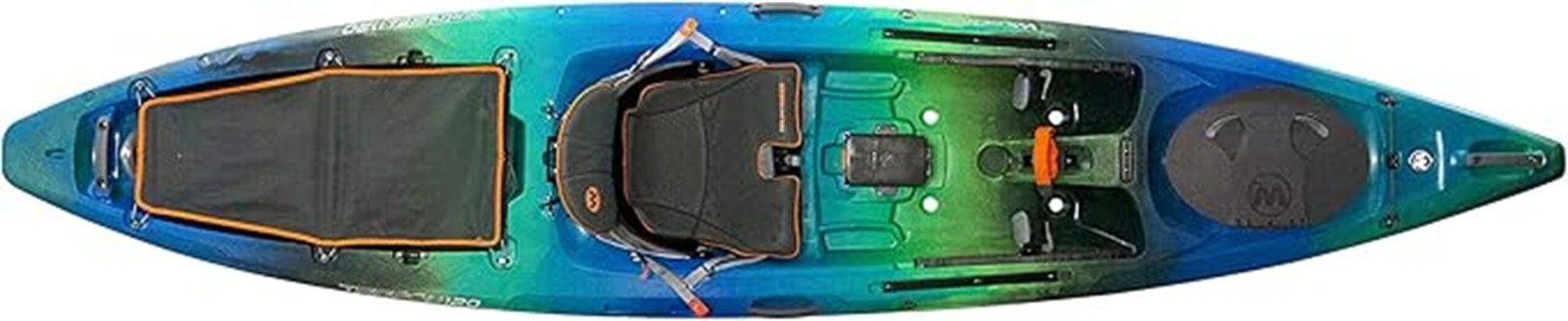
Anglers wanting comfort and customization will appreciate the Wilderness Systems Tarpon. This 12’3″ sit-on-top kayak weighs 63 pounds and supports up to 350 pounds, balancing manageable transport with solid load capacity. Its Phase 3 Air Pro seat uses adjustable settings and Cool Touch technology for long-session comfort. Large padded footrests and a locking lever help fine-tune fit. Storage includes a rear well, front hatch, Dry Tec box, and sectioned tray. Sidetracks rails and a magnetic bottle strap support fishing and filming.
Best For: Anglers who want a comfortable, customizable sit-on-top fishing kayak with strong storage options and good stability for day trips or long sessions.
Pros:
- Adjustable Phase 3 Air Pro seat with Cool Touch technology for improved comfort
- Multiple storage options, including rear well, front hatch, Dry Tec box, and storage tray
- Sidetracks rails and magnetic bottle strap make it easy to customize for fishing or filming
Cons:
- At 63 lbs, it may be a bit heavy for solo carrying
- 12’3″ length can be less compact for storage and transport
- Best suited for calm to moderate waters rather than highly technical conditions
Pelican Argo 100X EXO – Premium Sit-in Recreational Kayak -10 ft
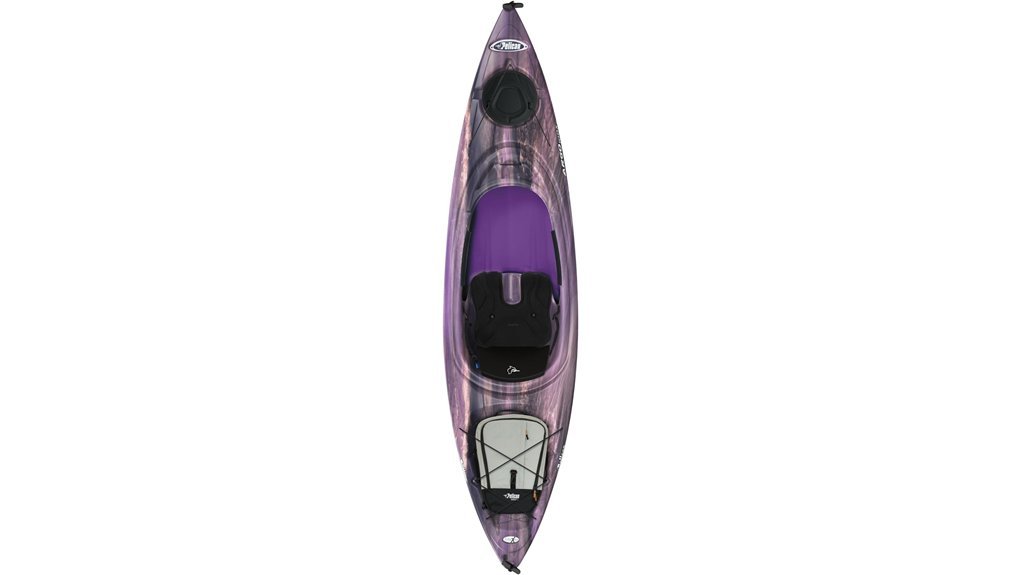
With its ultra-stable twin-arched multi-chine hull, the Pelican Argo 100X EXO suits new paddlers seeking confidence on calm water. This 10-foot premium sit-in recreational kayak pairs that steady ride with Ram-X construction, a patented material that stays feather-light while remaining durable. The Ergobreeze seating system adds an adjustable backrest and roomy cushion for longer outings. Storage comes from the portable ExoChill compartment, which helps protect gear from splash. For anglers or casual paddlers wanting a compact, comfortable, and reassuring kayak, the Argo 100X EXO offers a practical balance of stability, comfort, and convenience.
Best For: New paddlers, casual recreational users, and anglers who want a stable, comfortable, and compact 10-foot sit-in kayak for calm water.
Pros:
- Ultra-stable twin-arched multi-chine hull helps boost confidence and safety on the water.
- Ergobreeze seating system offers an adjustable backrest and roomy cushion for improved comfort.
- ExoChill storage compartment provides convenient, splash-protected gear storage.
Cons:
- Best suited for calm water, so it may not be ideal for rougher conditions.
- 10-foot length offers portability but less tracking and speed than longer kayaks.
- Recreational design may not meet the needs of more advanced or performance-focused paddlers.
Pelican Catch Classic Angler
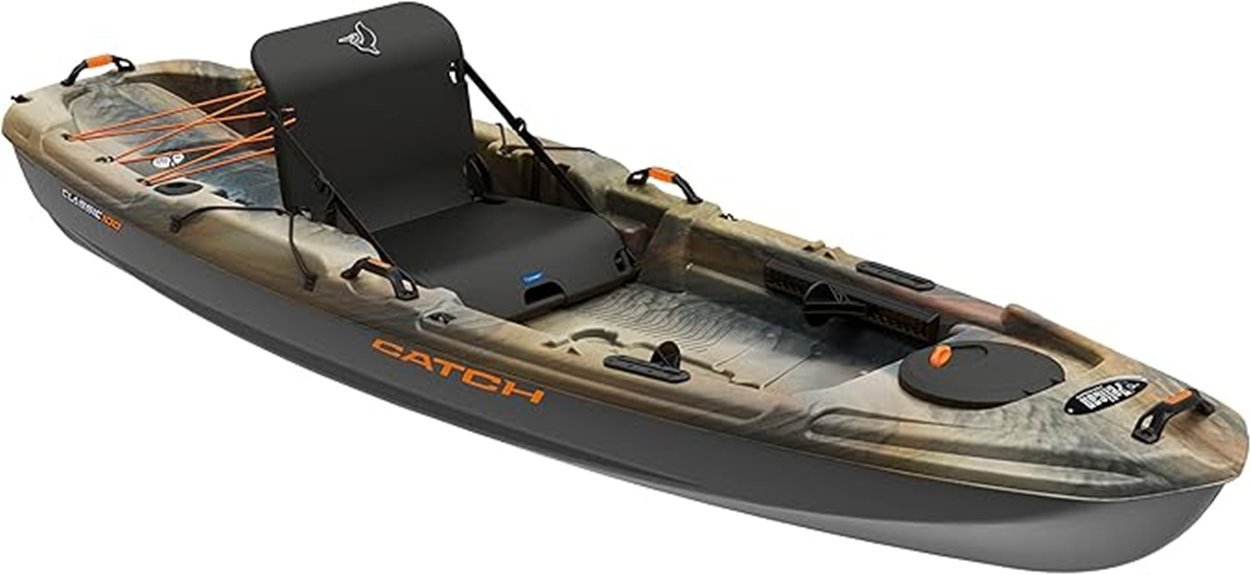
The Pelican Catch Classic Angler suits anglers who want a stable, easy-to-handle fishing kayak. Its tunnel hull and flatter profile provide strong steadiness, while the 10-foot frame and 58-pound weight keep transport manageable. The ERGOCAST CLASSIC seat adjusts for height and support, and the footrests improve comfort on longer outings. Storage includes a front quick-lock hatch and rear tank well with bungees. Two flush mount rod holders, accessory eyelets, rigging tracks, and paddle tie-downs support fishing setups. Built from durable polyethylene, it carries up to 350 lb and meets ABYC flotation standards.
Best For: Anglers who want a stable, easy-to-transport fishing kayak with comfortable seating and solid onboard storage for casual or day-long trips.
Pros:
- Tunnel hull and flatter design provide excellent stability and easy entry/exit.
- Comfortable ERGOCAST CLASSIC seat and adjustable footrests support longer outings.
- Good fishing setup with rod holders, rigging tracks, paddle tie-downs, and storage compartments.
Cons:
- 10-foot length may feel limited for paddlers wanting more speed or tracking.
- 58 lb weight is manageable, but still not ultra-light for frequent solo carrying.
- 350 lb capacity may be restrictive for heavier anglers or extra gear.
Factors to Consider When Choosing a Sit-in Fishing Kayak

When choosing a sit-in fishing kayak, hull stability is often a primary concern because it affects balance and confidence on the water. Seat comfort, storage capacity, rod holder setup, and overall weight also shape how practical the kayak will be for long outings. Portability matters as well, especially for anglers who need to transport and launch the kayak with ease.
Hull Stability
Stability sits at the center of a reliable sit-in fishing kayak, and hull design is a major factor in how secure it feels on the water. Multi-chine and tunnel hulls improve stability by spreading weight more evenly and increasing the hull’s contact with the surface. A flatter hull can add another layer of steadiness, especially when entering or exiting the kayak. Wider hulls generally feel more stable, though that advantage often comes with reduced speed and maneuverability. Flotation-enhancing features also contribute to confidence and can help support safety standards. Beyond balance, a well-shaped hull improves tracking, keeping the kayak moving straight and controlled. That steadiness matters when fishing in changing conditions, where precise handling and predictable movement are valuable.
Seat Comfort
Comfort can make or break a long day on the water, so a sit-in fishing kayak should offer a well-cushioned seat with an adjustable backrest and strong ergonomic support. A thoughtful seating system helps reduce fatigue during long fishing trips by supporting the back and encouraging proper paddling posture. Adjustable footrests are also important, since they let the paddler achieve a more customized fit and steady leg support. Seat height deserves attention as well: higher positions can improve visibility and ease entry and exit, while lower ones may increase stability. Breathable fabrics and supportive padding further improve comfort by limiting heat buildup and pressure points, making extended time on the water more manageable and less distracting overall.
Storage Capacity
Storage space is a practical measure of a sit-in fishing kayak’s usefulness, with front hatches, rear tank wells, and dedicated compartments helping keep tackle, food, and personal items organized on the water. Quick-lock hatches and bungee cord systems improve access while keeping gear secure in shifting conditions. Removable storage compartments can simplify packing and transport, and they also help maximize usable deck space during a trip. Weight capacity deserves close attention, since a 275 to 300 lb limit may be needed to support both paddler and equipment. Layout matters as well, because tie-down points and other built-in storage features improve organization and reduce clutter. A kayak with efficient storage supports longer outings, easier retrieval of essentials, and a more orderly fishing setup overall.
Rod Holder Setup
A kayak’s rod holder setup can make a noticeable difference in fishing efficiency, since secure holders let anglers paddle, land fish, or manage tackle without constantly setting rods aside. Flush-mount holders, built into the kayak, offer a streamlined option, while vertical holders provide quicker access when a rod must be grabbed fast. Fishing-oriented sit-in kayaks often include multiple holders, which helps keep different rigs ready for varied techniques or bait choices. Adjustable holders add flexibility by changing angle and height to suit casting style and comfort. Some models also use accessory tracks, making it easier to install or reposition holders without permanent changes. A well-planned setup supports smoother on-water shifts and keeps essential gear organized throughout the trip.
Weight And Portability
Weight and portability can strongly influence how practical a sit-in fishing kayak is for regular use, especially for anglers who need to load, unload, and carry it alone. Lighter models, often in the 36- to 44-pound range, are usually easier to move from garage to vehicle and from vehicle to water. Ergonomic carrying handles, especially on kayaks at 43 pounds or less, improve control during short carries. Length also matters, since most sit-in fishing kayaks measure about 10 to 13 feet; shorter versions are generally easier to lift and maneuver. Many designs under 45 pounds, including those with molded-in side handles, simplify vehicle loading and compact storage. Material choices such as high-density polyethylene or Ram-X help balance manageable weight with practical transport.
Material Durability
Durability is just as important as portability when choosing a sit-in fishing kayak, because a lightweight boat still needs to hold up to regular use, transport, and exposure to the elements. Materials such as polyethylene and patented Ram-X are common choices because they resist impact and UV damage well. High molecular density polyethylene adds further protection against harsh weather and extended water exposure, helping the hull last longer. Stronger materials often support higher weight capacities without sacrificing structural integrity, which matters for anglers carrying gear. Manufacturing methods also influence toughness, since designs that improve flotation and stability can enhance overall resilience. Durable construction usually means less cleaning and maintenance, allowing more time on the water and less time on upkeep.
Footrest Adjustability
Footrest adjustability is an important comfort and performance feature in a sit-in fishing kayak, since it helps accommodate paddlers of different sizes and leg lengths. Adjustable footrests let users set a position that supports efficient paddling while matching individual body proportions. This customization can improve stability and control, making it easier to maneuver in changing water conditions. It also supports better comfort during long outings by reducing pressure on the legs and allowing position changes that limit fatigue. A well-designed system can further strengthen paddling technique by giving firmer leverage and support. For anglers planning extended sessions, footrest range and ease of adjustment are practical details that can meaningfully affect overall comfort and on-water efficiency.
Safety Features
Safety features play a central role in choosing a sit-in fishing kayak, especially when stability and accident prevention matter on the water. A stable hull, whether flat-bottomed or multi-chine, helps reduce tipping risk and supports confident handling in changing conditions. Additional flotation built into the kayak increases buoyancy and can improve compliance with safety standards if capsizing occurs. Anti-slip deck and seating surfaces further protect users during entry, exit, and movement aboard. Integrated rod holders and paddle tie-downs add convenience while keeping hands free and lowering accident potential. Adjustable footrests and supportive seating also improve posture and balance, which strengthens control during paddling and fishing. Together, these features create a safer, more reliable kayak for varied outings.
Frequently Asked Questions
How Much Weight Can a Sit-In Fishing Kayak Safely Carry?
Like a small bridge carrying a steady load, a sit-in fishing kayak typically safely carries 250 to 400 pounds, though some larger models reach 500 pounds or more. That limit includes the paddler, gear, tackle, battery, and any extras. For safety, it is wise to stay below the maximum by about 20 percent, since overloaded kayaks lose stability, speed, and freeboard, making rough water more hazardous and less forgiving overall.
Are Sit-In Kayaks Better Than Sit-On-Top Kayaks for Cold-Weather Fishing?
Sit-in kayaks are often better for cold-weather fishing because they provide more protection from wind, spray, and splashing water. Their enclosed cockpit helps retain body heat and reduces exposure, making long sessions more comfortable. Sit-on-top kayaks, however, are easier to enter, exit, and recover from if capsized. For icy or wet conditions, the sit-in design usually offers a warmer, drier advantage, though stability and safety remain important.
What Accessories Are Essential for Kayak Fishing Beginners?
A beginner launching at dawn on a quiet lake would benefit most from a PFD, paddle leash, anchor or stakeout system, rod holder, dry bag, fish finder, and basic first-aid kit. These essentials improve safety, control, and efficiency while reducing lost gear and fatigue. Gloves, polarized sunglasses, and a whistle are also practical additions. For new anglers, simplicity matters more than carrying every possible accessory at once.
How Do I Transport a Fishing Kayak on a Small Car?
A fishing kayak can be transported on a small car with a roof rack, foam blocks, or J-cradles, secured by cam straps and bow and stern lines. A lightweight kayak and proper padding reduce stress on the vehicle. If lifting is difficult, a roller or load assist helps. Before driving, the kayak should be centered, tightly fastened, and checked for clearance, wind resistance, and local transport rules.
Can I Stand and Fish From a Sit-In Fishing Kayak?
Yes—standing and fishing from a sit-in fishing kayak is possible, but only in certain models and conditions. Who would risk it on a narrow, unstable boat? A wider hull, high primary stability, and a confident balance are essential. Many sit-in kayaks are better suited to seated angling, especially in rough water. If standing is attempted, it should be brief, deliberate, and practiced in calm conditions first.