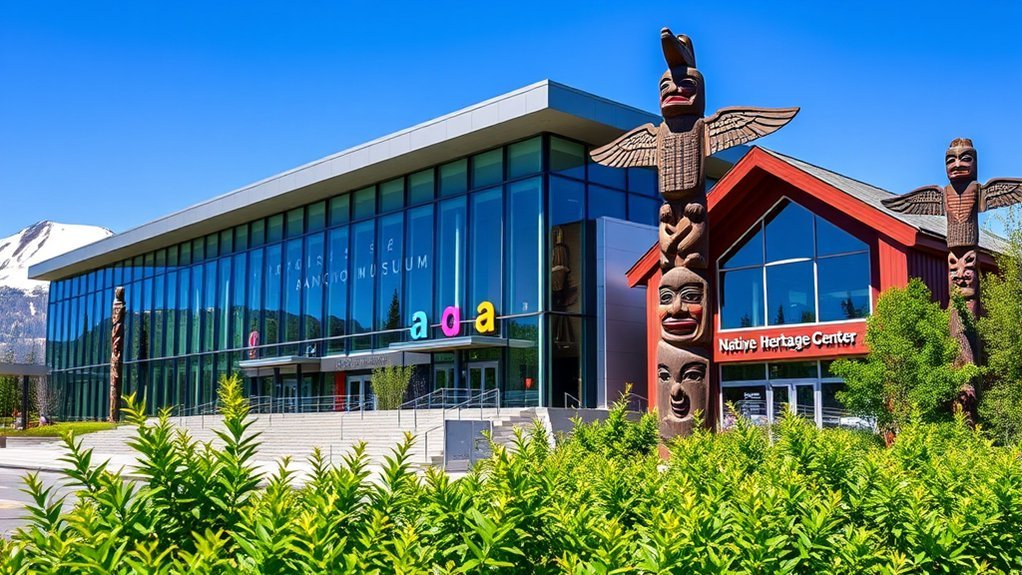
Anchorage has several excellent places to learn about Alaska’s art, history, Indigenous cultures, science, and aviation. The strongest museum-focused choices are the Anchorage Museum, Alaska Native Heritage Center, and Alaska Aviation Museum. The original list also includes markets, wildlife viewing, a coastal trail, and a historic hotel, so this guide clearly separates those bonus attractions from the museums themselves.
Quick Answer
The best museums in Anchorage include the Anchorage Museum for art, history, science, and northern culture; the Alaska Native Heritage Center for Alaska Native cultures and living traditions; and the Alaska Aviation Museum for bush flying and aviation history. Families should also explore the Discovery Center inside the Anchorage Museum.
Key Takeaways
- Best all-around museum: The Anchorage Museum combines Alaska art, history, Indigenous perspectives, science, and family-friendly exhibits.
- Best for Alaska Native cultures: The Alaska Native Heritage Center offers exhibits, cultural programming, demonstrations, performances, and village sites.
- Best for aviation: The Alaska Aviation Museum at Lake Hood focuses on the aircraft and pilots that helped connect Alaska’s remote communities.
- Best with children: The Discovery Center is part of the Anchorage Museum and provides hands-on science and invention activities.
- Not every place in this guide is a museum: The markets, Alaska Wildlife Conservation Center, Tony Knowles Coastal Trail, and Historic Anchorage Hotel are bonus Anchorage attractions.
Anchorage Museums at a Glance
| Place | Best For | 2026 Planning Note |
|---|---|---|
| Anchorage Museum | Art, history, science, Indigenous perspectives, families | Summer hours are 10 a.m.–6 p.m. daily; standard adult admission is $25 as of August 2026. |
| Alaska Native Heritage Center | Alaska Native cultures, arts, languages, performances, living traditions | The 2026 summer season runs through September 13, with the Center open daily from 9 a.m.–5 p.m. |
| Alaska Aviation Museum | Historic aircraft, bush pilots, restoration, flight simulation | The museum currently lists 10 a.m.–5 p.m. operating hours, with Sunday opening at noon; non-resident adult admission is $23. |
| Discovery Center | Hands-on science and family activities | Located inside the Anchorage Museum and included with museum admission. |
Note: Hours, admission prices, programs, and seasonal schedules can change. The information below was checked against official sources in August 2026, and links are included where current details matter most.
Anchorage Museum at Rasmuson Center
The Anchorage Museum, commonly referred to simply by that name on its current website, is the best all-around museum choice for most first-time Anchorage visitors. It combines art, Alaska history, northern science, Indigenous perspectives, contemporary exhibitions, and family activities in one downtown building.
Instead of focusing on a single chapter of Alaska’s story, the museum explores connections among people, place, climate, creativity, and life in the North. Its major spaces include art and history galleries, the Smithsonian Arctic Studies Center, the Discovery Center, and the Thomas Planetarium.
The museum is especially useful if you have limited time because adults can explore serious cultural and historical material while children spend time with interactive science exhibits. Current visitor information lists summer hours of 10 a.m. to 6 p.m. daily from May through September, with extended First Friday hours. Standard adult admission is $25 as of August 2026. See the museum’s official hours and ticket page for current rates and seasonal changes.
Pro Tip: Give the Anchorage Museum at least 1.5 to 3 hours if you want to see both the galleries and Discovery Center without rushing. The museum itself recommends that general range for many visits.
Alaska Native Heritage Center
The Alaska Native Heritage Center is one of Anchorage’s most important cultural destinations. It is more than a conventional museum because its exhibits are paired with living cultural programs, Alaska Native voices, performances, demonstrations, films, and outdoor village sites.
The Center presents the diversity of Alaska Native peoples rather than treating Indigenous Alaska as one culture. Its updated Hall of Cultures uses objects, media, contemporary art, historical interpretation, and rotating exhibitions to introduce visitors to Alaska’s major cultural regions.
Cultural Exhibits and Celebrations
The Hall of Cultures provides context before you explore the rest of the campus. Exhibitions cover cultural identity, history, artistic traditions, and contemporary Alaska Native life. The Center also schedules cultural programs that may include dancing, storytelling, films, demonstrations, and guided experiences.
Seasonal celebrations and special events can add another layer to a visit, but programming varies by date. Check the Center’s current calendar rather than assuming a particular demonstration will run every day.
Traditional Arts and Crafts
Traditional and contemporary arts are an important part of the Alaska Native Heritage Center experience. Depending on the day’s programming and exhibitions, you may encounter work that demonstrates how artistic knowledge, materials, stories, and community traditions connect generations.
- Beading: Detailed patterns can carry personal, regional, and cultural meaning.
- Carving: Carved objects can reflect artistic traditions, practical uses, stories, and cultural knowledge.
- Weaving: Baskets, clothing, and other woven pieces demonstrate knowledge of materials and skilled handwork.
- Drum-making and performance traditions: Drums can play important roles in dance, song, gatherings, and cultural expression.
The most respectful way to approach these arts is as living practices rather than relics of the past. The Center emphasizes that Alaska Native cultures, languages, arts, and traditions continue today.
Indigenous Storytelling Experiences
Storytelling at the Alaska Native Heritage Center can appear through spoken narratives, dance, film, visual art, cultural interpretation, and conversations with staff and culture bearers. These forms help visitors understand how knowledge and values are carried across generations.
| Story Element | Description |
|---|---|
| Oral Traditions | Stories and knowledge shared across generations through spoken language and community practice. |
| Dance | Movement, rhythm, regalia, and song can communicate history, identity, and community relationships. |
| Visual Art | Historic and contemporary artworks help communicate cultural knowledge, experience, and identity. |
For the 2026 summer season, the Center lists daily hours from 9 a.m. to 5 p.m. through September 13. Current admission and seasonal information are available on its official visit page.
Alaska Aviation Museum
The Alaska Aviation Museum is the best Anchorage museum for aviation enthusiasts. Its location at Lake Hood is especially appropriate because Alaska has long depended on aircraft to connect communities separated by vast distances and limited road access.
The museum combines historic aircraft, restoration work, exhibits, aviation stories, and views of active seaplane operations. Its official site describes four hangars of exhibitions and vintage aircraft, the Cecil Higgins Restoration Hangar, and the Seybert Tower overlooking Lake Hood.
Rich Aviation History
Alaska’s geography made aviation unusually important to transportation, communication, commerce, medical access, and everyday life. The museum uses aircraft and exhibits to explain that history.
- Historic Aircraft: See vintage planes connected with different periods of Alaska aviation.
- Alaska’s Bush Pilots: Learn how pilots helped connect remote communities and difficult terrain.
- Aviation Innovation: Explore how pilots and aircraft operators adapted to Alaska’s weather, geography, and transportation needs.
- Cultural and Economic Impact: Understand how flight changed travel, trade, public services, and connections between communities.
Interactive Exhibits Available
The museum’s current exhibit information includes a virtual-reality flight simulator, giving visitors an interactive way to experience aviation. Other highlights include historic aircraft, restoration work, aviation displays, and the opportunity to watch activity around Lake Hood.
Interactive offerings and aircraft access can vary, so do not assume every cockpit or exhibit will be open for hands-on use during every visit. Families and aviation fans can still expect a strong mix of aircraft, history, and Lake Hood atmosphere.
Anchorage Market and Festival / Downtown Weekend Market
Note: This is a market, not a museum. It remains here because it appeared in the original Anchorage attractions list.
Anchorage’s summer market scene gives visitors another way to experience local food, crafts, produce, and small businesses. Market names and locations have changed over time, so older listings for the “Anchorage Market & Festival” can be confusing.
A current 2026 option is the Anchorage Downtown Weekend Market, which says it returned with renewed programming in May 2026 and operates on Saturdays and Sundays through September 13.
Anchorage’s weekend markets are better viewed as seasonal shopping and community stops than as museums, so confirm the current market name, location, and schedule before building an itinerary around one.
- Local Artisans: Look for handcrafted goods and work from local makers.
- Local Food: Vendors may include prepared foods, produce, and Alaska-inspired specialties.
- Live Entertainment: Current market programming can include local performers.
- Family-Friendly Atmosphere: Weekend markets can be an easy casual stop between downtown attractions.
Discovery Center at the Anchorage Museum
The former Imaginarium name still appears in some historical Anchorage Museum materials, but current visitor information prominently calls this space the Discovery Center. It is located inside the Anchorage Museum, not a separate museum that requires a second trip across town.
The Discovery Center uses hands-on exploration to make science, invention, natural history, and northern environments easier to understand. Current museum information describes an approximately 11,000-square-foot space divided into five zones.
One highlight is Spark!Lab, where children and families explore invention through creative activities. Other experiences focus on Alaska environments, experimentation, and scientific curiosity. This makes the Discovery Center one of the strongest family-friendly reasons to visit the Anchorage Museum.
Instead of relying on the older claim that there are “over 60 interactive exhibits,” plan on a flexible hands-on experience whose individual activities and programs may change. Ask museum staff about demonstrations, planetarium programs, or special family activities scheduled for the day of your visit.
Alaska Wildlife Conservation Center
Note: The Alaska Wildlife Conservation Center is a wildlife sanctuary, not a museum, and it is south of central Anchorage near Portage.
If you want to add wildlife to an Anchorage-area cultural itinerary, the Alaska Wildlife Conservation Center is one of the region’s best-known options. The nonprofit sanctuary focuses on conservation, education, research, and quality animal care.
Visitors travel around a scenic approximately 1.5-mile loop that can be explored on foot, by bicycle, or by car. The sanctuary covers more than 200 acres, with large managed habitats for resident animals.
- Wildlife Viewing: See resident Alaska animals such as bears, moose, bison, and other species in spacious sanctuary habitats.
- Educational Programs: Interpretive signs, talks, and scheduled tours help explain the animals and Alaska ecosystems.
- Animal Care Stories: Learn about the sanctuary’s work with orphaned and injured wildlife and its long-term animal-care mission.
- Photography Opportunities: The center provides opportunities to photograph wildlife with mountains and Alaska scenery in the background.
Warning: A wildlife sanctuary is not the same as viewing wild animals in unrestricted natural habitat. Follow all barriers, signs, and staff instructions, and never attempt to feed or approach animals unless participating in an authorized staff-led program.
Tony Knowles Coastal Trail
Note: This is an outdoor recreation attraction, not a museum.
Approximately 11 miles of paved trail connect downtown Anchorage with Kincaid Park along the Tony Knowles Coastal Trail. That corrects the previous six-mile description.
The route follows Anchorage’s Cook Inlet coastline and is popular for walking and cycling. Depending on where you enter, you can see coastal marshes, wooded areas, mountain views, and landmarks such as Westchester Lagoon and Earthquake Park.
Wildlife sightings are possible, including moose and birds, but keep a safe distance from all animals. You do not need to cover the full 11 miles to enjoy the trail. A shorter out-and-back trip from downtown can provide coastal scenery without committing to the complete route.
Pro Tip: If you are already visiting downtown museums, a short Coastal Trail walk can add outdoor scenery to the same day. Cyclists can turn the route into a much longer 22-mile round trip between downtown and Kincaid Park.
4th Avenue Market Place
Note: 4th Avenue Market Place is a downtown shopping destination, not a museum. Businesses, hours, and events can change as downtown properties evolve.
4th Avenue Market Place has long been associated with shopping and visitor-oriented businesses in historic downtown Anchorage. It can serve as a casual stop while exploring Fourth Avenue, but it should not replace one of the city’s main museums if culture and history are your priority.
Depending on the current tenant mix and event schedule, visitors may encounter:
- Local Artisans: Crafts, artwork, or other locally made products.
- Food Options: Snacks, prepared food, or nearby downtown dining.
- Souvenir Shopping: Alaska-themed gifts and keepsakes.
- Seasonal Activities: Markets, performances, or community events when scheduled.
Because downtown redevelopment can affect individual businesses, treat opening hours and tenant lists from older travel guides cautiously.
Historic Anchorage Hotel
Note: The Historic Anchorage Hotel is a functioning hotel and historic property, not a museum.
The Historic Anchorage Hotel provides a link to Anchorage’s early urban history, but its dates need careful explanation. The Anchorage Hotel business was established in 1916. The surviving building used by today’s hotel was constructed in 1936 as an annex to the original hotel.
The original 1916 structure was later demolished, while the 1936 annex survived and eventually became today’s Historic Anchorage Hotel. The surviving building is listed on the National Register of Historic Places.
| Feature | Details | Significance |
|---|---|---|
| Hotel Established | 1916 | Marks the beginning of the original Anchorage Hotel business. |
| Current Building | 1936 | Built as an annex to the earlier hotel and is the structure that survives today. |
| Architectural Character | Art Deco with Gothic elements noted in historic documentation | Reflects Anchorage’s more substantial pre-World War II downtown development. |
| Historic Status | National Register of Historic Places | Recognizes the building’s architectural and historical importance. |
If you are staying at the hotel, its historic setting adds context to a downtown visit. Travelers interested primarily in exhibitions should still prioritize the Anchorage Museum, Alaska Native Heritage Center, or Alaska Aviation Museum instead.
Which Anchorage Museum Is Best for You?
- Choose the Anchorage Museum if this is your first visit, you have limited time, or your group has mixed interests.
- Choose the Alaska Native Heritage Center if learning from Alaska Native perspectives, arts, languages, performances, and cultural programming is your main priority.
- Choose the Alaska Aviation Museum if you are interested in aircraft, bush pilots, Lake Hood, engineering, or transportation history.
- Prioritize the Discovery Center within the Anchorage Museum if you are visiting with children who enjoy hands-on science.
- Add the Coastal Trail or a market when you want to balance indoor museum time with outdoor recreation or casual shopping.
- Add the Alaska Wildlife Conservation Center when you have transportation and enough time for an excursion south of central Anchorage.
Frequently Asked Questions
What are the museum hours of operation?
Hours differ by institution. In summer 2026, the Anchorage Museum lists 10 a.m.–6 p.m. daily. The Alaska Native Heritage Center lists 9 a.m.–5 p.m. daily during its summer season through September 13, 2026. The Alaska Aviation Museum currently lists 10 a.m.–5 p.m., with Sunday opening at noon. Seasonal schedules can change, so use each institution’s official website for your travel date.
Are there admission fees for the museums?
Yes. As of August 2026, standard adult admission to the Anchorage Museum is $25. The Alaska Native Heritage Center lists a $30 standard adult summer admission rate, while the Alaska Aviation Museum lists $23 for non-resident adults. Resident, child, senior, military, member, and other discounts vary by institution.
Is parking available at each museum?
Parking arrangements differ. The Anchorage Museum has nearby street and paid-lot options, plus public access to its underground garage during specified periods and accessible parking at all times. The Alaska Native Heritage Center states that ample parking is available on site. The Alaska Aviation Museum is at Lake Hood and advertises convenient parking. Check the individual venue if you need accessible or oversized-vehicle parking.
Do the museums offer guided tours?
Yes, but schedules and formats vary. The Anchorage Museum offers public guided tours during parts of the year and private tours by advance arrangement. The Alaska Native Heritage Center includes guided cultural programming during its summer season and also offers self-guided experiences. The Alaska Aviation Museum offers docent-guided museum tours and self-guided options for some groups.
Are there special events or exhibitions happening in 2026?
Yes. Anchorage museums regularly rotate exhibitions, talks, performances, tours, and seasonal programs. The Anchorage Museum, for example, continues First Friday programming and changing exhibitions in 2026, while the Alaska Native Heritage Center opened updated Hall of Cultures exhibitions. Because event calendars change frequently, use the official calendar for the exact date of your visit.
Which Anchorage museum is best for children?
The Anchorage Museum is usually the easiest first choice for families because its Discovery Center provides hands-on science, invention, and learning activities in the same building as the museum’s art and history galleries. Families interested in aircraft may also enjoy the Alaska Aviation Museum.
How much time should I allow for the Anchorage Museum?
Plan roughly 1.5 to 3 hours for a general visit. Give yourself more time if you want to explore multiple exhibitions, spend substantial time in the Discovery Center, attend a planetarium program, or join a scheduled talk or tour.
Are all the attractions in this guide actually museums?
No. The Anchorage Museum and Alaska Aviation Museum are museums, while the Alaska Native Heritage Center is a broader cultural institution with museum exhibitions and living cultural programs. The Anchorage markets, Alaska Wildlife Conservation Center, Tony Knowles Coastal Trail, 4th Avenue Market Place, and Historic Anchorage Hotel are additional attractions rather than museums.
Sources
- Anchorage Museum — Hours & Tickets — current 2026 hours, admission, parking, and visitor information.
- Anchorage Museum — Discovery Center — current information about the museum’s hands-on science and family space.
- Alaska Native Heritage Center — Plan Your Visit — current seasonal hours, admission, programs, and visitor information.
- Alaska Aviation Museum — current admission, operating information, aircraft, museum tours, and Lake Hood exhibits.
- Alaska Wildlife Conservation Center — sanctuary mission, animals, educational programs, and visitor information.
- Visit Anchorage — Tony Knowles Coastal Trail — official visitor information supporting the approximately 11-mile trail distance and downtown-to-Kincaid route.