London has an exceptional range of museums covering ancient history, fine art, science, design, conflict, natural history, and the story of the city itself. Many of the best museums in London offer free general admission, so you can build an itinerary around your interests rather than ticket prices. This guide compares 11 major institutions, what to see, where they are, and the practical details that matter before you visit.
Quick Answer
For a first London museum visit, start with the British Museum for global history, the Natural History Museum for dinosaurs and nature, or the V&A for art and design. Most museums in this guide have free general admission, although temporary exhibitions and some special experiences may charge separately.
Last checked: October 1, 2026. Dates and figures were verified against official sources.
Key Takeaways
- The British Museum, National Gallery, V&A, Tate Modern, Natural History Museum, Science Museum, IWM London, and National Maritime Museum all offer free general admission.
- South Kensington is especially convenient because the V&A, Natural History Museum, and Science Museum sit within a short walk of one another.
- The former Museum of London site at London Wall is closed to visitors; the new London Museum at Smithfield is scheduled to open on November 28, 2026.
- Free entry does not always mean no booking: some museums recommend or require a free timed ticket, particularly during busy periods.
- Temporary exhibitions, tours, IMAX screenings, and special galleries may carry a separate charge even where the permanent collection is free.
Museums in London at a Glance
The right museum depends on what you want to see and where you are spending the day. The table below compares the main strengths, locations, general-admission position, and usual opening hours of the museums covered in this guide.
Hours can change for holidays, maintenance, private events, or one-off closures. The details below were checked against each institution’s current visitor information.
| Museum | Area | Best for | General admission | Usual hours |
|---|---|---|---|---|
| British Museum | Bloomsbury | World history and archaeology | Free | 10:00–17:00 daily; Friday to 20:30 |
| National Gallery | Trafalgar Square | European painting | Free | 10:00–18:00 daily; Friday to 21:00 |
| V&A South Kensington | South Kensington | Art, fashion, and design | Free | 10:00–17:45 daily; Friday to 22:00 |
| Tate Modern | Bankside | Modern and contemporary art | Free | 10:00–18:00 Sunday–Thursday; Friday–Saturday to 21:00 |
| Natural History Museum | South Kensington | Dinosaurs and natural science | Free | 10:00–17:50 daily |
| Science Museum | South Kensington | Science, technology, and families | Free | 10:00–18:00 daily |
| Design Museum | Kensington | Product, graphic, fashion, and architectural design | Free permanent display | 10:00–17:00 Monday–Thursday; Friday–Sunday to 18:00 |
| London Museum | Smithfield | London history | Free permanent galleries | Opens November 28, 2026 |
| IWM London | Lambeth | War and its effects on people | Free | 10:00–18:00 daily |
| Sir John Soane’s Museum | Lincoln’s Inn Fields | Architecture and an historic house collection | Free | 10:00–17:00 Wednesday–Sunday |
| National Maritime Museum | Greenwich | Maritime and naval history | Free | 10:00–17:00 daily |
British Museum: Best for Ancient Civilizations and World History
The British Museum in Bloomsbury is one of the strongest choices if you want thousands of years of human history in one building. Founded in 1753, its collections range across cultures and periods, with famous objects including the Rosetta Stone, Egyptian material, Sutton Hoo finds, and sculptures from the Parthenon.
The Rosetta Stone is especially significant because its inscriptions helped scholars decipher ancient Egyptian hieroglyphs. The Parthenon galleries display marble sculptures that once formed part of the temple complex on the Acropolis in Athens.
General admission is free. The museum is normally open from 10:00 to 17:00 daily and until 20:30 on Fridays, and advance booking of a free ticket is recommended for priority entry during busy periods. See the British Museum visitor information before your trip.
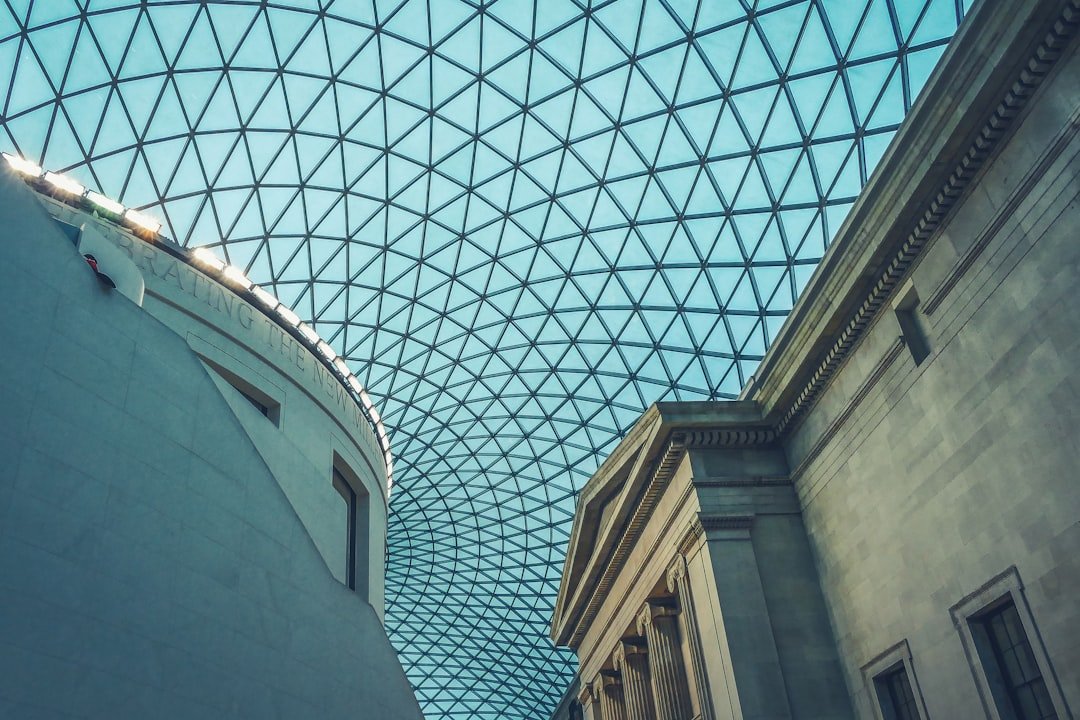
Because the collection is so large, first-time visitors usually get more from choosing a few galleries rather than trying to cover the entire building. The Great Court also makes a useful central point for orienting yourself between sections.
The National Gallery: Best for European Painting
The National Gallery is the clearest choice for visitors who want major European paintings rather than archaeological objects. Located on Trafalgar Square, its collection spans Western European painting from the 13th century into the early 20th century.
You can see works by artists including Leonardo da Vinci, Rembrandt, Monet, Turner, and Vincent van Gogh. The collection moves from medieval and Renaissance painting through the Dutch and Spanish masters to Impressionism and other 19th-century movements.
General admission is free, although some exhibitions charge separately. The gallery is normally open from 10:00 to 18:00 daily and until 21:00 on Fridays. Its current National Gallery visit information also identifies the Sainsbury Wing as the main visitor entrance.
If you have limited time, choosing a period or a short list of paintings will make the visit easier. This is also an easy museum to combine with Westminster, Covent Garden, Leicester Square, or the West End.
The Victoria and Albert Museum
The Victoria and Albert Museum, usually called the V&A, is best for decorative arts, fashion, furniture, ceramics, sculpture, textiles, jewelry, and design. Its South Kensington collection spans roughly 5,000 years of human creativity, so it suits visitors who like both historic craftsmanship and modern design.
The museum’s range is one of its biggest strengths. You can move from European sculpture and Asian art to fashion, photography, furniture, theater, metalwork, and other areas without leaving the building.
General admission is free and no booking is normally required. V&A South Kensington is open daily from 10:00 to 17:45, with Friday opening until 22:00, although some galleries close earlier. The V&A South Kensington visitor page lists current gallery closures and access information.
The V&A sits close to both the Natural History Museum and Science Museum. That makes South Kensington the easiest part of London for visiting several major museums without spending much time in transit.
Tate Modern: Best for Modern and Contemporary Art
Tate Modern is a strong choice for 20th-century and contemporary art, large installations, and experimental work. The gallery occupies the former Bankside Power Station beside the Thames, with the vast Turbine Hall forming one of its most recognizable interior spaces.
The collection includes painting, sculpture, photography, film, performance, and installation art. Artists represented in Tate’s displays include Pablo Picasso, Henri Matisse, and many other major figures from modern and contemporary art.
General admission is free, while major temporary exhibitions may require paid tickets. Current visitor information lists opening from 10:00 to 18:00 Sunday through Thursday and later opening on Friday and Saturday. See the official Tate Modern visitor page for exhibition and access details.
The location also works well for a wider South Bank day. Millennium Bridge, St Paul’s Cathedral across the river, Shakespeare’s Globe, and riverside walking routes are all nearby.
The Natural History Museum
The Natural History Museum is one of the best museums in London for dinosaurs, animals, fossils, minerals, biodiversity, and the history of Earth. It also functions as a major scientific institution, caring for more than 80 million natural-history objects used for research as well as public display.
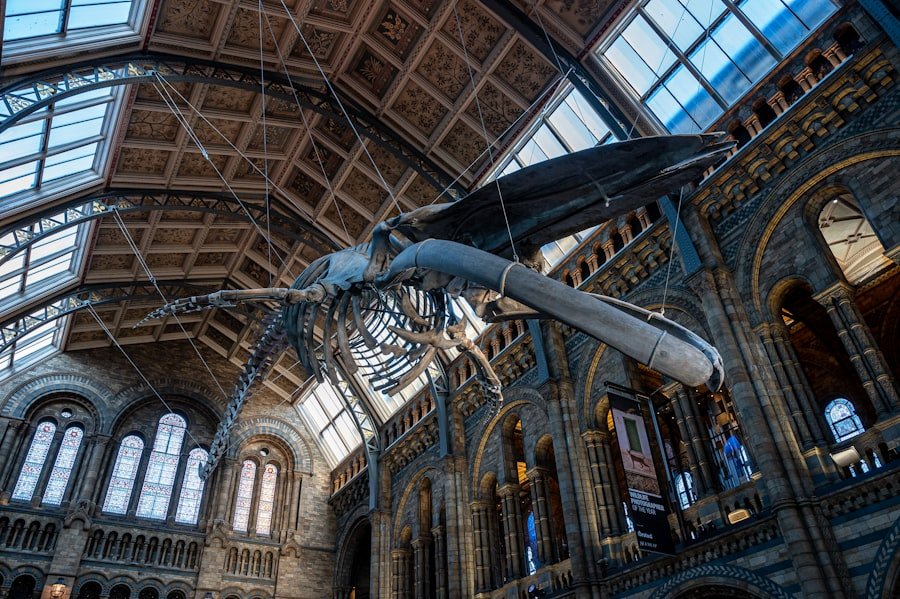
One of the first sights in Hintze Hall is Hope, a 25-metre blue whale skeleton suspended above the hall. This replaces the older image many returning visitors remember of the Diplodocus cast known as Dippy in the central hall.
The dinosaur galleries remain a major draw, with fossils, skeletons, and displays explaining how dinosaurs lived and what scientists have learned from their remains. Other galleries cover mammals, minerals, volcanoes, earthquakes, evolution, and the diversity of life.
General museum entry is free. The museum is normally open daily from 10:00 to 17:50, and booking a free ticket can guarantee entry during busy periods. Check the Natural History Museum visitor information because one-off closures can occur; for example, the museum lists a full closure on October 9, 2026.
The Science Museum
The Science Museum is best for visitors interested in technology, engineering, space, medicine, communications, and hands-on science. Its roots reach back to the South Kensington Museum of 1857, while the Science Museum name was officially adopted in 1909 when the science and engineering collections became administratively separate.
The galleries use historic objects and interactive displays to explain how scientific ideas and technologies developed. Family-focused experiences include hands-on areas, while other sections cover subjects such as spaceflight, information technology, engineering, medicine, and mathematics.
General admission is free, but the museum currently asks visitors to pre-book a free general-admission ticket. It is normally open daily from 10:00 to 18:00. Some experiences, including certain interactive galleries and screenings, have separate tickets. See the Science Museum visitor page for current closures and booking information.
The museum is especially easy to pair with the V&A or Natural History Museum because all three are in South Kensington. Families may prefer to give the Science Museum several hours rather than trying to fit all three into one short visit.
The Design Museum
The Design Museum focuses on how everyday objects, buildings, graphics, technology, fashion, and products are conceived and made. Founded in 1989, it moved to Kensington in 2016 after the former Commonwealth Institute building was transformed into its new home.
The free permanent display, Designer Maker User, examines modern design from the viewpoints of designers, manufacturers, and people who use the finished products. It includes almost 1,000 examples across areas such as architecture, engineering, graphics, fashion, products, and digital design.
The permanent collection display is free, while larger temporary exhibitions may be ticketed. Normal hours are 10:00 to 17:00 Monday through Thursday and 10:00 to 18:00 Friday through Sunday. The museum’s current visitor information lists a full closure on October 13, 2026.
This museum works particularly well for visitors interested in how design choices affect ordinary life. It is also smaller and easier to cover than several of London’s large national museums.
London Museum: The Former Museum of London
The institution formerly known as the Museum of London is undergoing a major transition, so older guides can be misleading. Its former visitor site at 150 London Wall closed in December 2022, and the organization changed its public name to London Museum in 2024.
As of October 1, 2026, the new main museum at Smithfield is not yet open. Its free permanent galleries in the restored General Market are scheduled to open on November 28, 2026, presenting London’s history from its earliest communities through the modern city.
The adjacent Poultry Market is planned as a later phase, with temporary exhibition spaces, learning facilities, and collections areas expected to follow in 2028. The official London Museum Smithfield page carries the current opening information.
If you are visiting before the Smithfield opening, London Museum Docklands remains open at West India Quay. Its free galleries focus on London’s river, docks, trade, communities, and the development of Docklands from the 1600s to the present.
The Imperial War Museum
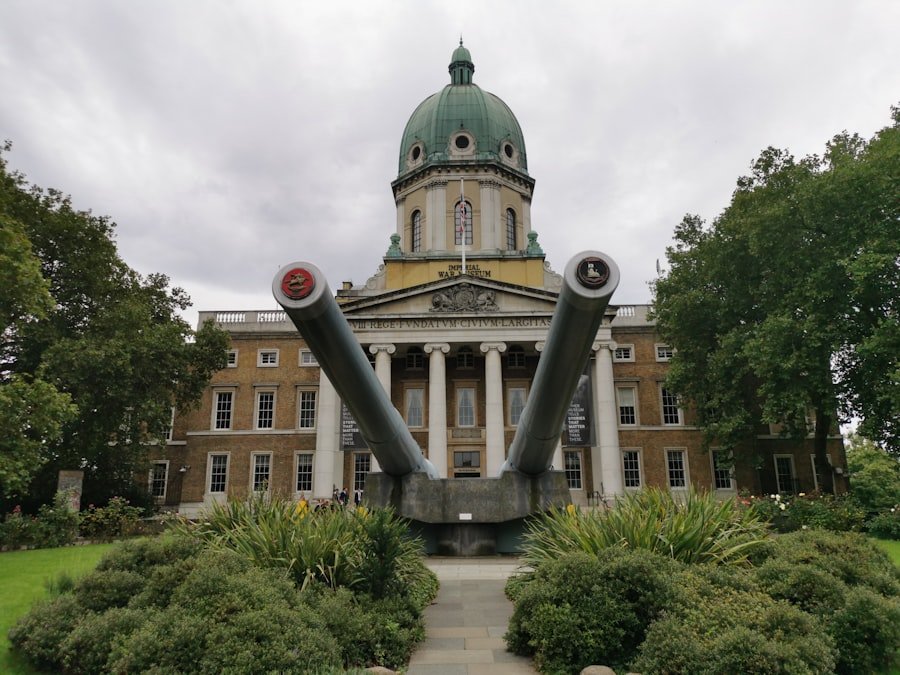
IWM London examines how war has affected service personnel, civilians, families, and societies rather than treating conflict only as a sequence of battles. Its permanent galleries cover subjects including the First World War, the Second World War, the Holocaust, and individual experiences of conflict.
The large central atrium contains major objects from the museum’s collections, while galleries combine equipment, uniforms, documents, photographs, film, art, and personal testimony. This approach gives visitors both the broader historical setting and individual human stories.
General admission to IWM London is free, and the museum is normally open daily from 10:00 to 18:00. Temporary exhibitions or special events may have separate tickets. See the IWM London visitor information when planning your visit.
The museum is in Lambeth, south of the Thames. Its subject matter can be emotionally demanding, especially in the Holocaust and wartime galleries, so it is worth allowing enough time to move through them without rushing.
Sir John Soane’s Museum
Sir John Soane’s Museum offers a very different experience from London’s large national institutions. It preserves the architect’s former home in Lincoln’s Inn Fields, where rooms are densely arranged with paintings, antiquities, architectural fragments, models, drawings, and other objects collected by Soane.
Highlights include paintings by Hogarth, Canaletto, Turner, and Piranesi, along with architectural models and the alabaster sarcophagus of the Egyptian pharaoh Seti I. The Picture Room is especially unusual because movable wall panels allow a small room to hold a large number of paintings.
Entry is free, and the museum is normally open Wednesday through Sunday from 10:00 to 17:00. General visitors do not need to pre-book, although the house has limited capacity and waits can occur. The Sir John Soane’s Museum visitor page has current admission and tour information.
This is a good choice if you prefer historic interiors and tightly packed collections to large modern galleries. Its smaller rooms also reward slower looking rather than trying to cover everything quickly.
The National Maritime Museum
The National Maritime Museum in Greenwich explores Britain’s relationship with the sea, including navigation, naval history, exploration, maritime trade, art, and life at sea. It forms part of Royal Museums Greenwich and works well as part of a full day in this historic riverside district.
The collections include ship models, paintings, navigational instruments, maps, and objects connected with voyages and maritime communities. Exhibitions also examine how seafaring, empire, commerce, science, and the oceans have affected people across different periods.
General admission is free. The museum is normally open daily from 10:00 to 17:00, and free advance tickets are recommended to guarantee entry, although walk-up visits are also possible. The National Maritime Museum visitor page lists current exhibitions and ticket information.
The museum sits close to the Queen’s House and Greenwich Park, with the Royal Observatory and Cutty Sark also nearby. Some of those neighboring attractions require paid tickets, so a Greenwich day can mix free museum time with one paid attraction if you wish.
If you’re looking for a break from exploring the best museums in London, why not try making some delicious homemade cottage cheese with this simple and healthy recipe? Check out this article for step-by-step instructions.
Frequently Asked Questions
What are the top museums in London?
Top museums in London include the British Museum, National Gallery, V&A, Tate Modern, Natural History Museum, and Science Museum. Your best choice depends on whether you prefer archaeology, paintings, design, contemporary art, natural history, or science, and several major museums can be visited without paying general admission.
Are museums in London free to visit?
Many major museums in London offer free general admission, including the British Museum, National Gallery, V&A, Tate Modern, Natural History Museum, Science Museum, IWM London, and National Maritime Museum. Temporary exhibitions, tours, screenings, and some special experiences can still require paid tickets.
What can I expect to see at the British Museum?
The British Museum covers roughly two million years of human history and culture through objects from many regions. Famous highlights include the Rosetta Stone, Egyptian collections, Sutton Hoo material, and the Parthenon Sculptures, while dozens of galleries cover civilizations across Europe, Asia, Africa, and the Americas.
What are the highlights of the National Gallery?
The National Gallery’s main strength is Western European painting from the 13th century into the early 20th century. Its collection includes works by Leonardo da Vinci, Rembrandt, Turner, Monet, and Vincent van Gogh, with galleries organized so visitors can follow major periods and traditions in European painting.
What makes the Victoria and Albert Museum unique?
The V&A stands out for the breadth of its art and design collections, which span about 5,000 years. Visitors can move between fashion, textiles, ceramics, sculpture, jewelry, furniture, photography, theater, and decorative arts, making it especially useful for people interested in how objects are designed and made.
What can visitors see at the Natural History Museum?
Visitors to the Natural History Museum can see dinosaur fossils, animal specimens, minerals, meteorites, and displays about evolution and Earth’s history. Hintze Hall is dominated by Hope, a 25-metre blue whale skeleton, while the museum’s wider scientific collections contain more than 80 million natural-history objects.
What is the focus of the Science Museum?
The Science Museum focuses on science, technology, engineering, medicine, communications, and their effects on everyday life. Its galleries combine historic objects with interactive displays, while family attractions and special experiences provide more hands-on ways to explore subjects ranging from space and mathematics to gaming and medical technology.
Is the London Museum open in 2026?
The new London Museum at Smithfield is scheduled to open its free permanent galleries on November 28, 2026. As of October 1, 2026, it is not yet open to visitors, while London Museum Docklands at West India Quay remains open for people who want to explore London’s river and docklands history.
Sources
- British Museum: admission, opening hours, booking, and visitor information.
- National Gallery: free admission, hours, entrance, and visitor planning.
- V&A South Kensington: admission, opening hours, gallery closures, and access.
- Tate Modern: admission, opening hours, collection displays, and visitor information.
- Natural History Museum: admission, opening hours, ticketing, and current closures.
- Science Museum: admission, opening hours, ticket requirements, and current closures.
- Design Museum: opening hours, permanent display access, and current closures.
- London Museum: Smithfield opening date, free admission, and new museum information.
- IWM London: museum location, exhibitions, admission, and visitor information.
- Sir John Soane’s Museum: free admission, opening days, capacity, and tours.
- National Maritime Museum: free admission, opening hours, booking, and exhibitions.