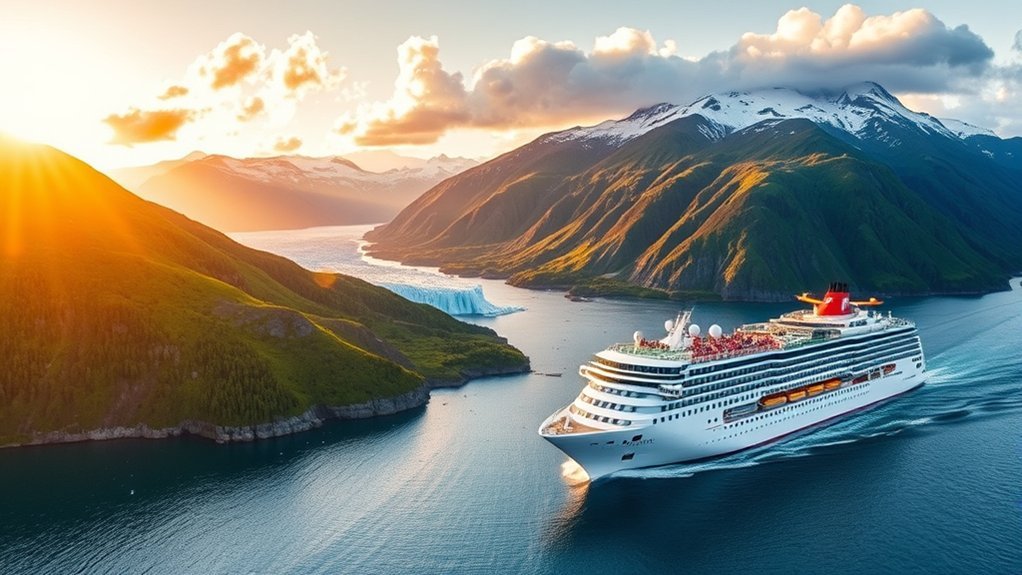
The best time to cruise Alaska is usually May through September, when major cruise lines, ports, and shore excursions are operating at full seasonal strength. June and July bring very long days and peak-season activity, while May and September suit travelers who prefer shoulder-season conditions. April and October have some limited sailings, but winter is mainly a land-based Alaska experience.
Quick Answer
Choose June or July for long daylight and the broadest summer experience. May offers spring scenery and lighter shoulder-season demand, August is strong for salmon-linked wildlife activity, and September adds fall color and darker nights. April and October have limited sailings; November through March are primarily winter land-travel months.
Last checked: September 30, 2026. Dates and figures were verified against official sources.
Key Takeaways
- Alaska’s main cruise season runs from May through September, although some itineraries extend into April and October.
- June through August are the most popular Alaska travel months, with long days, broad excursion availability, and active wildlife.
- May and September trade some warmth and daylight for shoulder-season advantages and a different landscape.
- Late August and September bring darker nights, improving the possibility of seeing the northern lights when skies are clear.
Alaska Cruise Season by Month
Alaska cruise conditions change quickly from spring through fall. The official Travel Alaska cruise guide identifies May through September as the main season, with some shoulder-season itineraries in April and October.
The temperatures below use NOAA’s 1991–2020 normals for downtown Juneau as a consistent Southeast Alaska benchmark. Your actual weather can differ considerably between Ketchikan, Juneau, Skagway, Glacier Bay, and Gulf of Alaska routes.
| Month | Juneau Normal High / Low | Normal Precipitation | Cruise Availability | Typical Demand |
|---|---|---|---|---|
| January | 34.1°F / 26.5°F | 5.88 in. | No regular mainstream season | Very low |
| February | 36.7°F / 27.7°F | 5.16 in. | Specialty options only, if offered | Very low |
| March | 39.4°F / 29.6°F | 6.17 in. | Specialty options only, if offered | Very low |
| April | 48.6°F / 35.8°F | 4.76 in. | Limited shoulder season | Low |
| May | 57.3°F / 43.1°F | 5.09 in. | Main season begins | Moderate |
| June | 62.2°F / 49.0°F | 4.90 in. | Peak season | High |
| July | 62.9°F / 51.8°F | 6.21 in. | Peak season | High |
| August | 62.4°F / 51.0°F | 7.76 in. | Peak season | High |
| September | 55.9°F / 46.3°F | 12.71 in. | Late main / shoulder season | Moderate |
| October | 47.9°F / 39.4°F | 12.27 in. | Limited extended season | Low |
| November | 39.9°F / 32.1°F | 8.75 in. | No regular mainstream season | Very low |
| December | 36.3°F / 28.7°F | 9.93 in. | No regular mainstream season | Very low |
These figures come from NOAA’s 1991–2020 Juneau Downtown climate normals. September’s normal precipitation is much higher than May through July, which is a useful reminder to pack for wet weather on late-season sailings.
January: Winter Wonderland in Alaska
January can be beautiful in Alaska, but it is not a normal mainstream Alaska cruise month. Travelers visiting now are usually planning a winter land trip rather than an Inside Passage voyage.
Snowshoeing, skiing, dog mushing, and aurora viewing replace the usual summer cruise activities. Coastal communities are quieter, daylight is short, and many businesses geared toward cruise passengers operate seasonally.
If your priority is glaciers from a cruise ship, busy port towns, or a wide range of shore excursions, wait for the main May–September season. If snow and dark skies matter more, January offers an entirely different Alaska experience.
February: A Chill in the Air
February remains a winter-travel month rather than part of the regular large-ship cruise season. Juneau’s long-term normal daily high is 36.7°F, with a normal low of 27.7°F, although Alaska’s enormous size means conditions vary greatly by region.
Winter Weather Insights
Daylight is increasing, yet snow, ice, cold rain, and rapidly changing conditions can still shape coastal travel. Winter visitors should plan around local conditions rather than treating one statewide temperature as representative of Alaska.
February works best for travelers who specifically want winter scenery and activities. It is not a substitute for the summer cruise experience.
Wildlife Viewing Opportunities
Wildlife does not disappear in winter, but what you can see changes with migration, snow depth, food, and location. The Alaska Department of Fish and Game seasonal wildlife guide notes that winter can make tracks easier to see and may concentrate some animals in coastal or lower-elevation areas.
Here’s a practical winter wildlife snapshot:
| Wildlife | What You Might Notice |
|---|---|
| Bald Eagles | Resident birds around coastal areas |
| Moose | Animals using lower or more accessible terrain |
| Sea Otters | Year-round activity in suitable coastal waters |
| Wolves | Tracks may be easier to notice in snow |
| Dall Sheep | Often associated with windswept mountain terrain |
Travel Planning Tips
If you travel in February, build the trip around winter conditions rather than a conventional cruise itinerary. Waterproof outerwear, insulating layers, warm footwear, and flexible transportation plans matter more than summer cruise gear.
For northern lights, darker winter nights are a major advantage. However, cloud cover and auroral activity still determine whether you actually see a display.
March: Winter Starts to Ease
March brings noticeably longer days, but much of Alaska can still be firmly in winter. Mainstream Alaska cruise operations have generally not started, so March is better treated as a late-winter travel month.
Seasonal wildlife activity also begins changing. Alaska Fish and Game describes March through May as spring wildlife season, with migration increasing as spring progresses and some animals moving toward feeding or calving areas.
March is a strong choice if you want snow-based activities with more daylight than midwinter. It is not the best month if your goal is a classic Southeast Alaska cruise with fully operating summer excursions.
April: Limited Early-Season Cruising
April is the first month when you may find limited Alaska cruise departures, especially later in the month or with smaller operators. Choice remains much thinner than in May through September.
Juneau’s 1991–2020 normal high is 48.6°F and the normal low is 35.8°F. Snow can remain at higher elevations while lower coastal areas begin shifting toward spring.
April wildlife activity is also increasing. Migratory birds return to Alaska, and bears begin emerging from dens in parts of the state. Travelers should still expect cool conditions and fewer seasonal visitor services than midsummer.
May: Shoulder Season and Rapidly Increasing Daylight
May is one of the most useful months to consider if you want the best time to cruise Alaska without going straight into midsummer demand. The main cruise season is underway, daylight increases quickly, and spring wildlife activity is strong.
What May Is Best For
May combines lingering snow on mountain peaks with greening coastal landscapes. Travel Alaska also identifies May and June as particularly good months for whale watching.
| May Strength | What to Expect |
|---|---|
| Spring scenery | Snowy peaks above increasingly green coastal areas |
| Wildlife | Migrating birds, marine mammals, and active spring wildlife |
| Cruise atmosphere | Main season with less midsummer pressure than June and July |
Ketchikan’s Celebration of the Sea Art Walk is held on the first Friday in May, according to the Ketchikan Area Arts and Humanities Council. Local events can make a port day more interesting, although individual cruise schedules determine whether your ship is in town at the right time.
Extended Daylight Hours
May gains daylight rapidly. That gives you more usable time for scenic cruising, wildlife scanning from deck, and long shore days without requiring the near-midnight brightness of the June solstice period.
- Wildlife watching: Keep watch from open decks as well as during dedicated excursions.
- Hiking: Lower-elevation trails may be accessible while higher terrain can still hold snow.
- Scenic cruising: Longer evenings give you more time to watch mountains, waterfalls, and glaciers from the ship.
June: Long Days and Full Cruise-Season Energy
June is a top choice for travelers who want long daylight, broad excursion availability, and active wildlife. It is firmly inside Alaska’s busiest summer travel period, so popular sailings and excursions can require earlier planning.
Juneau’s normal daily high is 62.2°F and the normal low is 49.0°F. Conditions can still feel much colder on exposed decks, near glaciers, or during rain and wind.
Here’s what June commonly offers:
| Activity | What June Offers |
|---|---|
| Wildlife Viewing | Whales, marine mammals, birds, and increasing summer wildlife activity |
| Shore Excursions | Broad seasonal availability for hiking, kayaking, sightseeing, and cultural tours |
| Local Events | Summer festivals and community events |
| Temperature | Juneau normal high 62.2°F; normal low 49.0°F |
| Daylight | Among the longest days of the year |
If your itinerary reaches Juneau around June 19–20, the 2027 Juneau Gold Rush Days are scheduled for those dates at Savikko Park in Douglas. The event celebrates the area’s mining and logging history with competitions, music, food, vendors, and family activities.
July: Mild Temperatures and Peak Demand
July is the heart of the Alaska cruise season. It suits travelers who want a large choice of sailings and excursions and are comfortable sharing ports with more summer visitors.
NOAA’s Juneau Downtown normal high is 62.9°F and the normal low is 51.8°F. That makes July the warmest month by normal mean temperature in this Juneau dataset, although cool rain, wind, and glacier-chilled air can occur at any time.
Wildlife viewing remains strong. Alaska Fish and Game notes that July is an important month for seabird colonies, while salmon runs increasingly influence bear activity in suitable areas during summer.
Skagway marks July 4 with an Independence Day street celebration featuring music, games, and food, according to the town’s annual events guide. If quieter ports matter more than midsummer scheduling flexibility, May or September may suit you better.
August: Wildlife Activity With a Wetter Pattern
August remains a prime cruise month, especially if wildlife is a major reason for your trip. Salmon runs can concentrate bears and other wildlife around suitable streams, while marine wildlife remains active along Alaska’s coast.
August is also wetter than early summer in Juneau’s long-term record. NOAA lists 7.76 inches of normal monthly precipitation downtown, compared with 4.90 inches in June and 6.21 inches in July.
This does not mean every August sailing will be rainy. It means waterproof layers should be part of your plan even when the forecast looks favorable before departure.
Ketchikan’s 52nd Annual Blueberry Arts Festival is scheduled for August 6–8, 2027. The three-day community arts festival includes performances, art, vendors, contests, and other downtown activities.
September: Fall Color, Cooler Weather, and Darker Nights
September is the late-season choice for travelers who value fall scenery and darker evenings more than midsummer warmth. Cruise availability remains substantial early in the month but begins winding down as the season progresses.
Juneau’s normal high drops to 55.9°F, and normal September precipitation rises to 12.71 inches. Pack for cool rain and do not assume shoulder season means dry weather.
September also improves your aurora chances because true darkness returns. Travel Alaska says the best northern-lights season generally runs from late August through late April, although Southeast Alaska’s cloudy weather means sightings are never guaranteed.
The Travel Alaska northern lights guide recommends dark skies and flexibility. A September cruise gives you a possibility, not a promise.
The 2027 Klondike Road Relay is scheduled for September 10–11, running between Skagway and Whitehorse. That is a useful date to know if your itinerary includes Skagway during the event.
October: Limited Late-Season Sailings
October sits outside the core Alaska cruise season, although Travel Alaska notes that some operators extend itineraries into this month. Expect far fewer choices than you would find from May through September.
Juneau’s normal high is 47.9°F, the normal low is 39.4°F, and normal monthly precipitation is 12.27 inches. Shorter days, cool rain, and reduced seasonal services become bigger considerations.
October can appeal to travelers specifically seeking an unusual shoulder-season itinerary. For a first Alaska cruise, however, the main season generally provides a wider choice of ships, excursions, and visitor services.
November: Winter Travel Replaces Cruising
November is not part of Alaska’s regular mainstream cruise season. The focus shifts toward winter travel, local life, snow-based recreation, and northern-lights trips farther inland.
Wildlife patterns change too. Alaska Fish and Game notes that late fall and winter can make tracks more visible and bring some animals into different habitats as snow deepens.
If your goal is an Inside Passage cruise, November is a planning month rather than a sailing month. If you want aurora viewing or early winter experiences, a land itinerary makes more sense.
December: Deep Winter and Aurora Season
December brings some of Alaska’s shortest days and is firmly outside the mainstream cruise calendar. It is better suited to travelers seeking winter landscapes, holiday-season communities, and northern-lights opportunities.
Juneau’s normal high is 36.3°F and its normal low is 28.7°F, but Interior Alaska can be dramatically colder. This is why statewide temperature claims are not very useful for planning.
For cruising, wait until the spring season returns. For winter, choose your destination around the activity itself, because coastal Southeast Alaska and the Interior offer very different conditions.
Frequently Asked Questions
What are the best-known cruise lines for Alaska trips?
Major Alaska operators include Princess Cruises, Holland America Line, Norwegian Cruise Line, Royal Caribbean, Celebrity Cruises, Carnival, Disney, Viking, Cunard, and others. The better choice depends on your itinerary, glacier access, departure port, ship size, budget, and whether you want a cruise-only trip or a cruise-and-land package.
How does Alaska cruise weather change through the season?
May is cooler, June and July bring mild summer conditions and very long days, August remains mild but becomes wetter in Juneau’s climate record, and September is cooler and substantially wetter there. Weather varies by port, so layers and waterproof outerwear are useful throughout the cruise season.
Are there summer festivals during Alaska cruise season?
Yes. Verified 2027 examples include Juneau Gold Rush Days on June 19–20, Ketchikan’s Blueberry Arts Festival on August 6–8, and the Klondike Road Relay from Skagway on September 10–11. Skagway also holds its annual Independence Day street celebration on July 4.
What wildlife can I expect to see on an Alaska cruise?
Possible sightings include humpback whales, sea otters, sea lions, bald eagles, bears, mountain goats, and many seabirds. Timing and location matter, and no wild-animal sighting is guaranteed. Summer salmon runs can also concentrate bears around suitable streams.
How far in advance should I book an Alaska cruise?
Booking six to twelve months ahead can give you more choice of ships, cabins, and popular excursion times, especially for midsummer. Exact availability varies by cruise line and itinerary, so travelers with fixed dates or specific cabin requirements benefit most from booking early.
Can you cruise Alaska in winter?
Winter is not part of Alaska’s normal mainstream cruise season. Specialty operators have offered occasional winter programs, but travelers should not expect the ship choice, port schedules, and excursion availability found from May through September. Most winter visitors plan a land-based trip instead.
Can I see the northern lights on an Alaska cruise?
It is possible on late-August or September sailings when the sky becomes dark enough, but it is never guaranteed. Cloud cover is common in Southeast Alaska, and the strongest cruise-season advantage is simply having darker nights than you would in June or July.
Conclusion
For most travelers, the best time to cruise Alaska falls between May and September. Match the month to what matters most to you: spring scenery in May, long days in June and July, active late-summer wildlife in August, or fall color and darker skies in September.
Sources
- Travel Alaska — How to Plan the Best Alaska Cruise: Alaska’s main cruise season, shoulder-season cruising, whale-watching timing, and seasonal planning.
- NOAA National Centers for Environmental Information: 1991–2020 monthly temperature and precipitation normals for Juneau Downtown.
- Alaska Department of Fish and Game — Wildlife Viewing: When to Go: seasonal wildlife migration, bear, bird, salmon, and winter-viewing patterns.
- Travel Alaska — How to See Alaska’s Northern Lights: late-August through late-April aurora season and viewing limitations.
- Ketchikan Area Arts and Humanities Council: Celebration of the Sea timing and August 6–8, 2027 Blueberry Arts Festival dates.
- Juneau Gold Rush Days: June 19–20, 2027 event dates and activities.
- Skagway Convention & Visitors Bureau — Annual Events: July 4 Independence Day celebration and seasonal events.
- Klondike Road Relay: September 10–11, 2027 race dates between Skagway and Whitehorse.