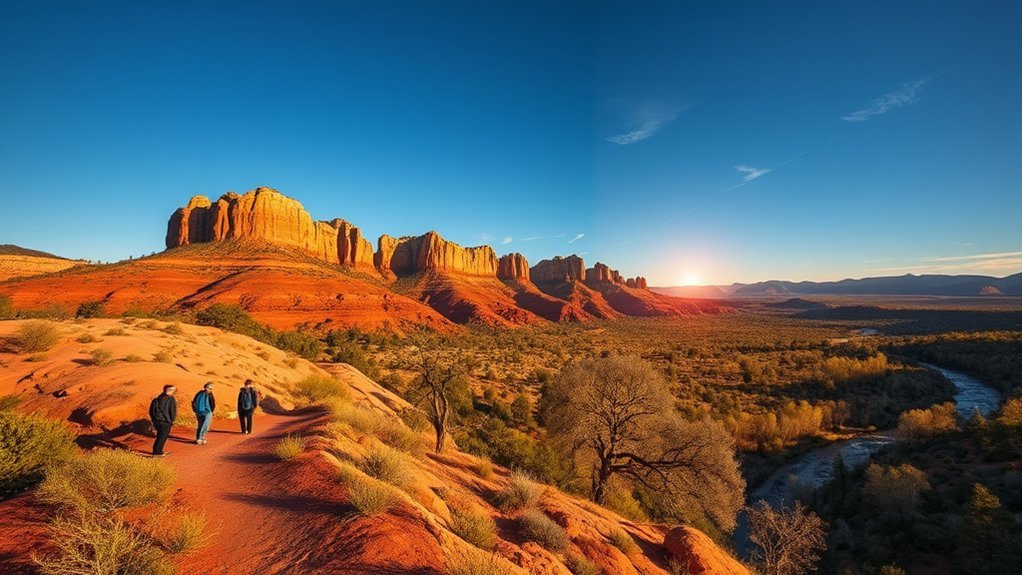
The best time to visit Sedona depends on what matters most to you. Spring and fall offer some of the most comfortable weather for hiking and sightseeing, but they also bring stronger demand for lodging, tours, parking, and popular trails. Winter is quieter and often better for your budget, while summer can offer lower rates if you plan around hot afternoons and seasonal thunderstorms.
Quick Answer
The best time to visit Sedona is usually spring (March–May) or fall (September–November) for comfortable hiking weather, but those are also the busiest and often priciest seasons. Choose winter for quieter trails and better lodging value, or summer for lower rates if you can plan outdoor time around heat and afternoon monsoon storms.
Key Takeaways
- Best overall weather: Spring and fall are usually the easiest seasons for hiking, scenic drives, and long outdoor days.
- Best for lower prices: Summer and winter generally offer better lodging value than peak spring and fall, especially on weekdays.
- Best for fewer crowds: Winter is usually the quietest choice outside holiday periods; hot summer weekdays can also be calmer.
- Best for fall color: Look to Oak Creek Canyon from roughly late October into early November, depending on the year’s weather.
- Best summer strategy: Hike early, avoid strenuous midday activity, monitor thunderstorms, and keep a backup indoor or shaded plan.
Best Time to Visit Sedona by Priority
There is no single perfect month for every traveler. Pick your season by matching Sedona’s weather, visitor demand, prices, and scenery to the trip you actually want.
| Your Priority | Best Window | What to Expect |
|---|---|---|
| Comfortable hiking weather | March–May and September–November | Milder days, cooler mornings and evenings, but stronger visitor demand. |
| Lower hotel rates | Summer and winter | Better value is often available, especially midweek, although holidays and major events can raise prices. |
| Fewer crowds | Winter, plus some summer weekdays | Less pressure at many trails and viewpoints, with weather tradeoffs. |
| Fall foliage | Late October into early November | Color usually works down Oak Creek Canyon with elevation and weather affecting timing. |
| Snow-dusted red rocks | Winter | Snow is occasional rather than constant, so it should be treated as a bonus rather than a guarantee. |
When to Visit for Best Weather
If mild temperatures and long outdoor days are your priority, spring from March through May and fall from September through November are usually the easiest seasons to work with. Daytime conditions commonly move from the 60s into the 80s°F across these transition periods, although individual days can be much warmer or colder.
Spring brings greening vegetation, possible wildflowers, and comfortable conditions for red-rock hikes. Fall starts warm and becomes progressively cooler. For autumn color, timing matters: Visit Sedona says color generally appears around late October in Flagstaff and the upper reaches of Oak Creek Canyon before reaching lower areas of the canyon and Sedona around early November. Exact timing changes with weather.
April and October are particularly attractive if you want a balance of comfortable temperatures and strong scenery, but they are not secret seasons. Expect more competition for lodging, dining, trail access, and parking than you would typically find in winter or during the hottest part of summer.
Note: Sedona’s elevation and varied terrain create noticeable temperature changes between sunny exposed trails, shaded canyons, and evening conditions. Carry a layer even when the afternoon forecast looks warm.
Peak Seasons and Crowd Patterns
Spring and fall are Sedona’s strongest visitor seasons because comfortable weather lines up with hiking, sightseeing, Jeep tours, wellness activities, and outdoor dining. Popular trailheads can become busy early, and traffic can slow travel through Uptown and the main highway corridors.
Winter generally becomes quieter outside holiday periods. Summer can also have lower visitor demand than spring and fall because afternoon heat limits when many people want to hike. That does not mean every summer attraction is empty, however. Swimming areas, holiday weekends, events, and famous sunset viewpoints can still draw plenty of visitors.
One of the most useful crowd-management tools is the Sedona Shuttle. Its trailhead routes operate year-round on their scheduled service days, with expanded service during some busy holiday and spring-break periods. The free trailhead shuttle does not require reservations.
Pro Tip: Check the shuttle schedule before driving to Cathedral Rock or Soldier Pass. Private trailhead parking can be closed during shuttle operating hours, so going directly to the trailhead may waste time.
If you want more breathing room during a popular season, stay midweek, begin outdoor activities early, and keep a second-choice trail or viewpoint ready instead of building your entire day around one famous location.
Budget-Friendly Times to Travel
Winter and summer generally provide better lodging value than the high-demand spring and fall seasons. Visit Sedona’s lodging guidance also notes that midweek stays tend to cost less than weekends. Exact rates change constantly, so compare your actual dates rather than relying on a fixed seasonal dollar estimate.
| Strategy | Benefit |
|---|---|
| Midweek travel | Often lower nightly rates and lighter demand |
| Summer or winter dates | Generally better lodging value than peak spring and fall |
| Kitchenette stays | Can reduce restaurant spending |
| Check recreation-pass requirements | Avoid arriving at a fee site without the required pass |
| Use free trailhead shuttles | Reduce parking stress and unnecessary driving |
Many of Sedona’s best experiences do not require an expensive tour. Scenic drives, self-guided walks, viewpoints, and public trails can fill an itinerary at relatively low cost, although some National Forest recreation sites require a Red Rock Pass or another accepted recreation pass.
Holiday weekends and major events can interrupt the normal low-season pattern, so check the local event calendar before assuming that every winter or summer date will be inexpensive.
Seasonal Activities and What to Expect
Spring: Hiking, Wildflowers, and High Demand
Spring combines mild days with longer daylight and possible wildflower displays, making it one of the easiest seasons for hiking, mountain biking, scenic drives, outdoor tours, and photography. The tradeoff is popularity. Plan lodging early and expect famous trails to feel busy, especially on weekends and during spring-break periods.
Summer: Early Hikes, Water Activities, and Monsoon Weather
Summer afternoons can reach the 90s°F, so start strenuous hikes early and shift midday time toward shaded locations, galleries, restaurants, pools, spas, or other indoor activities. Summer also overlaps Arizona’s monsoon season, when thunderstorms can develop quickly and bring lightning, heavy rain, gusty winds, and localized flash-flood hazards.
Warning: Do not treat a cloudy summer afternoon as automatic relief from the heat. Thunderstorms can create lightning and flooding risks, while exposed rock can remain hot. Check the latest forecast before leaving, carry more water than you expect to need, and turn around early if conditions deteriorate.
Fall: Comfortable Hiking and Oak Creek Color
September remains warm, while October and November cool progressively. Fall is excellent for longer hikes and scenic drives, but it is also another popular visitor season. If fall foliage is a major reason for your trip, concentrate on Oak Creek Canyon around late October into early November rather than assuming all of October will be at peak color.
Winter: Quiet Trails, Crisp Air, and Occasional Snow
Winter is one of Sedona’s best choices for travelers who value quieter trails and lower lodging demand. Days can be comfortable in sunshine, while mornings and nights may approach or fall below freezing. Snow occasionally dusts the red-rock formations, creating memorable photography conditions, but snowfall is intermittent and should never be considered guaranteed.
After snow or freezing nights, shaded trails can stay icy or muddy even when downtown roads look clear. Wear appropriate footwear and be willing to change plans if trail conditions are poor.
Weather, Trail, and Road Safety
Seasonal averages are useful for planning, but your final decision should be based on the actual forecast and current land conditions immediately before each outdoor activity. Wildfires, post-fire flooding, thunderstorms, snow, ice, road work, and temporary resource closures can all affect access with little connection to the usual seasonal pattern.
- Summer: Start exposed hikes early, carry ample water, use sun protection, and watch for thunderstorms.
- Monsoon days: Avoid narrow drainages and flood-prone areas when heavy rain is possible, even if the storm appears distant.
- Winter: Expect cold mornings and possible ice on shaded trails.
- Any season: Check current Coconino National Forest alerts, trail closures, fire restrictions, and road conditions before leaving.
If you are considering Schnebly Hill Road, do not treat it like an ordinary paved scenic route. The U.S. Forest Service advises against driving up Schnebly Hill Road from Sedona without a high-clearance four-wheel-drive vehicle.
Tips for Planning Your Trip
Build your Sedona itinerary around the activities you care about most, then confirm transportation and access details instead of assuming every trailhead works the same way.
- Reserve lodging and guided tours early for spring, fall, holiday weekends, and major events.
- Do not assume public hikes require reservations. Instead, check whether your destination requires a recreation pass, shuttle access, or a separate site-specific reservation.
- Review the Sedona Shuttle schedule before visiting Cathedral Rock, Soldier Pass, Dry Creek Vista, Mescal, or Little Horse.
- Check Red Rock Pass requirements for National Forest day-use sites before parking.
- Pack layers because mornings, shaded canyons, exposed ridges, and evenings can feel very different.
- Carry water and sun protection in every season, with extra caution during hot weather.
- Check current events because festivals, races, retreats, and holiday periods can increase hotel demand and traffic.
- Keep a backup plan in case a trailhead is full, weather changes, or a temporary closure affects your first choice.
A rental car can still be useful for regional flexibility and scenic drives, but you do not need to drive it to every popular trail. Combining a car with Sedona’s transit and trailhead-shuttle system can reduce parking problems.
Frequently Asked Questions
Is Sedona dog-friendly on trails and in restaurants?
Sedona is generally dog-friendly, but rules depend on the property. Dogs on Coconino National Forest trails must be leashed and owners must clean up after them. Some restaurant patios welcome dogs, but individual policies vary. Red Rock State Park is an important exception: Arizona State Parks does not allow pets there other than qualifying service animals.
Are permits required for photography or drone use?
Permit requirements depend on the activity and land manager. Ordinary personal photography is different from commercial filming or photography, which may require a Forest Service special-use permit in some circumstances. Recreational drone pilots must follow current FAA rules, including TRUST and applicable registration, Remote ID, and airspace requirements. Drones cannot be operated from congressionally designated wilderness areas, and Arizona State Parks prohibits recreational drone use inside state parks.
What are the best scenic drives for sunset views?
Good paved options include Red Rock Scenic Byway on SR 179, SR 89A through Oak Creek Canyon, Red Rock Loop Road, and the drive toward Airport Mesa. Sunset parking can fill quickly. Schnebly Hill Road offers backcountry views but is rough and should not be treated as a standard passenger-car scenic drive from Sedona.
Can you drink tap water in Sedona?
If your property is served by Arizona Water Company’s Sedona system, its 2024 Annual Water Quality Report states that supplied water complied with applicable state and federal safe-drinking-water standards. Sedona-area properties may not all use the same provider, so check your hotel, rental, or utility if you want the report for the exact water system serving you.
How accessible are trails for visitors with mobility limitations?
Accessibility varies widely because many Sedona hiking trails use natural rock, sand, steps, and uneven surfaces. Crescent Moon Ranch/Red Rock Crossing is one verified option with more than 1.5 miles of paved walking paths, although terrain closer to Oak Creek can be uneven. Check the specific site before visiting rather than assuming an “easy” trail is wheelchair accessible.
Do I need a Red Rock Pass to hike in Sedona?
Not for every trail or every parking area. Certain National Forest day-use sites in Red Rock Country require a Red Rock Pass or an accepted federal recreation pass. Check the current requirement for your exact destination before parking because rules differ by site.
When is the best time to see fall colors in Sedona?
The most reliable window is usually from late October into early November, particularly around Oak Creek Canyon. Color tends to develop earlier at higher elevations and later closer to Sedona, but weather can shift the timing from year to year.
Conclusion
For the easiest combination of comfortable temperatures and outdoor activities, choose spring or fall and accept that you will share Sedona with more visitors. For quieter trails and better lodging value, winter is often the stronger choice. Summer can also save money, but outdoor plans should center on early mornings, hydration, and changing monsoon conditions.
Whatever season you choose, check the current forecast, trail and road conditions, recreation-pass requirements, and Sedona Shuttle schedule shortly before your visit. Those details can matter more to your actual day than the season printed on the calendar.
Sources
- Visit Sedona Frequently Asked Questions — fall-color timing, scenic routes, hiking and Red Rock Country planning.
- Visit Sedona Lodging Guidance — seasonal hotel-demand and pricing patterns.
- Sedona Shuttle Trailhead Routes — current trailhead transportation and operating guidance.
- Coconino National Forest Trails — trail planning and pet rules on National Forest lands.
- Federal Aviation Administration Recreational Flyers — current recreational drone requirements.
- Arizona Water Company 2024 Sedona Water Quality Report — drinking-water compliance information for the company’s Sedona system.