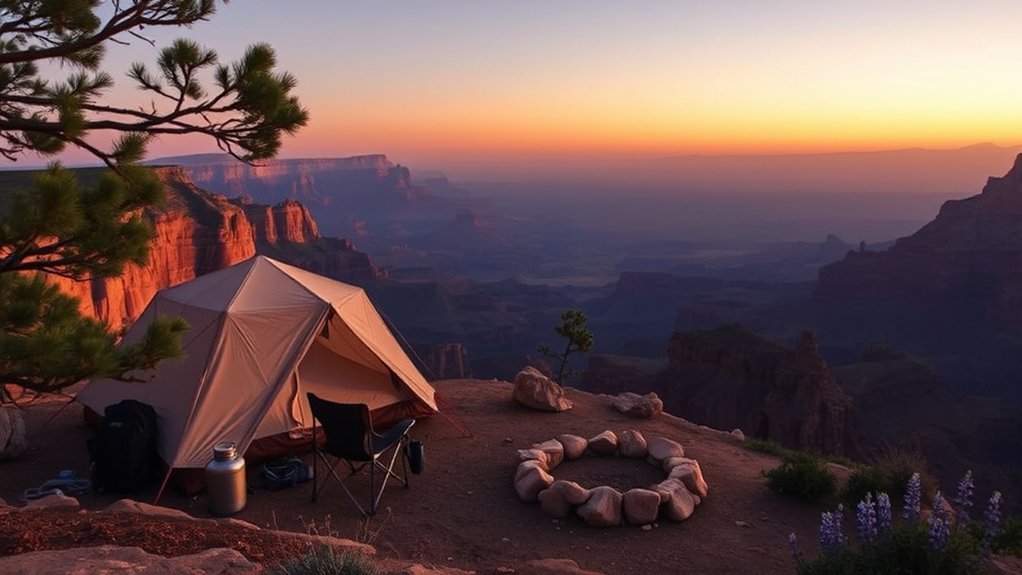
Camping on the Grand Canyon’s North Rim gives you cooler high-elevation nights, pine and aspen forest, and a quieter base for exploring the canyon, but 2026 requires more planning than a normal season. The North Rim is operating with reduced services following the Dragon Bravo Fire, and campground water, fire rules, trail access, and backcountry procedures have changed. Check current conditions before you leave, carry enough water, and keep a backup campground in mind.
Quick Answer
For 2026, the North Rim Campground is open June 1 through October 15, with reservations through Recreation.gov and limited walk-up availability. Bring or buy all potable water, expect no RV hookups, showers, laundry, or dump station, and follow Stage 2 fire restrictions. Backcountry camping requires a separate permit.
Key Takeaways
- North Rim Campground reopened June 1, 2026, and reservations are available through October 15.
- There is no potable water, RV hookup, dump station, shower, or laundry service at the campground in 2026.
- Wood and charcoal fires are prohibited under the North Rim’s 2026 Stage 2 fire restrictions.
- A backcountry permit is required for overnight backpacking, but not for a normal stay at the developed North Rim Campground during its operating season.
- Several North Rim trails remain closed because of Dragon Bravo Fire impacts, so check the current NPS status page before hiking.
At a Glance
| 2026 Campground Season | June 1–October 15 |
| Reservations | Recreation.gov; limited walk-up sites may also be available |
| Campground Water | Not available; bring water or buy packaged water at the nearby General Store |
| Campfires | Wood and charcoal fires prohibited during the 2026 season |
| Backcountry Permit Cost | $10 permit or lottery charge, plus $15 per person/night below the rim or $4 per person/night above the rim |
Key Takeaways for Camping the North Rim
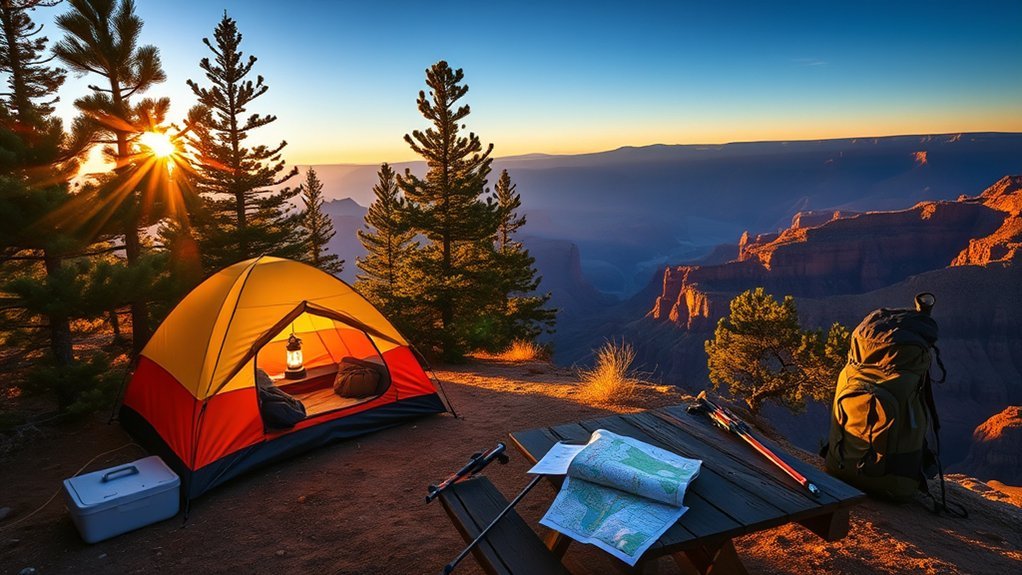
The National Park Service North Rim status page should be your first planning stop in 2026. The North Rim reopened to visitors on May 15, while North Rim Campground reopened June 1. The campground is operating through October 15 and is being run by Aramark during the 2026 season.
Expect a more self-sufficient stay than in a normal year. Potable water is not available inside the campground, RV hookups are unavailable, the dump station is closed, and campground showers and laundry facilities remain closed. Portable toilets are available. Pack enough drinking and cooking water for your stay or plan to purchase packaged water at the adjacent General Store.
Warning: Stage 2 fire restrictions apply on the North Rim during the 2026 season. Wood fires, charcoal fires, campfires, warming fires, and charcoal barbecues are prohibited. Certain liquid-petroleum or LPG devices that can be switched on and off may be used when surrounding flammable material is cleared as required by NPS rules.
Who Should Camp at the North Rim and When to Go
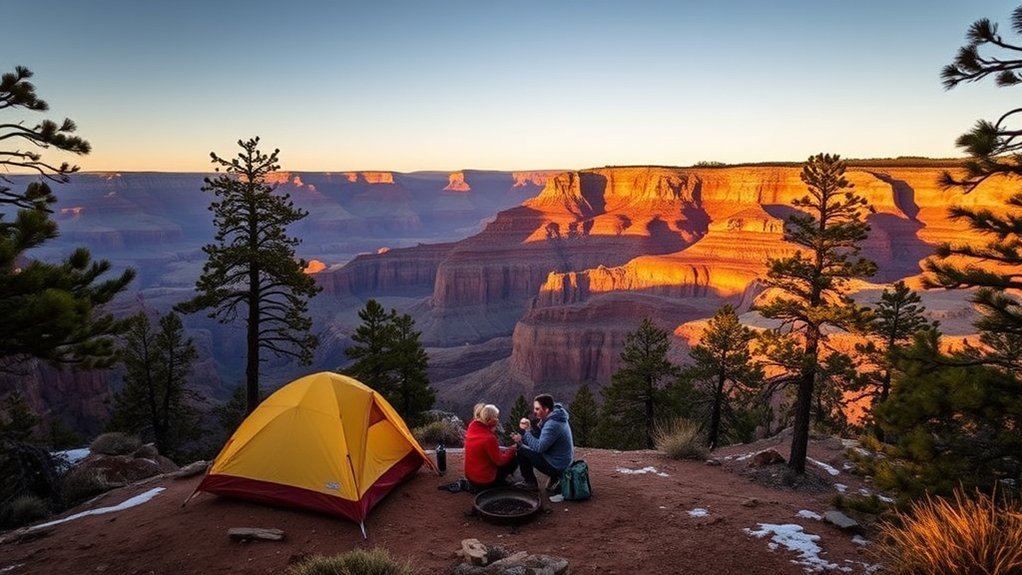
The North Rim works best if you value cooler high-elevation weather, forest scenery, a quieter atmosphere, and a more self-sufficient camping experience. North Rim Campground sits at about 8,200 feet, so nights can be cool even when the inner canyon is dangerously hot.
- You want a quieter Grand Canyon base: the North Rim feels more remote than the South Rim and requires a much longer drive from many Arizona cities.
- You are comfortable with limited services: in 2026, bring your own water supply and do not count on campground showers, laundry, a dump station, or RV hookups.
- You can adapt your hiking plans: some trails remain closed because of the Dragon Bravo Fire, including Bright Angel Point, Widforss, Transept, Uncle Jim, and part of the Ken Patrick Trail.
- You are prepared for sudden weather: high elevation can bring cool nights, thunderstorms, strong winds, and rapid changes in conditions.
The developed campground closes October 15 in 2026. Highway 67 normally closes to vehicles for winter once seasonal road closure begins, and winter access and services are very limited. Always check current park and Arizona road conditions before a shoulder-season trip.
North Rim Developed Campground and 2026 Amenities
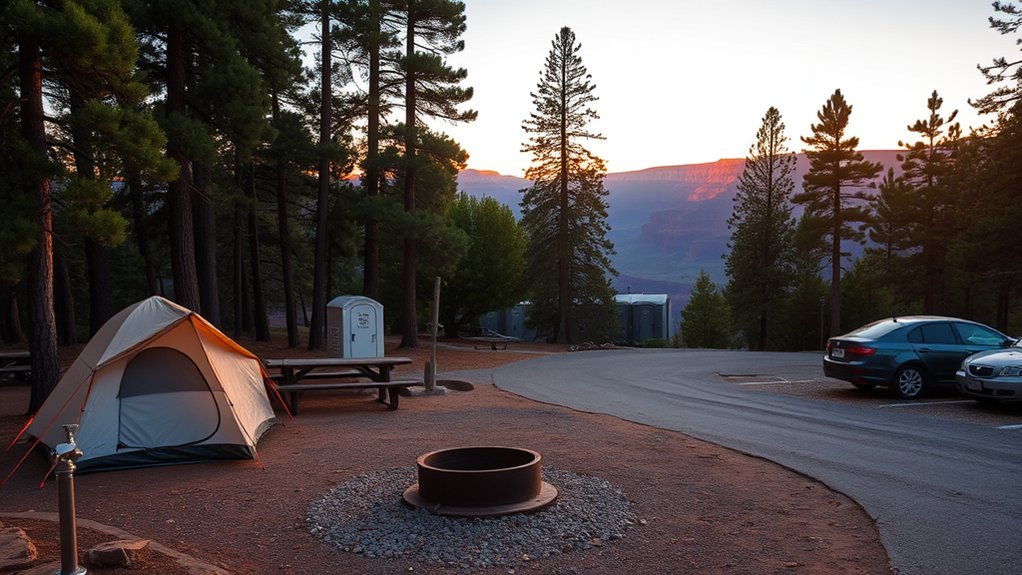
North Rim Campground is the main developed campground inside the park on the North Rim. You can check current availability and individual site limits on the official North Rim Campground Recreation.gov page. Reservations are available for the 2026 season, and NPS also reports a limited number of walk-up sites.
| Amenity | 2026 Status |
| Potable water | Not available in the campground |
| Toilets | Portable toilets available |
| RV hookups | None |
| Dump station | Unavailable |
| Showers/laundry | Closed for 2026 |
| Wood/charcoal fires | Prohibited under Stage 2 restrictions |
The campground is especially suitable for tents and smaller RVs because many sites have tight turns, trees, narrow clearances, and individual length limits. Recreation.gov also states that Cape Royal Scenic Road and the North Kaibab Trailhead have a 22-foot maximum vehicle length.
Note: Tuweep and Indian Hollow are not developed North Rim Campground alternatives inside the same visitor-services area. Tuweep is a remote NPS backcountry destination in western Grand Canyon, while Indian Hollow is a primitive Kaibab National Forest campground outside the park.
Top Backcountry Campgrounds Below the Rim
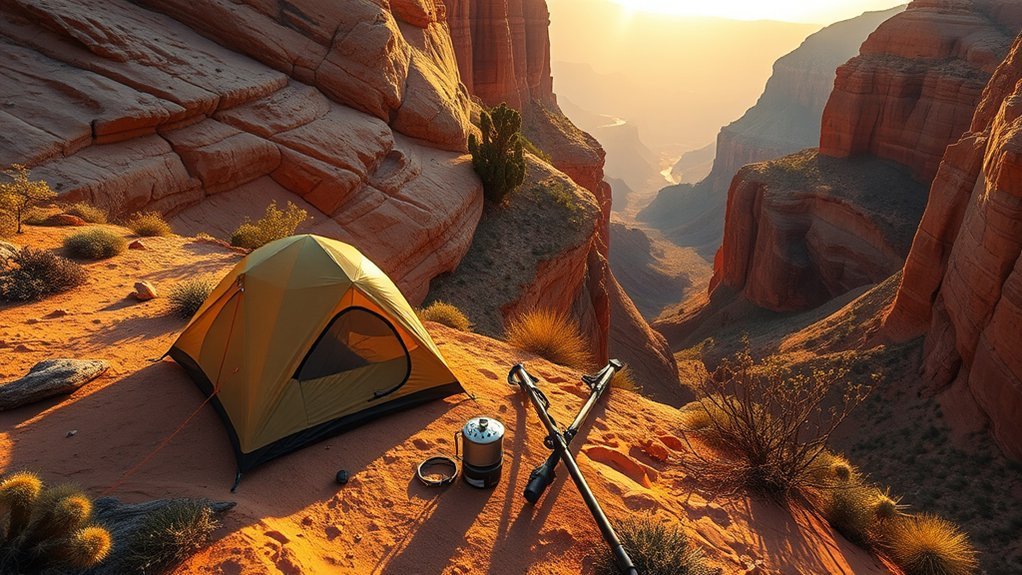
The main Corridor backcountry campgrounds are Cottonwood Campground, Bright Angel Campground, and Havasupai Gardens, formerly known as Indian Garden. Overnight stays require a Grand Canyon backcountry permit. These camps are for backpackers and should not be confused with the drive-in North Rim Campground.
Current water availability can change with pipeline conditions, so check the NPS Key Hiking Messages page immediately before your hike. Carry a water-treatment backup even when a source is listed as available.
Bright Angel Campground
Bright Angel Campground sits near Bright Angel Creek and the Colorado River, close to Phantom Ranch. From the South Rim, NPS lists it as approximately 9.5 miles via the Bright Angel Trail or 7 miles via the South Kaibab Trail. From the North Kaibab Trailhead, it is approximately 14 miles.
The campground has potable water when the system is operating, toilets, picnic tables, food-storage facilities, and nearby ranger presence. It is one of the park’s most requested backcountry destinations, so obtaining the exact itinerary you want can be competitive.
- Apply during the appropriate Recreation.gov backcountry permit window.
- Check trail closures and water status immediately before departure.
- Store food and scented items according to park requirements.
- Do not attempt a rim-to-river-and-back day hike as a substitute if you fail to obtain an overnight permit.
Cottonwood & Havasupai Gardens
Cottonwood Campground is 6.8 miles down the North Kaibab Trail from the North Rim trailhead. It provides a logical overnight stop for many North Kaibab itineraries. Potable water is normally seasonal and can be interrupted, so never assume a tap will be working without checking current NPS updates.
Havasupai Gardens, formerly Indian Garden, is approximately 4.5 miles below the South Rim on Bright Angel Trail. It has toilets, picnic tables, food-storage facilities, and potable water when the water system is operating.
Grand Canyon generally limits designated backcountry campground stays to two nights per campground per hike, with a seasonal Corridor exception during the winter period. Your permit controls the exact itinerary and dates.
Tuweep Campground
Tuweep is a much more remote option and is not part of the developed North Rim village area. According to the National Park Service Tuweep guide, the campground has nine sites for groups of one to six people plus one larger group campsite. Backcountry permits are required and must be obtained online in advance. The campground has picnic tables and composting toilets but no water. Fires and charcoal are prohibited.
How to Apply for Backcountry Permits and the Waiting List
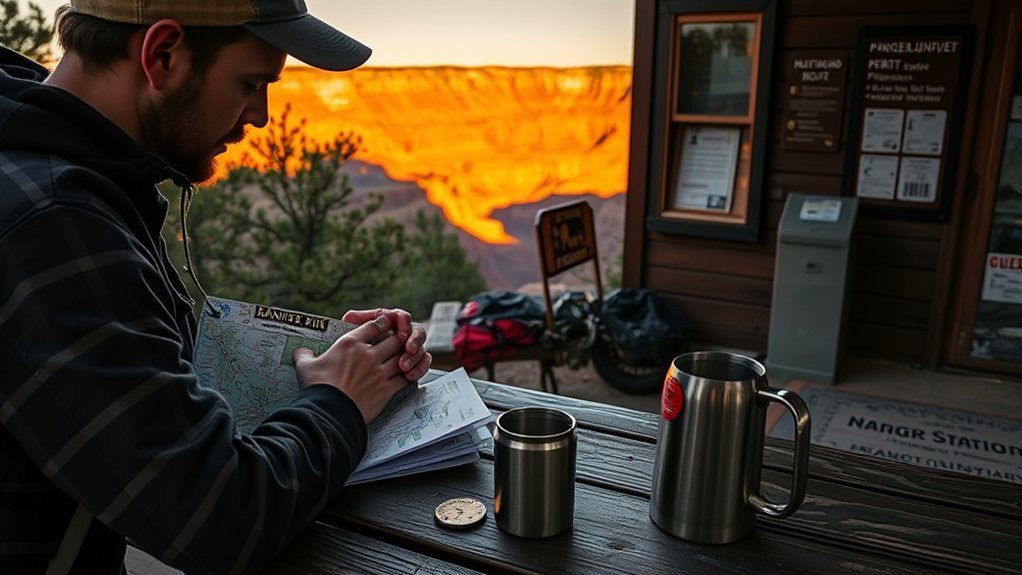
Grand Canyon backcountry permits are now handled through Recreation.gov. The old mail-and-fax application process should not be used as your primary planning method.
- Create a Recreation.gov account. You will need it to enter the early-access lottery or reserve remaining permit space.
- Apply during the early-access lottery window. Lottery applications generally open on the 16th of the month about five months before the desired trip month and close on the first day of the month four months before the trip month.
- Use remaining availability if you miss the lottery. Unsold space becomes available through Recreation.gov after the early-access period.
- Watch for cancellations. Cancelled space can reappear online and may be booked close to the trip date.
- Use last-minute permits only as a backup. A small amount of space is held for certain Corridor campgrounds, but availability is limited and office procedures can change. Check the current NPS backcountry permit page before relying on this option.
The current backcountry charge is $10 per permit or lottery application, plus a nightly charge of $15 per person for below-rim areas or $4 per person for above-rim areas. Park entrance fees are separate.
Pro Tip: If your preferred itinerary is unavailable, keep checking Recreation.gov. Cancelled permit space is released back into the system, and flexibility with dates or campgrounds can improve your chances.
Practical Planning: Gear, Water, and Safety Considerations
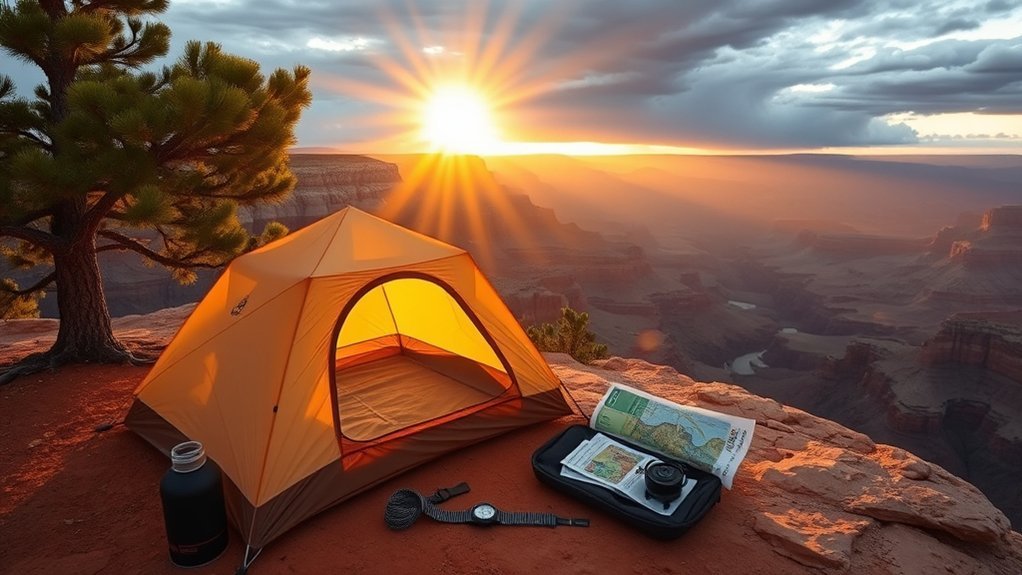
North Rim camping requires two different levels of preparation. A drive-in campground stay is relatively straightforward, but a below-rim backpacking trip exposes you to steep elevation changes, extreme inner-canyon heat, limited shade, and water systems that can fail without much warning.
| Essential | Planning Action |
| Water | Carry enough for your route and conditions, plus treatment or filtration as a backup. Do not depend on an unverified tap. |
| Navigation | Carry an offline map or paper map and know your permitted itinerary. |
| Layers | Prepare for cool rim nights and much hotter conditions lower in the canyon. |
| Emergency gear | Carry first aid, sun protection, lighting, emergency shelter, and enough food for delays. |
| Permit | Carry your printed backcountry permit when an overnight wilderness trip requires one. |
The North Rim campground sits around 8,200 feet, but the inner canyon is dramatically hotter. Packing for the rim alone can leave you badly underprepared for a below-rim hike.
For 2026, hikers on the upper North Kaibab Trail should also be alert for post-fire hazards such as rockfall, debris flows, flash flooding, and falling trees, especially during storms or high winds.
Access, Roads, and Nearby Outside-Park Camping Options
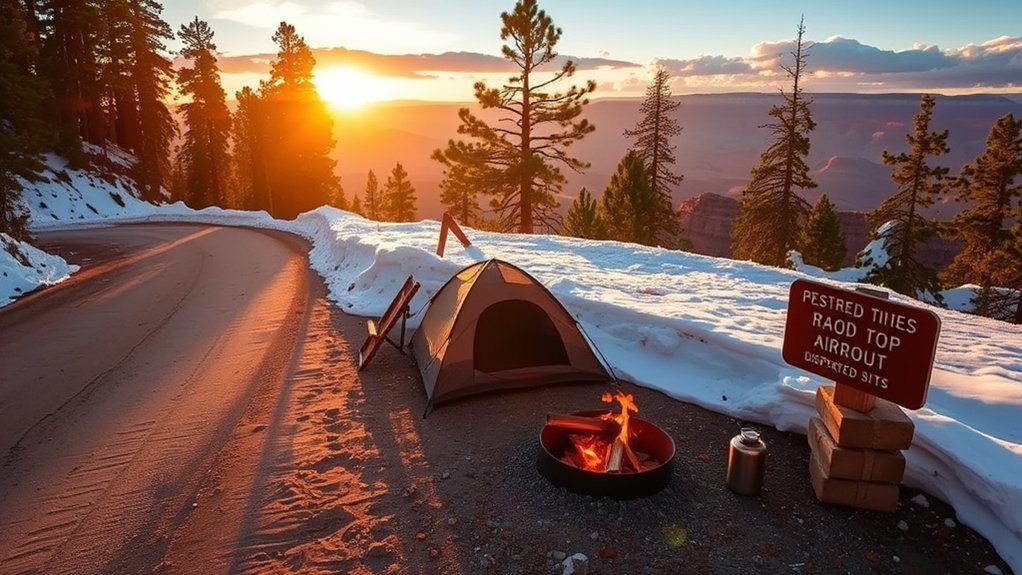
Highway 67 is the main road into the North Rim developed area. The North Rim campground is about 41 miles south of Jacob Lake and roughly 120 miles southwest of Page. NPS estimates Page at about a 2.5-hour drive under normal conditions. The South Rim is much farther by road because there is no direct vehicle crossing of the canyon.
All paved North Rim park roads, including Cape Royal and Point Imperial Roads, reopened for the 2026 season, but trail access is more limited than road access. Check the NPS North Rim status page immediately before traveling because fire recovery, storms, road damage, or maintenance can change access.
There is no overnight lodging on the North Rim inside the park during the 2026 season, so campers who cannot secure a site should plan an outside-park alternative.
- DeMotte Campground: a Kaibab National Forest campground about 7 miles north of the North Rim park entrance. For 2026 dates and reservations, use the official USDA Forest Service DeMotte page.
- Jacob Lake Campground: another Forest Service option along the main North Rim approach near the US 89A and AZ 67 junction.
- Indian Hollow Campground: a free, primitive Forest Service campground with three first-come, first-served sites. It is not suitable for large RVs or large groups.
- Kaibab Camper Village: a private campground near Jacob Lake that can be useful when you need RV hookups or campground services unavailable inside North Rim Campground.
- Dispersed camping: permitted in appropriate parts of Kaibab National Forest, but local closure orders and camping restrictions apply. Check current Forest Service alerts before choosing a dispersed site.
Rules, Stay Limits, Fees, and Group Regulations
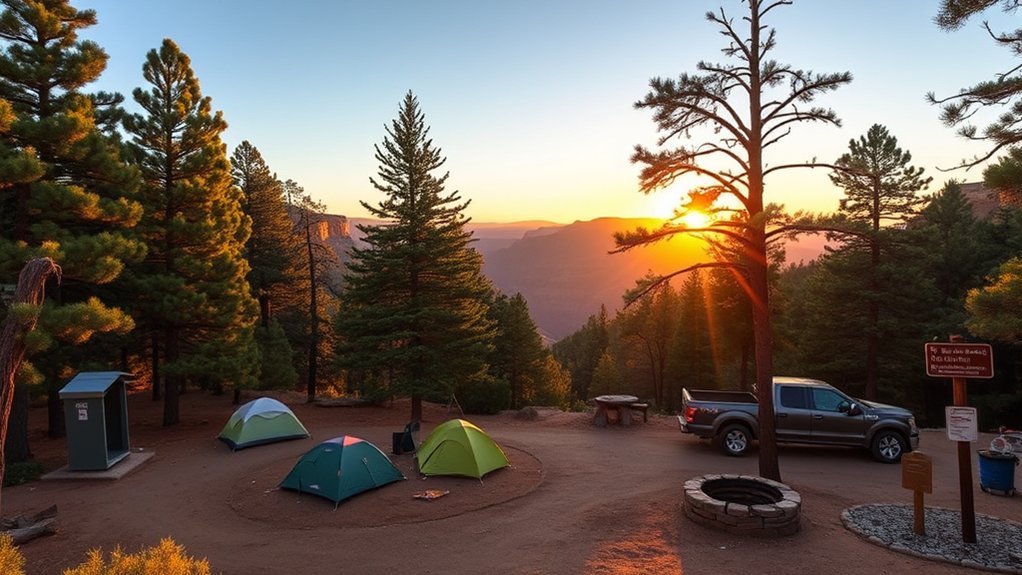
The most important rule distinction is simple: a normal reservation at North Rim Campground is not a Grand Canyon backcountry permit. Backcountry permits are required when you camp overnight outside the developed campground system, including Corridor camps and Tuweep.
| Item | Current Rule |
| North Rim Campground | Campground reservation; no separate backcountry permit required during the developed campground season |
| Backcountry camping | Backcountry permit required before the overnight trip begins |
| Designated backcountry camp stay | Generally limited to two nights per campground per hike, subject to seasonal exceptions |
| Backcountry fee | $10 permit/lottery charge plus $15/person/night below rim or $4/person/night above rim |
| Backcountry group size | Small groups are 1–6 people; large groups are 7–11, and groups larger than 11 cannot camp together in the same backcountry campground or use area |
At North Rim Campground, follow the individual site’s vehicle, tent, and equipment limits. Recreation.gov states that a standard campsite normally allows up to two passenger vehicles, or one passenger vehicle plus one RV/trailer/camper-type vehicle. Pets must remain leashed and are restricted from most park trails.
Tips for Booking, Contingency Plans, and Responsible Camping
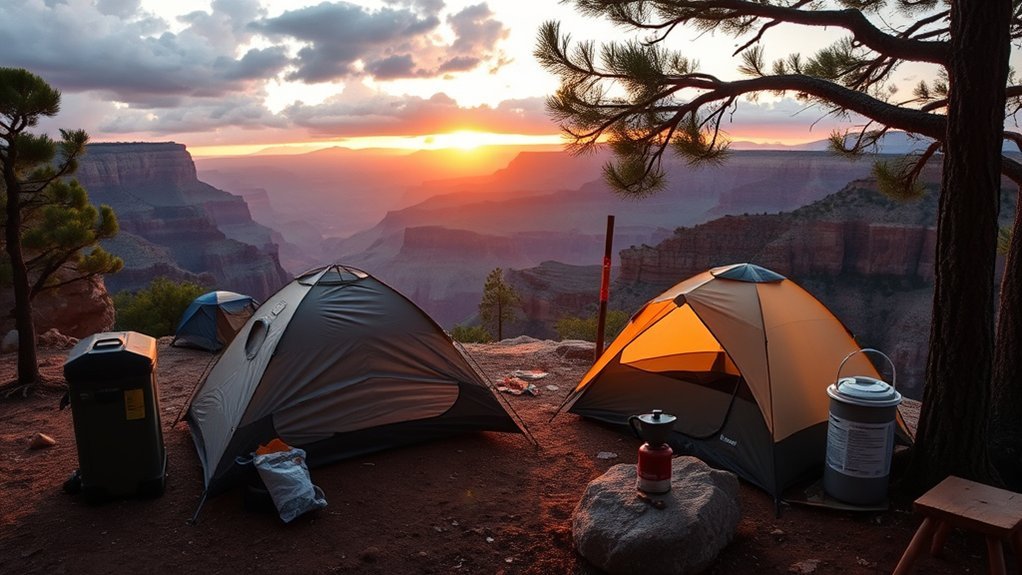
North Rim camping rewards flexibility. Reserve the developed campground through Recreation.gov as soon as suitable dates are available, and do not assume that historic services will be operating during the 2026 recovery season.
- Book the correct product: use the campground listing for a drive-in North Rim Campground stay and the separate Grand Canyon Backcountry Permits listing for backpacking.
- Carry a backup water plan: arrive with sufficient potable water rather than assuming campground taps will be working.
- Choose a backup campground: keep DeMotte, Jacob Lake, Indian Hollow, or a private campground near Jacob Lake in your planning notes.
- Verify fire restrictions: restrictions differ between Grand Canyon National Park and surrounding Kaibab National Forest land.
- Check trail status immediately before departure: 2026 post-fire closures remain in effect on several North Rim trails.
- Leave no trace: secure food, pack out waste where required, avoid creating new campsites, and protect wildlife from human food.
October 2026 Alert: Beginning at 11:59 p.m. on October 15, 2026, the North Kaibab Trail is scheduled to close between Redwall Bridge and the northern end of Cottonwood Campground for Transcanyon Waterline work. A traditional Rim-to-Rim hike will not be possible beginning October 16.
Frequently Asked Questions
What are the rules for North Rim campsites in 2026?
Use only your assigned campsite, follow the site’s tent and vehicle limits, keep pets leashed, secure food from wildlife, observe quiet hours, and follow the 2026 Stage 2 fire restrictions. Wood and charcoal fires are prohibited. The campground also has no potable water, RV hookups, dump station, showers, or laundry during the 2026 season.
Is it better to camp on the North or South Rim of the Grand Canyon?
Choose the North Rim if you want a cooler, forested, more remote experience and are comfortable with seasonal access and limited services. Choose the South Rim if you prefer year-round access, more lodging and services, and easier transportation. In 2026, North Rim campers should be especially prepared for reduced services and fire-recovery closures.
How do I get a Grand Canyon backcountry camping permit?
Apply through Recreation.gov. Popular itineraries are initially offered through an online early-access lottery, after which remaining availability can be reserved online. Cancelled space can also reappear. Carry the issued permit during your trip and follow the itinerary, group size, and dates printed on it.
Do I need a backcountry permit for North Rim Campground?
No. A normal stay at the developed North Rim Campground during its operating season does not require a separate Grand Canyon backcountry permit. Reserve the campground through Recreation.gov. A backcountry permit is required when you camp overnight outside the developed campground system.
Where can I camp near Grand Canyon North Rim if the park campground is full?
Nearby alternatives include DeMotte Campground, Jacob Lake Campground, primitive Indian Hollow Campground, and private Kaibab Camper Village. Dispersed camping is also possible in appropriate parts of Kaibab National Forest, but check current closure orders, road conditions, and camping restrictions first.
Can I have a campfire at North Rim Campground in 2026?
No wood or charcoal fires are allowed under the Stage 2 restrictions in effect for the 2026 North Rim season. Certain LPG or liquid-fuel devices that can be switched on and off are permitted when used according to NPS requirements. Check the current NPS restriction notice before using any flame-producing device.
Is drinking water available at North Rim Campground in 2026?
No potable water is available inside the campground. Campers should bring their own supply or plan to purchase packaged water at the nearby General Store. Backpackers should separately check current inner-canyon water status because those sources can change with pipeline conditions.
Conclusion
North Rim camping can still be one of the most peaceful ways to experience Grand Canyon, but the 2026 season is not business as usual. Reserve the right campground or backcountry permit, arrive with a solid water plan, follow the no-fire rules, and verify trail conditions before every hike. With those details handled, you can enjoy the cooler forest, dramatic viewpoints, dark skies, and quieter pace that make the North Rim distinctive.
Sources
- Grand Canyon National Park: North Rim Status — 2026 reopening, campground dates, reduced services, fire restrictions, trail closures, and North Rim recovery information.
- Recreation.gov: North Rim Campground — campground facilities, water, toilets, showers, RV restrictions, check-in rules, and campsite reservations.
- National Park Service: Backcountry Permits — permit requirements, fees, lottery timing, stay limits, and last-minute permit guidance.
- National Park Service: Backcountry Trail Distances — official distances to Cottonwood, Havasupai Gardens, and Bright Angel Campgrounds.
- National Park Service: Tuweep — campsite count, water, fire, vehicle, and backcountry permit requirements.
- USDA Forest Service: DeMotte Campground — 2026 dates, location, and camping information near the North Rim.