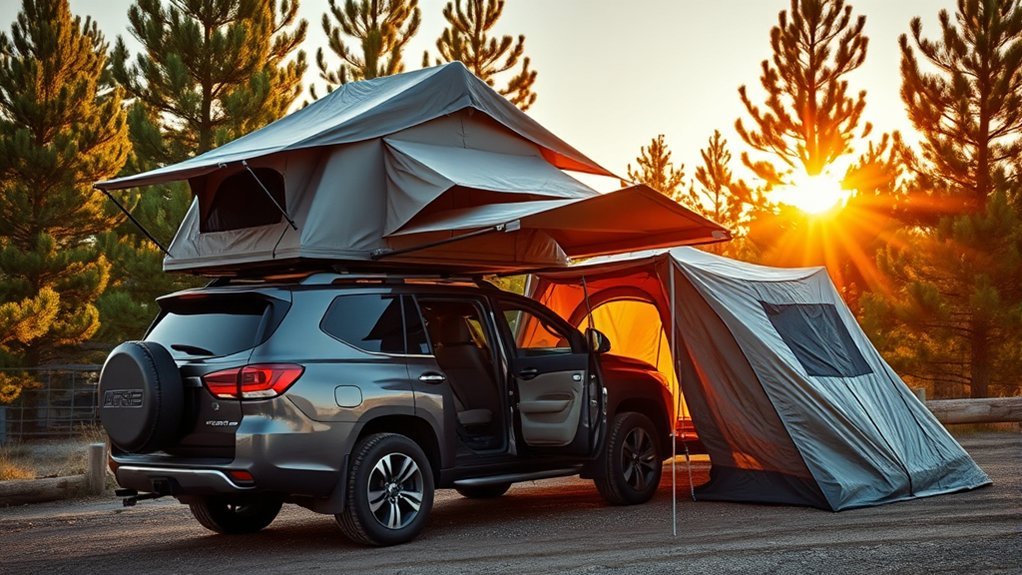
Finding the best waterproof camping tent means matching rain protection to the way you camp. A quick-pitch cabin tent can work well for a wet car-camping weekend, while a lighter dome makes more sense when you carry your shelter. Compare the rainfly, seams, floor, frame, ventilation, capacity, setup time, and packed weight together rather than relying on one number.
Quick Answer
Among the tents in this roundup, the FanttikOutdoor instant cabin model stands out for fast car-camping setup, while the Night Cat suits lightweight solo use. The Coleman Sundome offers a simple two-person dome design. EVER ADVANCED lists a 4000mm coating, one of the highest published figures here, but seams, fly coverage, floor design, and pitching still matter.
Key Takeaways
- Tent capacity is a maximum sleeping fit, not a comfort guarantee; sizing up gives you more room for gear.
- A higher millimeter rating can add margin, but fly coverage, sealed seams, floor construction, and a good pitch also determine rain performance.
- Instant and pop-up tents save setup time, while traditional pole tents can pack smaller and may give you more control over tensioning.
- Ventilation still matters in wet weather because condensation can make a dry tent feel damp inside.
- For backpacking, weight and packed size matter more than they do for car camping.
Waterproof Camping Tent Comparison
The table below compares the published specifications in this roundup. Treat capacity as a maximum and waterproof ratings as one part of the design, not a guarantee that every tent will perform the same in a storm.
| Tent | Listed Capacity | Setup | Published Water Protection | Portability / Space |
|---|---|---|---|---|
| FanttikOutdoor Instant Cabin | 4-person linked model | Under 60 seconds | 1500mm listed | Cabin-style car camping |
| Night Cat Backpacking Tent | 1–2 people | 1–2 minutes | PU 3000 | 2 kg for one-person version |
| 4–6 Person Pop Up Tent | 4–6 listed | Automatic pop-up | PU 3000 listed | More comfortable for 2–3 with gear |
| Coleman Sundome | 2-person linked model | About 10 minutes | WeatherTec system | 5 × 7 ft floor, 4 ft high |
| Mimajor Instant Pop Up | 2 people | About 40 seconds | 3000mm listed | 3.5 kg |
| Purebox 4 Person Dome | 4 people | Minutes with two people | Waterproof coating + rainfly listed | 6 lb listed |
| EVER ADVANCED Blackout | 4 people | About 60 seconds | 4000mm listed | 8 × 7 ft, 59 in high |
| Camping Tent for 2–4 People | 2–4 product family | About 3 minutes | Waterproof / windproof listing | 4.8 lb linked variant |
| UNP 6 Person Family Tent | 6 people | 5 min with two / 10 min solo | Polyurethane coating listed | 10 × 9 ft, 78 in high |
| 4 Person Easy Pop Up | 3–4 people | Pops up in seconds | 3000–4000mm listed | 9.2 × 6.6 ft, 4.3 ft high |
Note: This roundup compares published specifications and current manufacturer information where available. It does not claim hands-on rain testing. A hydrostatic-head number is useful, but real weather performance also depends on seams, fly coverage, floor design, ventilation, frame stability, and how well the tent is pitched.
FanttikOutdoor Instant Cabin Camping Tent with Rainfly
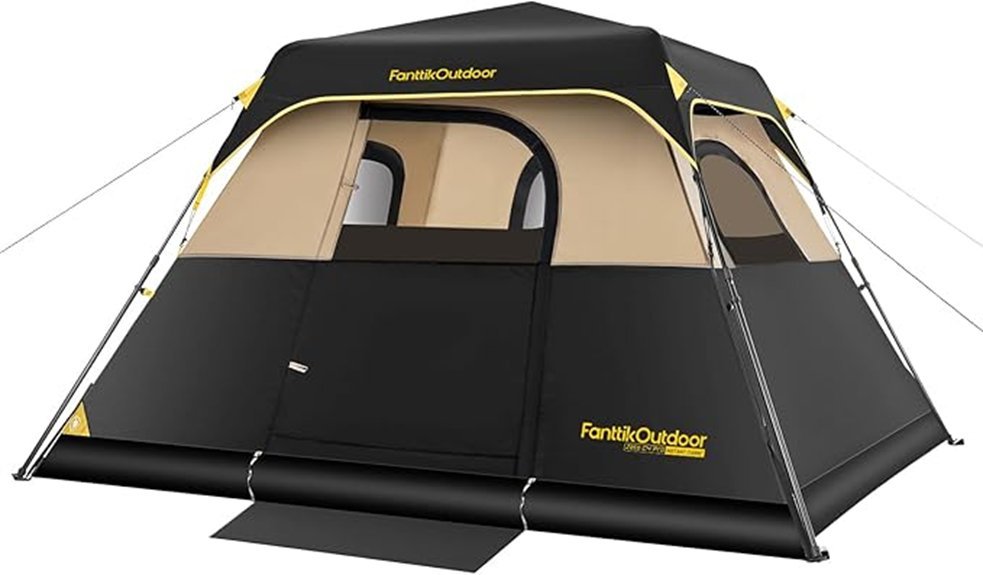
The FanttikOutdoor Instant Cabin Camping Tent is the strongest fit here for campers who value very fast setup and cabin-style space. The Fanttik Zeta C4 Pro product page confirms a sub-60-second setup, a 59-inch peak height, carbon structural steel construction, multiple ventilation openings, and 14.5 lb in its feature copy.
The linked model uses polyester fabric with a listed 1500mm water-resistance figure, plus a rainfly, drainage channel, tub-style floor, mesh windows, a floor vent, and mesh ceiling. Those features make it better suited to car camping and short walks from the vehicle than to weight-focused backpacking.
Best For: Campers who want a roomy cabin-style tent that can be pitched quickly for car camping or short trips.
Pros:
- Pre-attached poles allow setup in under 60 seconds.
- Rainfly, tub-style floor, drainage details, and sturdy frame support wet-weather use.
- Mesh windows, floor vent, and mesh ceiling improve airflow.
Cons:
- The mesh roof depends on the rainfly for rain protection.
- The SBS zippers need careful handling to reduce snagging.
- Its cabin-style frame is less practical for backpacking than a compact trekking tent.
Night Cat Lightweight Waterproof Backpacking Tent for 1-2 Persons
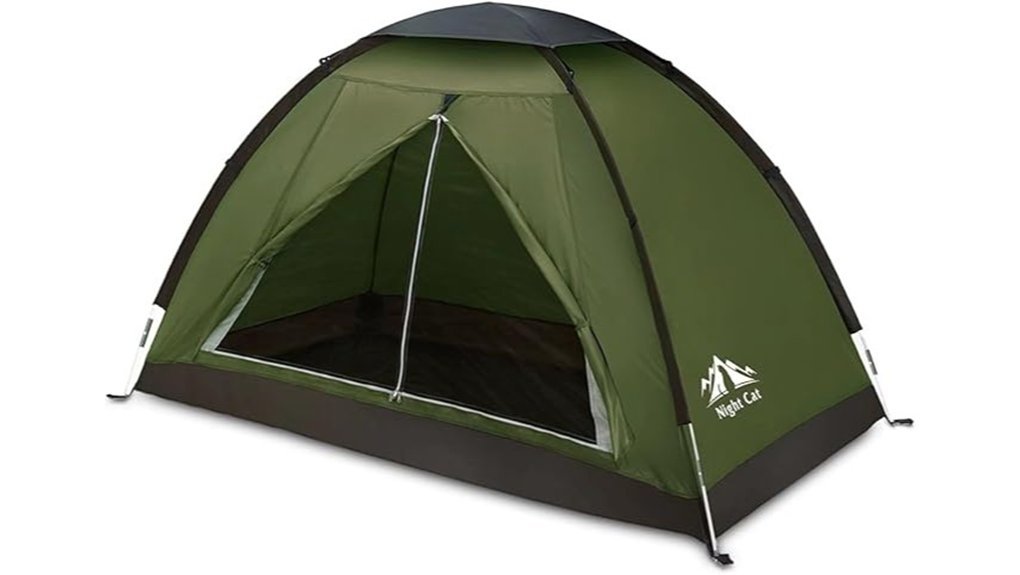
The Night Cat is the most backpacking-oriented option in this list because it combines a compact dome shape with a 2 kg listed weight for the one-person version. Night Cat’s current backpacking tent specifications list PU 3000-coated fabric, a PU 3000 Oxford floor, taped seams, and a 1–2-minute setup with two fiberglass poles.
The inner sleeping area is listed around 7.0 x 3.8 x 3.6 ft for the one-person version. A mesh door and roof window help ventilation, while the compact packed size suits hiking, motorcycling, biking, and other trips where carrying weight matters.
Best For: Solo campers, hikers, motorcyclists, and compact-pack travelers who want quick setup and stronger published rain protection than many basic budget domes.
Pros:
- Lightweight at about 2 kg for the one-person version.
- Quick 1–2 minute pole setup.
- PU 3000 fabric, taped seams, and an Oxford floor provide a weather-focused build.
Cons:
- The one-person size is best for one adult; two occupants will be very tight.
- Single-layer construction can be more sensitive to condensation than a well-ventilated double-wall shelter.
- Headroom is limited compared with cabin-style tents.
4-6 Person Pop Up Camping Tent with Rainfly
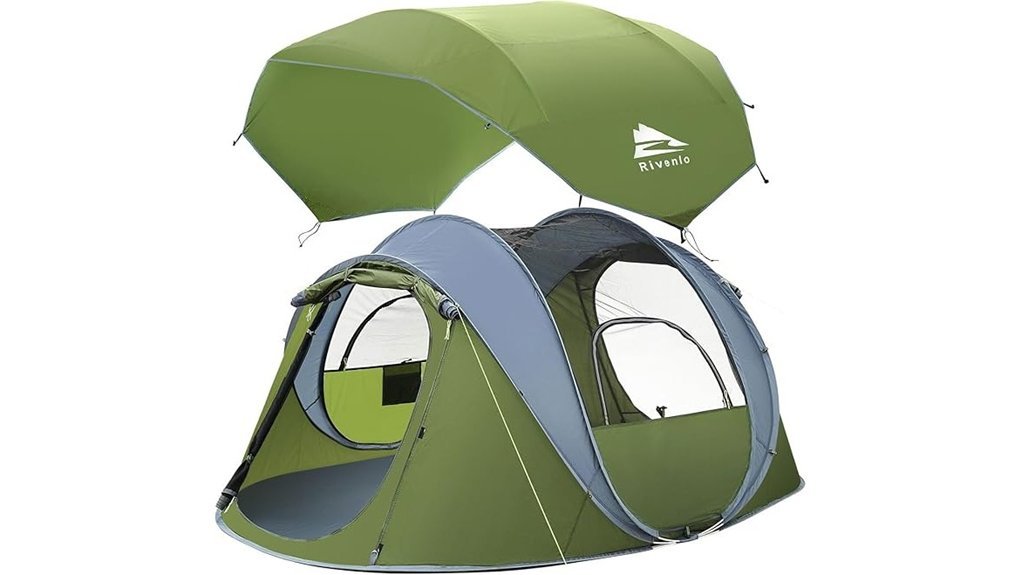
This 4–6 person pop-up tent is best for families or small groups that want automatic setup without a traditional pole assembly. Its 190T polyester shell, listed PU 3000 coating, removable rainfly, and 9.5 x 6.6 x 4.3 ft footprint make it a convenient fair-to-wet-weather shelter for casual camping.
The interior is more realistic for about four sleepers, or two to three campers who also keep gear inside. Four mesh windows, two doors, a skylight, storage pockets, and a lantern hook improve airflow and day-to-day use.
Best For: Families and small groups who prioritize fast setup, multiple openings, and easy campsite convenience.
Pros:
- Automatic pop-up design reduces setup work.
- PU 3000 coating and removable rainfly add rain protection.
- Four mesh windows, two doors, and a skylight improve airflow.
Cons:
- Four people plus gear can feel cramped despite the larger capacity label.
- Pop-up frames can be bulkier to transport than conventional pole tents.
- The large mesh and skylight area can make privacy and temperature control more dependent on the outer layer.
Coleman Sundome Camping Tent with Rainfly
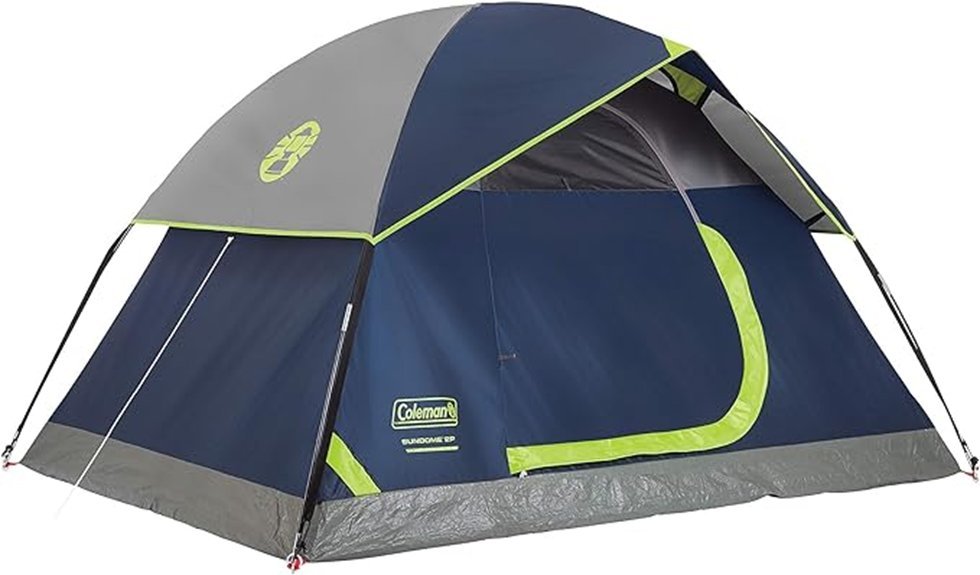
The Coleman Sundome is a straightforward dome tent for campers who want simple setup, ventilation, and a proven rain-management layout. The current Coleman Sundome 2-Person page lists a 5 x 7 ft floor, 4 ft center height, two windows, one ground vent, a rainfly, and the WeatherTec system with a tub-like floor, welded corners, inverted seams, and taped seams.
The linked two-person version uses fiberglass poles, not aluminum. Coleman also says the frame has been tested to withstand winds up to 35 mph. Setup is commonly listed around 10 minutes, and one Coleman support answer lists the packed tent at 7.5 lb with poles, stakes, and rainfly.
Best For: Campers, festival-goers, and backyard users who want a familiar two-person dome tent with basic weather protection and airflow.
Pros:
- WeatherTec details target common leak points around the floor and seams.
- Two windows and a ground vent improve warm-weather airflow.
- Its 5 x 7 ft floor remains manageable for car camping and short carries.
Cons:
- Two people will have limited room for gear inside.
- Only one door can be less convenient for two occupants.
- It is not an ultralight backpacking tent.
Camping Instant Pop Up Tent with Rainfly
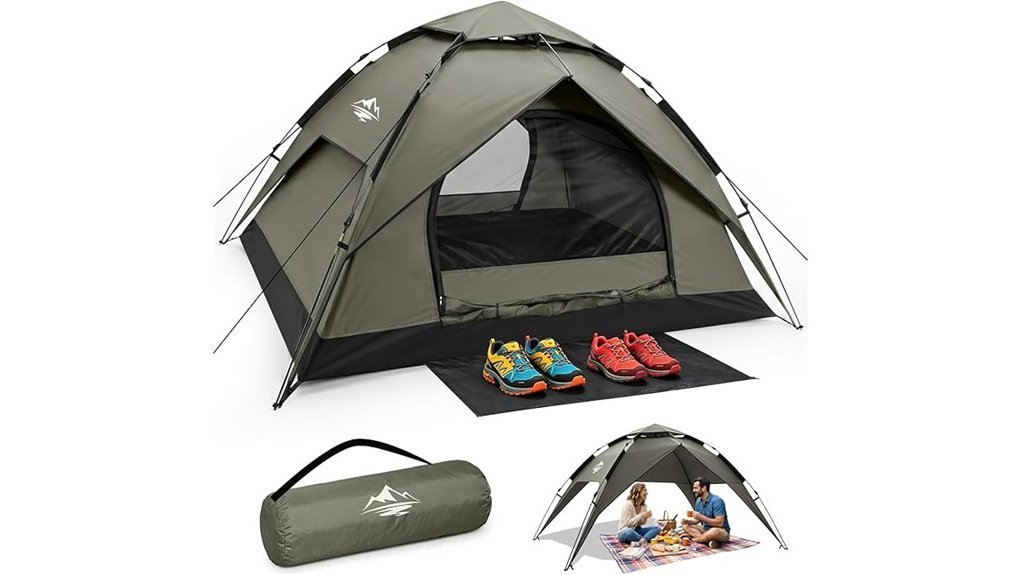
The Mimajor Camping Tent is built for two campers who want very fast hydraulic setup and a double-layer shelter. The automatic mechanism is listed at about 40 seconds, while 210D flame-retardant polyester, fully taped seams, a 3000mm waterproof rating, and a reinforced frame support wet-weather use.
The detachable outer layer can serve as a rainfly or separate shade cover. Two doors and dual mesh windows help airflow, while stakes, ropes, and a welcome mat round out the package at a listed 3.5 kg.
Best For: Two-person car-camping trips where fast setup and a double-layer design matter more than ultralight weight.
Pros:
- Automatic hydraulic system is designed for setup in about 40 seconds.
- Listed 3000mm waterproofing and fully taped seams strengthen rain protection.
- Two doors and mesh windows improve access and ventilation.
Cons:
- The two-person interior leaves limited room for bulky gear.
- At 3.5 kg, it is heavier than many dedicated backpacking tents.
- The hydraulic frame is more complex than a basic two-pole dome.
Purebox 4 Person Waterproof Camping Dome Tent
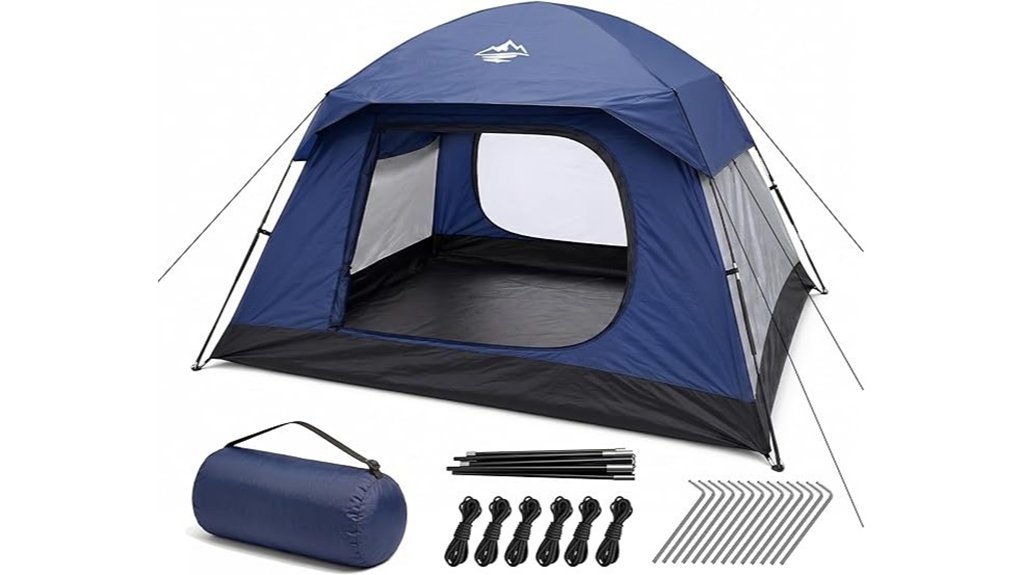
The Purebox QBT00083 is aimed at small groups that want a lightweight dome layout with two doors and a rainfly. The listing describes polyester fabric, fiberglass poles, a waterproof coating, large mesh panels, wind-resistant construction, and a longer floor than many compact four-person domes.
At a listed 6 lb, it is easier to carry than the larger cabin tents in this roundup. Two people can set it up in minutes, while the mesh panels and separate entries help airflow and reduce traffic through a single doorway.
Best For: Small groups or families who want a lighter four-person-style dome for camping, beach trips, picnics, or short hikes.
Pros:
- Listed 6 lb weight is relatively light for a roomy dome tent.
- Two doors and large mesh panels improve access and ventilation.
- Rainfly and waterproof coating add wet-weather protection.
Cons:
- The exact waterproof rating is not stated in the source listing used for this roundup.
- Fiberglass poles are less weight-efficient than many aluminum backpacking-pole systems.
- Four adults with gear may find the interior tight.
EVER ADVANCED 4-Person Blackout Camping Tent
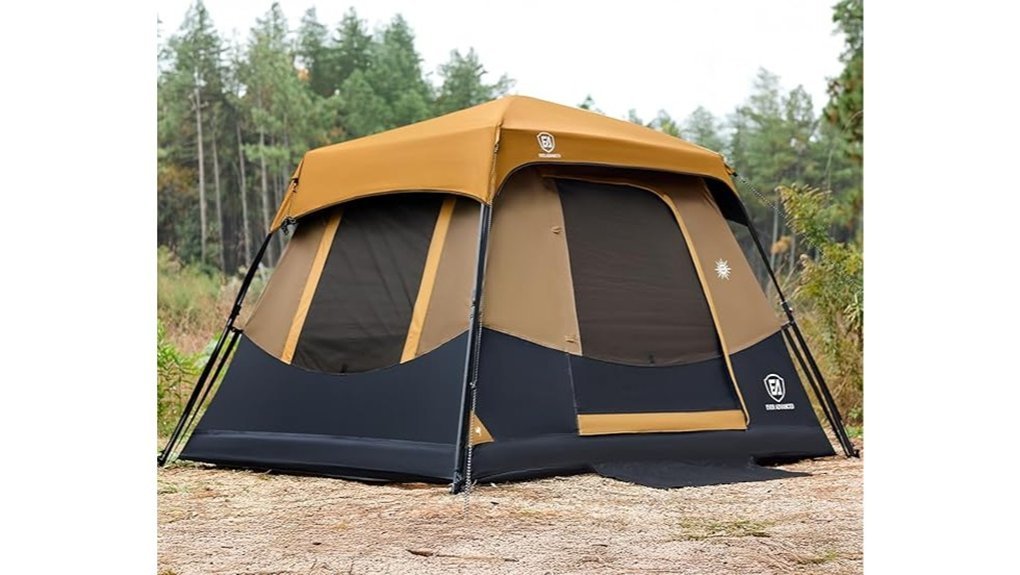
The EVER ADVANCED four-person blackout tent is a good match for families and late sleepers who want fast setup plus a darker interior. Its pre-attached frame is listed for setup in about 60 seconds, while the blackout fabric reduces incoming light and can help the interior feel less bright on early mornings.
The tent measures about 8 x 7 ft with a 59-inch center height. Three mesh windows and an overhead net window support airflow, while a listed 4000mm water-resistant coating, taped seams, rainfly, and alloy-steel frame add weather protection. Storage pockets and an E-port improve campsite convenience.
Best For: Families and car campers who value blackout fabric, quick pitching, and a roomy four-person footprint.
Pros:
- Pre-attached frame is listed for setup in about 60 seconds.
- Blackout fabric reduces morning light inside the tent.
- 4000mm listed coating, taped seams, and rainfly support rain protection.
Cons:
- Bulkier than a lightweight backpacking tent.
- Four people plus gear can still feel tight.
- Blackout material also reduces natural daylight inside.
Camping Tent for 2-4 People, Waterproof Windproof
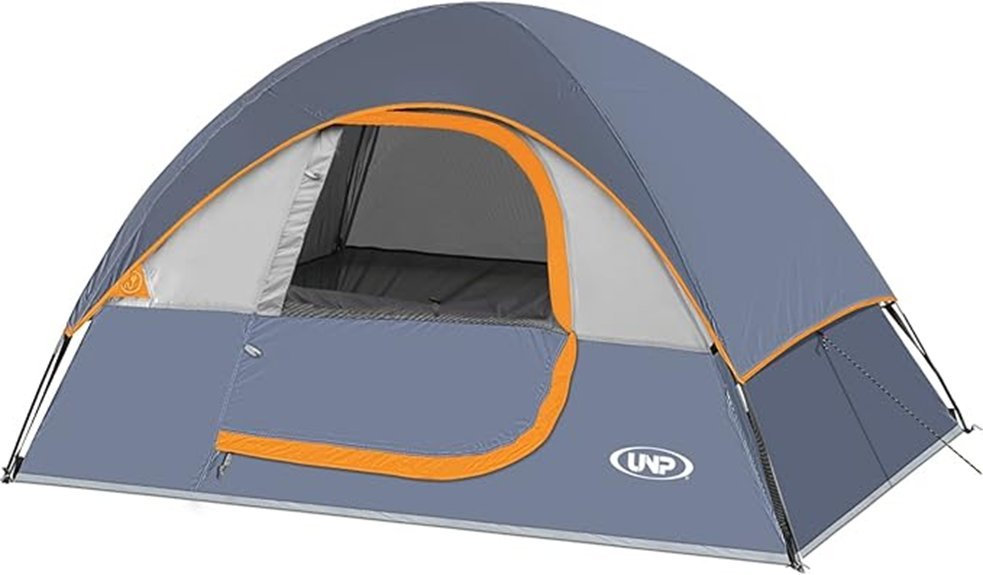
This lightweight dome is best for campers who want a simple shelter that one person can pitch quickly. The product family is sold in 2–4 person sizes; the linked variant is listed at about 7 x 5 x 4.5 ft and 4.8 lb, making it more realistic for two adults than four.
Tear-resistant polyester, a removable rainfly, two zippers, ropes, and stakes support basic weather protection. A skylight net, large mesh window, and storage pocket improve airflow and organization, while the setup is listed at about three minutes for one person.
Best For: Campers, hikers, beachgoers, and families who need a light, uncomplicated tent for short trips.
Pros:
- Listed 4.8 lb weight makes it easy to transport.
- One-person setup is listed at about three minutes.
- Rainfly, ropes, and stakes add basic rain and wind support.
Cons:
- The linked size is most comfortable for about two adults.
- It is less suited to prolonged severe weather than a heavier storm-focused tent.
- Interior storage is limited.
UNP 6 Person Waterproof Family Camping Tent
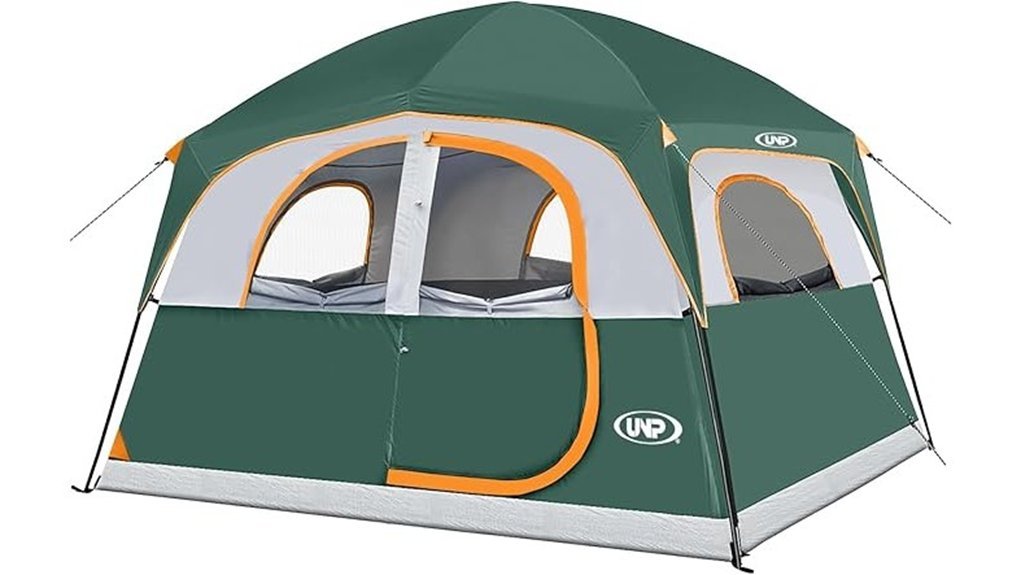
The UNP six-person family tent is the roomiest conventional family option in this roundup, with a listed 10 x 9 ft floor and 78-inch center height. That gives enough headroom for many adults to stand upright and enough floor space for six sleeping bags or two air mattresses.
Two people can pitch it in about five minutes, while solo setup is listed at about 10 minutes. A polyurethane-coated fabric, four steel leg poles, a mesh door, five windows, and a mesh top balance weather protection, stability, and airflow. At about 18 lb, it is clearly a car-camping tent rather than a backpacking choice.
Best For: Families or small groups who want standing height, strong ventilation, and quick setup at a drive-up campsite.
Pros:
- 10 x 9 ft floor and 78-inch center height provide useful family space.
- Setup is listed at about five minutes with two people.
- Mesh door, five windows, and mesh top give strong airflow.
Cons:
- About 18 lb is too heavy for normal backpacking.
- Six sleepers will have less room for gear than a smaller group.
- Solo setup takes longer than the instant-tent options.
4 Person Easy Pop Up Waterproof Camping Tent
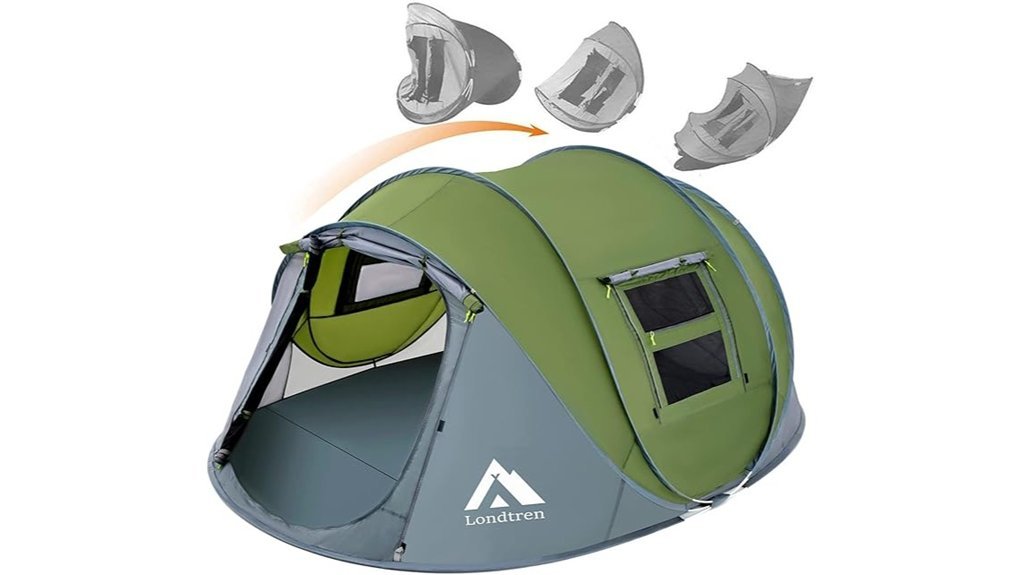
This four-person easy pop-up tent is best for casual campers who want the shortest possible setup routine. Pre-assembled poles let the tent open in seconds, while the roughly 9.2 x 6.6 ft floor and 4.3 ft center height suit three to four sleepers who do not need standing room.
The listing describes 190T polyester, a 110G PE groundsheet, heat-sealed seams, and a 3000–4000mm waterproof range. Two doors and mesh panels help airflow, while a vestibule gives muddy shoes and outerwear a place outside the sleeping area. Eight pegs, four ropes, pockets, and a lantern hook are also included.
Best For: Families, festival-goers, and casual weekend campers who want a roomy pop-up shelter with a vestibule.
Pros:
- Pre-assembled poles let the tent pop open in seconds.
- Heat-sealed seams and the listed waterproof coating target wet-weather use.
- Two doors, mesh panels, and a vestibule improve access and organization.
Cons:
- The 4.3 ft center height is low for standing adults.
- The pop-up frame is intended more for casual camping than rugged backcountry use.
- Four adults with gear will have limited spare floor space.
Factors to Consider When Choosing the Best Waterproof Camping Tent
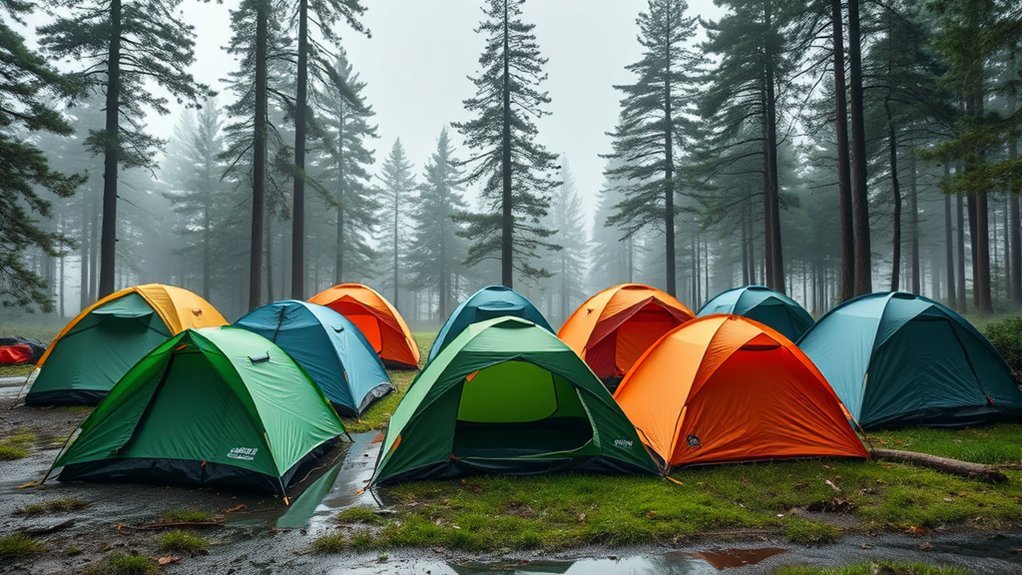
The best waterproof camping tent is not simply the one with the biggest millimeter number. Waterproof fabric, seam treatment, rainfly coverage, floor design, frame stability, ventilation, setup, weight, and usable space work together. The sections below show what each specification actually tells you.
Waterproof Rating
A waterproof rating, often called hydrostatic head or water column, measures how much water pressure a fabric can resist before water pushes through. EXPED’s explanation of water column also notes why tent floors often need higher ratings than rainflies: kneeling and standing put extra pressure on the floor fabric.
A higher number can provide more margin, but there is no single universal rating that guarantees a tent will stay dry in “heavy rain.” A well-tensioned fly, protected seams, floor shape, doors, vents, and drainage can matter as much as the fabric number. Compare the rating with the full construction instead of treating 1500mm, 3000mm, or 4000mm as a stand-alone pass/fail score.
Seam Construction
Seams are common leak points because stitching puts needle holes through coated fabric. Taped or sealed seams reduce that path for water, but the treatment must match the fabric and coating. REI’s tent-waterproofing guide explains that silicone-treated fabrics require a different sealer from polyurethane-coated fabrics.
Do not use the fabric’s hydrostatic-head number as a shortcut for seam quality. Inspect seam tape for lifting, peeling, or gaps, especially at corners and high-stress points. A sound 3000mm fabric can still leak through a damaged seam.
Frame Stability
A waterproof shell works only if the frame keeps the fly and walls correctly tensioned. Sturdy poles, secure clips or sleeves, guylines, and stakes help the tent keep its shape in wind so water can run off instead of pooling.
Traditional sleeve-pole tents let you tension a shelter carefully, while instant frames trade some simplicity for speed. Material alone does not decide stability: pole diameter, geometry, guy-out points, stake placement, and campsite exposure all affect how the tent behaves in a storm.
Ventilation Design
Waterproof tents can still feel wet inside because of condensation. Warm, moist air from breathing, damp clothes, and wet ground can condense on a cooler rainfly or wall. REI’s condensation guidance recommends reducing moisture sources and keeping the shelter ventilated.
Look for mesh doors or windows, roof vents, low vents, or openings that can stay protected by the rainfly. Cross-ventilation is especially helpful in warm, humid weather. Closing every vent may reduce drafts, but it can increase moisture buildup inside.
Setup Speed
Setup speed matters most when you arrive in rain, darkness, or strong wind. Instant and pop-up tents can be ready in seconds or about a minute, while conventional pole tents often take longer but may pack into a smaller shape.
Consider who will pitch the tent. A five-minute tent that one person can handle confidently may be more useful than a faster design that needs two people to unfold or tension correctly. Practice at home before a trip so you know the pole order, stake points, and rainfly orientation.
Weight And Packability
Weight matters differently for backpacking and car camping. A 2 kg shelter can be manageable on foot, while a roomy 18 lb family tent is much better when a vehicle carries it. Packed dimensions matter too because instant frames often fold into longer or bulkier bags.
Do not chase the lowest weight if it forces you to give up the space, ventilation, or weather protection you need. For backpacking, compare total packed weight and volume. For car camping, floor area, standing height, and setup convenience may matter more.
Capacity and Livable Space
Tent capacity should be treated as a maximum sleeping fit, not a promise of roomy comfort. REI’s camping-tent buying guidance notes that there is no industry standard for how much room each person gets and suggests looking at floor area and peak height as well as the person rating.
If you want indoor gear storage, wider sleeping pads, or more personal space, sizing up can make a big difference. A four-person tent often feels better for two or three campers with gear than for four adults packed shoulder to shoulder.
Footprints, Storage, and Waterproofing Care
A footprint can protect the tent floor from abrasion and sharp objects, but it should not stick out beyond the tent perimeter where it can catch rain. REI’s tent-care guidance also recommends drying a tent completely before storage and renewing seam or fabric treatments when they begin to fail.
After wet trips, dry the tent before packing it away long-term. Check the underside of the rainfly and floor for peeling coating, inspect seam tape, and clean dirt gently. Correct storage and timely repairs can extend the useful life of the waterproof layers.
Frequently Asked Questions
How Do I Waterproof a Tent Seam?
Waterproof a tent seam by cleaning the area, removing only loose failed tape, and applying a compatible seam sealer. Pitch the tent first so you can inspect the seam clearly. Silicone-treated fabric needs a different sealer from polyurethane-coated fabric. Let the repair dry completely before you pack the tent.
Can Waterproof Tents Still Get Condensation Inside?
Yes. A waterproof tent can still collect condensation when warm, moist air meets a cooler wall or rainfly. Breath, wet gear, damp ground, and poor airflow all add moisture. Keep protected vents open when conditions allow, reduce wet items inside, and use mesh openings to improve cross-ventilation.
How Often Should Tent Rainfly Coatings Be Replaced?
There is no fixed replacement schedule for a rainfly coating. Reproof it when performance starts to fail, such as when water no longer beads well or the inner coating begins to peel or flake. Use the treatment recommended for that fabric and coating, then let it dry completely before storage.
Do Waterproof Tents Need Extra Groundsheet Protection?
A waterproof tent can still benefit from a footprint or groundsheet because it reduces abrasion, punctures, dirt, and direct contact with wet ground. Keep the footprint fully under the tent floor. Material that extends beyond the edges can catch rain and channel water underneath the shelter.
What Waterproof Rating Is Best for Heavy Rain?
There is no single hydrostatic-head number that guarantees heavy-rain performance. Higher ratings can provide more water-pressure resistance, but a dry shelter also depends on seam treatment, rainfly coverage, floor design, door protection, drainage, and pitching. Compare the whole tent rather than choosing by the millimeter rating alone.
Sources
- FanttikOutdoor Zeta C4 Pro: setup time, height, frame, ventilation, and published weight details.
- Night Cat Backpacking Tent: current fabric, waterproofing, weight, dimensions, and setup specifications.
- Coleman Sundome 2-Person Camping Tent: WeatherTec construction, dimensions, ventilation, frame claims, and pole material.
- EXPED Tent and Tarp FAQs: hydrostatic-head definition and why tent floors may use higher water-column ratings.
- REI How to Waterproof a Tent: seam sealing, coating care, and compatible sealers.
- REI How to Prevent Condensation in a Tent: condensation causes and ventilation practices.
- REI Best Camping Tents: tent capacity, floor area, and livability guidance.
- REI Tent Care Basics: footprint use, drying, seam inspection, and waterproof-coating maintenance.