Bologna is one of Italy’s most rewarding cities for a three-day break, combining medieval streets, UNESCO-listed porticoes, one of Europe’s great food traditions, historic university buildings, lively markets, and easy excursions into Emilia-Romagna. Its compact center makes it possible to see the major landmarks on foot while still leaving time for long lunches, neighborhood walks, and a day beyond the central streets.
Quick Answer
Spend Day 1 exploring Piazza Maggiore, the Archiginnasio, the Two Towers area, Santo Stefano, and the Quadrilatero. Use Day 2 for Bologna’s markets, fresh pasta, mortadella, and local wine. On Day 3, choose Modena, Dozza and Imola, or San Luca and the Bologna hills.
Key Takeaways
- Bologna is compact enough for a three-day itinerary built mostly around walking.
- The Asinelli Tower is currently closed to visitors, so plan to see the Two Towers from outside rather than climbing its 498 steps.
- Piazza Maggiore, the Archiginnasio, Santo Stefano, the Quadrilatero, and Bologna’s UNESCO porticoes belong on a first visit.
- For food, prioritize tagliatelle al ragù, tortellini in brodo, mortadella, crescentine, Parmigiano Reggiano, and local Pignoletto.
- Modena is an excellent Day 3 choice for balsamic vinegar, food, architecture, and an easy change of pace.
- Much of Bologna’s historic center is a restricted traffic zone, so walking and public transport are usually easier than driving.
Bologna has roughly 62 km of porticoed routes. Twelve representative components of this extraordinary network were inscribed on the UNESCO World Heritage List in 2021.
Before You Go: Important Bologna Travel Updates
Bologna’s history stretches back to antiquity, while the city’s university tradition is especially important to its identity. The University of Bologna uses 1088 as its conventional foundation date and describes itself as the oldest university in the Western world. That academic legacy still shapes the university district, cafés, museums, bookshops, and nightlife.
Note: The Asinelli Tower is currently closed to the public while work continues in the Two Towers area. You can still see the towers from outside. For an elevated city view, consider Bologna’s Clock Tower at Palazzo d’Accursio and check current opening information before your visit.
The city’s UNESCO-listed porticoes are another defining feature. They provide shade and shelter while linking major squares, university streets, residential neighborhoods, and the route toward the Sanctuary of the Madonna di San Luca.
Spring and autumn are particularly comfortable for long walking days, while summer can be hot and busy. Winter is quieter and works well for museums, covered portico walks, and Bologna’s hearty cuisine. Whatever the season, check official opening hours shortly before traveling because museum schedules, restoration projects, and event access can change.
Day 1: Exploring the Historic City Center
Discovering Piazza Maggiore
Start your first morning in Piazza Maggiore, Bologna’s civic heart. The square brings together the Basilica di San Petronio, Palazzo del Podestà, Palazzo dei Banchi, and Palazzo d’Accursio, with the Fountain of Neptune immediately nearby.
Take time to look carefully at the different periods represented around the square. Palazzo dei Banchi has a monumental 16th-century façade designed by Jacopo Barozzi da Vignola, while Palazzo d’Accursio developed over several centuries and has served as Bologna’s municipal seat since the Middle Ages.
Visit the Basilica di San Petronio if it is open, then walk a few steps to the Archiginnasio. Built in the 16th century to bring university teaching into one major building, the Archiginnasio later became home to Bologna’s Municipal Library. Its historic spaces include the Anatomical Theatre, where anatomy lessons were once held.
Exploring the City’s Iconic Landmarks
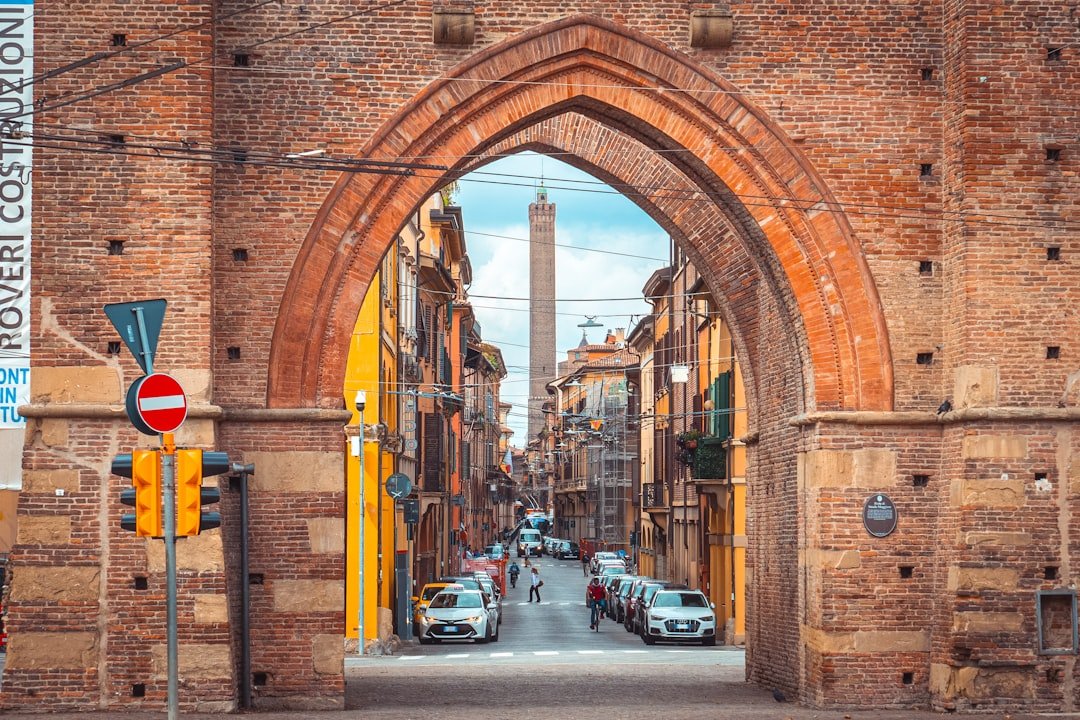
From Piazza Maggiore, walk along Via Rizzoli toward Piazza di Porta Ravegnana and the Two Towers, Asinelli and Garisenda. These medieval towers are among Bologna’s best-known symbols. The Asinelli Tower rises to about 97 meters and contains 498 internal steps, but it is currently closed to visitors because of work in the surrounding area.
Instead of planning a climb, enjoy the towers from street level and continue toward Via Zamboni and the historic university district. If a panoramic viewpoint is important to you, check availability for the Clock Tower at Palazzo d’Accursio before your trip.
Warning: Do not build your itinerary around climbing the Asinelli Tower unless the official tourism site confirms that it has reopened. Its visitor status has changed because of restoration and safety work in the Two Towers area.
Wandering through the Quadrilatero District
From the towers, loop back toward the Quadrilatero, the compact network of old market streets beside Piazza Maggiore. This is one of the best places to slow down, browse food shops, see displays of cheese and cured meat, and stop for an espresso, aperitivo, or light lunch.
Continue toward Piazza Santo Stefano and the Basilica di Santo Stefano, often called the Seven Churches because of its interconnected religious spaces. The square and surrounding porticoes are especially atmospheric in the late afternoon.
If you still have time, walk through the university district along Via Zamboni. Depending on your interests and opening hours, you can continue to the Pinacoteca Nazionale di Bologna or simply enjoy the student atmosphere around the historic university streets.
Day 2: Indulging in Bologna’s Food and Wine Scene

Bologna is famous for food, but the best second day is not about trying to eat everything at once. Build the day around a few traditional specialties and leave room to enjoy them slowly.
Begin in the Quadrilatero and visit Mercato di Mezzo. The site has served as a food and commercial area for centuries and was redeveloped in 2014 as a modern food venue where you can buy or eat local products. For more of a traditional covered-market experience, you can also explore Mercato delle Erbe.
Look for mortadella, Parmigiano Reggiano, fresh egg pasta, and regional cured meats. A guided food tour can be useful if you want explanations of ingredients and local food customs, but you can also create your own tasting route through the center.
At lunch, try tagliatelle al ragù. The local dish is better described as ragù alla bolognese than simply “Bolognese sauce,” and the classic pairing in Bologna is tagliatelle rather than spaghetti. Tortellini in brodo is another essential dish, particularly in cooler weather.
Pro Tip: If a menu is long and overwhelmingly aimed at tourists, walk a few streets away from the busiest part of Piazza Maggiore. Traditional trattorias around the wider center often provide a calmer setting for pasta, regional wine, and a longer lunch.
For an afternoon snack, try crescentine, Bologna’s name for pieces of fried dough commonly served with cured meats and soft cheeses. Gelato is another easy stop between sights.
When choosing wine, Pignoletto is particularly associated with the hills around Bologna and comes in still, sparkling, and spumante styles. Lambrusco is another classic Emilia wine, while Sangiovese is widely produced across the region. Ask for a recommendation based on what you are eating rather than choosing only by grape name.
Spend the evening over dinner rather than rushing through another list of attractions. Lasagne verdi alla bolognese, gramigna with sausage, tortellini, and seasonal dishes all provide a different view of the region’s cooking.
Day 3: Venturing Beyond the City Limits
| Day 3 Option | Best For | Planning Note |
|---|---|---|
| Modena | Balsamic vinegar, historic center, food, architecture | Easy to combine with a pre-booked acetaia visit |
| Dozza and Imola | Murals, medieval streets, regional wine, motorsport history | A car or organized excursion makes combining both easier |
| San Luca and Bologna Hills | Walking, views, porticoes, a slower local day | Best if you prefer not to spend much of Day 3 in transit |
After two days in Bologna’s center, Modena is one of the easiest ways to experience another side of Emilia-Romagna. Its historic center, food culture, and balsamic-vinegar tradition make it a natural companion to Bologna.
If balsamic vinegar interests you, arrange an acetaia visit rather than simply buying a bottle from the first souvenir shop you see. VisitModena explains the important distinction between Aceto Balsamico Tradizionale di Modena DOP and Aceto Balsamico di Modena IGP, and many producers require advance reservations.
For a different day, combine Imola with the medieval village of Dozza. Dozza is known for murals painted directly onto buildings and for the Rocca di Dozza, while Imola offers museums, historic streets, parks, and its famous motor-racing circuit.
If you would rather avoid a full day trip, make the Sanctuary of the Madonna di San Luca your main excursion. From Porta Saragozza, the famous covered route climbs toward the sanctuary through hundreds of arches. The walk gives you a direct experience of Bologna’s portico culture and gradually opens views toward the surrounding hills.
Public transport can shorten the San Luca outing if you do not want to walk the entire route. Check the latest TPER timetable before setting out because hill services are less frequent than central-city buses.
Where to Stay in Bologna
Bologna has accommodation for a wide range of budgets, but location usually matters more than choosing a particular hotel brand. For a first trip, staying inside or close to the historic center reduces transport time and makes early-morning and evening walks easy.
- Piazza Maggiore and the central historic district: Best for first-time visitors who want major attractions within walking distance.
- Via Indipendenza and Bologna Centrale area: Convenient for travelers arriving by train or planning regional day trips.
- University district: Lively, youthful, and useful for nightlife and casual dining, but some streets can be noisy.
- Saragozza: A calmer choice with local character and easy access toward the San Luca portico.
- Bolognina: A practical option north of the railway station with a more residential atmosphere.
For a luxury stay, Grand Hotel Majestic già Baglioni remains a well-known five-star option on Via dell’Indipendenza, within easy walking distance of Piazza Maggiore.
Travelers who prefer guesthouses, apartments, and smaller properties have many choices across Bologna. The property referred to as A Casa di Lucio is in Budrio, outside central Bologna, so it is better suited to travelers who specifically want a quieter base outside the city or who have appropriate transportation rather than someone expecting to walk from the property to Piazza Maggiore.
Short-term apartment stays can be especially useful for families or longer visits. Compare the exact address with Bologna Centrale, Piazza Maggiore, or the bus routes you expect to use rather than judging a listing by the word “Bologna” alone.
Getting Around Bologna

Bologna’s compact center is highly walkable. Piazza Maggiore, the Quadrilatero, Archiginnasio, Two Towers area, Santo Stefano, and much of the university district can be linked comfortably on foot.
For longer trips, TPER operates Bologna’s urban buses. Tickets and passes are available through authorized sales channels, while contactless payment is also supported on equipped buses. When using contactless, tap the same card or device when boarding and again when changing urban buses so the system can apply the correct fare. Current instructions are available from TPER.
If you use a paper, electronic, or travel-card ticket that requires validation, validate it according to TPER’s current instructions when you begin your trip and again when required during transfers. Do not assume that buying a ticket alone completes the validation process.
Bike sharing can be useful for flatter areas outside the busiest pedestrian streets. Availability, operators, parking zones, and app requirements can change, so check the current municipal or operator information before relying on a shared bicycle for an important connection.
Warning for Drivers: Much of Bologna’s historic center is a ZTL, or restricted traffic zone. Do not drive into a controlled area simply because your navigation app sends you there. If your hotel or parking garage is inside the ZTL, ask the property or garage how vehicle authorization is handled before entering.
For current parking and ZTL information, consult Bologna’s official tourism guidance before driving into the center.
Must-See Attractions in Bologna
Bologna has enough museums, churches, towers, palaces, and porticoes to fill far more than three days. For a first visit, prioritize places that tell different parts of the city’s story rather than trying to enter every monument.
Archiginnasio and Anatomical Theatre
The Archiginnasio was built in the 16th century as a central seat for university teaching. Today it houses Bologna’s Municipal Library, while visitors can explore historic areas including the Anatomical Theatre, subject to current opening arrangements.
The library itself was founded in 1801 and later moved to the Archiginnasio; it should not be described as Europe’s oldest university library.
Basilica di Santo Stefano
The Basilica di Santo Stefano is a complex of interconnected religious buildings and courtyards commonly known as the Seven Churches. Its layered architecture makes it one of the city’s most distinctive religious sites, and Piazza Santo Stefano outside is worth seeing even if you have limited time.
Pinacoteca Nazionale di Bologna
The National Art Gallery is particularly valuable for visitors interested in Emilian painting. Its collections span medieval and Renaissance works through major Bolognese painters of later centuries, including the Carracci and Guido Reni.
The Two Towers
See Asinelli and Garisenda from outside even while access remains restricted. The towers remain central to Bologna’s medieval skyline and are easy to combine with Via Zamboni, Santo Stefano, and the Quadrilatero.
San Luca and the Porticoes
The Sanctuary of the Madonna di San Luca and its long covered approach show why Bologna’s porticoes are much more than decorative architecture. They have served commercial, social, religious, and everyday pedestrian functions for centuries.
Sampling Bologna’s Culinary Delights
Breakfast in Bologna can be simple: coffee with a cornetto or another pastry is common in bars and cafés. Save more of your appetite for lunch and dinner, when the city’s fresh-pasta traditions become the focus.
Try tagliatelle al ragù, tortellini in brodo, lasagne verdi alla bolognese, gramigna with sausage, and mortadella. These dishes are closely associated with Bologna and Emilia’s culinary identity.
Crescentine are pieces of fried dough typically served with cured meats or soft cheeses. The same general style of fried bread is known by different names elsewhere in Emilia-Romagna, including gnocco fritto around Modena.
Parmigiano Reggiano is another regional staple, and Bologna’s location makes it easy to encounter products from neighboring parts of Emilia-Romagna as well as foods specifically tied to the city.
For wine, Pignoletto provides one of the clearest links to the Bologna hills. Lambrusco works especially well with many rich Emilian foods, while Sangiovese gives red-wine drinkers another regional option.
Shopping and Souvenirs in Bologna
Via dell’Indipendenza has mainstream fashion shops, while the Quadrilatero is more interesting for edible souvenirs and traditional food businesses. Smaller streets around the historic center also contain independent boutiques, bookshops, design stores, and specialty shops.
Food souvenirs are usually more meaningful when you know what you are buying. Mortadella Bologna IGP, Parmigiano Reggiano, packaged fresh or dried pasta products, regional wine, chocolate, and carefully selected balsamic vinegar are all possibilities.
If buying balsamic vinegar, read the label rather than assuming every bottle represents the same product. Traditional Balsamic Vinegar of Modena DOP and Balsamic Vinegar of Modena IGP follow different production rules.
Handmade ceramics, kitchen tools, illustrated prints, and products from local artisans can also make practical souvenirs without requiring refrigeration.
Bologna’s Cultural and Artistic Highlights
Bologna’s cultural calendar includes visual art, cinema, music, theater, festivals, university events, and exhibitions throughout the year. Check the official calendar for your travel dates rather than assuming that annual events take place at the same time every year.
Arte Fiera is Bologna’s major international modern and contemporary art fair and has been part of the Italian art calendar since the 1970s. If your trip falls near the event, book accommodation early because large fairs can increase demand.
The Teatro Comunale di Bologna remains one of the city’s important musical institutions, but performance venues can change during renovation or production periods. The 2026 opera season, for example, uses Comunale Nouveau, so check the exact venue printed on your ticket instead of automatically going to the historic theater building.
Street art adds another layer to Bologna’s visual culture. The wider Saragozza area and other neighborhoods contain murals and contemporary interventions, while nearby Dozza offers an especially concentrated open-air collection of painted walls.
Tips for Making the Most of Your Bologna Trip
- Book selectively: Reserve high-priority museum entries, special tours, food experiences, and popular restaurants when your dates are fixed.
- Check closures shortly before traveling: The Two Towers situation shows why an old itinerary can become inaccurate even when the landmark itself has not changed.
- Walk whenever practical: Bologna’s historic center rewards slow exploration, and the porticoes make walking more comfortable in sun or rain.
- Do not over-schedule meals: Long lunches and dinners are part of the experience, so leave breathing room between reservations.
- Use the correct food names: Ask for tagliatelle al ragù rather than assuming “spaghetti Bolognese” is the local standard.
- Check museum opening days: Weekly closing days and temporary exhibitions vary by institution.
- Watch the ZTL: If driving, confirm legal access and parking before entering the historic center.
- Learn a few Italian phrases: Simple greetings and polite requests can make everyday interactions easier, even though English is widely understood in tourism settings.
- Keep Day 3 flexible: Choose Modena for food, Dozza and Imola for a broader regional excursion, or San Luca if you prefer more time in Bologna.
Take time to explore beyond the most photographed streets. Bologna’s appeal comes not only from major monuments but also from its porticoes, food shops, university life, quieter residential streets, and the contrast between busy central squares and the hills just outside the core.
If you are staying somewhere with a kitchen and want a simple snack between sightseeing days, this homemade cottage cheese recipe is an optional self-catering idea rather than a traditional Bologna specialty.
Sources
- Bologna Welcome — The Two Towers: Garisenda and Asinelli — current tower access, height, steps, and restoration status.
- UNESCO World Heritage Centre — The Porticoes of Bologna — UNESCO inscription and the extent and significance of Bologna’s portico network.
- University of Bologna — Our History — the conventional 1088 foundation date and university history.
- Archiginnasio — History of the Palace — the former university seat and later library use.
- TPER — Contactless Bus Payments — current onboard contactless and transfer-validation guidance.
- VisitModena — Balsamic Vinegar — Modena vinegar traditions and the distinction between DOP and IGP products.
Frequently Asked Questions
What is Bologna known for?
Bologna is known for its medieval center, extensive porticoes, historic university, food traditions, the Two Towers, Piazza Maggiore, and dishes such as tagliatelle al ragù, tortellini, mortadella, and lasagne verdi alla bolognese.
Are three days enough for Bologna?
Yes. Three days give you enough time for the major historic-center sights, a dedicated food day, and either a nearby excursion or a longer walk to San Luca. Add another day if you want several museums or multiple regional day trips.
Is the Asinelli Tower open to visitors?
As of September 2026, Bologna’s official tourism information lists the Asinelli Tower as closed to the public because of work in the Two Towers area. See the towers from outside and check the official site before traveling in case access changes.
What are the must-see attractions in Bologna?
Good first-visit priorities include Piazza Maggiore, Basilica di San Petronio, the Archiginnasio and Anatomical Theatre, the Two Towers area, Basilica di Santo Stefano, the Quadrilatero, Bologna’s UNESCO porticoes, and the Sanctuary of San Luca.
What food and drink should I try in Bologna?
Try tagliatelle al ragù, tortellini in brodo, mortadella, lasagne verdi alla bolognese, crescentine, Parmigiano Reggiano, and gelato. For wine, Pignoletto is closely associated with the Bologna hills, while Lambrusco and Sangiovese are also regional choices.
What is the best way to get around Bologna?
Walking is the easiest way to explore the historic center. TPER buses are useful for longer journeys and support several ticketing methods, including contactless payment on equipped vehicles. Drivers should pay close attention to the historic-center ZTL.
What are good day trips from Bologna?
Modena is excellent for balsamic vinegar, food, and its historic center. Parma and Ravenna are other popular regional choices. Dozza and Imola work well together, while San Luca and the Bologna hills provide an easier alternative if you want to stay close to the city.