
Finding a budget hotel in London is less about chasing the lowest nightly rate and more about finding the best combination of location, transport, room features, and booking terms. A cheaper room can become poor value if it requires long journeys, excludes essentials you need, or comes with restrictive cancellation rules.
Quick Answer
For a good-value London stay, compare the total cost rather than the room rate alone. Check the hotel’s exact location, walking distance to useful public transport, room size, bathroom type, breakfast, Wi-Fi, cancellation rules, luggage storage, accessibility, and recent guest reviews before booking.
Key Takeaways
- A hotel does not have to be beside every major attraction to be convenient; being near the right transport connection can matter more.
- Single, double, twin, triple, and family rooms are available across London’s budget market, but room size and bed layouts vary greatly.
- Do not assume breakfast, Wi-Fi, air conditioning, daily housekeeping, luggage storage, or a private bathroom is included in the cheapest rate.
- Contactless and Oyster pay-as-you-go are convenient ways to use much of London’s public transport, with fare capping available on eligible journeys.
- Read recent negative reviews as carefully as positive ratings and look for repeated comments about noise, cleanliness, room condition, and staff response.
Location and Accessibility
A convenient London hotel is not necessarily the hotel closest to a famous landmark. London covers a large area, so start by identifying the places you expect to visit most and then compare hotels against those locations.
For example, Bloomsbury and King’s Cross can work well for visitors interested in the British Museum, central London, and major rail connections. Paddington and Bayswater are worth comparing if western London or Paddington’s rail connections are useful to your itinerary. Victoria can be convenient for rail, coach, Westminster, and Buckingham Palace areas, while South Bank locations can work well for attractions around the Thames.
Areas such as Stratford or Canary Wharf may also be worth comparing when central hotel prices are high, but calculate the extra travel time before assuming an outer location will save money overall.
Check the Exact Transport Distance
Do not rely only on descriptions such as “close to the Tube.” Open a map and check the actual walking route from the hotel entrance to the station you plan to use. A station that looks nearby on a map can still involve a longer walk, busy roads, hills, stairs, or an inconvenient entrance.
London’s public transport network includes the Tube, buses, Elizabeth line, London Overground, DLR, trams, and other services. Transport for London provides journey planning, service status, fare information, and accessibility details through its official tools.
Accessibility Matters
If you use a wheelchair, mobility aid, pushchair, or heavy luggage, do not assume every nearby Underground station offers the same level of accessibility. TfL distinguishes between different types of step-free access and provides station-specific information about lifts, platform access, gaps, and steps.
TfL’s step-free journey guidance can help you check the route before choosing a hotel.
Pro Tip: Before paying for a room, map the hotel to the two or three places you expect to visit most. Compare journey time, number of changes, walking distance, and transport cost. The lowest room rate is not always the lowest-cost trip.
Room Options and Amenities
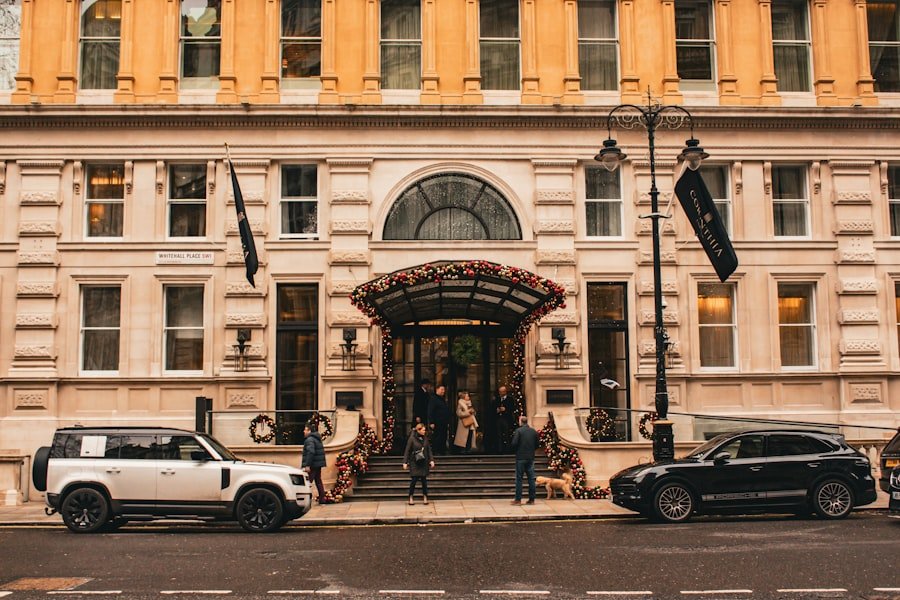
Budget hotels in London offer room types for solo travelers, couples, friends, families, and business travelers. Depending on the property, you may see single, double, twin, triple, family, accessible, or compact room categories.
Room descriptions deserve close attention. London properties can differ significantly in floor area, bed size, window size, storage space, bathroom layout, and accessibility. A low-priced “double” room may suit a short solo stay but feel cramped for two travelers with large suitcases.
What to Check Before Booking a Room
- Bed configuration: Confirm whether you are booking one double bed, two separate beds, bunk beds, a sofa bed, or another arrangement.
- Bathroom: Check whether it is private, en-suite, or shared.
- Wi-Fi: Confirm whether internet access is free and whether any restrictions apply.
- Breakfast: Check whether it is included in your exact rate rather than simply available at the hotel.
- Air conditioning: Do not assume every budget property has it.
- Lift access: Check this if stairs would be difficult for you or if you are traveling with heavy luggage.
- Luggage storage: This can be valuable when you arrive before check-in or leave London after check-out.
- Reception hours: Smaller properties may not operate a staffed front desk around the clock.
- Housekeeping: Check the property’s current cleaning schedule, especially for longer stays.
- Family occupancy: Verify the maximum number and ages of guests allowed in the room.
Flat-screen TVs, kettles, toiletries, breakfast, and other extras are available at many properties, but there is no single amenity package that applies to every budget hotel. Treat each listing as a separate product and confirm what your chosen rate actually includes.
Dining Options and Nearby Restaurants
Breakfast can add value to a hotel booking, particularly for families, but an included breakfast is not automatically the cheapest option. Compare the room-only rate with the breakfast rate and consider what is available within walking distance.
London has eating options at many price points, from supermarkets, bakeries, cafes, pubs, and takeaway counters to food halls and full-service restaurants. Areas such as Soho and Camden have extensive food choices, while markets can be useful for travelers who want to sample several dishes without committing to a formal restaurant.
Borough Market is a major food destination, and Brick Lane and the surrounding East London area have a wide range of restaurants and food businesses. Market prices vary, however, so a “market” should not automatically be treated as a low-cost meal.
Ways to Keep Food Costs Under Control
- Check whether your room has a kettle, refrigerator, or kitchenette.
- Compare hotel breakfast prices with nearby cafes before adding breakfast.
- Use supermarkets for water, snacks, fruit, and simple meals.
- Look at menus before sitting down rather than assuming a neighborhood is cheap.
- Budget separately for meals near major tourist attractions, where convenient locations can come with higher prices.
Transportation Options
London’s public transport system makes it possible to stay beyond the immediate sightseeing core while still reaching major attractions. The best location depends on which lines and stations connect efficiently to your itinerary.
Tube, Rail, DLR, and London Overground
For many visitors, pay-as-you-go using contactless or an Oyster card is one of the simplest ways to pay for London transport. Transport for London says pay-as-you-go provides daily and weekly capping on eligible journeys, so travelers do not need to purchase a separate ticket for every trip.
Always use the same contactless card or device to touch in and out for the complete journey. Using a phone to enter and a physical card to exit can cause the system to treat them as separate payment methods. On buses and trams, you normally touch in only.
Visitors using cards issued outside the UK should also check whether their bank charges foreign transaction fees. See TfL’s official visitor payment guidance for current rules.
TfL pay-as-you-go travel can be capped daily and weekly on eligible journeys, making your hotel’s transport connections an important part of its overall value.
Buses
Buses can be useful when a direct route is available and can also let you see more of the city than an underground journey. Check live journey information rather than assuming a bus will always be quicker; central London traffic can affect travel times.
Cycling
TfL’s Santander Cycles scheme provides hire bikes across inner and central London. Cycling can be useful for some short journeys, but consider your confidence in city traffic, the route, weather, and where docking stations are located.
Taxis and Private Hire
Black taxis and licensed private-hire vehicles provide door-to-door alternatives when public transport is inconvenient. TfL advises passengers to book minicabs/private-hire journeys through a licensed operator rather than accepting an unsolicited ride.
Warning: Do not get into an unbooked minicab offered by a driver on the street. Use a licensed operator or another authorized service. TfL provides a licence checker and passenger safety guidance.
Local Attractions and Entertainment

A lower-priced hotel does not prevent you from enjoying London’s major sights. The important question is how easily you can reach the attractions that matter to you.
Visitors commonly plan trips around areas containing Westminster Abbey, the Houses of Parliament, Buckingham Palace, the South Bank, the Tower of London, museums, markets, shopping districts, and the West End. Rather than trying to find one hotel within walking distance of everything, choose a base that gives you a practical route to the areas you expect to visit.
Use Free Attractions to Balance Your Budget
Many major London museums and galleries offer free entry to their permanent collections. Visit London’s current free-museum guide includes institutions such as the British Museum, Natural History Museum, Science Museum, and V&A. Special exhibitions or activities may still require tickets.
See the official Visit London free museums guide when planning your sightseeing budget.
Look for Official Theatre Discounts
West End theatre does not always require paying the highest advertised ticket price. The Society of London Theatre operates the Official London Theatre Ticket Booth in Leicester Square and publishes current on-the-day and discount inventory online.
Check Official London Theatre’s Ticket Booth rather than buying from an unknown street seller.
Budget-Friendly Tips and Deals
Hotel prices in London change according to demand, dates, major events, room inventory, and booking conditions. Instead of assuming one season, weekday, or booking window will always be cheapest, compare several date combinations when your schedule is flexible.
Compare the Total Stay Cost
A lower room rate can be misleading when another property includes services you would otherwise pay for separately. Compare the final cost of the stay using the features that matter to you.
- Room price for the full stay.
- Breakfast.
- Wi-Fi if it is not included.
- Transport from the hotel to your planned destinations.
- Airport or rail-station transfers.
- Luggage storage.
- Cancellation flexibility.
- Any optional services you know you will use.
Check Cancellation and No-Show Terms
Flexible rates often cost more than restrictive rates, but they can protect you if plans change. Read the cancellation deadline, prepayment rules, refund conditions, and no-show policy before confirming the reservation. Hotel cancellation and no-show charges can apply according to the booking terms.
Use Loyalty Discounts Carefully
If you already belong to a hotel-chain or booking-platform loyalty program, compare the member price with the public rate. A loyalty rate can offer a discount or benefit, but do not assume it is automatically the lowest total price.
Note: “Budget” does not have one fixed nightly price in London. A rate that is cheap during one week may be expensive during another because hotel demand changes constantly.
Customer Reviews and Recommendations
Guest reviews can reveal problems that are difficult to see in promotional photos, but the average score alone does not tell the whole story. Read recent reviews and look for repeated patterns.
What to Look for in Reviews
- Cleanliness: Are the same complaints appearing repeatedly?
- Noise: Look for comments about traffic, nightlife, internal corridors, thin walls, construction, or nearby rail lines.
- Room size: Review photos can help show whether the room will work with your luggage.
- Bed comfort: Repeated comments matter more than one isolated complaint.
- Bathroom condition: Check water pressure, ventilation, cleanliness, and whether the bathroom is actually private.
- Staff response: See how the property handles complaints rather than judging only whether complaints exist.
- Location: Reviewers often reveal whether the walk to the station feels practical at night or with luggage.
Compare reviews from more than one source when possible. Pay particular attention to recent reviews because hotel management, renovations, staffing, or nearby construction can change the guest experience over time.
Safety and Security Measures
Do not assume a hotel is secure simply because it is well rated or belongs to a known brand. Check the specific property’s access arrangements and use normal precautions during your stay.
Before Booking
- Check whether reception is staffed at the hours you expect to arrive.
- Look for recent comments about unauthorized access or room-security problems.
- Confirm how guests enter the building outside reception hours.
- Check whether in-room safes or another secure storage option are available if you need them.
During Your Stay
The Metropolitan Police advises London visitors to keep phones, cameras, laptops, and other valuables close and never unattended. It also warns travelers not to leave luggage unattended, even briefly, and notes that hotel lobbies can attract thieves.
Read the Metropolitan Police’s visitor safety guidance before your trip.
For an emergency requiring police, ambulance, or fire services in the UK, call 999 or 112. Non-emergency police matters can be reported using 101.
Staff and Customer Service
Good customer service can make a simple hotel much easier to use, but service quality varies by property. Instead of assuming budget hotels provide a particular service standard, check recent guest feedback and contact the hotel when you have a requirement that could affect your stay.
Questions worth asking before arrival include:
- Can luggage be stored before check-in or after check-out?
- Is late arrival permitted, and how does late check-in work?
- Is an accessible room available for the exact dates you need?
- Can the requested bed configuration be guaranteed?
- Does the building have a lift to your room floor?
- Are there quiet rooms away from lifts, bars, roads, or other known noise sources?
- What documentation is required at check-in?
A helpful response before booking can also give you an early indication of how clearly the property communicates with guests.
Alternatives to a Traditional Budget Hotel
If conventional hotel rates are too high, London also has other lower-cost accommodation types. The official Visit London accommodation guide includes hostels, bed-and-breakfasts, guesthouses, self-catering options, pubs with rooms, and some student accommodation.
These options can suit different travelers. A hostel may work well for a solo traveler, while self-catering accommodation can be useful when preparing some meals would reduce food costs. Families should compare occupancy rules and total prices carefully because a room advertised cheaply for one or two people may not remain inexpensive for a larger group.
Frequently Asked Questions
What are budget hotels in London?
Budget hotels in London are lower-cost accommodation options that focus on essential services rather than luxury features. There is no single nightly price that defines “budget,” because London hotel rates change according to location, dates, demand, room type, and booking conditions.
What amenities can I expect at budget hotels in London?
Many properties provide basics such as beds, bathrooms, Wi-Fi, toiletries, and reception services, but inclusions vary. Always check your exact room and rate for breakfast, private bathrooms, air conditioning, Wi-Fi, housekeeping, luggage storage, lifts, and other features you need.
Are budget hotels in London centrally located?
Some are in central London and others are farther out. Instead of focusing only on whether an address is “central,” check the hotel’s walking distance to useful public transport and calculate the journey time to the attractions or neighborhoods you plan to visit.
How can I find and book budget hotels in London?
Compare hotel websites and reputable booking services, then examine the final stay price, location, room dimensions, bathroom type, included amenities, cancellation rules, and recent reviews. Checking several dates can also reveal meaningful price differences when your travel schedule is flexible.
What are the advantages of staying at a budget hotel in London?
Spending less on accommodation can leave more of your trip budget for transport, food, attractions, shopping, and entertainment. A well-chosen budget hotel can provide a practical base without charging for luxury facilities you do not intend to use.
Is it cheaper to stay outside central London?
Sometimes, but not always. Compare the room saving with additional transport costs and travel time. A slightly more expensive hotel with a direct route to your main destinations can provide better overall value than a cheaper room requiring long or complicated journeys.
What is the easiest way for visitors to pay for London public transport?
TfL recommends pay-as-you-go options such as contactless or Oyster for many visitors. Eligible pay-as-you-go journeys benefit from fare capping. Use the same card or device throughout a journey, and check foreign transaction fees if your payment card was issued outside the UK.
Are London budget hotels suitable for families?
Many properties offer family or multi-bed rooms, but occupancy limits and bed arrangements differ. Check the maximum number of guests, children’s age rules, cot availability, room size, bathroom arrangement, lift access, and the exact total price before booking.
Conclusion and Final Recommendations
A good budget hotel in London should make the whole trip easier, not simply produce the lowest room rate on a search screen. Start with your itinerary, identify useful transport connections, and then compare properties using the details that directly affect your stay.
Check room size, bed layout, bathroom type, Wi-Fi, breakfast, air conditioning, luggage storage, accessibility, cancellation rules, recent reviews, and the actual walking route to public transport. Then compare the complete cost of each option, including the transport you are likely to use.
London’s extensive public transport network, free cultural attractions, varied food options, and official theatre discounts can help travelers manage the rest of their trip budget. With careful comparison, a simple hotel can provide a comfortable and practical base for exploring the city without paying for features you do not need.
Sources
- Transport for London — Best ways for visitors to pay — contactless, Oyster, pay-as-you-go, and fare-capping guidance.
- Transport for London — Step-free journey planning — accessibility, lifts, platforms, gaps, and step-free route information.
- Transport for London — Taxis and minicabs — licensed private-hire and passenger-safety guidance.
- Visit London — Cheap hotels and accommodation — official guidance on lower-cost London accommodation types.
- Metropolitan Police — Visiting London safely — luggage, valuables, ticket purchasing, and visitor-safety guidance.
- Official London Theatre — Ticket Booth — official same-day and discounted West End ticket information.