You can see a remarkable amount of Arizona without turning the trip into a luxury vacation. Sunrise walks among saguaros, Tucson’s historic streets, Sedona’s red-rock trails, scenic drives, library Culture Passes, farmers markets, picnics, and dispersed camping can all keep costs down. The key is knowing which experiences are truly free and which have entrance, parking, or camping fees.
Quick Answer
Some of the best cheap things to do in Arizona include self-guided Tucson walks, public art, picnics, free local events, Sedona hikes reached by free shuttle, and low-cost camping. Budget for park entrance and parking fees, though: Saguaro National Park, many Sedona recreation sites, state parks, and Lowell Observatory are not automatically free.
Key Takeaways
- Saguaro National Park is excellent for inexpensive sunrise hiking, but visitors still need an entrance pass.
- Sedona hiking does not require an expensive tour, but many Forest Service parking areas require a Red Rock Pass or qualifying federal pass.
- The free Sedona Shuttle can reduce both parking costs and trailhead congestion on supported routes.
- Arizona library cardholders may be able to check out free Act One Culture Passes for participating museums and attractions.
- Lowell Observatory is a paid attraction, not a free Flagstaff stop, although discounted admission is available to some visitors.
- Desert heat can become dangerous quickly. Carry enough water, start early, and change plans when temperatures or conditions become unsafe.
Arizona Budget Reality Check for 2026
Arizona has plenty of no-cost scenery, but “free activity” does not always mean “free trip.” A trail may have no hiking charge while its parking lot requires a recreation pass. A national park hike may be included with an entrance pass you already bought. Use this quick comparison before building your itinerary.
| Experience | Budget Reality |
|---|---|
| Saguaro National Park | A standard private-vehicle entrance pass is currently $25 and is valid for seven days in both park districts. |
| Sedona Red Rock Country | Some stops are free, but designated Forest Service fee sites may require a Red Rock Pass. Current prices are $5 daily, $15 weekly, or $20 annually. |
| Act One Culture Pass | Free passes may be available to local library cardholders at participating Arizona libraries. Venue availability varies. |
| Lowell Observatory | Paid admission is required for general campus access. Adult general admission is currently $35, with several discounted categories available. |
| Arizona State Parks | Day-use fees currently vary by park, generally from $5 to $30. Camping at parks that offer it generally ranges from $25 to $50 per night. |
Note: Fees, closures, shuttle schedules, fire restrictions, and trail access can change. Check the managing agency before leaving, especially if you are driving a long distance to a single trailhead or attraction.
Sunrise Hikes in Saguaro National Park
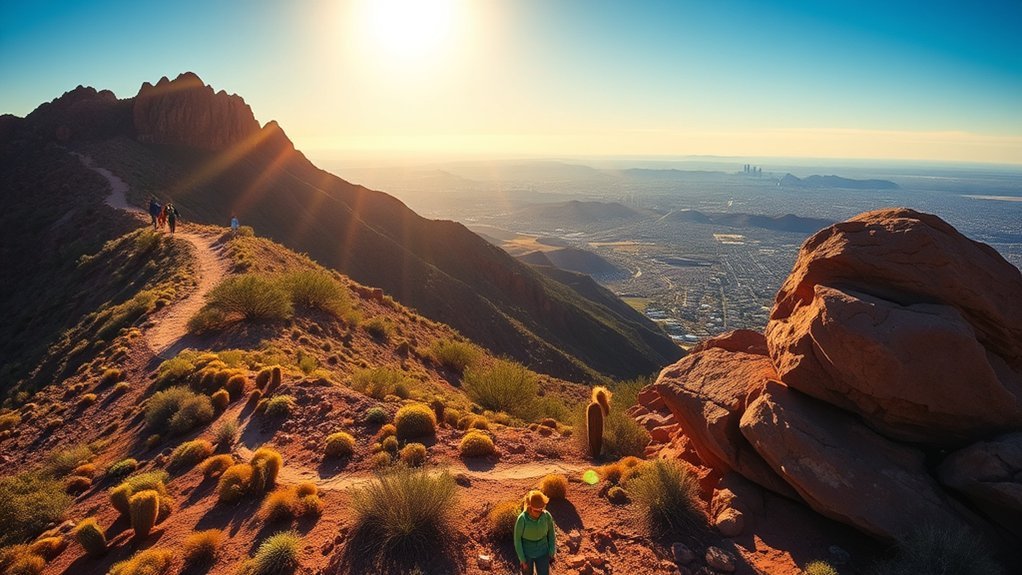
If you get an early start, Saguaro National Park rewards you with cooler air, long shadows, and pink light behind towering cacti. Early morning is also one of the smartest times to be outside when Arizona temperatures are climbing.
The hike itself can be a low-cost way to spend several hours, but the park is not generally free. According to the National Park Service entrance-fee page, a standard private-vehicle pass currently costs $25 and is valid for seven days in both the Tucson Mountain District and Rincon Mountain District. Visitors arriving on foot or bicycle who are age 16 or older pay the applicable individual entrance fee unless covered by another valid pass.
Once you are in, you can stretch the value of that pass by combining short hikes, picnic areas, overlooks, and scenic drives. Some park roads and gated areas have dawn-to-dusk access even though hiking access may extend beyond those road hours, so check the specific district before planning a pre-sunrise drive.
Warning: Desert heat can become dangerous faster than many visitors expect. Saguaro National Park advises drinking regularly rather than waiting until you feel thirsty. On hot, dry summer days, its hiking guidance recommends about one quart of water per hour and turning back when half your water supply is gone. See the park’s hiking safety information before setting out.
Keep to established paths, wear sun protection, bring salty snacks or another source of electrolytes, and carry more water than you expect to need. Pack a simple breakfast or snack and stop at an appropriate overlook or picnic area rather than spending money on another attraction. Leave plants, wildlife, rocks, and cultural objects where you find them.
Free Museum Days and Cultural Passes
Arizona’s museums can fit a tight budget if you plan around genuinely free institutions, special admission programs, or library passes instead of assuming every museum has a recurring free day.
Act One’s Culture Pass program works with nearly 200 public and academic libraries around Arizona. Local residents with participating library cards may be able to check out free passes for museums, gardens, cultural institutions, and other participating attractions. Availability depends on the library and venue, so check before making a special trip.
Act One also notes that more than 20 museums are free to the public without a Culture Pass. That gives budget travelers two useful strategies: look first for institutions with regular free admission, then check your eligible library for Culture Pass options when a paid attraction interests you.
| Type | Tip |
|---|---|
| Scheduling | Check the institution’s current admission calendar before traveling. |
| Passes | Ask your participating Arizona library about Act One Culture Pass availability. |
| Timing | Reserve or check out a pass early when quantities are limited. |
| Budget | Pair one museum stop with free public art, parks, or a self-guided walk nearby. |
Self-Guided Walking Tours of Historic Downtown Tucson
You can explore much of downtown Tucson on foot without buying a guided tour. The historic route originally known as the Presidio Trail is now commonly called the Turquoise Trail, a roughly 2.5-mile loop connecting historic sites in and around downtown.
You can also build your own architecture-and-art walk through the Presidio district, Congress Street, downtown murals, courtyards, plazas, and historic commercial blocks. The streets are free to explore even though individual museums, restaurants, and attractions along the way may charge admission or have their own operating hours.
Presidio Trail Highlights
The historic walking route brings downtown Tucson’s layered history into a compact area that works well for a half-day outing. Follow the turquoise marking where available, read interpretive signs, and use the route as a framework rather than rushing from stop to stop.
You can pass historic structures, public art, plazas, and the area associated with the Spanish presidio while moving at your own pace. Bring water, a hat, and comfortable shoes. Tucson’s heat is a serious consideration even on an urban walk, so mornings are usually more comfortable than the middle of a hot afternoon.
Food and drink prices around downtown vary widely. If you are watching costs, eat before you start, carry water, or choose one inexpensive café or food stop rather than treating every break as a purchase.
Architectural Styles Walk
You do not need an official architecture tour to notice how Tucson’s buildings tell the city’s story. Start around the Presidio district, where adobe and other historic building forms reflect the city’s desert setting and long cultural history. Continue toward central downtown to compare older facades with Spanish Colonial Revival, Art Deco, and modern buildings.
Photograph details such as shaded portals, courtyards, cornices, ironwork, tiles, and changes in building materials. This turns an ordinary downtown walk into a free architecture lesson while keeping you close to shade, restaurants, transit, and public spaces.
Murals & Public Art
After the historic buildings, let your route drift toward Tucson’s murals and public art. Large-scale paintings, sculptures, and installations add a modern layer to the city’s older streets.
Wear comfortable shoes, bring water, and time your walk for morning or late afternoon if you want softer light for photos. Public art makes an especially useful budget activity because you can combine it with historic architecture and parks without purchasing a ticket.
Scenic Drives With Pullouts and Photo Ops
Arizona’s highways can provide hours of scenery for little more than the cost of fuel, but parking and recreation fees vary. Before stopping, make sure the turnout is legal, your vehicle is completely out of the traffic lane, and the site does not require a recreation pass.
Red Rock Scenic Pullouts
Roads around Sedona and Red Rock Country deliver dramatic sandstone views without requiring a long hike. Some simple roadside viewpoints can be enjoyed without a separate recreation fee, while designated Coconino National Forest fee sites require a pass for parking.
The Coconino National Forest Red Rock Pass program currently charges $5 for a daily pass, $15 for a weekly pass, and $20 for an annual pass. An eligible America the Beautiful pass can also cover standard amenity fees at participating federal recreation sites.
That makes planning important. Instead of paying separately because you did not understand the parking system, group several Red Rock Country stops into the same day or week and choose the pass that fits your itinerary.
Desert Highway Viewpoints
Drive outside Arizona’s cities and you will find desert highways lined with broad views of cacti, mesas, volcanic fields, cliffs, and distant mountains. Where legal pullouts exist, they can make excellent short photo stops.
Cell service can disappear quickly outside populated areas. Carry drinking water, keep enough fuel in the tank, download maps for offline use, and never stop in a travel lane or on a blind curve. Respect fragile desert plants and do not create a new parking spot simply because a view looks appealing.
Mountain Pass Photo Stops
Arizona’s higher roads trade open desert for ridgelines, forests, changing vegetation, and cooler air. Pullouts can be ideal places for a quick snack or photograph, but mountain weather can change faster than conditions at lower elevations.
Use designated parking, avoid exposed ridges when storms are approaching, and keep a light jacket in the vehicle even when you started the day in desert heat. A phone camera is enough for most travelers, although a lightweight tripod can help if photography is a major part of your trip.
Budget-Friendly Trails Around Sedona’s Red Rocks
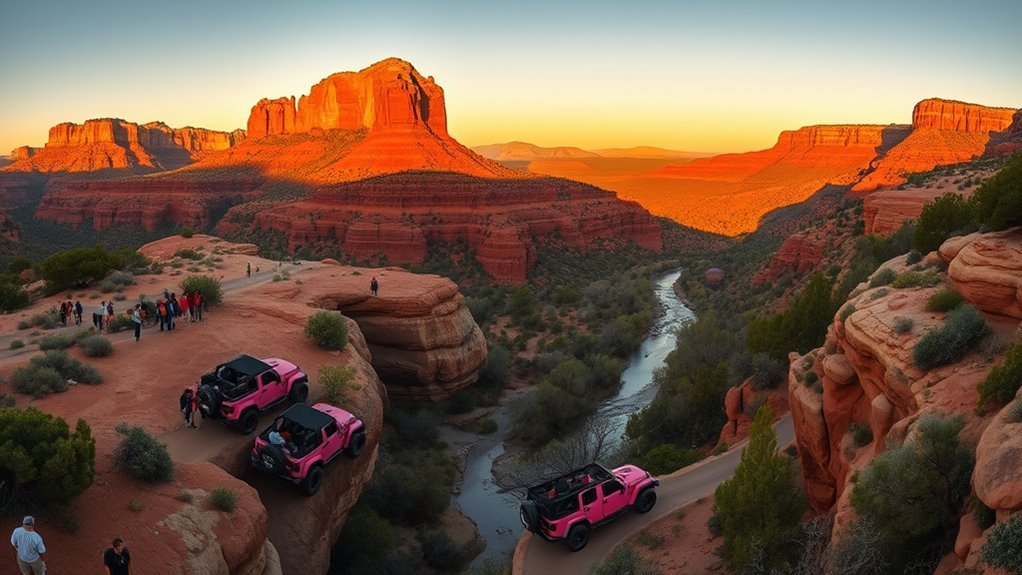
You do not need an expensive Jeep tour or private guide to experience Sedona’s red-rock scenery. Bell Rock Pathway, Fay Canyon, Cathedral Rock, and the surrounding trail network provide plenty of independent hiking options.
The important distinction is that walking the trail and parking at the trailhead are not always the same cost question. Many Coconino National Forest fee sites require a Red Rock Pass or qualifying federal pass. Bell Rock-area parking, for example, includes managed fee sites.
Cathedral Rock deserves another warning: although the route is short, the upper section is steep and involves hands-on scrambling. Treat it as a more demanding outing than an easy sightseeing path.
Pro Tip: Use the free Sedona Shuttle when its trailhead routes match your hike. The city provides free park-and-ride access to several popular trailheads. Cathedral Rock trailhead parking closes to the general public while applicable shuttle service is operating, making the shuttle both the cheaper and easier choice during those hours.
Carry plenty of water and salty snacks, use sun protection, and avoid treating sunrise or late afternoon as a guarantee of safe temperatures. Check the day’s weather and current Forest Service alerts before leaving. Stay on established trails to protect the area’s thin soils and vegetation.
Exploring Flagstaff’s Parks and Lowell Observatory on a Budget
Flagstaff works well as a budget stop because you can spend much of the day exploring parks, public spaces, downtown streets, public art, and nearby scenery without paying an attraction fee. Lowell Observatory can still fit the itinerary, but it should be treated as a paid attraction rather than a free walk.
Downtown Park Strolls
Flagstaff’s higher elevation gives it a very different atmosphere from Phoenix or Tucson. A simple walk through downtown and nearby green spaces can include public art, local architecture, shady benches, raven watching, and a picnic without building the day around shopping.
| What to Do | Budget Tip |
|---|---|
| Walk and stretch | Build a park stop into your downtown walk instead of paying for another attraction. |
| Watch wildlife | Observe from a respectful distance and never feed wild animals. |
| Picnic | Bring groceries or market food instead of sitting down for every meal. |
| People-watch or read | A notebook or book turns a simple park break into an hour-long reset. |
Lowell Observatory Grounds
Lowell Observatory is one of Flagstaff’s signature attractions, but general campus access is not free. According to Lowell Observatory’s current ticket page, adult general admission is $35, seniors age 55 and older are $30, children ages 6–17 are $20, and children under 5 are free. Lowell also lists military, local, student, Arizona Native Nations, and Museums for All discounts under specified conditions.
General admission includes campus access, exhibits, historic buildings, tours, science programming, and stargazing opportunities. If astronomy is a priority, consider Lowell your paid splurge and balance it with free Flagstaff activities before or afterward.
Cheap Eats: Sonoran Hot Dogs and Street Food Stops
If you want filling local food without committing to a full-service restaurant, start with the Sonoran hot dog, especially around Tucson and Phoenix. The familiar version layers a bacon-wrapped hot dog in a soft bolillo-style bun with beans, onions, tomatoes or pico, sauces, and peppers, although toppings vary by vendor.
Food carts, small stands, counter-service restaurants, and neighborhood spots can be easier on the budget than destination dining. Check the posted menu before ordering, because “street food” does not automatically mean the cheapest option in every neighborhood.
One useful strategy is to make lunch your local-food splurge and keep breakfast and dinner simple with groceries, picnic food, or food you already packed. That lets you try a regional specialty without turning every meal into a major expense.
Picnic Spots and Farmers Markets Across the State
Arizona’s public parks, recreation areas, town squares, and scenic day-use spaces make picnics an easy alternative to restaurant meals. You can combine an urban park in Phoenix, a green space in Flagstaff, or a Tucson-area overlook with groceries or farmers-market food.
Farmers markets can be enjoyable even when they are not the absolute cheapest place to shop. Instead of buying a full basket of artisan products, choose one or two local items such as seasonal fruit, bread, salsa, baked goods, or cheese and combine them with less expensive supermarket staples.
Bring a reusable water bottle, small cooler, utensils, napkins, and a trash bag. Check whether your chosen picnic area charges a day-use or parking fee before assuming the meal stop itself is free.
Budget Road-Trip Itineraries and Camping Options
A weeklong loop or weekend trip can stretch your budget if you group destinations geographically instead of crossing Arizona repeatedly. Tucson and Saguaro pair naturally. Sedona and Flagstaff work well together. Grand Canyon can be added to a northern-Arizona loop, but remember that national-park entrance fees, fuel, and lodging can quickly become larger expenses than the individual hikes or overlooks.
Pack snacks and refillable water, reduce unnecessary backtracking, and compare one multi-day recreation pass with paying separate daily fees. If several people are traveling together, splitting fuel and campsite costs can make a dramatic difference.
Low-Cost Camping Options
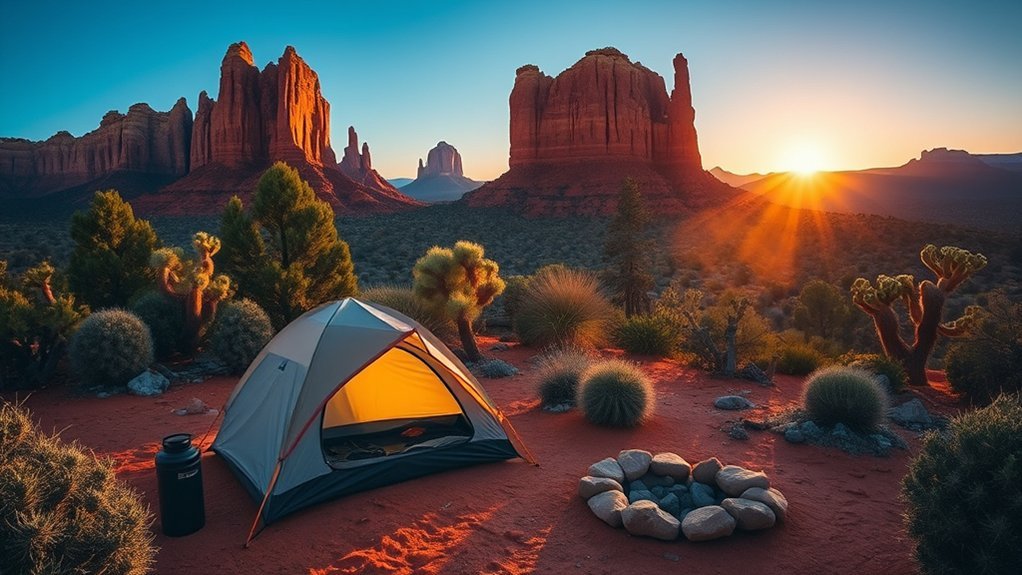
Camping can cut lodging costs, but not every campsite is free. Arizona State Parks currently lists camping fees generally ranging from $25 to $50 per night at parks with camping, while individual parks and campsite types vary. State-park day-use fees also vary.
Dispersed camping on Bureau of Land Management land can sometimes cost nothing, but it is not a license to camp anywhere. The Bureau of Land Management says dispersed camping is generally limited to 14 days within a 28-day period, with local rules and exceptions. Some areas are closed to camping or have additional restrictions.
Use previously disturbed campsites where allowed, keep vehicles on legal roads, pack out waste, and check current fire restrictions. Arizona fire conditions can change quickly, and an area that normally permits a campfire may temporarily prohibit one.
Bring camping essentials such as an appropriate sleeping bag, headlamp, layered clothing, food storage, sufficient drinking water, and a legal cooking setup. Do not assume a dispersed campsite has toilets, trash service, potable water, or cell coverage.
Small-Town Gems: Free Events and Local Markets
Arizona’s smaller communities can fill an afternoon or evening without another major admission charge. Depending on the town and season, you may find community concerts, art walks, holiday events, farmers markets, courthouse-square activities, or local festivals with free entry.
- A downtown plaza with strings of lights, handmade pottery, public seating, and the smell of coffee from a nearby stand.
- A weekend market where growers and artisans sell produce, baked goods, crafts, and locally made products.
- A town square or park hosting music, dancing, art, or a seasonal community celebration.
Event schedules change, so check the town or organizer’s current calendar before driving a long distance. Even at a free event, food, crafts, parking, and special activities may cost extra. Set a small spending limit before you arrive if browsing market stalls is likely to test your budget.
Frequently Asked Questions
Are there senior or military discounts at Arizona State Parks?
Arizona State Parks does not offer a general senior discount for park entrance or camping. It does offer qualifying military and veteran day-use discounts. Active-duty military, reserves, National Guard members, retired military, and qualifying service-disabled veterans may receive discounts under the state’s current rules. A veteran with a qualifying 100% service-connected disability can receive free day-use access. See the current Arizona State Parks fee schedule for eligibility and exclusions.
What are safe water sources for long hikes in desert areas?
The safest plan is to begin with enough drinking water for the hike rather than relying on springs, streams, or seasonal sources. Backcountry water can be scarce or dry and should be filtered or treated when a managing agency says it is usable. Drink regularly, do not wait until you are thirsty, and turn around early if your water supply is being used faster than planned.
Can I bring my dog to these trails and picnic spots?
Dogs are allowed at many Arizona trails and picnic areas, but rules differ by park, trail, wilderness area, and attraction. Check the specific site before leaving. Where dogs are permitted, follow leash rules, carry water for the animal, pack out waste, and protect paws from hot pavement and rock. Never leave a pet in a parked vehicle.
Where can I find free public restrooms on scenic drives?
Visitor centers, highway rest areas, developed trailheads, picnic areas, and some public parks are the most reliable places to look, but facilities vary and remote viewpoints may have none. Check the official park or forest map before starting a long drive and use available facilities when you see them rather than assuming another stop is nearby.
Are there bike-friendly routes between the small towns mentioned?
Some Arizona communities are connected by roads that experienced cyclists use, but you should not assume every town-to-town route is bicycle-friendly. Traffic speed, shoulder width, elevation, construction, heat, and distance vary widely. Check current state and local bicycle maps for the exact towns you plan to connect before treating a highway as a safe cycling route.
Is Saguaro National Park free to visit?
No. Saguaro National Park requires an entrance pass for visitors who are not otherwise covered by a valid qualifying pass. The current standard private-vehicle entrance fee is $25 and is valid for seven days in both park districts.
Are Sedona’s hiking trails free?
You generally do not need to buy a guided tour just to hike Sedona’s public trail system, but many Coconino National Forest parking and day-use sites require a Red Rock Pass or qualifying federal recreation pass. The current Red Rock Pass is $5 daily, $15 weekly, or $20 annually. The free Sedona Shuttle can eliminate trailhead parking costs on supported routes.
Can I visit Lowell Observatory for free?
General campus admission at Lowell Observatory is paid. Adult general admission is currently $35, with lower published prices for seniors and children and additional discounts for certain military members, local residents, students, Arizona Native Nations visitors, and Museums for All participants. Check Lowell’s current ticket page because prices and eligibility can change.
Conclusion
Arizona rewards travelers who spend carefully rather than travelers who simply spend more. Rise early for saguaro silhouettes, follow Tucson’s historic streets, use a library Culture Pass when you qualify, ride Sedona’s free shuttle, photograph roadside scenery, picnic in public spaces, and camp where the rules allow it.
The biggest budget lesson is to separate a free experience from the costs surrounding it. A hike may still require a park pass. A viewpoint may have a parking fee. A dispersed campsite may have no nightly charge but still be subject to stay limits, fire restrictions, and access rules. Check those details first and the rest of the trip can stay flexible, memorable, and genuinely affordable.
Sources
- National Park Service — Saguaro National Park Fees & Passes — current entrance-pass requirements and prices.
- Act One Arizona — Culture Pass — library Culture Pass availability and participating cultural attractions.
- Coconino National Forest — Red Rock & Coconino Passes Program — Sedona-area parking pass rules and current Red Rock Pass prices.
- City of Sedona — Sedona Shuttle — free trailhead transportation, park-and-ride access, and current trailhead service information.
- Lowell Observatory — Tickets — current general admission and discount pricing.
- Arizona State Parks & Trails — Fee Schedule — current day-use, camping, annual-pass, military, and veteran fee information.